


“In Gaza, it is like this… You get bombed. It is as if you ‘put your soul on your hand and walk.”
These are the words of Fatma Hassona, a 25-year-old Palestinian photojournalist from Gaza who was killed in an Israeli strike on April 16 last year. In Put Your Soul on Your Hand and Walk, the phrase becomes an ethic of witnessing. To move through Gaza is to live with one’s death exposed, but also to insist on seeing, recording, and speaking.
Directed by Iranian filmmaker Sepideh Farsi, Put Your Soul on Your Hand and Walk stands out for its raw and vivid portrayal of a Palestinian woman’s life during the bombing of Gaza. But if one is expecting the documentary to be concentrated on visuals of what Mohammed el-Kurd (2025) has defined as a “perfect victim” from Gaza, laced with blood under the rubble, one might be caught by surprise. That is precisely why Farsi’s documentary is important, for here she tells a story of an ordinary human — who has dreams of visiting Italy, enjoys drinking coffee, pictures a peaceful life with her family — all while living through extraordinary, genocidal conditions, under the constant threat of being bombed and displaced.
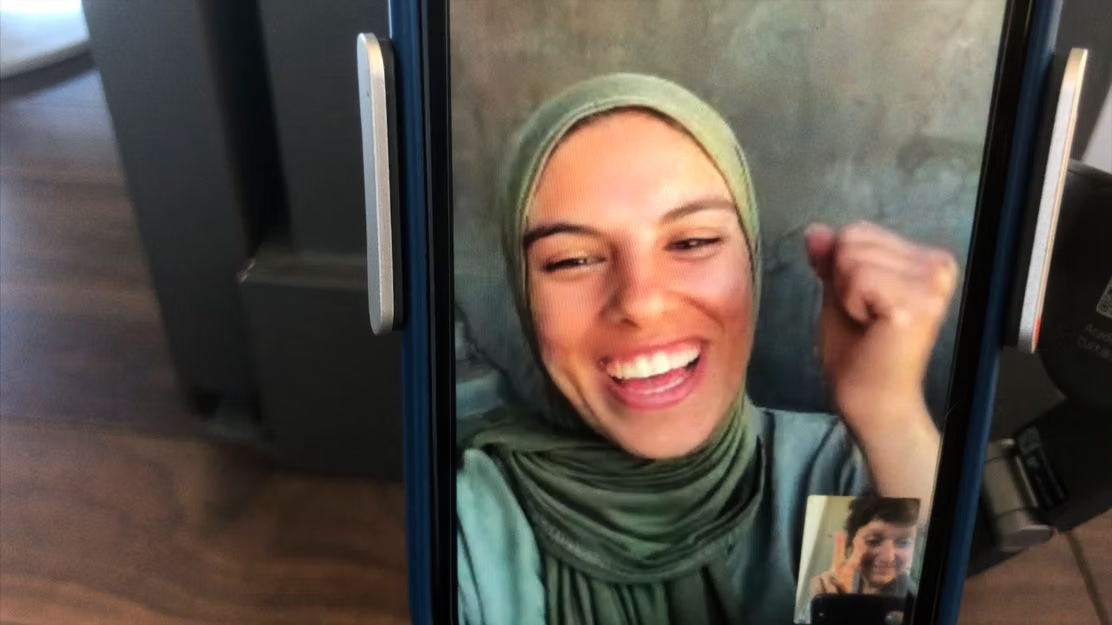
Unlike conventional film practices, where the filmmaker is often present on the ground with the subject they are filming, Farsi shoots the film over a series of video calls with a camera in one hand and the phone in the other. “I could have screen-recorded the video calls, but then they would have been just like some ordinary Zoom call recordings that the viewers would be watching,” Farsi said at a screening held at the London School of Economics and Political Science. “It was a deliberate choice to actually shoot the medium — my laptop screens and mobile phone during the calls — because that creates an illusion of putting Hassona talking to you — the viewers.”
When Hassona first appears on screen, we see a shy girl communicating with Farsi through an Instagram call. Over 112 minutes, we experience her journey of becoming a dear friend of Farsi, and in a way ours too, such that when she is killed alongside ten family members in an Israeli airstrike, we are left with immense hollowness and grief. The production’s unconventional nature reflects the fragmented reality of life under siege, bridging the distance between the filmmaker, the audience, and Hassona. Put Your Soul on Your Hand and Walk serves as a medium for both Farsi and Hassona, two women bound by a shared history of defiance, to claim spaces in the world that tries to silence voices of dissent.
Farsi’s exile and Hassona’s murder: The price of resistance
Politically active from a young age, Farsi was incarcerated for being an anti-Islamic Republic activist at the age of 16 when the Iran-Iraq war broke out in the 1980s. When she was released, she lost her citizenship rights and was banned from continuing her studies at her university. At 18, she moved to Paris in 1984, where she studied and taught mathematics before transitioning into photography and cinema. As a politically engaged director, her extensive body of work includes award-winning documentaries and features such as Tehran Without Permission (2009), Red Rose (2014), and the Berlinale-opening animated teenage anti-war manifesto The Siren (2021), during which she learned about Hassona in Cairo.
“I wanted to cross through Rafah, but I couldn’t because all the roads to Gaza were blocked,” Farsi said. “While I was filming Gazans in Cairo, I met Ahmed, a Palestinian refugee, who told me about Hassona, who was still living in Gaza.” Farsi, who fled Iran to tell stories of resistance, was drawn to a woman her daughter’s age who refused to give up on her home because she wanted to live there and tell her people’s stories.
Put Your Soul on Your Hand and Walk is Farsi’s attempt to let Hassona do what she aimed for — to tell the story of Gazans as humans and not just mere statistics. This is established through the documentary, which portrays Hassona as someone living in a world where some—like us—have the choice to live freely, while others’ lives become dispensable. These emotions aren’t conveyed through conventional long voiceovers, but through buffering screens and unclear voices, echoing the conditions where calls often couldn’t go through because the signal was too weak or Hassona was trapped in continuous bombing. Despite these obstacles, Hassona’s determination to save her life and the lives of fellow Gazans shines through the film. In her attempts to find a ‘peaceful’ corner in the chaotic vicinity, from her praying rituals to one day wishing to walk the lanes of her hometown without any fear of being killed any second, to making coffee for the family, Hassona’s calls with Farsi become an opportunity for Hassona to show Gaza as a place that is a living, breathing home to people.
But that doesn’t mean Farsi is providing an optimistic picture amid the bloodshed. She makes us sit uncomfortably through the silence of unanswered phone calls, which could have been cut in the final edit, or by showing Hassona’s work, in which she photographs a child washing bloodstains off a wall or a young girl posing with a victory sign amid rubble. She then soothes this uneasiness with Hassona’s positive spirit, where we see her desire to travel around the world for work someday, and this cycle of precarity continues — an underlying metaphor for how Gaza has been for years.

The photos above were shot by Hassona, who had started documenting the genocide in October 2023, six months before this documentary began taking shape. Hassona’s Instagram bio remains an attestation to her spirit, reading: “A brave woman chase (ing) the light, looking for astonishment.” Before October 7, 2023, her social media account shows her primarily focused on aesthetic imagery, but the genocide compelled her to step into the role of a documentarian and photojournalist, sharing unfiltered images of Gaza.
But with every resistance comes a price, and we witness Hassona paying it — with her life.
In Put Your Soul on Your Hand and Walk, we see Hassona being happy about the film’s selection at Cannes. Because of Farsi’s intimate shots, we feel like we personally know Hassona; we feel her ecstasy and the hope she holds on to. But the happiness is short-lived. Soon after, the film ends, and a black screen appears stating that Hassona was killed in the attack.
“I was looking forward to seeing her at the screening of our film,” Farsi reflected. “She wanted to see Paris, but still wanted to go back home as her family lived there.”
Forensic Architecture’s report concluded that Hassona, along with her family, was murdered using precision-guided munitions (PGMs) laden with a “GPS and delay fuse that would detonate at specific coordinates and floor levels.” Journalists like Hassona in Gaza live a dual life: as citizens and as conveyors of the brutality that is inflicted on them. It is the harsh reality that ‘press vests become targets’ for attacks instead of markers of protection. And when a foreign journalist or filmmaker like Farsi tries to enter Gaza, they are stopped at the border.
Reframing the understandings of war

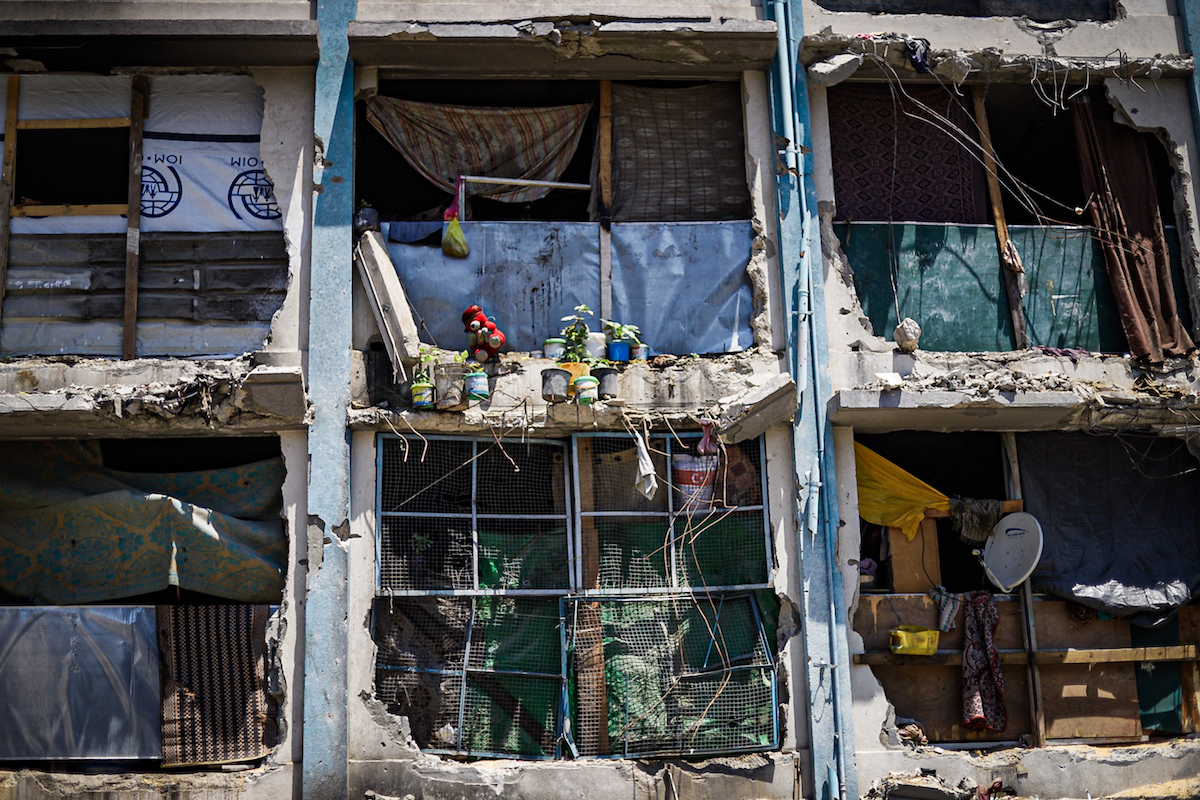
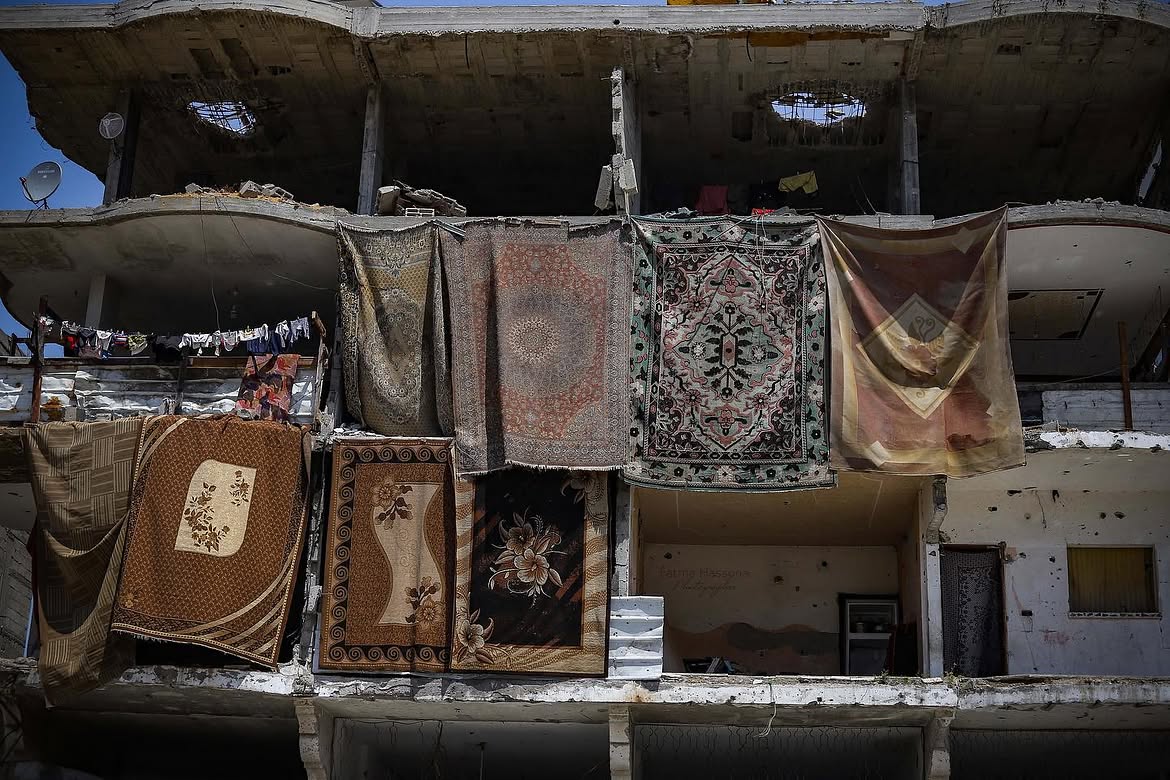
In Put Your Soul on Your Hand and Walk, Farsi eschews traditional aesthetics in filmmaking for something more visceral. As far as cinematography is concerned, we usually aim to get still shots, clean visuals, clear sounds. The coverage of genocide through traditional media includes video bytes from ‘international peace experts,’ or ‘reporters,’ positioned in the frame according to the rule of thirds or depth of field. However, in Farsi’s work, all these technicalities are crushed. Instead of aiming for perfect video imagery, she captures the messiness of not just Hassona’s world but also of her own, blurring the lines between the observer and the observed.
Farsi shared that Hassona was not her initial choice as the documentary’s primary interlocutor. But Hassona was the first person she met with in Gaza, and they both felt a pull towards each other. “When I saw her, there was immediate recognition,” Farsi said, “and then our relationship started to develop organically and on mutual trust.” Their shared interest in photography and womanhood, along with experiences of struggle and resistance, brought them together.
“In my second meeting with her,” Farsi recalled, “I knew she would be the center of my film.”
During the film, Hassona expresses a yearning for a simple meal of chicken and chips — a longing born of nine months of deprivation. She shares it with a smile, which deepens the scene’s emotional weight. In doing so, Farsi intentionally disrupts the viewer’s comfort, forcing an uncomfortable reckoning with the stark disparity of their own privilege. The camera functions as a fragile window where the roar of dropping bombs is not distant. Farsi’s decision to shun traditional cinematography in favor of spontaneous video calls is crucial here. We see that as soon as a nearby building is struck by drones or bombs are dropped, Hassona flips the camera, pulling the viewer into the immediate tremor of the event. This technique transforms the relationship between filmmaker, subject, and audience, serving as a vital bridge: the viewer not only watches Hassona from a safe distance but is also compelled to walk alongside her in the rubble.
Probably, this is why it becomes imperative to note that Farsi’s documentary makes you ‘feel and experience’ Fatma’s life. It follows her — through her days of joy and optimism to desperation and depression, which is hard to establish when conventional media paints a distant image of war. Instead of a disjointed, distant view of war, the filmmaker uses her technique to put the audience in direct conversation with Fatma, appealing to the ethos of war coverage: unless we feel for someone, we wouldn’t advocate for them.
Farsi’s directorial approach aligns with the principles of ethico-political pacifism, refusing to frame Hassona as a passive victim of a single, isolated act of war. Instead, through exposing the audience to Hassona’s daily routines alongside the spectacular imagery of destruction, she forces us to interrogate the structural foundations of the war. By stripping away the curated distance typical of documentation, Put Your Soul on Your Hand and Walk challenges the audience to move beyond sympathy toward a critical awareness of the systemic injustices that sustain the ongoing state of war.
The documentary pushes the viewer to look beyond the immediate destruction to the insidious nature of the Israeli occupation. This is clearest in a scene where Hassona remarks, “Hummus is ours, Falafel is ours; they want to take everything.” In this moment, she invites us to consider the political economy of war, where the oppressor’s objective is not merely territorial control but an active invasion of daily life and erasure of cultural identity. This erasure is not always spectacular enough to satisfy the narrow, conventional definitions of settler colonialism. Hence, it often eludes formal condemnation.
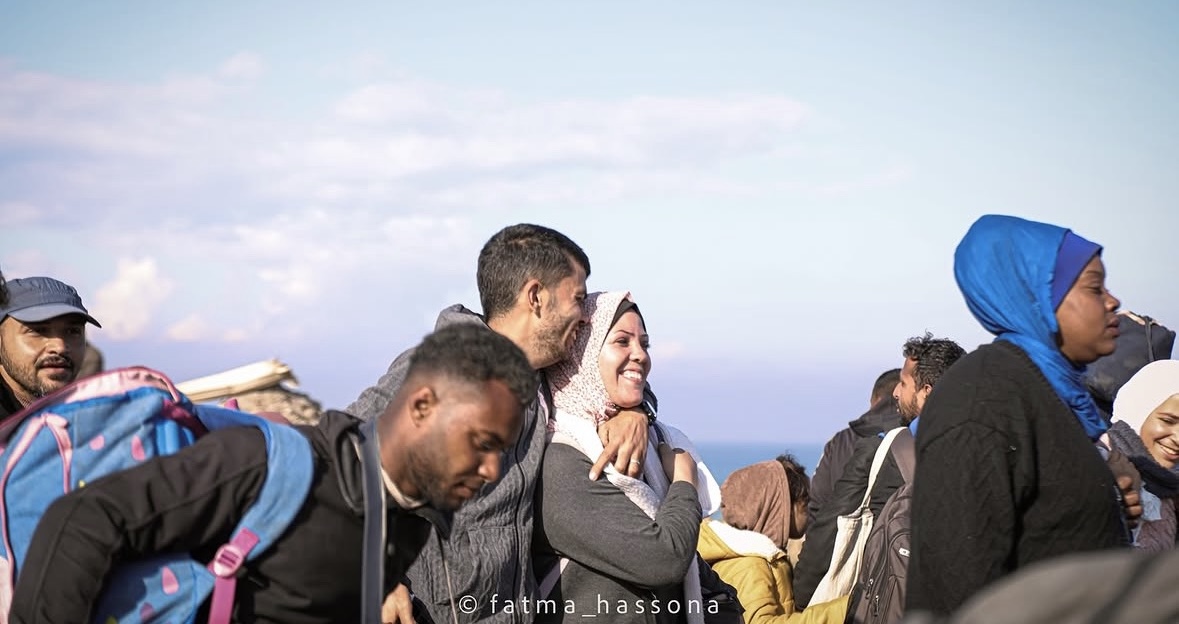
It is precisely Hassona’s focus on these everyday grievances that exposes how the active denial of historical displacement has culminated in the present-day devastation of Palestine. The film reveals that while the post-October 7 images finally fit the definitions of a genocide, the erasure of Palestinian life has been a persistent, daily reality for decades.
Farsi’s technique of mise-en-abyme, which translates as “a story within a story,” grounds Fatma’s story with gravity. It is not just frames within frames, but the intersecting stories of Hassona, Farsi, and the Palestinian people.
“Documentaries never have a fixed flow, and while I was at the editing table, I skimmed through a lot of footage. The conversations that we used to have focused mostly on how she was and the bombings, so they were repetitive. And I tried to make sure emotions drive the story instead of the spectacularity of the incidents,” Farsi said.
Farsi’s decision to use hyper-zoomed, handheld shots by fixating intently on the lips and eyes of news anchors is a symbolic critique of the international peacekeeping community’s impotence. As broadcasters from the BBC, Al Jazeera, and CNN read out the sterile language of ceasefire negotiations against a backdrop of escalating death tolls, Farsi forces us to witness the disconnect. The very language of peacekeeping, when closely looked at, becomes a hollow ritual, serving less as a genuine pursuit of peace and more as a bureaucratic mask for the collective failure of international bodies to halt the ongoing genocide.
In our interaction, Farsi emphasized that some stories and realities have to be filmed in their real forms and in the rawest ways possible to justify their cause. Through Put Your Soul on Your Hand and Walk, Farsi’s intentions are clear. She said, “I never wanted to show the gore in war. We have it all over the media. I wanted to give those who went through this gore a face, a name.”
Perhaps that is why the film lands strongly because, though it does not turn away from violence, it refuses to let violence become the only language through which Hassona is remembered.

In Gaza, you put your soul on your hand and walk: Fatma Hassona and the cost of documenting a genocide
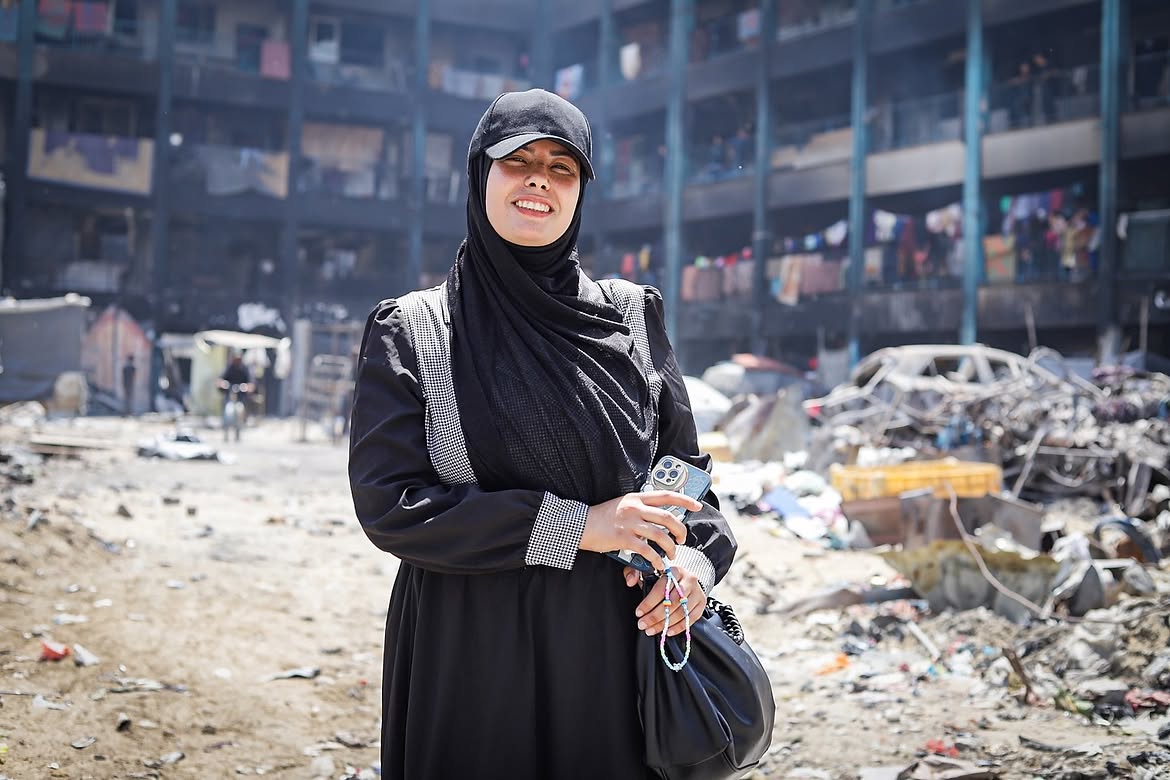
Fatma Hassouna was a Palestinian photojournalist and writer born and raised in Gaza. She was the subject of the documentary film Put Your Sould on Your Hand and Walk. In April 2025, she was killed alongside ten members of her family in an Israeli airstrike. She was 26 years old.
“In Gaza, it is like this… You get bombed. It is as if you ‘put your soul on your hand and walk.”
These are the words of Fatma Hassona, a 25-year-old Palestinian photojournalist from Gaza who was killed in an Israeli strike on April 16 last year. In Put Your Soul on Your Hand and Walk, the phrase becomes an ethic of witnessing. To move through Gaza is to live with one’s death exposed, but also to insist on seeing, recording, and speaking.
Directed by Iranian filmmaker Sepideh Farsi, Put Your Soul on Your Hand and Walk stands out for its raw and vivid portrayal of a Palestinian woman’s life during the bombing of Gaza. But if one is expecting the documentary to be concentrated on visuals of what Mohammed el-Kurd (2025) has defined as a “perfect victim” from Gaza, laced with blood under the rubble, one might be caught by surprise. That is precisely why Farsi’s documentary is important, for here she tells a story of an ordinary human — who has dreams of visiting Italy, enjoys drinking coffee, pictures a peaceful life with her family — all while living through extraordinary, genocidal conditions, under the constant threat of being bombed and displaced.
Unlike conventional film practices, where the filmmaker is often present on the ground with the subject they are filming, Farsi shoots the film over a series of video calls with a camera in one hand and the phone in the other. “I could have screen-recorded the video calls, but then they would have been just like some ordinary Zoom call recordings that the viewers would be watching,” Farsi said at a screening held at the London School of Economics and Political Science. “It was a deliberate choice to actually shoot the medium — my laptop screens and mobile phone during the calls — because that creates an illusion of putting Hassona talking to you — the viewers.”
When Hassona first appears on screen, we see a shy girl communicating with Farsi through an Instagram call. Over 112 minutes, we experience her journey of becoming a dear friend of Farsi, and in a way ours too, such that when she is killed alongside ten family members in an Israeli airstrike, we are left with immense hollowness and grief. The production’s unconventional nature reflects the fragmented reality of life under siege, bridging the distance between the filmmaker, the audience, and Hassona. Put Your Soul on Your Hand and Walk serves as a medium for both Farsi and Hassona, two women bound by a shared history of defiance, to claim spaces in the world that tries to silence voices of dissent.
Farsi’s exile and Hassona’s murder: The price of resistance
Politically active from a young age, Farsi was incarcerated for being an anti-Islamic Republic activist at the age of 16 when the Iran-Iraq war broke out in the 1980s. When she was released, she lost her citizenship rights and was banned from continuing her studies at her university. At 18, she moved to Paris in 1984, where she studied and taught mathematics before transitioning into photography and cinema. As a politically engaged director, her extensive body of work includes award-winning documentaries and features such as Tehran Without Permission (2009), Red Rose (2014), and the Berlinale-opening animated teenage anti-war manifesto The Siren (2021), during which she learned about Hassona in Cairo.
“I wanted to cross through Rafah, but I couldn’t because all the roads to Gaza were blocked,” Farsi said. “While I was filming Gazans in Cairo, I met Ahmed, a Palestinian refugee, who told me about Hassona, who was still living in Gaza.” Farsi, who fled Iran to tell stories of resistance, was drawn to a woman her daughter’s age who refused to give up on her home because she wanted to live there and tell her people’s stories.
Put Your Soul on Your Hand and Walk is Farsi’s attempt to let Hassona do what she aimed for — to tell the story of Gazans as humans and not just mere statistics. This is established through the documentary, which portrays Hassona as someone living in a world where some—like us—have the choice to live freely, while others’ lives become dispensable. These emotions aren’t conveyed through conventional long voiceovers, but through buffering screens and unclear voices, echoing the conditions where calls often couldn’t go through because the signal was too weak or Hassona was trapped in continuous bombing. Despite these obstacles, Hassona’s determination to save her life and the lives of fellow Gazans shines through the film. In her attempts to find a ‘peaceful’ corner in the chaotic vicinity, from her praying rituals to one day wishing to walk the lanes of her hometown without any fear of being killed any second, to making coffee for the family, Hassona’s calls with Farsi become an opportunity for Hassona to show Gaza as a place that is a living, breathing home to people.
But that doesn’t mean Farsi is providing an optimistic picture amid the bloodshed. She makes us sit uncomfortably through the silence of unanswered phone calls, which could have been cut in the final edit, or by showing Hassona’s work, in which she photographs a child washing bloodstains off a wall or a young girl posing with a victory sign amid rubble. She then soothes this uneasiness with Hassona’s positive spirit, where we see her desire to travel around the world for work someday, and this cycle of precarity continues — an underlying metaphor for how Gaza has been for years.
The photos above were shot by Hassona, who had started documenting the genocide in October 2023, six months before this documentary began taking shape. Hassona’s Instagram bio remains an attestation to her spirit, reading: “A brave woman chase (ing) the light, looking for astonishment.” Before October 7, 2023, her social media account shows her primarily focused on aesthetic imagery, but the genocide compelled her to step into the role of a documentarian and photojournalist, sharing unfiltered images of Gaza.
But with every resistance comes a price, and we witness Hassona paying it — with her life.
In Put Your Soul on Your Hand and Walk, we see Hassona being happy about the film’s selection at Cannes. Because of Farsi’s intimate shots, we feel like we personally know Hassona; we feel her ecstasy and the hope she holds on to. But the happiness is short-lived. Soon after, the film ends, and a black screen appears stating that Hassona was killed in the attack.
“I was looking forward to seeing her at the screening of our film,” Farsi reflected. “She wanted to see Paris, but still wanted to go back home as her family lived there.”
Forensic Architecture’s report concluded that Hassona, along with her family, was murdered using precision-guided munitions (PGMs) laden with a “GPS and delay fuse that would detonate at specific coordinates and floor levels.” Journalists like Hassona in Gaza live a dual life: as citizens and as conveyors of the brutality that is inflicted on them. It is the harsh reality that ‘press vests become targets’ for attacks instead of markers of protection. And when a foreign journalist or filmmaker like Farsi tries to enter Gaza, they are stopped at the border.
Reframing the understandings of war
In Put Your Soul on Your Hand and Walk, Farsi eschews traditional aesthetics in filmmaking for something more visceral. As far as cinematography is concerned, we usually aim to get still shots, clean visuals, clear sounds. The coverage of genocide through traditional media includes video bytes from ‘international peace experts,’ or ‘reporters,’ positioned in the frame according to the rule of thirds or depth of field. However, in Farsi’s work, all these technicalities are crushed. Instead of aiming for perfect video imagery, she captures the messiness of not just Hassona’s world but also of her own, blurring the lines between the observer and the observed.
Farsi shared that Hassona was not her initial choice as the documentary’s primary interlocutor. But Hassona was the first person she met with in Gaza, and they both felt a pull towards each other. “When I saw her, there was immediate recognition,” Farsi said, “and then our relationship started to develop organically and on mutual trust.” Their shared interest in photography and womanhood, along with experiences of struggle and resistance, brought them together.
“In my second meeting with her,” Farsi recalled, “I knew she would be the center of my film.”
During the film, Hassona expresses a yearning for a simple meal of chicken and chips — a longing born of nine months of deprivation. She shares it with a smile, which deepens the scene’s emotional weight. In doing so, Farsi intentionally disrupts the viewer’s comfort, forcing an uncomfortable reckoning with the stark disparity of their own privilege. The camera functions as a fragile window where the roar of dropping bombs is not distant. Farsi’s decision to shun traditional cinematography in favor of spontaneous video calls is crucial here. We see that as soon as a nearby building is struck by drones or bombs are dropped, Hassona flips the camera, pulling the viewer into the immediate tremor of the event. This technique transforms the relationship between filmmaker, subject, and audience, serving as a vital bridge: the viewer not only watches Hassona from a safe distance but is also compelled to walk alongside her in the rubble.
Probably, this is why it becomes imperative to note that Farsi’s documentary makes you ‘feel and experience’ Fatma’s life. It follows her — through her days of joy and optimism to desperation and depression, which is hard to establish when conventional media paints a distant image of war. Instead of a disjointed, distant view of war, the filmmaker uses her technique to put the audience in direct conversation with Fatma, appealing to the ethos of war coverage: unless we feel for someone, we wouldn’t advocate for them.
Farsi’s directorial approach aligns with the principles of ethico-political pacifism, refusing to frame Hassona as a passive victim of a single, isolated act of war. Instead, through exposing the audience to Hassona’s daily routines alongside the spectacular imagery of destruction, she forces us to interrogate the structural foundations of the war. By stripping away the curated distance typical of documentation, Put Your Soul on Your Hand and Walk challenges the audience to move beyond sympathy toward a critical awareness of the systemic injustices that sustain the ongoing state of war.
The documentary pushes the viewer to look beyond the immediate destruction to the insidious nature of the Israeli occupation. This is clearest in a scene where Hassona remarks, “Hummus is ours, Falafel is ours; they want to take everything.” In this moment, she invites us to consider the political economy of war, where the oppressor’s objective is not merely territorial control but an active invasion of daily life and erasure of cultural identity. This erasure is not always spectacular enough to satisfy the narrow, conventional definitions of settler colonialism. Hence, it often eludes formal condemnation.
It is precisely Hassona’s focus on these everyday grievances that exposes how the active denial of historical displacement has culminated in the present-day devastation of Palestine. The film reveals that while the post-October 7 images finally fit the definitions of a genocide, the erasure of Palestinian life has been a persistent, daily reality for decades.
Farsi’s technique of mise-en-abyme, which translates as “a story within a story,” grounds Fatma’s story with gravity. It is not just frames within frames, but the intersecting stories of Hassona, Farsi, and the Palestinian people.
“Documentaries never have a fixed flow, and while I was at the editing table, I skimmed through a lot of footage. The conversations that we used to have focused mostly on how she was and the bombings, so they were repetitive. And I tried to make sure emotions drive the story instead of the spectacularity of the incidents,” Farsi said.
Farsi’s decision to use hyper-zoomed, handheld shots by fixating intently on the lips and eyes of news anchors is a symbolic critique of the international peacekeeping community’s impotence. As broadcasters from the BBC, Al Jazeera, and CNN read out the sterile language of ceasefire negotiations against a backdrop of escalating death tolls, Farsi forces us to witness the disconnect. The very language of peacekeeping, when closely looked at, becomes a hollow ritual, serving less as a genuine pursuit of peace and more as a bureaucratic mask for the collective failure of international bodies to halt the ongoing genocide.
In our interaction, Farsi emphasized that some stories and realities have to be filmed in their real forms and in the rawest ways possible to justify their cause. Through Put Your Soul on Your Hand and Walk, Farsi’s intentions are clear. She said, “I never wanted to show the gore in war. We have it all over the media. I wanted to give those who went through this gore a face, a name.”
Perhaps that is why the film lands strongly because, though it does not turn away from violence, it refuses to let violence become the only language through which Hassona is remembered.