

Mayor Zohran Mamdani announced plans on Monday to disband the NYPD’s Strategic Response Group (SRG), fulfilling his campaign promise to dismantle a unit associated with violent protest policing. The unit’s officers have been accused of beating protesters with batons, ramming them with bicycles, and trapping crowds before making mass arrests, including during the 2020 racial justice protests in Mott Haven. At least two fatal police encounters have been linked to SRG-initiated operations.
Under the proposed plan, civilian staff will work with protest organizers on communication and de-escalation, while a new NYPD Patrol Support Division will retain crowd-management and arrest duties. Until the civilian division becomes operational, no earlier than 2028, according to Politico, a 30-officer police team will handle dialogue and de-escalation.
“New Yorkers exercising their constitutional right to protest should not be met with the same police response as a terrorism threat,” Mamdani said in a statement announcing the changes with Police Commissioner Jessica Tisch. The plan separates the SRG’s counterterrorism responsibilities from protest response and restricts several crowd-control tactics.
Our previous story on Commissioner Tisch’s policing record ended by asking whether Mamdani would rein in the department’s treatment of protesters or accommodate the institution he inherited. Monday’s announcement offers some, if incomplete, answer: restrictions on how NYPD officers will police demonstrations, coupled with a reorganization whose implementation will eventually determine how much changes on the street.
A phased dismantling of SRG
The SRG unit will not disappear immediately. Mamdani and Tisch said the unit is scheduled to dissolve in spring 2027, with its roughly 500 officers reassigned within the NYPD. Many will move to the department’s existing counterterrorism operation, which will absorb the SRG’s duties, including heavy-weapons deployments at critical infrastructure. Protest-response responsibilities will shift to separate police teams and, eventually, a civilian dialogue division. The administration has not provided a complete breakdown of the officers’ new assignments.
A new NYPD unit will take over protest-response duties while the city builds its civilian alternative. Although the administration plans to hire and train civilian staff over the next year, Politico reports that the Community Dialogue and De-escalation Division will not become operational until 2028 at the earliest. Until then, armed officers will continue to lead protest responses. The city’s announcement does not specify when the newly announced restrictions, including bans on kettling and tear gas at protests and limits on pepper spray, will take effect.
The transition raises some important questions: Is the city dismantling the SRG’s model of protest policing, or rebranding it under a new name? The answer will depend on who staffs and commands the replacement Patrol Support Division, what triggers its deployment, and whether officers will face any consequences for violating the new restrictions.
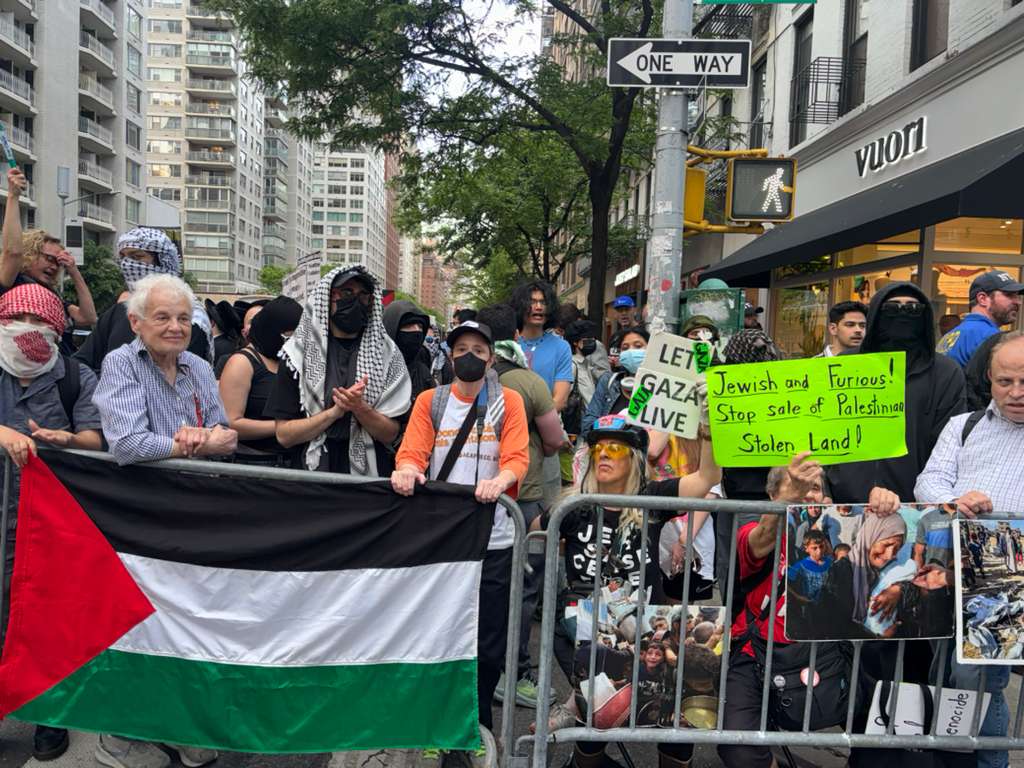
Pro-Palestinian demonstrations outside synagogues hosting real estate events can be a litmus test for those commitments. In May, Mamdani criticized the promotion of West Bank settlement properties at Park East Synagogue but defended the NYPD’s response to protesters outside. The NYCLU called the police barricades a “no-speech zone.”
The NYPD’s record offers reason for skepticism. By June 2025, during the Adams administration, only five of 66 officers whose use of force during the 2020 protests led the civilian oversight board to recommend serious disciplinary proceedings had lost more than 10 vacation days, according to The City. Under Mamdani, an officer involved in the fatal shooting of Win Rozario retired before facing a disciplinary trial after the NYPD failed to notify the oversight board of his impending departure. Mamdani has since announced measures intended to prevent similar failures, but whether those changes will deliver meaningful accountability remains untested.
Mandani’s proposal has promised “strict eligibility requirements” but has not detailed them in its announcement, leaving unanswered whether officers with substantiated misconduct records can join. The NYCLU has already warned that it remains concerned about a new police unit tasked with protest policing and will monitor its compliance with the organization’s 2023 settlement with the city. Without transparent staffing standards, deployment rules, and disciplinary outcomes, the public will have little basis to judge whether the restructuring changes police conduct or merely the department’s organizational chart.
New restrictions
Mamdani’s directive bans kettling, the act of surrounding and confining crowds, and prohibits tear gas and long guns at protests. Officers may no longer use pepper spray as a crowd-management tool, and acoustic devices will be limited to 90 decibels. NYPD Officers will be prohibited from using bicycles as weapons, except when necessary to prevent injury or death to themselves or others.
The new Community Dialogue and De-escalation Division, housed in the mayor’s Office of Community Safety, is intended to lead engagement with demonstrators. Its civilian staff will carry no weapons and have no arrest powers.
Until that division is launched, a 30-officer First Amendment Support Team within the NYPD’s Community Affairs Bureau will lead dialogue and de-escalation. Those officers will remain armed and continue operating after the civilian division launches. A separate Patrol Support Division will accompany them, positioned nearby to make arrests when deemed necessary. The Justice Committee (JC), a New York-based grassroots organization dedicated to ending police violence and systemic racism, has urged the mayor’s office to reconsider whether to create the civilian division at all, warning that the proposal risks civilianizing policing, extending police functions beyond the NYPD, and turning the Office of Community Safety into an arm of policing.
Created in 2015, the roughly 500-member SRG became a focus of criticism over excessive force, particularly during the 2020 Black Lives Matter demonstrations. The state attorney general’s investigation found that the NYPD violated protesters’ First Amendment rights during that response; the SRG played a central role in policing the demonstrations.
Tisch, who has defended the unit, endorsed Mamdani’s plan. “These changes will make us a stronger, more effective department,” she said, while emphasizing that she would not support measures that weakened the NYPD’s ability to confront serious threats. Her support came after negotiations over what would replace the SRG. City & State reported, citing two people briefed on the proposal, that creating the Patrol Support Division was a condition of securing Tisch’s backing.
Can Mamdani create lasting change?
Mamdani also endorsed Council Member Chi Ossé’s CURB Act on November 16, legislation intended to put protest-policing restrictions into city law and prevent a future administration from restoring the SRG model. The NYCLU had announced a month ago that the bill had secured 26 co-sponsors, a council majority. In its statement on November 16th, the organization called for an immediate hearing and vote.
Mamdani’s mayorship has shown, over and over again, that the Legislative fight matters. Administrative changes reorganize the department; legislation would give the restrictions a foundation beyond the current mayor’s directives. Neither, by itself, establishes how consistently officers will follow the rules or how violations will be punished.
The announcement makes a meaningful distinction between protest and terrorism. But too few details are public to assess how substantial that break will be. Who will staff the replacement units? Who will authorize intervention, and what consequences will follow violations? Will the civilian division offer an alternative to policing, or extend its reach? Until the administration makes the staffing standards, command relationships, and accountability procedures clear, the announcement remains a promise whose implementation New Yorkers have yet to see.
Whether that distinction holds will become clear when NYPD officers confront a demonstration they want to disperse, and when the city must decide what to do with officers who break its new rules.

Mamdani moves to dismantle the SRG. What replaces it will be the litmus test of his promise.
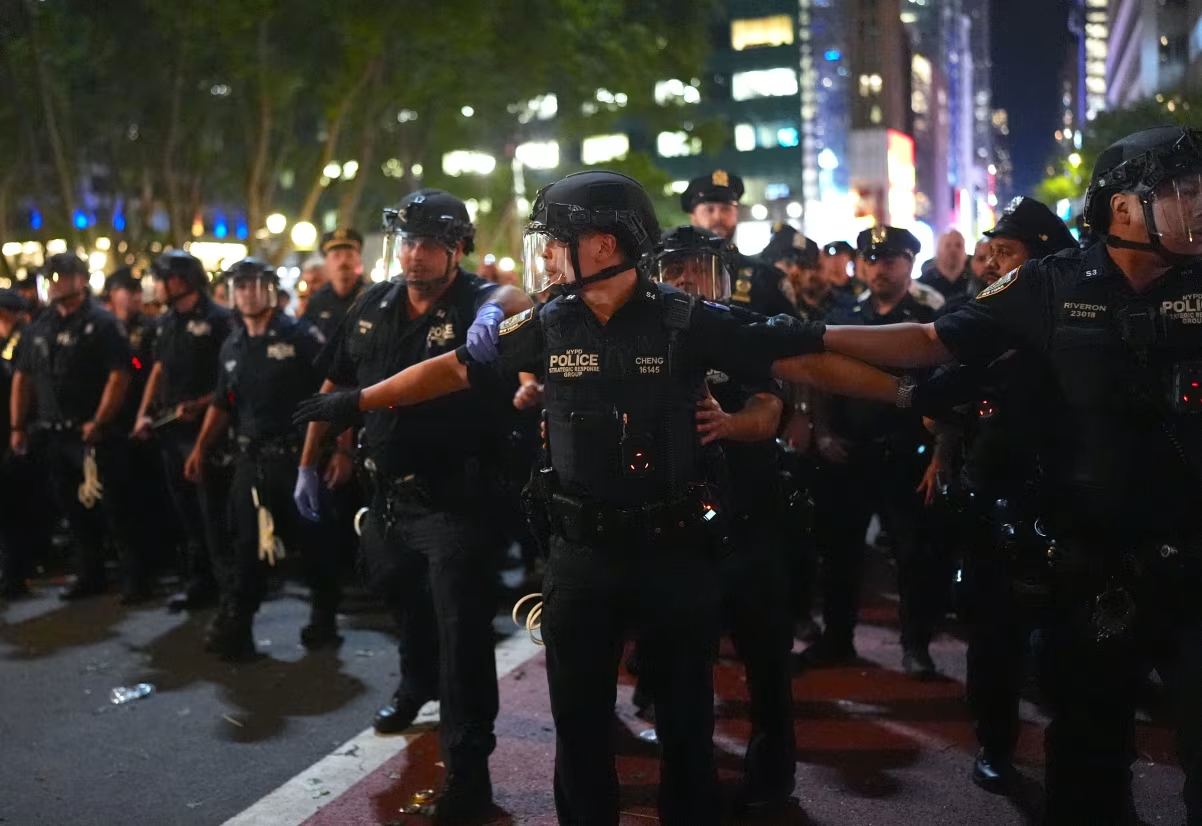
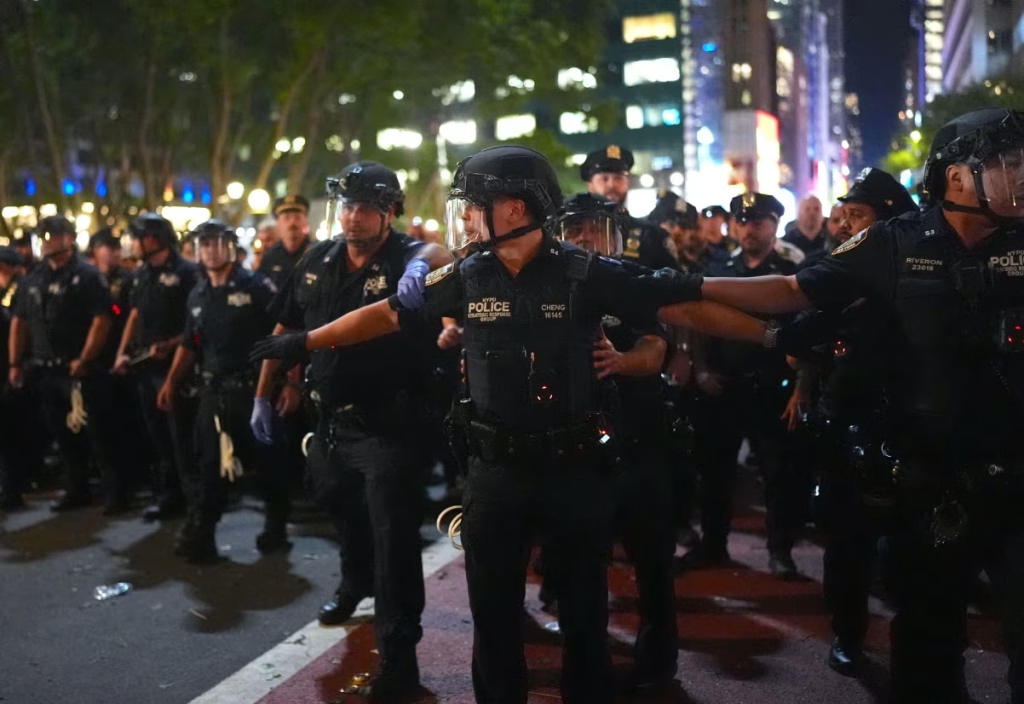
Members of the New York Police Department's Strategic Response Group push back a crowd outside a watch party at Bryant Park following violent incidents during Game 3 of the NBA Finals in New York on June 8. Selçuk Acar/Anadolu/Getty Images
Mayor Zohran Mamdani announced plans on Monday to disband the NYPD’s Strategic Response Group (SRG), fulfilling his campaign promise to dismantle a unit associated with violent protest policing. The unit’s officers have been accused of beating protesters with batons, ramming them with bicycles, and trapping crowds before making mass arrests, including during the 2020 racial justice protests in Mott Haven. At least two fatal police encounters have been linked to SRG-initiated operations.
Under the proposed plan, civilian staff will work with protest organizers on communication and de-escalation, while a new NYPD Patrol Support Division will retain crowd-management and arrest duties. Until the civilian division becomes operational, no earlier than 2028, according to Politico, a 30-officer police team will handle dialogue and de-escalation.
“New Yorkers exercising their constitutional right to protest should not be met with the same police response as a terrorism threat,” Mamdani said in a statement announcing the changes with Police Commissioner Jessica Tisch. The plan separates the SRG’s counterterrorism responsibilities from protest response and restricts several crowd-control tactics.
Our previous story on Commissioner Tisch’s policing record ended by asking whether Mamdani would rein in the department’s treatment of protesters or accommodate the institution he inherited. Monday’s announcement offers some, if incomplete, answer: restrictions on how NYPD officers will police demonstrations, coupled with a reorganization whose implementation will eventually determine how much changes on the street.
A phased dismantling of SRG
The SRG unit will not disappear immediately. Mamdani and Tisch said the unit is scheduled to dissolve in spring 2027, with its roughly 500 officers reassigned within the NYPD. Many will move to the department’s existing counterterrorism operation, which will absorb the SRG’s duties, including heavy-weapons deployments at critical infrastructure. Protest-response responsibilities will shift to separate police teams and, eventually, a civilian dialogue division. The administration has not provided a complete breakdown of the officers’ new assignments.
A new NYPD unit will take over protest-response duties while the city builds its civilian alternative. Although the administration plans to hire and train civilian staff over the next year, Politico reports that the Community Dialogue and De-escalation Division will not become operational until 2028 at the earliest. Until then, armed officers will continue to lead protest responses. The city’s announcement does not specify when the newly announced restrictions, including bans on kettling and tear gas at protests and limits on pepper spray, will take effect.
The transition raises some important questions: Is the city dismantling the SRG’s model of protest policing, or rebranding it under a new name? The answer will depend on who staffs and commands the replacement Patrol Support Division, what triggers its deployment, and whether officers will face any consequences for violating the new restrictions.
Pro-Palestinian demonstrations outside synagogues hosting real estate events can be a litmus test for those commitments. In May, Mamdani criticized the promotion of West Bank settlement properties at Park East Synagogue but defended the NYPD’s response to protesters outside. The NYCLU called the police barricades a “no-speech zone.”
The NYPD’s record offers reason for skepticism. By June 2025, during the Adams administration, only five of 66 officers whose use of force during the 2020 protests led the civilian oversight board to recommend serious disciplinary proceedings had lost more than 10 vacation days, according to The City. Under Mamdani, an officer involved in the fatal shooting of Win Rozario retired before facing a disciplinary trial after the NYPD failed to notify the oversight board of his impending departure. Mamdani has since announced measures intended to prevent similar failures, but whether those changes will deliver meaningful accountability remains untested.
Mandani’s proposal has promised “strict eligibility requirements” but has not detailed them in its announcement, leaving unanswered whether officers with substantiated misconduct records can join. The NYCLU has already warned that it remains concerned about a new police unit tasked with protest policing and will monitor its compliance with the organization’s 2023 settlement with the city. Without transparent staffing standards, deployment rules, and disciplinary outcomes, the public will have little basis to judge whether the restructuring changes police conduct or merely the department’s organizational chart.
New restrictions
Mamdani’s directive bans kettling, the act of surrounding and confining crowds, and prohibits tear gas and long guns at protests. Officers may no longer use pepper spray as a crowd-management tool, and acoustic devices will be limited to 90 decibels. NYPD Officers will be prohibited from using bicycles as weapons, except when necessary to prevent injury or death to themselves or others.
The new Community Dialogue and De-escalation Division, housed in the mayor’s Office of Community Safety, is intended to lead engagement with demonstrators. Its civilian staff will carry no weapons and have no arrest powers.
Until that division is launched, a 30-officer First Amendment Support Team within the NYPD’s Community Affairs Bureau will lead dialogue and de-escalation. Those officers will remain armed and continue operating after the civilian division launches. A separate Patrol Support Division will accompany them, positioned nearby to make arrests when deemed necessary. The Justice Committee (JC), a New York-based grassroots organization dedicated to ending police violence and systemic racism, has urged the mayor’s office to reconsider whether to create the civilian division at all, warning that the proposal risks civilianizing policing, extending police functions beyond the NYPD, and turning the Office of Community Safety into an arm of policing.
Created in 2015, the roughly 500-member SRG became a focus of criticism over excessive force, particularly during the 2020 Black Lives Matter demonstrations. The state attorney general’s investigation found that the NYPD violated protesters’ First Amendment rights during that response; the SRG played a central role in policing the demonstrations.
Tisch, who has defended the unit, endorsed Mamdani’s plan. “These changes will make us a stronger, more effective department,” she said, while emphasizing that she would not support measures that weakened the NYPD’s ability to confront serious threats. Her support came after negotiations over what would replace the SRG. City & State reported, citing two people briefed on the proposal, that creating the Patrol Support Division was a condition of securing Tisch’s backing.
Can Mamdani create lasting change?
Mamdani also endorsed Council Member Chi Ossé’s CURB Act on November 16, legislation intended to put protest-policing restrictions into city law and prevent a future administration from restoring the SRG model. The NYCLU had announced a month ago that the bill had secured 26 co-sponsors, a council majority. In its statement on November 16th, the organization called for an immediate hearing and vote.
Mamdani’s mayorship has shown, over and over again, that the Legislative fight matters. Administrative changes reorganize the department; legislation would give the restrictions a foundation beyond the current mayor’s directives. Neither, by itself, establishes how consistently officers will follow the rules or how violations will be punished.
The announcement makes a meaningful distinction between protest and terrorism. But too few details are public to assess how substantial that break will be. Who will staff the replacement units? Who will authorize intervention, and what consequences will follow violations? Will the civilian division offer an alternative to policing, or extend its reach? Until the administration makes the staffing standards, command relationships, and accountability procedures clear, the announcement remains a promise whose implementation New Yorkers have yet to see.
Whether that distinction holds will become clear when NYPD officers confront a demonstration they want to disperse, and when the city must decide what to do with officers who break its new rules.