


Despite facing an onslaught of police brutality, young people refuse to give up the fight
“Our dreams are much bigger than the fear they want to instill in us.” A young protester participating in the anti-government movement of 2026 offered this response to a journalist who asked him if, in the face of formidable barricades, overwhelming police deployment, and threats from the police, he was still thinking of joining the protest.
The unending sequence of protests by young people that began in Delhi in July this year suggest, that this was not merely the response of one young man. It was an expression of something that many others were feeling.
On July 20, during the march to Parliament called by the Cockroach Janta Party, the Delhi Police brutally assaulted young protesters not just with batons, but even pellet guns. Young people were seriously injured. There were even instances of sexual misconduct.
We met a young woman studying at a Delhi University college. She had witnessed a protest for the first time in her life. It was also the first time she had seen the police act against protesters. She said she had once wanted to join the administrative or police services. But after seeing Delhi Police’s actions, she no longer wanted to become a police officer. And yet, she was not willing to abandon the protest out of fear. There was something deeply significant in this resolve. An encounter with the brutality of the state had changed her understanding of the state, but it had not made her retreat from the struggle against it.
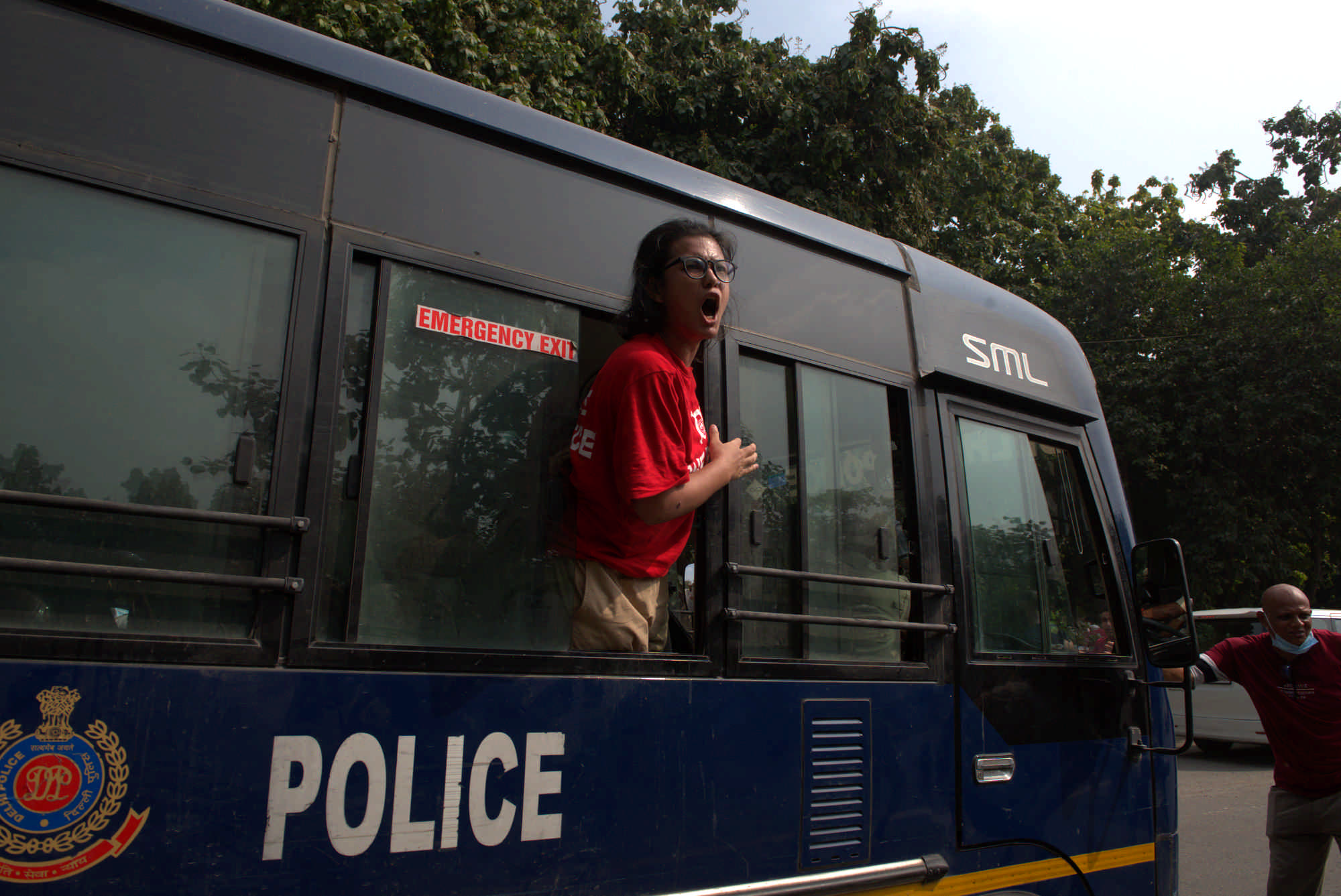
After the terrible police repression of July 20, the streets should have emptied. That would have been the expected response. The police had done what the police are often expected to do: make an example of those who dare to challenge authority, so that others might think twice before joining them. But the opposite happened. More and more people came out and made the streets their home. Those who had never participated in any collective action before appeared at Jantar Mantar and on adjoining streets. Young people, generally thought to be apolitical, came out to confront the police. They also confronted the fear that they could be beaten or arrested. In several cities across India, young people remained on the streets for days, protesting against the government. Their educational institutions issued notices threatening them with consequences, but many students joined the demonstrations nevertheless. Warnings did not produce the silence that the authorities had hoped for. Instead, they seemed to make the question of freedom itself more immediate.
In my class, a student asked whether the notice was even legal. I said that the university had no authority to issue a cease-and-desist notice to its students if they wanted to join a protest happening outside the campus. I asked her whether she had followed the advisory. “I went to the protest,” she replied, smiling.
One can feel a spirit of defiance towards the authorities in the air in Delhi and across India these days. It is not always expressed through slogans or speeches. Sometimes it appears in a smile, in an apparently casual response to a warning, or in the refusal to accept that an institution has the right to dictate how one should live one’s life.
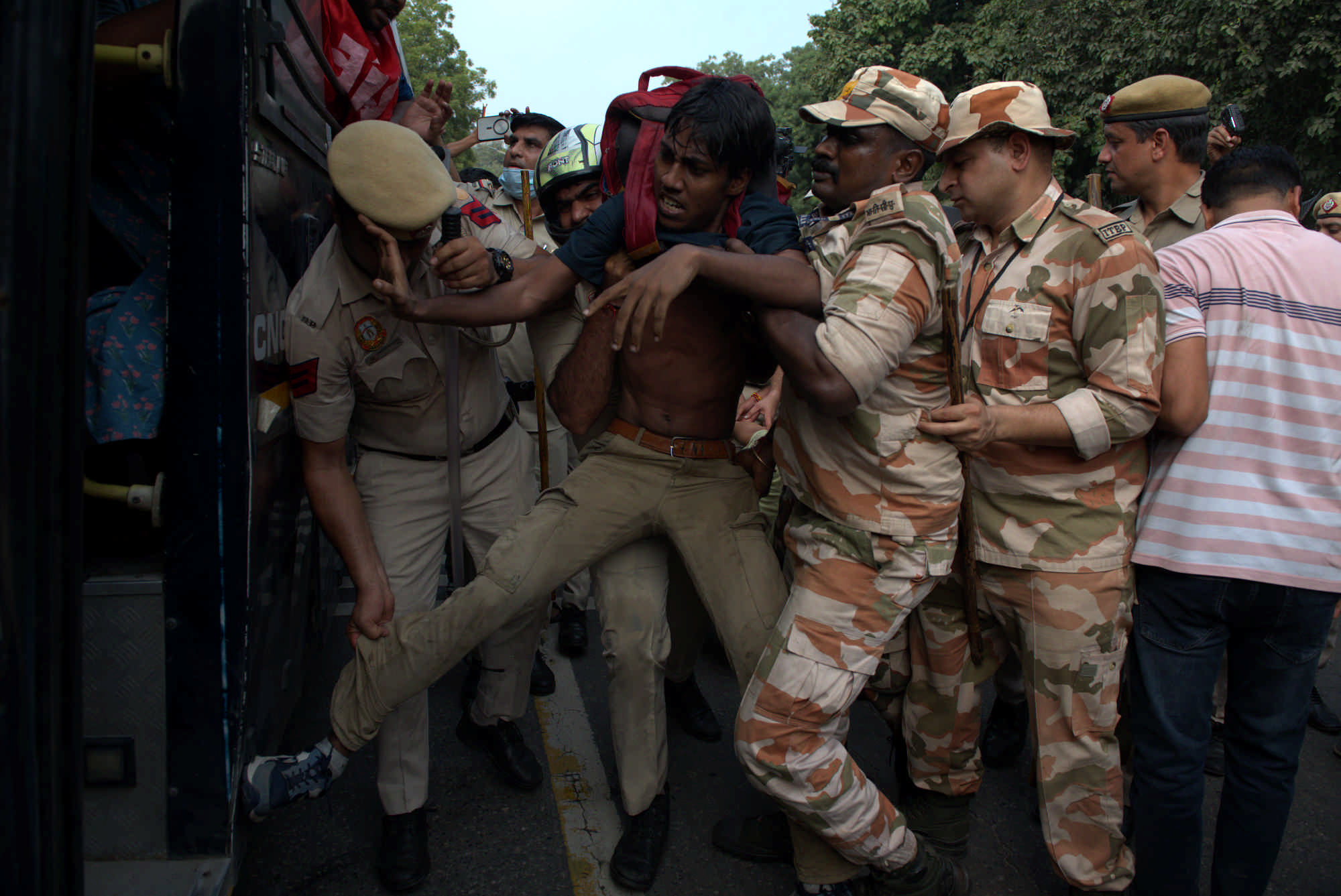
After the horrific police crackdown of July 20, it seemed like the fear of the police, of prison and of punishment in any form had suddenly begun to recede from people’s minds. To protest meant a way of affirming one’s own existence. To be present on the street was to say that one existed, that one had a voice, and that one would not allow that voice to be taken away.
The July protests freed the younger generation from its hesitation about collective action. The experience of being together gave people the strength to confront the brutal violence of the state. People who had been beaten returned to the streets. Their bruises and injuries gave them an unfiltered understanding of the cruel character of the Bharatiya Janata Party (BJP) government. Their bodies had become testimonies to the violence of power.
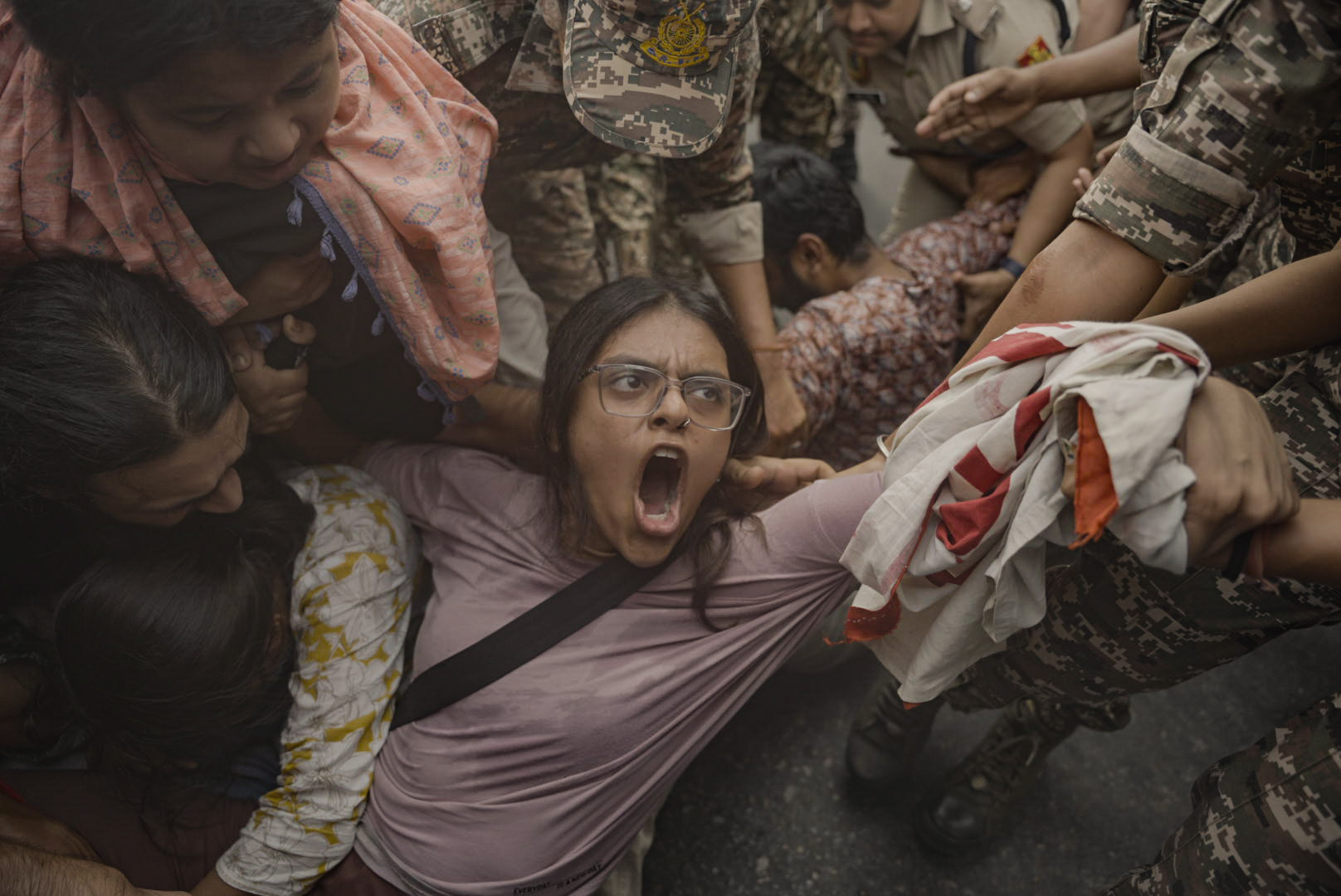
The July protests made people realize that the presence of others changes the relationship one has with one’s own fear. Fear is real. Police batons and boots inflict injuries. Arrest is not an ordinary experience. Prison is not something one can romanticize. But a movement can give the strength to face them. When people stand together, the possibility of imprisonment or police torture does not cease to frighten, but it no longer automatically prevents them from acting.
The protests were also a moment when young people challenged the authority of the family to determine how they should act and what they should believe. Many young people from families that support the government and believe in Hindutva, not only took to the streets, but even went on camera to criticize their families’ ideological positions.
Many others kept protesting even when the cost of doing so would be higher for them and their families than for the others. For those from modestly resourced families, the threat of arrest, the possibility of violence and the uncertainty of what might happen were not abstract matters, but real anxieties. For, the police in India do not intimidate young people alone. They call their parents and threaten them, too.
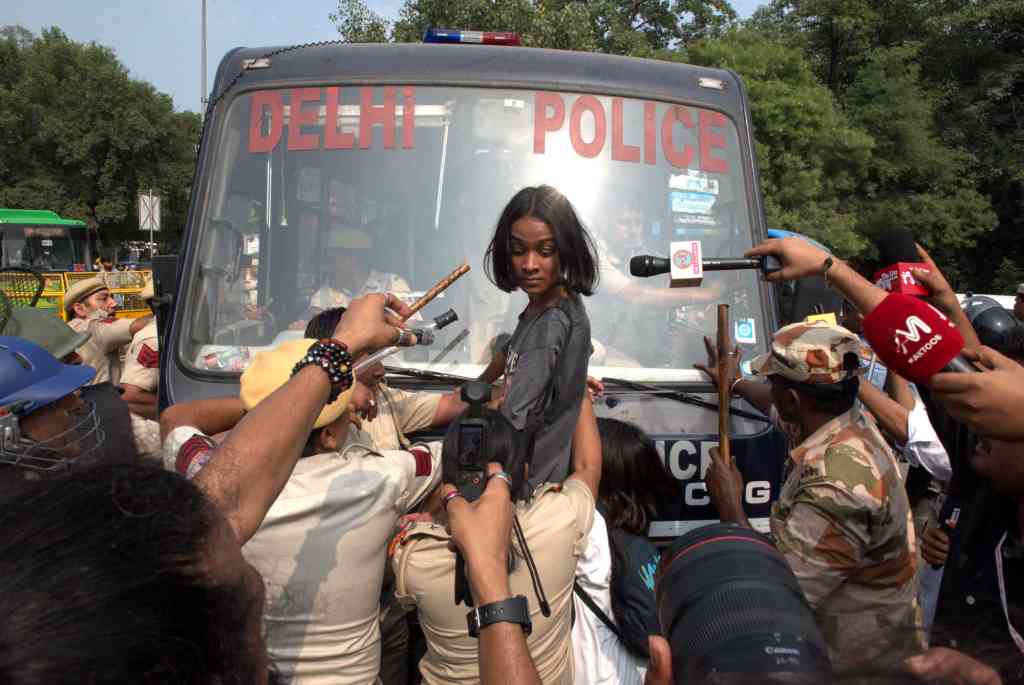
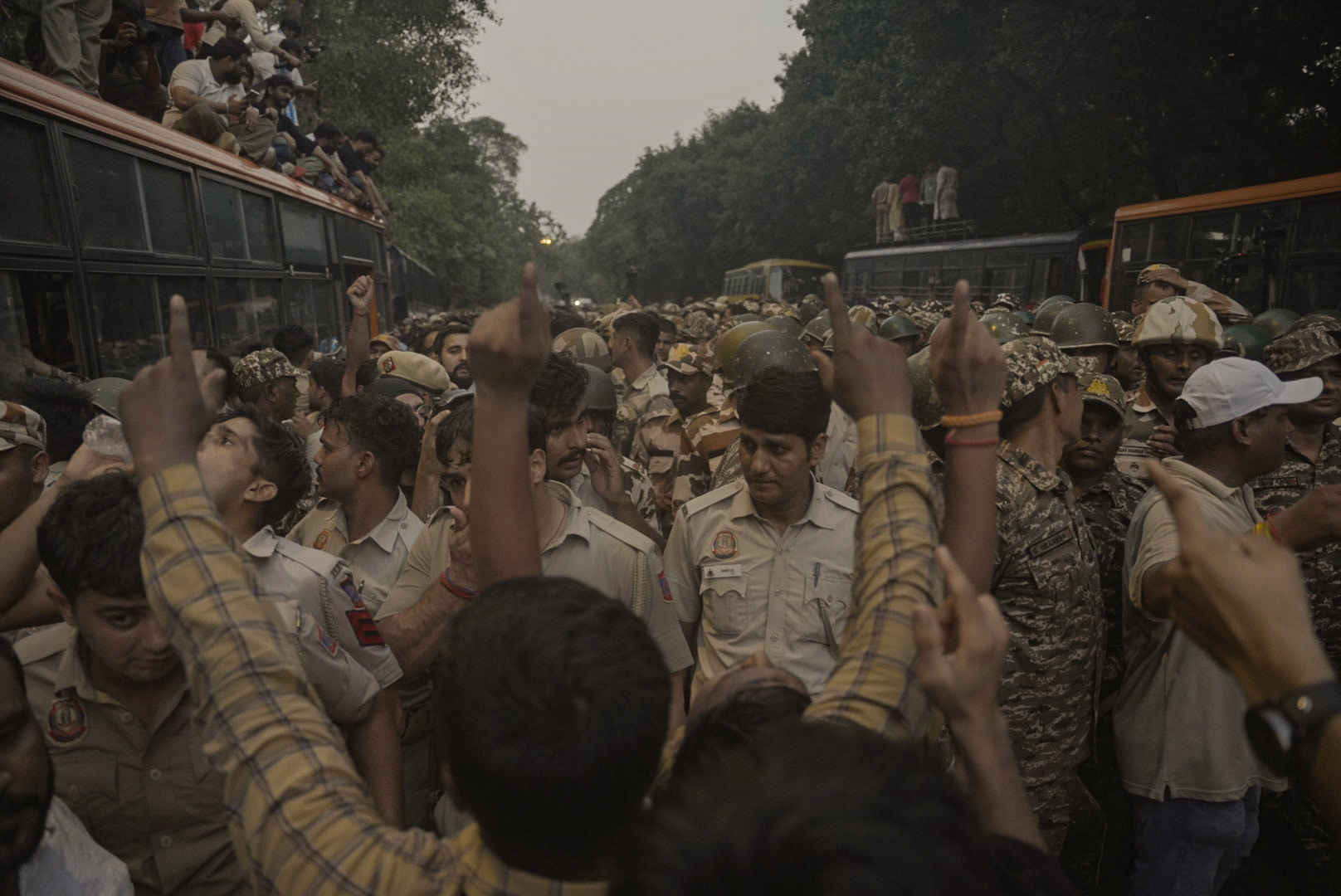
After July, people took to the streets on October 10 again, to protest the manipulation of the electoral process. This time, the government went so far as to impose a lockdown in Delhi. More than 56 metro stations were closed, and roads were blocked, even for pedestrians. Multi-layered barricades, backed by heavy police surveillance, were put in place to make it impossible for anyone to approach the protest site. The city appeared to have been transformed into a fortress, as if the presence of citizens themselves had become a threat to its rulers. But in different parts of the city, groups of young people managed to evade the police and stage protests. This time, the police crackdown was even more severe. Yet, the protests continued.
The government’s task has become more difficult. The authorities discovered that the coercive measures which once seemed sufficient to discourage people from participating in protests, no longer produce the desired result. It has become harder to keep people confined, harder to silence them. They are speaking out. They are coming onto the streets to oppose the government. Everyone is now saying that fear has left people’s hearts.
This freedom from fear is not something we are witnessing for the first time.
In 2019, when the Citizenship (Amendment) Law (CAA) was enacted, Muslims in Uttar Pradesh came out to protest. The police fired indiscriminately, killing 23. Yet, the protests did not stop. When students at Jamia Millia Islamia and Aligarh Muslim University demonstrated against the amendment, the police suppressed them with extraordinary brutality. Out of this repression emerged the Shaheen Bagh movement. Muslim women sat down on the streets in protest. Most were participating in a public protest for the first time in their lives. The movement spread across the country, and Shaheen Bagh protests sprang up in nearly 200 cities. BJP leaders launched a disinformation campaign against the movement. In Delhi, there were physical attacks on Shaheen Bagh. But the women would not be frightened into submission. They refused to move. They did not need to be instructed in the language of constitutional rights to understand that the state was treating them unjustly. Their experience of injustice had already taught them what justice meant.
The COVID-19 pandemic meant the movement had to be suspended. But Shaheen Bagh showed us that the courage to resist does not necessarily come from an absence of fear. Or from the certainty that one will prevail. Sometimes it comes from the simple conviction that one cannot remain silent in the face of injustice.
In 2020, the farmers’ started a movement against three ‘anti farmer bills’. The BJP government tried to intimidate them—cases were filed, a country wide disinformation campaign was conducted, they were even called terrorists. When they set out from Punjab and Haryana towards Delhi, roads were dug up, iron spikes were driven in and Delhi’s borders were sealed. The entire machinery of the state was deployed against a few thousand farmers. The farmers defied these measures and settled at the borders where they were stopped, enduring attacks by goons, the heat of summer, the rains, the cold of winter and the changing seasons. In the end, they forced the government to its knees. Their struggle demonstrated that the power of a government, however formidable it may appear, is not beyond challenge when people refuse to surrender their collective will.
This fearlessness is now visible on the streets of Delhi. People do not always take to the streets because they are certain that their demands will be met. What makes people, especially the youth, stand up, say no, and protest is the human instinct to resist humiliation and injustice. People feel humiliated when they want to talk to the authorities and are ignored, rebuffed, or abused. There are moments when remaining silent becomes more unbearable than the consequences of speaking out. A protest, even when it fails to secure its immediate objective, affirms the democratic individuality of the people. It asserts their right to think, to speak, to disagree and to act collectively. In this sense a protest is never merely about the demand with which it begins.
It is true that the July uprising brought about a definitive change in the nature of publicness. The movement could not be confined to the identity of any one community or group. It had acquired a public character that made it possible for people to recognize their own grievances in the grievances of others. It was a movement that claimed to speak for everyone. People came out because they identified with the cause. They felt that it affected them. It is the feeling of being directly and adversely affected that animates people, and when that happens, they do not necessarily think about the risks involved. Teachers protest, Anganwadi workers protest, hawkers protest. They get beaten up, penalized, and yet they do not cede ground. Their struggles may not always attract attention, but they remind us that resistance is not confined to spectacular moments of political mobilization. It is also sustained in the everyday struggles of people who refuse to accept humiliation as the natural condition of their lives.
Democracy has a deep and intrinsic relationship with freedom from fear. In a democracy, asking questions and criticizing the government should be regarded as natural acts, not as transgressions that invite punishment. The right to dissent is not a favor that the government grants to its citizens. Nor is it something that citizens must earn by demonstrating their patriotism or their loyalty to the ruling party. It is an essential condition of democratic existence. A government that seeks to make its citizens afraid of speaking, assembling or protesting is not merely suppressing a particular movement. It is undermining the very possibility of democracy.
It is a good thing that the streets are once again filling with people. A democracy is diminished when its streets fall silent, when people are afraid to speak, when the possibility of collective action begins to disappear. The sight of people reclaiming the streets tells us that despite the fear a government may seek to instill, people can still discover the courage to stand together and raise their voices.
Perhaps the most important lesson these movements offer us is that fear does not have to be the final word in our relationship with power. People can overcome it, not necessarily because they have ceased to be afraid, but because they have discovered something larger than fear: the possibility of standing together, of refusing humiliation, and of affirming their humanity in public.

Why India’s Streets Refuse to Fall Silent
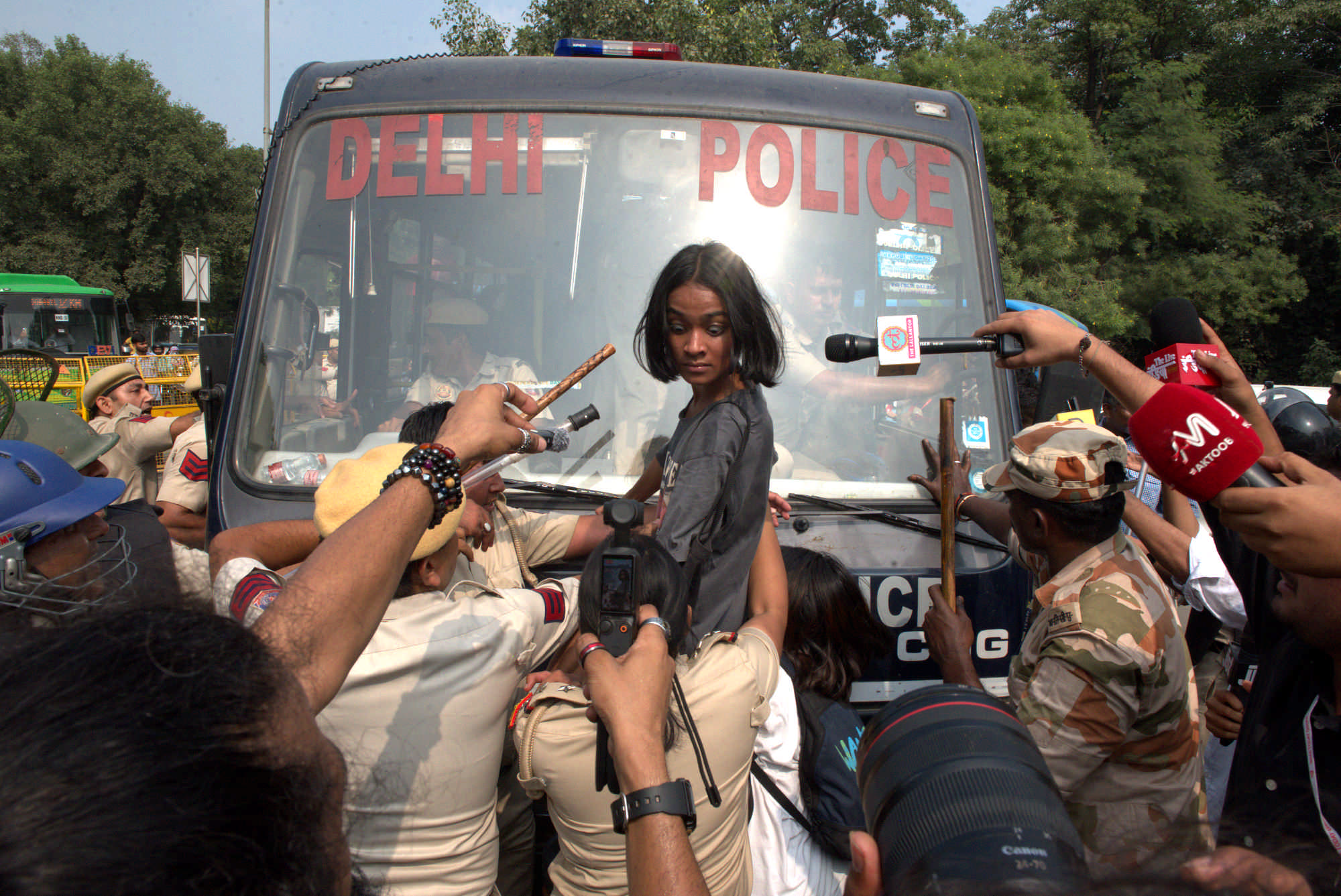
A protestor stares down the Delhi Police at the Oct 10 protests. Photo: Ritesh Uttamchandani for The Polis Project
Despite facing an onslaught of police brutality, young people refuse to give up the fight
“Our dreams are much bigger than the fear they want to instill in us.” A young protester participating in the anti-government movement of 2026 offered this response to a journalist who asked him if, in the face of formidable barricades, overwhelming police deployment, and threats from the police, he was still thinking of joining the protest.
The unending sequence of protests by young people that began in Delhi in July this year suggest, that this was not merely the response of one young man. It was an expression of something that many others were feeling.
On July 20, during the march to Parliament called by the Cockroach Janta Party, the Delhi Police brutally assaulted young protesters not just with batons, but even pellet guns. Young people were seriously injured. There were even instances of sexual misconduct.
We met a young woman studying at a Delhi University college. She had witnessed a protest for the first time in her life. It was also the first time she had seen the police act against protesters. She said she had once wanted to join the administrative or police services. But after seeing Delhi Police’s actions, she no longer wanted to become a police officer. And yet, she was not willing to abandon the protest out of fear. There was something deeply significant in this resolve. An encounter with the brutality of the state had changed her understanding of the state, but it had not made her retreat from the struggle against it.
After the terrible police repression of July 20, the streets should have emptied. That would have been the expected response. The police had done what the police are often expected to do: make an example of those who dare to challenge authority, so that others might think twice before joining them. But the opposite happened. More and more people came out and made the streets their home. Those who had never participated in any collective action before appeared at Jantar Mantar and on adjoining streets. Young people, generally thought to be apolitical, came out to confront the police. They also confronted the fear that they could be beaten or arrested. In several cities across India, young people remained on the streets for days, protesting against the government. Their educational institutions issued notices threatening them with consequences, but many students joined the demonstrations nevertheless. Warnings did not produce the silence that the authorities had hoped for. Instead, they seemed to make the question of freedom itself more immediate.
In my class, a student asked whether the notice was even legal. I said that the university had no authority to issue a cease-and-desist notice to its students if they wanted to join a protest happening outside the campus. I asked her whether she had followed the advisory. “I went to the protest,” she replied, smiling.
One can feel a spirit of defiance towards the authorities in the air in Delhi and across India these days. It is not always expressed through slogans or speeches. Sometimes it appears in a smile, in an apparently casual response to a warning, or in the refusal to accept that an institution has the right to dictate how one should live one’s life.
After the horrific police crackdown of July 20, it seemed like the fear of the police, of prison and of punishment in any form had suddenly begun to recede from people’s minds. To protest meant a way of affirming one’s own existence. To be present on the street was to say that one existed, that one had a voice, and that one would not allow that voice to be taken away.
The July protests freed the younger generation from its hesitation about collective action. The experience of being together gave people the strength to confront the brutal violence of the state. People who had been beaten returned to the streets. Their bruises and injuries gave them an unfiltered understanding of the cruel character of the Bharatiya Janata Party (BJP) government. Their bodies had become testimonies to the violence of power.
The July protests made people realize that the presence of others changes the relationship one has with one’s own fear. Fear is real. Police batons and boots inflict injuries. Arrest is not an ordinary experience. Prison is not something one can romanticize. But a movement can give the strength to face them. When people stand together, the possibility of imprisonment or police torture does not cease to frighten, but it no longer automatically prevents them from acting.
The protests were also a moment when young people challenged the authority of the family to determine how they should act and what they should believe. Many young people from families that support the government and believe in Hindutva, not only took to the streets, but even went on camera to criticize their families’ ideological positions.
Many others kept protesting even when the cost of doing so would be higher for them and their families than for the others. For those from modestly resourced families, the threat of arrest, the possibility of violence and the uncertainty of what might happen were not abstract matters, but real anxieties. For, the police in India do not intimidate young people alone. They call their parents and threaten them, too.
After July, people took to the streets on October 10 again, to protest the manipulation of the electoral process. This time, the government went so far as to impose a lockdown in Delhi. More than 56 metro stations were closed, and roads were blocked, even for pedestrians. Multi-layered barricades, backed by heavy police surveillance, were put in place to make it impossible for anyone to approach the protest site. The city appeared to have been transformed into a fortress, as if the presence of citizens themselves had become a threat to its rulers. But in different parts of the city, groups of young people managed to evade the police and stage protests. This time, the police crackdown was even more severe. Yet, the protests continued.
The government’s task has become more difficult. The authorities discovered that the coercive measures which once seemed sufficient to discourage people from participating in protests, no longer produce the desired result. It has become harder to keep people confined, harder to silence them. They are speaking out. They are coming onto the streets to oppose the government. Everyone is now saying that fear has left people’s hearts.
This freedom from fear is not something we are witnessing for the first time.
In 2019, when the Citizenship (Amendment) Law (CAA) was enacted, Muslims in Uttar Pradesh came out to protest. The police fired indiscriminately, killing 23. Yet, the protests did not stop. When students at Jamia Millia Islamia and Aligarh Muslim University demonstrated against the amendment, the police suppressed them with extraordinary brutality. Out of this repression emerged the Shaheen Bagh movement. Muslim women sat down on the streets in protest. Most were participating in a public protest for the first time in their lives. The movement spread across the country, and Shaheen Bagh protests sprang up in nearly 200 cities. BJP leaders launched a disinformation campaign against the movement. In Delhi, there were physical attacks on Shaheen Bagh. But the women would not be frightened into submission. They refused to move. They did not need to be instructed in the language of constitutional rights to understand that the state was treating them unjustly. Their experience of injustice had already taught them what justice meant.
The COVID-19 pandemic meant the movement had to be suspended. But Shaheen Bagh showed us that the courage to resist does not necessarily come from an absence of fear. Or from the certainty that one will prevail. Sometimes it comes from the simple conviction that one cannot remain silent in the face of injustice.
In 2020, the farmers’ started a movement against three ‘anti farmer bills’. The BJP government tried to intimidate them—cases were filed, a country wide disinformation campaign was conducted, they were even called terrorists. When they set out from Punjab and Haryana towards Delhi, roads were dug up, iron spikes were driven in and Delhi’s borders were sealed. The entire machinery of the state was deployed against a few thousand farmers. The farmers defied these measures and settled at the borders where they were stopped, enduring attacks by goons, the heat of summer, the rains, the cold of winter and the changing seasons. In the end, they forced the government to its knees. Their struggle demonstrated that the power of a government, however formidable it may appear, is not beyond challenge when people refuse to surrender their collective will.
This fearlessness is now visible on the streets of Delhi. People do not always take to the streets because they are certain that their demands will be met. What makes people, especially the youth, stand up, say no, and protest is the human instinct to resist humiliation and injustice. People feel humiliated when they want to talk to the authorities and are ignored, rebuffed, or abused. There are moments when remaining silent becomes more unbearable than the consequences of speaking out. A protest, even when it fails to secure its immediate objective, affirms the democratic individuality of the people. It asserts their right to think, to speak, to disagree and to act collectively. In this sense a protest is never merely about the demand with which it begins.
It is true that the July uprising brought about a definitive change in the nature of publicness. The movement could not be confined to the identity of any one community or group. It had acquired a public character that made it possible for people to recognize their own grievances in the grievances of others. It was a movement that claimed to speak for everyone. People came out because they identified with the cause. They felt that it affected them. It is the feeling of being directly and adversely affected that animates people, and when that happens, they do not necessarily think about the risks involved. Teachers protest, Anganwadi workers protest, hawkers protest. They get beaten up, penalized, and yet they do not cede ground. Their struggles may not always attract attention, but they remind us that resistance is not confined to spectacular moments of political mobilization. It is also sustained in the everyday struggles of people who refuse to accept humiliation as the natural condition of their lives.
Democracy has a deep and intrinsic relationship with freedom from fear. In a democracy, asking questions and criticizing the government should be regarded as natural acts, not as transgressions that invite punishment. The right to dissent is not a favor that the government grants to its citizens. Nor is it something that citizens must earn by demonstrating their patriotism or their loyalty to the ruling party. It is an essential condition of democratic existence. A government that seeks to make its citizens afraid of speaking, assembling or protesting is not merely suppressing a particular movement. It is undermining the very possibility of democracy.
It is a good thing that the streets are once again filling with people. A democracy is diminished when its streets fall silent, when people are afraid to speak, when the possibility of collective action begins to disappear. The sight of people reclaiming the streets tells us that despite the fear a government may seek to instill, people can still discover the courage to stand together and raise their voices.
Perhaps the most important lesson these movements offer us is that fear does not have to be the final word in our relationship with power. People can overcome it, not necessarily because they have ceased to be afraid, but because they have discovered something larger than fear: the possibility of standing together, of refusing humiliation, and of affirming their humanity in public.