



María Paula Giménez and Lucas Ezequiel Aguilera were ready to put their bodies on the line to stand with Gaza. In May this year, they planned to drive from Mauritania, across the continent of Africa and enter Gaza via the Rafa border in Egypt, challenging Israel’s blockade to the strip. Since Israel escalated its restrictions on the movement of goods into Gaza in 2007, numerous flotillas have attempted to breach the blockade on the water (and once succeeded), but this would only be the second to attempt a land mission.
The journey on land was part of the symbolism, Giménez told the Polis Project. The aim, she explained, was to “break and denounce Israel’s genocidal blockade of Palestine, by land and by sea.”
The two Argentines joined nearly 300 medical professionals, engineers, educators and legal observers from around the world who traveled in a convoy of aid trucks, mobile homes and ambulances.
“I think what was particularly interesting about the convoy was that it was primarily organized by people from the Maghreb and the Arab world,” Giménez recalled. “There were delegations from Mauritania, Morocco, Algeria, Tunisia and Libya. It was a very rich and beautiful exchange with these Arab peoples, with their long histories, and an opportunity to learn how they express their solidarity with Palestine. There was a strong sense of brotherhood in the struggle, and a real exchange of experiences.”
“There were also international delegations from many countries across Europe, Asia, Latin America and North America—in fact, from every continent. We ate together, and there was music. Muslim spirituality was very much present throughout the convoy,” she added.
The group knew that crossing Libya —one of the biggest countries on earth, controlled by dueling governments — could be complicated and dangerous. To manage that, Giménez said, representatives from the convoy began communicating with the relevant authorities about their journey months before the trip, in January.
Despite their early preparations, eastern Libyan authorities, a separate entity from the UN-recognized government in Tripoli, stopped them in Sirte on May 24. Most of the participants were sent home, but ten activists, from the US, Europe, South America and neighboring Tunisia, were detained. Intelligence agents flew them to Benghazi on an empty commercial flight, where they were held for 30 days in what Giménez calls “black holes” – individual two-meter-by-two-meter cells with a latrine and no light.
“We were in darkness, surrounded by cockroaches, spiders and mosquitoes, with the horrible smell of that latrine and eerie sounds of a pack of dogs barking,” Giménez said. “Things never stopped being terrifying throughout those 30 days.”
They were released a month later, on June 24, and flown to Istanbul, Turkey, from where they were sent home.
Argentina’s Foreign Ministry said that it worked with Libyan authorities from the day of the detentions, sending its consul in neighboring Tunisia to Benghazi, Libya, and working with the United Nations Support Mission in Libya (UNSMIL), a body that monitors detentions and mediates between rival authorities, the Red Cross and “friendly countries.”
“Abandoned” by the Government
Giménez, however, disagreed. According to her, the consul did not arrive until the day they left, and her experience, instead, was of “abandonment and criminalization” by the Argentine government. “When we were kidnapped, they issued a statement saying that we had engaged in reckless and imprudent activities,” she said, quoting language from a statement released on May 29, days after their detention.
Giménez attributes her freedom to efforts on the part of EU nations and wider international pressure. She said that her government did not meaningfully engage while she was behind bars.
“The Argentine Foreign Ministry does not make politics or spectacle of Argentine citizens who need help abroad,” Foreign Minister Pablo Quirno said in a post on X on June 24 after the release, adding that the efforts were carried out “with the caution the situation warranted.”
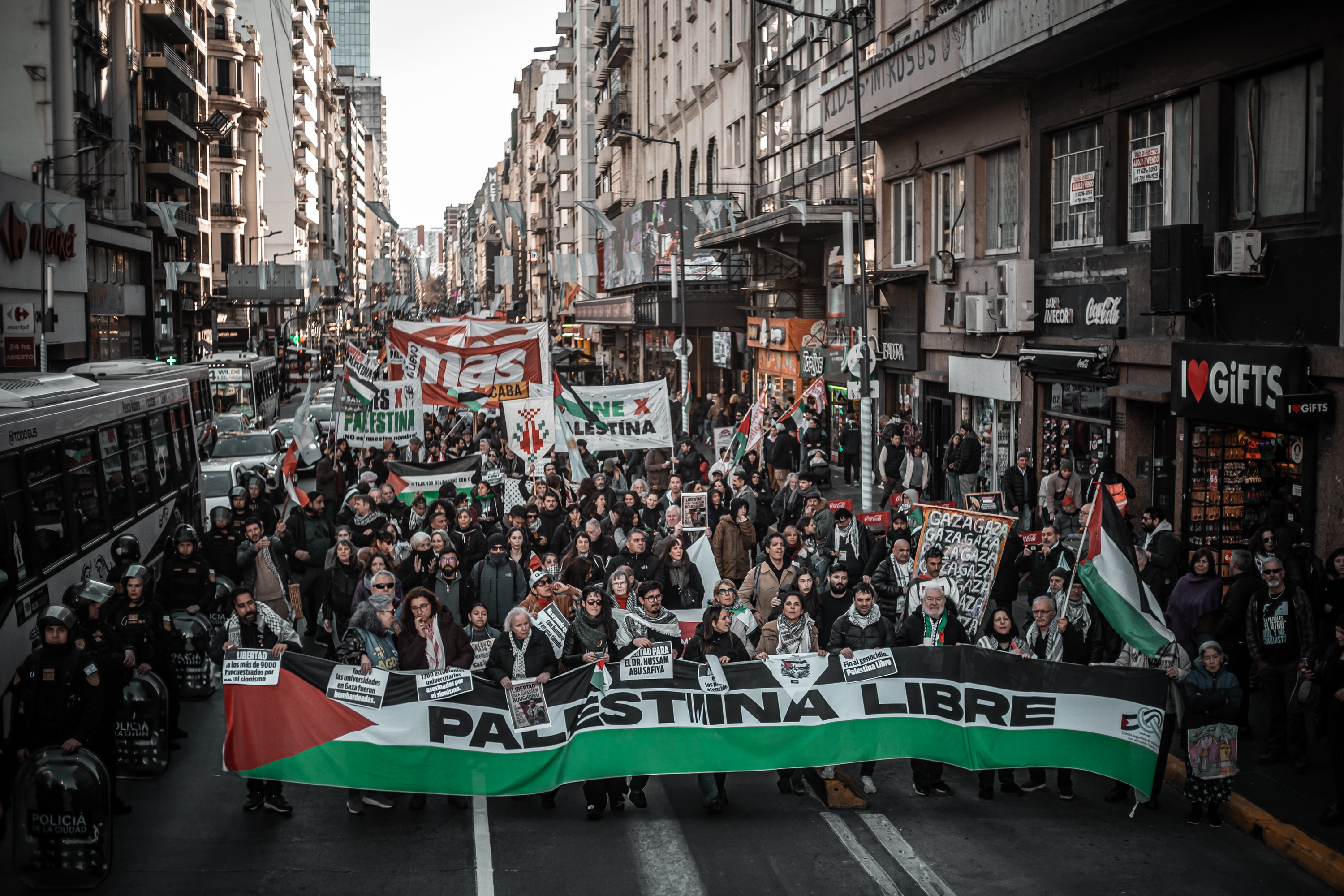
Argentina’s President, Javier Milei, has called himself the “most Zionist president in the world.” He is one of few leaders who has deepened national ties with Israel since it began its bombardment of Gaza following the October 7, 2023 attacks. This year, Argentines participating in international protests, including multiple Gaza-bound missions this year were detained by Israel as well as Libya. Despite these detentions, the government prioritized affirming its alliance with Israel over their responsibilities to its captured citizens, the activists said.
“We were detained, and the diplomatic representatives did absolutely nothing for us,” Raúl Laguna, who was captured by Israeli authorities at sea, told the Polis Project. “That made us feel disrespected, neglected, abandoned, really, by our own government.”
Argentina’s obligations to citizens detained abroad fall under general consular assistance rules, including the Vienna Convention on Consular Relations, which Argentina ratified in 1967, and its own consular regulations, which require it to monitor due process and the well-being of nationals. According to the consular website, “Arrests and/or serious police incidents affecting Argentine citizens abroad,” and “cases of violence abroad affecting Argentine citizens,” are considered consular emergencies.
Diego Armesto, an Argentine constitutional lawyer told the Polis Project that Article 5 of the Vienna Convention “establishes what the consular functions are, which consist of protecting in the States the interests of nationals, whether natural or legal persons.”
“The law in its Article 5 establishes the way in which consular assistance has more to do with natural disasters, detentions, serious police incidents, admissions and deportations, and situations of violence,” he added.
But, Armesto emphasized, the scope of consular assistance depends on the facts and circumstances of each case. “It is not linear, it is not that consular assistance exists because all Argentines are good and decent people, but rather that you have to look at the circumstances and the facts by which a wrong is occurring.”
The Argentine Foreign Ministry did not reply to a request for comment.
Stranded
Last April, Laguna was on watch aboard a sailboat with the Global Sumud Flotilla (GSF), scribbling in a notebook between glances at the sea west of the Greek island of Crete, when he saw boats approaching.
It was around 7 o’ clock in the evening. A storm was on its way. The 38-year-old Argentine assumed the vessels were Greek. But they were Israeli.
“We didn’t quite understand what was happening until they identified themselves,” he recalled.
By then, it was too late. Following a protocol his group had rehearsed, Laguna threw his phone overboard, raised his arms, and tried to stay calm as Israeli soldiers boarded the sailboat.
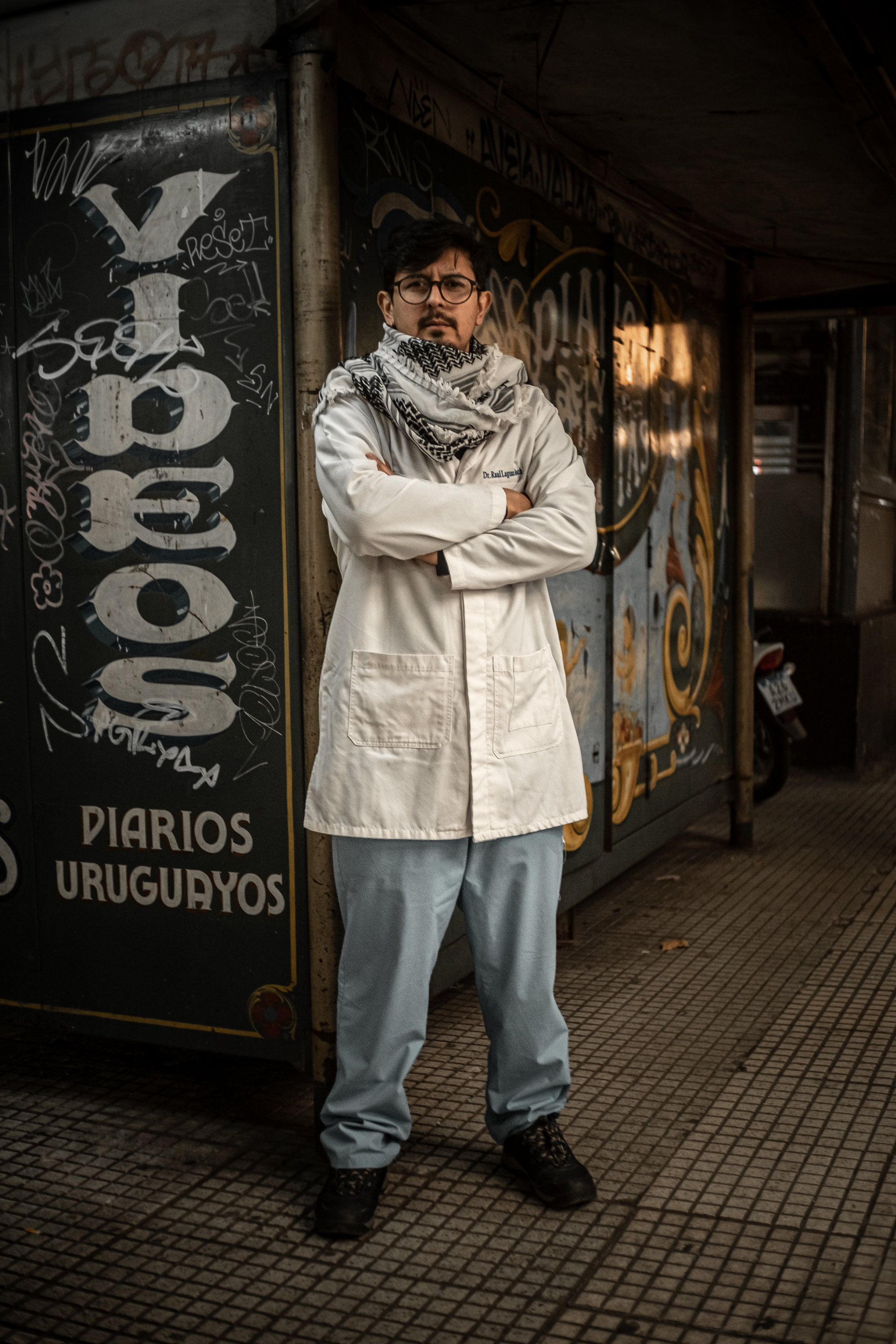
Laguna was one of about 200 activists from around the world taken to the INS Nahshon, a US-built Israeli navy ship which flotilla organizers say was fitted out as a makeshift prison with holding areas made from shipping containers and barbed wire.
What came next, Laguna and other Argentines said, hurt almost as much as the interception. When they asked their own government for help, none came.
Laguna and others on the April flotilla said that after Israel held them for 36 hours, they were flown to Crete, and then on to Istanbul. Argentina’s embassies refused to help, leaving them stranded.
Among them were several current and former Argentine politicians, including Mónica Schlotthauer, a member of the lower house of Congress, and Pablo Giachello, a deputy for Buenos Aires Province, Celeste Fierro, former Buenos Aires City legislator, and Ezequiel Peressini, a former provincial deputy for Córdoba.
“We spent long hours kneeling, with no room to move, to talk, only allowed to look at the floor,” Fierro, 41, told the Polis Project in an interview in Buenos Aires. “Our knees ached, our hips ached, our backs ached. They screamed, they pointed weapons. Several of our companions were taken elsewhere and we didn’t understand why. Some were beaten in front of us.”
Many had broken ribs, broken arms and head trauma, and about 35 activists were taken to the hospital, Laguna said.
Back on dry land after a day-and-a-half in detention, the activists called the Argentine embassy in Greece.
“They told us clearly they weren’t coming, and that if we wanted, we should go to them,” Laguna said. The group had no money, and the embassy was in Athens, about 250 miles and a boat ride away from Crete.
The Turkish Embassy arranged a flight to Istanbul, where consular officials gave the same answer, Laguna said.
“We asked for some kind of financial help: clothes, food, a return flight. Their response was that we shouldn’t get our hopes up, because it had been our decision to go and that we knew what we were doing. We were stranded,” Laguna said.
The GSF gave each activist about USD 200, and after three days, covered his flight home. Others relied on family and friends.
A second wave of arrests by sea followed on May 18, when Argentine activists were among the hundreds on a flotilla that was detained by Israel.
Israel’s treatment of the activists on ships captured in April and May has been documented in a complaint filed before the International Criminal Court.
Brazil, Spain and Turkey condemned the treatment of their citizens detained on the flotillas, but Millei’s government stayed silent. The Argentine Embassies in Athens and Istanbul did not reply to a request for comment on the treatment of the flotilla organizers.
Policy Shift for Argentina
Eight days before the first interceptions in April, Argentine President Milei took part in Israel’s 78th Independence Day ceremony, becoming the first foreign leader to light one of its torches. His third visit to Israel since taking office ended with the signing of the “Isaac Accords,” meant to deepen ties between Israel and Latin America, and a USD 150 million credit line for Israeli companies in Argentina.
Argentina recognized Israel in 1949 and the State of Palestine in 2010, and had long kept a neutral stance. That shifted when Milei took office in December 2023.
The activists also linked their treatment abroad to new policies at home. In June 2025, Argentina signed a memorandum with the Delegation of Argentine Israelite Associations (DAIA) to cooperate against terrorism and antisemitism.
The activists said that this agreement has since been used in investigations of the legislators: Vanina Biasi of the Workers’ Party, and Alejandro Bodart of the Socialist Workers’ Movement, and of a teacher who denounced events in Gaza online. Bodart has been acquitted.
For Giménez, the government’s stance clashes with a political culture shaped by Argentina’s reckoning with its 1976–83 military dictatorship, including the 1985 Trial of the Juntas and decades of work to identify children taken from their families.
“I don’t think Zionism enjoys much popularity in Argentina,” she said, “There’s no social consensus around a policy like the one underway in Gaza. That would be impossible in a country that’s made such progress on memory, truth and justice.”
This article is published in collaboration with Egab.

Argentines Who Were Detained en Route to Gaza Say Their Government ‘Abandoned’ Them

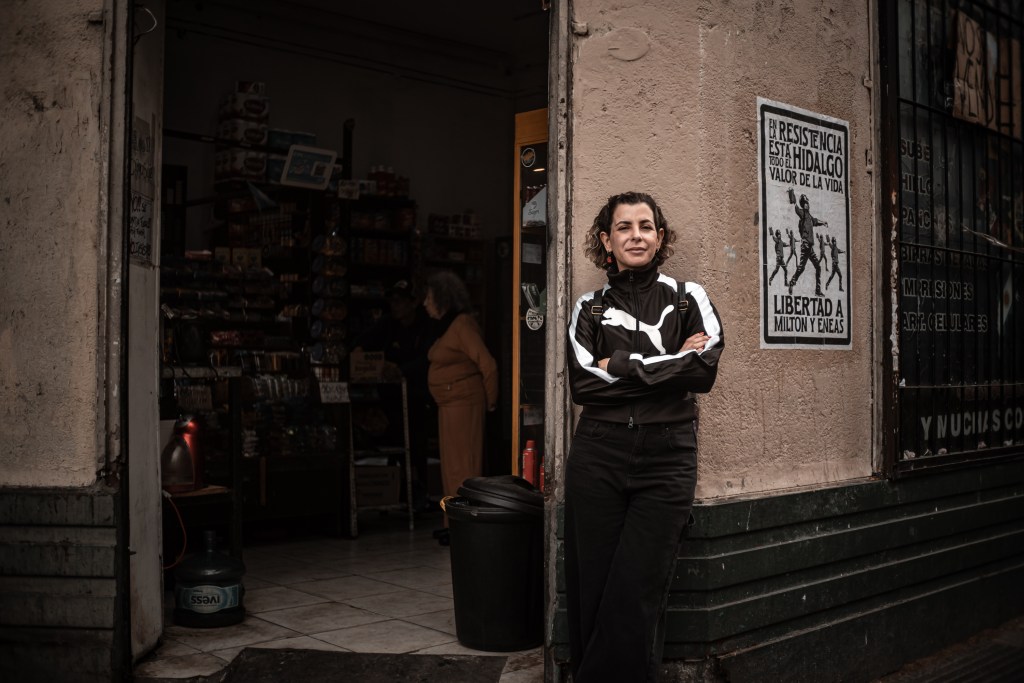
Argentine activist María Paula Giménez was detained for 30 days in Benghazi, Libya. She was part of a land mission to Gaza. Photo: Daniella Fernández
María Paula Giménez and Lucas Ezequiel Aguilera were ready to put their bodies on the line to stand with Gaza. In May this year, they planned to drive from Mauritania, across the continent of Africa and enter Gaza via the Rafa border in Egypt, challenging Israel’s blockade to the strip. Since Israel escalated its restrictions on the movement of goods into Gaza in 2007, numerous flotillas have attempted to breach the blockade on the water (and once succeeded), but this would only be the second to attempt a land mission.
The journey on land was part of the symbolism, Giménez told the Polis Project. The aim, she explained, was to “break and denounce Israel’s genocidal blockade of Palestine, by land and by sea.”
The two Argentines joined nearly 300 medical professionals, engineers, educators and legal observers from around the world who traveled in a convoy of aid trucks, mobile homes and ambulances.
“I think what was particularly interesting about the convoy was that it was primarily organized by people from the Maghreb and the Arab world,” Giménez recalled. “There were delegations from Mauritania, Morocco, Algeria, Tunisia and Libya. It was a very rich and beautiful exchange with these Arab peoples, with their long histories, and an opportunity to learn how they express their solidarity with Palestine. There was a strong sense of brotherhood in the struggle, and a real exchange of experiences.”
“There were also international delegations from many countries across Europe, Asia, Latin America and North America—in fact, from every continent. We ate together, and there was music. Muslim spirituality was very much present throughout the convoy,” she added.
The group knew that crossing Libya —one of the biggest countries on earth, controlled by dueling governments — could be complicated and dangerous. To manage that, Giménez said, representatives from the convoy began communicating with the relevant authorities about their journey months before the trip, in January.
Despite their early preparations, eastern Libyan authorities, a separate entity from the UN-recognized government in Tripoli, stopped them in Sirte on May 24. Most of the participants were sent home, but ten activists, from the US, Europe, South America and neighboring Tunisia, were detained. Intelligence agents flew them to Benghazi on an empty commercial flight, where they were held for 30 days in what Giménez calls “black holes” – individual two-meter-by-two-meter cells with a latrine and no light.
“We were in darkness, surrounded by cockroaches, spiders and mosquitoes, with the horrible smell of that latrine and eerie sounds of a pack of dogs barking,” Giménez said. “Things never stopped being terrifying throughout those 30 days.”
They were released a month later, on June 24, and flown to Istanbul, Turkey, from where they were sent home.
Argentina’s Foreign Ministry said that it worked with Libyan authorities from the day of the detentions, sending its consul in neighboring Tunisia to Benghazi, Libya, and working with the United Nations Support Mission in Libya (UNSMIL), a body that monitors detentions and mediates between rival authorities, the Red Cross and “friendly countries.”
“Abandoned” by the Government
Giménez, however, disagreed. According to her, the consul did not arrive until the day they left, and her experience, instead, was of “abandonment and criminalization” by the Argentine government. “When we were kidnapped, they issued a statement saying that we had engaged in reckless and imprudent activities,” she said, quoting language from a statement released on May 29, days after their detention.
Giménez attributes her freedom to efforts on the part of EU nations and wider international pressure. She said that her government did not meaningfully engage while she was behind bars.
“The Argentine Foreign Ministry does not make politics or spectacle of Argentine citizens who need help abroad,” Foreign Minister Pablo Quirno said in a post on X on June 24 after the release, adding that the efforts were carried out “with the caution the situation warranted.”
Argentina’s President, Javier Milei, has called himself the “most Zionist president in the world.” He is one of few leaders who has deepened national ties with Israel since it began its bombardment of Gaza following the October 7, 2023 attacks. This year, Argentines participating in international protests, including multiple Gaza-bound missions this year were detained by Israel as well as Libya. Despite these detentions, the government prioritized affirming its alliance with Israel over their responsibilities to its captured citizens, the activists said.
“We were detained, and the diplomatic representatives did absolutely nothing for us,” Raúl Laguna, who was captured by Israeli authorities at sea, told the Polis Project. “That made us feel disrespected, neglected, abandoned, really, by our own government.”
Argentina’s obligations to citizens detained abroad fall under general consular assistance rules, including the Vienna Convention on Consular Relations, which Argentina ratified in 1967, and its own consular regulations, which require it to monitor due process and the well-being of nationals. According to the consular website, “Arrests and/or serious police incidents affecting Argentine citizens abroad,” and “cases of violence abroad affecting Argentine citizens,” are considered consular emergencies.
Diego Armesto, an Argentine constitutional lawyer told the Polis Project that Article 5 of the Vienna Convention “establishes what the consular functions are, which consist of protecting in the States the interests of nationals, whether natural or legal persons.”
“The law in its Article 5 establishes the way in which consular assistance has more to do with natural disasters, detentions, serious police incidents, admissions and deportations, and situations of violence,” he added.
But, Armesto emphasized, the scope of consular assistance depends on the facts and circumstances of each case. “It is not linear, it is not that consular assistance exists because all Argentines are good and decent people, but rather that you have to look at the circumstances and the facts by which a wrong is occurring.”
The Argentine Foreign Ministry did not reply to a request for comment.
Stranded
Last April, Laguna was on watch aboard a sailboat with the Global Sumud Flotilla (GSF), scribbling in a notebook between glances at the sea west of the Greek island of Crete, when he saw boats approaching.
It was around 7 o’ clock in the evening. A storm was on its way. The 38-year-old Argentine assumed the vessels were Greek. But they were Israeli.
“We didn’t quite understand what was happening until they identified themselves,” he recalled.
By then, it was too late. Following a protocol his group had rehearsed, Laguna threw his phone overboard, raised his arms, and tried to stay calm as Israeli soldiers boarded the sailboat.
Laguna was one of about 200 activists from around the world taken to the INS Nahshon, a US-built Israeli navy ship which flotilla organizers say was fitted out as a makeshift prison with holding areas made from shipping containers and barbed wire.
What came next, Laguna and other Argentines said, hurt almost as much as the interception. When they asked their own government for help, none came.
Laguna and others on the April flotilla said that after Israel held them for 36 hours, they were flown to Crete, and then on to Istanbul. Argentina’s embassies refused to help, leaving them stranded.
Among them were several current and former Argentine politicians, including Mónica Schlotthauer, a member of the lower house of Congress, and Pablo Giachello, a deputy for Buenos Aires Province, Celeste Fierro, former Buenos Aires City legislator, and Ezequiel Peressini, a former provincial deputy for Córdoba.
“We spent long hours kneeling, with no room to move, to talk, only allowed to look at the floor,” Fierro, 41, told the Polis Project in an interview in Buenos Aires. “Our knees ached, our hips ached, our backs ached. They screamed, they pointed weapons. Several of our companions were taken elsewhere and we didn’t understand why. Some were beaten in front of us.”
Many had broken ribs, broken arms and head trauma, and about 35 activists were taken to the hospital, Laguna said.
Back on dry land after a day-and-a-half in detention, the activists called the Argentine embassy in Greece.
“They told us clearly they weren’t coming, and that if we wanted, we should go to them,” Laguna said. The group had no money, and the embassy was in Athens, about 250 miles and a boat ride away from Crete.
The Turkish Embassy arranged a flight to Istanbul, where consular officials gave the same answer, Laguna said.
“We asked for some kind of financial help: clothes, food, a return flight. Their response was that we shouldn’t get our hopes up, because it had been our decision to go and that we knew what we were doing. We were stranded,” Laguna said.
The GSF gave each activist about USD 200, and after three days, covered his flight home. Others relied on family and friends.
A second wave of arrests by sea followed on May 18, when Argentine activists were among the hundreds on a flotilla that was detained by Israel.
Israel’s treatment of the activists on ships captured in April and May has been documented in a complaint filed before the International Criminal Court.
Brazil, Spain and Turkey condemned the treatment of their citizens detained on the flotillas, but Millei’s government stayed silent. The Argentine Embassies in Athens and Istanbul did not reply to a request for comment on the treatment of the flotilla organizers.
Policy Shift for Argentina
Eight days before the first interceptions in April, Argentine President Milei took part in Israel’s 78th Independence Day ceremony, becoming the first foreign leader to light one of its torches. His third visit to Israel since taking office ended with the signing of the “Isaac Accords,” meant to deepen ties between Israel and Latin America, and a USD 150 million credit line for Israeli companies in Argentina.
Argentina recognized Israel in 1949 and the State of Palestine in 2010, and had long kept a neutral stance. That shifted when Milei took office in December 2023.
The activists also linked their treatment abroad to new policies at home. In June 2025, Argentina signed a memorandum with the Delegation of Argentine Israelite Associations (DAIA) to cooperate against terrorism and antisemitism.
The activists said that this agreement has since been used in investigations of the legislators: Vanina Biasi of the Workers’ Party, and Alejandro Bodart of the Socialist Workers’ Movement, and of a teacher who denounced events in Gaza online. Bodart has been acquitted.
For Giménez, the government’s stance clashes with a political culture shaped by Argentina’s reckoning with its 1976–83 military dictatorship, including the 1985 Trial of the Juntas and decades of work to identify children taken from their families.
“I don’t think Zionism enjoys much popularity in Argentina,” she said, “There’s no social consensus around a policy like the one underway in Gaza. That would be impossible in a country that’s made such progress on memory, truth and justice.”
This article is published in collaboration with Egab.