




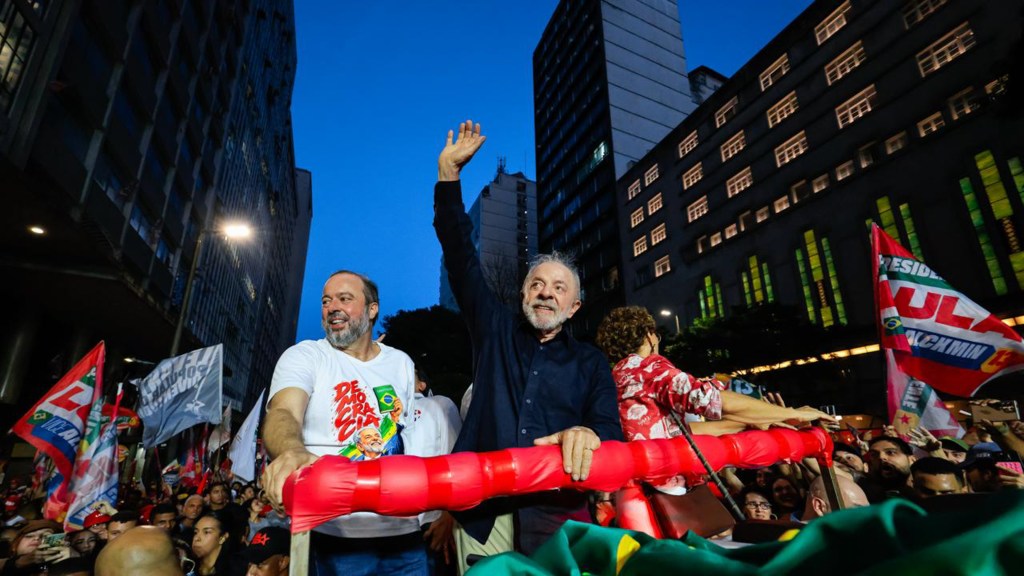
After four decades at the center of the country’s political life, the man considered by many to be Latin America’s greatest living statesman is running out of time to stop the far right from returning to power
If there is one thing that unites most Brazilians, it’s the feeling of being the underdog. Despite the nation’s many shortcomings, Brazilians pride themselves on being as good, or sometimes even better than richer countries at say sports, food, friendliness, or natural beauty. And also, our electronic voting system.
Brazil has used voting machines in elections for three decades. Starting with a mayoral race in Rio de Janeiro in 1996, the urna eletrônica, literally an electronic ballot box, has become synonymous with Brazilian democracy. No other country as large as this one can count ballots as quickly and reliably.
So on 4th October, when the numbers for the first round of the 2026 presidential elections started to trickle in on the Electoral Court’s official website, it quickly became apparent how dire the situation was for President Luiz Inácio Lula da Silva and the Brazilian left. Senator Flávio Bolsonaro, the 45-year-old son of former president Jair Bolsonaro, once considered a weak candidate, took the lead early on and stayed up. For a brief moment, it even seemed possible that Flávio would achieve over 50% of the vote and be elected outright.
A day earlier, Datafolha, one of Brazil’s leading polling institutes, predicted Flávio would reach no higher than 45%. On 4th night however, Flávio took home 47% of the vote, with Lula trailing at 45%. By the end of the night, Lula, the 80-year-old leader of the Workers’ Party (Partido dos Trabalhadores or PT), had regained ground and managed to force a runoff, which will take place this Sunday on 25th October.
That same day, in another important election, Brazilians voted to completely re-elect the 513 member Câmara dos Deputados or Congress’ Lower House along with two-thirds of the Senate. The outcome was equally shocking. Flávio’s Partido Liberal (PL) became the only party since the military dictatorship (1964-1985) to win with a thumping margin, electing 121 representatives in the Lower House, and 22 out of the 54 seats up for elections, at the Senate.
To put that in perspective, in Brazil’s fractured multi-party system, the PL will, on its own, have about as many seats in the Lower House as the entire left-wing bloc, made up of seven different parties. With the help of other powerful right or center-right factions, the Bolsonarista camp could have 300 seats, just eight shy of a three-fifths majority required for major constitutional changes.
Even if Lula defies the odds and beats Flávio this Sunday, he will face a hostile Congress, strongly aligned with the Bolsonaro family. On the other hand, if Flávio wins, he will have all the support he needs to alter Brazil’s constitution and in his words, “re-democratize the country”. Which, to his critics, means just the opposite. In a recent interview to the British newspaper The Guardian, political scientist Celso Rocha de Barros said, “…Flávio’s plan is a corrosion of Brazilian democracy…”. His choice of words, Barros explained, is meant to “smuggle his authoritarian purposes into acceptable language.” Flávio, Barros told The Guardian, appeared to be part of “a new generation of authoritarians” who sought to dismantle democracy from within by undermining and occupying the institutions. “…Then you don’t need to break any laws to achieve authoritarianism…because you are the law.”
Nowhere to Go and No Time to Get There
There have been nine presidential elections since Brazil regained its democracy in the 1980s, and every one of them since 2002 has been decided in a runoff. A common bit of Brazilian political wisdom states that the second round is a new election, meaning all bets are off. There are however, several reasons to make one skeptical of Lula’s chances of closing the two point gap between him and Flávio.
The first one is how short this new election has been. In the three weeks since the first round, Lula has needed to convince millions who voted for Flávio or for one of the smaller candidates, to change their minds and back him instead. However, all the other four candidates who got more than 1% of the vote are in the political right, and three of them have backed Flávio against Lula. The likelihood that their electorate would support the current president seems low.
In theory, Lula could appeal to the millions of Brazilians who didn’t vote at all. Approximately 33 million eligible voters or over 20% of the electorate, chose to stay home on 4th October. However, the chances of them rallying around him look slim. If they were not motivated enough to cast their ballots to elect not only the president, but also the governor and federal and state representatives, the chances of them turning up to vote now, seem slim. Many state races were also decided three weeks ago, including those in Brazil’s largest states, further increasing the challenges of persuading erstwhile absentees to attend.
Finally, compounding all those problems is the fact that the Lula campaign faces an extremely unfavorable set of circumstances that could mean that he is being set up to fail. There is pressure from the United States, with Donald Trump trying to help Flávio’s chances at the ballot box. New tariffs have been levied specifically against Brazil, because according to Secretary of State Marco Rubio, “Lula and his government have not negotiated with the US in good faith… Lula has put his own ego ahead of making a deal for the welfare of the Brazilian people, and these tariffs are the price for that.”
The Trump administration has designated two drug cartels in Brazil as terrorist groups. The Lula administration opposes this, fearing the possibility of American military action, as has happened in countries like Ecuador, where Washington recently bombed alleged cartel facilities on Ecuadorian soil. It is a move Flávio and his brother Eduardo had lobbied for. Eduardo, currently in the United States, was tried and convicted in absentia by the Brazilian Supreme Court for his attempts to interfere in the trial that jailed Jair Bolsonaro.
Meta, which owns the messaging app Whatsapp and social media platforms Instagram, Facebook and Threads, was taken to court by the PT for interfering in the elections and favoring Bolsonaro. The Court has ruled in Lula’s favor, ordering Meta to prove it is treating both candidates fairly or face a R$ 1 million (US$ 200.000) daily fine, which it still hasn’t done.
Meanwhile, whistleblowers at the company spoke to Brazilian journalist Patrícia Campos Mello to confirm that Lula’s online reach had been harmed by internal decisions at Meta, adding that engineers in the US seemed unconcerned by the urgency of the matter and took a long time to respond.
To add to it, the president of the electoral court, Kassio Nunes Marques, a Bolsonaro-era appointee, has taken a string of decisions censoring pro-Lula content online, claiming, on very flimsy grounds, that it classifies as fake news. In Brazil, the electoral court has immense power to act to ensure a level playing field between candidates, including removing false content. Lula’s campaign has denied the posts were fake. Some of them merely contained accusations that Flávio intends to cut public services, and pointed to the fact that similar content by their adversary was left in place by the court.
Owing largely to what some observers see as Lula’s misplaced overconfidence in a first-round victory, this unfavorable scenario did not seem to mobilize the left earlier. A common observation in leftist circles in the run-up to the vote was how drowsy the race seemed this time, with no debates between the major candidates and no upsets in the polls, all pointing to a slim, but constant lead for Lula.
The 4th October results, and the onslaught of interference by Meta, actions by the Electoral Court, and American pressure spurred on by Eduardo seem to have changed all that. In the first two Datafolha polls published since, Flávio was consistently ahead, having gained ground with almost every subset of the electorate. The last Datafolha poll showed a different story: Lula and Flávio are tied at 50%.
This scenario has roused the Left. In the past weeks, it has hosted huge rallies for Lula in many cities and increased its social media presence in a way it wasn’t able to for many years. According to Poder360, a Brasília-based news portal, at least a quarter million people showed up in support of the president’s campaign on 11th October, at Avenida Paulista, the broad thoroughfare traditionally used for political demonstrations in São Paulo. Addressing the thousands of young people in the audience, Lula said: “The youth must be heard. Either you participate in politics, or it can’t be fixed. You must take responsibility while you are still young and can still fight. This country cannot lose its democracy, however flawed it may be”.
This show of force, coupled with a flurry of popular measures Lula has been able to pass through Congress at the eleventh hour, such as the 40-hour work week, could mean the president might still take the election home. This slight gain in the polls, however, will not make up for all the time Lula and the PT lost in the months before the first round believing the race was already won.
I spoke this month to Luiz Augusto Campos, a political scientist and professor at Rio de Janeiro State University (UERJ). He told me that PT campaign officials made a grave strategic mistake by holding off on criticizing Flávio in the early days of the race fearing he may be replaced with a stronger candidate like Jair Bolsonaro’s wife, Michelle (now a newly elected senator) or the governor of São Paulo state, Tarcísio de Freitas (re-elected with over 60% of the vote).
“The basic element that mobilizes the right-wing vote is antipetismo”, the feeling of hatred towards Lula and the PT, Campos told me. “It ultimately didn’t matter who might end up representing that camp, whether it was Flávio or Michelle or Tarcísio. We’re talking about a polarized electorate and a strong sense of inertia in voting patterns”, which means voters are unlikely to change their minds now. “Lula chose not to attack Flávio early on. After that, it was Flávio who had the better organized campaign, not Lula.”

The Underdog Entrepreneur
Even if he had campaigned differently from the start, Lula’s party is facing a more difficult challenge. Over 18 years in power, they implemented welfare programs that lifted millions out of poverty, made investments in public universities, and made reforms in higher education access that created millions of first-generation college graduates. These successes are all however, at least 10 years old. However, in his last term since 2022, “this Lula administration did not make broad efforts like previous ones, and the major policies it chose to spend political capital on had very little electoral appeal”, Campos told me.
Like a broad fiscal reform that will relieve lower income taxpayers, but whose major effects in the economy probably won’t be felt until next year. “The PT lacks new ideas, and that has thrown it into a crisis”, says Campos. “It has excellent people, such as (the former finance minister, Fernando) Haddad, who could have proposed bolder action but they were constrained by an uncooperative Congress, mainly because of the Legislature’s increased control over the federal budget”, an inheritance from the Bolsonaro years.
There may even be unexpected factors at play. In her essay, “Brazil goes to the polls divided between those who realize their dreams and those who feel left behind”, anthropologist Rosana Pinheiro-Machado, argued that economic growth and the upliftment of millions from poverty in recent decades, due in large part to Lula and the PT, created a new class of dreams and expectations for the Brazilian working class.
“Expanding a population’s range of aspirations is a key indicator of development, as dreams evolve alongside widening horizons”, Pinheiro-Machado writes. “High expectations, however, can fuel frustration and resentment. More demanding consumers and workers want more and seek policy responses, either to advance further, or to safeguard the modest gains they have already secured. Ultimately, if the aspirations are met, social mobility policies succeed. If not, the price is paid in the form of political radicalization.”
The 4th October results seem to indicate that Lula and the PT don’t have any more convincing dreams to sell, and a large part of the electorate is no longer interested in what they have to say, namely, that Brazil needs to overcome its inequality if it is to prosper. In fact they may even be openly hostile to the kind of messaging that focuses on fighting poverty with the power of the public sector.
In her research, Pinheiro-Machado said, she found many Brazilians use social media as a window into a life of opulence. Here, internet celebrities and financial coaches, who claim humble beginnings, display impossible dreams of luxury cars and exotic holidays. All that wealth is within reach, they imply, if only one works hard enough, and is left alone by a meddling state and its corrupt and inefficient state bureaucracy.
It is a very pervasive mentality, and anyone who has lived in Brazil in the past few years has invariably come in contact with it. It promotes the myth of the underdog entrepreneur. Millions of people—Uber drivers, food delivery workers and tiny nail-salon owners hope they will, each through their own willpower and effort, overcome insurmountable odds and achieve a vastly better living condition. When those dreams are dashed, Pinheiro-Machado argues, resentment turns to anger, which turns to radicalization. They are enraged by the mere suggestion of what they perceive as handouts from the State, they seek economic liberty and security at any cost.

Another Bolsonaro Administration
Flávio Bolsonaro’s campaign on the other hand, seems tailored to speak directly to the underdog entrepreneur. He promises to slash red tape, curb public spending, and take a tough stance on crime. He plans to lower the legal age at which teenagers can be prosecuted as adults to 16. According to experts, this will drastically increase the already heavy caseload for the court system, and create overcrowding in Brazilian jails.
These policies have endeared him to the electorate, and Flávio’s many political weaknesses now seem minor in their eyes. He has managed to shrug off his connections to the Banco Master scandal, a financial fraud case that rocked Brazil. His long history with criminal paramilitary groups in Rio de Janeiro does not seem to trouble the median voter.
Nor does his father’s criminal record cast a shadow on his popularity. A long investigation and trial proved Jair Bolsonaro was guilty of trying to convince the Brazilian military to intervene and keep him in power after he lost the election to Lula in 2022. For this and other crimes, he was sentenced to over 27 years in jail, and is currently serving his sentence under house arrest. If elected, Flávio’s top priority is to grant his father a presidential pardon immediately to ensure Bolsonaro is able to attend and take center stage at his son’s inauguration ceremony.
“A Flávio administration would be an unprecedented disaster” for Brazilian democracy, Campos, the political scientist, told me. “His father, always at war with Congress, couldn’t govern for half his term, and for the other half he gave Congress the reins of the federal budget in the name of political survival. Flávio would have the kind of majority in the House and the Senate that is unheard of in Brazil. Wide-reaching constitutional alterations could be possible.” Given the Bolsonaros’ animosity toward the Supreme Court that threw Jair in jail, it’s very likely some of those reforms would defang the court’s powers to hold President Flávio in check.
The election isn’t over yet, and many in the Brazilian left hope for an upset. Lula, true to the Brazilian spirit, certainly feels more at home campaigning as the underdog, as seen in recent media appearances, debates and rallies.
If Lula does win, he has his work cut out for him. An unstable foreign environment and perceived support from Trump could embolden would-be coup plotters in Brazil. A hostile Congress may make his job impossible, or even remove him from office altogether. Political violence could spiral out of control.
No matter the outcome, the traditional Brazilian left is facing a reckoning. It will be forced to come up with new dreams for the working class if it wants to remain a serious political alternative in Brazil.


Lula and the Brazilian Left Are Out of Dreams to Sell

Lula, once called “the most popular politician on Earth,” campaigns ahead of the Oct. 25 runoff.
After four decades at the center of the country’s political life, the man considered by many to be Latin America’s greatest living statesman is running out of time to stop the far right from returning to power
If there is one thing that unites most Brazilians, it’s the feeling of being the underdog. Despite the nation’s many shortcomings, Brazilians pride themselves on being as good, or sometimes even better than richer countries at say sports, food, friendliness, or natural beauty. And also, our electronic voting system.
Brazil has used voting machines in elections for three decades. Starting with a mayoral race in Rio de Janeiro in 1996, the urna eletrônica, literally an electronic ballot box, has become synonymous with Brazilian democracy. No other country as large as this one can count ballots as quickly and reliably.
So on 4th October, when the numbers for the first round of the 2026 presidential elections started to trickle in on the Electoral Court’s official website, it quickly became apparent how dire the situation was for President Luiz Inácio Lula da Silva and the Brazilian left. Senator Flávio Bolsonaro, the 45-year-old son of former president Jair Bolsonaro, once considered a weak candidate, took the lead early on and stayed up. For a brief moment, it even seemed possible that Flávio would achieve over 50% of the vote and be elected outright.
A day earlier, Datafolha, one of Brazil’s leading polling institutes, predicted Flávio would reach no higher than 45%. On 4th night however, Flávio took home 47% of the vote, with Lula trailing at 45%. By the end of the night, Lula, the 80-year-old leader of the Workers’ Party (Partido dos Trabalhadores or PT), had regained ground and managed to force a runoff, which will take place this Sunday on 25th October.
That same day, in another important election, Brazilians voted to completely re-elect the 513 member Câmara dos Deputados or Congress’ Lower House along with two-thirds of the Senate. The outcome was equally shocking. Flávio’s Partido Liberal (PL) became the only party since the military dictatorship (1964-1985) to win with a thumping margin, electing 121 representatives in the Lower House, and 22 out of the 54 seats up for elections, at the Senate.
To put that in perspective, in Brazil’s fractured multi-party system, the PL will, on its own, have about as many seats in the Lower House as the entire left-wing bloc, made up of seven different parties. With the help of other powerful right or center-right factions, the Bolsonarista camp could have 300 seats, just eight shy of a three-fifths majority required for major constitutional changes.
Even if Lula defies the odds and beats Flávio this Sunday, he will face a hostile Congress, strongly aligned with the Bolsonaro family. On the other hand, if Flávio wins, he will have all the support he needs to alter Brazil’s constitution and in his words, “re-democratize the country”. Which, to his critics, means just the opposite. In a recent interview to the British newspaper The Guardian, political scientist Celso Rocha de Barros said, “…Flávio’s plan is a corrosion of Brazilian democracy…”. His choice of words, Barros explained, is meant to “smuggle his authoritarian purposes into acceptable language.” Flávio, Barros told The Guardian, appeared to be part of “a new generation of authoritarians” who sought to dismantle democracy from within by undermining and occupying the institutions. “…Then you don’t need to break any laws to achieve authoritarianism…because you are the law.”
Nowhere to Go and No Time to Get There
There have been nine presidential elections since Brazil regained its democracy in the 1980s, and every one of them since 2002 has been decided in a runoff. A common bit of Brazilian political wisdom states that the second round is a new election, meaning all bets are off. There are however, several reasons to make one skeptical of Lula’s chances of closing the two point gap between him and Flávio.
The first one is how short this new election has been. In the three weeks since the first round, Lula has needed to convince millions who voted for Flávio or for one of the smaller candidates, to change their minds and back him instead. However, all the other four candidates who got more than 1% of the vote are in the political right, and three of them have backed Flávio against Lula. The likelihood that their electorate would support the current president seems low.
In theory, Lula could appeal to the millions of Brazilians who didn’t vote at all. Approximately 33 million eligible voters or over 20% of the electorate, chose to stay home on 4th October. However, the chances of them rallying around him look slim. If they were not motivated enough to cast their ballots to elect not only the president, but also the governor and federal and state representatives, the chances of them turning up to vote now, seem slim. Many state races were also decided three weeks ago, including those in Brazil’s largest states, further increasing the challenges of persuading erstwhile absentees to attend.
Finally, compounding all those problems is the fact that the Lula campaign faces an extremely unfavorable set of circumstances that could mean that he is being set up to fail. There is pressure from the United States, with Donald Trump trying to help Flávio’s chances at the ballot box. New tariffs have been levied specifically against Brazil, because according to Secretary of State Marco Rubio, “Lula and his government have not negotiated with the US in good faith… Lula has put his own ego ahead of making a deal for the welfare of the Brazilian people, and these tariffs are the price for that.”
The Trump administration has designated two drug cartels in Brazil as terrorist groups. The Lula administration opposes this, fearing the possibility of American military action, as has happened in countries like Ecuador, where Washington recently bombed alleged cartel facilities on Ecuadorian soil. It is a move Flávio and his brother Eduardo had lobbied for. Eduardo, currently in the United States, was tried and convicted in absentia by the Brazilian Supreme Court for his attempts to interfere in the trial that jailed Jair Bolsonaro.
Meta, which owns the messaging app Whatsapp and social media platforms Instagram, Facebook and Threads, was taken to court by the PT for interfering in the elections and favoring Bolsonaro. The Court has ruled in Lula’s favor, ordering Meta to prove it is treating both candidates fairly or face a R$ 1 million (US$ 200.000) daily fine, which it still hasn’t done.
Meanwhile, whistleblowers at the company spoke to Brazilian journalist Patrícia Campos Mello to confirm that Lula’s online reach had been harmed by internal decisions at Meta, adding that engineers in the US seemed unconcerned by the urgency of the matter and took a long time to respond.
To add to it, the president of the electoral court, Kassio Nunes Marques, a Bolsonaro-era appointee, has taken a string of decisions censoring pro-Lula content online, claiming, on very flimsy grounds, that it classifies as fake news. In Brazil, the electoral court has immense power to act to ensure a level playing field between candidates, including removing false content. Lula’s campaign has denied the posts were fake. Some of them merely contained accusations that Flávio intends to cut public services, and pointed to the fact that similar content by their adversary was left in place by the court.
Owing largely to what some observers see as Lula’s misplaced overconfidence in a first-round victory, this unfavorable scenario did not seem to mobilize the left earlier. A common observation in leftist circles in the run-up to the vote was how drowsy the race seemed this time, with no debates between the major candidates and no upsets in the polls, all pointing to a slim, but constant lead for Lula.
The 4th October results, and the onslaught of interference by Meta, actions by the Electoral Court, and American pressure spurred on by Eduardo seem to have changed all that. In the first two Datafolha polls published since, Flávio was consistently ahead, having gained ground with almost every subset of the electorate. The last Datafolha poll showed a different story: Lula and Flávio are tied at 50%.
This scenario has roused the Left. In the past weeks, it has hosted huge rallies for Lula in many cities and increased its social media presence in a way it wasn’t able to for many years. According to Poder360, a Brasília-based news portal, at least a quarter million people showed up in support of the president’s campaign on 11th October, at Avenida Paulista, the broad thoroughfare traditionally used for political demonstrations in São Paulo. Addressing the thousands of young people in the audience, Lula said: “The youth must be heard. Either you participate in politics, or it can’t be fixed. You must take responsibility while you are still young and can still fight. This country cannot lose its democracy, however flawed it may be”.
This show of force, coupled with a flurry of popular measures Lula has been able to pass through Congress at the eleventh hour, such as the 40-hour work week, could mean the president might still take the election home. This slight gain in the polls, however, will not make up for all the time Lula and the PT lost in the months before the first round believing the race was already won.
I spoke this month to Luiz Augusto Campos, a political scientist and professor at Rio de Janeiro State University (UERJ). He told me that PT campaign officials made a grave strategic mistake by holding off on criticizing Flávio in the early days of the race fearing he may be replaced with a stronger candidate like Jair Bolsonaro’s wife, Michelle (now a newly elected senator) or the governor of São Paulo state, Tarcísio de Freitas (re-elected with over 60% of the vote).
“The basic element that mobilizes the right-wing vote is antipetismo”, the feeling of hatred towards Lula and the PT, Campos told me. “It ultimately didn’t matter who might end up representing that camp, whether it was Flávio or Michelle or Tarcísio. We’re talking about a polarized electorate and a strong sense of inertia in voting patterns”, which means voters are unlikely to change their minds now. “Lula chose not to attack Flávio early on. After that, it was Flávio who had the better organized campaign, not Lula.”
The Underdog Entrepreneur
Even if he had campaigned differently from the start, Lula’s party is facing a more difficult challenge. Over 18 years in power, they implemented welfare programs that lifted millions out of poverty, made investments in public universities, and made reforms in higher education access that created millions of first-generation college graduates. These successes are all however, at least 10 years old. However, in his last term since 2022, “this Lula administration did not make broad efforts like previous ones, and the major policies it chose to spend political capital on had very little electoral appeal”, Campos told me.
Like a broad fiscal reform that will relieve lower income taxpayers, but whose major effects in the economy probably won’t be felt until next year. “The PT lacks new ideas, and that has thrown it into a crisis”, says Campos. “It has excellent people, such as (the former finance minister, Fernando) Haddad, who could have proposed bolder action but they were constrained by an uncooperative Congress, mainly because of the Legislature’s increased control over the federal budget”, an inheritance from the Bolsonaro years.
There may even be unexpected factors at play. In her essay, “Brazil goes to the polls divided between those who realize their dreams and those who feel left behind”, anthropologist Rosana Pinheiro-Machado, argued that economic growth and the upliftment of millions from poverty in recent decades, due in large part to Lula and the PT, created a new class of dreams and expectations for the Brazilian working class.
“Expanding a population’s range of aspirations is a key indicator of development, as dreams evolve alongside widening horizons”, Pinheiro-Machado writes. “High expectations, however, can fuel frustration and resentment. More demanding consumers and workers want more and seek policy responses, either to advance further, or to safeguard the modest gains they have already secured. Ultimately, if the aspirations are met, social mobility policies succeed. If not, the price is paid in the form of political radicalization.”
The 4th October results seem to indicate that Lula and the PT don’t have any more convincing dreams to sell, and a large part of the electorate is no longer interested in what they have to say, namely, that Brazil needs to overcome its inequality if it is to prosper. In fact they may even be openly hostile to the kind of messaging that focuses on fighting poverty with the power of the public sector.
In her research, Pinheiro-Machado said, she found many Brazilians use social media as a window into a life of opulence. Here, internet celebrities and financial coaches, who claim humble beginnings, display impossible dreams of luxury cars and exotic holidays. All that wealth is within reach, they imply, if only one works hard enough, and is left alone by a meddling state and its corrupt and inefficient state bureaucracy.
It is a very pervasive mentality, and anyone who has lived in Brazil in the past few years has invariably come in contact with it. It promotes the myth of the underdog entrepreneur. Millions of people—Uber drivers, food delivery workers and tiny nail-salon owners hope they will, each through their own willpower and effort, overcome insurmountable odds and achieve a vastly better living condition. When those dreams are dashed, Pinheiro-Machado argues, resentment turns to anger, which turns to radicalization. They are enraged by the mere suggestion of what they perceive as handouts from the State, they seek economic liberty and security at any cost.
Another Bolsonaro Administration
Flávio Bolsonaro’s campaign on the other hand, seems tailored to speak directly to the underdog entrepreneur. He promises to slash red tape, curb public spending, and take a tough stance on crime. He plans to lower the legal age at which teenagers can be prosecuted as adults to 16. According to experts, this will drastically increase the already heavy caseload for the court system, and create overcrowding in Brazilian jails.
These policies have endeared him to the electorate, and Flávio’s many political weaknesses now seem minor in their eyes. He has managed to shrug off his connections to the Banco Master scandal, a financial fraud case that rocked Brazil. His long history with criminal paramilitary groups in Rio de Janeiro does not seem to trouble the median voter.
Nor does his father’s criminal record cast a shadow on his popularity. A long investigation and trial proved Jair Bolsonaro was guilty of trying to convince the Brazilian military to intervene and keep him in power after he lost the election to Lula in 2022. For this and other crimes, he was sentenced to over 27 years in jail, and is currently serving his sentence under house arrest. If elected, Flávio’s top priority is to grant his father a presidential pardon immediately to ensure Bolsonaro is able to attend and take center stage at his son’s inauguration ceremony.
“A Flávio administration would be an unprecedented disaster” for Brazilian democracy, Campos, the political scientist, told me. “His father, always at war with Congress, couldn’t govern for half his term, and for the other half he gave Congress the reins of the federal budget in the name of political survival. Flávio would have the kind of majority in the House and the Senate that is unheard of in Brazil. Wide-reaching constitutional alterations could be possible.” Given the Bolsonaros’ animosity toward the Supreme Court that threw Jair in jail, it’s very likely some of those reforms would defang the court’s powers to hold President Flávio in check.
The election isn’t over yet, and many in the Brazilian left hope for an upset. Lula, true to the Brazilian spirit, certainly feels more at home campaigning as the underdog, as seen in recent media appearances, debates and rallies.
If Lula does win, he has his work cut out for him. An unstable foreign environment and perceived support from Trump could embolden would-be coup plotters in Brazil. A hostile Congress may make his job impossible, or even remove him from office altogether. Political violence could spiral out of control.
No matter the outcome, the traditional Brazilian left is facing a reckoning. It will be forced to come up with new dreams for the working class if it wants to remain a serious political alternative in Brazil.