


On October 10, as more than 40,000 armed personnel were deployed across Delhi to contain and detain protesters at the heart of India’s capital, a fierce battle over narrative and imagery had already begun.
Delhi Police, Haryana Police, Uttar Pradesh Police, the Border Security Force, the Rapid Action Force, the Central Reserve Police Force and the Sashastra Seema Bal combed the streets, breaking up groups of protesters and picking them off one by one. Yellow barricades dotted the area, shutting the capital’s roads to its own people.
India’s Special Intensive Revision (SIR) of electoral rolls has set off mass protests across the country over what voters allege are the fraudulent deletions of names from voter lists. Several opposition parties and citizens have demanded Chief Election Commissioner Gyanesh Kumar’s resignation over irregularities. The Election Commission recently struck about 130 million names from the rolls, barring those voters from casting ballots unless they can establish their eligibility — a number comparable to the population of Mexico.
The Cockroach Janta Party (CJP), a youth-led group founded by Abhijeet Dipke; Neha Bora, president of the All India Students’ Association; and Leader of the Opposition Rahul Gandhi, called for large-scale protests in New Delhi. The agitations grew out of the CJP’s July hunger strike over the NEET paper leak, which forced Education Minister Dharmendra Pradhan to resign.
On October 16, Dipke called for a “Lehra Do Tiranga” march in Delhi to protest the detention of CJP leaders and to assert protesters’ right to demonstrate with the national flag. The police met that march with batons and barricades, too. Besides these obstacles to the right to protest, Hindu right-wing outlets started creating a nearly uniform narrative meant to turn audiences at home against the protesters.
How the Hindutva Ecosystem Turned Protesters Into ‘Rioters’
On October 10, as protesters made repeated attempts to reach Connaught Place, a cat-and-mouse chase began, with the Delhi Police using disproportionate violence to target protesters. In one incident, protesters fleeing the police entered the grounds of Bangla Sahib Gurdwara for safety. Sudarshan News Editor-in-Chief Suresh Chavhanke, a longtime member of the RSS, seized on the moment and portrayed the protesters as rioters hiding inside the premises to attack the police.
Using a video of the incident, Chavhanke called the protesters “dangai” (rioters) and labeled their presence suspicious without addressing how they came to be on the gurdwara grounds.
The scene at Bangla Sahib looked different.
The Polis Project was reporting outside the gurdwara’s Gate No. 3 when the incident unfolded. Delhi Police and RAF personnel chased protesters with batons, who rushed into the gurdwara’s lobby and garden seeking shelter and safety. However, Chavhanke’s comments recast this police pursuit as evidence of an anti-national conspiracy, invoking Sikh religious sentiment to cast suspicion on the protesters’ presence in a place of worship. “What are gurdwaras for? Prayers and prostration. Are gurdwaras becoming the new hub of politics? When rioters could be allowed to enter the gurdwara after hitting policemen, why were police not allowed inside? Are gurdwaras giving asylum to rioters?”
Calling the protesters “dangai” quickly criminalized dissent and placed them squarely within the vocabulary of public disorder. Labeling protesters rioters also shifted the burden of proof: Rather than the police answering or being held accountable for their use of violence, protesting citizens now had to prove that they posed no threat. The accusation left little room to examine the police action that drove them there.
As the confrontation unfolded outside the gurdwara, The Polis Project’s reporters also observed that Times Now and India Today reporters on the scene followed the same script: that protesters had entered the gurdwara to escape the police, omitting that the police with batons and tear gas gear had chased them there. The portrayal of protesters as a threat to public order extended beyond Bangla Sahib.
In “Policing the Crisis,” Stuart Hall describes how political and media institutions construct “social threats” through a recurring language of “disorder.” The mass media can easily define a person or group as a threat to societal values and interests by presenting them in stereotypical terms. On social media, right-wing influencers used confrontational language even before the demonstrations had begun.
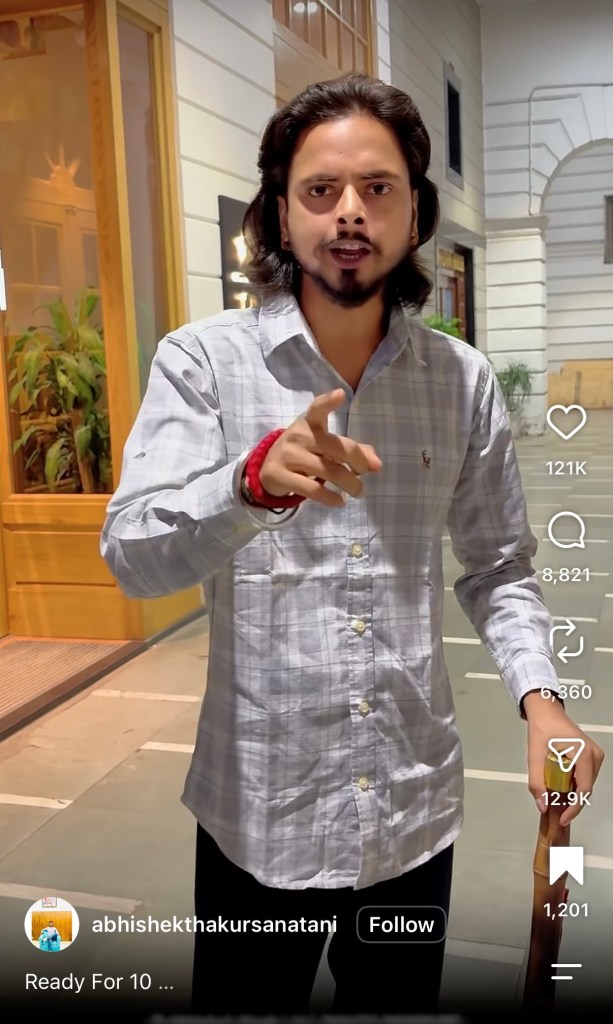
“Hindu brothers … this Sonia Sena, Congress, cockroaches, flies and insects are gearing up to beat up Delhi Police again. But keep in mind, we are going to teach them a lesson. You, who are trying to protest on the 10 October — be mindful of your left and right; we are ready with batons to mend you,” says Abhishek Thakur, a social media influencer with nearly 1 million Facebook followers, posing with a stick in a video shot in Connaught Place.
Thakur is no ordinary influencer discussing fads or promoting brands; he is a foot soldier in a wider Hindutva extremist network who openly urges Hindus to hate, hit, and harass anyone who defies India’s Hindu supremacist prime minister, Narendra Modi.
Thakur goes further. He accuses the protesters who gathered at Jantar Mantar in July over the NEET exam leak of being violent and provocative, and he paints the police as victims of protesters. He accuses CJP-aligned protesters of planning to lynch Delhi Assistant Commissioner of Police Vivek Bhagat, who was recently in the news over allegations that he sexually assaulted a female protester.

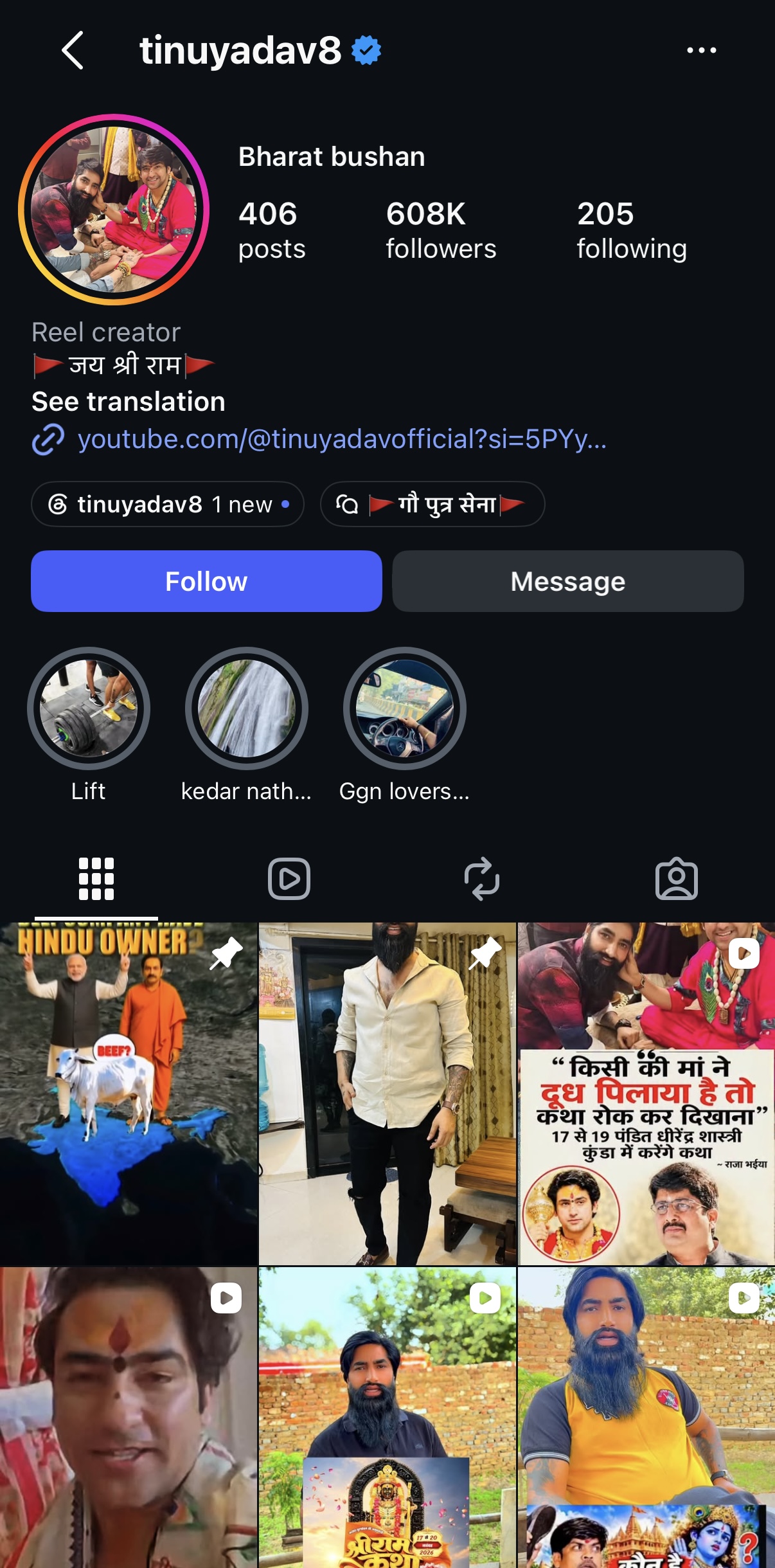
Hindu right-wing influencers Tinu Yadav and Deepak Singh Hindu use different tactics to discredit Modi’s critics, but both make hostility toward protesters central to their messaging and treat violence as the answer to “violent” protests. Yadav, who has nearly 610,000 followers, targeted YouTuber Dhruv Rathee for criticizing India and Modi while living abroad, calling him a “shame to the nation” and sarcastically warning that he would be “welcomed” back.
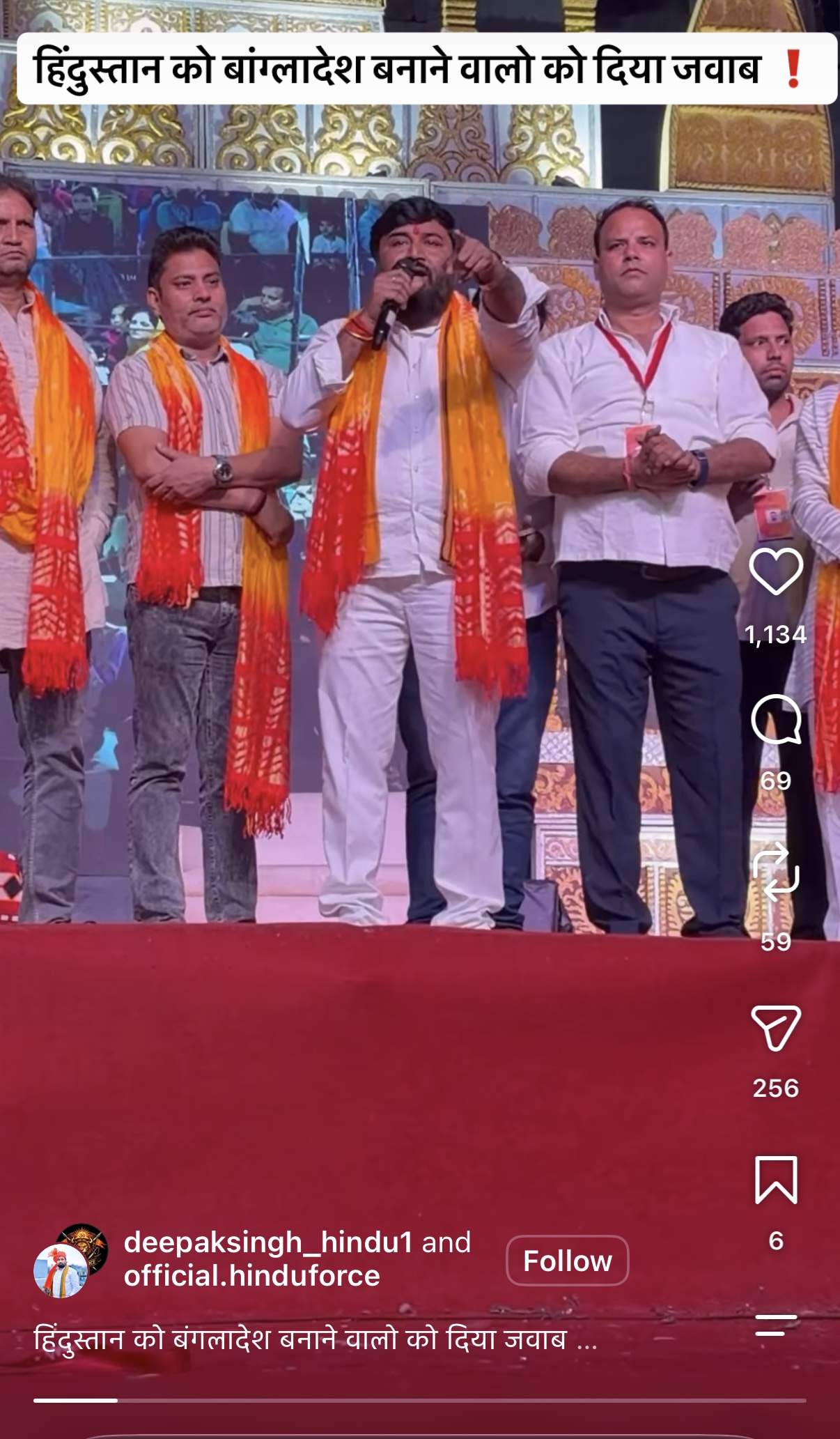
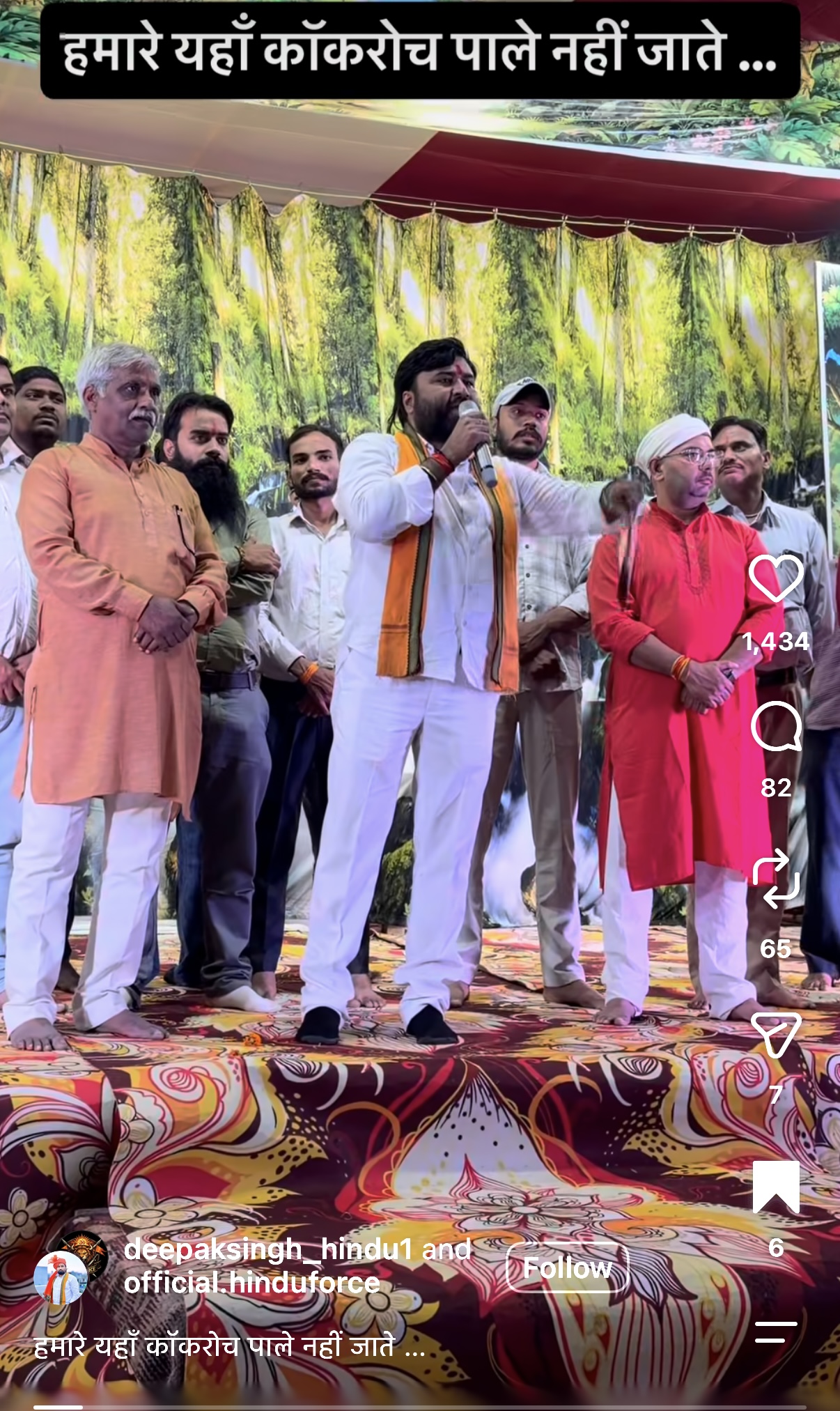
Deepak Singh Hindu’s rhetoric is more explicitly dehumanizing. Referring to CJP protesters, he asks his followers what should be done with cockroaches: nurture them or kill them. Followers respond that they should be killed. Singh, who calls himself the founder of ‘Hindu Force’, often posts reels calling for the boycott and shaming of Muslim influencers and mocking Islamic practices.
In a recent video, he tells a crowd of thousands, “In Pakistani mansikta waale jo iss desh ko Bangladesh banana chahtay hain, unko Hinduo ki taakat nahi pata” — roughly, those with a Pakistani mindset who want to turn this country into Bangladesh do not know the might of Hindus.
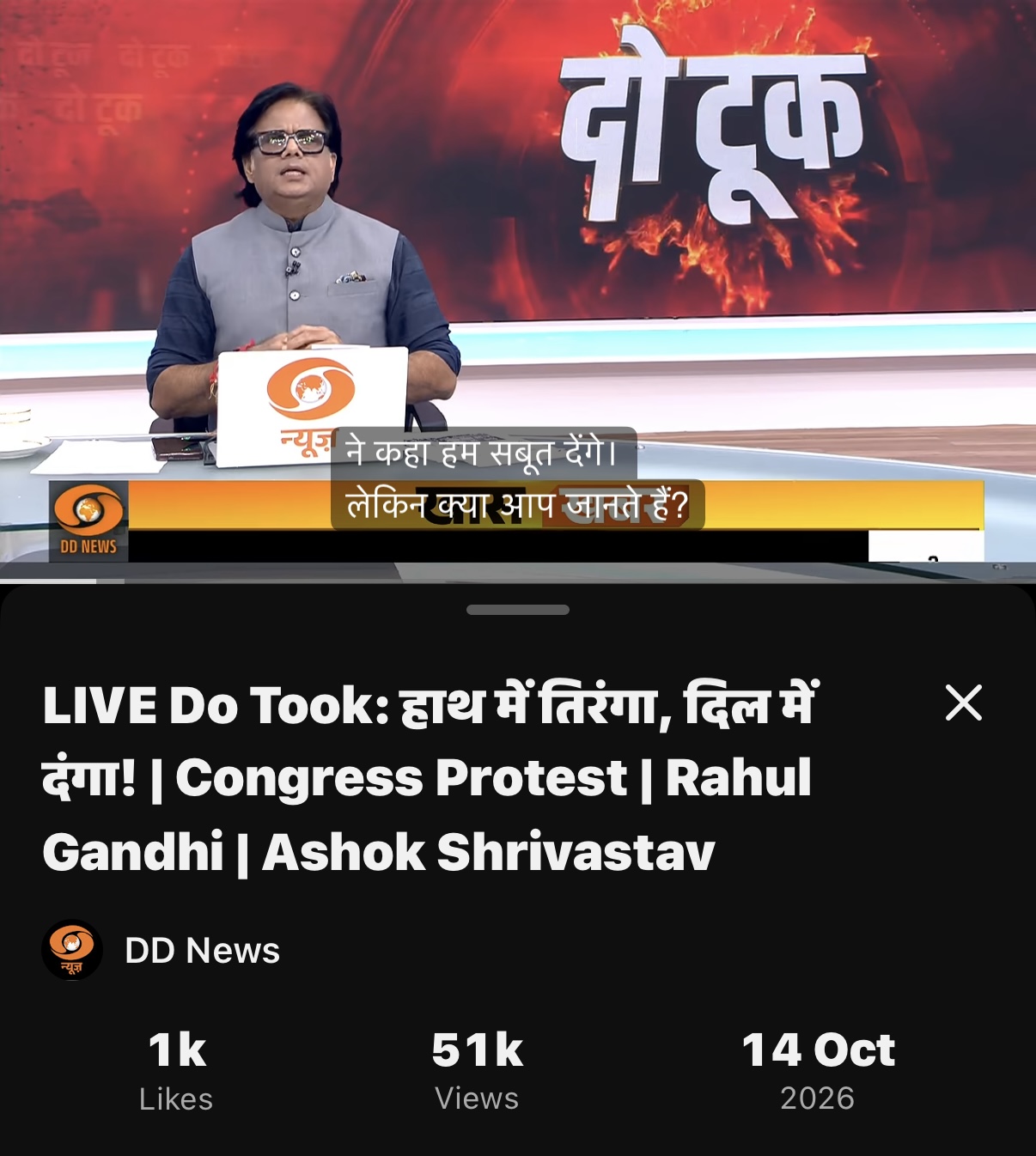
The country’s public television broadcaster Doordarshan’s “Do Took,” presented by Ashok Srivastav, also used a similar framing. As footage of the demonstrations played, Srivastav described the protesters as “Haath mein tiranga, dil mein danga” (the national flag in their hands, riots in their hearts), suggesting that their display of the flag concealed an intent to create disorder. Thakur’s warnings and dehumanizing language, Deepak Singh Hindu’s invitation to contemplate violence, Yadav’s questioning of Rathee’s loyalty, and Srivastav’s insinuation of hidden violent intent all pulled attention away from the allegations of voter deletions. The protesters became people to fear, confront, or distrust, rather than citizens demanding answers.
The Flag as a Test of Loyalty
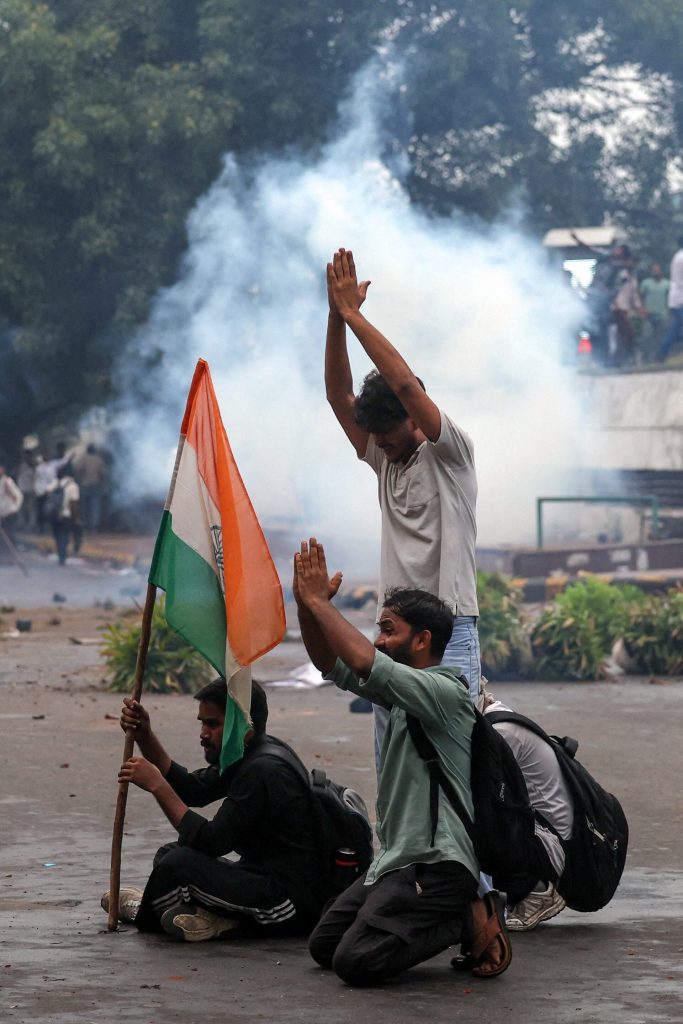
The Indian flag, a potent symbol of shared citizenship, became one of the most contested images in the coverage. When Srivastav suggested that the flag-carrying protesters had riots in their hearts, he claimed to know their intent and thoughts. Scholars of surveillance call this pre-crime: attributing intent to people before any offense has occurred. The protester is judged for what they are presumed to believe, intend, or might do. The accusation shifts from the act of protest to an imagined state of mind. How does one prove innocence of an act conjured in someone else’s mind and broadcast to the world? When suspicion becomes the measure of citizenship, the dissenter must establish not merely that they have done no wrong, but that they are loyal enough to deserve a hearing.
In India, the demand to prove loyalty to the nation has a long history, and its burdens have fallen unequally. Muslims have repeatedly been called on to demonstrate their patriotism, affirm their belonging, and answer insinuations that their faith places their national allegiance in doubt. The debates over the Citizenship Amendment Act, 2019 (CAA) and the proposed National Register of Citizens (NRC), and the vilification of Muslim protesters at Shaheen Bagh, exposed this hierarchy of belonging.
The language surrounding the SIR protests suggests that this test of loyalty can travel beyond the communities historically subjected to it. Protesters who question the government, challenge electoral processes, or mock the prime minister can be portrayed as suspects, either manipulated or hostile to the nation. The grounds of suspicion differ, and the consequences are unequal. Yet the underlying demand is recognizable: Before citizens can be heard as political actors, they must prove their dissent does not make them disloyal.
The effect is to make the government’s political position synonymous with the nation.
The Protester as Pawn: Dismissing Dissent as Political Theater
A second narrative did not necessarily portray protesters as violent. Instead, it questioned their judgment, dismissed their concerns, and suggested that the Congress party and Rahul Gandhi were using them to destabilize the Modi government. In this telling, the demonstrations were less an expression of public concern about voter deletions than a political exercise, with participants either misunderstanding their cause or acting on behalf of opposition parties.
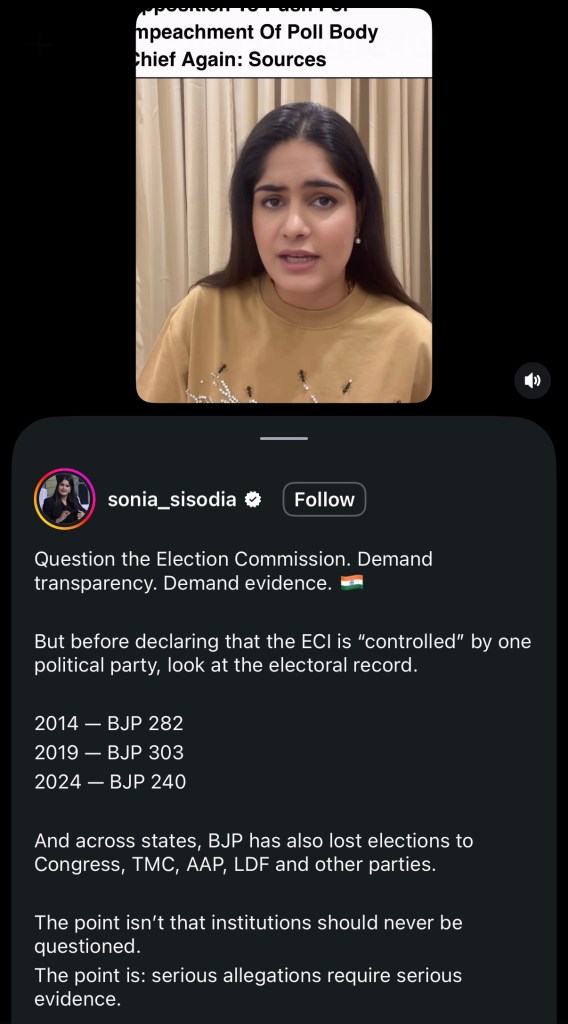
Sonia Sisodia, who has more than 400,000 Instagram followers and describes herself in her bio as a Narendra Modi supporter, took a different approach. In an Instagram post, she questions allegations that the Election Commission of India was acting in the ruling Bharatiya Janata Party’s favor.
Sisodia urges people to question the commission and demand transparency but cautioned against claiming, without evidence, that one party controlled it. Her argument shifts focus from the allegations to the credibility of those making them. The question of whether eligible voters had been wrongly removed gave way to a familiar rebuttal: If the electoral process were compromised, how could the opposition win elections? This cast doubt on the protesters’ central concern without resolving it.
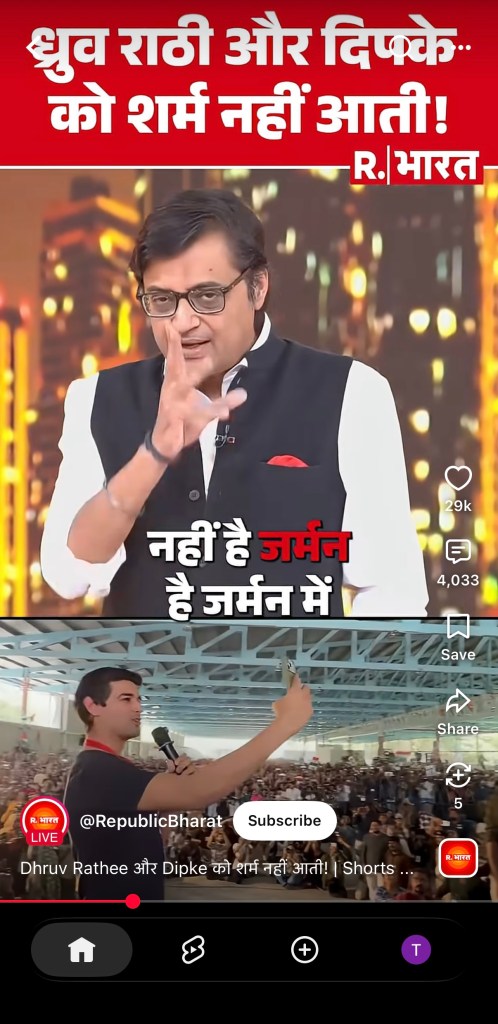
Republic Bharat Hindi went further, presenting YouTuber Dhruv Rathee’s appeal to join the protests in solidarity as an attempt to mobilize people against the police and armed forces and sow chaos. In another segment, the channel repeatedly showed Neha Bora, Rahul Gandhi and Priyanka Gandhi alongside footage of protesters being dragged away and pushed into police buses. Its commentary framed the demonstrations as an “opposition-led conspiracy,” suggesting young people were being used to advance a regime-change agenda.


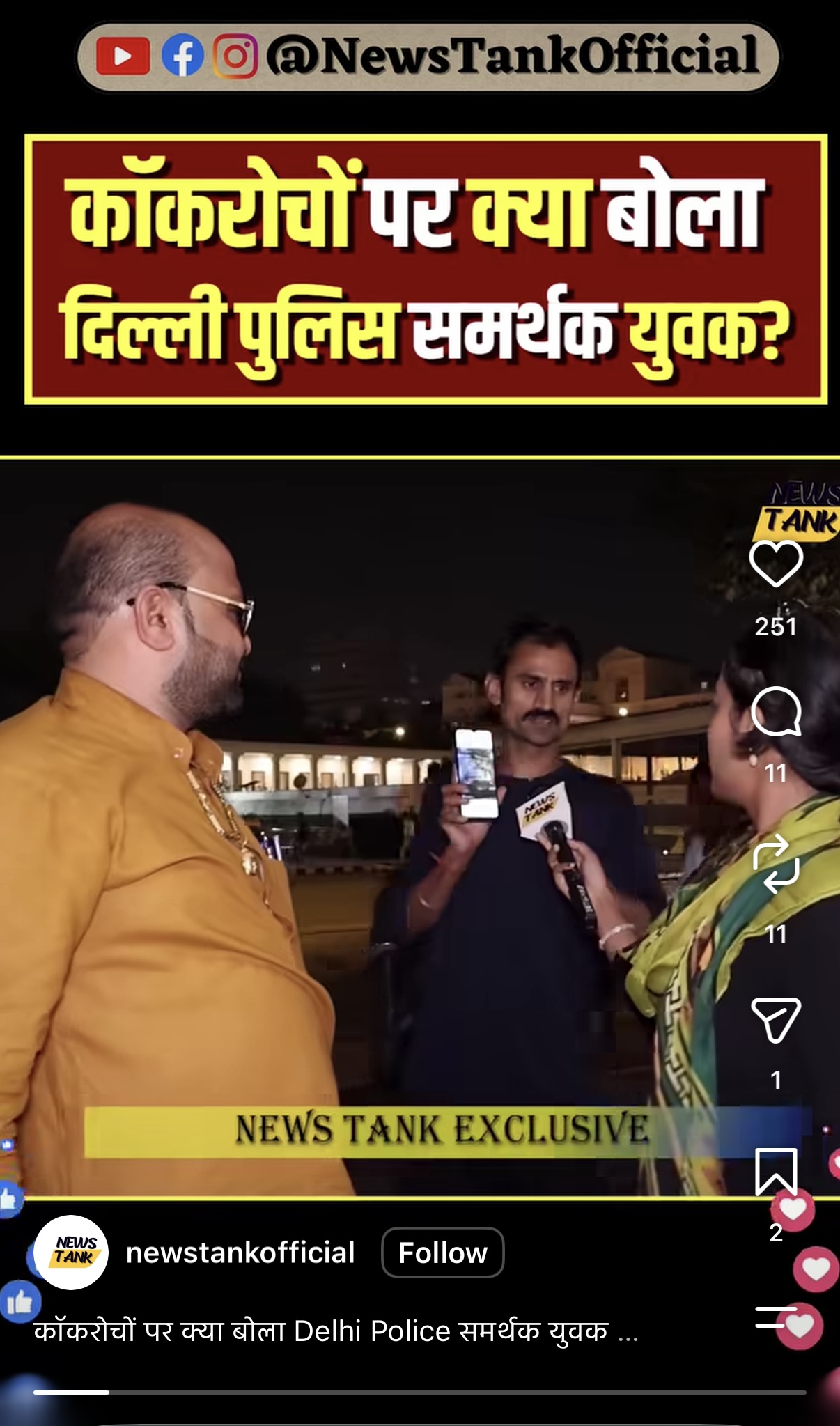
Digital news portal News Tank’s coverage of the October 10-12 protests was more openly dismissive, calling the demonstrations a flop, accusing protesters of harassing the police and framing their mobilization as an effort to protect infiltrators. Its reporters seem to happen upon Modi supporters on the street, ready with slogans such as “Waving the tricolor is not a crime, but acting like a traitor with a tricolor in your hand is a crime.”
In another video, a News Tank anchor again appears to meet a Modi supporter by chance. The man asks where CJP members were on August 15 and why they did not remember the tricolor on Independence Day. He then pulls out his phone, shows an image of a Delhi Police van with shattered glass, and blames the CJP. By featuring only people aligned with the Modi government, News Tank presents them as the bulk of the citizenry and distorts what happened on the ground.
The Polis Project’s reporter on the ground at the time disputes News Tank’s account, saying its claims are inconsistent with what the reporter directly witnessed and documented.
India TV’s coverage of the Tiranga rally on October 16 shows the same impulse. A reporter called the demonstration a flop, said barely 1,000 people attended, and suggested the CJP take the dwindling numbers as a reality check.


BJP leaders reinforce this framing by turning the protests into a test of the opposition’s political loyalties. Responding to student activist Neha Bora’s remark that “Bangladesh showed us the way,” BJP leader Sudhanshu Trivedi questioned whether the opposition wanted to make Bangladesh’s upheaval a model for political change in India.
Trivedi shifted the focus from why young people were protesting to whether the opposition was exploiting the moment to create chaos. In a TV interview, Trivedi said, “When you want to overthrow a government by a non-democratic process, this is a regime change.” Defending the SIR, he said, “The basic objective of the Congress party is to create confusion”.
As footage of crowds holding placards played, Trivedi said the crowd the CJP drew on October 16 was smaller than on any ordinary day.
On Instagram, where he has 3.1 million followers, Trivedi posted Bora’s video on Bangladesh’s protests and wrote: “This statement, ‘Bangladesh showed us the way,’ raises several serious questions. Do these people want to make events like those in Bangladesh a model for political change in India? I want to ask Rahul Gandhi and the leaders of the INDIA alliance: do they agree with this statement by people like Neha Bora? If not, they should publicly and unequivocally condemn it. If they do not, it becomes clear that Rahul Gandhi and the INDIA alliance stand not with democracy, but with anarchy.”
Robert Entman’s account of framing offers a practical way to understand the process. Frames define a problem, identify its causes, make moral judgments and suggest remedies. In coverage of the SIR protests, the problem was repeatedly defined as disorder, opposition manipulation, and political conspiracy. The moral judgment cast protesters as irresponsible, disloyal and easily manipulated young people whose actions threatened public order and national unity. Their patriotism was questioned, their political agency diminished and their grievances treated with suspicion. The implied remedy was to distrust, contain or dismiss the demonstrations. The frame also served to justify the police brutality, attacks, and sexual violence protesters endured.
The original question about electoral rolls was left outside the frame.
Modi, Protests, and Popularity
Modi’s carefully cultivated aura of invincibility is beginning to crack. A generation raised in a media discourse heavily shaped by the BJP and the Rashtriya Swayamsevak Sangh, and accustomed to receiving political messages through social media, was now speaking back in a language the establishment could not easily control.
Young protesters mocked Modi and his ministers, ridiculing his claims to authority and making him an object of public satire. Their irreverence punctured the image of the once-invincible leader with the “56-inch chest.”
The right-wing response must be read against this backdrop. It sought to reassert Modi’s invincibility, insisting that his popularity remained intact and that the protests posed no meaningful challenge to his standing. The demonstrations were recast as an opposition project, a conspiracy to damage his image or an insignificant spectacle staged by manipulated young people. Insistence on Modi’s enduring popularity countered the spectacle of young people publicly mocking him. Here, Doordarshan’s “Decode,” hosted by Sudhir Chaudhary, becomes significant.
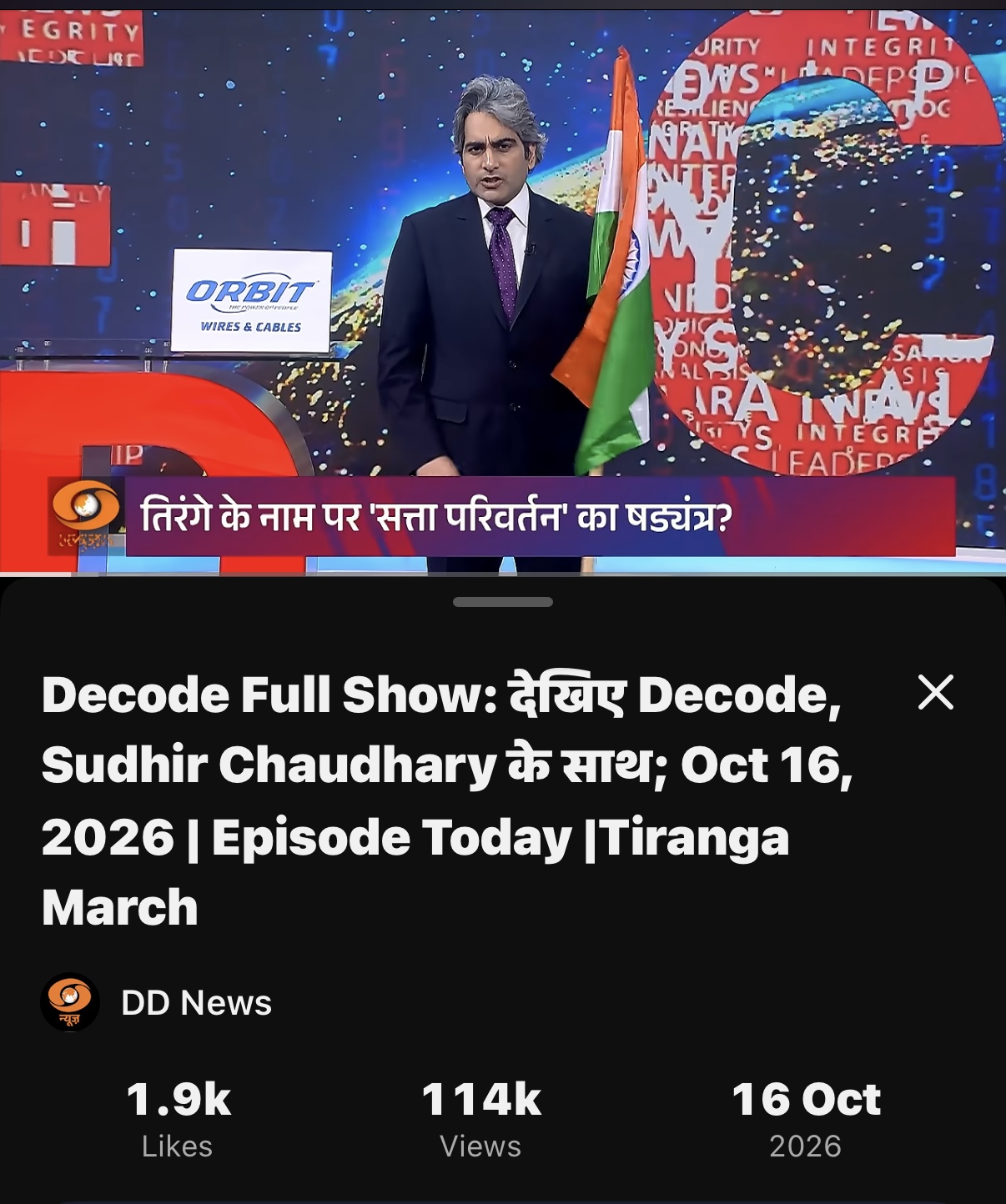
In a series of episodes aired between October 10 and16, Decode host Chaudhary argued that the protests aimed simply to dent Modi’s image. “PM Modi had already warned us about ‘Dimagi Naxals,’ who live among us,” he said. The opposition might think otherwise, he added, but the protests cannot dent Modi’s popularity. For Chaudhary, too, the question was no longer whether the Election Commission had adequately answered concerns about voter deletions, but whether the demonstrations were a conspiracy against the standing of a prime minister who had safely steered the country through Operation Sindoor.
Chaudhary added theater, holding a tricolor in the studio as he said, “The problem is when those waving the tricolor want to chop the country into pieces” — implying that the CJP was aligned with what the BJP ecosystem calls the “tukde tukde gang.”
‘Who Gets to Be Believed?’
Raghav, a 19-year-old student at Delhi Technological University who attended the October 10 protest, told the Polis Project that he had once supported the RSS, an organization his parents had presented as the right way to run India. He said he did not agree with the Congress but had seen enough online to feel betrayed by the BJP’s failures.
Raghav had not told his parents he was attending the protests. They trusted television, particularly Doordarshan, he said, but what they saw on screen bore little resemblance to what he had experienced on the streets over the previous two days. His account complicates the portrayal of protesters as young people mobilized by the opposition: Here was a former RSS supporter, still critical of the Congress, questioning the government and the electoral process.
Rima, another protester, flew from Bengaluru to Delhi to join the October 10 demonstration. She too had kept her participation from her parents. She wore a face mask as she walked through Connaught Place because, she told the Polis Project, she feared someone from the Hindutva ecosystem might photograph her and use the image on social media to malign her. Rima’s fear of being photographed suggests that public participation carried a reputational risk beyond the immediate threat of police action.
Testimonial injustice occurs “when a speaker receives less credibility” because of prejudice attached to their identity. The right-wing media ecosystem, operating across television, political commentary and social media, has helped build just such a hierarchy of credibility.
At first, those who openly criticized Modi were portrayed as anti-national, politically motivated or hostile to the country. Over time, this language has extended to a wider group of citizens: liberals, secularists, the left and progressives, and anyone who questions the government, challenges its decisions or refuses to endorse the prime minister’s actions. Their right to dissent becomes conditional on demonstrating patriotism. A political culture has been built in which citizens must repeatedly perform loyalty to Modi, and loyalty to the prime minister is presented as loyalty to the nation. Patriotism becomes personalized, measured through public declarations of allegiance to a leader.
Who narrates the protests in India to its people? Who is authorized to interpret the actions of those in the street? The protesters’ account of fleeing the police had to compete with a more powerful narrative of rioters and conspiracy.
The struggle over the narrative also unfolded on Instagram and other platforms, where young people produced and circulated their own account of the demonstrations. Through reels, eyewitness videos, satire, personal testimony and commentary, they spoke directly to audiences, challenged television narratives, and documented events that established broadcasters had overlooked or presented differently.
This right-wing coverage has obscured the question that brought people into the streets: whether eligible voters have been wrongly removed from the rolls and whether the Election Commission has adequately answered those concerns. Instead, the Hindutva ecosystem repeatedly redirected attention to protesters’ motives, their supposed handlers and their loyalty to the nation. When coverage insists that Modi’s image cannot be dented, it turns a question about the electoral process into a test of the prime minister’s invulnerability. The people demanding answers become the subject of scrutiny, while their questions are erased from public view.
A democracy depends on citizens’ ability to ask that question, to assemble around it, and to receive an answer grounded in evidence. When public attention shifts from the grievance to the supposed character of those raising it, the space for democratic scrutiny narrows. The protesters remain visible, but their questions disappear.

How the Hindutva Ecosystem “Modi-fied” Content to Discredit SIR Protests
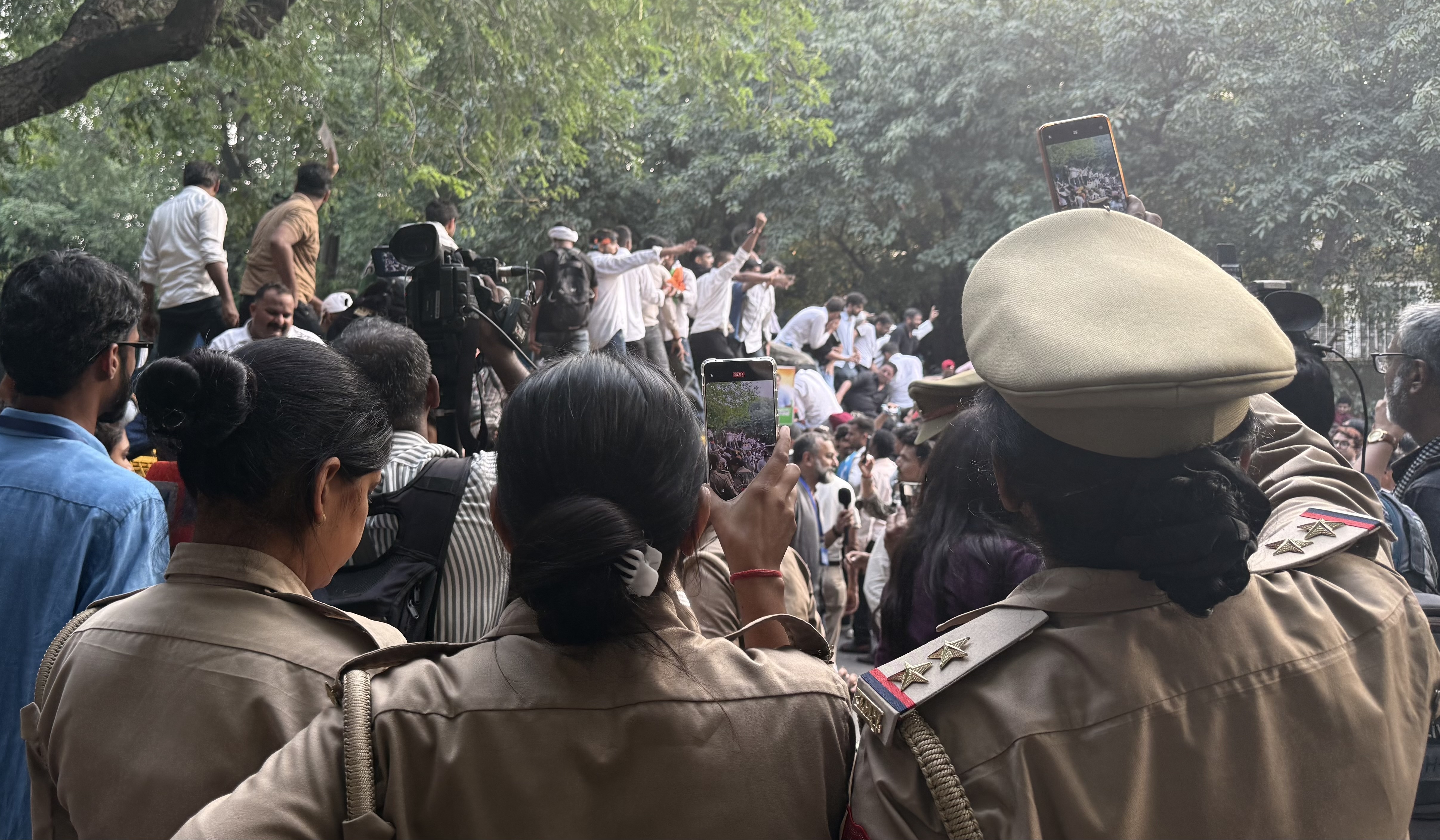
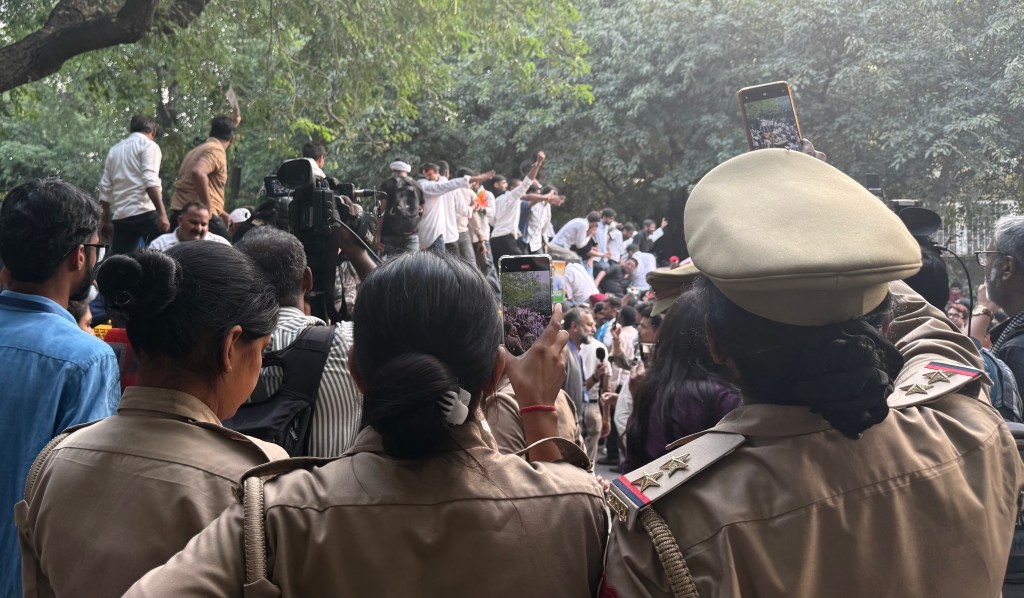
Police women photograph protestors during Congress’ protest in New Delhi on October 12. Photo: Tarushi Aswani.
On October 10, as more than 40,000 armed personnel were deployed across Delhi to contain and detain protesters at the heart of India’s capital, a fierce battle over narrative and imagery had already begun.
Delhi Police, Haryana Police, Uttar Pradesh Police, the Border Security Force, the Rapid Action Force, the Central Reserve Police Force and the Sashastra Seema Bal combed the streets, breaking up groups of protesters and picking them off one by one. Yellow barricades dotted the area, shutting the capital’s roads to its own people.
India’s Special Intensive Revision (SIR) of electoral rolls has set off mass protests across the country over what voters allege are the fraudulent deletions of names from voter lists. Several opposition parties and citizens have demanded Chief Election Commissioner Gyanesh Kumar’s resignation over irregularities. The Election Commission recently struck about 130 million names from the rolls, barring those voters from casting ballots unless they can establish their eligibility — a number comparable to the population of Mexico.
The Cockroach Janta Party (CJP), a youth-led group founded by Abhijeet Dipke; Neha Bora, president of the All India Students’ Association; and Leader of the Opposition Rahul Gandhi, called for large-scale protests in New Delhi. The agitations grew out of the CJP’s July hunger strike over the NEET paper leak, which forced Education Minister Dharmendra Pradhan to resign.
On October 16, Dipke called for a “Lehra Do Tiranga” march in Delhi to protest the detention of CJP leaders and to assert protesters’ right to demonstrate with the national flag. The police met that march with batons and barricades, too. Besides these obstacles to the right to protest, Hindu right-wing outlets started creating a nearly uniform narrative meant to turn audiences at home against the protesters.
How the Hindutva Ecosystem Turned Protesters Into ‘Rioters’
On October 10, as protesters made repeated attempts to reach Connaught Place, a cat-and-mouse chase began, with the Delhi Police using disproportionate violence to target protesters. In one incident, protesters fleeing the police entered the grounds of Bangla Sahib Gurdwara for safety. Sudarshan News Editor-in-Chief Suresh Chavhanke, a longtime member of the RSS, seized on the moment and portrayed the protesters as rioters hiding inside the premises to attack the police.
Using a video of the incident, Chavhanke called the protesters “dangai” (rioters) and labeled their presence suspicious without addressing how they came to be on the gurdwara grounds.
The scene at Bangla Sahib looked different.
The Polis Project was reporting outside the gurdwara’s Gate No. 3 when the incident unfolded. Delhi Police and RAF personnel chased protesters with batons, who rushed into the gurdwara’s lobby and garden seeking shelter and safety. However, Chavhanke’s comments recast this police pursuit as evidence of an anti-national conspiracy, invoking Sikh religious sentiment to cast suspicion on the protesters’ presence in a place of worship. “What are gurdwaras for? Prayers and prostration. Are gurdwaras becoming the new hub of politics? When rioters could be allowed to enter the gurdwara after hitting policemen, why were police not allowed inside? Are gurdwaras giving asylum to rioters?”
Calling the protesters “dangai” quickly criminalized dissent and placed them squarely within the vocabulary of public disorder. Labeling protesters rioters also shifted the burden of proof: Rather than the police answering or being held accountable for their use of violence, protesting citizens now had to prove that they posed no threat. The accusation left little room to examine the police action that drove them there.
As the confrontation unfolded outside the gurdwara, The Polis Project’s reporters also observed that Times Now and India Today reporters on the scene followed the same script: that protesters had entered the gurdwara to escape the police, omitting that the police with batons and tear gas gear had chased them there. The portrayal of protesters as a threat to public order extended beyond Bangla Sahib.
In “Policing the Crisis,” Stuart Hall describes how political and media institutions construct “social threats” through a recurring language of “disorder.” The mass media can easily define a person or group as a threat to societal values and interests by presenting them in stereotypical terms. On social media, right-wing influencers used confrontational language even before the demonstrations had begun.
“Hindu brothers … this Sonia Sena, Congress, cockroaches, flies and insects are gearing up to beat up Delhi Police again. But keep in mind, we are going to teach them a lesson. You, who are trying to protest on the 10 October — be mindful of your left and right; we are ready with batons to mend you,” says Abhishek Thakur, a social media influencer with nearly 1 million Facebook followers, posing with a stick in a video shot in Connaught Place.
Thakur is no ordinary influencer discussing fads or promoting brands; he is a foot soldier in a wider Hindutva extremist network who openly urges Hindus to hate, hit, and harass anyone who defies India’s Hindu supremacist prime minister, Narendra Modi.
Thakur goes further. He accuses the protesters who gathered at Jantar Mantar in July over the NEET exam leak of being violent and provocative, and he paints the police as victims of protesters. He accuses CJP-aligned protesters of planning to lynch Delhi Assistant Commissioner of Police Vivek Bhagat, who was recently in the news over allegations that he sexually assaulted a female protester.
Hindu right-wing influencers Tinu Yadav and Deepak Singh Hindu use different tactics to discredit Modi’s critics, but both make hostility toward protesters central to their messaging and treat violence as the answer to “violent” protests. Yadav, who has nearly 610,000 followers, targeted YouTuber Dhruv Rathee for criticizing India and Modi while living abroad, calling him a “shame to the nation” and sarcastically warning that he would be “welcomed” back.
Deepak Singh Hindu’s rhetoric is more explicitly dehumanizing. Referring to CJP protesters, he asks his followers what should be done with cockroaches: nurture them or kill them. Followers respond that they should be killed. Singh, who calls himself the founder of ‘Hindu Force’, often posts reels calling for the boycott and shaming of Muslim influencers and mocking Islamic practices.
In a recent video, he tells a crowd of thousands, “In Pakistani mansikta waale jo iss desh ko Bangladesh banana chahtay hain, unko Hinduo ki taakat nahi pata” — roughly, those with a Pakistani mindset who want to turn this country into Bangladesh do not know the might of Hindus.
The country’s public television broadcaster Doordarshan’s “Do Took,” presented by Ashok Srivastav, also used a similar framing. As footage of the demonstrations played, Srivastav described the protesters as “Haath mein tiranga, dil mein danga” (the national flag in their hands, riots in their hearts), suggesting that their display of the flag concealed an intent to create disorder. Thakur’s warnings and dehumanizing language, Deepak Singh Hindu’s invitation to contemplate violence, Yadav’s questioning of Rathee’s loyalty, and Srivastav’s insinuation of hidden violent intent all pulled attention away from the allegations of voter deletions. The protesters became people to fear, confront, or distrust, rather than citizens demanding answers.
The Flag as a Test of Loyalty
The Indian flag, a potent symbol of shared citizenship, became one of the most contested images in the coverage. When Srivastav suggested that the flag-carrying protesters had riots in their hearts, he claimed to know their intent and thoughts. Scholars of surveillance call this pre-crime: attributing intent to people before any offense has occurred. The protester is judged for what they are presumed to believe, intend, or might do. The accusation shifts from the act of protest to an imagined state of mind. How does one prove innocence of an act conjured in someone else’s mind and broadcast to the world? When suspicion becomes the measure of citizenship, the dissenter must establish not merely that they have done no wrong, but that they are loyal enough to deserve a hearing.
In India, the demand to prove loyalty to the nation has a long history, and its burdens have fallen unequally. Muslims have repeatedly been called on to demonstrate their patriotism, affirm their belonging, and answer insinuations that their faith places their national allegiance in doubt. The debates over the Citizenship Amendment Act, 2019 (CAA) and the proposed National Register of Citizens (NRC), and the vilification of Muslim protesters at Shaheen Bagh, exposed this hierarchy of belonging.
The language surrounding the SIR protests suggests that this test of loyalty can travel beyond the communities historically subjected to it. Protesters who question the government, challenge electoral processes, or mock the prime minister can be portrayed as suspects, either manipulated or hostile to the nation. The grounds of suspicion differ, and the consequences are unequal. Yet the underlying demand is recognizable: Before citizens can be heard as political actors, they must prove their dissent does not make them disloyal.
The effect is to make the government’s political position synonymous with the nation.
The Protester as Pawn: Dismissing Dissent as Political Theater
A second narrative did not necessarily portray protesters as violent. Instead, it questioned their judgment, dismissed their concerns, and suggested that the Congress party and Rahul Gandhi were using them to destabilize the Modi government. In this telling, the demonstrations were less an expression of public concern about voter deletions than a political exercise, with participants either misunderstanding their cause or acting on behalf of opposition parties.
Sonia Sisodia, who has more than 400,000 Instagram followers and describes herself in her bio as a Narendra Modi supporter, took a different approach. In an Instagram post, she questions allegations that the Election Commission of India was acting in the ruling Bharatiya Janata Party’s favor.
Sisodia urges people to question the commission and demand transparency but cautioned against claiming, without evidence, that one party controlled it. Her argument shifts focus from the allegations to the credibility of those making them. The question of whether eligible voters had been wrongly removed gave way to a familiar rebuttal: If the electoral process were compromised, how could the opposition win elections? This cast doubt on the protesters’ central concern without resolving it.
Republic Bharat Hindi went further, presenting YouTuber Dhruv Rathee’s appeal to join the protests in solidarity as an attempt to mobilize people against the police and armed forces and sow chaos. In another segment, the channel repeatedly showed Neha Bora, Rahul Gandhi and Priyanka Gandhi alongside footage of protesters being dragged away and pushed into police buses. Its commentary framed the demonstrations as an “opposition-led conspiracy,” suggesting young people were being used to advance a regime-change agenda.
Digital news portal News Tank’s coverage of the October 10-12 protests was more openly dismissive, calling the demonstrations a flop, accusing protesters of harassing the police and framing their mobilization as an effort to protect infiltrators. Its reporters seem to happen upon Modi supporters on the street, ready with slogans such as “Waving the tricolor is not a crime, but acting like a traitor with a tricolor in your hand is a crime.”
In another video, a News Tank anchor again appears to meet a Modi supporter by chance. The man asks where CJP members were on August 15 and why they did not remember the tricolor on Independence Day. He then pulls out his phone, shows an image of a Delhi Police van with shattered glass, and blames the CJP. By featuring only people aligned with the Modi government, News Tank presents them as the bulk of the citizenry and distorts what happened on the ground.
The Polis Project’s reporter on the ground at the time disputes News Tank’s account, saying its claims are inconsistent with what the reporter directly witnessed and documented.
India TV’s coverage of the Tiranga rally on October 16 shows the same impulse. A reporter called the demonstration a flop, said barely 1,000 people attended, and suggested the CJP take the dwindling numbers as a reality check.
BJP leaders reinforce this framing by turning the protests into a test of the opposition’s political loyalties. Responding to student activist Neha Bora’s remark that “Bangladesh showed us the way,” BJP leader Sudhanshu Trivedi questioned whether the opposition wanted to make Bangladesh’s upheaval a model for political change in India.
Trivedi shifted the focus from why young people were protesting to whether the opposition was exploiting the moment to create chaos. In a TV interview, Trivedi said, “When you want to overthrow a government by a non-democratic process, this is a regime change.” Defending the SIR, he said, “The basic objective of the Congress party is to create confusion”.
As footage of crowds holding placards played, Trivedi said the crowd the CJP drew on October 16 was smaller than on any ordinary day.
On Instagram, where he has 3.1 million followers, Trivedi posted Bora’s video on Bangladesh’s protests and wrote: “This statement, ‘Bangladesh showed us the way,’ raises several serious questions. Do these people want to make events like those in Bangladesh a model for political change in India? I want to ask Rahul Gandhi and the leaders of the INDIA alliance: do they agree with this statement by people like Neha Bora? If not, they should publicly and unequivocally condemn it. If they do not, it becomes clear that Rahul Gandhi and the INDIA alliance stand not with democracy, but with anarchy.”
Robert Entman’s account of framing offers a practical way to understand the process. Frames define a problem, identify its causes, make moral judgments and suggest remedies. In coverage of the SIR protests, the problem was repeatedly defined as disorder, opposition manipulation, and political conspiracy. The moral judgment cast protesters as irresponsible, disloyal and easily manipulated young people whose actions threatened public order and national unity. Their patriotism was questioned, their political agency diminished and their grievances treated with suspicion. The implied remedy was to distrust, contain or dismiss the demonstrations. The frame also served to justify the police brutality, attacks, and sexual violence protesters endured.
The original question about electoral rolls was left outside the frame.
Modi, Protests, and Popularity
Modi’s carefully cultivated aura of invincibility is beginning to crack. A generation raised in a media discourse heavily shaped by the BJP and the Rashtriya Swayamsevak Sangh, and accustomed to receiving political messages through social media, was now speaking back in a language the establishment could not easily control.
Young protesters mocked Modi and his ministers, ridiculing his claims to authority and making him an object of public satire. Their irreverence punctured the image of the once-invincible leader with the “56-inch chest.”
The right-wing response must be read against this backdrop. It sought to reassert Modi’s invincibility, insisting that his popularity remained intact and that the protests posed no meaningful challenge to his standing. The demonstrations were recast as an opposition project, a conspiracy to damage his image or an insignificant spectacle staged by manipulated young people. Insistence on Modi’s enduring popularity countered the spectacle of young people publicly mocking him. Here, Doordarshan’s “Decode,” hosted by Sudhir Chaudhary, becomes significant.
In a series of episodes aired between October 10 and16, Decode host Chaudhary argued that the protests aimed simply to dent Modi’s image. “PM Modi had already warned us about ‘Dimagi Naxals,’ who live among us,” he said. The opposition might think otherwise, he added, but the protests cannot dent Modi’s popularity. For Chaudhary, too, the question was no longer whether the Election Commission had adequately answered concerns about voter deletions, but whether the demonstrations were a conspiracy against the standing of a prime minister who had safely steered the country through Operation Sindoor.
Chaudhary added theater, holding a tricolor in the studio as he said, “The problem is when those waving the tricolor want to chop the country into pieces” — implying that the CJP was aligned with what the BJP ecosystem calls the “tukde tukde gang.”
‘Who Gets to Be Believed?’
Raghav, a 19-year-old student at Delhi Technological University who attended the October 10 protest, told the Polis Project that he had once supported the RSS, an organization his parents had presented as the right way to run India. He said he did not agree with the Congress but had seen enough online to feel betrayed by the BJP’s failures.
Raghav had not told his parents he was attending the protests. They trusted television, particularly Doordarshan, he said, but what they saw on screen bore little resemblance to what he had experienced on the streets over the previous two days. His account complicates the portrayal of protesters as young people mobilized by the opposition: Here was a former RSS supporter, still critical of the Congress, questioning the government and the electoral process.
Rima, another protester, flew from Bengaluru to Delhi to join the October 10 demonstration. She too had kept her participation from her parents. She wore a face mask as she walked through Connaught Place because, she told the Polis Project, she feared someone from the Hindutva ecosystem might photograph her and use the image on social media to malign her. Rima’s fear of being photographed suggests that public participation carried a reputational risk beyond the immediate threat of police action.
Testimonial injustice occurs “when a speaker receives less credibility” because of prejudice attached to their identity. The right-wing media ecosystem, operating across television, political commentary and social media, has helped build just such a hierarchy of credibility.
At first, those who openly criticized Modi were portrayed as anti-national, politically motivated or hostile to the country. Over time, this language has extended to a wider group of citizens: liberals, secularists, the left and progressives, and anyone who questions the government, challenges its decisions or refuses to endorse the prime minister’s actions. Their right to dissent becomes conditional on demonstrating patriotism. A political culture has been built in which citizens must repeatedly perform loyalty to Modi, and loyalty to the prime minister is presented as loyalty to the nation. Patriotism becomes personalized, measured through public declarations of allegiance to a leader.
Who narrates the protests in India to its people? Who is authorized to interpret the actions of those in the street? The protesters’ account of fleeing the police had to compete with a more powerful narrative of rioters and conspiracy.
The struggle over the narrative also unfolded on Instagram and other platforms, where young people produced and circulated their own account of the demonstrations. Through reels, eyewitness videos, satire, personal testimony and commentary, they spoke directly to audiences, challenged television narratives, and documented events that established broadcasters had overlooked or presented differently.
This right-wing coverage has obscured the question that brought people into the streets: whether eligible voters have been wrongly removed from the rolls and whether the Election Commission has adequately answered those concerns. Instead, the Hindutva ecosystem repeatedly redirected attention to protesters’ motives, their supposed handlers and their loyalty to the nation. When coverage insists that Modi’s image cannot be dented, it turns a question about the electoral process into a test of the prime minister’s invulnerability. The people demanding answers become the subject of scrutiny, while their questions are erased from public view.
A democracy depends on citizens’ ability to ask that question, to assemble around it, and to receive an answer grounded in evidence. When public attention shifts from the grievance to the supposed character of those raising it, the space for democratic scrutiny narrows. The protesters remain visible, but their questions disappear.