



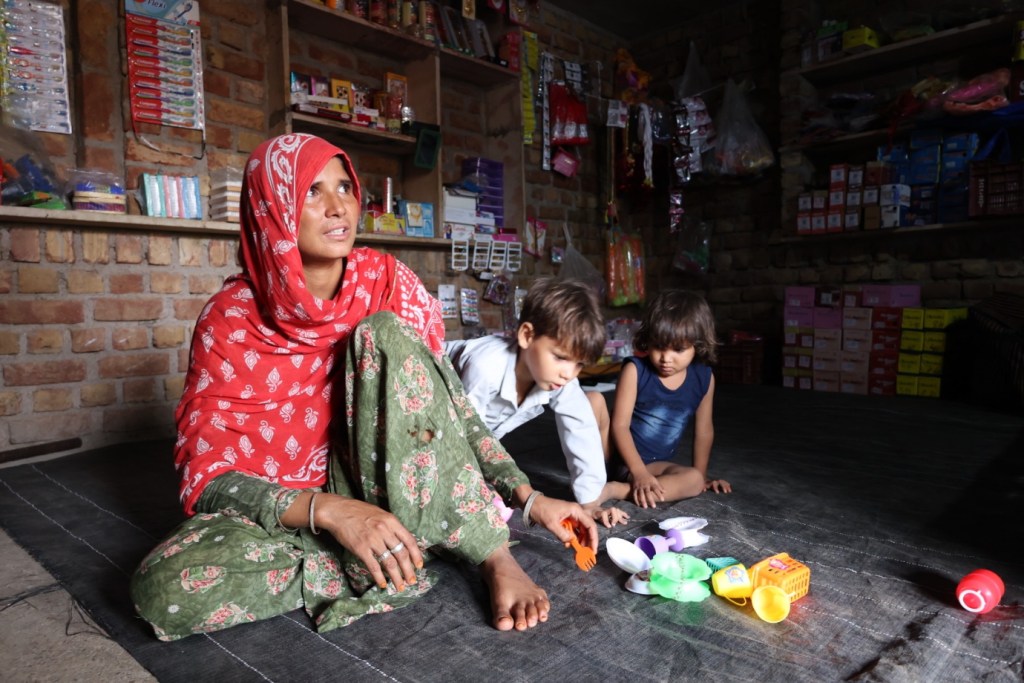
Amidst the small, unplastered houses in the narrow lanes of Ghatmeeka, a village in the Mewat region of Bharatpur district of Rajasthan, stands Sajida’s shop, with bangles perfectly placed on one corner, faux flowers kept on another, creams and lipsticks displayed on one shelf, and gaudy earrings hanging for customers to adorn themselves with. The shop reads “Sajida’s Smile Shop by Miles2Smile Foundation,” an NGO that supports her relief and rehabilitation. Inside the shop, Sajida sits cross-legged on a carpet, surrounded by the colorful items she sells. Sajida finds relief in chit-chatting with her daily customers like Paveena, Rukshsaar, and Nita. “It makes me so happy to see Sajida working with such happiness, slowly turning her life into something beautiful,” says Paveena. Sajida’s three-year-old daughter Shifa toddles around her, asking, “Can I put on a little cream too?” Then she bursts into laughter as she gently stops her. The smile shop has become the family’s main source of income and comfort. But each brick in the walls, each piece of plywood on the shelves, and every penny she earns reminds her of the easygoing life she shared with her husband, Junaid.
A Killing That Tore a Family Apart

On February 15, 2023, 35-year-old Junaid and his nephew Nasir, 25, were allegedly abducted, beaten up, and set ablaze by self-styled ‘gau rakshaks’ or cow vigilantes on suspicion of cow smuggling. Gau Rakshak, or Cow vigilante violence in India, involves mob-led attacks primarily carried out by Hindu nationalist groups targeting non-Hindu communities, especially Muslims. Hindutva ideologues consider the lynching of minorities a shortcut route to gain majority votes and to suppress the voices of minorities. These assaults are justified by the perpetrators as efforts to protect cows, which hold sacred significance in Hinduism. The vigilante outfits, including Bajrang Dal, Vishwa Hindu Parishad, and Gauraksha Dal, have been accused of spreading inflammatory and often unfounded allegations of cattle smuggling to justify harassment and violent assaults.
Dairy farming forms the backbone of the rural economy in Ghatmeeka, with nearly every household rearing cows, buffaloes, or goats as a primary source of livelihood. However, what compounds the challenges for residents is the constant surveillance and intimidation by these self-proclaimed cow vigilantes.
“Earlier, every household here had two or three buffaloes and cows, which served as a major source of income for families. But now, forget cows—even buffaloes are no longer found in every home. In fact, you wouldn’t find even 20 buffaloes in the entire village now. The fear has become so pervasive,” says Ramzan Chaudhary, President of the All India Mewati Samaj.
“We used to have a very large buffalo dairy farming business, but now that’s no longer possible. The trust between us has broken down,” he adds.
Now people hardly opt for cow-rearing because of lynching associated with cows. The members of cow vigilante groups cite reasons behind lynching in the name of cow protection. However, economic and social marginalization of a large population of Muslims emerged as the key factor.
“This (mob lynching) is an entire model through which Muslims are intimidated so that their livelihoods are targeted, making them poorer and forcing them to sell their land, which cow vigilantes then purchase,” says Ramzan Chaudhary, President of the All India Mewati Samaj.
Furthermore, Chaudhary highlights that cow slaughtering is a practice which is conducted by a handful of the population in Mewat, and it includes both Muslims and Hindus. “Police are also involved in this business,” he claims.
“This (Cow smuggling and slaughtering) is a very large racket. There is a group of financiers from the Hindu community, a significant section of the police supports it, and there is another group in Mewat that slaughters the cattle and sells the meat,” Chaudhary says.
“We have identified 20 to 50 people and given their names to the police, saying that they are involved in cow slaughter. These are habitual offenders, not ordinary people. An ordinary person in Mewat does not engage in cow slaughter. Cases have already been registered against these habitual offenders,” Chaudhary claims.
“All the cow vigilantes are cattle smugglers too,” he asserts.
The Muslims of Mewat, including Ghatmeeka, are a Rajput community that converted to Islam but still practice customs of Hinduism. They continue to follow the Hindu caste hierarchy and identify with the Rajput clan, tracing their lineage to revered figures such as Rama, Krishna, and Arjuna. Cow rearing has been their traditional livelihood for generations. Here, cows symbolize wealth and prosperity. When one dies, they are buried with care and respect. These practices form part of a way of life passed down through centuries—one the community continues to preserve under the threat of vigilante violence.
“Now because of lynchings, people don’t purchase and own cows. The fear is so much it has changed everything,” Sajida says
“Mewat has long been a cattle-rearing region, where agriculture and livestock have traditionally been the primary sources of livelihood. For generations, people here have cared for and respected cows. Even when a cow died, people would not remove its hide. To this day, if a cow dies from illness, many families prefer to bury it rather than leave the carcass in the open. Traditionally, people did not sell their cows to butchers, treating them with dignity and care throughout their lives,” Umar Mohammad, a Mewat-based social activist, says.
Farmers, including Muslims, also show respect for cows in celebrations when the first showers of the season arrive in June or July.
“Whenever the first monsoon rains arrived in June or July, farmers would celebrate by decorating their cows and applying oil to their chests. That was the level of respect people had for cows,” Mohammad says.
Recalling how the region has changed profoundly, Mohammad adds, “Mewat was a peaceful region. Hindus and Muslims used to live together harmoniously here. But now, so much hatred has been spread that there is a constant fear of cow vigilantism. It has also pushed many families into poverty. Those who are lynched are often the sole breadwinners of their households. After they are killed, the family’s source of income disappears. There are also very few opportunities for women in Mewat to earn a livelihood.”
Meanwhile, Siddiq Ahmed, author and head of Mewat Vikas Sabha, revealed a fresh challenge facing Muslims in Mewat. Cow vigilantes are also stopping trucks loaded with goats traveling from Mewat to Delhi for Eid ul Adha and allowing them to leave Mewat only if the drivers pay a demanded amount.
“Since last year’s Bakrid, even trucks transporting goats from Mewat to Delhi for sale during the festival have started being stopped. The cow vigilante only allows the trucks to pass when an amount is paid, and if the drivers refuse to pay, they assault them,” he says.
Ghatmeeka the “Village of Cow Smugglers”

Ghatmeeka has come under the stigmatizing label of a “village of cow smugglers,” with over 200 residents reportedly booked under cow smuggling charges. Villagers express deep anguish over how self-styled cow vigilantes bypass legal processes and instead resort to mob violence, often targeting members of the Muslim community, which owns 400 out of 450 houses in Ghatmeeka, based solely on suspicion — regardless of the validity or severity of the alleged offense.
The case of Junaid and Nasir is one of many similar incidents. In April 2017, dairy farmer Pehlu Khan was lynched to death in broad daylight at Behror in Rajasthan’s Alwar district by vigilantes despite carrying valid papers for his cows. Later that year, Umar Khan was hacked down, and his body was left on a railway track. But Junaid and Nasir’s killing stood out for its barbarity.
The details of their lynching start with how Junaid and Nasir were first assaulted for several hours by the cow vigilantes at the junctions of districts—Rajasthan’s Bharatpur and Haryana’s Ferozepur Jhirka. Cow vigilantes took the severely injured men to Ferozepur-Jhirka police station in Haryana, but were turned away by police officers who feared the duo could die in custody.
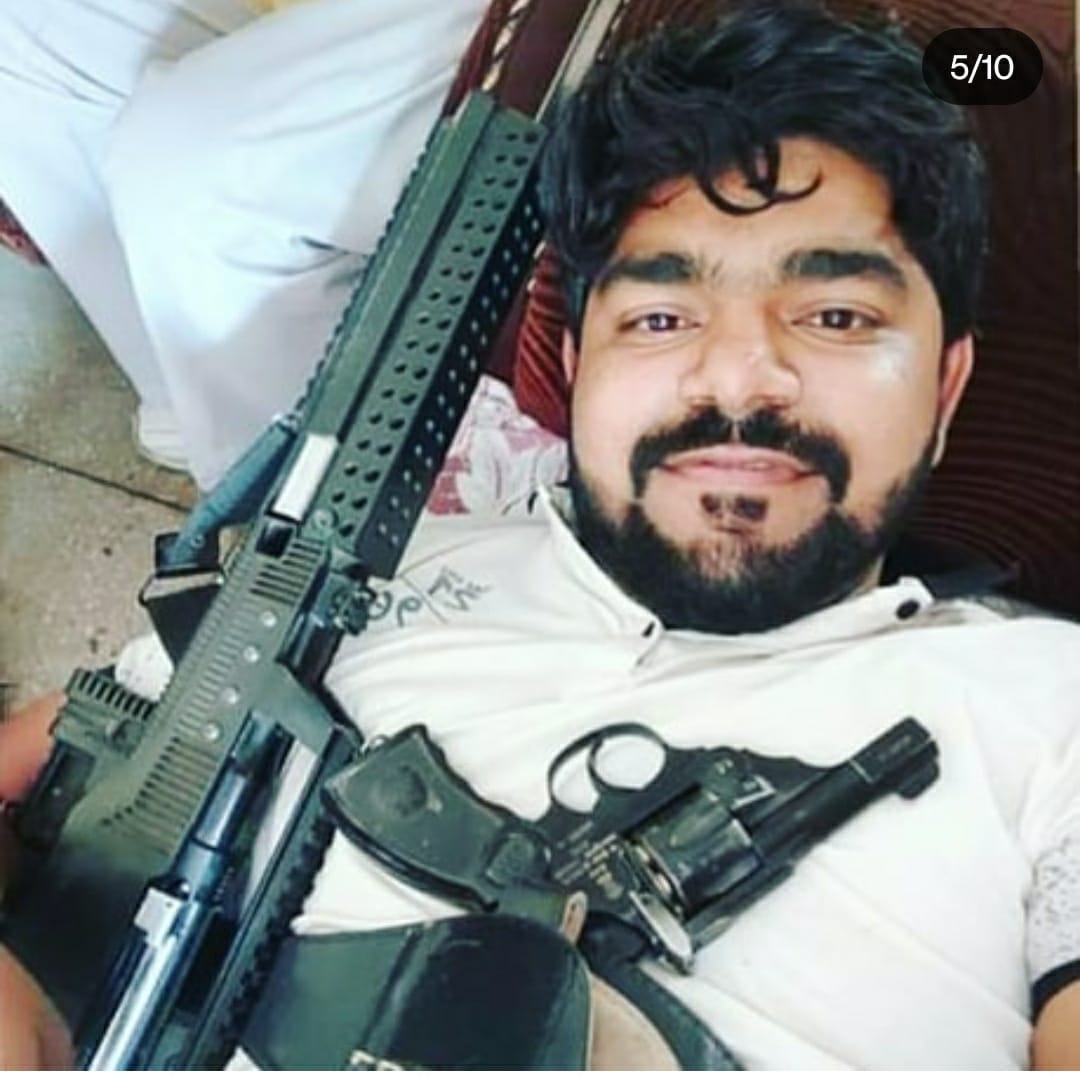
Following this, the group took Junaid and Nasir to Bhiwani and burned them. Only parts of their skeletal remains were recovered from the charred vehicle in Loharu town in Bhiwani district. The Rajasthan Police named 30 accused in a 3,500-page chargesheet filed in Deeg district court in May 2023. Many of the accused, including Mohit Yadav aka Monu Manesar, Monu Rana, Gogi alias Monu, Rinku Saini and Anil Multhan, were arrested after months of manhunt. One accused, Lokesh Sangla, who was absconding, allegedly died by suicide by jumping in front of a train in Haryana’s Palwal district on July 9, 2025 (two years after the incident). The Rajasthan High Court granted Monu Manesar bail on March 5, 2026. While Manesar’s supporters welcomed him with flowers and garlands, Juanid’s children reeled in pain.
“No one hears us. Monu Manesar didn’t remain in jail even for three years. Even the government doesn’t listen to us. Whom should we go to?” Junaid’s son Arbaz says.
“My father was alive when he was taken to the police station by Bajrangdal, but the police thought they would die, so they turned away; they did not help my father,” he adds.
Arbaz recalls his heart was crushed when his mother, Sajida, informed him about Manesar’s bail. The footage of Manesar’s grand welcome still haunts him and leads to emotional breakdowns.
“Whenever I sleep at night, I remember everything. Many times, I cannot sleep at all. I feel like going and asking the Bajrang Dal members, why did you kill my Abba? And I want to ask the government too: will we never get justice?” he says.
However, for Sajida, the footage fortified her trust in her Lord that the ultimate justice will be granted by Him in the hereafter.
“I have hope only in Allah. He will give me true justice. There has been so much pain in my heart, but Allah will give me justice,” she says
The probe into the case also revealed that Sangla and other accused, such as Rinku Saini and Srikant, were police informers in four first information reports (FIRs) filed in Nuh district of Haryana against alleged cow smugglers.
The brutality of Junaid and Nasir’s lynching left no way to distinguish the two victims. Their graves bear a single inscription, “Nasir and Junaid”. This left a lasting impact on Sajida.
“Everything was gone; only bones remained; my Junaid was reduced to a skeleton. They brought his body in a bag; it was nothing but ashes,” she says, pressing her right hand tightly to suppress the trembling she can no longer hide.
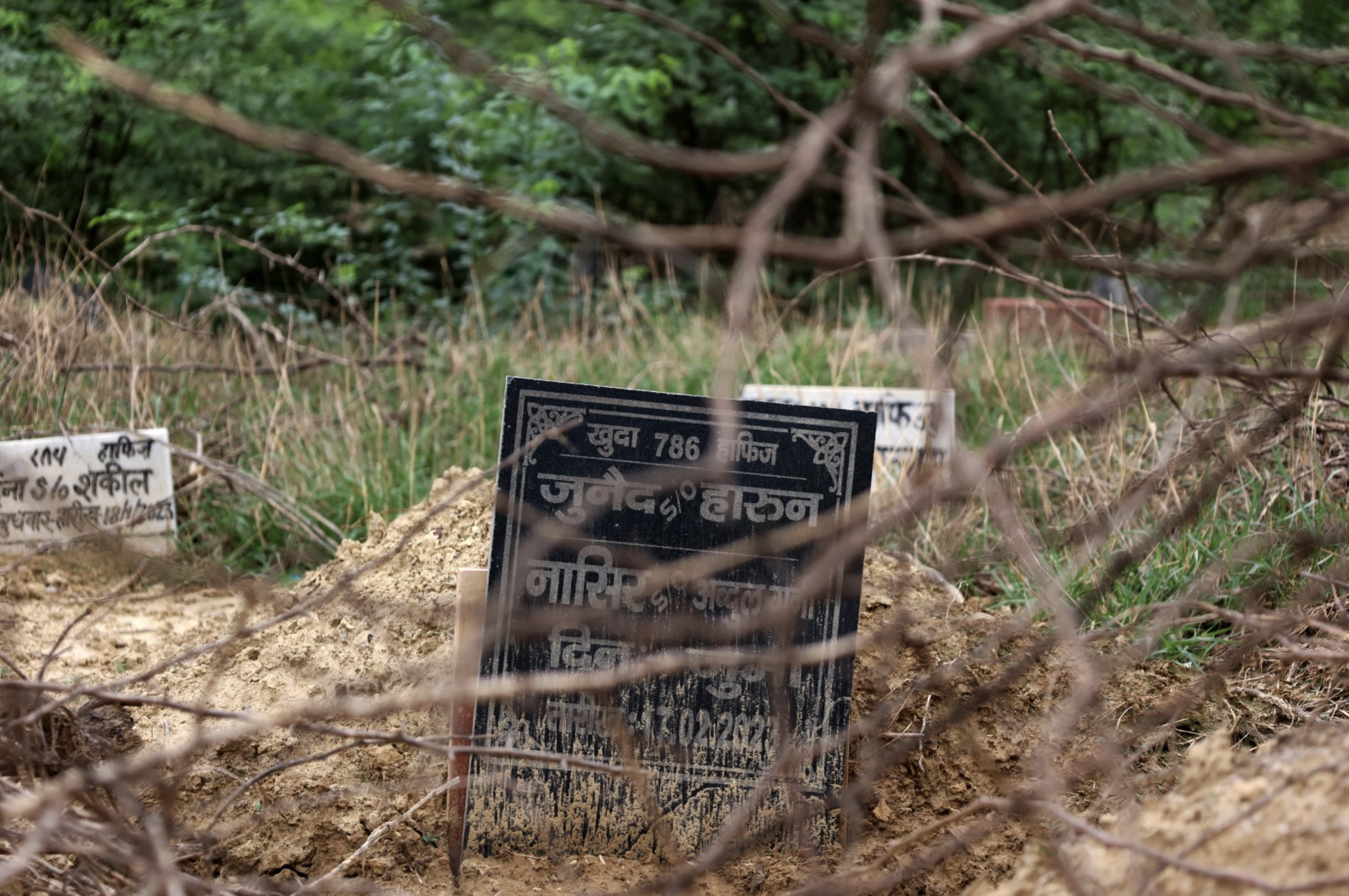
“Everything had been set on fire. How can someone burn a living, breathing human being like that?” she asks, controlling her tears.
Junaid and Nasir were traveling to their relative’s house “to see a potential spouse for Junaid’s niece” when they were reportedly ambushed, violently attacked, and then burned alive inside the vehicle.
“I’m just going to meet a prospective groom for my niece; I want to make sure he’s the right one.” This last conversation with Junaid over a meal Parwana, their eldest daughter, cooked still replays in Sajida’s head.
The Day Sajida’s Life Shattered
When Junaid did not come back until the next day, frantic Sajida placed multiple calls to him, only to find his phone was switched off. After hours of anxious waiting, Sajida’s elder brother finally broke the silence. He told Sajida, “The Bajrang Dal people have taken Junaid.” She said a large crowd began gathering at Sajida’s house to offer comfort.
“I didn’t even know who Bajrang Dal was or what they were capable of. I just kept praying to Allah to bring my husband back. I missed him terribly.” Sajida says.
“After searching for a long time—two days had passed—then I found out that my Junaid had been killed. He was no longer alive; they had burned him.” She continues, tears rolling down her face, but her expression remains emotionless.
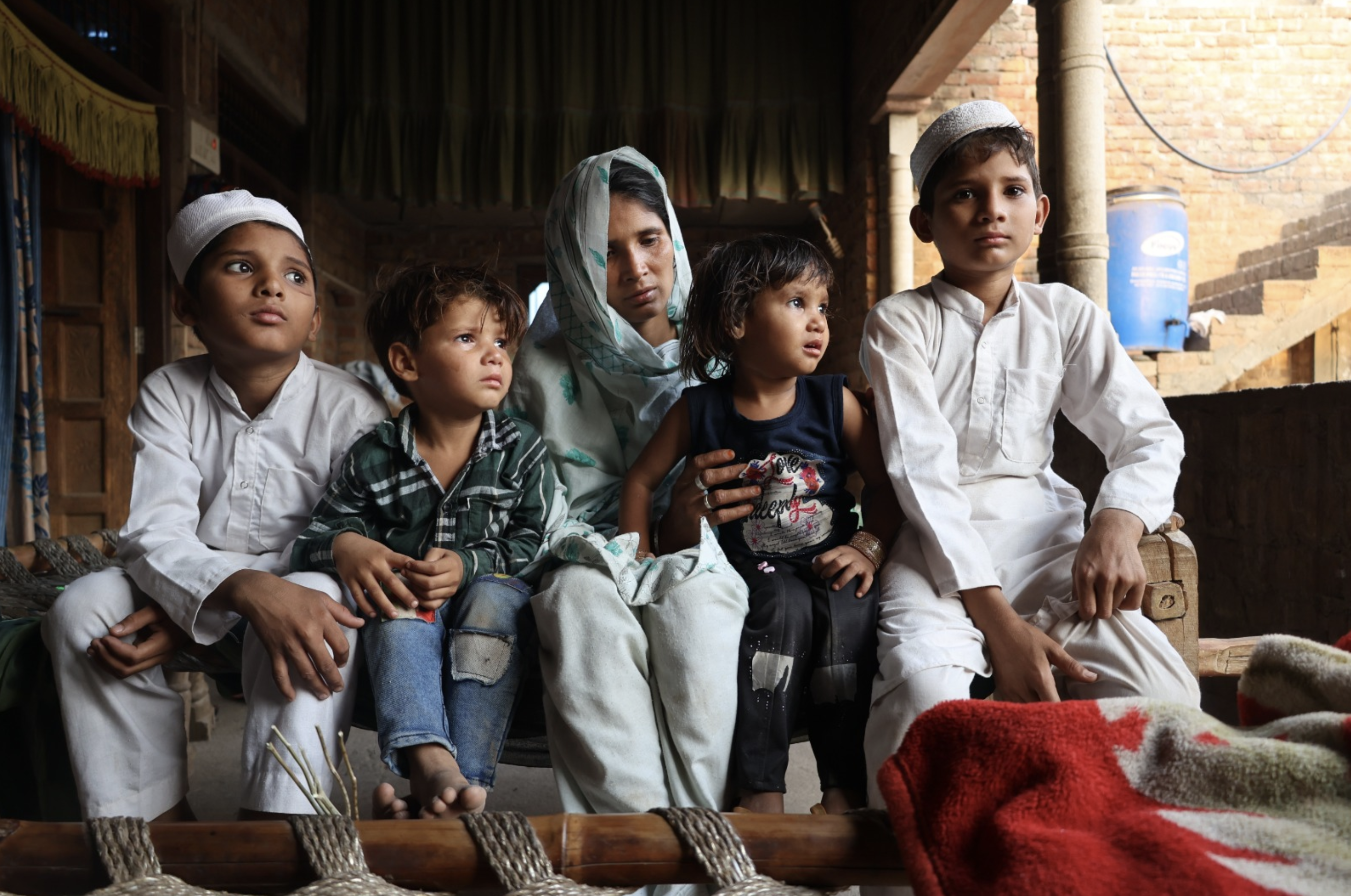
Sajida recounts the harrowing ordeal: “The shock was so heavy that even small moments of recovery were fleeting. I barely managed to eat. My eldest daughter, Parwana, fell silent and stopped smiling. My sons kept saying, ‘Bajrang Dal took our father away; they burned him.’”
Sajida describes the prolonged public outcry and the deep personal loss she endured: “The public protest lasted for many days. My 12-year-old marriage ended in just hours; it was burned away. My life was devastated. How could I ever find peace?”
The invisible wounds of trauma, isolation, and unspoken fear
This barbaric killing of Junaid left the family shattered, with deep emotional scars and a community seeking answers. The circumstances surrounding the death and the subsequent turmoil continued to unfold for days.
The meal times of the family became uncertain, the bills became mountains, and everything collapsed, but Sajida seldom expressed her grief openly, knowing that if she broke down, there would be no one to care for her children. Silence was her only refuge.
Their eldest daughter, Parwana, could not take the pain for long; she went silent too. The only words she uttered were, “My father won’t come back anymore. He was killed. Where else can I see him now? How he used to eat the bread I made with my own hands; now, who should I make it for?”
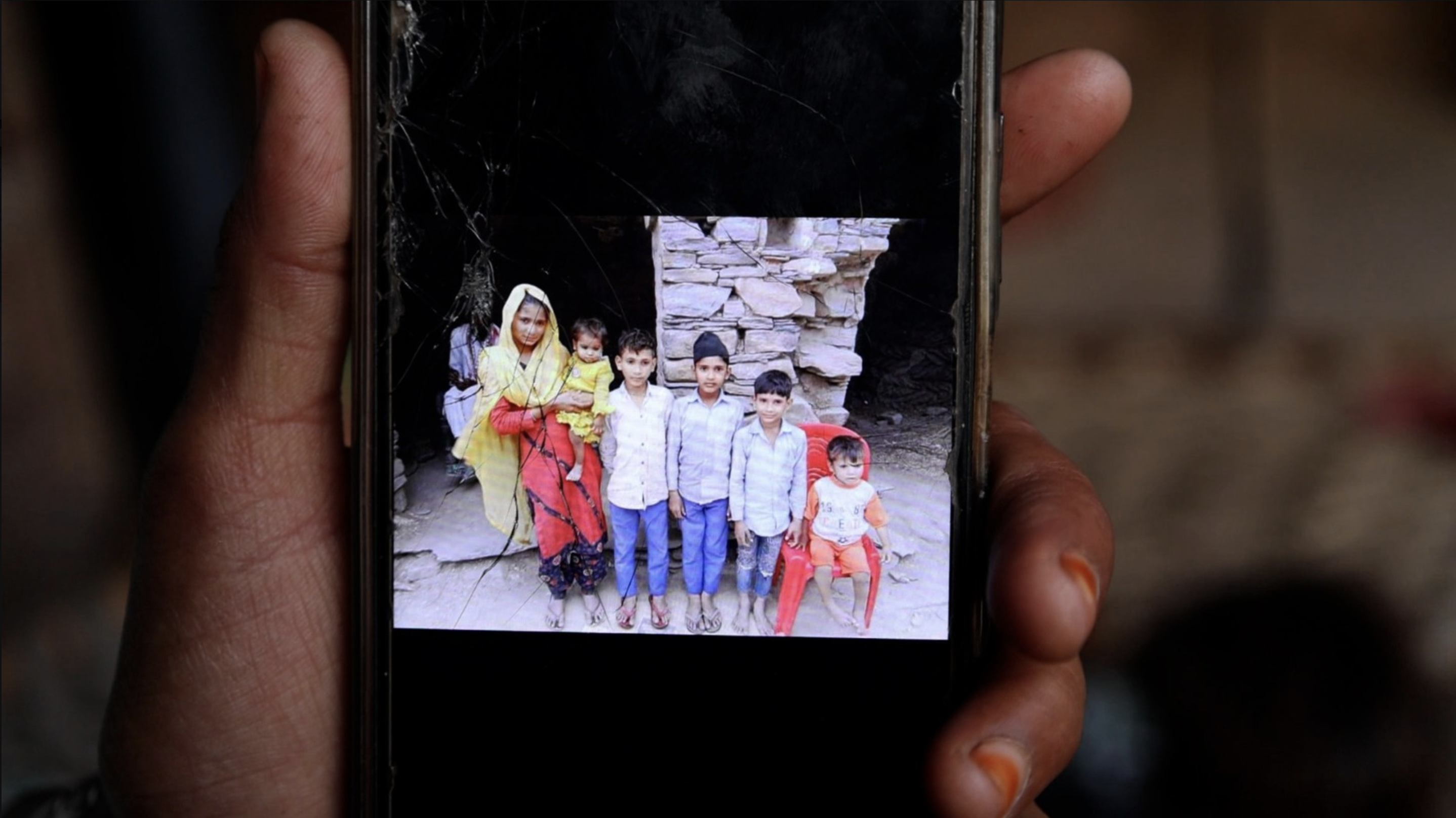
The pain and the longing for her father made her ill, and after a year, she too lost her life. The medical reports say Parwana suffered from tuberculosis, but Sajida claims it was the grief that led to the condition.
“When Parwana passed away, it felt like the end of the world. She too was gone. As long as she was there, I had some support. After her, my heart just died; it turned to stone. Now, the body is all that’s left, and I have no choice but to live it, to somehow endure it,” Sajida says.
Sajida’s Life Rewritten by Loss and Hope
Three years after Junaid’s death and a year since Parwana’s passing, Sajida has begun to show the world signs of healing. But are the signs real? The question remains: Sajida consistently feels fatigued and often dizzy, she admits, when asked; her weight has dropped drastically, and she misses Parwana every minute and Junaid every second.
“Every moment, every second, I remember Junaid and Parwana, whether I’m surrounded by people or all alone. When the memories feel too strong, I look at their photos.” Sajida says
Sajida says her life is emotionally over, but her children’s lives remain unwritten. She envisions a future away from trauma and fears for her sons Parwaan, Arbaz, and Kaif. Sajida says she sent her sons to a private school with support from the NGO Shaagird Foundation.
Parwaan, Sajida’s eldest son, says, “When I grow up, I will join the police or the army. After that, I won’t let people like my father be killed. I won’t allow groups like Bajrang Dal to harm innocent people.”
Her other son Armaan, who avoids talking about Junaid, says that he struggles to answer when kids of her class ask “how did your father die?”
“Whenever my classmates ask this, I can’t sleep. I cry and miss my father; I don’t cry in front of them; I cry when I am alone,” he adds.
Her youngest daughter, Shifa, is too young to comprehend what happened to her father and her sister. Yet, Sajida ensures that Shifa recognizes Junaid by showing her his photograph. Each time, Shifa responds with, “This is my Abbu, this is my Abbu.” Sajida’s heart aches as she realizes her dearest Shifa will never experience fatherly love.
A Woman Defying Entrenched Gender Roles
In Ghatmeeka, men are the sole breadwinners. Women rarely leave home. But Sajida broke that wall. “If someone gives me roti (bread) now, they will taunt me later. And therefore, I work day and night to earn a living from this shop. It is better to eat less but eat your own,” she says.
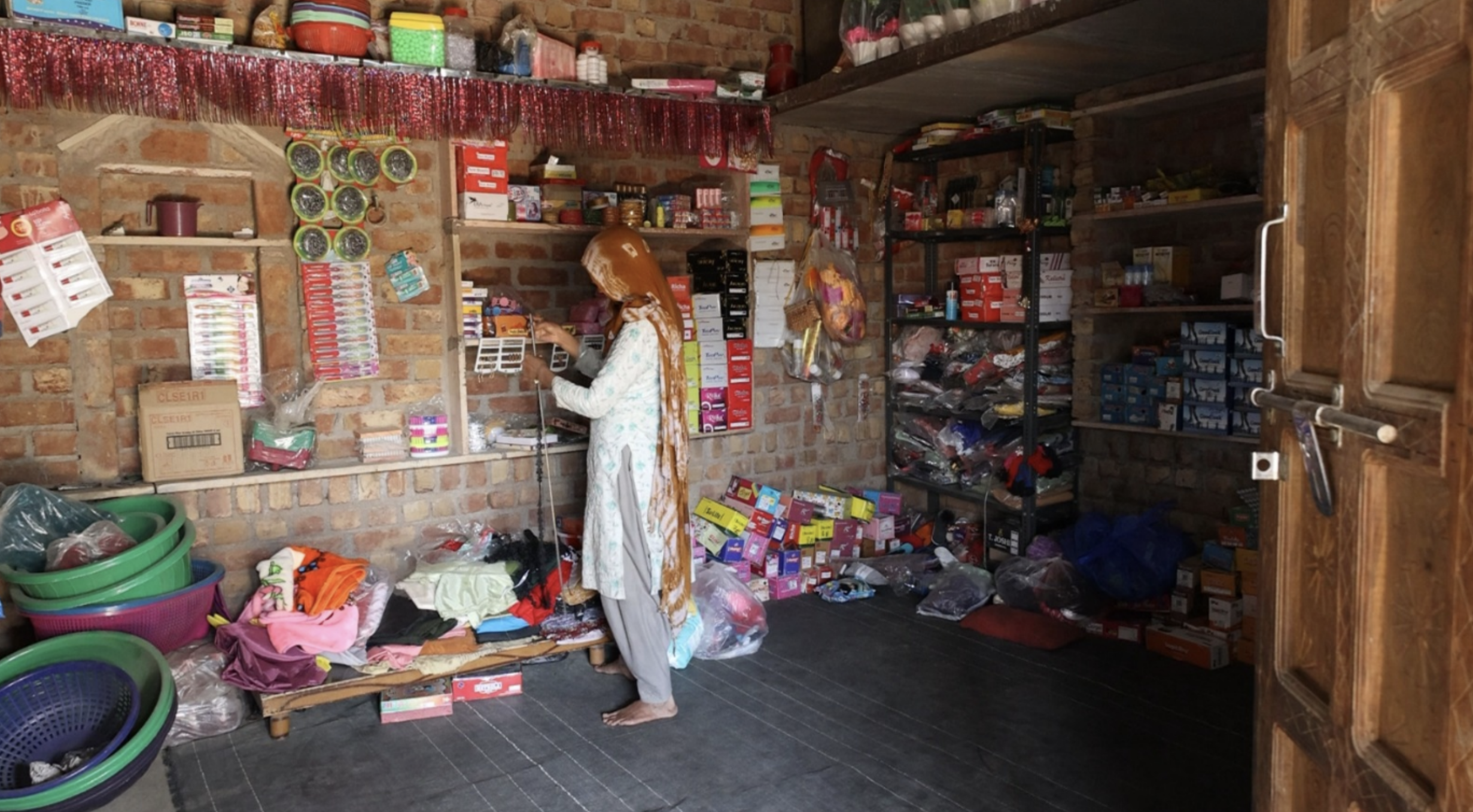
At first, she didn’t know how to run the shop. Now she manages accounts and stock, and even travels alone to Delhi. “Earlier, I would not even step outside the village. But now, I even go to Delhi, she says.
“In the beginning, I did not have the courage, but then I found the strength for my children. Aasif bhai suggested the idea of starting a shop, helped me get the supplies, told me about Delhi, and gradually, I found more courage within myself,” she says.
Sometimes, it feels as if Junaid is still alive, that he will come back and I will tell him, ‘Look, I have learned everything,’” she says.
“Sajida stands out for the courage with which she has rebuilt her life. At one point, she struggled to make ends meet. Today, she earns enough to support herself and her family. Whenever I offer to help, she turns it down with a smile, saying she has enough now,” Aasif Mujtaba, Human Rights Activist and Founder of NGO Miles2Smile, says.
“In cases of mob lynching, communal violence, or other hate crimes, the women survivors who are left behind after the death of their husband or sons have to take care of the entire family. They lack financial support. They do not have the financial backup, and justice for muslims in India seems utopian. NGOs have to intervene to support them financially,” he adds
Sajida’s life revolves around her shop; she stays there all day and welcomes customers at night too. Whenever she is alone, she wishes Junaid to come back, and this time, she will not let her go away anywhere, she says.


Junaid-Nasir Lynching: How Junaid’s Wife Sajida Defies Grief and Patriarchy
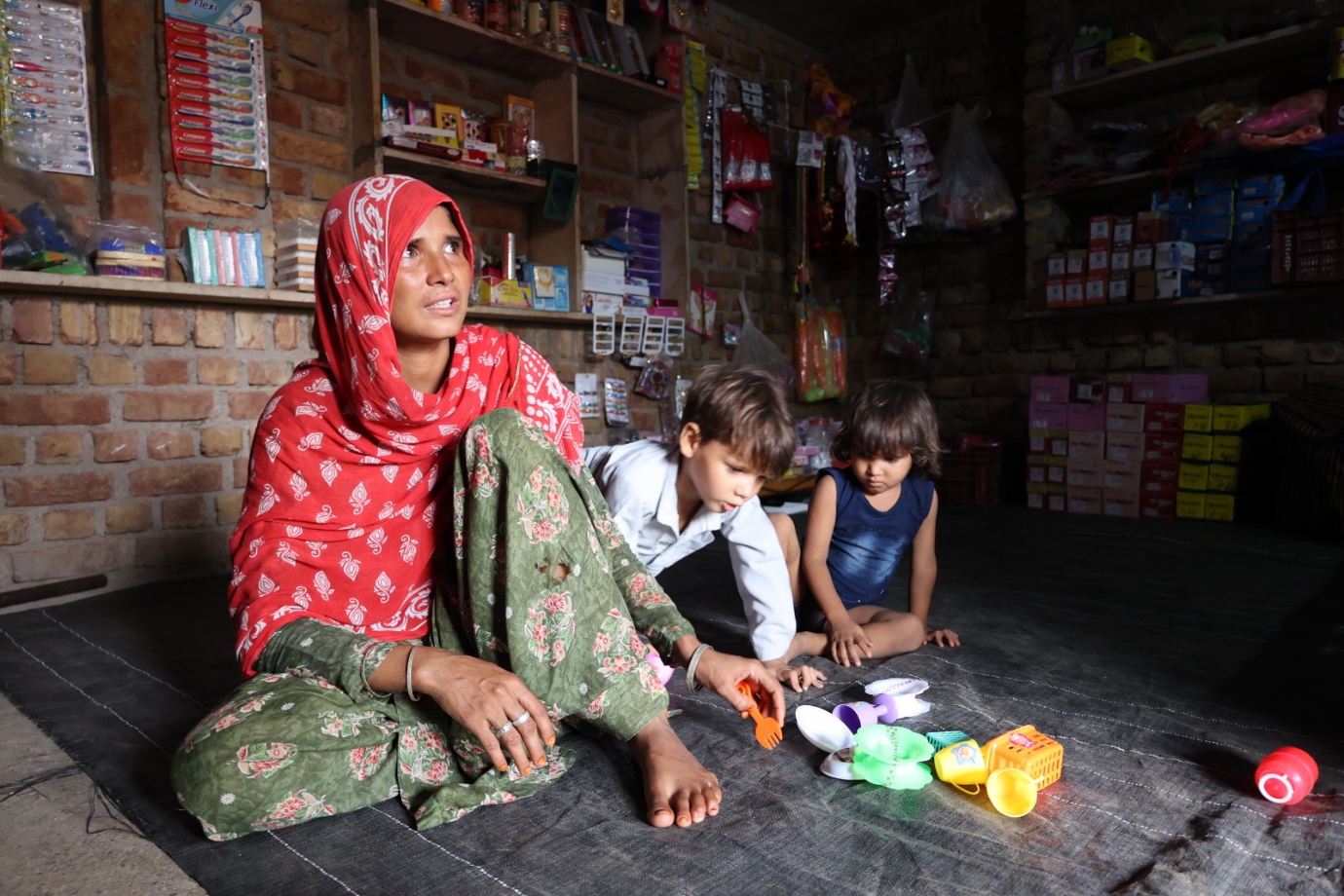
Amidst the small, unplastered houses in the narrow lanes of Ghatmeeka, a village in the Mewat region of Bharatpur district of Rajasthan, stands Sajida’s shop, with bangles perfectly placed on one corner, faux flowers kept on another, creams and lipsticks displayed on one shelf, and gaudy earrings hanging for customers to adorn themselves with. The shop reads “Sajida’s Smile Shop by Miles2Smile Foundation,” an NGO that supports her relief and rehabilitation. Inside the shop, Sajida sits cross-legged on a carpet, surrounded by the colorful items she sells. Sajida finds relief in chit-chatting with her daily customers like Paveena, Rukshsaar, and Nita. “It makes me so happy to see Sajida working with such happiness, slowly turning her life into something beautiful,” says Paveena. Sajida’s three-year-old daughter Shifa toddles around her, asking, “Can I put on a little cream too?” Then she bursts into laughter as she gently stops her. The smile shop has become the family’s main source of income and comfort. But each brick in the walls, each piece of plywood on the shelves, and every penny she earns reminds her of the easygoing life she shared with her husband, Junaid.
A Killing That Tore a Family Apart
On February 15, 2023, 35-year-old Junaid and his nephew Nasir, 25, were allegedly abducted, beaten up, and set ablaze by self-styled ‘gau rakshaks’ or cow vigilantes on suspicion of cow smuggling. Gau Rakshak, or Cow vigilante violence in India, involves mob-led attacks primarily carried out by Hindu nationalist groups targeting non-Hindu communities, especially Muslims. Hindutva ideologues consider the lynching of minorities a shortcut route to gain majority votes and to suppress the voices of minorities. These assaults are justified by the perpetrators as efforts to protect cows, which hold sacred significance in Hinduism. The vigilante outfits, including Bajrang Dal, Vishwa Hindu Parishad, and Gauraksha Dal, have been accused of spreading inflammatory and often unfounded allegations of cattle smuggling to justify harassment and violent assaults.
Dairy farming forms the backbone of the rural economy in Ghatmeeka, with nearly every household rearing cows, buffaloes, or goats as a primary source of livelihood. However, what compounds the challenges for residents is the constant surveillance and intimidation by these self-proclaimed cow vigilantes.
“Earlier, every household here had two or three buffaloes and cows, which served as a major source of income for families. But now, forget cows—even buffaloes are no longer found in every home. In fact, you wouldn’t find even 20 buffaloes in the entire village now. The fear has become so pervasive,” says Ramzan Chaudhary, President of the All India Mewati Samaj.
“We used to have a very large buffalo dairy farming business, but now that’s no longer possible. The trust between us has broken down,” he adds.
Now people hardly opt for cow-rearing because of lynching associated with cows. The members of cow vigilante groups cite reasons behind lynching in the name of cow protection. However, economic and social marginalization of a large population of Muslims emerged as the key factor.
“This (mob lynching) is an entire model through which Muslims are intimidated so that their livelihoods are targeted, making them poorer and forcing them to sell their land, which cow vigilantes then purchase,” says Ramzan Chaudhary, President of the All India Mewati Samaj.
Furthermore, Chaudhary highlights that cow slaughtering is a practice which is conducted by a handful of the population in Mewat, and it includes both Muslims and Hindus. “Police are also involved in this business,” he claims.
“This (Cow smuggling and slaughtering) is a very large racket. There is a group of financiers from the Hindu community, a significant section of the police supports it, and there is another group in Mewat that slaughters the cattle and sells the meat,” Chaudhary says.
“We have identified 20 to 50 people and given their names to the police, saying that they are involved in cow slaughter. These are habitual offenders, not ordinary people. An ordinary person in Mewat does not engage in cow slaughter. Cases have already been registered against these habitual offenders,” Chaudhary claims.
“All the cow vigilantes are cattle smugglers too,” he asserts.
The Muslims of Mewat, including Ghatmeeka, are a Rajput community that converted to Islam but still practice customs of Hinduism. They continue to follow the Hindu caste hierarchy and identify with the Rajput clan, tracing their lineage to revered figures such as Rama, Krishna, and Arjuna. Cow rearing has been their traditional livelihood for generations. Here, cows symbolize wealth and prosperity. When one dies, they are buried with care and respect. These practices form part of a way of life passed down through centuries—one the community continues to preserve under the threat of vigilante violence.
“Now because of lynchings, people don’t purchase and own cows. The fear is so much it has changed everything,” Sajida says
“Mewat has long been a cattle-rearing region, where agriculture and livestock have traditionally been the primary sources of livelihood. For generations, people here have cared for and respected cows. Even when a cow died, people would not remove its hide. To this day, if a cow dies from illness, many families prefer to bury it rather than leave the carcass in the open. Traditionally, people did not sell their cows to butchers, treating them with dignity and care throughout their lives,” Umar Mohammad, a Mewat-based social activist, says.
Farmers, including Muslims, also show respect for cows in celebrations when the first showers of the season arrive in June or July.
“Whenever the first monsoon rains arrived in June or July, farmers would celebrate by decorating their cows and applying oil to their chests. That was the level of respect people had for cows,” Mohammad says.
Recalling how the region has changed profoundly, Mohammad adds, “Mewat was a peaceful region. Hindus and Muslims used to live together harmoniously here. But now, so much hatred has been spread that there is a constant fear of cow vigilantism. It has also pushed many families into poverty. Those who are lynched are often the sole breadwinners of their households. After they are killed, the family’s source of income disappears. There are also very few opportunities for women in Mewat to earn a livelihood.”
Meanwhile, Siddiq Ahmed, author and head of Mewat Vikas Sabha, revealed a fresh challenge facing Muslims in Mewat. Cow vigilantes are also stopping trucks loaded with goats traveling from Mewat to Delhi for Eid ul Adha and allowing them to leave Mewat only if the drivers pay a demanded amount.
“Since last year’s Bakrid, even trucks transporting goats from Mewat to Delhi for sale during the festival have started being stopped. The cow vigilante only allows the trucks to pass when an amount is paid, and if the drivers refuse to pay, they assault them,” he says.
Ghatmeeka the “Village of Cow Smugglers”
Ghatmeeka has come under the stigmatizing label of a “village of cow smugglers,” with over 200 residents reportedly booked under cow smuggling charges. Villagers express deep anguish over how self-styled cow vigilantes bypass legal processes and instead resort to mob violence, often targeting members of the Muslim community, which owns 400 out of 450 houses in Ghatmeeka, based solely on suspicion — regardless of the validity or severity of the alleged offense.
The case of Junaid and Nasir is one of many similar incidents. In April 2017, dairy farmer Pehlu Khan was lynched to death in broad daylight at Behror in Rajasthan’s Alwar district by vigilantes despite carrying valid papers for his cows. Later that year, Umar Khan was hacked down, and his body was left on a railway track. But Junaid and Nasir’s killing stood out for its barbarity.
The details of their lynching start with how Junaid and Nasir were first assaulted for several hours by the cow vigilantes at the junctions of districts—Rajasthan’s Bharatpur and Haryana’s Ferozepur Jhirka. Cow vigilantes took the severely injured men to Ferozepur-Jhirka police station in Haryana, but were turned away by police officers who feared the duo could die in custody.
Following this, the group took Junaid and Nasir to Bhiwani and burned them. Only parts of their skeletal remains were recovered from the charred vehicle in Loharu town in Bhiwani district. The Rajasthan Police named 30 accused in a 3,500-page chargesheet filed in Deeg district court in May 2023. Many of the accused, including Mohit Yadav aka Monu Manesar, Monu Rana, Gogi alias Monu, Rinku Saini and Anil Multhan, were arrested after months of manhunt. One accused, Lokesh Sangla, who was absconding, allegedly died by suicide by jumping in front of a train in Haryana’s Palwal district on July 9, 2025 (two years after the incident). The Rajasthan High Court granted Monu Manesar bail on March 5, 2026. While Manesar’s supporters welcomed him with flowers and garlands, Juanid’s children reeled in pain.
“No one hears us. Monu Manesar didn’t remain in jail even for three years. Even the government doesn’t listen to us. Whom should we go to?” Junaid’s son Arbaz says.
“My father was alive when he was taken to the police station by Bajrangdal, but the police thought they would die, so they turned away; they did not help my father,” he adds.
Arbaz recalls his heart was crushed when his mother, Sajida, informed him about Manesar’s bail. The footage of Manesar’s grand welcome still haunts him and leads to emotional breakdowns.
“Whenever I sleep at night, I remember everything. Many times, I cannot sleep at all. I feel like going and asking the Bajrang Dal members, why did you kill my Abba? And I want to ask the government too: will we never get justice?” he says.
However, for Sajida, the footage fortified her trust in her Lord that the ultimate justice will be granted by Him in the hereafter.
“I have hope only in Allah. He will give me true justice. There has been so much pain in my heart, but Allah will give me justice,” she says
The probe into the case also revealed that Sangla and other accused, such as Rinku Saini and Srikant, were police informers in four first information reports (FIRs) filed in Nuh district of Haryana against alleged cow smugglers.
The brutality of Junaid and Nasir’s lynching left no way to distinguish the two victims. Their graves bear a single inscription, “Nasir and Junaid”. This left a lasting impact on Sajida.
“Everything was gone; only bones remained; my Junaid was reduced to a skeleton. They brought his body in a bag; it was nothing but ashes,” she says, pressing her right hand tightly to suppress the trembling she can no longer hide.
“Everything had been set on fire. How can someone burn a living, breathing human being like that?” she asks, controlling her tears.
Junaid and Nasir were traveling to their relative’s house “to see a potential spouse for Junaid’s niece” when they were reportedly ambushed, violently attacked, and then burned alive inside the vehicle.
“I’m just going to meet a prospective groom for my niece; I want to make sure he’s the right one.” This last conversation with Junaid over a meal Parwana, their eldest daughter, cooked still replays in Sajida’s head.
The Day Sajida’s Life Shattered
When Junaid did not come back until the next day, frantic Sajida placed multiple calls to him, only to find his phone was switched off. After hours of anxious waiting, Sajida’s elder brother finally broke the silence. He told Sajida, “The Bajrang Dal people have taken Junaid.” She said a large crowd began gathering at Sajida’s house to offer comfort.
“I didn’t even know who Bajrang Dal was or what they were capable of. I just kept praying to Allah to bring my husband back. I missed him terribly.” Sajida says.
“After searching for a long time—two days had passed—then I found out that my Junaid had been killed. He was no longer alive; they had burned him.” She continues, tears rolling down her face, but her expression remains emotionless.
Sajida recounts the harrowing ordeal: “The shock was so heavy that even small moments of recovery were fleeting. I barely managed to eat. My eldest daughter, Parwana, fell silent and stopped smiling. My sons kept saying, ‘Bajrang Dal took our father away; they burned him.’”
Sajida describes the prolonged public outcry and the deep personal loss she endured: “The public protest lasted for many days. My 12-year-old marriage ended in just hours; it was burned away. My life was devastated. How could I ever find peace?”
The invisible wounds of trauma, isolation, and unspoken fear
This barbaric killing of Junaid left the family shattered, with deep emotional scars and a community seeking answers. The circumstances surrounding the death and the subsequent turmoil continued to unfold for days.
The meal times of the family became uncertain, the bills became mountains, and everything collapsed, but Sajida seldom expressed her grief openly, knowing that if she broke down, there would be no one to care for her children. Silence was her only refuge.
Their eldest daughter, Parwana, could not take the pain for long; she went silent too. The only words she uttered were, “My father won’t come back anymore. He was killed. Where else can I see him now? How he used to eat the bread I made with my own hands; now, who should I make it for?”
The pain and the longing for her father made her ill, and after a year, she too lost her life. The medical reports say Parwana suffered from tuberculosis, but Sajida claims it was the grief that led to the condition.
“When Parwana passed away, it felt like the end of the world. She too was gone. As long as she was there, I had some support. After her, my heart just died; it turned to stone. Now, the body is all that’s left, and I have no choice but to live it, to somehow endure it,” Sajida says.
Sajida’s Life Rewritten by Loss and Hope
Three years after Junaid’s death and a year since Parwana’s passing, Sajida has begun to show the world signs of healing. But are the signs real? The question remains: Sajida consistently feels fatigued and often dizzy, she admits, when asked; her weight has dropped drastically, and she misses Parwana every minute and Junaid every second.
“Every moment, every second, I remember Junaid and Parwana, whether I’m surrounded by people or all alone. When the memories feel too strong, I look at their photos.” Sajida says
Sajida says her life is emotionally over, but her children’s lives remain unwritten. She envisions a future away from trauma and fears for her sons Parwaan, Arbaz, and Kaif. Sajida says she sent her sons to a private school with support from the NGO Shaagird Foundation.
Parwaan, Sajida’s eldest son, says, “When I grow up, I will join the police or the army. After that, I won’t let people like my father be killed. I won’t allow groups like Bajrang Dal to harm innocent people.”
Her other son Armaan, who avoids talking about Junaid, says that he struggles to answer when kids of her class ask “how did your father die?”
“Whenever my classmates ask this, I can’t sleep. I cry and miss my father; I don’t cry in front of them; I cry when I am alone,” he adds.
Her youngest daughter, Shifa, is too young to comprehend what happened to her father and her sister. Yet, Sajida ensures that Shifa recognizes Junaid by showing her his photograph. Each time, Shifa responds with, “This is my Abbu, this is my Abbu.” Sajida’s heart aches as she realizes her dearest Shifa will never experience fatherly love.
A Woman Defying Entrenched Gender Roles
In Ghatmeeka, men are the sole breadwinners. Women rarely leave home. But Sajida broke that wall. “If someone gives me roti (bread) now, they will taunt me later. And therefore, I work day and night to earn a living from this shop. It is better to eat less but eat your own,” she says.
At first, she didn’t know how to run the shop. Now she manages accounts and stock, and even travels alone to Delhi. “Earlier, I would not even step outside the village. But now, I even go to Delhi, she says.
“In the beginning, I did not have the courage, but then I found the strength for my children. Aasif bhai suggested the idea of starting a shop, helped me get the supplies, told me about Delhi, and gradually, I found more courage within myself,” she says.
Sometimes, it feels as if Junaid is still alive, that he will come back and I will tell him, ‘Look, I have learned everything,’” she says.
“Sajida stands out for the courage with which she has rebuilt her life. At one point, she struggled to make ends meet. Today, she earns enough to support herself and her family. Whenever I offer to help, she turns it down with a smile, saying she has enough now,” Aasif Mujtaba, Human Rights Activist and Founder of NGO Miles2Smile, says.
“In cases of mob lynching, communal violence, or other hate crimes, the women survivors who are left behind after the death of their husband or sons have to take care of the entire family. They lack financial support. They do not have the financial backup, and justice for muslims in India seems utopian. NGOs have to intervene to support them financially,” he adds
Sajida’s life revolves around her shop; she stays there all day and welcomes customers at night too. Whenever she is alone, she wishes Junaid to come back, and this time, she will not let her go away anywhere, she says.