

Editor’s Note
“I wrote the book to address the way Hindutva was able to cast sammohan (spell), the way it was able to emerge as a fashion and fascination for a vast section of people in North India, when I saw people finding violence and exclusion attractive and appealing to an extent that lynching was almost turning into a site of jouissance.” That is how Brahma Prakash explained to me why he wrote Spectacle State. The spell he describes has never been harmless. Muslims, Dalits, Christians, and others cast as outsiders to the Hindu nation have disproportionately borne its vioelnce. The spectacle is staged on their bodies, and an audience is summoned to watch and cheer. Hindutva’s processions and rallies long predate Narendra Modi, who has been India’s prime minister since 2014. Under his rule, though, the spectacle has grown to a new scale. His power reaches into people’s lives and bodies, and into their sense of reality: how they understand the world, what they accept as fact, and what they believe is politically possible. Prakash’s book shows how that power has been built and sustained. “Besides ideology,” he writes, “Hindutva feeds on cultural and aesthetic reservoirs, on conscious, unconscious and irrational behaviors that most often appear in the form of spectacle.” Looking past dogma, he asks how ordinary people came to find this grotesque view of the world attractive. He traces the answer through images, performances, rituals, aesthetics, religious processions, and public displays of power. These forms give political ideas a presence people can see, feel, and imitate. In his account, spectacle does more than convey a message: it makes ideology something people participate in, remix, and reproduce in their daily lives. By tracing how violence and exclusion become sources of pleasure, pride, and belonging, Spectacle State asks us to look beyond what political spectacles show us. It asks what they teach people to desire, and how watching can itself become a form of participation.
The following is an excerpt from Spectacle State: How Hindutva Shapes Feeling and Culture.

The unparalleled rise of the Bharatiya Janata Party (BJP) and the culture of Hindutva came as a shock and surprise for critics and observers. Now, Hindutva has a visible bearing on the socio-political and cultural lives of people in India. It is no longer on the fringes. It has led to a drastic shift in the thinking about faith, religion, politics, institutions and social relationships. There are several writings on the popular emergence of Hindutva and its functions in relation to nationalism, religion, democracy, minoritization and so on. And while cultural nationalism remains at the core of the right-wing politics, less focus has been paid to its cultural and aesthetic facets. Whether it is about the emergence of leaders as cult figures, the formation of bhakts (ardent followers), or the manifesting of politics as performance and spectacle, or as imagery and symbols, Hindutva politics finds strong resonance in aesthetics—it functions at the level of the body and senses; it seeks to turn politics into sensuous performance. It can create substance without the substance. Its response is gutsy, gustatory and galvanizing at various levels—it is not rational: it is based on instinct, on taste and smell, and on instant, electric-shock-level reaction.
Spectacle State is about so many things. But foremost, it is about the heart, about the feeling of ‘Hinduness’. Some elements of myths and cultural beliefs were already there. Hindutva wants to make them appear or seeable through the power of spectacle.
Hindutva has been working at the level of perception and feeling. It constantly deploys the aesthetic modes of perceptual politics using perpetual crisis, including what Naomi Klein calls shock doctrine, by the act of demonetization, war and by providing other collective Hindutva shocks. These strategies of Hindutva perhaps necessitate a look into an overarching reading of its aesthetic and cultural phenomena. Spectacle State aims to bring aesthetic, performative and cultural logic to the understanding of this as a wider phenomenon. It is here that the arts and the heart of Hindutva come together, and so do the processes of aestheticization and politicization. In this background, I situate Hindutva as an aesthetic project and a cultural phenomenon. Aesthetics and cultural performance are not its side dishes. They are its meal. They are its fire-giving force. Besides ideology, Hindutva feeds on cultural and aesthetic reservoirs, on conscious, unconscious and irrational behaviours that most often appear in the form of spectacle. It is through the spectacle that Hindutva walks in; it is through the spectacle that Hindutva mobilizes the mass feeling. It is the spectacle that becomes its body. The images and performances are the lifeblood of Hindutva; like fascism, it is a body and laboratory of its theatre. Hindutva is more about experiencing than the ideology. In a media-saturated sphere, you first get the taste of Hindutva through its image and rhythm. In an image-saturated society, Hindutva invests so much in carving images, crafting them and consolidating them.
Aesthetics and cultural performance are not its side dishes. They are its meal.
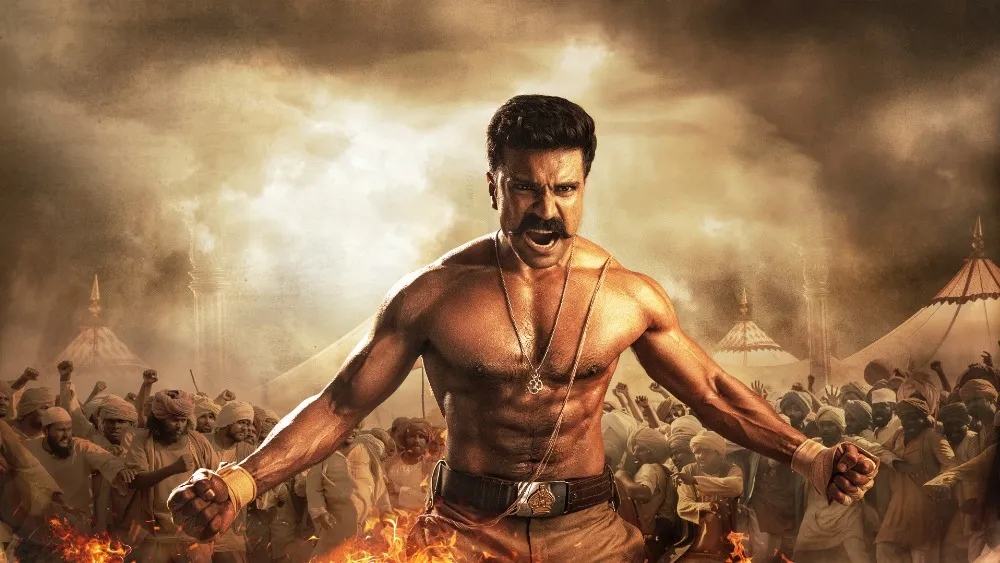
From mainstream popular culture (Bollywood, cricket, Hindu festivals, the wedding and fashion industries) to classical dance and music to the subcultures of meme, music and AI image-making to the radical arts of street theatres, Hindutva has been creating a cultural hegemony and an ecosystem, reorganizing our sensory life and training our perception. In a podcast, ‘Is India Developing a Fascist Aesthetic?’, writers and activists Suchitra Vijayan, Bhakti Shringarpure and Madhuri Sastry discuss the formation of fascist aesthetics in various forms. They discuss changing depictions, from Bollywood’s hyper-masculine action heroes to the aggressive iconography of Hindu gods, from the spectacle of nationalist weddings to the militarization of everyday imagery. They trace how authoritarian regimes have used visual culture—sculpted bodies, rigid pageantry and hyper-masculinity—to manufacture patriotic obedience. In India, these elements have been absorbed into entertainment, fashion and religion, reinforcing a Hindutva-dominated visual order. While these connections are visible, there are far more complex phenomena that need a detailed analysis.
Spectacle State is about so many things. But foremost, it is about the heart, about the feeling of ‘Hinduness’. Some elements of myths and cultural beliefs were already there. Hindutva wants to make them appear or seeable through the power of spectacle. The Sangh Parivar would say that these elements were already there, people were not able to see them before. The point is to make them palpable, palatable, visible and participatory, so people can feel pride in themselves. Hindutva is about the feeling and sensation of ‘Hinduness’. It is a matter of hurt, heart and art. But we do not know when it fills them with hate. The love object of hate itself is a paradox. It turns love into hate. It carries hate with the same passion as a lover carries love. Or perhaps the intensity of love and the intensity of hate come together in its formation, like a jilted lover. The heart also indicates an ecosystem—the core of the feeling, the site of sensation and overriding sentiments that colour our day-to-day politics. In other words, Hindutva is a matter of heart, a matter of faith, of love and hate, of liking and disliking. Its politics lie less in texts and speeches and more in perceptions, spectacles, actions and excess. Politics here is a moving spectacle. Hindutva can mobilize colour, sound, smell, touch, food, clothes, love, sex, spit at the level of spectacle. Hence, it is an aesthetic project too.
What could be some possible ways of readings these materials and the cultural phenomenon? There can be always many, perhaps as many as a dancing spectacle. The cultural phenomenon of Hindutva is now varied, often contradictory and so banal that one cannot claim to capture it fully. It is my passionate but partial reading, one punctured with several holes. What I present to you are fragments, the fragments of discourse that Roland Barthes calls figures. Sometimes, I follow B.R. Ambedkar to understand the caste menace of Hindu society, sometimes I follow Walter Benjamin to understand the wrath of capitalism and fascism, sometimes I follow Roland Barthes and Toni Morrison’s words. What Barthes noted in A Lover’s Discourse becomes so pertinent here:
The word is to be understood, not in its rhetorical sense, but rather in its gymnastic or choreographic acceptation; […] in a much livelier way, the body’s gesture caught in action and not contemplated in repose: the body of athletes, orators, statues.
For me, Hindutva does not work as a word or a concept. It is rather a gymnastic and choreographic term that moves with its body and actions. I want to see its body gesture caught in action, like one is watching the bodies of athletes, orators or statues. But it is not just an act of seeing from a distance but also getting inflicted by it, the way some subaltern communities in Bihar would face colonialism. They would hear their names or actions and they would get inflicted by fever; they would feel nauseous. When I hear about lynching, when I see mobs moving to the mosque, I feel motion sickness. By my location, by my association, I am so close to Hindutva that our exchange is almost happening at the bodily level, in a close proximity. Hindutva is not merely a word or a concept for me, it is choreographing my life. It is walking with me. I am a figure, like a lover at work, but I am caught in hate. I am not sure whether I call it a lover’s discourse or a hater’s discourse or a jilted lover, but we perhaps carry the same passion.
Hindutva as a gymnastic figure is also about feeling and desire. Full of vigorous energy and vitality, it carries an intense desire to shape the body and movement in certain ways. In the words of Sandhya Fuchs, it employs ‘theatrical performances’ of Hindu victimhood. The book also shows an unbreakable relationship between heart and art, cult and exhibition. In modern times, art can find its autonomy and cult will lose its aura, but Hindutva wants to protect it, knowing that there is already a split. It wants to bring the cult value through art and education and the exhibition of mythic past. It aims to create the cult of tradition. Hindutva is about honour, pride, war, valour and conquering at any cost—and deep masculine anxiety. If it cannot conquer in real life and history, it can go to conquer it on screen and hypermedia narratives. This book explores the ritual, spectacular and sensory dimension of ideology.
Standing at the crossroads of culture, aesthetics and politics, the book aims to offer some sideways reflections on the aesthetic expression and mobilization of Hindutva through various objects (they can also be read as images and figures) that perhaps carry its body and soul, its feelings and sensations. So much emotion is placed in these objects and figures that it can be said that they manifest the pulsating heart of Hindutva. As the old villains of the folktales would hang their soul in a tree, Hindutva hides its soul in the bulldozer and war machine—only make it exhibitory and spectacle.
Hindutva is an aesthetic project and cultural phenomenon but can be also read as an image and movement—a person and a machine too. I draw a portrait of the movements of the heart of Hindutva—cultural, psychological but also a figurative one—a walking Hindutva, a laughing Hindutva, a messianic and machinic Hindutva. Is it possible to make a portraiture of Hindutva through its aesthetic and spectacle? Hindutva depends on new aesthetics to produce its force, to disseminate its ideology. Most often these objects and images are not fixed. Today it is a bulldozer, tomorrow it can be a tank; today it is Hindutva pop, tomorrow it can be a new genre. The nature of images might change at the level of appearance, but they will carry the same substance at the level of arguments. What does Hindutva music want to argue through its loudness and its sword through its pointedness?
Like my exemplar, the late John Berger, I search for meanings in the image, objects and symbols of various mobilized objects to draw my analysis. From this perspective, a bulldozer does not remain a bulldozer, a motorized machine that helps in construction works, but it also acquires aesthetic value. Now, a bulldozer can be displayed in political processions and wedding ceremonies. It emerges as a symbol of power and pride and a symptom of destruction. I take seven to ten such objects and images to talk about the cultural politics of Hindutva. I read them for their appearance and sensations, not so much for their ‘use’ purpose. The Hindutva bulldozer is not an earth mover, nor is its sword for the real war. They are aesthetic and cultural objects that participate in exhibitions and ceremonies. They go to political rallies and museums. They are evaluated for their appearance and stylistic design. The aestheticization and fun of violence, and the brutalization of art and life, are not uncommon, as is evident from the cases of lynching and posing for selfies with a brutalized body. The body gets so staged that it can be read as an art or performance installation. Such extreme acts ask us to do an extreme reading—a reading that can capture the excesses of these figures and objects in all possible ways and beyond, where one might say that perhaps you are reading too much. An extreme reading is a method of reading that comes close to enacting street fights or street theatre against the authorities or walking in the violent zones without reeling under the pressure of the spectacle or the unleashed fear. It is reading at the level of the body and senses. If a bulldozer or a sword appears as a display object of Hindutva, an act of lynching in a street can be read as a bodywork.
Not Side Dishes, but the Meal: Hindutva as an Aesthetic Project | An Excerpt from Spectacle State
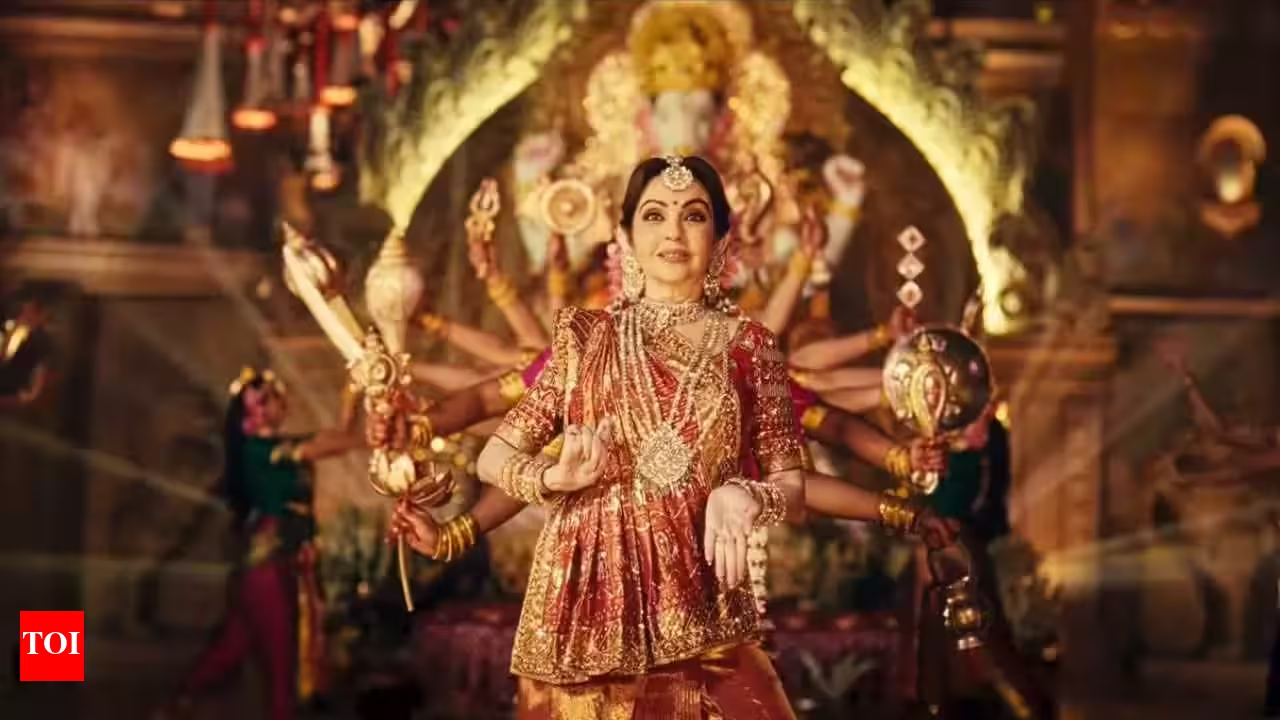
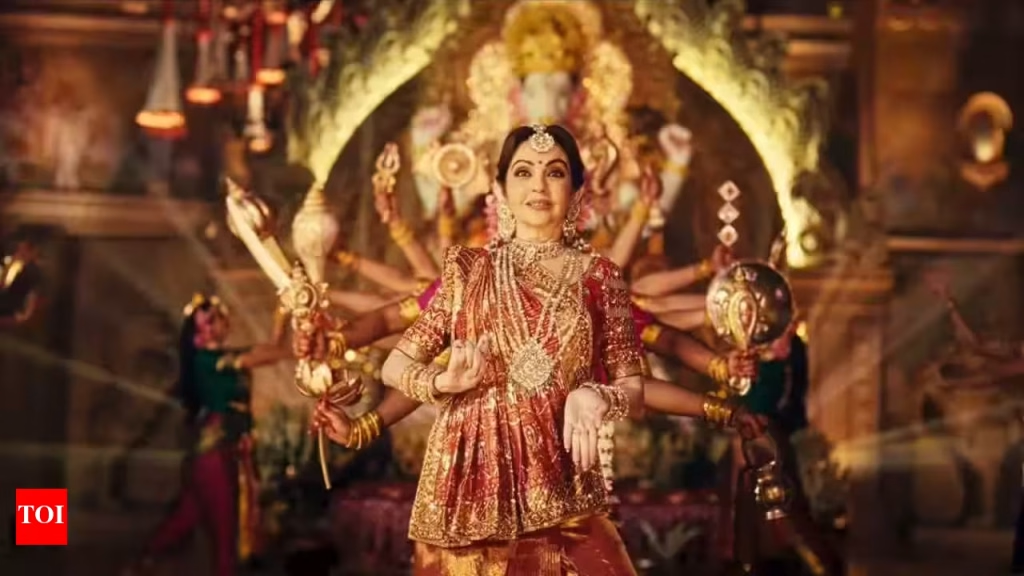
Nita Ambani performs at 'Nita Mukesh Ambani Cultural Centre' (NMACC), at Jio World Centre. Photo Credit: ANI
Editor’s Note
“I wrote the book to address the way Hindutva was able to cast sammohan (spell), the way it was able to emerge as a fashion and fascination for a vast section of people in North India, when I saw people finding violence and exclusion attractive and appealing to an extent that lynching was almost turning into a site of jouissance.” That is how Brahma Prakash explained to me why he wrote Spectacle State. The spell he describes has never been harmless. Muslims, Dalits, Christians, and others cast as outsiders to the Hindu nation have disproportionately borne its vioelnce. The spectacle is staged on their bodies, and an audience is summoned to watch and cheer. Hindutva’s processions and rallies long predate Narendra Modi, who has been India’s prime minister since 2014. Under his rule, though, the spectacle has grown to a new scale. His power reaches into people’s lives and bodies, and into their sense of reality: how they understand the world, what they accept as fact, and what they believe is politically possible. Prakash’s book shows how that power has been built and sustained. “Besides ideology,” he writes, “Hindutva feeds on cultural and aesthetic reservoirs, on conscious, unconscious and irrational behaviors that most often appear in the form of spectacle.” Looking past dogma, he asks how ordinary people came to find this grotesque view of the world attractive. He traces the answer through images, performances, rituals, aesthetics, religious processions, and public displays of power. These forms give political ideas a presence people can see, feel, and imitate. In his account, spectacle does more than convey a message: it makes ideology something people participate in, remix, and reproduce in their daily lives. By tracing how violence and exclusion become sources of pleasure, pride, and belonging, Spectacle State asks us to look beyond what political spectacles show us. It asks what they teach people to desire, and how watching can itself become a form of participation.
The following is an excerpt from Spectacle State: How Hindutva Shapes Feeling and Culture.
The unparalleled rise of the Bharatiya Janata Party (BJP) and the culture of Hindutva came as a shock and surprise for critics and observers. Now, Hindutva has a visible bearing on the socio-political and cultural lives of people in India. It is no longer on the fringes. It has led to a drastic shift in the thinking about faith, religion, politics, institutions and social relationships. There are several writings on the popular emergence of Hindutva and its functions in relation to nationalism, religion, democracy, minoritization and so on. And while cultural nationalism remains at the core of the right-wing politics, less focus has been paid to its cultural and aesthetic facets. Whether it is about the emergence of leaders as cult figures, the formation of bhakts (ardent followers), or the manifesting of politics as performance and spectacle, or as imagery and symbols, Hindutva politics finds strong resonance in aesthetics—it functions at the level of the body and senses; it seeks to turn politics into sensuous performance. It can create substance without the substance. Its response is gutsy, gustatory and galvanizing at various levels—it is not rational: it is based on instinct, on taste and smell, and on instant, electric-shock-level reaction.
Spectacle State is about so many things. But foremost, it is about the heart, about the feeling of ‘Hinduness’. Some elements of myths and cultural beliefs were already there. Hindutva wants to make them appear or seeable through the power of spectacle.
Hindutva has been working at the level of perception and feeling. It constantly deploys the aesthetic modes of perceptual politics using perpetual crisis, including what Naomi Klein calls shock doctrine, by the act of demonetization, war and by providing other collective Hindutva shocks. These strategies of Hindutva perhaps necessitate a look into an overarching reading of its aesthetic and cultural phenomena. Spectacle State aims to bring aesthetic, performative and cultural logic to the understanding of this as a wider phenomenon. It is here that the arts and the heart of Hindutva come together, and so do the processes of aestheticization and politicization. In this background, I situate Hindutva as an aesthetic project and a cultural phenomenon. Aesthetics and cultural performance are not its side dishes. They are its meal. They are its fire-giving force. Besides ideology, Hindutva feeds on cultural and aesthetic reservoirs, on conscious, unconscious and irrational behaviours that most often appear in the form of spectacle. It is through the spectacle that Hindutva walks in; it is through the spectacle that Hindutva mobilizes the mass feeling. It is the spectacle that becomes its body. The images and performances are the lifeblood of Hindutva; like fascism, it is a body and laboratory of its theatre. Hindutva is more about experiencing than the ideology. In a media-saturated sphere, you first get the taste of Hindutva through its image and rhythm. In an image-saturated society, Hindutva invests so much in carving images, crafting them and consolidating them.
Aesthetics and cultural performance are not its side dishes. They are its meal.
From mainstream popular culture (Bollywood, cricket, Hindu festivals, the wedding and fashion industries) to classical dance and music to the subcultures of meme, music and AI image-making to the radical arts of street theatres, Hindutva has been creating a cultural hegemony and an ecosystem, reorganizing our sensory life and training our perception. In a podcast, ‘Is India Developing a Fascist Aesthetic?’, writers and activists Suchitra Vijayan, Bhakti Shringarpure and Madhuri Sastry discuss the formation of fascist aesthetics in various forms. They discuss changing depictions, from Bollywood’s hyper-masculine action heroes to the aggressive iconography of Hindu gods, from the spectacle of nationalist weddings to the militarization of everyday imagery. They trace how authoritarian regimes have used visual culture—sculpted bodies, rigid pageantry and hyper-masculinity—to manufacture patriotic obedience. In India, these elements have been absorbed into entertainment, fashion and religion, reinforcing a Hindutva-dominated visual order. While these connections are visible, there are far more complex phenomena that need a detailed analysis.
Spectacle State is about so many things. But foremost, it is about the heart, about the feeling of ‘Hinduness’. Some elements of myths and cultural beliefs were already there. Hindutva wants to make them appear or seeable through the power of spectacle. The Sangh Parivar would say that these elements were already there, people were not able to see them before. The point is to make them palpable, palatable, visible and participatory, so people can feel pride in themselves. Hindutva is about the feeling and sensation of ‘Hinduness’. It is a matter of hurt, heart and art. But we do not know when it fills them with hate. The love object of hate itself is a paradox. It turns love into hate. It carries hate with the same passion as a lover carries love. Or perhaps the intensity of love and the intensity of hate come together in its formation, like a jilted lover. The heart also indicates an ecosystem—the core of the feeling, the site of sensation and overriding sentiments that colour our day-to-day politics. In other words, Hindutva is a matter of heart, a matter of faith, of love and hate, of liking and disliking. Its politics lie less in texts and speeches and more in perceptions, spectacles, actions and excess. Politics here is a moving spectacle. Hindutva can mobilize colour, sound, smell, touch, food, clothes, love, sex, spit at the level of spectacle. Hence, it is an aesthetic project too.
What could be some possible ways of readings these materials and the cultural phenomenon? There can be always many, perhaps as many as a dancing spectacle. The cultural phenomenon of Hindutva is now varied, often contradictory and so banal that one cannot claim to capture it fully. It is my passionate but partial reading, one punctured with several holes. What I present to you are fragments, the fragments of discourse that Roland Barthes calls figures. Sometimes, I follow B.R. Ambedkar to understand the caste menace of Hindu society, sometimes I follow Walter Benjamin to understand the wrath of capitalism and fascism, sometimes I follow Roland Barthes and Toni Morrison’s words. What Barthes noted in A Lover’s Discourse becomes so pertinent here:
The word is to be understood, not in its rhetorical sense, but rather in its gymnastic or choreographic acceptation; […] in a much livelier way, the body’s gesture caught in action and not contemplated in repose: the body of athletes, orators, statues.
For me, Hindutva does not work as a word or a concept. It is rather a gymnastic and choreographic term that moves with its body and actions. I want to see its body gesture caught in action, like one is watching the bodies of athletes, orators or statues. But it is not just an act of seeing from a distance but also getting inflicted by it, the way some subaltern communities in Bihar would face colonialism. They would hear their names or actions and they would get inflicted by fever; they would feel nauseous. When I hear about lynching, when I see mobs moving to the mosque, I feel motion sickness. By my location, by my association, I am so close to Hindutva that our exchange is almost happening at the bodily level, in a close proximity. Hindutva is not merely a word or a concept for me, it is choreographing my life. It is walking with me. I am a figure, like a lover at work, but I am caught in hate. I am not sure whether I call it a lover’s discourse or a hater’s discourse or a jilted lover, but we perhaps carry the same passion.
Hindutva as a gymnastic figure is also about feeling and desire. Full of vigorous energy and vitality, it carries an intense desire to shape the body and movement in certain ways. In the words of Sandhya Fuchs, it employs ‘theatrical performances’ of Hindu victimhood. The book also shows an unbreakable relationship between heart and art, cult and exhibition. In modern times, art can find its autonomy and cult will lose its aura, but Hindutva wants to protect it, knowing that there is already a split. It wants to bring the cult value through art and education and the exhibition of mythic past. It aims to create the cult of tradition. Hindutva is about honour, pride, war, valour and conquering at any cost—and deep masculine anxiety. If it cannot conquer in real life and history, it can go to conquer it on screen and hypermedia narratives. This book explores the ritual, spectacular and sensory dimension of ideology.
Standing at the crossroads of culture, aesthetics and politics, the book aims to offer some sideways reflections on the aesthetic expression and mobilization of Hindutva through various objects (they can also be read as images and figures) that perhaps carry its body and soul, its feelings and sensations. So much emotion is placed in these objects and figures that it can be said that they manifest the pulsating heart of Hindutva. As the old villains of the folktales would hang their soul in a tree, Hindutva hides its soul in the bulldozer and war machine—only make it exhibitory and spectacle.
Hindutva is an aesthetic project and cultural phenomenon but can be also read as an image and movement—a person and a machine too. I draw a portrait of the movements of the heart of Hindutva—cultural, psychological but also a figurative one—a walking Hindutva, a laughing Hindutva, a messianic and machinic Hindutva. Is it possible to make a portraiture of Hindutva through its aesthetic and spectacle? Hindutva depends on new aesthetics to produce its force, to disseminate its ideology. Most often these objects and images are not fixed. Today it is a bulldozer, tomorrow it can be a tank; today it is Hindutva pop, tomorrow it can be a new genre. The nature of images might change at the level of appearance, but they will carry the same substance at the level of arguments. What does Hindutva music want to argue through its loudness and its sword through its pointedness?
Like my exemplar, the late John Berger, I search for meanings in the image, objects and symbols of various mobilized objects to draw my analysis. From this perspective, a bulldozer does not remain a bulldozer, a motorized machine that helps in construction works, but it also acquires aesthetic value. Now, a bulldozer can be displayed in political processions and wedding ceremonies. It emerges as a symbol of power and pride and a symptom of destruction. I take seven to ten such objects and images to talk about the cultural politics of Hindutva. I read them for their appearance and sensations, not so much for their ‘use’ purpose. The Hindutva bulldozer is not an earth mover, nor is its sword for the real war. They are aesthetic and cultural objects that participate in exhibitions and ceremonies. They go to political rallies and museums. They are evaluated for their appearance and stylistic design. The aestheticization and fun of violence, and the brutalization of art and life, are not uncommon, as is evident from the cases of lynching and posing for selfies with a brutalized body. The body gets so staged that it can be read as an art or performance installation. Such extreme acts ask us to do an extreme reading—a reading that can capture the excesses of these figures and objects in all possible ways and beyond, where one might say that perhaps you are reading too much. An extreme reading is a method of reading that comes close to enacting street fights or street theatre against the authorities or walking in the violent zones without reeling under the pressure of the spectacle or the unleashed fear. It is reading at the level of the body and senses. If a bulldozer or a sword appears as a display object of Hindutva, an act of lynching in a street can be read as a bodywork.