


The unequal cost of surviving rising temperatures
On a peak summer day in June 2026, as I walk into Ladpur, a small village in Madhya Pradesh’s Bundelkhand region, it looks deserted. The temperature today is around 46°C. The sole road that leads to the village is bordered by farmland on both sides. On one of them, around 10 women bend and manually pluck weeds in a near-rhythmic fashion, clearing the land to make way for the new crop to be sown.
“We are from a nearby village called Radhapur,” says 40-year-old Anguri. “When big farmers need work done in their fields, they call full-time farm laborers who work on another person’s agricultural land — khetihar mazdoor. We get a fixed daily rate: Rs. 400 for us, and 500 for the men. Typically, work starts around 8 am and goes on till there is light in the field, around 7 pm.” According to reports by the Directorate of Economics and Statistics (DESAGRI), agricultural laborers make up roughly 36 percent of the total main and marginal workforce in Bundelkhand, forming the single largest occupational group in the region.
The khetihar mazdoors in the district are mostly from Dalit and Adivasi communities which include the Chamars, a major Scheduled Caste, and other socially disadvantaged caste groups such as the Balmiki or Chuhra community. Historically, these communities have faced long-standing prejudice, caste-based or racial discrimination that have led to stripped generational wealth, land ownership, and social standing. The landowner’s daughter-in-law, 25-year-old Anita Yadav, stands at the edge of the farm watching the women. Yadavs (also known as Ahirs) are the dominant caste in the Bundelkhand region. Pointing to her family’s land, Anita says, “We employ women labor for this work, to make the farm ready for crop planting and then sowing the seeds. This is three or four days’ work.” Anita’s job is to bring them water from a nearby well.
It is our majboori. To run our homes, we have to work in all weather.
I ask the women, “Does working in this heat feel inhumane?” Initially, they brush the question aside. Almost in unison, they say, “Arre hum aurton ko kuch garmi nahi lagti, humein koi dikkat naa hai. [We women don’t feel the heat, we are absolutely fine.]”
Sheela, 35, who is here with her two children, a 5-year-old girl, and a 1-year-old boy says, “See, my children are also here with me. They are fine.” Wouldn’t they be better off at home under a fan? “Yes, but how can I leave them unattended? Here they’re before me, and my elder daughter looks after the younger one. I try to make them drink water every hour so that this heat doesn’t affect them.”
This is when the others begin to open up and lament working in the heat and enduring health issues. “Who wants to work in such heat? It is our majboori. To run our homes, we have to work in all weather,” one of them says. “We work in the hope that our children do not ever work like this in the future.”
Who feels the heat?
The burden of a 46°C afternoon does not fall evenly across society. In India, heat is experienced differently depending on your class, caste, and gender. The difference between those who do the back-breaking fieldwork under the afternoon sun, and those who oversee it, is not incidental. Depending on who owns land, who owns a well, and who depends on daily wages earned in the field, the same afternoon is experienced differently.
For some, there is no escape from heat at all. Deaths due to heatstroke have risen by more than 70 percent in India over the past 15 years (2009–2024) as per data released by the National Crime Records Bureau (NCRB).
The Polis Project‘s ground reporting in rural Bundelkhand from 20-26 June 2026, and in Delhi NCR, an urban center, over a few days of May and July 2026, set out to find out how heatwaves disproportionately affect marginalized castes, classes, and genders. We found that heat is no longer about discomfort. It means mounting hospital bills, lost wages, sleepless nights and spoiled produce and goods, apart from being a serious threat to life.
Bundelkhand
Rural Bundelkhand (spread across parts of Uttar Pradesh and Madhya Pradesh) is a drought-prone, semi-arid region, with rocky terrain and limited groundwater. The erratic rainfall and rising temperatures here have made water access increasingly uncertain. From May–July 2026, many Indian cities made it to the list of 97 of the world’s 100 hottest cities, as reported by the Hindustan Times. Among these was Jhansi in the Bundelkhand region. Daytime temperatures often exceeded 45°C, and nighttime temperatures went as high as 40°C. The brutal heatwave left people struggling.
Jhansi’s population, estimated at 759,000 in 2026, consists mainly of people dependent on farming and small trade, including textiles and transport services. Each day in extreme heat requires them to adjust their lives and livelihoods to the weather. For many, a day starts before 5 am, for the sun makes the outdoors unbearable after noon. Sunaina Devi, a domestic worker from Galla Mandi, says, “I ask my employers to let me start a bit earlier than usual, so I don’t have to spend the hottest hours walking a kilometer in the heat.”
“Afternoons mean no customers,” says a small textile trader with a wholesale shop in Manik Chowk, Jhansi. The market lanes of Manik Chowk, teeming with shoppers in the evening, wear a deserted look in the afternoon. Shopping in 40–45°C outdoors is unthinkable.
Around 30 km from the main city of Jhansi, in Ladpur, inhabited largely by the agrarian community, lives Rani, a khetihar mazdoor. She belongs to the Kushwaha community, an Other Backward Class (OBC). She’s up at 4 am every day, and starts work in the field around 6, where she works for 10–12 hours. “We women do around 70 percent of the field work. The men mostly work outside, getting seeds and other things for farming, or selling crops,” she says. Like Rani, most farm laborers are women, often chosen over men because their pay rates are at least 20 percent less. As a result, they are forced to keep working during the hottest hours. “Harsh sun or not, we have to work in the field. We cannot afford to fall sick, or take a break. If I get heat rashes, I ask my husband to buy me a cooling powder, which gives me some relief.” Some days are worse than others, she says. “Extreme heat sometimes gives us fever and vomiting. When that happens, we get medicine from the chemist but still go to work the next day.” For Rani and other workers, especially the women, these symptoms have become part of everyday life during the summer.
Dr. Amlendu Yadav, who treats several heatwave patients at RML Hospital, says, “Heat exhaustion is often characterized by excessive sweating, dizziness, headache, nausea, rapid pulse and muscle cramps. The concern is when workers such as daily wage and construction laborers, gig workers and farmers, dismiss these warning signs as routine summer discomfort, and continue working, increasing their risk of progressing to heatstroke.”
The politics of what you can afford to wear to get relief from the heat
Like the others, Rani’s first response to questions about working in the extreme heat is an innocent answer: there’s no problem. When I ask her why in temperatures above 45°C, she’s wearing a winter cardigan over her sari, Rani opens up about her “real” issues. “There is no other way to protect oneself from sunburns while working in this heat. So I wear a thick cardigan. It’s the only way to survive it.”
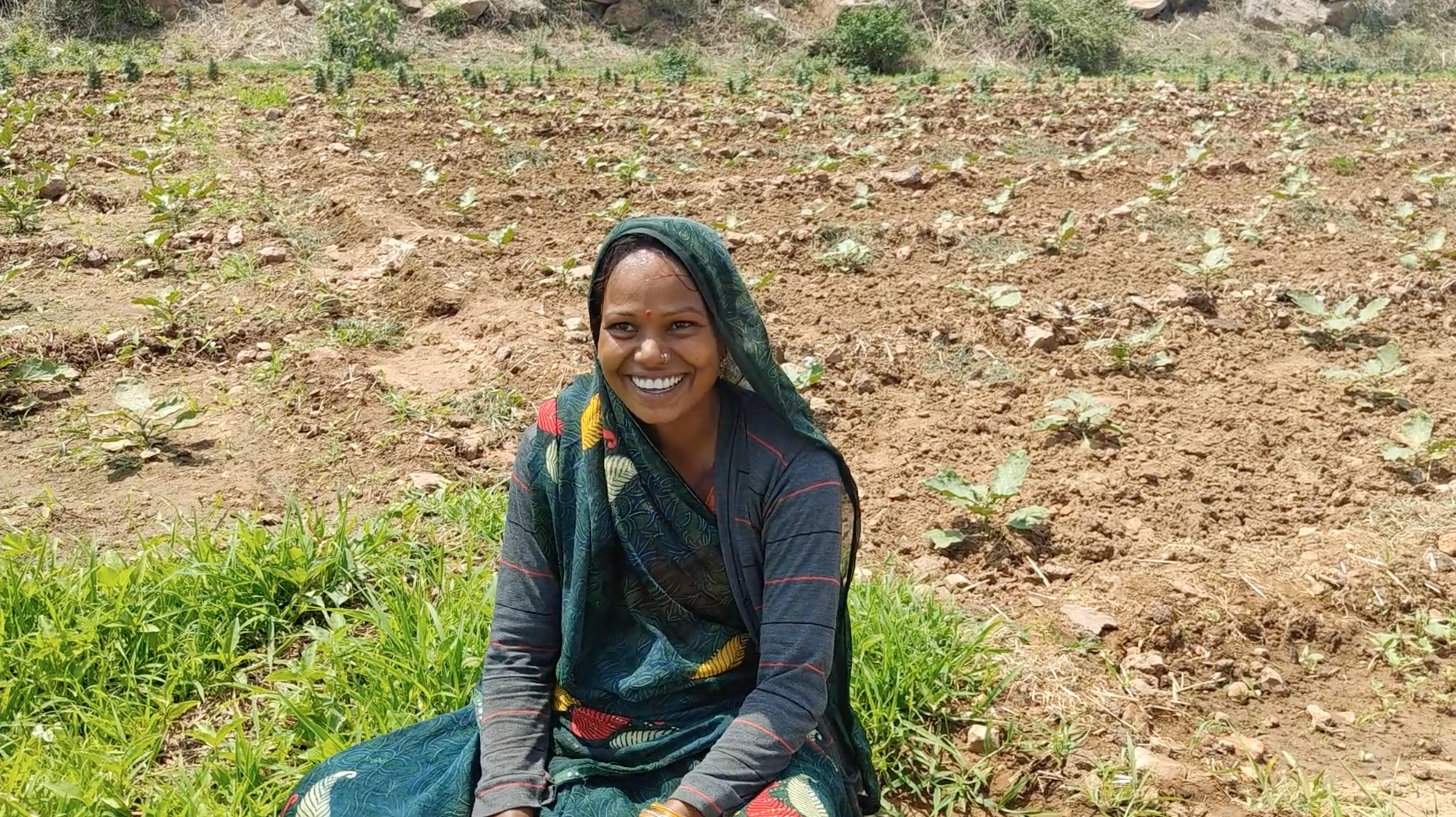
“Pura sharir chinminane lagta hai. Aur pure sharir mein kururai ho jatee hai. (It feels like there are pinpricks burning through my body. I have a rash across my face, neck, and back). Sometimes, there is swelling on the skin also,” she said, while trying to cover her head with her sari. “There is no other way to protect oneself from the sun that burns the skin.”
Sitting on the ground on the farm, Rani is wearing a polyester saree with a sweater while working in the fields. She didn’t choose her clothes because they suited the weather. She chose them because they fit her budget. “This sari costs only Rs. 200 and lasts for years. It doesn’t tear easily, even in the worst conditions. We can’t afford cotton, even if it is breathable,” she said. A cloth merchant from Jhansi Kapda Mandi, Raju Patwari, explains, “We are wholesale merchants for Bundelkhand’s villages like Karera, Prithvipur, Lidhora, Tikamgarh, Muaranipur, Baruasagar, Orai and Kaonch. Earlier, workers bought cotton clothes suitable for summer wear like dhoti, lungi, and safi. But in the last five years, cotton prices have increased by more than 50 percent, so they’re forced to shift to polyester.”
How extreme heat is leading to more pesticides in our food
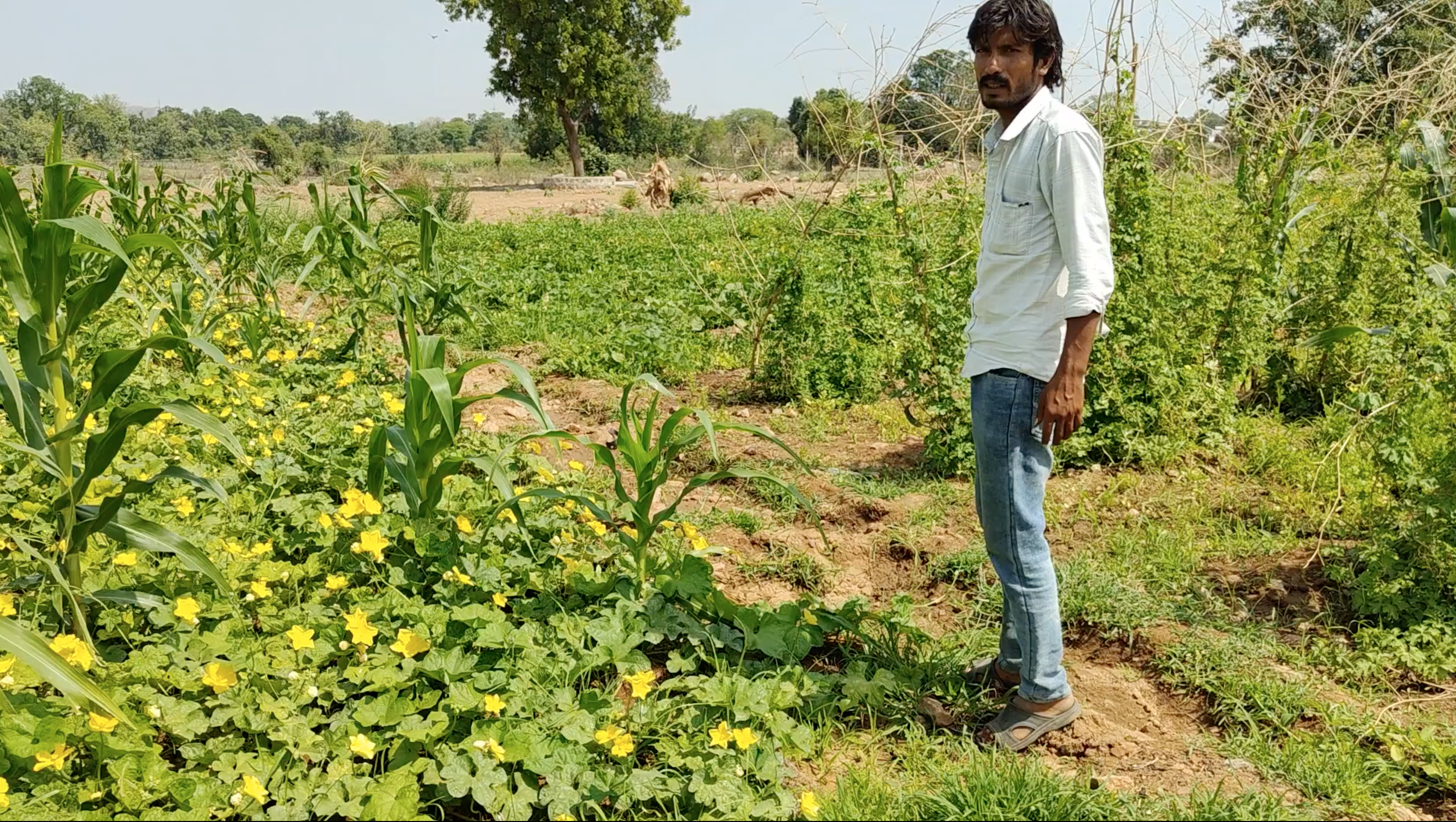
In rural India, farmers say that the extreme heat is felt not only by the body, but also by the earth, leading to crop losses, rising input costs, and changing pest patterns. Rani’s husband, Dinesh Kushwaha, says that traditionally, farmers used to grow peanuts, white pea, moong, urad, wheat, and sesame in this region. Today, extreme heat has forced farmers, especially smaller ones, to switch to vegetables and flowers, which carry less financial risk. “This heat kills crops, and unlike wealthy farmers, we can’t afford to lose even a small percentage of our harvest.”
Golu Kushwaha, another small farmer, said climate change had directly affected rural communities. “A patch of land that used to give us 10 kg of produce, now gives only 2. This extreme heat has stunted crop yield, so we are forced to use more chemicals,” said Golu. Dinesh has been trying to move towards organic farming. “We are being forced to eat poison in the form of chemicals, whose use is only increasing with climate change. Most farmers cannot achieve a proper yield without fertilizers. The quantity of pesticide has doubled over the last few years to give us the same produce. It’s now a necessity,” he says.
Farmers linked the region’s changing ecology to an increase in pests and patterns of attack. Most farmers don’t plant trees around their farms anymore to increase their area of cultivation. Increasingly, traditional forests are being cut. This directly affects farming because earlier, when an area was infected by pests, dense tree cover would help keep the infestation relatively localized, they said. Now, without tree cover, pests can spread quickly with the wind across a larger area, forcing more farmers to use pest-control measures. “We are all playing with the lives of our children,” said Dinesh. “Earlier, when someone fell sick, we would say eat fruits. Have apples or guavas. Now, none of those are produced without pesticides.”
Dinesh also teaches children from the nearby areas every morning between his farm work. He believes that, “Government policies should take into account heat and its financial burden on us. Equipping farmers to deal with it without the use of chemicals and pesticides can save farming, and is the only way to fight climate change.”
When heat-related livelihood loss forces people to leave their villages
For many in Bundelkhand, the story of surviving heat does not end in the fields. It continues on trains headed to bigger cities in search of a livelihood.
A survey conducted by the Bundelkhand Apda Nivaran Manch, a civil society network operating in the region, found that in many areas, climate change and extreme heat have triggered migration. Panwari Block, in Mahoba district, Uttar Pradesh, experiences widespread seasonal migration driven by chronic water scarcity, climate variability, and limited livelihood opportunities. Agriculture remains the primary source of income for most households, but dependence on rain-fed farming, recurrent droughts, declining groundwater levels and inadequate irrigation have significantly reduced agricultural productivity. Consequently, many families must migrate seasonally to find work during this period.
A rapid assessment across 17 Gram Panchayats, covering 9,195 households, found that 3,623 households, or 39.4 percent, were affected by seasonal migration. Another rapid assessment conducted across 10 Gram Panchayats in Sarila Block, Hamirpur district, covering 3,509 households with an estimated population of 18,885, found that 990 households, or 28.2 percent, were affected by seasonal migration.
The findings indicate that migration is predominantly seasonal and distress-driven, reflecting a lack of sustainable livelihood opportunities. “The burden falls disproportionately on Scheduled Caste and economically vulnerable Other Backward Class households, many of whom own small or marginal landholdings and have limited access to irrigation, productive assets and alternative income sources,” the survey states.
Environmentalists have linked the region’s worsening heat to ecological damage, deforestation, shrinking water bodies, mining along the Ken River, and changes in land-use patterns in the surrounding area. Bundelkhand-based climate activist Sanjay Singh says the region’s proximity to the Tropic of Cancer naturally makes it warm, but the gradual loss of ponds, forests, and hills has aggravated conditions over the years.
DELHI NCR: The impact of extreme heat in urban settings
More than 400 kilometers away from Jhansi, the same crisis unfolds in Delhi. Blue-collar migrant workers and petty traders face a disproportionate impact of the heatwave. Survival depends on a capacity to rent in greener pockets, buy an air-conditioner, or work indoors.
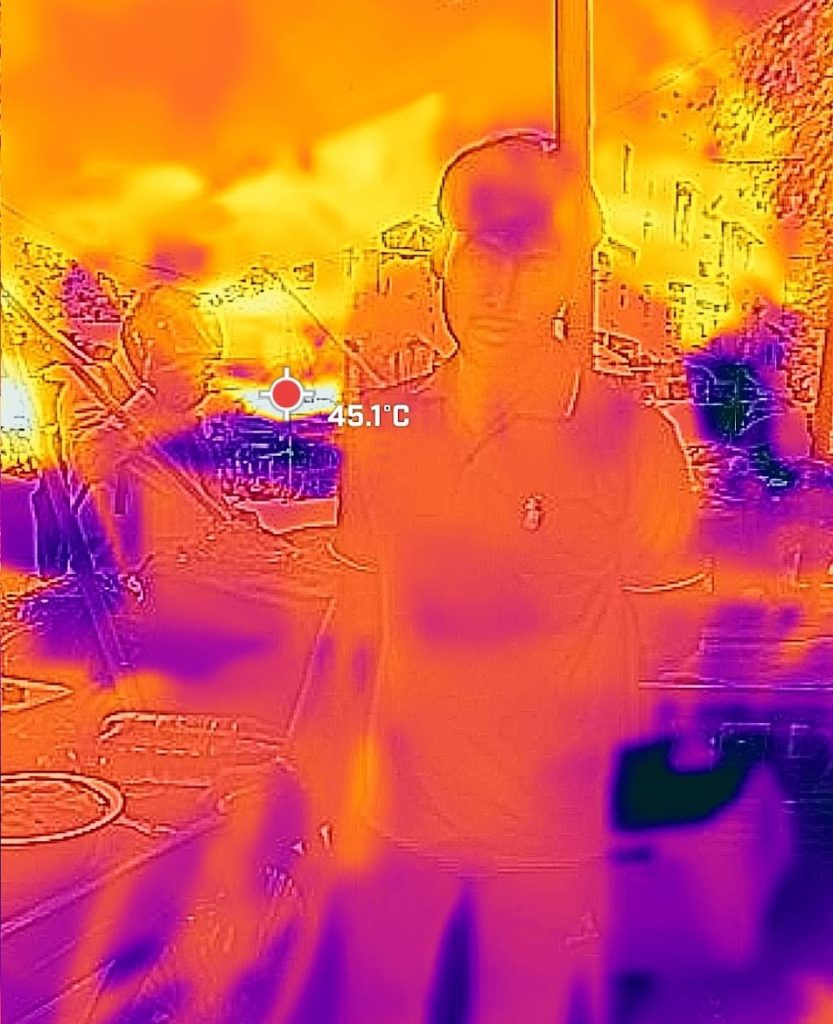
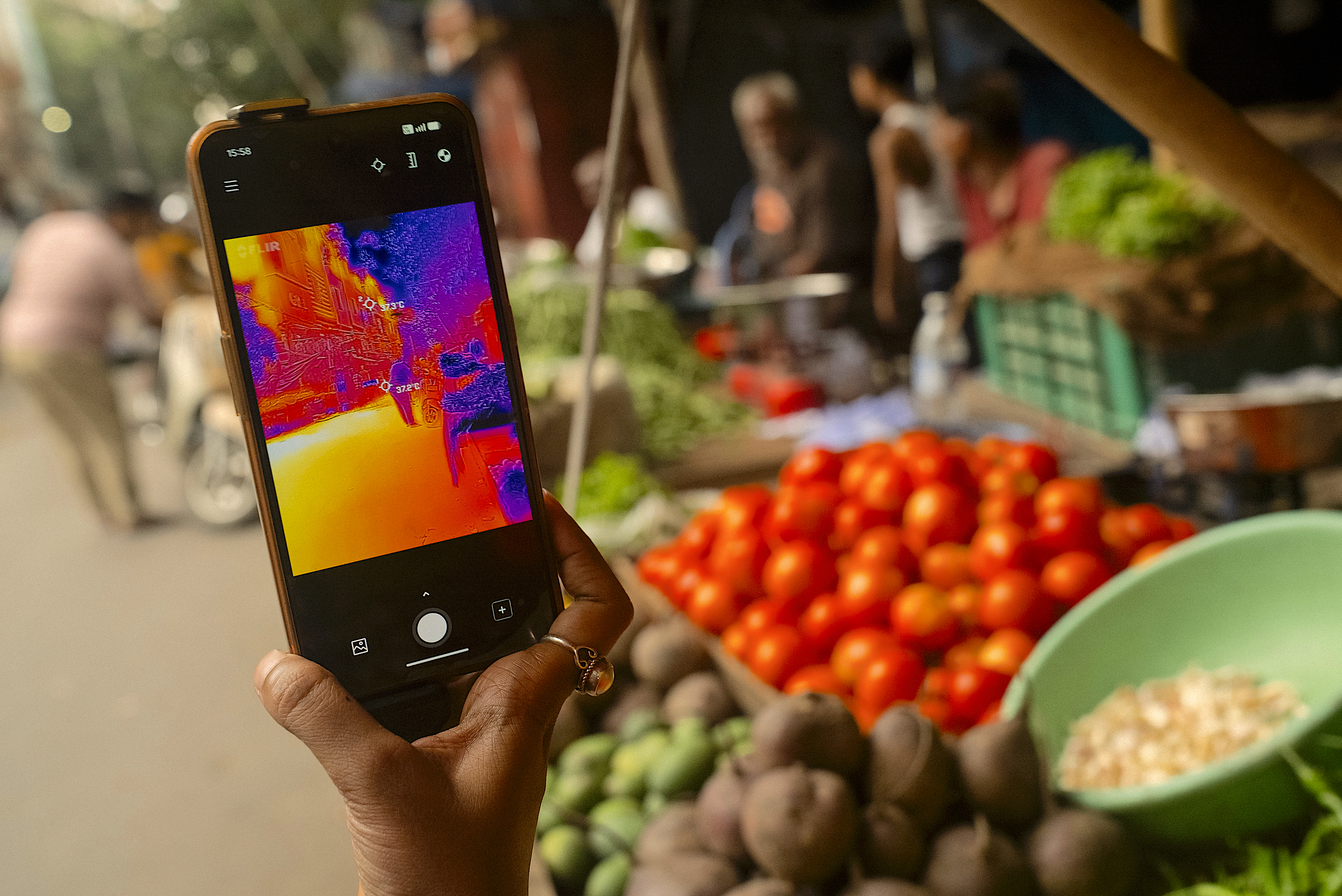
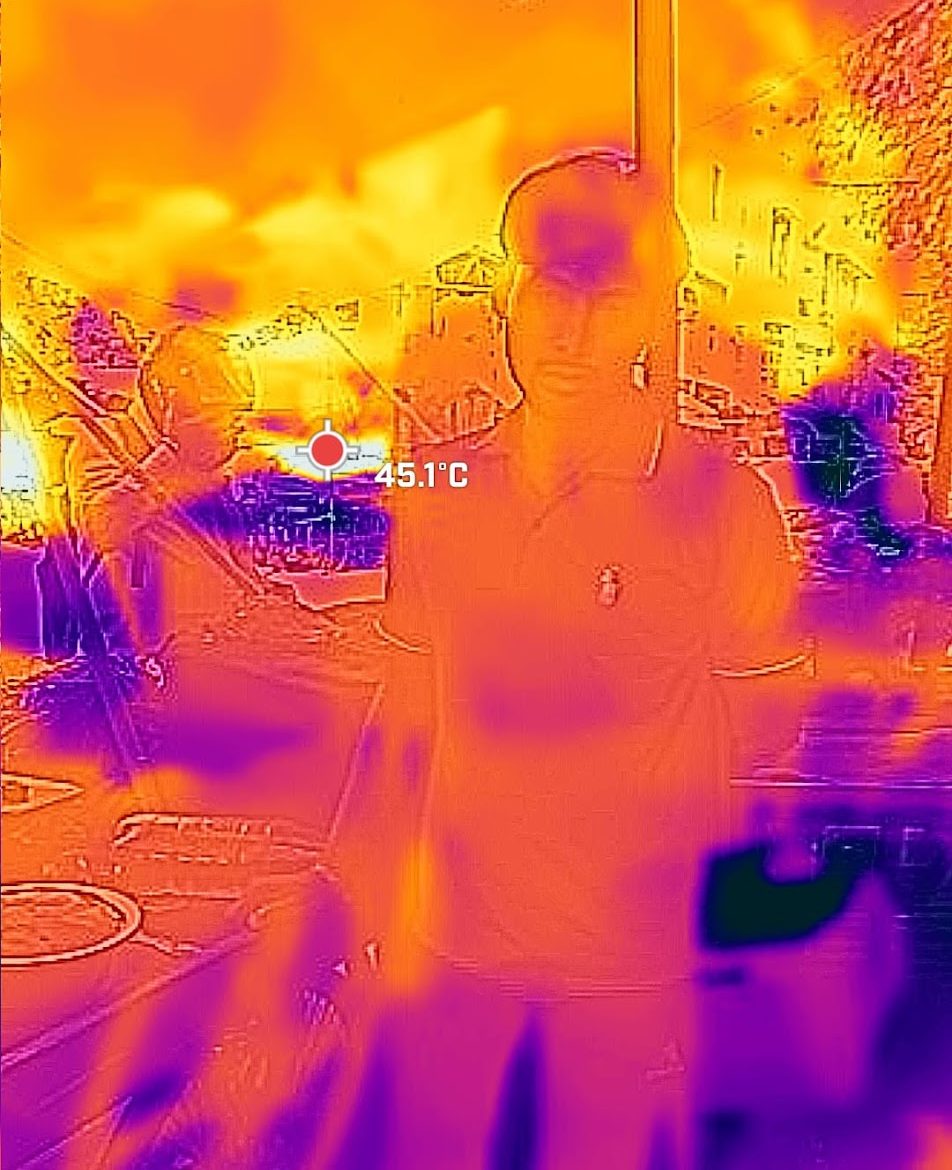
On July 31, 2026, at 3 pm, the Polis team, equipped with a thermal camera and a wet-bulb thermometer, went to Sundar Nagri’s vegetable market. Our thermal camera images revealed pockets of intense heat invisible to the naked eye. A road that appears merely warm under the afternoon sun shows up as one of the hottest spots on the screen. The ground and concrete buildings around radiate heat back into the air. Street vendors stood around with their vegetable carts with small battery-operated fans as their only relief from the heat. These vendors sit beside their carts for hours, exposed to a combination of high temperature, humidity, and reflected heat. The IMD forecast for that day was “cloudy skies with humidity.” However, high humidity pushed the heat index, or ‘feels like’ temperature, to nearly 49°C.
Sitting next to his vegetable cart, right in front of the battery fan’s face, Raja Tamar, 20, is a third-generation vegetable seller. Legal rulings—such as those by the Jharkhand High Court—recognize the Tamaria (also spelled Tamar or Tamdia) as a sub-caste or group of the Munda community, placing them under the Scheduled Tribe (ST) category, as reported by Live Law.
Raja, a student of political honors in a distance education program, told Polis, “Post-Covid, my brother and I were forced to leave our studies and start selling vegetables with our father because of our family’s financial condition.” For Raja’s family, a workday begins at 5 am. From procuring vegetables from the mandi to running the cart, the family spends at least 12 hours working outdoors in all weather conditions. Raja told us, “To earn our livelihood means spending the entire day outdoors and directly facing the brunt of the heat. I had read about climate change when I was in class 5. The reality is much harsher, for people like us who are from this economic section of society.”
A decade ago, the summer heat was uncomfortable, but now it is harmful.
He added, “A decade ago, the summer heat was uncomfortable, but now it is harmful. Last month, from May 25–28, the heat was unbearable. It was extremely hot not just outside but also inside our house. I was taking a bath four times a day, because that was the only way to get some relief. Even sitting in front of our lone cooler did not stop me from sweating.”
On May 25, 2026, Delhi recorded its warmest night in 14 years. Every summer, as the city reels under intense daytime heat, it’s nights no longer offer relief, according to a new report from the Center for Science and Environment (CSE). Raja says, “We sleep on the terrace hoping that while daytime temperatures were bad, the nights at least would be cooler. But the nights were also so hot that I was sweating the entire night, and subsequently my health was affected.”
For Raja and many others, heat also directly affects livelihoods, from increased medical and utility bills (electricity and water) to income loss. “Due to this heat, the vegetables spoil faster. We have no provision for cold storage. We buy in smaller batches, which works out to be costlier,” he says. At the same time, he is forced to compete for margins against big players who have access to bulk procurement and storage. For Raja and others like him, the hotter it gets, the more it costs to keep earning the same livelihood.
We drink less water as there are no toilets around
Next to Raja’s cart, Ruksana (55), and her husband, run a stall selling vegetables for 12-15 hours a day. For a week now, both have been suffering from diarrhea, nausea and dizziness—heat exhaustion symptoms. “This small fan and a small cooler at home are our only relief. For us, heat is not just discomfort. It is life-threatening,” says Ruksana. For people from economically weaker sections, she believes, getting sick does not mean the luxury of resting. “We can’t shut shop or stand in lines to get good treatment. We depend on local chemists to get medicines,” she lamented.
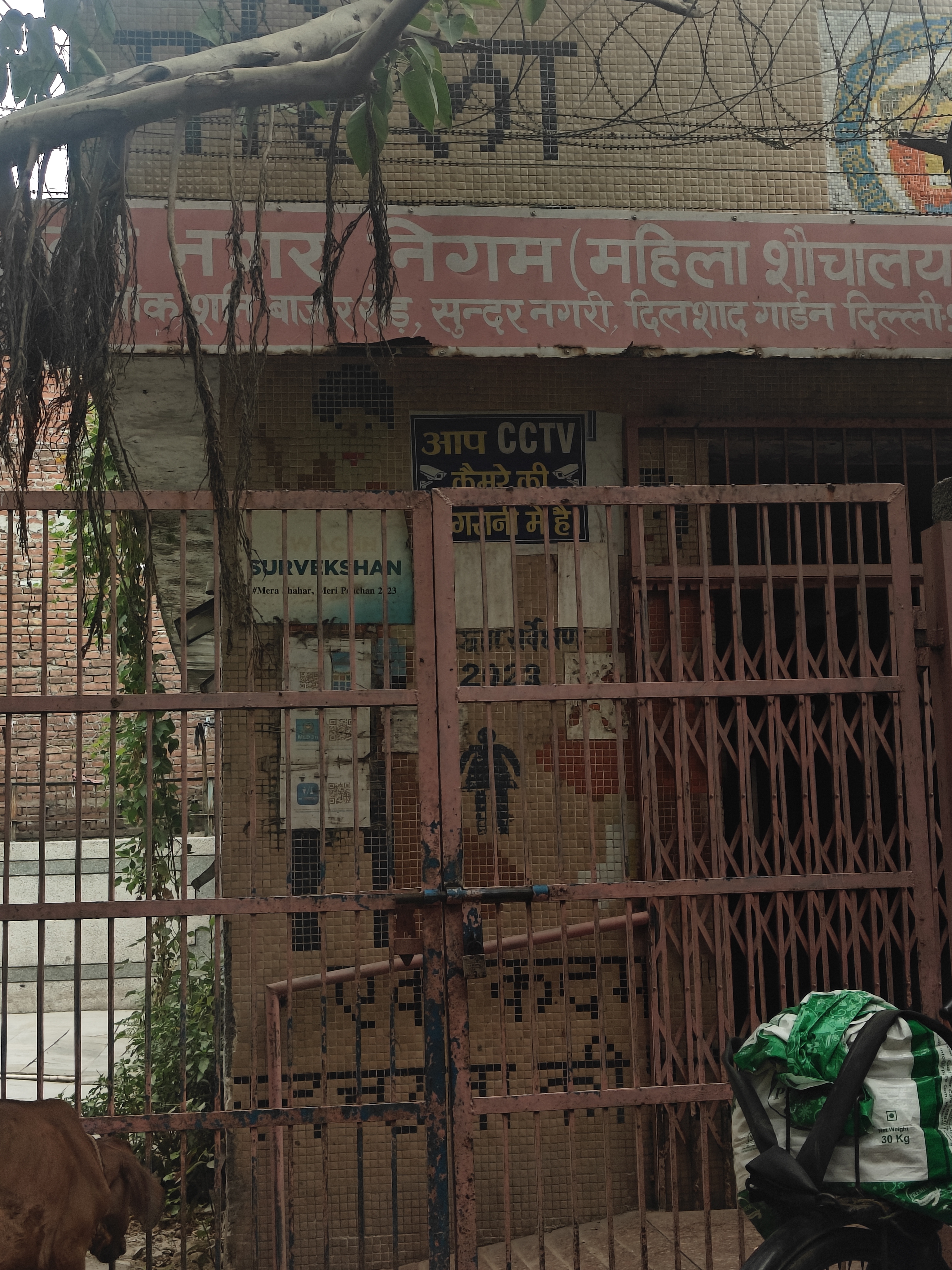
Heat also affects women differently, she says. “Men have the liberty to wear loose, open clothes, or even go shirtless while working. But women are forced to keep covered, and we end up with rashes.” She showed me rashes spread across her body. “A lack of washrooms forces us to avoid drinking water. Men, on the other hand, can relieve themselves in the open,” she added.
Behind her stood a public toilet. I checked it and found all the doors locked. More women vegetable vendors around Ruksana said they suffered the same problem.
The Polis Project reached out to Sundar Nagri’s Deputy Commissioner, Shashi Pratap, to raise the issue of locked public toilets in the area but has received no response. Polis has also raised a complaint on the MCD 311 complaint portal and is currently waiting for action.
Structures that absorb heat
Ruksana lives in a one room windowless house made entirely of cement. Thermal images taken inside showed temperatures near 38.5°C, indicating the structure had absorbed and retained heat. A ceiling fan offered little relief as it circulated hot air rather than cooling the space. The photograph highlights a reality many residents of informal settlements face during heatwaves.
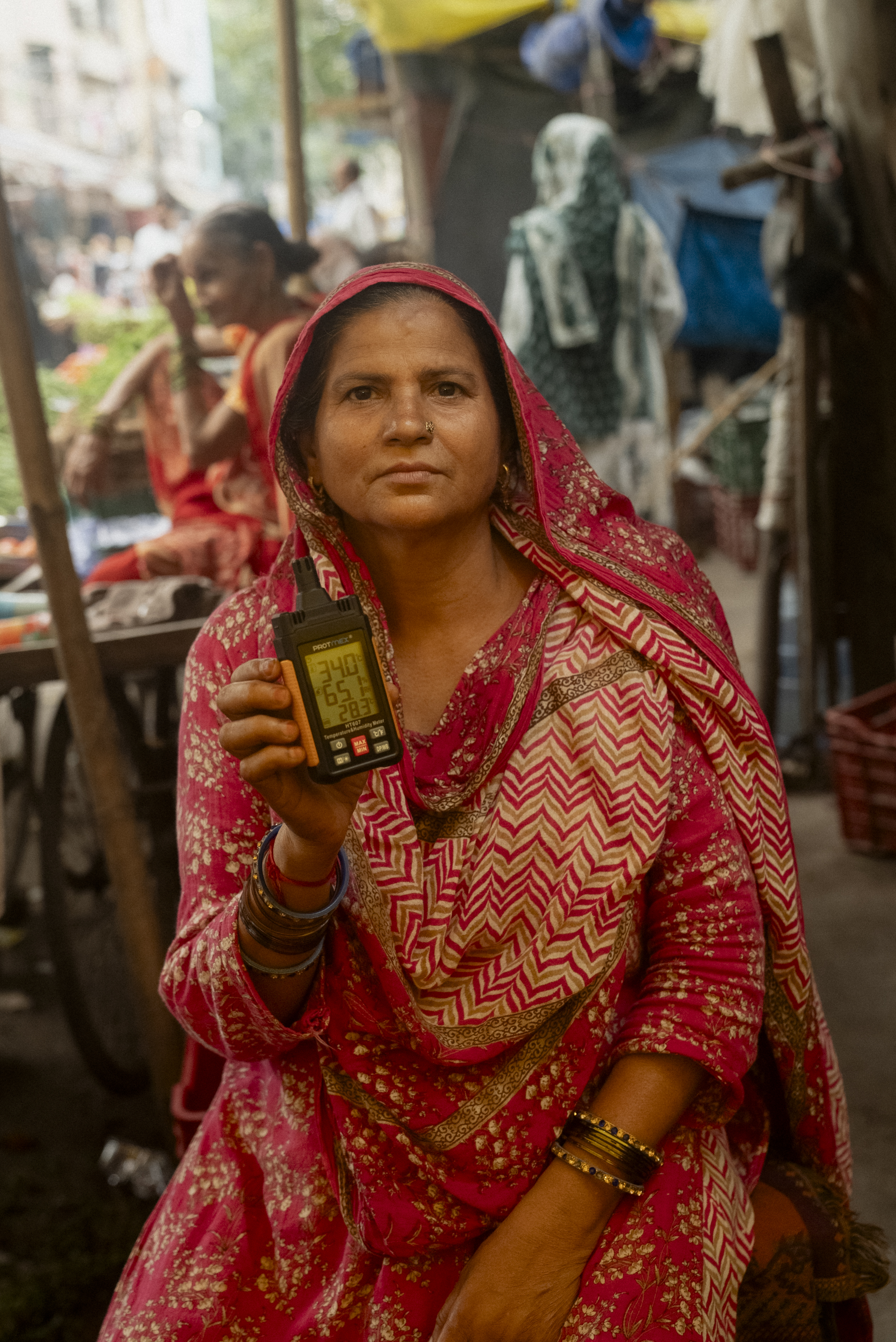
Dry heat is not the only issue. Experts say humid heat is more dangerous because it combines high temperatures and high levels of moisture which make it harder for the body to cool itself. When the air is moist, sweat cannot evaporate, preventing the body from cooling down. A moderately hot day with high humidity can sometimes be more dangerous than a hotter but drier day. The Polis team also recorded humidity and temperature in the area. On July 3, 2026, in Sunder Nagri, the humidity was 68 percent as per the recordings on my humidity thermometer. Depending on the time of day, the humidity ranged between 50–80 percent in July.
Heat that follows everywhere
Polis traveled to Gulshan Chowk, a cramped locality in Anand Parvat in Central Delhi to meet another group of workers living through Delhi’s summer with little protection: feri walees, or female mobile street vendors. They told us that the heat seemed to follow them everywhere—at their workplace in narrow lanes, and inside their homes.
“This year,” says 50-year-old Babita, “the heat left people ‘behaal’ (in a ruined state). During the day, especially when I am cooking, the house becomes so hot that the family has to step out into the lane.” Her 1-bedroom windowless home is about 450 square feet, and houses Babita, her husband, and their married daughter.
Her husband and daughter have fixed jobs. Babita does not. As a feri walee, she has no fixed location. Starting her day at 6 am with household chores, she says from noon onwards, “I go door to door, from one locality to another to sell wares till 6 pm. These are the hottest hours of the day.” This year the heat has been unbearable, so she has had to find new ways to cope. “I wet a cloth before leaving home and drape it on my body to keep cool,” she said. Working in this harsh heat is no guarantee of earning. “Some days, people buy. On other days, we return empty-handed. But the only way to earn, is to keep going door to door despite the heat,” she said.
If extreme heat once meant discomfort, it now means medical bills, lost work and days without income. “Working in this heat means fighting headaches, tiredness, and nausea. This year, I fell sick often. The other day, I almost fainted and had to turn back. I got medicines from a nearby pharmacy, but for the next few days I was unable to return to work.”
Double whammy: Heat and water shortage
The heat brings another daily crisis— water scarcity. As you enter the narrow lanes of Gulshan Chowk, you see empty buckets and drums outside every house.
Residents say they have no water connection, and families have to line up every day to fill water from tankers. “Heat and problems that come with it are not experienced equally across classes,” says 50-year-old Babli, who runs a roadside eatery in the area. “We get one government tanker every eight days. If you’re lucky, you store enough. Otherwise, god alone knows how you will manage for the next few days. The only other option is to buy it.” Water retails at Rs. 20-30 per liter in shops.
The losses are beginning to pile up. Several women say they take private loans regularly to manage household expenses. “Our electricity bill increased exponentially to Rs. 7,000. At the same time, our livelihood has taken a drastic hit. How can we run our monthly expenses?,” says Babli.
Sunita, a 37-year-old street food stall vendor, lives in the next lane with her two children. Her daughter Bhavana, a class 11 student tells me, “We read about climate change and extreme heat in our books, but people like us suffer more. We have only a fan and a cooler, which give no relief. We can’t afford an air conditioner. So if we feel hot, we soak a towel, put it on ourselves and sit under a fan. Or take many showers a day. But with water scarcity in our locality, we have to be mindful of water consumption,”.
The heat has even affected her studies, “How can I study in this state? Outside, when we set up our stall, or when we are at home, we have to face the harsh heat. There is no escape from it.”
A fallout of the US Iran war also created a heat crisis of sorts in March. Nearly 33 crore Indian households dependent on imported LPG (Liquefied Petroleum Gas) for household cooking, had to scramble around for anything they could use as firewood, when its supply was cut short drastically with the closing of the Strait of Hormuz.
“We have also started cooking on a chulha because of the LPG crisis. That is additional heat for all of us, especially my mother!,”says Bhavana.
In May 2026, Delhi Chief Minister Rekha Gupta said laborers across government and private sectors should be given a break from 1-4 pm. For Bhavana, the announcement raised a more basic question. “This is only on paper—who is giving us a break? If we take this break, will there be any compensation for the loss of work?”, she questioned.
Most Vulnerable
Sunita says she is worried about the health of her infant. “He cries throughout the day. We try to not make the child wear clothes, else they trap heat.” Young children are most vulnerable to heatstroke, as they tend to absorb heat faster and dehydrate more quickly than adults. “Exposure to extreme heat leads to dehydration, which reduces blood flow and can become dangerous if vital organs such as the brain, liver and heart are affected,” said Dr Naval Vikram at a press conference on “Precautions During Heat Wave” at the All India Institute of Medical Sciences (AIIMS), Delhi this May.
Hospitals are witnessing a growing number of heatwave-related health complaints. Common symptoms include dehydration, weakness, dizziness, headaches, excessive sweating, vomiting, and low blood pressure. In severe cases, heat strokes are being reported, where the body temperature rises dangerously high. Dr Ajay Chauhan, who heads a specialized Heat Wave Clinic at Delhi’s Ram Manohar Lohia Hospital (RML), said, “When a patient suffers a heatstroke, the body loses its natural capacity to cool down, which can cause organ failure and soon turn life-threatening.”
Heatwaves do not affect everyone equally. Dr Chauhan said, “While anyone can be a victim of heatstroke, we receive more patients who are from weaker economic sections. Vulnerable groups include outdoor manual workers such as construction laborers, farmers, delivery staff, and gig workers. Also the elderly, young children, and individuals with chronic medical conditions.”
What does it mean to get heatstroke and survive?
Heatstroke is a serious condition caused by the body overheating to 104F (40°C) or higher, and needs emergency care. Delayed treatment increases the risk of serious complications or death. There are very few advanced cooling therapy clinics in India, especially in government hospitals. RML is one of the few hospitals that has a dedicated heat wave clinic. From May-June 2024, 25 of the 70 patients brought in with heatstroke conditions at RML Hospital, died.
Chandrashekar (name changed on request), who worked as a security guard at a private company in Delhi, is a heatstroke survivor. The 55-year-old suffered a heat stroke with a high fever while at work. In a telephonic interview, he said, “I don’t think I will forget what I felt that day. My seniors asked me to do maintenance work on the building terrace. I remember working in the harsh heat for some time, and then suddenly experiencing a blackout.” He collapsed and was rushed to RML.
As per hospital records, he received cooling therapy and was hospitalized for over a week. The “near-death experience,” however, was nothing compared to what came after — health complications, a loss of livelihood, and eventually a move back to his village. “First, my employers cut my salary since I was hospitalized for 10 days. For weeks after being discharged, I had extreme headaches, weakness and nausea. Other health issues arose over the months, but there was no support from my employers. There was no one to care for me in the city. I had to leave work and return home to Bihar,” he said.
The rising toll of heatstroke: How has heat cost more lives in India over the years?
Chandrashekhar’s story is not an isolated incident. Data provided by the NCRB’s Accidental Death in India report shows that under the category of deaths by Forces of Nature, the country recorded 1,071 deaths due to heatstroke in 2009. By 2024, that number climbed to 1,832, representing an alarming 71.1 percent increase. The report Struck by Heat: A News Analysis of Heatstroke Deaths in India in 2025, by non-profit HeatWatch, claimed that India’s true heat toll is being masked by diagnostic “blind spots”, weak enforcement of worker protections, and outdated heatwave alerts that fail to reflect the combined impact of temperature and humidity on human health.
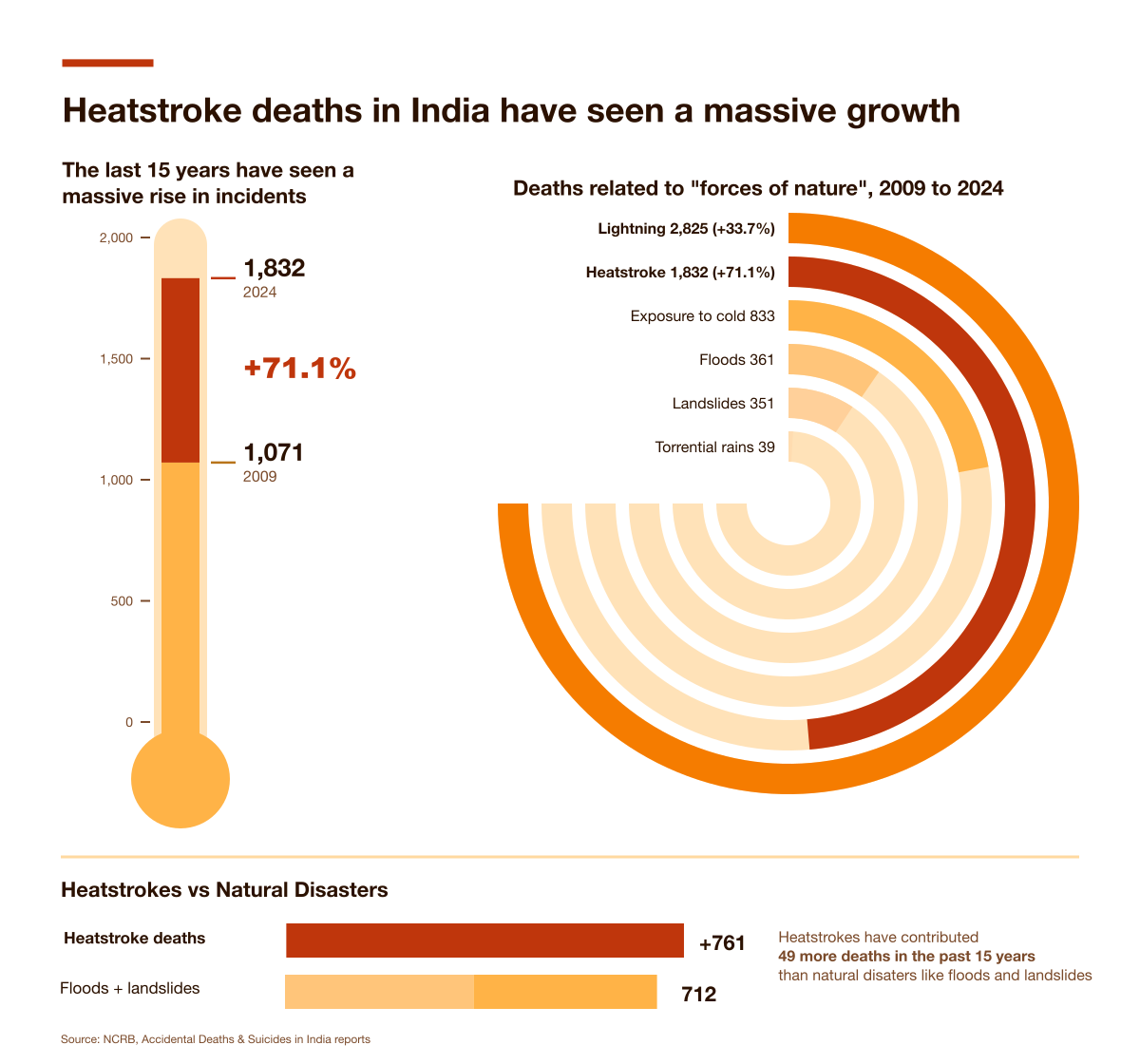
Although the NCRB data shows a concerning rise in heatwave deaths, it is still a significant undercount, according to experts who say these numbers are just the tip of the iceberg. Dr Dileep Mavalankar, a public health expert and the former Director of the Indian Institute of Public Health in Gandhinagar, Gujarat, said, “Heat mortality is difficult to capture. There are two types of heatstroke deaths: a person working under the harsh sun suddenly collapses and subsequently dies—the conversion to death data is easier, especially if the person who has died is a young person with no comorbidities. However, these are just 10 percent of the deaths. Most deaths occur in older people and those with comorbidities, where organs are not working properly. Dangerous levels of heat add an extra load and lead to heart failure, lung failure or dehydration, and subsequently, death. Consequently, these are not reported as heatstroke deaths.”
He adds, “The better way to report heat-associated deaths is to report excess mortality. Every state in India has a Birth and Death registry. If on average 100 people die in a month, but then during a heatwave, the number increases to 300, and when the heatwave reduces, if those mortalities also reduce, then we know how many may have died due to extreme heat related conditions. That is how heat-associated deaths can be measured better. If we want to prevent heat-related deaths, the first step is to have better reporting of the data, and to make officials aware of the gravity of the situation.”
Heat related deaths carry a painful truth—most are preventable through basic intervention at the right time.
The Garmi Khata or Heat Registry
In July 2026, Delhi residents from Sunder Nagri, CR Park, Dwarka and Jamia Nagar, submitted a representation to the National Human Rights Commission. They urged the NHRC to recognize extreme heat as a human rights issue, push for dedicated funding for heat action plans, and declare heatwaves a national disaster. The submission stated that the protections guaranteed under Articles 21 and 14 of the Constitution, require adequate funding and associated planning. They posited that conventional heatwave statistics that record extremely high temperatures, fail to record how people live through them with no meaningful protection. A record of 46°C for instance, does not capture the realities unfolding inside homes and workplaces.
The submission was backed by handwritten heat registries. For three months, street vendors, gig workers, home-based workers and students, wrote daily accounts documenting how soaring temperatures were affecting their health, livelihoods, household finances, and overall well-being. These accounts were accompanied by supporting documents, including electricity bills, medical bills and income records, providing undeniable evidence of both the cost of coping with the heat, and the health and financial harm it causes.
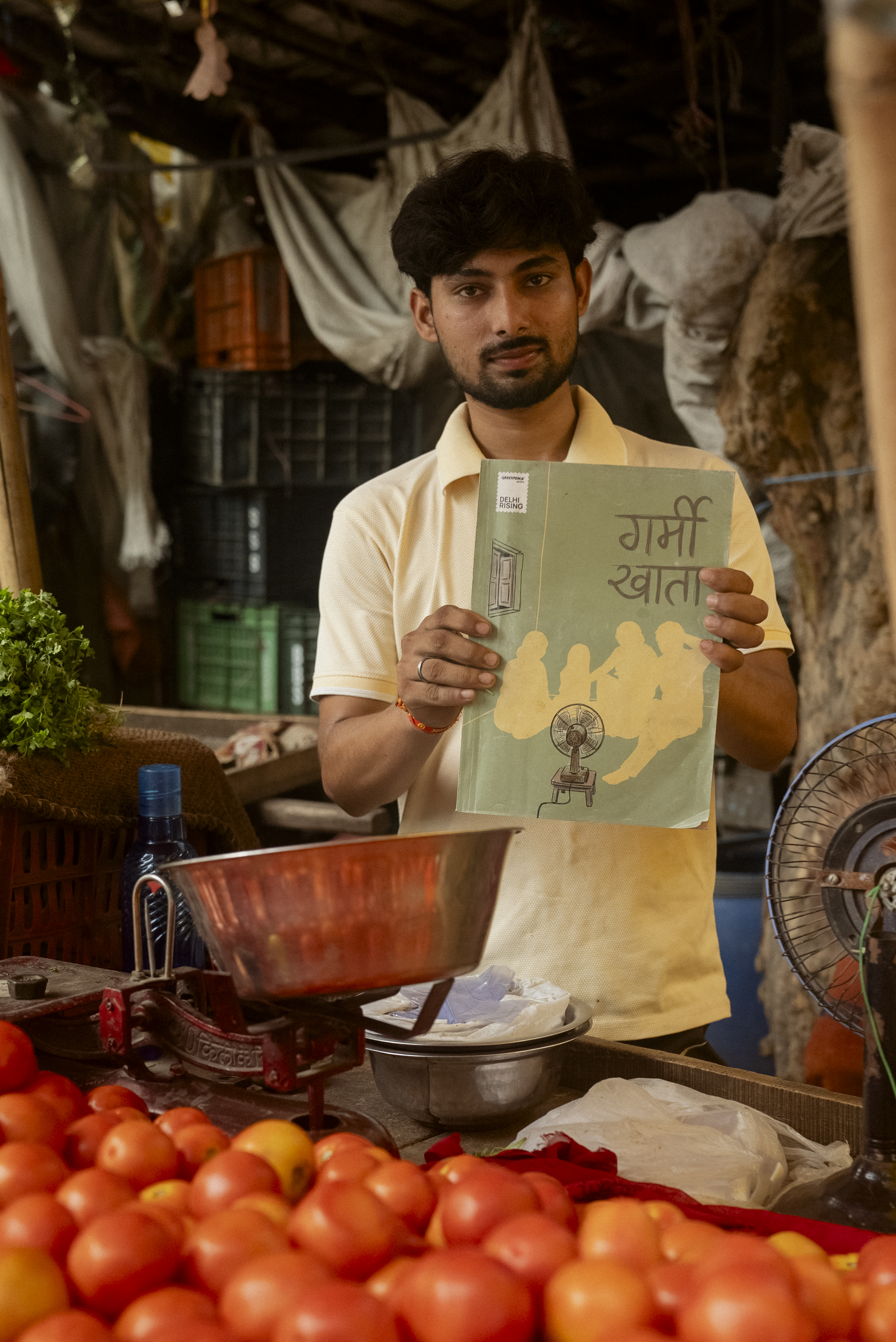
“Heat adds new and higher expenditure for workers for coping and adaptation while adversely impacting their health and livelihood. Workers fall into a debt trap for managing heat. The Garmi Khata shows what heat looks like from the worker’s perspective. If heat is being treated as a disaster, worker protection must be at the heart of that response,” said Dharmendra Kumar, secretary of Janpahal, a non-profit which focuses on the rights of low-income migrant families.
Speaking to Polis, Dharmendra said, “India is estimated to have more than 380 million workers exposed to hazardous occupational heat levels every year, particularly in outdoor and physically demanding occupations. While heat action plans of different cities and states in India exist on paper, the measures they recommend, including cooling shelters, shaded public spaces, drinking water access, adjusted working hours, early warnings and health-system preparedness, require proper financial mechanisms, which have been lacking.”
“Heat policy cannot be designed only around temperatures and alerts. It has to account for lost wages, lost working hours and the conditions in which people actually work. We must also hold major polluting corporations accountable for the consequences faced by people who have contributed the least,” said Vaishali Upadhyay, campaigner at Greenpeace India, which initiated the Heat Registry campaign.
New Action
Amid rising concern over extreme weather linked to climate change, the 16th Finance Commission of India, worked to enhance climate governance. As part of its recommendations, authorities can now draw on the State Disaster Response Fund (NDRF) and mitigation funds for heatwave and lightning-related relief, with the National Disaster Response Fund available when state funds are inadequate.
“It is a victory and a step in the right direction. This means there is now a dedicated fund that can support affected people, take measures to prevent heatwaves, and provide compensation for those impacted by heatwaves. We have written to the Ministry of Labor and Employment again to convene a national consultation with workers, trade unions, informal worker organizations, employers, occupational health experts, meteorological agencies and civil society to develop a National Framework for Protection of Workers from Extreme Heat. We demand that heat stress be recognized as an occupational hazard and that there should be mandatory work-rest, shade and hydration provisions. Given that humid heat is an issue, there should be specific protections for informal and unorganized workers,” said Janpahal’s Dharmendra Kumar.
Dr Dileep Mavalankar, former Director of the Indian Institute of Public Health, stated, “At present there are very few states in India that provide compensation for heatstroke deaths. Now that each state can use funds from the state NDRF for heatwaves, the ambit of compensation can be increased. The need is also for better reporting of heatstroke deaths and heat-associated deaths.”
A Need for Change
The central question that arose during Polis’ reporting is whether those belonging to marginalized castes and classes, or gender who were impacted most by extreme heat will ever be recognized as victims entitled to protection and compensation.
Our reporting raised more questions than answers. What kind of resources will Rani Kushwaha, a landless farm laborer in the Bundelkhand region for a daily wage, receive when working in 46°C temperatures? Can Babita, the mobile street vendor in Delhi, seek compensation to recover income lost when heat exhaustion forces her to stop working for several days? Or can Raja, a vegetable vendor in Delhi, access public cold storage facilities to compete for fair margins?
As the Garmi Khatas document, for most workers, climate change and extreme heat translate to lower earnings, higher electricity bills and medical expenses and rising. However, this rarely appears in official disaster assessments, as those impacted are rarely included in the policy planning committee.
In August 26, Polis reached out to the National Disaster Management Authority, India (NDMA), and the Ministry of Labor & Employment asking them if there was any plan to develop the National Framework for Protection of Workers from Extreme Heat, and if separate funds be allocated to address heatstroke deaths across all states.
An NDMA official, on condition of anonymity, said, “In June 2026, the NDMA had formulated new guidelines for states for heat preparedness. As per these guidelines, cities should carry out assessments to identify major factors contributing to urban heat island effect and include suitable mitigation measures in their Heat Action Plans (HAPs). HAPs have been prepared by 23 states, 195 districts and 64 cities. An advisory has been issued on ‘Protecting Informal Workers during Heatwaves in Indian Cities’ that makes recommends incorporating needs of street vendors and other outdoor workers through measures such as shaded vending zones, hydration facilities, cooling centers, flexible working hours and timely dissemination of heat alerts.”
No response has been provided by the Labour department on any policy formation for the heat action plan ahead of summer 2027.
This reporter found a gap between government announcements for heat relief and their on–ground impact for marginalized sections. Locked public toilets, uncertain water supply, limited cooling facilities and the absence of wage protection show how this support is visible in workers’ lives. Now, with heat recognized as a national disaster, States will have access to disaster-response funds, which will make the relief implementation better. Going forward, the government should also include gig worker unions, labor worker unions and other affected sections for formulations of new policies.
Long after government notifications are issued and upcoming policy announcements are made, back in Ladpur, Bundelkhand, Rani Kushwaha’s life is still the same. She hopes the national announcement brings change that goes beyond paper. Bending to weed the dry ground in her cardigan in 46°C heat, she says, “Summers are only going to be worse. I hope by the time my children grow up, they have better support from the authorities to deal with this crisis.”
The Real Victims of India’s Extreme Heat
India recorded 1,832 heatstroke related deaths in 2024
The unequal cost of surviving rising temperatures
On a peak summer day in June 2026, as I walk into Ladpur, a small village in Madhya Pradesh’s Bundelkhand region, it looks deserted. The temperature today is around 46°C. The sole road that leads to the village is bordered by farmland on both sides. On one of them, around 10 women bend and manually pluck weeds in a near-rhythmic fashion, clearing the land to make way for the new crop to be sown.
“We are from a nearby village called Radhapur,” says 40-year-old Anguri. “When big farmers need work done in their fields, they call full-time farm laborers who work on another person’s agricultural land — khetihar mazdoor. We get a fixed daily rate: Rs. 400 for us, and 500 for the men. Typically, work starts around 8 am and goes on till there is light in the field, around 7 pm.” According to reports by the Directorate of Economics and Statistics (DESAGRI), agricultural laborers make up roughly 36 percent of the total main and marginal workforce in Bundelkhand, forming the single largest occupational group in the region.
The khetihar mazdoors in the district are mostly from Dalit and Adivasi communities which include the Chamars, a major Scheduled Caste, and other socially disadvantaged caste groups such as the Balmiki or Chuhra community. Historically, these communities have faced long-standing prejudice, caste-based or racial discrimination that have led to stripped generational wealth, land ownership, and social standing. The landowner’s daughter-in-law, 25-year-old Anita Yadav, stands at the edge of the farm watching the women. Yadavs (also known as Ahirs) are the dominant caste in the Bundelkhand region. Pointing to her family’s land, Anita says, “We employ women labor for this work, to make the farm ready for crop planting and then sowing the seeds. This is three or four days’ work.” Anita’s job is to bring them water from a nearby well.
It is our majboori. To run our homes, we have to work in all weather.
I ask the women, “Does working in this heat feel inhumane?” Initially, they brush the question aside. Almost in unison, they say, “Arre hum aurton ko kuch garmi nahi lagti, humein koi dikkat naa hai. [We women don’t feel the heat, we are absolutely fine.]”
Sheela, 35, who is here with her two children, a 5-year-old girl, and a 1-year-old boy says, “See, my children are also here with me. They are fine.” Wouldn’t they be better off at home under a fan? “Yes, but how can I leave them unattended? Here they’re before me, and my elder daughter looks after the younger one. I try to make them drink water every hour so that this heat doesn’t affect them.”
This is when the others begin to open up and lament working in the heat and enduring health issues. “Who wants to work in such heat? It is our majboori. To run our homes, we have to work in all weather,” one of them says. “We work in the hope that our children do not ever work like this in the future.”
Who feels the heat?
The burden of a 46°C afternoon does not fall evenly across society. In India, heat is experienced differently depending on your class, caste, and gender. The difference between those who do the back-breaking fieldwork under the afternoon sun, and those who oversee it, is not incidental. Depending on who owns land, who owns a well, and who depends on daily wages earned in the field, the same afternoon is experienced differently.
For some, there is no escape from heat at all. Deaths due to heatstroke have risen by more than 70 percent in India over the past 15 years (2009–2024) as per data released by the National Crime Records Bureau (NCRB).
The Polis Project‘s ground reporting in rural Bundelkhand from 20-26 June 2026, and in Delhi NCR, an urban center, over a few days of May and July 2026, set out to find out how heatwaves disproportionately affect marginalized castes, classes, and genders. We found that heat is no longer about discomfort. It means mounting hospital bills, lost wages, sleepless nights and spoiled produce and goods, apart from being a serious threat to life.
Bundelkhand
Rural Bundelkhand (spread across parts of Uttar Pradesh and Madhya Pradesh) is a drought-prone, semi-arid region, with rocky terrain and limited groundwater. The erratic rainfall and rising temperatures here have made water access increasingly uncertain. From May–July 2026, many Indian cities made it to the list of 97 of the world’s 100 hottest cities, as reported by the Hindustan Times. Among these was Jhansi in the Bundelkhand region. Daytime temperatures often exceeded 45°C, and nighttime temperatures went as high as 40°C. The brutal heatwave left people struggling.
Jhansi’s population, estimated at 759,000 in 2026, consists mainly of people dependent on farming and small trade, including textiles and transport services. Each day in extreme heat requires them to adjust their lives and livelihoods to the weather. For many, a day starts before 5 am, for the sun makes the outdoors unbearable after noon. Sunaina Devi, a domestic worker from Galla Mandi, says, “I ask my employers to let me start a bit earlier than usual, so I don’t have to spend the hottest hours walking a kilometer in the heat.”
“Afternoons mean no customers,” says a small textile trader with a wholesale shop in Manik Chowk, Jhansi. The market lanes of Manik Chowk, teeming with shoppers in the evening, wear a deserted look in the afternoon. Shopping in 40–45°C outdoors is unthinkable.
Around 30 km from the main city of Jhansi, in Ladpur, inhabited largely by the agrarian community, lives Rani, a khetihar mazdoor. She belongs to the Kushwaha community, an Other Backward Class (OBC). She’s up at 4 am every day, and starts work in the field around 6, where she works for 10–12 hours. “We women do around 70 percent of the field work. The men mostly work outside, getting seeds and other things for farming, or selling crops,” she says. Like Rani, most farm laborers are women, often chosen over men because their pay rates are at least 20 percent less. As a result, they are forced to keep working during the hottest hours. “Harsh sun or not, we have to work in the field. We cannot afford to fall sick, or take a break. If I get heat rashes, I ask my husband to buy me a cooling powder, which gives me some relief.” Some days are worse than others, she says. “Extreme heat sometimes gives us fever and vomiting. When that happens, we get medicine from the chemist but still go to work the next day.” For Rani and other workers, especially the women, these symptoms have become part of everyday life during the summer.
Dr. Amlendu Yadav, who treats several heatwave patients at RML Hospital, says, “Heat exhaustion is often characterized by excessive sweating, dizziness, headache, nausea, rapid pulse and muscle cramps. The concern is when workers such as daily wage and construction laborers, gig workers and farmers, dismiss these warning signs as routine summer discomfort, and continue working, increasing their risk of progressing to heatstroke.”
The politics of what you can afford to wear to get relief from the heat
Like the others, Rani’s first response to questions about working in the extreme heat is an innocent answer: there’s no problem. When I ask her why in temperatures above 45°C, she’s wearing a winter cardigan over her sari, Rani opens up about her “real” issues. “There is no other way to protect oneself from sunburns while working in this heat. So I wear a thick cardigan. It’s the only way to survive it.”
“Pura sharir chinminane lagta hai. Aur pure sharir mein kururai ho jatee hai. (It feels like there are pinpricks burning through my body. I have a rash across my face, neck, and back). Sometimes, there is swelling on the skin also,” she said, while trying to cover her head with her sari. “There is no other way to protect oneself from the sun that burns the skin.”
Sitting on the ground on the farm, Rani is wearing a polyester saree with a sweater while working in the fields. She didn’t choose her clothes because they suited the weather. She chose them because they fit her budget. “This sari costs only Rs. 200 and lasts for years. It doesn’t tear easily, even in the worst conditions. We can’t afford cotton, even if it is breathable,” she said. A cloth merchant from Jhansi Kapda Mandi, Raju Patwari, explains, “We are wholesale merchants for Bundelkhand’s villages like Karera, Prithvipur, Lidhora, Tikamgarh, Muaranipur, Baruasagar, Orai and Kaonch. Earlier, workers bought cotton clothes suitable for summer wear like dhoti, lungi, and safi. But in the last five years, cotton prices have increased by more than 50 percent, so they’re forced to shift to polyester.”
How extreme heat is leading to more pesticides in our food
In rural India, farmers say that the extreme heat is felt not only by the body, but also by the earth, leading to crop losses, rising input costs, and changing pest patterns. Rani’s husband, Dinesh Kushwaha, says that traditionally, farmers used to grow peanuts, white pea, moong, urad, wheat, and sesame in this region. Today, extreme heat has forced farmers, especially smaller ones, to switch to vegetables and flowers, which carry less financial risk. “This heat kills crops, and unlike wealthy farmers, we can’t afford to lose even a small percentage of our harvest.”
Golu Kushwaha, another small farmer, said climate change had directly affected rural communities. “A patch of land that used to give us 10 kg of produce, now gives only 2. This extreme heat has stunted crop yield, so we are forced to use more chemicals,” said Golu. Dinesh has been trying to move towards organic farming. “We are being forced to eat poison in the form of chemicals, whose use is only increasing with climate change. Most farmers cannot achieve a proper yield without fertilizers. The quantity of pesticide has doubled over the last few years to give us the same produce. It’s now a necessity,” he says.
Farmers linked the region’s changing ecology to an increase in pests and patterns of attack. Most farmers don’t plant trees around their farms anymore to increase their area of cultivation. Increasingly, traditional forests are being cut. This directly affects farming because earlier, when an area was infected by pests, dense tree cover would help keep the infestation relatively localized, they said. Now, without tree cover, pests can spread quickly with the wind across a larger area, forcing more farmers to use pest-control measures. “We are all playing with the lives of our children,” said Dinesh. “Earlier, when someone fell sick, we would say eat fruits. Have apples or guavas. Now, none of those are produced without pesticides.”
Dinesh also teaches children from the nearby areas every morning between his farm work. He believes that, “Government policies should take into account heat and its financial burden on us. Equipping farmers to deal with it without the use of chemicals and pesticides can save farming, and is the only way to fight climate change.”
When heat-related livelihood loss forces people to leave their villages
For many in Bundelkhand, the story of surviving heat does not end in the fields. It continues on trains headed to bigger cities in search of a livelihood.
A survey conducted by the Bundelkhand Apda Nivaran Manch, a civil society network operating in the region, found that in many areas, climate change and extreme heat have triggered migration. Panwari Block, in Mahoba district, Uttar Pradesh, experiences widespread seasonal migration driven by chronic water scarcity, climate variability, and limited livelihood opportunities. Agriculture remains the primary source of income for most households, but dependence on rain-fed farming, recurrent droughts, declining groundwater levels and inadequate irrigation have significantly reduced agricultural productivity. Consequently, many families must migrate seasonally to find work during this period.
A rapid assessment across 17 Gram Panchayats, covering 9,195 households, found that 3,623 households, or 39.4 percent, were affected by seasonal migration. Another rapid assessment conducted across 10 Gram Panchayats in Sarila Block, Hamirpur district, covering 3,509 households with an estimated population of 18,885, found that 990 households, or 28.2 percent, were affected by seasonal migration.
The findings indicate that migration is predominantly seasonal and distress-driven, reflecting a lack of sustainable livelihood opportunities. “The burden falls disproportionately on Scheduled Caste and economically vulnerable Other Backward Class households, many of whom own small or marginal landholdings and have limited access to irrigation, productive assets and alternative income sources,” the survey states.
Environmentalists have linked the region’s worsening heat to ecological damage, deforestation, shrinking water bodies, mining along the Ken River, and changes in land-use patterns in the surrounding area. Bundelkhand-based climate activist Sanjay Singh says the region’s proximity to the Tropic of Cancer naturally makes it warm, but the gradual loss of ponds, forests, and hills has aggravated conditions over the years.
DELHI NCR: The impact of extreme heat in urban settings
More than 400 kilometers away from Jhansi, the same crisis unfolds in Delhi. Blue-collar migrant workers and petty traders face a disproportionate impact of the heatwave. Survival depends on a capacity to rent in greener pockets, buy an air-conditioner, or work indoors.
On July 31, 2026, at 3 pm, the Polis team, equipped with a thermal camera and a wet-bulb thermometer, went to Sundar Nagri’s vegetable market. Our thermal camera images revealed pockets of intense heat invisible to the naked eye. A road that appears merely warm under the afternoon sun shows up as one of the hottest spots on the screen. The ground and concrete buildings around radiate heat back into the air. Street vendors stood around with their vegetable carts with small battery-operated fans as their only relief from the heat. These vendors sit beside their carts for hours, exposed to a combination of high temperature, humidity, and reflected heat. The IMD forecast for that day was “cloudy skies with humidity.” However, high humidity pushed the heat index, or ‘feels like’ temperature, to nearly 49°C.
Sitting next to his vegetable cart, right in front of the battery fan’s face, Raja Tamar, 20, is a third-generation vegetable seller. Legal rulings—such as those by the Jharkhand High Court—recognize the Tamaria (also spelled Tamar or Tamdia) as a sub-caste or group of the Munda community, placing them under the Scheduled Tribe (ST) category, as reported by Live Law.
Raja, a student of political honors in a distance education program, told Polis, “Post-Covid, my brother and I were forced to leave our studies and start selling vegetables with our father because of our family’s financial condition.” For Raja’s family, a workday begins at 5 am. From procuring vegetables from the mandi to running the cart, the family spends at least 12 hours working outdoors in all weather conditions. Raja told us, “To earn our livelihood means spending the entire day outdoors and directly facing the brunt of the heat. I had read about climate change when I was in class 5. The reality is much harsher, for people like us who are from this economic section of society.”
A decade ago, the summer heat was uncomfortable, but now it is harmful.
He added, “A decade ago, the summer heat was uncomfortable, but now it is harmful. Last month, from May 25–28, the heat was unbearable. It was extremely hot not just outside but also inside our house. I was taking a bath four times a day, because that was the only way to get some relief. Even sitting in front of our lone cooler did not stop me from sweating.”
On May 25, 2026, Delhi recorded its warmest night in 14 years. Every summer, as the city reels under intense daytime heat, it’s nights no longer offer relief, according to a new report from the Center for Science and Environment (CSE). Raja says, “We sleep on the terrace hoping that while daytime temperatures were bad, the nights at least would be cooler. But the nights were also so hot that I was sweating the entire night, and subsequently my health was affected.”
For Raja and many others, heat also directly affects livelihoods, from increased medical and utility bills (electricity and water) to income loss. “Due to this heat, the vegetables spoil faster. We have no provision for cold storage. We buy in smaller batches, which works out to be costlier,” he says. At the same time, he is forced to compete for margins against big players who have access to bulk procurement and storage. For Raja and others like him, the hotter it gets, the more it costs to keep earning the same livelihood.
We drink less water as there are no toilets around
Next to Raja’s cart, Ruksana (55), and her husband, run a stall selling vegetables for 12-15 hours a day. For a week now, both have been suffering from diarrhea, nausea and dizziness—heat exhaustion symptoms. “This small fan and a small cooler at home are our only relief. For us, heat is not just discomfort. It is life-threatening,” says Ruksana. For people from economically weaker sections, she believes, getting sick does not mean the luxury of resting. “We can’t shut shop or stand in lines to get good treatment. We depend on local chemists to get medicines,” she lamented.
Heat also affects women differently, she says. “Men have the liberty to wear loose, open clothes, or even go shirtless while working. But women are forced to keep covered, and we end up with rashes.” She showed me rashes spread across her body. “A lack of washrooms forces us to avoid drinking water. Men, on the other hand, can relieve themselves in the open,” she added.
Behind her stood a public toilet. I checked it and found all the doors locked. More women vegetable vendors around Ruksana said they suffered the same problem.
The Polis Project reached out to Sundar Nagri’s Deputy Commissioner, Shashi Pratap, to raise the issue of locked public toilets in the area but has received no response. Polis has also raised a complaint on the MCD 311 complaint portal and is currently waiting for action.
Structures that absorb heat
Ruksana lives in a one room windowless house made entirely of cement. Thermal images taken inside showed temperatures near 38.5°C, indicating the structure had absorbed and retained heat. A ceiling fan offered little relief as it circulated hot air rather than cooling the space. The photograph highlights a reality many residents of informal settlements face during heatwaves.
Dry heat is not the only issue. Experts say humid heat is more dangerous because it combines high temperatures and high levels of moisture which make it harder for the body to cool itself. When the air is moist, sweat cannot evaporate, preventing the body from cooling down. A moderately hot day with high humidity can sometimes be more dangerous than a hotter but drier day. The Polis team also recorded humidity and temperature in the area. On July 3, 2026, in Sunder Nagri, the humidity was 68 percent as per the recordings on my humidity thermometer. Depending on the time of day, the humidity ranged between 50–80 percent in July.
Heat that follows everywhere
Polis traveled to Gulshan Chowk, a cramped locality in Anand Parvat in Central Delhi to meet another group of workers living through Delhi’s summer with little protection: feri walees, or female mobile street vendors. They told us that the heat seemed to follow them everywhere—at their workplace in narrow lanes, and inside their homes.
“This year,” says 50-year-old Babita, “the heat left people ‘behaal’ (in a ruined state). During the day, especially when I am cooking, the house becomes so hot that the family has to step out into the lane.” Her 1-bedroom windowless home is about 450 square feet, and houses Babita, her husband, and their married daughter.
Her husband and daughter have fixed jobs. Babita does not. As a feri walee, she has no fixed location. Starting her day at 6 am with household chores, she says from noon onwards, “I go door to door, from one locality to another to sell wares till 6 pm. These are the hottest hours of the day.” This year the heat has been unbearable, so she has had to find new ways to cope. “I wet a cloth before leaving home and drape it on my body to keep cool,” she said. Working in this harsh heat is no guarantee of earning. “Some days, people buy. On other days, we return empty-handed. But the only way to earn, is to keep going door to door despite the heat,” she said.
If extreme heat once meant discomfort, it now means medical bills, lost work and days without income. “Working in this heat means fighting headaches, tiredness, and nausea. This year, I fell sick often. The other day, I almost fainted and had to turn back. I got medicines from a nearby pharmacy, but for the next few days I was unable to return to work.”
Double whammy: Heat and water shortage
The heat brings another daily crisis— water scarcity. As you enter the narrow lanes of Gulshan Chowk, you see empty buckets and drums outside every house.
Residents say they have no water connection, and families have to line up every day to fill water from tankers. “Heat and problems that come with it are not experienced equally across classes,” says 50-year-old Babli, who runs a roadside eatery in the area. “We get one government tanker every eight days. If you’re lucky, you store enough. Otherwise, god alone knows how you will manage for the next few days. The only other option is to buy it.” Water retails at Rs. 20-30 per liter in shops.
The losses are beginning to pile up. Several women say they take private loans regularly to manage household expenses. “Our electricity bill increased exponentially to Rs. 7,000. At the same time, our livelihood has taken a drastic hit. How can we run our monthly expenses?,” says Babli.
Sunita, a 37-year-old street food stall vendor, lives in the next lane with her two children. Her daughter Bhavana, a class 11 student tells me, “We read about climate change and extreme heat in our books, but people like us suffer more. We have only a fan and a cooler, which give no relief. We can’t afford an air conditioner. So if we feel hot, we soak a towel, put it on ourselves and sit under a fan. Or take many showers a day. But with water scarcity in our locality, we have to be mindful of water consumption,”.
The heat has even affected her studies, “How can I study in this state? Outside, when we set up our stall, or when we are at home, we have to face the harsh heat. There is no escape from it.”
A fallout of the US Iran war also created a heat crisis of sorts in March. Nearly 33 crore Indian households dependent on imported LPG (Liquefied Petroleum Gas) for household cooking, had to scramble around for anything they could use as firewood, when its supply was cut short drastically with the closing of the Strait of Hormuz.
“We have also started cooking on a chulha because of the LPG crisis. That is additional heat for all of us, especially my mother!,”says Bhavana.
In May 2026, Delhi Chief Minister Rekha Gupta said laborers across government and private sectors should be given a break from 1-4 pm. For Bhavana, the announcement raised a more basic question. “This is only on paper—who is giving us a break? If we take this break, will there be any compensation for the loss of work?”, she questioned.
Most Vulnerable
Sunita says she is worried about the health of her infant. “He cries throughout the day. We try to not make the child wear clothes, else they trap heat.” Young children are most vulnerable to heatstroke, as they tend to absorb heat faster and dehydrate more quickly than adults. “Exposure to extreme heat leads to dehydration, which reduces blood flow and can become dangerous if vital organs such as the brain, liver and heart are affected,” said Dr Naval Vikram at a press conference on “Precautions During Heat Wave” at the All India Institute of Medical Sciences (AIIMS), Delhi this May.
Hospitals are witnessing a growing number of heatwave-related health complaints. Common symptoms include dehydration, weakness, dizziness, headaches, excessive sweating, vomiting, and low blood pressure. In severe cases, heat strokes are being reported, where the body temperature rises dangerously high. Dr Ajay Chauhan, who heads a specialized Heat Wave Clinic at Delhi’s Ram Manohar Lohia Hospital (RML), said, “When a patient suffers a heatstroke, the body loses its natural capacity to cool down, which can cause organ failure and soon turn life-threatening.”
Heatwaves do not affect everyone equally. Dr Chauhan said, “While anyone can be a victim of heatstroke, we receive more patients who are from weaker economic sections. Vulnerable groups include outdoor manual workers such as construction laborers, farmers, delivery staff, and gig workers. Also the elderly, young children, and individuals with chronic medical conditions.”
What does it mean to get heatstroke and survive?
Heatstroke is a serious condition caused by the body overheating to 104F (40°C) or higher, and needs emergency care. Delayed treatment increases the risk of serious complications or death. There are very few advanced cooling therapy clinics in India, especially in government hospitals. RML is one of the few hospitals that has a dedicated heat wave clinic. From May-June 2024, 25 of the 70 patients brought in with heatstroke conditions at RML Hospital, died.
Chandrashekar (name changed on request), who worked as a security guard at a private company in Delhi, is a heatstroke survivor. The 55-year-old suffered a heat stroke with a high fever while at work. In a telephonic interview, he said, “I don’t think I will forget what I felt that day. My seniors asked me to do maintenance work on the building terrace. I remember working in the harsh heat for some time, and then suddenly experiencing a blackout.” He collapsed and was rushed to RML.
As per hospital records, he received cooling therapy and was hospitalized for over a week. The “near-death experience,” however, was nothing compared to what came after — health complications, a loss of livelihood, and eventually a move back to his village. “First, my employers cut my salary since I was hospitalized for 10 days. For weeks after being discharged, I had extreme headaches, weakness and nausea. Other health issues arose over the months, but there was no support from my employers. There was no one to care for me in the city. I had to leave work and return home to Bihar,” he said.
The rising toll of heatstroke: How has heat cost more lives in India over the years?
Chandrashekhar’s story is not an isolated incident. Data provided by the NCRB’s Accidental Death in India report shows that under the category of deaths by Forces of Nature, the country recorded 1,071 deaths due to heatstroke in 2009. By 2024, that number climbed to 1,832, representing an alarming 71.1 percent increase. The report Struck by Heat: A News Analysis of Heatstroke Deaths in India in 2025, by non-profit HeatWatch, claimed that India’s true heat toll is being masked by diagnostic “blind spots”, weak enforcement of worker protections, and outdated heatwave alerts that fail to reflect the combined impact of temperature and humidity on human health.
Although the NCRB data shows a concerning rise in heatwave deaths, it is still a significant undercount, according to experts who say these numbers are just the tip of the iceberg. Dr Dileep Mavalankar, a public health expert and the former Director of the Indian Institute of Public Health in Gandhinagar, Gujarat, said, “Heat mortality is difficult to capture. There are two types of heatstroke deaths: a person working under the harsh sun suddenly collapses and subsequently dies—the conversion to death data is easier, especially if the person who has died is a young person with no comorbidities. However, these are just 10 percent of the deaths. Most deaths occur in older people and those with comorbidities, where organs are not working properly. Dangerous levels of heat add an extra load and lead to heart failure, lung failure or dehydration, and subsequently, death. Consequently, these are not reported as heatstroke deaths.”
He adds, “The better way to report heat-associated deaths is to report excess mortality. Every state in India has a Birth and Death registry. If on average 100 people die in a month, but then during a heatwave, the number increases to 300, and when the heatwave reduces, if those mortalities also reduce, then we know how many may have died due to extreme heat related conditions. That is how heat-associated deaths can be measured better. If we want to prevent heat-related deaths, the first step is to have better reporting of the data, and to make officials aware of the gravity of the situation.”
Heat related deaths carry a painful truth—most are preventable through basic intervention at the right time.
The Garmi Khata or Heat Registry
In July 2026, Delhi residents from Sunder Nagri, CR Park, Dwarka and Jamia Nagar, submitted a representation to the National Human Rights Commission. They urged the NHRC to recognize extreme heat as a human rights issue, push for dedicated funding for heat action plans, and declare heatwaves a national disaster. The submission stated that the protections guaranteed under Articles 21 and 14 of the Constitution, require adequate funding and associated planning. They posited that conventional heatwave statistics that record extremely high temperatures, fail to record how people live through them with no meaningful protection. A record of 46°C for instance, does not capture the realities unfolding inside homes and workplaces.
The submission was backed by handwritten heat registries. For three months, street vendors, gig workers, home-based workers and students, wrote daily accounts documenting how soaring temperatures were affecting their health, livelihoods, household finances, and overall well-being. These accounts were accompanied by supporting documents, including electricity bills, medical bills and income records, providing undeniable evidence of both the cost of coping with the heat, and the health and financial harm it causes.
“Heat adds new and higher expenditure for workers for coping and adaptation while adversely impacting their health and livelihood. Workers fall into a debt trap for managing heat. The Garmi Khata shows what heat looks like from the worker’s perspective. If heat is being treated as a disaster, worker protection must be at the heart of that response,” said Dharmendra Kumar, secretary of Janpahal, a non-profit which focuses on the rights of low-income migrant families.
Speaking to Polis, Dharmendra said, “India is estimated to have more than 380 million workers exposed to hazardous occupational heat levels every year, particularly in outdoor and physically demanding occupations. While heat action plans of different cities and states in India exist on paper, the measures they recommend, including cooling shelters, shaded public spaces, drinking water access, adjusted working hours, early warnings and health-system preparedness, require proper financial mechanisms, which have been lacking.”
“Heat policy cannot be designed only around temperatures and alerts. It has to account for lost wages, lost working hours and the conditions in which people actually work. We must also hold major polluting corporations accountable for the consequences faced by people who have contributed the least,” said Vaishali Upadhyay, campaigner at Greenpeace India, which initiated the Heat Registry campaign.
New Action
Amid rising concern over extreme weather linked to climate change, the 16th Finance Commission of India, worked to enhance climate governance. As part of its recommendations, authorities can now draw on the State Disaster Response Fund (NDRF) and mitigation funds for heatwave and lightning-related relief, with the National Disaster Response Fund available when state funds are inadequate.
“It is a victory and a step in the right direction. This means there is now a dedicated fund that can support affected people, take measures to prevent heatwaves, and provide compensation for those impacted by heatwaves. We have written to the Ministry of Labor and Employment again to convene a national consultation with workers, trade unions, informal worker organizations, employers, occupational health experts, meteorological agencies and civil society to develop a National Framework for Protection of Workers from Extreme Heat. We demand that heat stress be recognized as an occupational hazard and that there should be mandatory work-rest, shade and hydration provisions. Given that humid heat is an issue, there should be specific protections for informal and unorganized workers,” said Janpahal’s Dharmendra Kumar.
Dr Dileep Mavalankar, former Director of the Indian Institute of Public Health, stated, “At present there are very few states in India that provide compensation for heatstroke deaths. Now that each state can use funds from the state NDRF for heatwaves, the ambit of compensation can be increased. The need is also for better reporting of heatstroke deaths and heat-associated deaths.”
A Need for Change
The central question that arose during Polis’ reporting is whether those belonging to marginalized castes and classes, or gender who were impacted most by extreme heat will ever be recognized as victims entitled to protection and compensation.
Our reporting raised more questions than answers. What kind of resources will Rani Kushwaha, a landless farm laborer in the Bundelkhand region for a daily wage, receive when working in 46°C temperatures? Can Babita, the mobile street vendor in Delhi, seek compensation to recover income lost when heat exhaustion forces her to stop working for several days? Or can Raja, a vegetable vendor in Delhi, access public cold storage facilities to compete for fair margins?
As the Garmi Khatas document, for most workers, climate change and extreme heat translate to lower earnings, higher electricity bills and medical expenses and rising. However, this rarely appears in official disaster assessments, as those impacted are rarely included in the policy planning committee.
In August 26, Polis reached out to the National Disaster Management Authority, India (NDMA), and the Ministry of Labor & Employment asking them if there was any plan to develop the National Framework for Protection of Workers from Extreme Heat, and if separate funds be allocated to address heatstroke deaths across all states.
An NDMA official, on condition of anonymity, said, “In June 2026, the NDMA had formulated new guidelines for states for heat preparedness. As per these guidelines, cities should carry out assessments to identify major factors contributing to urban heat island effect and include suitable mitigation measures in their Heat Action Plans (HAPs). HAPs have been prepared by 23 states, 195 districts and 64 cities. An advisory has been issued on ‘Protecting Informal Workers during Heatwaves in Indian Cities’ that makes recommends incorporating needs of street vendors and other outdoor workers through measures such as shaded vending zones, hydration facilities, cooling centers, flexible working hours and timely dissemination of heat alerts.”
No response has been provided by the Labour department on any policy formation for the heat action plan ahead of summer 2027.
This reporter found a gap between government announcements for heat relief and their on–ground impact for marginalized sections. Locked public toilets, uncertain water supply, limited cooling facilities and the absence of wage protection show how this support is visible in workers’ lives. Now, with heat recognized as a national disaster, States will have access to disaster-response funds, which will make the relief implementation better. Going forward, the government should also include gig worker unions, labor worker unions and other affected sections for formulations of new policies.
Long after government notifications are issued and upcoming policy announcements are made, back in Ladpur, Bundelkhand, Rani Kushwaha’s life is still the same. She hopes the national announcement brings change that goes beyond paper. Bending to weed the dry ground in her cardigan in 46°C heat, she says, “Summers are only going to be worse. I hope by the time my children grow up, they have better support from the authorities to deal with this crisis.”