




Editor’s note: This article contains images and descriptions that some readers may find distressing, including references to death in custody, alleged police violence and suicide. Reader discretion is advised. Names marked with an asterisk (*) have been changed to protect the identity and safety of the individuals.
Sohrab Khan, aka Munna Khan, was a 46-year-old farmer and daily-wage laborer living in Bansra village in the Palasi community development block of Araria district in Bihar when the police arrested him on the night of April 17 last year on a non-bailable warrant in a bail-violation case. The next night, he allegedly died under ‘mysterious’ circumstances in the Araria District Jail, as per reports.
A few days before Khan’s death, 34-year-old Mithilesh Ram from Fulwari village in Araria also died in the same jail on April 13. Convicted in a case of abducting and killing an 18-month-old child from his neighborhood, Ram had been serving a life sentence since 2023.
On July 3, 2025, another convicted prisoner, Shibu Ghosh from West Bengal, also reportedly died on the way to the district hospital from Araria District Jail. He had been serving a five-year sentence since 2020 and was due to be released in two months.
This year, about an hour past midnight on April 3, the police at Falka police station in Katihar district, Bihar, took 25-year-old Rakesh Kumar Yadav into custody on suspicion of stealing a motorcycle. On the night of April 3, Yadav reportedly hanged himself and died, as per a police statement.
Bihar currently leads the country as the state with the highest number of deaths in police custody between 2025 and 2026. Minister of State for Home Affairs Nityanand Rai told the Lok Sabha in March this year that 19 such cases of deaths have been reported in Bihar out of the total 170 reported across India, referring to data shared by the National Human Rights Commission (NHRC).
We investigated five such cases of custodial deaths in a span of 15 months across Araria and Katihar districts of Bihar. The investigation revealed how primarily economically disadvantaged daily-wage migrant workers, often Muslim or belonging to marginalized castes, were dying within days of entering judicial or police custody. These deaths raise serious questions about Bihar’s judicial and law-enforcing authorities that have failed to provide justifiable compensation to the families of dying prisoners, and have not convicted a single personnel.
Data visualization: Andrew Pavamani
Arrested on suspicion, died in lock-up
Sakshi Kumar Yadav was sleeping with her two-month-old baby when she heard a loud knock on her door in Gopalpatti village in Katihar district at around 1 a.m. on April 3. It took her some time to gather herself when about 10-12 policemen from Falka police station pushed the door forcefully and entered her house. They were looking for her husband, Rakesh, in order to arrest him in connection with a motorcycle theft case.
“The police didn’t have a warrant for Rakesh, nor was he named in the complaint, yet they picked him up on suspicion,” Sakshi said. “When I asked why they were looking for him, they ignored me. Rakesh’s brother Pratosh Kumar Yadav was also in the house. They told him that there’s a case of theft and that they are taking him for inquiry and will set him free the next morning.”
Pratosh said, “It seemed odd that so many of them came without even a case registered against him.”
Pratosh and his elder brother, Santosh Kumar Yadav, went to the police station in the morning to see Rakesh. At the police station, the Investigating Officer, Kundan Patel, summoned the complainant, Kailash Pandit, from the neighboring village of Chandpur, to identify whether Rakesh was involved in the bike theft case. Pandit did not recognize him as one of the three men who snatched his motorcycle key from him on February 21 this year.
Yet, the police didn’t release Rakesh. “Patel asked us to bring our motorcycles for identification. When none of them matched the stolen bike, the police demanded one lakh rupees to settle the matter and let our brother go,” Pratosh said.
He alleged that his family could arrange only half of the amount demanded, so Patel sent them away, telling them they would have to secure Rakesh’s release from Katihar jail the following day. “Around 7:30 p.m. on the same day, about 10 to 15 policemen came to our house again, ransacked it, and took a pair of clothes for Rakesh before leaving,” Pratosh recalled.
Later that night, when Rakesh’s father-in-law, Lallan Kumar Yadav, went to meet him and give him food at the police station, Rakesh told him the police were pressuring him to falsely confess to stealing the motorcycle, Lallan shared with The Polis Project.
Pratosh and other family members claimed that the police brutally beat up Rakesh, which led to his death the same night before they admitted him to Sadar Hospital in Katihar early morning on April 4. “The next morning, at around 7:30 a.m., Patel called me to tell me that my brother was admitted to Sadar Hospital in Katihar after he hanged himself in the police station. When we reached the hospital, we found that he had been brought dead to the hospital,” Pratosh added.
Rakesh’s wife Sakshi alleged that, at the Katihar hospital, the police from Falka police station took her thumbprint on a blank paper under the guise of sending his body for autopsy.
After the family found out that Rakesh had died in police custody, Gopalpatti villagers vandalized the Falka police station, seized police rifles and blocked the state highway to express their anger against police brutality on the same day. Falka police filed multiple FIRs naming 25 people and 700 unnamed people from Gopalpatti for reported violence and snatching arms from the police. With public resistance heightening against Rakesh’s death, Katihar Superintendent of Police Shikhar Chaudhary immediately suspended Falka SHO Ravi Kumar Rai and Investigating Officer Patel on April 4, the same day.
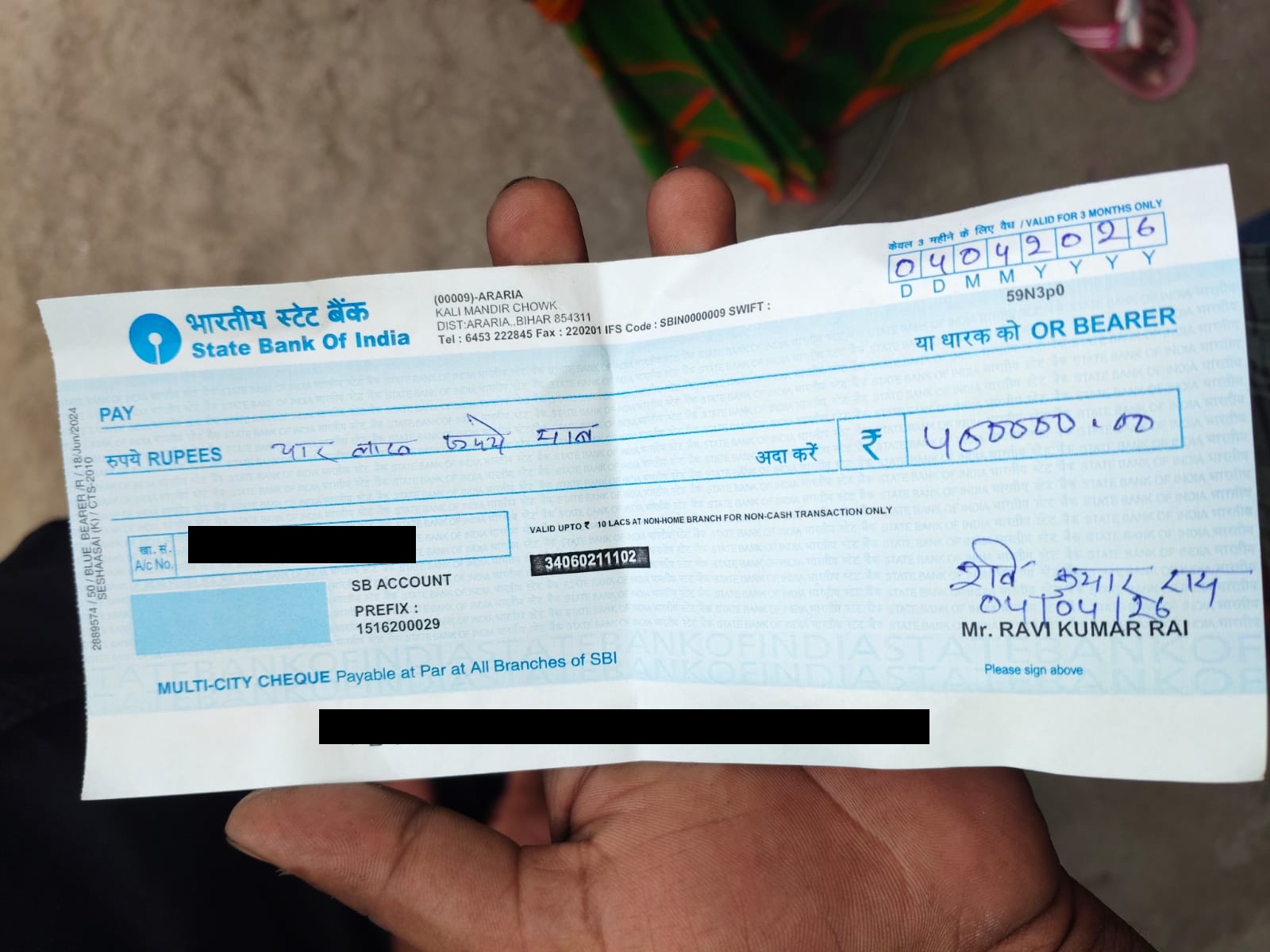
However, Rai allegedly tried to bribe Rakesh’s family with two lakh rupees in cash and a cheque of four lakh rupees on the day he died, claimed Pratosh, sharing a photo of the cheque with The Polis Project.
By the night of April 4, according to Rakesh’s family, the Falka police forcibly conducted his cremation without heeding the family’s wish.
The Polis Project also spoke to Pandit from Chandpur in Katihar district, who had filed the theft case in Falka police station on February 22 – a day after his bike was snatched by three unknown men in Dhamdaha in Purnia district. He claimed that a day after he had filed the complaint, the police had found his bike and kept it at the police station. “SHO Rai said that I’ll have to identify the offenders before I can get my motorcycle back,” recalled Pandit.
After this, Patel called him twice to identify the men, including Rakesh. Pandit denied recognizing him and again asked SHO Rai to return his bike, to which Rai reportedly told him to bail it out. Since the motorcycle was registered under his relative’s name, who had died, he hasn’t been able to retrieve his bike from Falka police station yet. He cycles 55 km between his home and his workplace every day, and has given up on the case.
Data visualization: Andrew Pavamani
The death of Rakesh Kumar Yadav in Falka police custody lays bare a pattern of unchecked police impunity that moves swiftly from procedural violation to extortion to lethal violence. While Pandit, the original complainant, remains without his motorcycle, this incident exposes the robust systemic violence that targets economically disadvantaged people, which often intersects with people belonging to marginalized castes, as suspects, and makes them suffer at the hands of the police and jail administration, where impunity is institutionalized and accountability remains non-existent. This reminds us that in this case, the police served no one except their own interests.
Although Yadavs are a politically influential caste group in Bihar, poorer members of the community, particularly migrant and daily-wage workers, remain vulnerable to police harassment and violence. Largely, custodial violence in India has disproportionately affected economically and socially marginalized communities, including Dalits, Adivasis, and Muslims.
Maja Daruwala, Chief Editor of India Justice Report, which reports and ranks Indian states based on performance data from their justice systems, and a long-time advocate for police reform, argued that procedural failures surrounding arrest and custody have become so widely normalized that they attract little accountability. When safeguards governing arrest and detention are disregarded, custody can become unlawful; and where a person is deliberately subjected to violence in custody and dies as a result, criminal responsibility must be fixed according to the facts.
“To my mind, ‘custodial violence’ and ‘custodial death’ are over-broad descriptions. When we talk about deaths in custody, we must not shy away from establishing exactly what happened and naming the offense accordingly. Where a death is caused by custodial violence or a culpable failure of duty, it may amount to murder, culpable homicide or causing death by negligence, depending on the facts,” Daruwala said.
She added that the police have a duty to produce an arrested person before a magistrate within the period prescribed by law, and the magistrate has a corresponding responsibility to scrutinize that procedural safeguards are being observed. “When these safeguards break down, the protections designed to prevent custodial excess break down.”
Jailed in the morning, dead by night
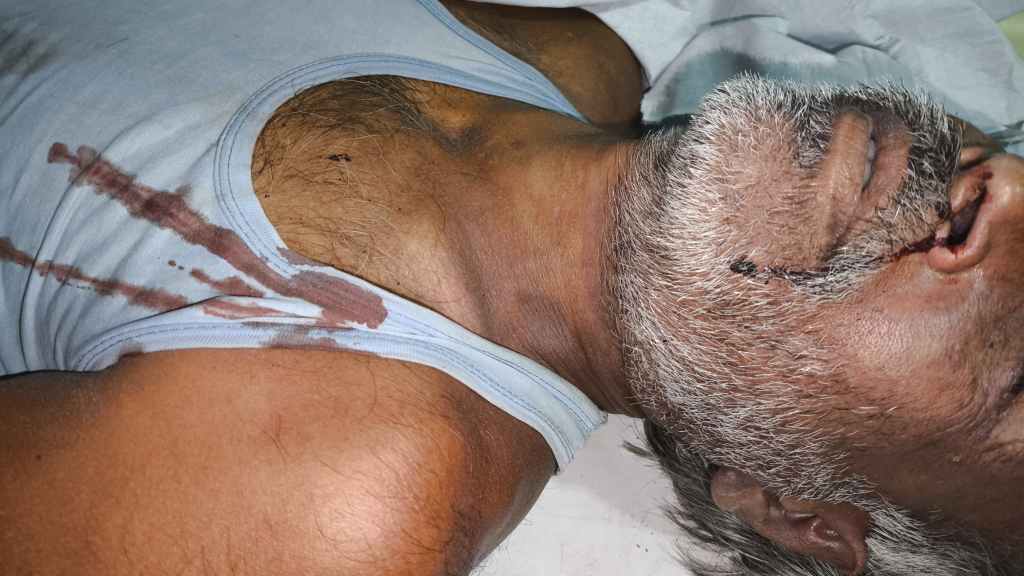
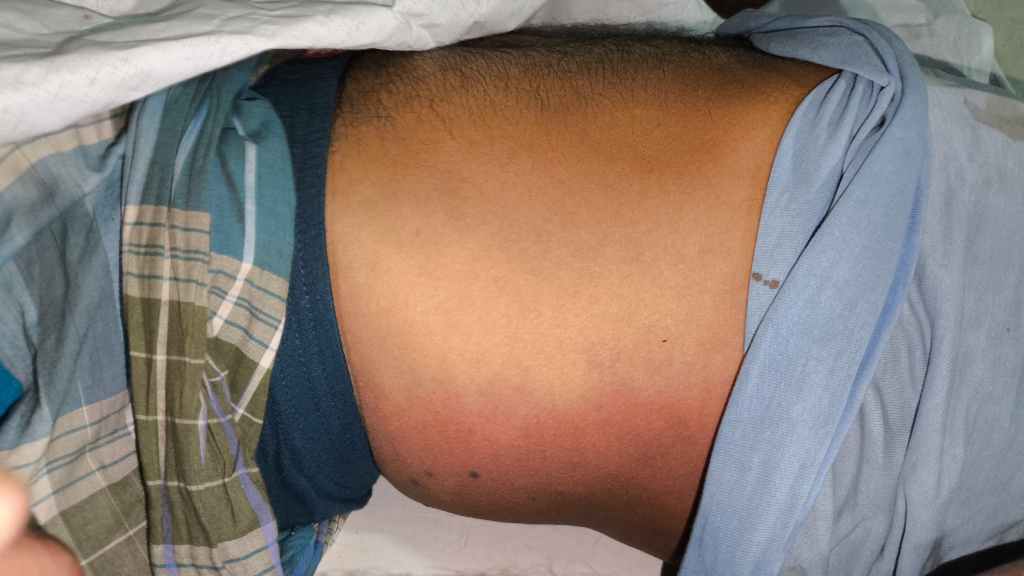
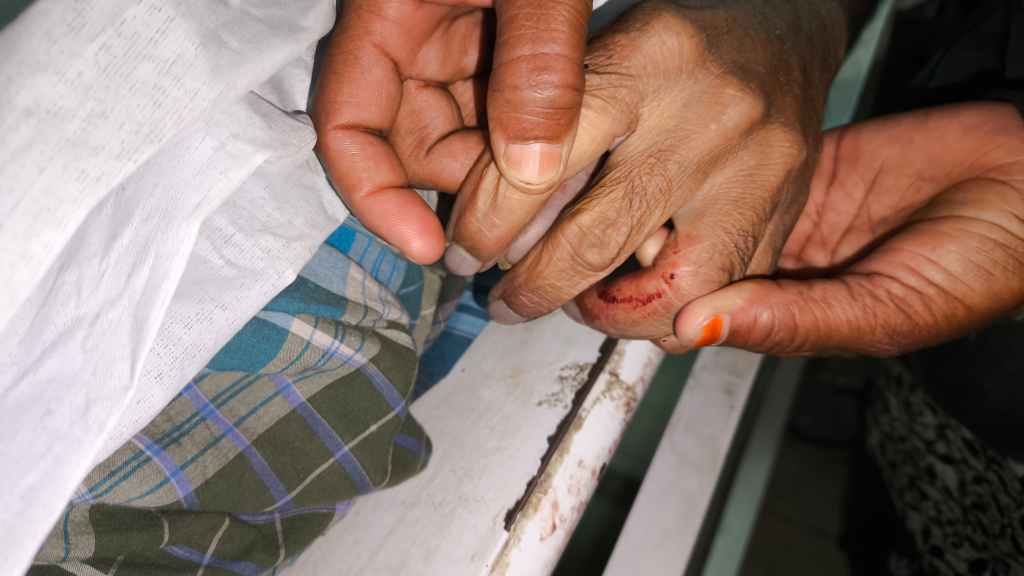
Sohrab Khan’s body at Sadar Hospital, Araria. His family says the photographs show blood and bruises that point to a beating in custody. The post-mortem report gave the cause of death as hanging. (Photos shared with permission from Sohrab Khan’s family.)
Sohrab Khan, who died in Araria district jail in April last year, was first arrested in December 2017 in a case of embezzlement, filed by his acquaintance Bipin Chaudhary. Reportedly, Sohrab had sold a Common Service Center (CSC) ID to Bipin for Rs 50,000. The CSC was blocked because of a fraudulent identity card, after which Chaudhary filed a fraud case against Sohrab. He spent roughly three months in jail at the time, according to his brother, Shahid Khan.
“When he came out on bail, they had a settlement in 2018, and the matter was resolved,” Shahid said.
“For seven years, we didn’t hear about the case at all and thought it was resolved. Then in April last year, out of nowhere, the police came at midnight to arrest him. None of us, including Sohrab, knew that he had missed court dates during these seven years and that a non-bailable warrant had been issued to arrest him,” Shahid added.
Sohrab’s wife, Gulshan Khatoon, recounted the night of April 17, 2025, when Palasi police came to arrest him. “The police didn’t tell us the reason behind his arrest. At least 15 policemen came, surrounded the house from all sides, and forced open our room to nab him. It was the most terrifying night of my life. I didn’t know then that it would be the last time I’d see him alive.”
When Sohrab arrived in Araria district jail, one of his acquaintances from his village, Mohammad Arif*, was already serving as an undertrial prisoner. The Polis Project met Arif* when he was out on bail, and he said, “On the morning of 18th April, when I got to know that someone from my village had come, I went to meet him and moved him to my ward. The first half of his day went into completing administrative formalities like a medical check-up, etc. Then we sat together in the evening.”
“We talked for a few hours. Then suddenly, he complained of stomach ache and anxiety, so I informed my ward-in-charge and fellow wardmate, Faizan Alam*, about it. Alam* called the guard, who took an hour to come. Then he called for the compounder, who took another hour to come. Since the wards are locked up at 6 p.m., the compounder insisted on injecting an antibiotic to Sohrab from between the iron rods of the jail ward, but Sohrab denied it vehemently. Then the compounder left and took another hour to bring the keys to take Sohrab to the medical facility in jail. In total, the jail personnel took three hours to take him to the jail clinic. That was the last time I saw him. He was fine and went with the compounder walking on his feet,” Rahi, who works as a migrant laborer in Delhi, added.
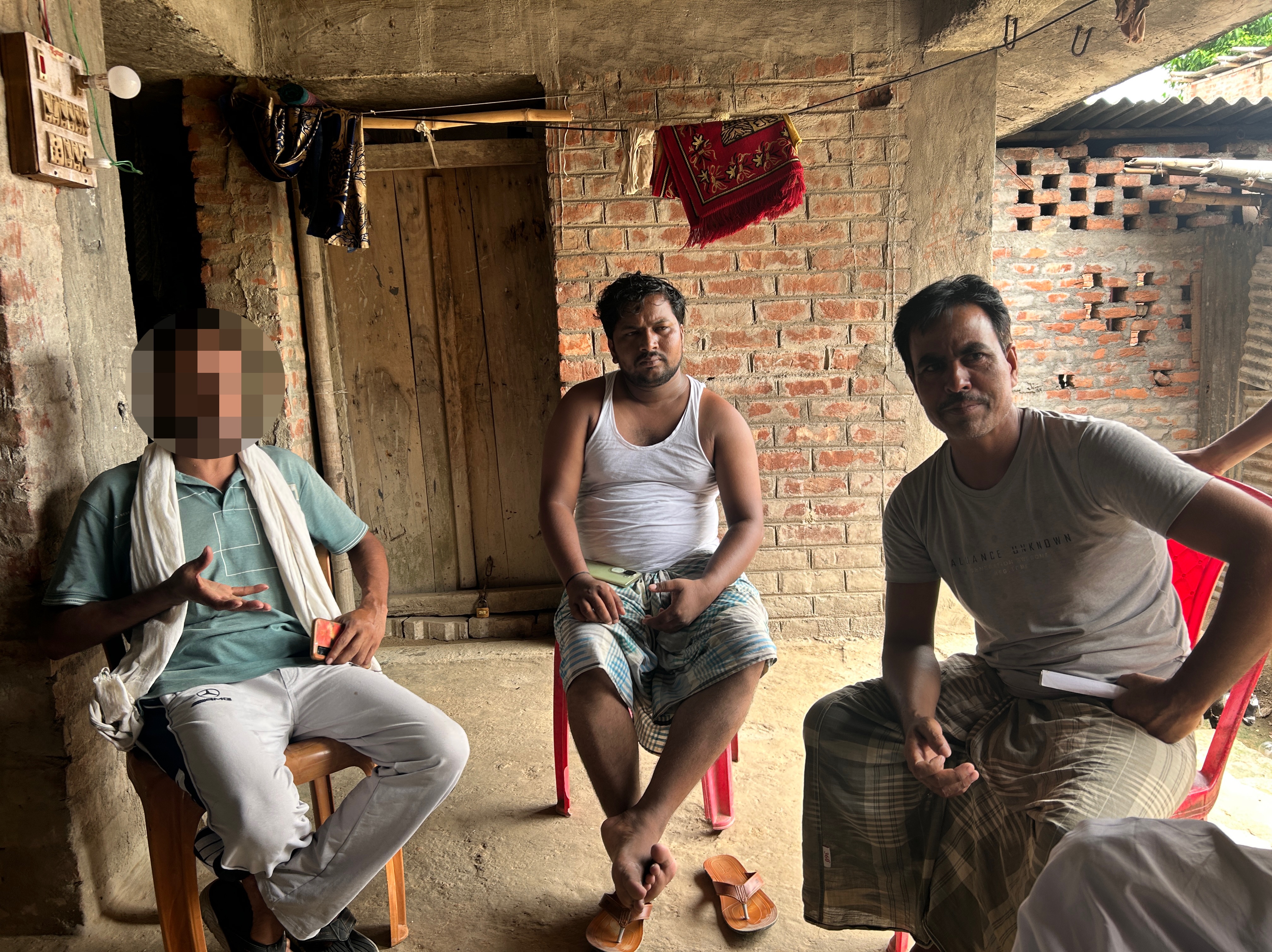
The Polis Project also spoke to Alam* – another prisoner of Araria district jail and ward-in-charge of Sohrab’s ward – when he was out on bail, and he corroborated Rahi’s account. “The next day we were shocked to know that he had died, ” Alam* said.
The SHO of Araria Railway Station Police Station, Ajeet Kumar Chaudhary, one of the initial investigators of this case, alleged that Sohrab kept pacing up and down in the jail clinic and some time later, he went to the toilet and hanged himself with his gamcha (a thin cotton cloth).
When we called the Superintendent of Araria District Jail, Sujit Kumar Jha, on the phone, he quickly disconnected the call, saying that he was on vacation when Sohrab died in custody. However, in earlier news reports, he had stated that Sohrab committed suicide in the toilet of the jail clinic when he was brought in for treatment.
However, on the same night, the jail officials wrote a letter to inform Sohrab’s family that he had fallen sick and had been taken to the district hospital, when he had already died in the jail clinic.
At Sohrab’s house, a police official came early the next morning to inform his family of Sohrab’s “illness” and gave them the letter, noted Khatoon.
“He asked me to go to Palasi police station to get permission to meet Sohrab in the district hospital. I rushed with my family. At the police station, they asked me to sign some blank papers. We refused at first, but the policeman said that it would allow us to meet Sohrab and care for him at the district hospital, so we relented,” Khatoon said.
When she and her family reached the hospital, they saw Sohrab already dead.
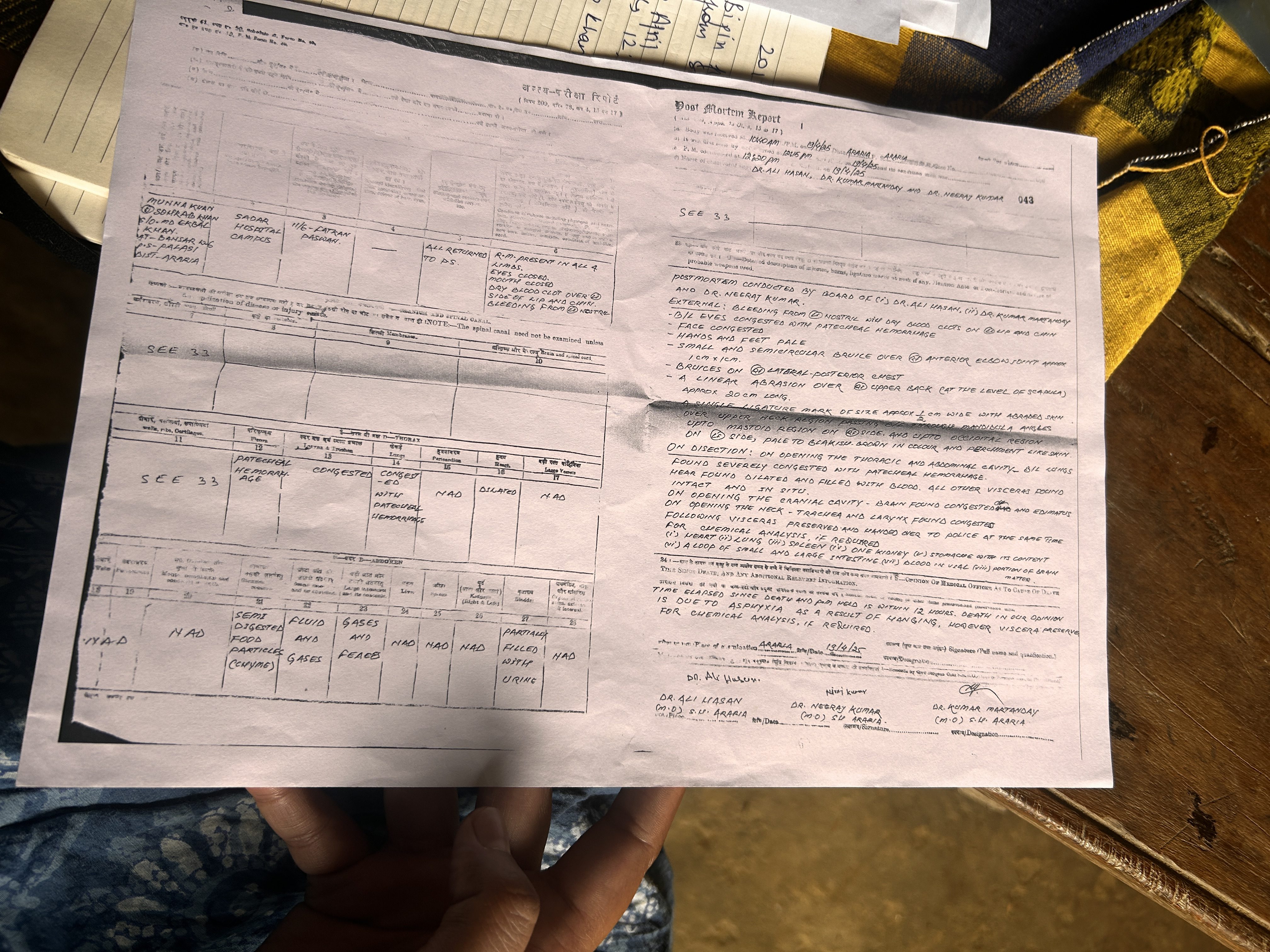
The autopsy report concluded that it was a death by hanging; however, his family alleged that Sohrab died due to being thrashed by the police. “His vest was drenched in blood. His nose had bled, and there were bruises on his body. When I saw him lying dead, my world fell apart,” said Khatoon.
Data visualization: Andrew Pavamani
Notably, in March this year, three doctors from Jamui district in Bihar were suspended for allegedly concealing crucial facts in an autopsy report related to a death in police custody.
Syed Naushad Ahmad, Deputy Superintendent of Jamui Sadar Hospital, along with two medical officers, Devendra Kumar and Nagendra Kumar, were suspended by Bihar Health Department following serious allegations of manipulating details in the custodial death case of Sidhu Koda, also known as Munshi Da, a resident of Nehaldih in the Chakai area of Jamui district.
A judicial inquiry ordered by the magistrate of Jamui exposed the irregularities in the autopsy report. The inquiry stated that the victim’s nose, ears, and mouth oozed blood and there were open wounds on the body. However, the original autopsy report prepared by these doctors omitted these details. The inquiry also reported that the standard of procedure was not followed during the autopsy and the report failed to mention the exact cause of death. The NHRC took serious note of the alleged negligence and directed the authorities to initiate strict disciplinary action against the medical team accused of altering the report.
For Khatoon, Sohrab’s wife, a long and challenging legal fight for justice has only just begun. She has filed multiple complaints with various law-enforcement agencies in Bihar and the NHRC. The investigation into the custodial death of Sohrab is ongoing but no FIR has been filed in the case so far.
What does the data say about Bihar’s custodial deaths?
Data visualization: Andrew Pavamani
In 2025, after Sohrab died, we filed hundreds of RTIs to assess the custodial deaths across all 38 districts in Bihar in the last decade, from 2015. Of the 38 districts, we received data from 32 districts through RTIs.
The NHRC responded with 1,542 cases of deaths in Bihar’s jails and 110 cases in police custody from January 1, 2015, to February 24, 2026. The NHRC laid down its guidelines regarding reporting of custodial deaths in 1993, mandating that every case of custodial death across the country be reported to the commission within 24 hours. Hence, the total number of custodial deaths in Bihar’s jails and police stations is 1,652 in the last decade.
The BHRC, which also takes up cases independently, has recorded 116 deaths in judicial custody and 14 in police custody over the last decade between 2015 and 2025. The massive difference between cases reported to the NHRC and the BHRC over roughly the same timeline flags a huge discrepancy, as activists have acknowledged.
Bihar has eight central jails, of which six shared their data on custodial deaths with the Polis Project. Motihari Central Jail recorded the highest number of custodial deaths with 123 cases in the last decade. Muzaffarpur Central Jail came second with 104 custodial deaths. Both Motihari and Muzaffarpur have already reported four custodial death cases each this year until March. The two central jails that didn’t share the custodial deaths data are in Buxar and Gaya.
The state has 31 district jails, of which 21 shared the data with us. A total of 290 custodial deaths, along with that of two newborns, have been reported from the district jails of Bihar in the last decade. Among these, Betia in West Champaran has registered the highest number with 32 cases, with Sasaram and Siwan following closely behind with 28 and 27 cases, respectively, in the last decade.
Notably, despite our efforts to file RTIs twice in Araria district, the officials failed to share the data with The Polis Project. However, since 2020, at least 22 cases of custodial deaths have been reported in Araria, tracked by the district-based lawyer Md Nawaz Hassan, who provides pro bono legal aid and support for families of those who have died in police or judicial custody in the district.
The Polis Project also received data from six sub-divisional jails. Among 16 such jails in the state, 36 custodial deaths have been recorded since 2015, with Uda Kishunganj sub-jail in Madhepura district and Bagaha sub-jail in West Champaran registering 10 and 9, respectively.
Data visualization: Andrew Pavamani
The latest National Crime Records Bureau (NCRB) data from 2024 shows only one death in police custody. However, when judicial custody is taken into account along with police custody, T the cumulative data we collected totaled 43 deaths in 2024.
This year, until March, we received data on at least 18 custodial deaths in judicial custody from the RTIs we filed, in addition to the data on 19 deaths in police custody shared in the Parliament, which concluded that Bihar tops Indian states in custodial deaths in 2026.
Died in Custody, Buried in Paperwork
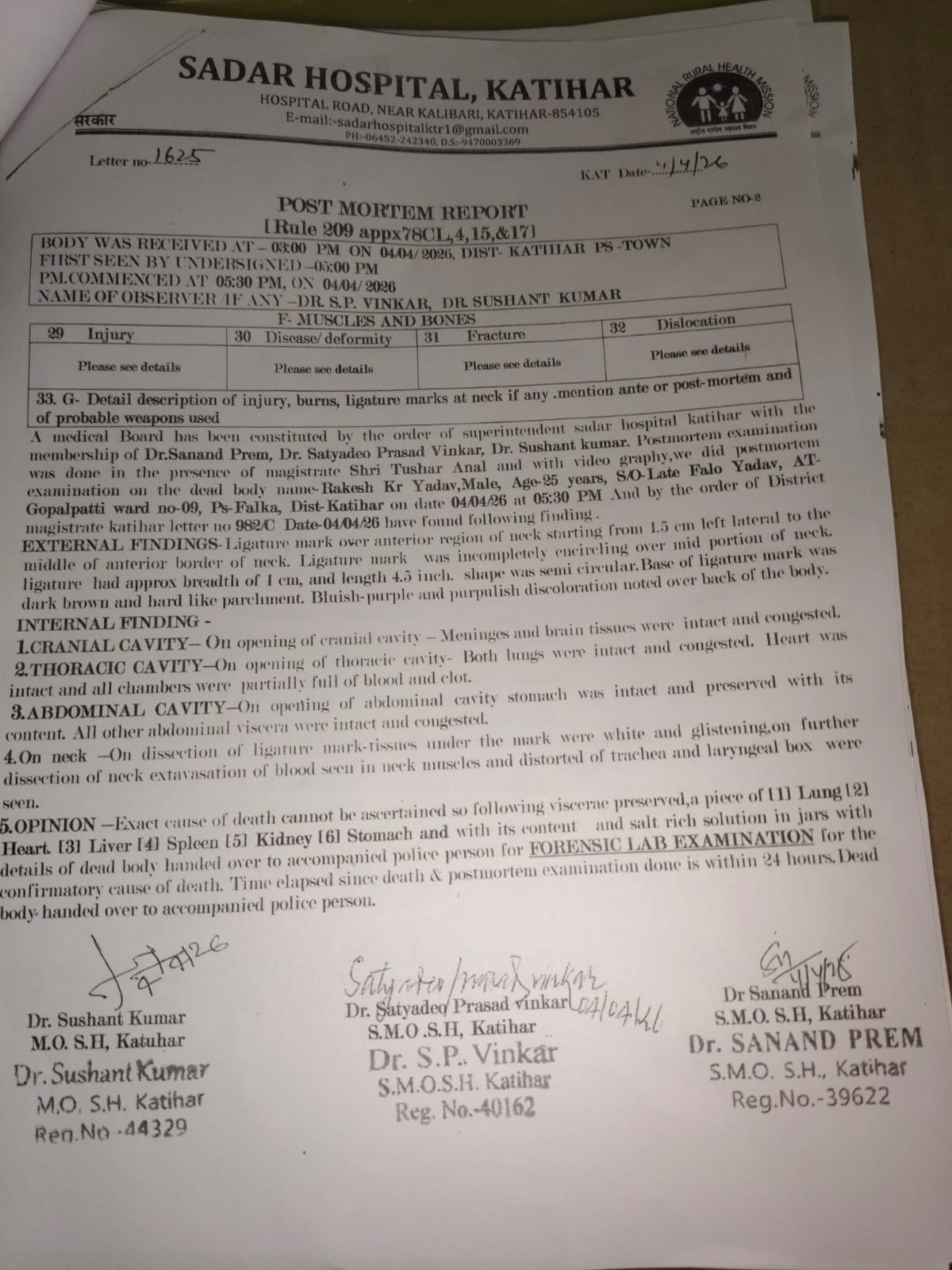
The cases of Rakesh and Sohrab expose a series of structural irregularities in Bihar’s policing and prison administration systems. Both men died within a day of their arrest. While the police maintain that they died by suicide, their families alleged they were subjected to brutality and harassment by law-enforcing authorities. Beyond the disputed cause of death, the authorities’ handling of both cases – from the circumstances surrounding their deaths to the subsequent investigation – raises serious questions about transparency in the procedure, accountability, and the treatment of prisoners from marginalized castes, class, and religious communities.
Ashish Ranjan of Jan Jagran Shakti Sangathan (JJSS), a grassroots people’s organization based predominantly in Araria district, Bihar, that works with marginalized communities, demanded a judicial inquiry into the custodial death of Sohrab and others in Araria District Jail, along with the National Alliance for People’s Movement (NAPM) and the Association for Protection of Civil Rights (APCR).
Ranjan said, “When we started working on these cases of custodial death, case after case, it became clear that each one of them belonged to economically and caste-marginalized backgrounds. After that, the police began a cover-up. The families allege police brutality. Tragically, there is no transparency and scope to intervene for civil society.”
In a press conference, Sohrab’s family alleged that these deaths occurred due to violence in jail or police custody. They stated that the administration concealed the truth and fabricated stories. They questioned how someone declared healthy during a routine medical checkup could die just a day or two after entering jail. Shouldn’t it be investigated why, if the medical report didn’t indicate poor health, how did the accused die so quickly?
Hassan, the lawyer who has been helping Sohrab’s family, said that despite multiple attempts to file complaints, the police had not lodged an FIR. “The police are investigating a case of unnatural death, which means that they have already assumed that they are not responsible in this case,” said Hassan.
Founder and national convener of Bandi Bachao Andolan, an organization working for prisoners’ rights in India, Santosh Upadhyay, also weighed in on police impunity in custodial deaths and said, “State machinery wants to save itself so it will never accept that the death happened in custody. If the death has happened in custody, the entire machinery comes together to prove that the death happened on the way to the hospital or in the hospital itself by admitting the body. It has the means, resources, and money to conduct it.”
In Rakesh’s case, the station house officer (SHO) and Investigating Officer (IO) were suspended. In Sohrab’s case, the NHRC has taken cognizance of the case, but the police are investigating it as a case of unnatural death. In the case of Sidhu Koda, the medical officers were suspended, but no police officials faced punishment for forging the autopsy report. In 2022, an FIR was registered against three policemen, including then sub-divisional police officer Sahariyar Akhtar, in connection with the custodial death of Ramsewak, a sweeper with the Rosera Nagar Parishad in Samastipur district, around 100 km from Patna. Ramsewak died in custody in November 2021.
In 2019, two Muslim men, Mohammad Taslim, 35, and Mohammad Gufran, 30, died in the custody of Dumra police in Bihar’s Sitamarhi district. Eight policemen, including the SHO of Dumra police station, were subsequently suspended, and the district police ordered an inquiry.
Beyond a temporary suspension, disciplinary action has rarely translated into criminal accountability. None of these cases of custodial deaths has resulted in the conviction of a police officer so far.
Men Die in Custody, Women Fight for Justice
Data visualization: Andrew Pavamani
For families, a case of custodial death is often where the legal struggles begin. Seeking justice and compensation often means years of navigating police investigations, court proceedings, and a legal system which is unfamiliar to these families already living at the margins of caste, class and religion. Finding legal support and sustaining hope for justice through the long-drawn process is the hardest battle of all.
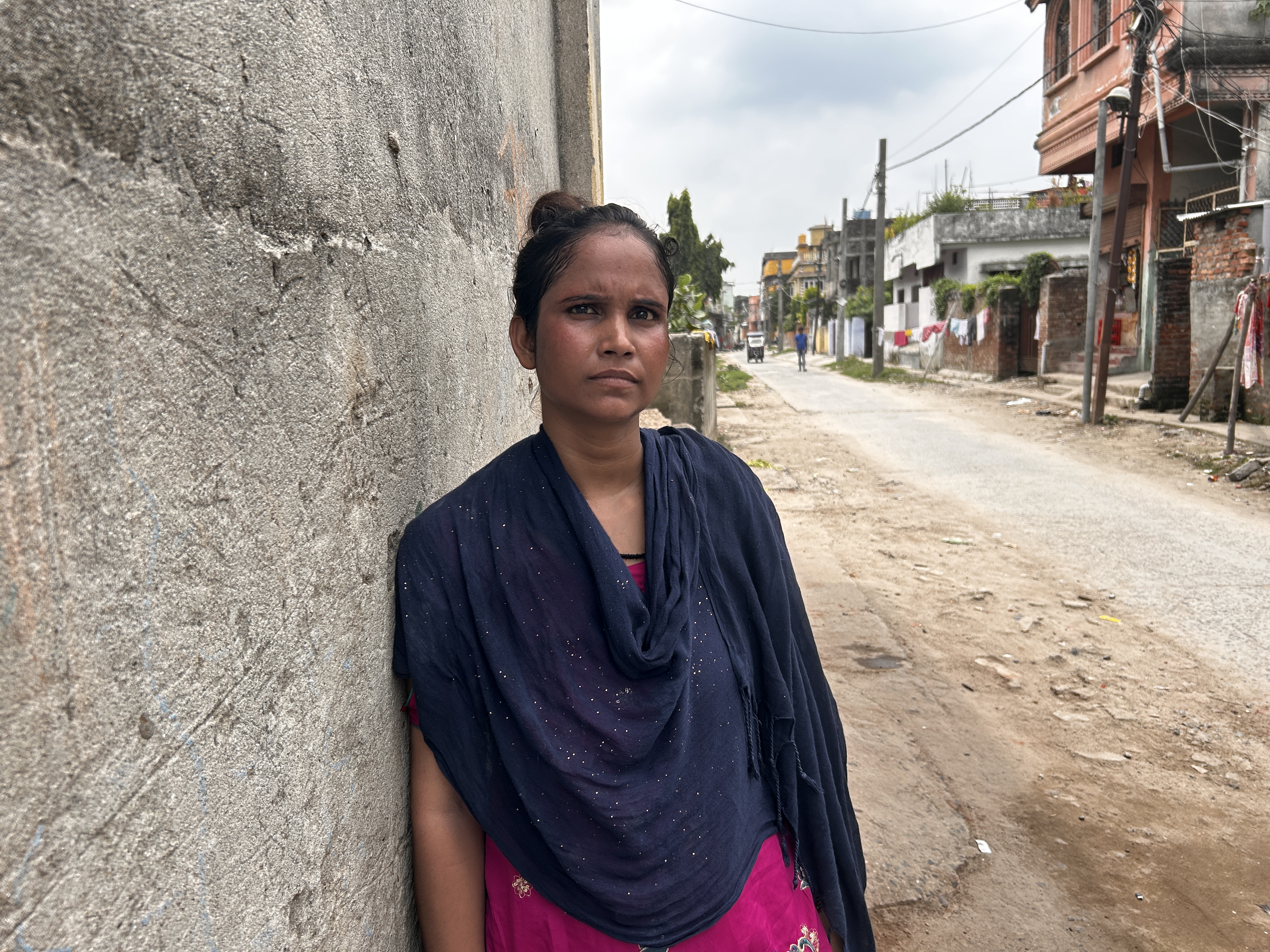
When 45-year-old rickshaw-puller Mohammad Sajjad died in Araria District jail in July 2022, after being arrested by Forbesganj police in a liquor case, his daughter Nikhat Parveen got compensation of five lakh rupees (approx. USD 5,215) from the Bihar government four years after his death, only after the NHRC directed the state government. Parveen, 23, said, “I had to struggle a lot to get the compensation. I’d never stepped out of Forbesganj alone, but when my father died, I had to go to Araria several times and record statements with the magistrate. In four years, I spent Rs 75,000 (approx. USD 800) to get the compensation.”
She added, “Fighting this battle was never a choice for me. I had to do it. The police beat my father to death. How could I have stayed silent? We are poor and survive by doing domestic work in other people’s homes. The compensation mattered to us. But the police must also be punished.” JJSS supported Parveen throughout her journey in dealing with the authorities.
Sajjad’s case is one of the few where compensation was awarded; most cases get buried in files.
Pushpendra of People’s Union for Civil Liberties (PUCL), an activist fighting against custodial deaths in Bihar for more than a decade, opined on the state of surviving families. “If a civil society organization provides support to the families where custodial death has taken place, then, at least, they feel empowered to fight for justice and, at least, they get compensation. But where no one steps forward to help the grieving family, or there is no public agitation, the family might not even get the measly compensation. In most of the cases, families fight for justice all alone and slowly give up against the unassailable law-enforcing institutions.”
When Rakesh and Sohrab died in custody within a day of their arrests, their families took to the streets. Villagers joined them, rooted in the understanding that protest is often the only language the state machinery is forced to hear.
The two cases, however, tell different stories of what protest can and cannot achieve. In Rakesh’s case, the outrage escalated, and the pressure drove the SHO to allegedly offer a bribe to settle the matter. In Sohrab’s case, the protests ebbed within days, the news cycle moved on, and the family was left to fight alone. More than a year later, the case remains under review and with each passing month, the hope of justice grows thinner.
Pushpendra further reflected on how women like Gulshan Khatoon, Sakshi Yadav and Nikhat Parveen must often deal with these cases alone, with little support. “Although there are cases of custodial torture involving women, custodial deaths of men largely outnumber those of women. This leaves an army of widows fighting for justice. They have children to tend to, their in-laws often don’t support them, and these cases drag on for years. People have to move on whether they want to or not, and justice is never served.”
Data visualization: Andrew Pavamani
The Bihar State Human Rights Commission, meant to scrutinize custodial death cases in Bihar, is itself functioning with key vacancies. BHRC Additional Secretary Mahesh Kumar Das said that the position of the registrar, the official responsible for overseeing these cases, has remained vacant for the past two months, in a phone call with the Polis Project this September. The Commission’s Member position has also been vacant for around one and a half years now. The Commission’s Chairperson, Justice Anant Manohar Badar, meanwhile, holds dual responsibility for Bihar and Maharashtra. As a result, while cases continue to be disposed of, they are primarily being examined by the Chairperson, who comes to the commission once a month or consults through video conferencing, the Additional Secretary said.
Former Inspector-General (Vigilance), Umesh Kumar Singh, said, “Earlier it was worse, but now the rulings from the High Court and Supreme Court have helped curtail the police administration. NHRC guidelines are in place. Corruption within the policing system has also increased manifold. Earlier, if there was a corrupt official, the whole state would know about them. But today, the situation has reversed; there are so many corrupt officials.”
In 1993, the NHRC first laid down guidelines for investigating custodial torture and deaths within 24 hours. The 1995 directives required mandatory videography of autopsies, and the constitution of medical panels by state governments to conduct autopsies. In 2001, the Commission narrowed the videography rule: it remained mandatory for deaths in police custody, but for deaths in jail, which made up the vast majority of reported cases, it would apply only where an inquest or complaint raised suspicion of foul play.
Despite detailed frameworks, implementation on the ground remains poor. In Rakesh’s case, his brother Pratosh is completely clueless, while his wife Sakshi has written complaints to the SP, Judicial Magistrate, and the CJM in vain. Rakesh’s family awaits justice as the hope withers away one day at a time.
Daruwala argued that accountability must extend across the entire chain of responsibility from the constable who arrests the accused, to the Station House Officer and Investigating Officer, and, once a person is remanded to prison, to prison authorities. Magistrates too play a crucial safeguarding role when an arrested person is produced before them and when continued detention is authorized. There is a duty at every stage, and failure – whether individual or systemic – must attract consequences.
In the face of such intense hopelessness, families still stand up to fight the system knowing fully well that little justice will be served. “Our duty is to do our work. Hope is continuously corroded in this work of raising our voice against cases of custodial death and supporting the surviving family. We tell people to keep faith in the judiciary and that justice will be served but, truthfully, none of the custodial death cases I have fought for have resulted in justice in the form of conviction of police officers,” added Pushpendra.
This article was published with the support of the Human Rights and Religious Freedom Grant from the Indian American Muslim Council.
Dead in a Day: How Bihar Became India’s Worst State for Custodial Deaths
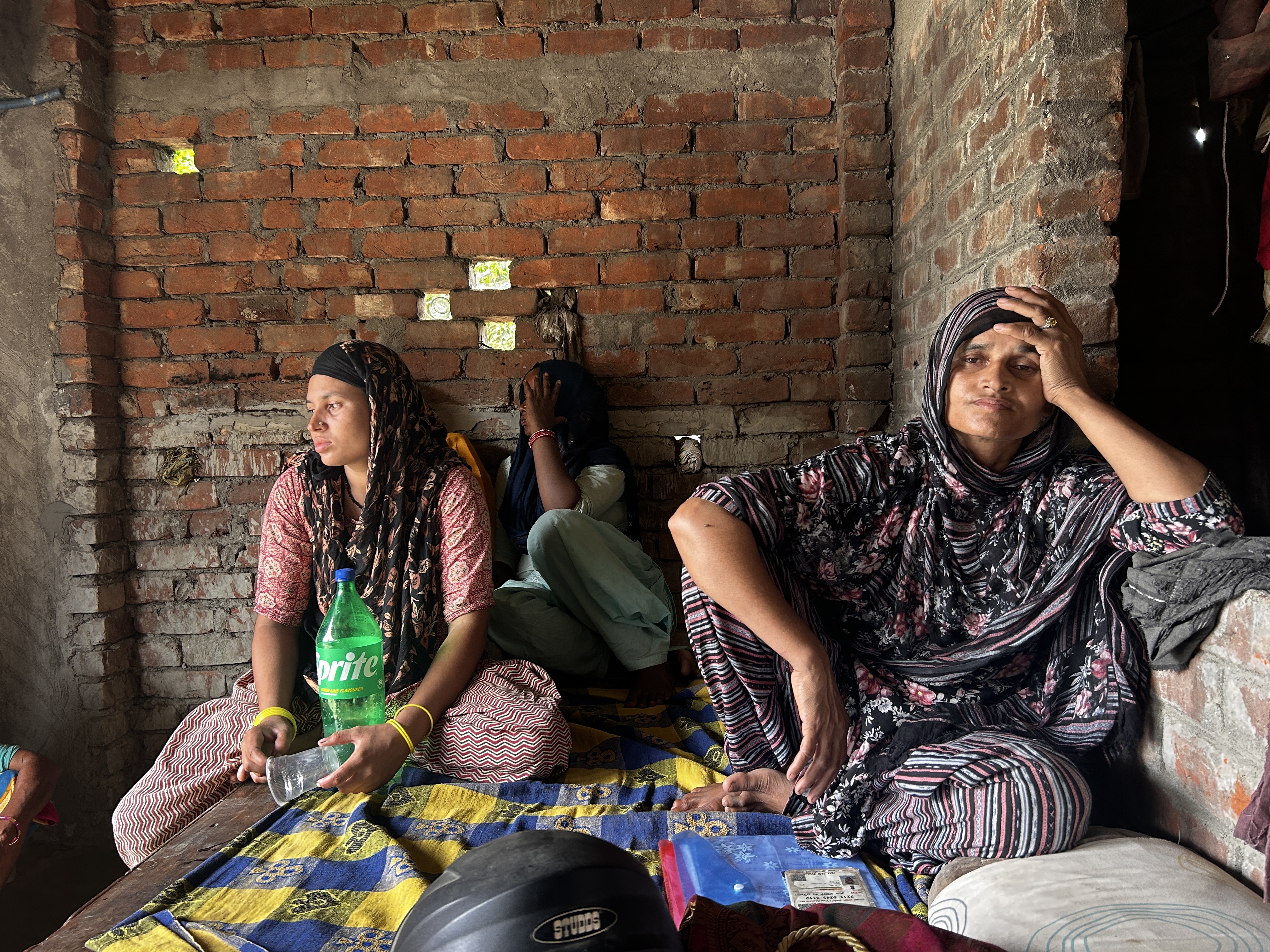
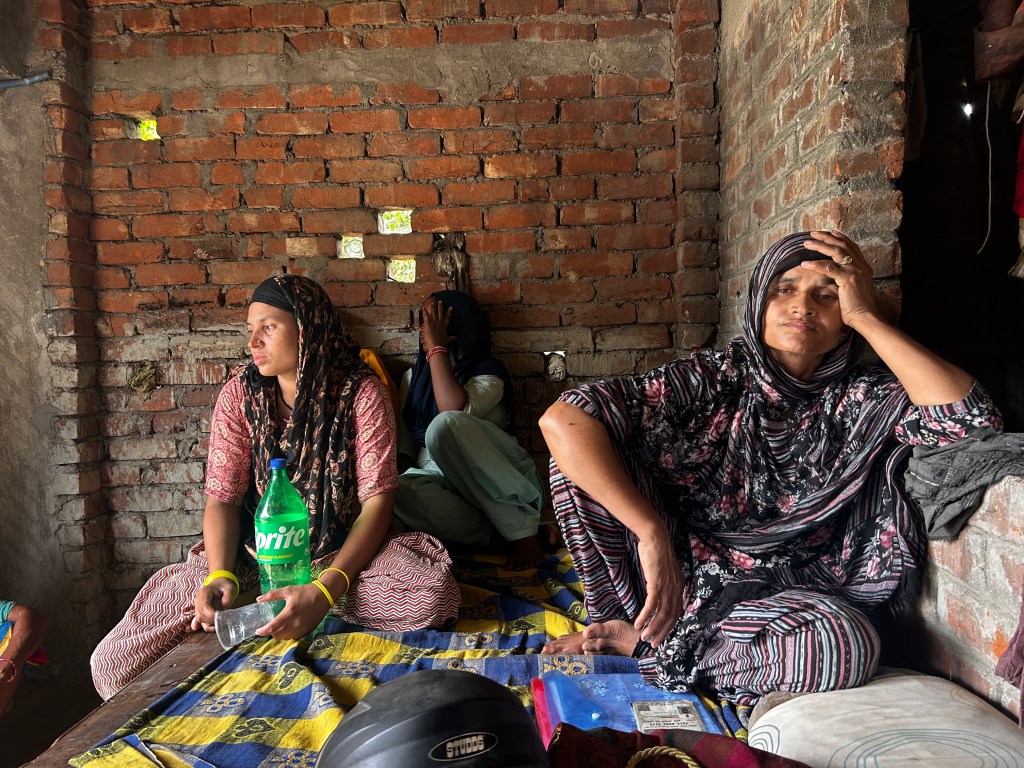
Gulshan Khatoon’s husband, Sohrab Khan, died in Araria District Jail within a day of his arrest in April 2025.
Editor’s note: This article contains images and descriptions that some readers may find distressing, including references to death in custody, alleged police violence and suicide. Reader discretion is advised. Names marked with an asterisk (*) have been changed to protect the identity and safety of the individuals.
Sohrab Khan, aka Munna Khan, was a 46-year-old farmer and daily-wage laborer living in Bansra village in the Palasi community development block of Araria district in Bihar when the police arrested him on the night of April 17 last year on a non-bailable warrant in a bail-violation case. The next night, he allegedly died under ‘mysterious’ circumstances in the Araria District Jail, as per reports.
A few days before Khan’s death, 34-year-old Mithilesh Ram from Fulwari village in Araria also died in the same jail on April 13. Convicted in a case of abducting and killing an 18-month-old child from his neighborhood, Ram had been serving a life sentence since 2023.
On July 3, 2025, another convicted prisoner, Shibu Ghosh from West Bengal, also reportedly died on the way to the district hospital from Araria District Jail. He had been serving a five-year sentence since 2020 and was due to be released in two months.
This year, about an hour past midnight on April 3, the police at Falka police station in Katihar district, Bihar, took 25-year-old Rakesh Kumar Yadav into custody on suspicion of stealing a motorcycle. On the night of April 3, Yadav reportedly hanged himself and died, as per a police statement.
Bihar currently leads the country as the state with the highest number of deaths in police custody between 2025 and 2026. Minister of State for Home Affairs Nityanand Rai told the Lok Sabha in March this year that 19 such cases of deaths have been reported in Bihar out of the total 170 reported across India, referring to data shared by the National Human Rights Commission (NHRC).
We investigated five such cases of custodial deaths in a span of 15 months across Araria and Katihar districts of Bihar. The investigation revealed how primarily economically disadvantaged daily-wage migrant workers, often Muslim or belonging to marginalized castes, were dying within days of entering judicial or police custody. These deaths raise serious questions about Bihar’s judicial and law-enforcing authorities that have failed to provide justifiable compensation to the families of dying prisoners, and have not convicted a single personnel.
Data visualization: Andrew Pavamani
Arrested on suspicion, died in lock-up
Sakshi Kumar Yadav was sleeping with her two-month-old baby when she heard a loud knock on her door in Gopalpatti village in Katihar district at around 1 a.m. on April 3. It took her some time to gather herself when about 10-12 policemen from Falka police station pushed the door forcefully and entered her house. They were looking for her husband, Rakesh, in order to arrest him in connection with a motorcycle theft case.
“The police didn’t have a warrant for Rakesh, nor was he named in the complaint, yet they picked him up on suspicion,” Sakshi said. “When I asked why they were looking for him, they ignored me. Rakesh’s brother Pratosh Kumar Yadav was also in the house. They told him that there’s a case of theft and that they are taking him for inquiry and will set him free the next morning.”
Pratosh said, “It seemed odd that so many of them came without even a case registered against him.”
Pratosh and his elder brother, Santosh Kumar Yadav, went to the police station in the morning to see Rakesh. At the police station, the Investigating Officer, Kundan Patel, summoned the complainant, Kailash Pandit, from the neighboring village of Chandpur, to identify whether Rakesh was involved in the bike theft case. Pandit did not recognize him as one of the three men who snatched his motorcycle key from him on February 21 this year.
Yet, the police didn’t release Rakesh. “Patel asked us to bring our motorcycles for identification. When none of them matched the stolen bike, the police demanded one lakh rupees to settle the matter and let our brother go,” Pratosh said.
He alleged that his family could arrange only half of the amount demanded, so Patel sent them away, telling them they would have to secure Rakesh’s release from Katihar jail the following day. “Around 7:30 p.m. on the same day, about 10 to 15 policemen came to our house again, ransacked it, and took a pair of clothes for Rakesh before leaving,” Pratosh recalled.
Later that night, when Rakesh’s father-in-law, Lallan Kumar Yadav, went to meet him and give him food at the police station, Rakesh told him the police were pressuring him to falsely confess to stealing the motorcycle, Lallan shared with The Polis Project.
Pratosh and other family members claimed that the police brutally beat up Rakesh, which led to his death the same night before they admitted him to Sadar Hospital in Katihar early morning on April 4. “The next morning, at around 7:30 a.m., Patel called me to tell me that my brother was admitted to Sadar Hospital in Katihar after he hanged himself in the police station. When we reached the hospital, we found that he had been brought dead to the hospital,” Pratosh added.
Rakesh’s wife Sakshi alleged that, at the Katihar hospital, the police from Falka police station took her thumbprint on a blank paper under the guise of sending his body for autopsy.
After the family found out that Rakesh had died in police custody, Gopalpatti villagers vandalized the Falka police station, seized police rifles and blocked the state highway to express their anger against police brutality on the same day. Falka police filed multiple FIRs naming 25 people and 700 unnamed people from Gopalpatti for reported violence and snatching arms from the police. With public resistance heightening against Rakesh’s death, Katihar Superintendent of Police Shikhar Chaudhary immediately suspended Falka SHO Ravi Kumar Rai and Investigating Officer Patel on April 4, the same day.
However, Rai allegedly tried to bribe Rakesh’s family with two lakh rupees in cash and a cheque of four lakh rupees on the day he died, claimed Pratosh, sharing a photo of the cheque with The Polis Project.
By the night of April 4, according to Rakesh’s family, the Falka police forcibly conducted his cremation without heeding the family’s wish.
The Polis Project also spoke to Pandit from Chandpur in Katihar district, who had filed the theft case in Falka police station on February 22 – a day after his bike was snatched by three unknown men in Dhamdaha in Purnia district. He claimed that a day after he had filed the complaint, the police had found his bike and kept it at the police station. “SHO Rai said that I’ll have to identify the offenders before I can get my motorcycle back,” recalled Pandit.
After this, Patel called him twice to identify the men, including Rakesh. Pandit denied recognizing him and again asked SHO Rai to return his bike, to which Rai reportedly told him to bail it out. Since the motorcycle was registered under his relative’s name, who had died, he hasn’t been able to retrieve his bike from Falka police station yet. He cycles 55 km between his home and his workplace every day, and has given up on the case.
Data visualization: Andrew Pavamani
The death of Rakesh Kumar Yadav in Falka police custody lays bare a pattern of unchecked police impunity that moves swiftly from procedural violation to extortion to lethal violence. While Pandit, the original complainant, remains without his motorcycle, this incident exposes the robust systemic violence that targets economically disadvantaged people, which often intersects with people belonging to marginalized castes, as suspects, and makes them suffer at the hands of the police and jail administration, where impunity is institutionalized and accountability remains non-existent. This reminds us that in this case, the police served no one except their own interests.
Although Yadavs are a politically influential caste group in Bihar, poorer members of the community, particularly migrant and daily-wage workers, remain vulnerable to police harassment and violence. Largely, custodial violence in India has disproportionately affected economically and socially marginalized communities, including Dalits, Adivasis, and Muslims.
Maja Daruwala, Chief Editor of India Justice Report, which reports and ranks Indian states based on performance data from their justice systems, and a long-time advocate for police reform, argued that procedural failures surrounding arrest and custody have become so widely normalized that they attract little accountability. When safeguards governing arrest and detention are disregarded, custody can become unlawful; and where a person is deliberately subjected to violence in custody and dies as a result, criminal responsibility must be fixed according to the facts.
“To my mind, ‘custodial violence’ and ‘custodial death’ are over-broad descriptions. When we talk about deaths in custody, we must not shy away from establishing exactly what happened and naming the offense accordingly. Where a death is caused by custodial violence or a culpable failure of duty, it may amount to murder, culpable homicide or causing death by negligence, depending on the facts,” Daruwala said.
She added that the police have a duty to produce an arrested person before a magistrate within the period prescribed by law, and the magistrate has a corresponding responsibility to scrutinize that procedural safeguards are being observed. “When these safeguards break down, the protections designed to prevent custodial excess break down.”
Jailed in the morning, dead by night
Sohrab Khan’s body at Sadar Hospital, Araria. His family says the photographs show blood and bruises that point to a beating in custody. The post-mortem report gave the cause of death as hanging. (Photos shared with permission from Sohrab Khan’s family.)
Sohrab Khan, who died in Araria district jail in April last year, was first arrested in December 2017 in a case of embezzlement, filed by his acquaintance Bipin Chaudhary. Reportedly, Sohrab had sold a Common Service Center (CSC) ID to Bipin for Rs 50,000. The CSC was blocked because of a fraudulent identity card, after which Chaudhary filed a fraud case against Sohrab. He spent roughly three months in jail at the time, according to his brother, Shahid Khan.
“When he came out on bail, they had a settlement in 2018, and the matter was resolved,” Shahid said.
“For seven years, we didn’t hear about the case at all and thought it was resolved. Then in April last year, out of nowhere, the police came at midnight to arrest him. None of us, including Sohrab, knew that he had missed court dates during these seven years and that a non-bailable warrant had been issued to arrest him,” Shahid added.
Sohrab’s wife, Gulshan Khatoon, recounted the night of April 17, 2025, when Palasi police came to arrest him. “The police didn’t tell us the reason behind his arrest. At least 15 policemen came, surrounded the house from all sides, and forced open our room to nab him. It was the most terrifying night of my life. I didn’t know then that it would be the last time I’d see him alive.”
When Sohrab arrived in Araria district jail, one of his acquaintances from his village, Mohammad Arif*, was already serving as an undertrial prisoner. The Polis Project met Arif* when he was out on bail, and he said, “On the morning of 18th April, when I got to know that someone from my village had come, I went to meet him and moved him to my ward. The first half of his day went into completing administrative formalities like a medical check-up, etc. Then we sat together in the evening.”
“We talked for a few hours. Then suddenly, he complained of stomach ache and anxiety, so I informed my ward-in-charge and fellow wardmate, Faizan Alam*, about it. Alam* called the guard, who took an hour to come. Then he called for the compounder, who took another hour to come. Since the wards are locked up at 6 p.m., the compounder insisted on injecting an antibiotic to Sohrab from between the iron rods of the jail ward, but Sohrab denied it vehemently. Then the compounder left and took another hour to bring the keys to take Sohrab to the medical facility in jail. In total, the jail personnel took three hours to take him to the jail clinic. That was the last time I saw him. He was fine and went with the compounder walking on his feet,” Rahi, who works as a migrant laborer in Delhi, added.
The Polis Project also spoke to Alam* – another prisoner of Araria district jail and ward-in-charge of Sohrab’s ward – when he was out on bail, and he corroborated Rahi’s account. “The next day we were shocked to know that he had died, ” Alam* said.
The SHO of Araria Railway Station Police Station, Ajeet Kumar Chaudhary, one of the initial investigators of this case, alleged that Sohrab kept pacing up and down in the jail clinic and some time later, he went to the toilet and hanged himself with his gamcha (a thin cotton cloth).
When we called the Superintendent of Araria District Jail, Sujit Kumar Jha, on the phone, he quickly disconnected the call, saying that he was on vacation when Sohrab died in custody. However, in earlier news reports, he had stated that Sohrab committed suicide in the toilet of the jail clinic when he was brought in for treatment.
However, on the same night, the jail officials wrote a letter to inform Sohrab’s family that he had fallen sick and had been taken to the district hospital, when he had already died in the jail clinic.
At Sohrab’s house, a police official came early the next morning to inform his family of Sohrab’s “illness” and gave them the letter, noted Khatoon.
“He asked me to go to Palasi police station to get permission to meet Sohrab in the district hospital. I rushed with my family. At the police station, they asked me to sign some blank papers. We refused at first, but the policeman said that it would allow us to meet Sohrab and care for him at the district hospital, so we relented,” Khatoon said.
When she and her family reached the hospital, they saw Sohrab already dead.
The autopsy report concluded that it was a death by hanging; however, his family alleged that Sohrab died due to being thrashed by the police. “His vest was drenched in blood. His nose had bled, and there were bruises on his body. When I saw him lying dead, my world fell apart,” said Khatoon.
Data visualization: Andrew Pavamani
Notably, in March this year, three doctors from Jamui district in Bihar were suspended for allegedly concealing crucial facts in an autopsy report related to a death in police custody.
Syed Naushad Ahmad, Deputy Superintendent of Jamui Sadar Hospital, along with two medical officers, Devendra Kumar and Nagendra Kumar, were suspended by Bihar Health Department following serious allegations of manipulating details in the custodial death case of Sidhu Koda, also known as Munshi Da, a resident of Nehaldih in the Chakai area of Jamui district.
A judicial inquiry ordered by the magistrate of Jamui exposed the irregularities in the autopsy report. The inquiry stated that the victim’s nose, ears, and mouth oozed blood and there were open wounds on the body. However, the original autopsy report prepared by these doctors omitted these details. The inquiry also reported that the standard of procedure was not followed during the autopsy and the report failed to mention the exact cause of death. The NHRC took serious note of the alleged negligence and directed the authorities to initiate strict disciplinary action against the medical team accused of altering the report.
For Khatoon, Sohrab’s wife, a long and challenging legal fight for justice has only just begun. She has filed multiple complaints with various law-enforcement agencies in Bihar and the NHRC. The investigation into the custodial death of Sohrab is ongoing but no FIR has been filed in the case so far.
What does the data say about Bihar’s custodial deaths?
Data visualization: Andrew Pavamani
In 2025, after Sohrab died, we filed hundreds of RTIs to assess the custodial deaths across all 38 districts in Bihar in the last decade, from 2015. Of the 38 districts, we received data from 32 districts through RTIs.
The NHRC responded with 1,542 cases of deaths in Bihar’s jails and 110 cases in police custody from January 1, 2015, to February 24, 2026. The NHRC laid down its guidelines regarding reporting of custodial deaths in 1993, mandating that every case of custodial death across the country be reported to the commission within 24 hours. Hence, the total number of custodial deaths in Bihar’s jails and police stations is 1,652 in the last decade.
The BHRC, which also takes up cases independently, has recorded 116 deaths in judicial custody and 14 in police custody over the last decade between 2015 and 2025. The massive difference between cases reported to the NHRC and the BHRC over roughly the same timeline flags a huge discrepancy, as activists have acknowledged.
Bihar has eight central jails, of which six shared their data on custodial deaths with the Polis Project. Motihari Central Jail recorded the highest number of custodial deaths with 123 cases in the last decade. Muzaffarpur Central Jail came second with 104 custodial deaths. Both Motihari and Muzaffarpur have already reported four custodial death cases each this year until March. The two central jails that didn’t share the custodial deaths data are in Buxar and Gaya.
The state has 31 district jails, of which 21 shared the data with us. A total of 290 custodial deaths, along with that of two newborns, have been reported from the district jails of Bihar in the last decade. Among these, Betia in West Champaran has registered the highest number with 32 cases, with Sasaram and Siwan following closely behind with 28 and 27 cases, respectively, in the last decade.
Notably, despite our efforts to file RTIs twice in Araria district, the officials failed to share the data with The Polis Project. However, since 2020, at least 22 cases of custodial deaths have been reported in Araria, tracked by the district-based lawyer Md Nawaz Hassan, who provides pro bono legal aid and support for families of those who have died in police or judicial custody in the district.
The Polis Project also received data from six sub-divisional jails. Among 16 such jails in the state, 36 custodial deaths have been recorded since 2015, with Uda Kishunganj sub-jail in Madhepura district and Bagaha sub-jail in West Champaran registering 10 and 9, respectively.
Data visualization: Andrew Pavamani
The latest National Crime Records Bureau (NCRB) data from 2024 shows only one death in police custody. However, when judicial custody is taken into account along with police custody, T the cumulative data we collected totaled 43 deaths in 2024.
This year, until March, we received data on at least 18 custodial deaths in judicial custody from the RTIs we filed, in addition to the data on 19 deaths in police custody shared in the Parliament, which concluded that Bihar tops Indian states in custodial deaths in 2026.
Died in Custody, Buried in Paperwork
The cases of Rakesh and Sohrab expose a series of structural irregularities in Bihar’s policing and prison administration systems. Both men died within a day of their arrest. While the police maintain that they died by suicide, their families alleged they were subjected to brutality and harassment by law-enforcing authorities. Beyond the disputed cause of death, the authorities’ handling of both cases – from the circumstances surrounding their deaths to the subsequent investigation – raises serious questions about transparency in the procedure, accountability, and the treatment of prisoners from marginalized castes, class, and religious communities.
Ashish Ranjan of Jan Jagran Shakti Sangathan (JJSS), a grassroots people’s organization based predominantly in Araria district, Bihar, that works with marginalized communities, demanded a judicial inquiry into the custodial death of Sohrab and others in Araria District Jail, along with the National Alliance for People’s Movement (NAPM) and the Association for Protection of Civil Rights (APCR).
Ranjan said, “When we started working on these cases of custodial death, case after case, it became clear that each one of them belonged to economically and caste-marginalized backgrounds. After that, the police began a cover-up. The families allege police brutality. Tragically, there is no transparency and scope to intervene for civil society.”
In a press conference, Sohrab’s family alleged that these deaths occurred due to violence in jail or police custody. They stated that the administration concealed the truth and fabricated stories. They questioned how someone declared healthy during a routine medical checkup could die just a day or two after entering jail. Shouldn’t it be investigated why, if the medical report didn’t indicate poor health, how did the accused die so quickly?
Hassan, the lawyer who has been helping Sohrab’s family, said that despite multiple attempts to file complaints, the police had not lodged an FIR. “The police are investigating a case of unnatural death, which means that they have already assumed that they are not responsible in this case,” said Hassan.
Founder and national convener of Bandi Bachao Andolan, an organization working for prisoners’ rights in India, Santosh Upadhyay, also weighed in on police impunity in custodial deaths and said, “State machinery wants to save itself so it will never accept that the death happened in custody. If the death has happened in custody, the entire machinery comes together to prove that the death happened on the way to the hospital or in the hospital itself by admitting the body. It has the means, resources, and money to conduct it.”
In Rakesh’s case, the station house officer (SHO) and Investigating Officer (IO) were suspended. In Sohrab’s case, the NHRC has taken cognizance of the case, but the police are investigating it as a case of unnatural death. In the case of Sidhu Koda, the medical officers were suspended, but no police officials faced punishment for forging the autopsy report. In 2022, an FIR was registered against three policemen, including then sub-divisional police officer Sahariyar Akhtar, in connection with the custodial death of Ramsewak, a sweeper with the Rosera Nagar Parishad in Samastipur district, around 100 km from Patna. Ramsewak died in custody in November 2021.
In 2019, two Muslim men, Mohammad Taslim, 35, and Mohammad Gufran, 30, died in the custody of Dumra police in Bihar’s Sitamarhi district. Eight policemen, including the SHO of Dumra police station, were subsequently suspended, and the district police ordered an inquiry.
Beyond a temporary suspension, disciplinary action has rarely translated into criminal accountability. None of these cases of custodial deaths has resulted in the conviction of a police officer so far.
Men Die in Custody, Women Fight for Justice
Data visualization: Andrew Pavamani
For families, a case of custodial death is often where the legal struggles begin. Seeking justice and compensation often means years of navigating police investigations, court proceedings, and a legal system which is unfamiliar to these families already living at the margins of caste, class and religion. Finding legal support and sustaining hope for justice through the long-drawn process is the hardest battle of all.
When 45-year-old rickshaw-puller Mohammad Sajjad died in Araria District jail in July 2022, after being arrested by Forbesganj police in a liquor case, his daughter Nikhat Parveen got compensation of five lakh rupees (approx. USD 5,215) from the Bihar government four years after his death, only after the NHRC directed the state government. Parveen, 23, said, “I had to struggle a lot to get the compensation. I’d never stepped out of Forbesganj alone, but when my father died, I had to go to Araria several times and record statements with the magistrate. In four years, I spent Rs 75,000 (approx. USD 800) to get the compensation.”
She added, “Fighting this battle was never a choice for me. I had to do it. The police beat my father to death. How could I have stayed silent? We are poor and survive by doing domestic work in other people’s homes. The compensation mattered to us. But the police must also be punished.” JJSS supported Parveen throughout her journey in dealing with the authorities.
Sajjad’s case is one of the few where compensation was awarded; most cases get buried in files.
Pushpendra of People’s Union for Civil Liberties (PUCL), an activist fighting against custodial deaths in Bihar for more than a decade, opined on the state of surviving families. “If a civil society organization provides support to the families where custodial death has taken place, then, at least, they feel empowered to fight for justice and, at least, they get compensation. But where no one steps forward to help the grieving family, or there is no public agitation, the family might not even get the measly compensation. In most of the cases, families fight for justice all alone and slowly give up against the unassailable law-enforcing institutions.”
When Rakesh and Sohrab died in custody within a day of their arrests, their families took to the streets. Villagers joined them, rooted in the understanding that protest is often the only language the state machinery is forced to hear.
The two cases, however, tell different stories of what protest can and cannot achieve. In Rakesh’s case, the outrage escalated, and the pressure drove the SHO to allegedly offer a bribe to settle the matter. In Sohrab’s case, the protests ebbed within days, the news cycle moved on, and the family was left to fight alone. More than a year later, the case remains under review and with each passing month, the hope of justice grows thinner.
Pushpendra further reflected on how women like Gulshan Khatoon, Sakshi Yadav and Nikhat Parveen must often deal with these cases alone, with little support. “Although there are cases of custodial torture involving women, custodial deaths of men largely outnumber those of women. This leaves an army of widows fighting for justice. They have children to tend to, their in-laws often don’t support them, and these cases drag on for years. People have to move on whether they want to or not, and justice is never served.”
Data visualization: Andrew Pavamani
The Bihar State Human Rights Commission, meant to scrutinize custodial death cases in Bihar, is itself functioning with key vacancies. BHRC Additional Secretary Mahesh Kumar Das said that the position of the registrar, the official responsible for overseeing these cases, has remained vacant for the past two months, in a phone call with the Polis Project this September. The Commission’s Member position has also been vacant for around one and a half years now. The Commission’s Chairperson, Justice Anant Manohar Badar, meanwhile, holds dual responsibility for Bihar and Maharashtra. As a result, while cases continue to be disposed of, they are primarily being examined by the Chairperson, who comes to the commission once a month or consults through video conferencing, the Additional Secretary said.
Former Inspector-General (Vigilance), Umesh Kumar Singh, said, “Earlier it was worse, but now the rulings from the High Court and Supreme Court have helped curtail the police administration. NHRC guidelines are in place. Corruption within the policing system has also increased manifold. Earlier, if there was a corrupt official, the whole state would know about them. But today, the situation has reversed; there are so many corrupt officials.”
In 1993, the NHRC first laid down guidelines for investigating custodial torture and deaths within 24 hours. The 1995 directives required mandatory videography of autopsies, and the constitution of medical panels by state governments to conduct autopsies. In 2001, the Commission narrowed the videography rule: it remained mandatory for deaths in police custody, but for deaths in jail, which made up the vast majority of reported cases, it would apply only where an inquest or complaint raised suspicion of foul play.
Despite detailed frameworks, implementation on the ground remains poor. In Rakesh’s case, his brother Pratosh is completely clueless, while his wife Sakshi has written complaints to the SP, Judicial Magistrate, and the CJM in vain. Rakesh’s family awaits justice as the hope withers away one day at a time.
Daruwala argued that accountability must extend across the entire chain of responsibility from the constable who arrests the accused, to the Station House Officer and Investigating Officer, and, once a person is remanded to prison, to prison authorities. Magistrates too play a crucial safeguarding role when an arrested person is produced before them and when continued detention is authorized. There is a duty at every stage, and failure – whether individual or systemic – must attract consequences.
In the face of such intense hopelessness, families still stand up to fight the system knowing fully well that little justice will be served. “Our duty is to do our work. Hope is continuously corroded in this work of raising our voice against cases of custodial death and supporting the surviving family. We tell people to keep faith in the judiciary and that justice will be served but, truthfully, none of the custodial death cases I have fought for have resulted in justice in the form of conviction of police officers,” added Pushpendra.
This article was published with the support of the Human Rights and Religious Freedom Grant from the Indian American Muslim Council.