


In 2025, an overwhelming 98% of 1,318 instances of hate speech against minorities in India targeted Muslims. While atrocities against Indian Muslims have peaked in recent times, Muslim women who defy the narrow boxes of identity politics, remain forthright about their constitutional rights, and are visible in public spaces are often subject to humiliation. The precarious position of Muslim women first came into the limelight in mainstream news media during the Shah Bano Case in the 1980s and remains a crucial concern with the rise of Hindutva majoritarian politics since 2014. The recent sulli deals issue made it particularly evident, where photographs of Muslim women were “auctioned” by right-wing Hindutva groups, aiming to target vocal Muslim women advocating for their rights. Bollywood too has significantly shaped the idea of a Muslim woman who is often shown as a hyper-sexualized courtesan, as in Pakeezah (1972) and Umrao Jaan (1981). Often fluent in Urdu and ghazals, she hails from northern India, from Delhi or Lucknow. Otherwise, she is often a victim of domestic violence, as in more recent movies such as Secret Superstar (2017), or like Konkana Sen Sharma’s character in Lipstick Under My Burkha (2016). At their best, they can be hyper-nationalists sacrificing their life and love for the nation, like Alia Bhatt’s character in Raazi (2018), where she is sent to Pakistan as an Indian spy under the guise of marriage.
Several critics and academics have routinely pointed out that Muslims are not a monolithic identity, and there are regional and socio-cultural variations. Sana Aziz, in her essay “Muslim Women and Hijab: Majoritarian Politics and Veiled Resistance in India” published in The Hijab: Islam, Woman and the Politics of Clothing (2022) sums up the position of Muslim women under the Hindutva ecosystem as being both the “religious other” and “gendered other”. In these politically fraught times, where identities of Muslim women are reduced to politically convenient singular dimensions, reading the works of prominent Tamil writer and political activist Salma is a crucial act of resistance, as they offer a distinctly regional peek into these “othered” lives.
Rajathi Samsudeen was born to a self-isolated Muslim community in the village of Thuvarankurichi in Tamil Nadu. Samsudeen adopted the pseudonym Salma to continue her creative endeavors in a conservative society. Through her stories, readers intimately witness the trials and tribulations of Muslim women from Tamil Nadu. The voice and flavor of her stories are distinctly regional, imbued with imagery of women making iddiyapam and kurma, a staple in Tamil Muslim cuisine. She deftly characterizes the Muslim woman of southern India, who are often rendered invisible in mainstream, stereotypical portrayals of Muslim women. Her works allow readers a glimpse into their inner worlds beyond the comfortable binary of the oppressed and the emancipated. With two poetry collections, three novels, and one short story collection, Salma has gained international recognition for her focus on the intense inner world of women from her community.
From the Domestic Sphere to a Life in Letters
Samsudeen’s transformation into the poet and writer Salma stemmed from intense loneliness. Confined to the domestic world, she became deeply aware of the limits of her life and experiences. It prompted her to turn her gaze to the spaces where women negotiated their boundaries. The women in Salma’s stories step out of their domestic world only to meet certain necessities—either to accompany an elder to a doctor’s visit, like Jassi in “On the Edge”, or to go to school like Shamin in “Toilets” from the collection The Curse Stories (2021), translated from Tamil by N. Kalyan Raman.
Salma shows that when a woman, irrespective of her age, steps out of her home, even to entertain herself, these transgressions are severely punished. In “Black Beads and Television” from The Curse Stories, readers witness Zakiramma’s obsession with movies. A 58-year-old woman, she religiously watches every movie in the theatre while being accused of “loitering” by her husband. In her first novel, The Hour Past Midnight (2009), translated from Tamil by Lakshmi Holmstrom, Rabia, a preteen, sneaks out of school to watch a movie with her friends. Unlike Zakiramma, Rabia’s punishment for loitering was harsher: a thrashing from her mother.
In “Childhood”, from The Curse Stories, Salma delineates the claustrophobic atmosphere of the domestic space. The drudgery of domesticity has hollowed out the protagonist, Mehrunisa, who is burdened with marriage and childbirth at the young age of 20; much like Salma herself, who was betrothed to her cousin at 13 and married at 19. It explores Mehrunisa’s humiliation when faced with her childhood love, and her “no vigor” smile conveys regrets for a life that was denied to her because her family forcibly married her off at 15. Unlike her character Mehrunisa, Salma refused to surrender to the restraints of her stifling life. She channeled her grief and anger through poetry, and found the “freedom song” in her verses. Her intensely personal poetry, known for depicting female sexuality and desire with candor, won recognition within the literary community and criticism from her conservative community. She faced charges of obscenity and threats of violence. Hence, to continue writing without scrutiny and judgment, she adopted the pseudonym Salma.
Centering Women’s Bodies
Salma portrays her characters through gritty images of their bodies— that bleed, bend with exhaustion, urge to pee and take a dump, sweat in the heat— as individuals taking up space, when patriarchal social milieu, both within and outside the community, seeks to invisibilize, erase, and deny them expression. Shamin, in “Toilets”, from The Curse Stories, has never peed in peace. In order to use their outdoor toilet, she must never be seen by men on her way. Her mother’s voice that forbids her from being seen lives forever in her psyche as a threat, and her body tenses up every time she has to relieve herself. The inability to express her body’s basic needs follows Shamin into adulthood, even after she has the privilege of an indoor toilet. Salma shows how the patriarchal gaze infiltrates the innermost corners of one’s being since Shamin can no longer use the toilet without being hypervigilant about her surroundings.
In Salma’s writings, silence is a syntax and a complete language in itself. The women in her stories seldom speak or are too intimidated to express themselves in the presence of men. Yet, their silence does not take away their individuality. In The Hour Past Midnight, readers sense Firdaus’s silence, heavy with grief and longing, as she overhears the decision about her marriage and weeps helplessly. Later, Firdaus casts one glance at her newlywed husband and declares that she would not spend her life with him. This decision leaves her confined to her home, cut off from the world. Her life comes to a standstill, contained within her house and the adjacent garden. Firdaus still yearns for love, and her love for Shiva, a Hindu man, blooms in silence, a taboo love that can never be uttered. Salma’s women, despite inhabiting deeply patriarchal settings, are never denied the agency to dream and take up space in the world. In her works, silence is not erasure but a necessity, for the fragile inner worlds and desires to stay intact.
Refusing Comforts of Redemption Arcs
Salma’s stories echo the predicament of Muslim women in India today, such as the portrayal of Sajida, in her novel, Women, Dreaming (2022), translated by Meena Kandasamy. Sajida’s trial is almost prophetic, resembling the challenges faced by the women in Udupi who were barred from wearing hijab on campus in 2022. The ban sparked protests from Muslim women who demanded the right to freedom of expression as well as the freedom to practice their religion. They were outraged because the hijab, often viewed as a symbol of oppression, was for them a way to assert their faith and dress as they wanted to. A young Sajida dreams of freedom from her orthodox father’s tyranny through education. Women, Dreaming ends with the hint that Sajida’s education might be discontinued, and as readers, we are left guessing. Salma avoids the easy arc of redemption from unjust or difficult situations and does not offer her readers the comfort of an easy resolution to structural injustices. Against the backdrop of the Hijab ban debate, one is left to wonder about the fates of women like Sajida who wage battles at home to enter educational institutions, only to find themselves unwelcome.

In one of her interviews, Salma said, “Authority is important and men know that it is something women should not be given”. This core conflict– women seeking authority, even in the smallest ways over their lives, and patriarchal structures or men around them thwarting their efforts– colors her stories, especially with the characters Parveen and Meher in Women, Dreaming. Parveen chooses her battle for financial independence and decides to stay with her unmarried aunt, Amina, after her husband abandons her. Meher, a survivor of a violent and tumultuous marriage, divorces her husband after she receives the news of his second marriage. Both face the same patriarchal obstacle: Hasan, Parveen’s brother and Meher’s husband. Salma resists the simplistic trope in Western liberal feminism that equates divorce with women’s emancipation. As women living outside of the institution of marriage, Parveen and Meher have to navigate an orthodox semi-rural setting that looks down upon single divorced women. Salma’s narratives are not designed to deliver easy answers but rather insist on the messiness of humanity and the nuanced nature of truths. Hence, reading Salma can be unsettling. She does not hesitate to make her readers, who might come from varying degrees of marginalization and privilege, uncomfortable, leaving closure elusive. Perhaps, in her symbolic way, she invites readers to stew in the same discomfort as the women in her stories are forced to reckon with.
I have often asked myself: through her stories, what kind of relationship is she trying to establish with her readers? As a female-assigned person, reading Salma is an act of personal reckoning with the subjugation of women and the unique ways in which patriarchy intersects with religious orthodoxy to create the oppressive conditions governing their lives. Despite leading a life starkly different from her characters, I found myself connecting with their losses, fears, and yearnings for freedom; whether it was Parveen’s longing for freedom and love or Rabia’s childlike curiosity for life and the ways in which they are stifled.
In the essay “Recognizing the Stranger: On Palestine and Narrative”, Isabella Hammad writes about the “consoling fictions of fixed identities, which make it easier to herd into groups”. To whom are these “fictions of fixed identities” consoling? Hammad answers in the essay: the oppressor, the groups who have to be continuously convinced of the humanity of the oppressed. The “consoling fictions” peddled by the Hindutva communal agenda dehumanize Muslim women or relegate them to be victims of religious orthodoxy, devoid of rights and agency, and in need of saving. Salma’s writing decenters the oppressor, and she lifts the curtain, allowing us glances into her own community, but resists the resolution of the narrative, the metaphorical closure of the circle. As readers, we must be prepared to be undone by the worlds we witness.
Translated regional literature, depicting ordinary lives in specific socio-cultural settings, has been gaining recognition in the international sphere. The Heart Lamp, a collection of short stories by Banu Mushtaq, translated from Kannada by Deepa Bhasthi, won the International Booker Prize in 2025. In her acceptance speech, Mushtaq said, “no story is ever ‘small’ –that in the tapestry of human experience, every thread holds the weight of the whole”. In these increasingly polarizing political times, where identities are mined for propaganda, literature that sheds light on the ambiguities of life and existence resists easy categorization. Reading authors like Salma, Mushtaq, and other writers who create immersive literary worlds rooted in regional realities is the first step toward building political solidarities and recognizing that our collective freedom and liberation are inextricably linked.

Reading Salma in Islamophobic India
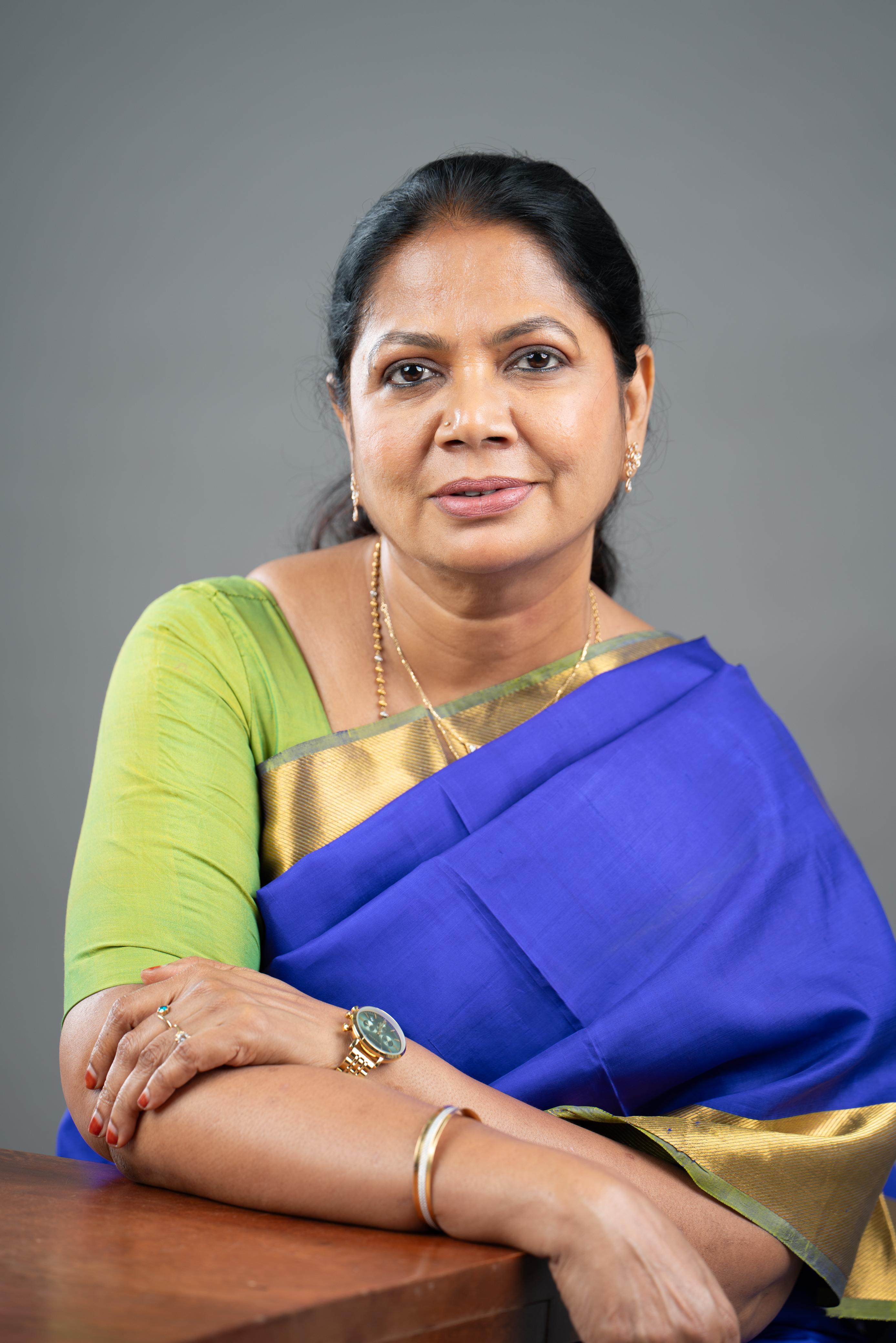
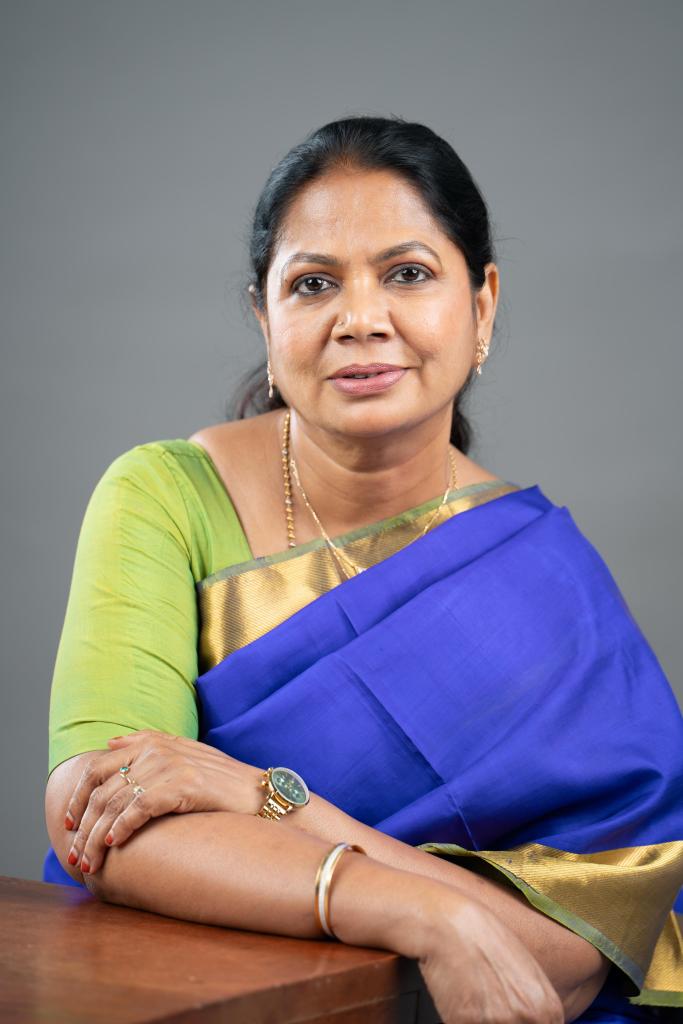
Author Salma. Photo: Bala
In 2025, an overwhelming 98% of 1,318 instances of hate speech against minorities in India targeted Muslims. While atrocities against Indian Muslims have peaked in recent times, Muslim women who defy the narrow boxes of identity politics, remain forthright about their constitutional rights, and are visible in public spaces are often subject to humiliation. The precarious position of Muslim women first came into the limelight in mainstream news media during the Shah Bano Case in the 1980s and remains a crucial concern with the rise of Hindutva majoritarian politics since 2014. The recent sulli deals issue made it particularly evident, where photographs of Muslim women were “auctioned” by right-wing Hindutva groups, aiming to target vocal Muslim women advocating for their rights. Bollywood too has significantly shaped the idea of a Muslim woman who is often shown as a hyper-sexualized courtesan, as in Pakeezah (1972) and Umrao Jaan (1981). Often fluent in Urdu and ghazals, she hails from northern India, from Delhi or Lucknow. Otherwise, she is often a victim of domestic violence, as in more recent movies such as Secret Superstar (2017), or like Konkana Sen Sharma’s character in Lipstick Under My Burkha (2016). At their best, they can be hyper-nationalists sacrificing their life and love for the nation, like Alia Bhatt’s character in Raazi (2018), where she is sent to Pakistan as an Indian spy under the guise of marriage.
Several critics and academics have routinely pointed out that Muslims are not a monolithic identity, and there are regional and socio-cultural variations. Sana Aziz, in her essay “Muslim Women and Hijab: Majoritarian Politics and Veiled Resistance in India” published in The Hijab: Islam, Woman and the Politics of Clothing (2022) sums up the position of Muslim women under the Hindutva ecosystem as being both the “religious other” and “gendered other”. In these politically fraught times, where identities of Muslim women are reduced to politically convenient singular dimensions, reading the works of prominent Tamil writer and political activist Salma is a crucial act of resistance, as they offer a distinctly regional peek into these “othered” lives.
Rajathi Samsudeen was born to a self-isolated Muslim community in the village of Thuvarankurichi in Tamil Nadu. Samsudeen adopted the pseudonym Salma to continue her creative endeavors in a conservative society. Through her stories, readers intimately witness the trials and tribulations of Muslim women from Tamil Nadu. The voice and flavor of her stories are distinctly regional, imbued with imagery of women making iddiyapam and kurma, a staple in Tamil Muslim cuisine. She deftly characterizes the Muslim woman of southern India, who are often rendered invisible in mainstream, stereotypical portrayals of Muslim women. Her works allow readers a glimpse into their inner worlds beyond the comfortable binary of the oppressed and the emancipated. With two poetry collections, three novels, and one short story collection, Salma has gained international recognition for her focus on the intense inner world of women from her community.
From the Domestic Sphere to a Life in Letters
Samsudeen’s transformation into the poet and writer Salma stemmed from intense loneliness. Confined to the domestic world, she became deeply aware of the limits of her life and experiences. It prompted her to turn her gaze to the spaces where women negotiated their boundaries. The women in Salma’s stories step out of their domestic world only to meet certain necessities—either to accompany an elder to a doctor’s visit, like Jassi in “On the Edge”, or to go to school like Shamin in “Toilets” from the collection The Curse Stories (2021), translated from Tamil by N. Kalyan Raman.
Salma shows that when a woman, irrespective of her age, steps out of her home, even to entertain herself, these transgressions are severely punished. In “Black Beads and Television” from The Curse Stories, readers witness Zakiramma’s obsession with movies. A 58-year-old woman, she religiously watches every movie in the theatre while being accused of “loitering” by her husband. In her first novel, The Hour Past Midnight (2009), translated from Tamil by Lakshmi Holmstrom, Rabia, a preteen, sneaks out of school to watch a movie with her friends. Unlike Zakiramma, Rabia’s punishment for loitering was harsher: a thrashing from her mother.
In “Childhood”, from The Curse Stories, Salma delineates the claustrophobic atmosphere of the domestic space. The drudgery of domesticity has hollowed out the protagonist, Mehrunisa, who is burdened with marriage and childbirth at the young age of 20; much like Salma herself, who was betrothed to her cousin at 13 and married at 19. It explores Mehrunisa’s humiliation when faced with her childhood love, and her “no vigor” smile conveys regrets for a life that was denied to her because her family forcibly married her off at 15. Unlike her character Mehrunisa, Salma refused to surrender to the restraints of her stifling life. She channeled her grief and anger through poetry, and found the “freedom song” in her verses. Her intensely personal poetry, known for depicting female sexuality and desire with candor, won recognition within the literary community and criticism from her conservative community. She faced charges of obscenity and threats of violence. Hence, to continue writing without scrutiny and judgment, she adopted the pseudonym Salma.
Centering Women’s Bodies
Salma portrays her characters through gritty images of their bodies— that bleed, bend with exhaustion, urge to pee and take a dump, sweat in the heat— as individuals taking up space, when patriarchal social milieu, both within and outside the community, seeks to invisibilize, erase, and deny them expression. Shamin, in “Toilets”, from The Curse Stories, has never peed in peace. In order to use their outdoor toilet, she must never be seen by men on her way. Her mother’s voice that forbids her from being seen lives forever in her psyche as a threat, and her body tenses up every time she has to relieve herself. The inability to express her body’s basic needs follows Shamin into adulthood, even after she has the privilege of an indoor toilet. Salma shows how the patriarchal gaze infiltrates the innermost corners of one’s being since Shamin can no longer use the toilet without being hypervigilant about her surroundings.
In Salma’s writings, silence is a syntax and a complete language in itself. The women in her stories seldom speak or are too intimidated to express themselves in the presence of men. Yet, their silence does not take away their individuality. In The Hour Past Midnight, readers sense Firdaus’s silence, heavy with grief and longing, as she overhears the decision about her marriage and weeps helplessly. Later, Firdaus casts one glance at her newlywed husband and declares that she would not spend her life with him. This decision leaves her confined to her home, cut off from the world. Her life comes to a standstill, contained within her house and the adjacent garden. Firdaus still yearns for love, and her love for Shiva, a Hindu man, blooms in silence, a taboo love that can never be uttered. Salma’s women, despite inhabiting deeply patriarchal settings, are never denied the agency to dream and take up space in the world. In her works, silence is not erasure but a necessity, for the fragile inner worlds and desires to stay intact.
Refusing Comforts of Redemption Arcs
Salma’s stories echo the predicament of Muslim women in India today, such as the portrayal of Sajida, in her novel, Women, Dreaming (2022), translated by Meena Kandasamy. Sajida’s trial is almost prophetic, resembling the challenges faced by the women in Udupi who were barred from wearing hijab on campus in 2022. The ban sparked protests from Muslim women who demanded the right to freedom of expression as well as the freedom to practice their religion. They were outraged because the hijab, often viewed as a symbol of oppression, was for them a way to assert their faith and dress as they wanted to. A young Sajida dreams of freedom from her orthodox father’s tyranny through education. Women, Dreaming ends with the hint that Sajida’s education might be discontinued, and as readers, we are left guessing. Salma avoids the easy arc of redemption from unjust or difficult situations and does not offer her readers the comfort of an easy resolution to structural injustices. Against the backdrop of the Hijab ban debate, one is left to wonder about the fates of women like Sajida who wage battles at home to enter educational institutions, only to find themselves unwelcome.
In one of her interviews, Salma said, “Authority is important and men know that it is something women should not be given”. This core conflict– women seeking authority, even in the smallest ways over their lives, and patriarchal structures or men around them thwarting their efforts– colors her stories, especially with the characters Parveen and Meher in Women, Dreaming. Parveen chooses her battle for financial independence and decides to stay with her unmarried aunt, Amina, after her husband abandons her. Meher, a survivor of a violent and tumultuous marriage, divorces her husband after she receives the news of his second marriage. Both face the same patriarchal obstacle: Hasan, Parveen’s brother and Meher’s husband. Salma resists the simplistic trope in Western liberal feminism that equates divorce with women’s emancipation. As women living outside of the institution of marriage, Parveen and Meher have to navigate an orthodox semi-rural setting that looks down upon single divorced women. Salma’s narratives are not designed to deliver easy answers but rather insist on the messiness of humanity and the nuanced nature of truths. Hence, reading Salma can be unsettling. She does not hesitate to make her readers, who might come from varying degrees of marginalization and privilege, uncomfortable, leaving closure elusive. Perhaps, in her symbolic way, she invites readers to stew in the same discomfort as the women in her stories are forced to reckon with.
I have often asked myself: through her stories, what kind of relationship is she trying to establish with her readers? As a female-assigned person, reading Salma is an act of personal reckoning with the subjugation of women and the unique ways in which patriarchy intersects with religious orthodoxy to create the oppressive conditions governing their lives. Despite leading a life starkly different from her characters, I found myself connecting with their losses, fears, and yearnings for freedom; whether it was Parveen’s longing for freedom and love or Rabia’s childlike curiosity for life and the ways in which they are stifled.
In the essay “Recognizing the Stranger: On Palestine and Narrative”, Isabella Hammad writes about the “consoling fictions of fixed identities, which make it easier to herd into groups”. To whom are these “fictions of fixed identities” consoling? Hammad answers in the essay: the oppressor, the groups who have to be continuously convinced of the humanity of the oppressed. The “consoling fictions” peddled by the Hindutva communal agenda dehumanize Muslim women or relegate them to be victims of religious orthodoxy, devoid of rights and agency, and in need of saving. Salma’s writing decenters the oppressor, and she lifts the curtain, allowing us glances into her own community, but resists the resolution of the narrative, the metaphorical closure of the circle. As readers, we must be prepared to be undone by the worlds we witness.
Translated regional literature, depicting ordinary lives in specific socio-cultural settings, has been gaining recognition in the international sphere. The Heart Lamp, a collection of short stories by Banu Mushtaq, translated from Kannada by Deepa Bhasthi, won the International Booker Prize in 2025. In her acceptance speech, Mushtaq said, “no story is ever ‘small’ –that in the tapestry of human experience, every thread holds the weight of the whole”. In these increasingly polarizing political times, where identities are mined for propaganda, literature that sheds light on the ambiguities of life and existence resists easy categorization. Reading authors like Salma, Mushtaq, and other writers who create immersive literary worlds rooted in regional realities is the first step toward building political solidarities and recognizing that our collective freedom and liberation are inextricably linked.