




There is a particular kind of life that doesn’t look like collapse.
This life looks functional, composed, and sometimes even admirable: an organized house, a familiar routine, predictable conversations, days differentiated only by small controlled variations—something different for lunch or a different route to work. Everything is in place.
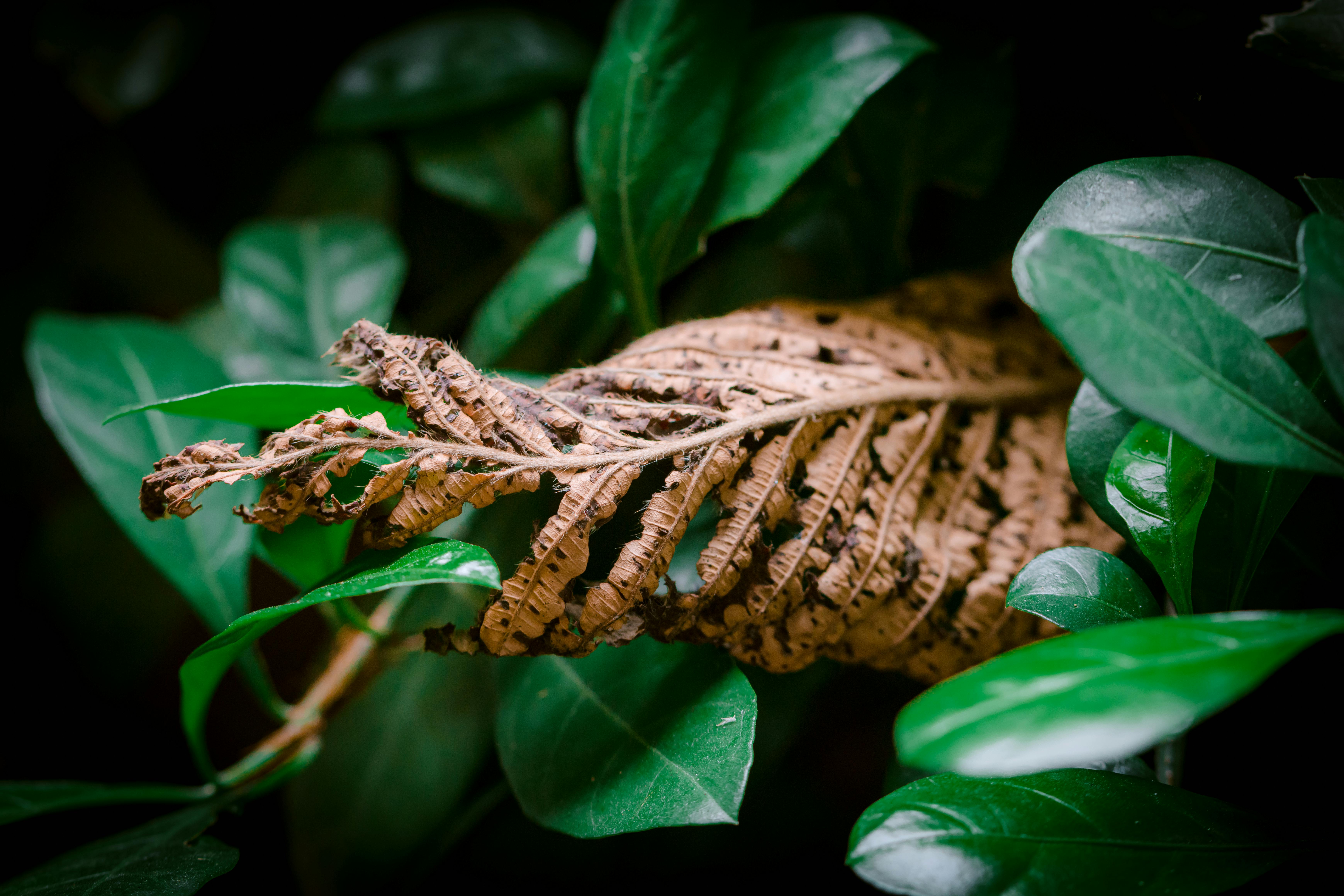
Like the areca palm plant in my clinic that stays in its fixed corner but has outgrown its pot. The plant looks healthy, with no immediate signs of decay. But it has stopped changing. A budding leaf tried to emerge once, but it browned and folded into itself even before it could take shape. If you take the plant out of the pot, the roots have circled very tightly around the base, and it feeds off the same exhausted soil. There is nowhere else for it to go.
The plant isn’t dead; it is enclosed. It has stopped growing.
The distinction is important: enclosures are not the absence of life but a life that is contained past the point of growth. The pot holds the plant (lovingly, so) but also restricts it. A structure is necessary for early protection, but the same structure—once it outlives its purpose—can prevent transformations.
For us humans, these structures are social: caste, class, gender, and ideology. They are taught as beliefs, but are also spaces we live inside. A world that is so carefully arranged that differences are minimized, frictions are avoided, and whatever is not “absorbed” is kept at arm’s length.
Over time, these structures limit what we encounter; they limit what we can feel. Experiences flatten. Nothing unfamiliar stays for long enough to change anything: wanted or unwanted.
Very Comforting Smallness
I am tempted to speak of enclosure as a failure—as a form of ignorance that can and must be corrected—to stop myself from seeing how relieving this restriction actually is. To live among sameness is also to be spared the burden of constant negotiation. We don’t have to sit with the discomfort of being affected by somebody else’s reality.
There is an ease to this: we don’t have to worry about being understood because we already belong.
I can recognize this impulse towards smallness—not as ideology, but maybe as withdrawal. I like to believe I am open, but I notice how quickly I shut things down when I feel unheard or misrecognized. In those moments, I would much rather retreat into a space where I don’t have to negotiate or risk being misunderstood again. In those moments, this smallness is comforting.
Isha (pseudonym) comes in speaking about distance. She feels cut off from her family, abandoned. She says the chasm widened after her younger sister’s marriage. She seems perplexed about her sibling’s choices, often saying, “How will she raise her children? She isn’t thinking straight!” or “What does she eat for dinner? We are vegetarians, you know!”
It takes me a while to realize that the reason Isha withdrew from her relationship with her sister was that she didn’t “approve” of her husband, who is “of a different caste.” There is irritation and confusion towards her sister.
At first, it is easy to hear this as grief: a loss of familiarity, shared values, or a known world. But as our work continues, something else begins to emerge.
Any attempt to introduce another perspective is deflected, reframed, or dismissed. I ask her if staying curious about her sister’s life may offer some closeness, and she immediately shrugs it off: “People make choices. Choices have consequences. Not everything deserves understanding.”
There is no ambiguity, no space for contradiction. Curiosity is dismissed as a stupid thought, perhaps even a dangerous one. I wonder: who is bearing the consequences of this worldview?
And then, something shifts in the room. (Maybe, something stops shifting.) I begin to notice a certain dullness between us. Some metaphorical sleepiness that we aren’t able to shake off. We still “talk,” but nothing is being said. Nothing moves, except in circles, and Isha complains about the repetition.
This is not an ideological difference or “resistance” to therapy. It is the embodiment of enclosure taking form even in our relationship.
What cannot be recognized cannot be taken in. Whatever cannot be taken in cannot transform. We tighten around what is already known. This is how small worlds sustain themselves, not just through belief, but through foreclosure of encounter.
What Does It Take To Leave?
At this point, it is easy to say: just expand. Open up. Let the differences in!
That is an important, but ultimately naive argument. Expansions are not neutral; they aren’t all about beautiful growth. They are destabilizing—some more than others. Repotting a plant is not gentle; the roots resist being loosened, some have to be cut, and we need to find the right pot, the right soil. To step outside a tightly held world is also to lose the familiarity that once felt like ground, the categories blur, and certainties stop existing. One is no longer fully at “home” in what once felt unquestionably solid.
There is grief in this. There is a lot of fear in this.
To open oneself to novelty, or to difference, is not just to include more—it is to risk being altered. Discovering that what we believed was stable may not survive, and that belonging needs to be renegotiated, is difficult. When we are scared, we cannot hold nuance; we cling to survival. (Remember how in early social media discourse around feminism, there was a narrative of “why choose feminism when all it does is turn women into bitter old cat ladies who are lonely?” So it is “much better to silently submit yourself for the ‘joys’ of companionship,” allegedly).
It is this system of coherence, of pushing out the differences, that allows enclosures to persist. Not because we as people are incapable of thinking differently, but because the cost of doing so feels too high. Identity, community, and coherence are not things we can surrender, and that is what feels threatened by change.
But here is what else happens in the enclosure: a society that is organized around small airless worlds is not only divided, fragmented into units that cannot tolerate each other, but it is also manageable and severely isolated. When differences are feared, authority is very reassuring. Stability and control become synonymous, and the emotional life looks calm, but it is tense, perpetually on its guard.
We become defensive, reactive, constantly bracing against the invisible threat of intrusion.
The unknown becomes a threat.
Enclosures Are Also Identities
Enclosures, at some point, are not conditions. They begin to feel like the truth.
Certainty is often less the result of clarity than of enclosure. In the pursuit of certainty, there is a constant and often invisible labor to avoiding encounters, dismissing some voices, finding your heroes before any holes in this system are noticed.
This is what makes the emotional life within rarely at ease.
Beneath the surface of confidence is vigilance. The unfamiliar is not ignored but managed: something must always be kept out. Making this world airless is the only way one knows how to breathe.
In the clinic, Isha doesn’t only speak from this closeness; she lives through it. Her language becomes tighter over time, less exploratory, very declarative. Statements replace questions, “this is just what I believe in” replaces reflections. The possibility that something else might exist is no longer debated; it is foreclosed, and with this, curiosity disappears too.
Without curiosity, there is no movement, and with that, a life is organized around preservation and nothing else.
Dreaming About a Different Kind of Safety
There is another possibility, though.
In psychoanalytic language, “containment” is not a restriction; it is a holding space where the unfamiliar can be encountered and held without being immediately expelled or defended against. A structure that allows difficult and overwhelming experiences to be felt/thought through, instead of being shut down.
Containment makes expansion possible. It creates enough stability to risk movement, like when a child learns to cycle, and a caregiver holds the bike to ensure the child doesn’t fall immediately. Containment is about creating enough support to tolerate the “not knowing.” Enough openness to allow something new to enter, without feeling the risk of contamination and seeing it as an addition to the self.
Containment is different from enclosure, which eliminates risks altogether.
The question is not simply how to break out of small worlds, but what conditions can make it possible to leave them without disintegration? What can allow the psyche to stretch instead of contract?
In the therapy room, it is not a dramatic process. We allow the slow, uneven (frustrating) staying with everything, even when it doesn’t make sense. In life, it looks like building resilience to this kind of discomfort and unresolvedness instead of the system-approved sacrificial discomfort. It requires us to have a tolerance for being changed.
This might look like allowing unfamiliar ideas with curiosity, resisting the urge to retreat into “my” way of thinking. It might look like building the ability to say “I don’t know” without feeling the shame this may carry. It is the slow work of making space for something that doesn’t immediately fit and knowing that it won’t lead to a collapse, that one can survive the effect.
Who Survives, What Grows
The areca palm is still in the corner of my clinic. For a while after its repotting, my areca palm looked like it was failing. The truth is, growth often begins as injury. But my plant is flourishing now.
Survival is deceptive; we perceive it as vitality. Intactness is often confused with health. Many systems survive precisely because nothing is allowed to disturb them. The closer we get to this “order,” the more we notice how much has to be held in place for it to remain intact.
I recognize this kind of survival more than I would like to admit. There are moments when I stop trying; not because I don’t care, but because staying where I am feels easier than risking being changed and bearing the consequences.
A plant can take this for a while.
So can systems.
So can families.
So can a person.
Long enough that we stop expecting anything else from the world.
Long enough that we stop expecting anything else from ourselves.
Join us
Shaifila Ladhani is a psychotherapist and researcher working at the intersection of psychoanalysis, culture, and politics. Her work explores psychic deadness, affect, and how interior life is shaped by structural and state violence in contemporary India. She sees patients in her private practice in Delhi, India.

Psychic Weather: On the Safety of Small Worlds
By Shaifila Ladhani
May 8, 2026
Psychic Weather is a column at The Polis Project.
There is a particular kind of life that doesn’t look like collapse.
This life looks functional, composed, and sometimes even admirable: an organized house, a familiar routine, predictable conversations, days differentiated only by small controlled variations—something different for lunch or a different route to work. Everything is in place.
Like the areca palm plant in my clinic that stays in its fixed corner but has outgrown its pot. The plant looks healthy, with no immediate signs of decay. But it has stopped changing. A budding leaf tried to emerge once, but it browned and folded into itself even before it could take shape. If you take the plant out of the pot, the roots have circled very tightly around the base, and it feeds off the same exhausted soil. There is nowhere else for it to go.
The plant isn’t dead; it is enclosed. It has stopped growing.
The distinction is important: enclosures are not the absence of life but a life that is contained past the point of growth. The pot holds the plant (lovingly, so) but also restricts it. A structure is necessary for early protection, but the same structure—once it outlives its purpose—can prevent transformations.
For us humans, these structures are social: caste, class, gender, and ideology. They are taught as beliefs, but are also spaces we live inside. A world that is so carefully arranged that differences are minimized, frictions are avoided, and whatever is not “absorbed” is kept at arm’s length.
Over time, these structures limit what we encounter; they limit what we can feel. Experiences flatten. Nothing unfamiliar stays for long enough to change anything: wanted or unwanted.
Very Comforting Smallness
I am tempted to speak of enclosure as a failure—as a form of ignorance that can and must be corrected—to stop myself from seeing how relieving this restriction actually is. To live among sameness is also to be spared the burden of constant negotiation. We don’t have to sit with the discomfort of being affected by somebody else’s reality.
There is an ease to this: we don’t have to worry about being understood because we already belong.
I can recognize this impulse towards smallness—not as ideology, but maybe as withdrawal. I like to believe I am open, but I notice how quickly I shut things down when I feel unheard or misrecognized. In those moments, I would much rather retreat into a space where I don’t have to negotiate or risk being misunderstood again. In those moments, this smallness is comforting.
Isha (pseudonym) comes in speaking about distance. She feels cut off from her family, abandoned. She says the chasm widened after her younger sister’s marriage. She seems perplexed about her sibling’s choices, often saying, “How will she raise her children? She isn’t thinking straight!” or “What does she eat for dinner? We are vegetarians, you know!”
It takes me a while to realize that the reason Isha withdrew from her relationship with her sister was that she didn’t “approve” of her husband, who is “of a different caste.” There is irritation and confusion towards her sister.
At first, it is easy to hear this as grief: a loss of familiarity, shared values, or a known world. But as our work continues, something else begins to emerge.
Any attempt to introduce another perspective is deflected, reframed, or dismissed. I ask her if staying curious about her sister’s life may offer some closeness, and she immediately shrugs it off: “People make choices. Choices have consequences. Not everything deserves understanding.”
There is no ambiguity, no space for contradiction. Curiosity is dismissed as a stupid thought, perhaps even a dangerous one. I wonder: who is bearing the consequences of this worldview?
And then, something shifts in the room. (Maybe, something stops shifting.) I begin to notice a certain dullness between us. Some metaphorical sleepiness that we aren’t able to shake off. We still “talk,” but nothing is being said. Nothing moves, except in circles, and Isha complains about the repetition.
This is not an ideological difference or “resistance” to therapy. It is the embodiment of enclosure taking form even in our relationship.
What cannot be recognized cannot be taken in. Whatever cannot be taken in cannot transform. We tighten around what is already known. This is how small worlds sustain themselves, not just through belief, but through foreclosure of encounter.
What Does It Take To Leave?
At this point, it is easy to say: just expand. Open up. Let the differences in!
That is an important, but ultimately naive argument. Expansions are not neutral; they aren’t all about beautiful growth. They are destabilizing—some more than others. Repotting a plant is not gentle; the roots resist being loosened, some have to be cut, and we need to find the right pot, the right soil. To step outside a tightly held world is also to lose the familiarity that once felt like ground, the categories blur, and certainties stop existing. One is no longer fully at “home” in what once felt unquestionably solid.
There is grief in this. There is a lot of fear in this.
To open oneself to novelty, or to difference, is not just to include more—it is to risk being altered. Discovering that what we believed was stable may not survive, and that belonging needs to be renegotiated, is difficult. When we are scared, we cannot hold nuance; we cling to survival. (Remember how in early social media discourse around feminism, there was a narrative of “why choose feminism when all it does is turn women into bitter old cat ladies who are lonely?” So it is “much better to silently submit yourself for the ‘joys’ of companionship,” allegedly).
It is this system of coherence, of pushing out the differences, that allows enclosures to persist. Not because we as people are incapable of thinking differently, but because the cost of doing so feels too high. Identity, community, and coherence are not things we can surrender, and that is what feels threatened by change.
But here is what else happens in the enclosure: a society that is organized around small airless worlds is not only divided, fragmented into units that cannot tolerate each other, but it is also manageable and severely isolated. When differences are feared, authority is very reassuring. Stability and control become synonymous, and the emotional life looks calm, but it is tense, perpetually on its guard.
We become defensive, reactive, constantly bracing against the invisible threat of intrusion.
The unknown becomes a threat.
Enclosures Are Also Identities
Enclosures, at some point, are not conditions. They begin to feel like the truth.
Certainty is often less the result of clarity than of enclosure. In the pursuit of certainty, there is a constant and often invisible labor to avoiding encounters, dismissing some voices, finding your heroes before any holes in this system are noticed.
This is what makes the emotional life within rarely at ease.
Beneath the surface of confidence is vigilance. The unfamiliar is not ignored but managed: something must always be kept out. Making this world airless is the only way one knows how to breathe.
In the clinic, Isha doesn’t only speak from this closeness; she lives through it. Her language becomes tighter over time, less exploratory, very declarative. Statements replace questions, “this is just what I believe in” replaces reflections. The possibility that something else might exist is no longer debated; it is foreclosed, and with this, curiosity disappears too.
Without curiosity, there is no movement, and with that, a life is organized around preservation and nothing else.
Dreaming About a Different Kind of Safety
There is another possibility, though.
In psychoanalytic language, “containment” is not a restriction; it is a holding space where the unfamiliar can be encountered and held without being immediately expelled or defended against. A structure that allows difficult and overwhelming experiences to be felt/thought through, instead of being shut down.
Containment makes expansion possible. It creates enough stability to risk movement, like when a child learns to cycle, and a caregiver holds the bike to ensure the child doesn’t fall immediately. Containment is about creating enough support to tolerate the “not knowing.” Enough openness to allow something new to enter, without feeling the risk of contamination and seeing it as an addition to the self.
Containment is different from enclosure, which eliminates risks altogether.
The question is not simply how to break out of small worlds, but what conditions can make it possible to leave them without disintegration? What can allow the psyche to stretch instead of contract?
In the therapy room, it is not a dramatic process. We allow the slow, uneven (frustrating) staying with everything, even when it doesn’t make sense. In life, it looks like building resilience to this kind of discomfort and unresolvedness instead of the system-approved sacrificial discomfort. It requires us to have a tolerance for being changed.
This might look like allowing unfamiliar ideas with curiosity, resisting the urge to retreat into “my” way of thinking. It might look like building the ability to say “I don’t know” without feeling the shame this may carry. It is the slow work of making space for something that doesn’t immediately fit and knowing that it won’t lead to a collapse, that one can survive the effect.
Who Survives, What Grows
The areca palm is still in the corner of my clinic. For a while after its repotting, my areca palm looked like it was failing. The truth is, growth often begins as injury. But my plant is flourishing now.
Survival is deceptive; we perceive it as vitality. Intactness is often confused with health. Many systems survive precisely because nothing is allowed to disturb them. The closer we get to this “order,” the more we notice how much has to be held in place for it to remain intact.
I recognize this kind of survival more than I would like to admit. There are moments when I stop trying; not because I don’t care, but because staying where I am feels easier than risking being changed and bearing the consequences.
A plant can take this for a while.
So can systems.
So can families.
So can a person.
Long enough that we stop expecting anything else from the world.
Long enough that we stop expecting anything else from ourselves.
SUPPORT US
We like bringing the stories that don’t get told to you. For that, we need your support. However small, we would appreciate it.
Shaifila Ladhani is a psychotherapist and researcher working at the intersection of psychoanalysis, culture, and politics. Her work explores psychic deadness, affect, and how interior life is shaped by structural and state violence in contemporary India. She sees patients in her private practice in Delhi, India.
Related Posts