



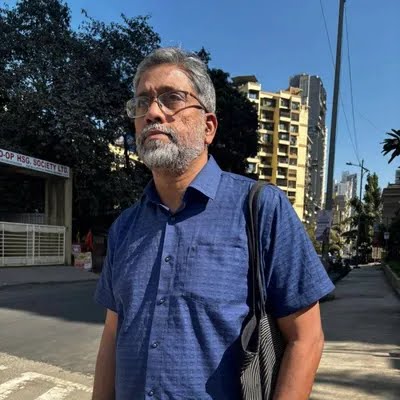
Hany Babu, a 59-year-old professor in the English department of Delhi University and an anti-caste activist, was arrested on July 28, 2020, charged under the Unlawful Activities Prevention Act (UAPA). He was incarcerated in Taloja Jail, Mumbai for 1,955 days without trial and eventually granted bail by the Bombay High Court on December 4 last year.
Babu was arrested because he was a member of the Committee for the Defence and Release of G.N. Saibaba, a fellow Delhi University professor who was incarcerated in a Maoist-related case for nearly 10 years. Saibaba was eventually acquitted of all charges by the court in 2024 and died shortly after his release.
The Pune police raided his apartment in Noida on September 10, 2019. The raid lasted six hours but according to Babu, the police said they did not have an official search warrant at the time.The police informed Babu that the search was conducted in connection with the Elgar Parishad and Bhima Koregaon case. They seized his laptop, cellphone, books and other electronic devices.
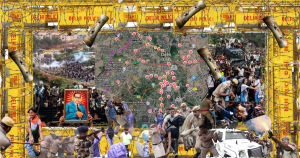
The Bhima Koregaon case happened when riots broke out in January 2018 at Koregaon, Maharashtra where more than five lakh people had gathered to commemorate the 200th anniversary of the Battle of Bhima Koregaon. In 1927, Baba Saheb Ambedkar had addressed a gathering in the Koregaon village on the banks of the river Bhima and called for an annual celebration of the victory of Dalit soldiers, who defeated the Peshwa Raj in an 1818 battle.
Riots broke out during the ceremony when motorbikes waving saffron flags appeared. Two people were identified as Sambhaji Bhide and Milind Ekbote by the local police. But later the investigation shifted and police claimed that the violence was linked to a conspiracy connected to Elgar Parishad, a public gathering held in Pune on December 31, 2017 where activists, lawyers, students, and cultural groups came together to speak about social justice, caste discrimination, and constitutional rights.The police claimed that speeches made at the Elgar Parishad had allegedly incited the violence and that they were linked to banned Maoist organizations.
Arbitrary arrests and imprisonment of activists, students, human rights defenders, journalists and academicians have increasingly become a pattern in India. Many of them spend years in prison before courts grant them relief after long legal battles. Often, these cases are used as a tactic by government agencies to set examples and suppress dissent. The legal battles drag on for years and even during the penultimate stages, administrative decisions such as transfer of judges delay the release of the dissenters. Recently, the Supreme Court of India observed that UAPA cases pending for more than five years should be heard more regularly.
Even after his release, Babu remains confined to Mumbai and has to take permission from the court even to visit his old mother in Kerala. Visibly unwell and with multiple health issues, Babu, in this interview with Md Imran Raza, opens up about his days in the prison.
Can you tell us about the day you were arrested and how your life changed after that?
I was arrested on 28th July, 2020 at around 4.30 pm. Until then, I was a teacher and scholar, and my life was about teaching, reading, and engaging with students. That life came to a sudden stop when I was arrested. From then onwards, I lost my academic work, my reading, and my life with my family. I entered a world where I could not control even the smallest thing. This was not just a physical change, but also an intellectual and emotional one. Overnight, from being a citizen with rights I became an undertrial prisoner whose freedom was snatched away cruelly and that too for so many long years.
How did you mentally prepare yourself for a long legal battle and imprisonment?
You can never really prepare for something as huge as this, as prisons are situated at the farthest edges of a middle class imagination. It’s a place you think you will never reach. But very early on, I realised that the prison system is designed to break you. And I was determined not to be broken. That itself was a form of resistance. For this, I struggled to give a certain shape and structure to my days from the very beginning. In spite of the pain and the anxieties about my family, especially my daughter who turned 17 the day before I got arrested, I tried to remain positive. I tried to read, reflect, and draw strength from my faith and discipline. Even if I could not control the system, I thought I would refuse to let it hollow me out.
How were the living conditions in Taloja Jail, especially as an undertrial?
Taloja Jail is severely overcrowded and filled with undertrial prisoners. I have seen only a handful of convicted prisoners there, as almost 90% of the inmates are undertrials. Most of them come from very marginalized backgrounds with heartbreaking stories behind their arrests and prolonged incarceration. Along with them, I too lived with constant uncertainty. Without a clear conviction and without clear timelines or a sense of my case and how it will move forward. I was initially kept in isolation during the Covid quarantine period which was extremely difficult. When my eyes swelled up with an infection during Covid, I didn’t get proper medical care. It made my eyes bulge out and my nerves were also damaged. It was only persistent intervention from outside by my family and lawyers that saved my life. Prison conditions are such in India. They are not made to reform anyone. They are made to punish and dehumanize you. Undertrials bear the worst of it because they are neither convicted nor are they free.
What were the biggest challenges you faced during your five years in prison?
The biggest challenge was the constant feeling of time on your hands. And that it was slowly eroding. Days followed days without change and purpose. As if life was frozen. The even more difficult part was the constant feeling that this suffering was unjust, that you really didn’t deserve this punishment, and that you were absolutely helpless about doing anything about it. It was really difficult to come to terms with the fact that you and your family too, were being punished without any proof of guilt, despite being fully innocent of any stated crime.
Did you face any discrimination or isolation in the prison?
Isolation is part of the prison system, especially during quarantine as in Covid. But mostly I lived in crowded barracks where everyone lived as a largely cooperative community. Even food was not eaten alone. We had what was called handis, where 3-4 people came together to share all the meals and all the stuff purchased from the prison canteen. So I did not face discrimination or isolation from my fellow inmates. In fact, they all showed respect to me for being older and educated and they tried to help me as much as they could. In turn, I helped them too. But as I said, institutional indifference was constant. Complaints, medical needs, or requests were often ignored or treated as mere inconveniences. This kind of a structural neglect of the urgent needs of the prisoners should also be seen as a form of discrimination.
In one of your interviews, you mentioned that you used to help fellow inmates by writing ‘plead guilty’ applications for them. Can you tell us what crimes they were accused of?
All sorts of crimes. And most of them were poor, marginalized people who had already spent years and years in jail. They chose to plead guilty not because they were actually guilty, but because prolonged legal battles made them choose to plead guilty hoping it would help them get released sooner. The legal process had already punished them enough. And this was the only way out.
Gautam Navlakha (another accused in the BK-16 case) said in one of his interviews that he faced hurdles in getting spectacles and had to obtain a court order to access them. Did you face any similar difficulties in accessing books or other essential things in jail?
Yes, in Indian prisons we do not have easy access to even basic necessities. The food and water is of sub-standard quality. There are no chairs and tables and even proper bedding. Forget all that, in many prisons even space to sleep is scant. In fact, whether it is urgent medical care or books, everything becomes a matter of permission. What should be a right becomes a favor. And no one seems to be bothered that lives are lost in this heartless system which does not view prisoners as humans, especially when they are from marginalized locations. Pandu Narote, the Adivasi leader, and Father Stan Swamy of the BK-16 case were all victims of this heartless system.

In one of your interviews with The Caravan, you said that the process itself becomes the punishment. How did you experience this process, and what role did the judiciary and investigative agencies play in it?
With constant delays and repeated adjournments and denial of bail, you end up being punished not through a verdict, but through just being forced to remain in jail. Investigative agencies create voluminous chargesheets and a large number of witnesses. So even trials go on forever. By allowing such prolonged pre-trial detention, the judiciary itself becomes part of this punitive process, even if unintentionally. In this way, the legal process itself replaces judgment and punishment precedes justice.
Do you believe justice was delayed in your case? How?
Yes, of course. I spent five years in prison without even the chargesheet being framed or the trial beginning. The NIA did not even reply to my default bail petition. Even the court acknowledged this delay while granting bail. The legal process is terrible in India. It moves at a snail’s pace and ordinary people who are often innocent of any crime lose years and years of their lives in the process. There is no punishment for those who cause this. No compensation for those who are acquitted after years of incarceration. Forget all that, there is no legal or political urgency to reform this inhuman system. Justice delayed is justice denied and we can say that it is also an extreme violation of human rights.
How did you feel on the day you were released? How does freedom feel after five years behind bars?
There was so much relief, of course, and I was so happy that the torturous separation from my family ended. But it wasn’t an uncomplicated joy. Even as I was stepping out, many others were still inside, dreaming of freedom. Also, I am not able to go out of Maharashtra as per my bail conditions. This makes me feel that I am not fully free yet. I have not yet met my mother who is too old to travel.
Freedom I now realise, is an ability to access the ordinariness of life. When you are free and not a prisoner, there are so many things you take for granted. Like walking in and out of the house freely, choosing what to read, speaking to whoever you want to. Planning your day the way you want. All this is denied in jail and when you come out, you realize how all these are such privileges. At the same time, freedom is incomplete when so many others remain incarcerated under similar circumstances. The joy of release is always shadowed by that reality. In our case, one of our co-accused, Surendra Gadling, who is a brilliant lawyer who fought for so many imprisoned activists, is still in Taloja jail. My freedom is marked by his continued and totally unjust incarceration.
Do you think anti-terror laws like UAPA are being misused? If yes, how?
UAPA is a law that allows the state to incarcerate people for long periods without trial, as it makes bail extremely difficult to get. In practice, it reverses the presumption of innocence. The courts are allowed to go by the police story and the accused is not allowed to defend. So this becomes a tool in the hands of the government. And it is not surprising that this is used to criminalize dissent, scholarship, and political disagreement. Here, the punishment begins the moment you are charged and it doesn’t matter if your guilt is ever established.
As you said you are not allowed to travel beyond Maharashtra and must appear before the NIA office on the first Monday of every month. Do you think this is a way to silence people who speak against injustice?
These conditions tend to extend the punishment even beyond the prison. Even after release, the state continues to regulate your life in this manner. These restrictions pluck you out of your home and leave you alienated in a completely new city. It constantly reminds you that freedom is conditional. Such measures are meted out as a punishment. And your political, or public life, becomes difficult. But then we make new connections and new homes and survive this oppression too. What else can we do?
Should journalists, activists, and scholars still ask questions and raise their voices despite the risk of imprisonment?
Of course, how can people fall silent? That will never happen and that would be the worst thing to happen. With that society would lose its ability to think and grow. The risks are real, and I would never romanticize imprisonment. But fear cannot be allowed to determine what can be thought, written, or questioned. Societies thrive precisely because people continue to speak even when the cost is high.

Hany Babu: “I was determined not to be broken”
Professor Hany Babu. Photo by Farzana Rowena.
Hany Babu, a 59-year-old professor in the English department of Delhi University and an anti-caste activist, was arrested on July 28, 2020, charged under the Unlawful Activities Prevention Act (UAPA). He was incarcerated in Taloja Jail, Mumbai for 1,955 days without trial and eventually granted bail by the Bombay High Court on December 4 last year.
Babu was arrested because he was a member of the Committee for the Defence and Release of G.N. Saibaba, a fellow Delhi University professor who was incarcerated in a Maoist-related case for nearly 10 years. Saibaba was eventually acquitted of all charges by the court in 2024 and died shortly after his release.
The Pune police raided his apartment in Noida on September 10, 2019. The raid lasted six hours but according to Babu, the police said they did not have an official search warrant at the time.The police informed Babu that the search was conducted in connection with the Elgar Parishad and Bhima Koregaon case. They seized his laptop, cellphone, books and other electronic devices.
The Bhima Koregaon case happened when riots broke out in January 2018 at Koregaon, Maharashtra where more than five lakh people had gathered to commemorate the 200th anniversary of the Battle of Bhima Koregaon. In 1927, Baba Saheb Ambedkar had addressed a gathering in the Koregaon village on the banks of the river Bhima and called for an annual celebration of the victory of Dalit soldiers, who defeated the Peshwa Raj in an 1818 battle.
Riots broke out during the ceremony when motorbikes waving saffron flags appeared. Two people were identified as Sambhaji Bhide and Milind Ekbote by the local police. But later the investigation shifted and police claimed that the violence was linked to a conspiracy connected to Elgar Parishad, a public gathering held in Pune on December 31, 2017 where activists, lawyers, students, and cultural groups came together to speak about social justice, caste discrimination, and constitutional rights.The police claimed that speeches made at the Elgar Parishad had allegedly incited the violence and that they were linked to banned Maoist organizations.
Arbitrary arrests and imprisonment of activists, students, human rights defenders, journalists and academicians have increasingly become a pattern in India. Many of them spend years in prison before courts grant them relief after long legal battles. Often, these cases are used as a tactic by government agencies to set examples and suppress dissent. The legal battles drag on for years and even during the penultimate stages, administrative decisions such as transfer of judges delay the release of the dissenters. Recently, the Supreme Court of India observed that UAPA cases pending for more than five years should be heard more regularly.
Even after his release, Babu remains confined to Mumbai and has to take permission from the court even to visit his old mother in Kerala. Visibly unwell and with multiple health issues, Babu, in this interview with Md Imran Raza, opens up about his days in the prison.
Can you tell us about the day you were arrested and how your life changed after that?
I was arrested on 28th July, 2020 at around 4.30 pm. Until then, I was a teacher and scholar, and my life was about teaching, reading, and engaging with students. That life came to a sudden stop when I was arrested. From then onwards, I lost my academic work, my reading, and my life with my family. I entered a world where I could not control even the smallest thing. This was not just a physical change, but also an intellectual and emotional one. Overnight, from being a citizen with rights I became an undertrial prisoner whose freedom was snatched away cruelly and that too for so many long years.
How did you mentally prepare yourself for a long legal battle and imprisonment?
You can never really prepare for something as huge as this, as prisons are situated at the farthest edges of a middle class imagination. It’s a place you think you will never reach. But very early on, I realised that the prison system is designed to break you. And I was determined not to be broken. That itself was a form of resistance. For this, I struggled to give a certain shape and structure to my days from the very beginning. In spite of the pain and the anxieties about my family, especially my daughter who turned 17 the day before I got arrested, I tried to remain positive. I tried to read, reflect, and draw strength from my faith and discipline. Even if I could not control the system, I thought I would refuse to let it hollow me out.
How were the living conditions in Taloja Jail, especially as an undertrial?
Taloja Jail is severely overcrowded and filled with undertrial prisoners. I have seen only a handful of convicted prisoners there, as almost 90% of the inmates are undertrials. Most of them come from very marginalized backgrounds with heartbreaking stories behind their arrests and prolonged incarceration. Along with them, I too lived with constant uncertainty. Without a clear conviction and without clear timelines or a sense of my case and how it will move forward. I was initially kept in isolation during the Covid quarantine period which was extremely difficult. When my eyes swelled up with an infection during Covid, I didn’t get proper medical care. It made my eyes bulge out and my nerves were also damaged. It was only persistent intervention from outside by my family and lawyers that saved my life. Prison conditions are such in India. They are not made to reform anyone. They are made to punish and dehumanize you. Undertrials bear the worst of it because they are neither convicted nor are they free.
What were the biggest challenges you faced during your five years in prison?
The biggest challenge was the constant feeling of time on your hands. And that it was slowly eroding. Days followed days without change and purpose. As if life was frozen. The even more difficult part was the constant feeling that this suffering was unjust, that you really didn’t deserve this punishment, and that you were absolutely helpless about doing anything about it. It was really difficult to come to terms with the fact that you and your family too, were being punished without any proof of guilt, despite being fully innocent of any stated crime.
Did you face any discrimination or isolation in the prison?
Isolation is part of the prison system, especially during quarantine as in Covid. But mostly I lived in crowded barracks where everyone lived as a largely cooperative community. Even food was not eaten alone. We had what was called handis, where 3-4 people came together to share all the meals and all the stuff purchased from the prison canteen. So I did not face discrimination or isolation from my fellow inmates. In fact, they all showed respect to me for being older and educated and they tried to help me as much as they could. In turn, I helped them too. But as I said, institutional indifference was constant. Complaints, medical needs, or requests were often ignored or treated as mere inconveniences. This kind of a structural neglect of the urgent needs of the prisoners should also be seen as a form of discrimination.
In one of your interviews, you mentioned that you used to help fellow inmates by writing ‘plead guilty’ applications for them. Can you tell us what crimes they were accused of?
All sorts of crimes. And most of them were poor, marginalized people who had already spent years and years in jail. They chose to plead guilty not because they were actually guilty, but because prolonged legal battles made them choose to plead guilty hoping it would help them get released sooner. The legal process had already punished them enough. And this was the only way out.
Gautam Navlakha (another accused in the BK-16 case) said in one of his interviews that he faced hurdles in getting spectacles and had to obtain a court order to access them. Did you face any similar difficulties in accessing books or other essential things in jail?
Yes, in Indian prisons we do not have easy access to even basic necessities. The food and water is of sub-standard quality. There are no chairs and tables and even proper bedding. Forget all that, in many prisons even space to sleep is scant. In fact, whether it is urgent medical care or books, everything becomes a matter of permission. What should be a right becomes a favor. And no one seems to be bothered that lives are lost in this heartless system which does not view prisoners as humans, especially when they are from marginalized locations. Pandu Narote, the Adivasi leader, and Father Stan Swamy of the BK-16 case were all victims of this heartless system.
In one of your interviews with The Caravan, you said that the process itself becomes the punishment. How did you experience this process, and what role did the judiciary and investigative agencies play in it?
With constant delays and repeated adjournments and denial of bail, you end up being punished not through a verdict, but through just being forced to remain in jail. Investigative agencies create voluminous chargesheets and a large number of witnesses. So even trials go on forever. By allowing such prolonged pre-trial detention, the judiciary itself becomes part of this punitive process, even if unintentionally. In this way, the legal process itself replaces judgment and punishment precedes justice.
Do you believe justice was delayed in your case? How?
Yes, of course. I spent five years in prison without even the chargesheet being framed or the trial beginning. The NIA did not even reply to my default bail petition. Even the court acknowledged this delay while granting bail. The legal process is terrible in India. It moves at a snail’s pace and ordinary people who are often innocent of any crime lose years and years of their lives in the process. There is no punishment for those who cause this. No compensation for those who are acquitted after years of incarceration. Forget all that, there is no legal or political urgency to reform this inhuman system. Justice delayed is justice denied and we can say that it is also an extreme violation of human rights.
How did you feel on the day you were released? How does freedom feel after five years behind bars?
There was so much relief, of course, and I was so happy that the torturous separation from my family ended. But it wasn’t an uncomplicated joy. Even as I was stepping out, many others were still inside, dreaming of freedom. Also, I am not able to go out of Maharashtra as per my bail conditions. This makes me feel that I am not fully free yet. I have not yet met my mother who is too old to travel.
Freedom I now realise, is an ability to access the ordinariness of life. When you are free and not a prisoner, there are so many things you take for granted. Like walking in and out of the house freely, choosing what to read, speaking to whoever you want to. Planning your day the way you want. All this is denied in jail and when you come out, you realize how all these are such privileges. At the same time, freedom is incomplete when so many others remain incarcerated under similar circumstances. The joy of release is always shadowed by that reality. In our case, one of our co-accused, Surendra Gadling, who is a brilliant lawyer who fought for so many imprisoned activists, is still in Taloja jail. My freedom is marked by his continued and totally unjust incarceration.
Do you think anti-terror laws like UAPA are being misused? If yes, how?
UAPA is a law that allows the state to incarcerate people for long periods without trial, as it makes bail extremely difficult to get. In practice, it reverses the presumption of innocence. The courts are allowed to go by the police story and the accused is not allowed to defend. So this becomes a tool in the hands of the government. And it is not surprising that this is used to criminalize dissent, scholarship, and political disagreement. Here, the punishment begins the moment you are charged and it doesn’t matter if your guilt is ever established.
As you said you are not allowed to travel beyond Maharashtra and must appear before the NIA office on the first Monday of every month. Do you think this is a way to silence people who speak against injustice?
These conditions tend to extend the punishment even beyond the prison. Even after release, the state continues to regulate your life in this manner. These restrictions pluck you out of your home and leave you alienated in a completely new city. It constantly reminds you that freedom is conditional. Such measures are meted out as a punishment. And your political, or public life, becomes difficult. But then we make new connections and new homes and survive this oppression too. What else can we do?
Should journalists, activists, and scholars still ask questions and raise their voices despite the risk of imprisonment?
Of course, how can people fall silent? That will never happen and that would be the worst thing to happen. With that society would lose its ability to think and grow. The risks are real, and I would never romanticize imprisonment. But fear cannot be allowed to determine what can be thought, written, or questioned. Societies thrive precisely because people continue to speak even when the cost is high.