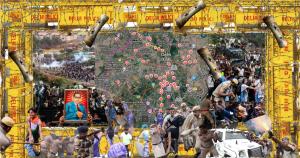



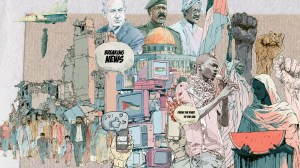

I vividly remember being in that room in Kabul in June 2010. I was presenting the findings of a large survey on the reach and effectiveness of a media program in Afghanistan to an audience of American donors and project implementation teams. The media program was a television series funded by USAID in which a popular host went to a different province each episode and talked about its history and culture. The program’s purpose was to build a sense of national identity among Afghans. A second purpose was to make Afghans aware of the contributions of American taxpayers to their country’s reconstruction. My presentation was a synthesis of the findings from the survey that I designed and managed in nine provinces. For the study, I even travelled to provinces where few foreigners went.
I spoke about the findings: first the probabilities, the likelihood that people would act in a given way, then the rationality beneath the numbers, why the Afghans would answer to one approach and not another. I explained their reasoning with great confidence. But what I did not add was that I had sat across from the people who were in the dataset, in remote villages, over tea and bread, and watched the effects of the program on them.
The audience engaged with the findings. But no one asked whether I was Indian or Pakistani or South Asian. No one asked where I belonged. They probably assumed but did not interrogate. I had buried that answer to avoid complicating the findings or introducing an unnecessary distraction. I perhaps thought that was the professional thing to do, to not bring myself into the conversation, to keep myself in the background, or to even fit in where I felt the need to belong.
The most puzzling aspect of the study was not that people could get together under a tree and watch TV. It was the presumption of being able to build a cohesive identity with a TV program. The ambition of fostering belonging was noble, but also outsized and misplaced, even in somewhere easier than Afghanistan. The audience was interested more in whether Afghans supported their government, than in whether the edifice of the state we created reflected the underlying power structures that they identified with.
Sixteen years later, on January 1, 2026, I watched Zohran Mamdani take the oath of office on a Quran to become the mayor of arguably the most consequential city in the world. I had followed his campaign with enthusiasm. I believed what he said about affordability, that the city had stopped delivering for most people; the rhetoric was highly relatable. But I had not expected the surge of recognition when he stood before the cameras and spoke not just as a democratic socialist or a progressive, but as the son of intellectuals expelled from Uganda, as someone whose mother directs Bollywood films and whose father is an eminent scholar of nationalism and identity. Zohran was brown, and he claimed his identity, brown, Muslim, South Asian, immigrant, without apology, as if it did not require one.
It was hard to name it that night, but it felt like the breaking of a bargain for South Asians in American politics. For almost two generations, South Asians who reached the national stage seemed to arrive with an implicit agreement: they would trade self-erasure for visibility. I had signed that agreement myself, in that room in Kabul, without reading the terms. But, evidently, Zohran had not. He stood there as the son of non-white immigrants and asked the city to recognize him precisely as that person.
This essay is about that older bargain, why it broke here, and what its breaking means for who actually gets to claim political belonging in America. Beneath the bargain lies a deeper question: what makes someone belong to a political community in the first place? Political theorist Mahmood Mamdani has spent much of his career arguing that belonging rests less on ancestry than on a shared commitment to a common future, and that it is not inherited but chosen.
For most of my adult life, I assumed the bargain was simply the price of entry because the South Asians who had reached political prominence before Zohran seemed to have paid it. Two figures, in particular, defined what political success was supposed to look like, and what it appeared to require.
Bobby Jindal and Nikki Haley were visibly present in American public life. They were popular and successful, and yet I could not recognize myself in them not only because of their brand of politics but also because of how they deployed their identity to serve their politics. Jindal, who was born as Piyush to Hindu immigrants, renamed himself Bobby as a teenager, before converting from Hinduism to Catholicism – a highly unusual choreography of one’s identity. When the Republican Party chose him to deliver its 2009 response to President Obama’s address to Congress, the moment meant to launch him, he described his own birth, bizarrely, as a “pre-existing condition”.
Nikki Haley’s identity politics rhymes with Jindal’s story. Born Nimrata Randhawa to Punjabi Sikh parents in South Carolina, she went by Nikki and took her husband’s surname after marriage. She converted to Methodism well before her foray into politics. On a 2001 voter registration card she curiously marked her race as ‘white’. When she launched her presidential campaign in 2024, she invoked her immigrant parents in one breath: “not Black, not white, I was different”.
In both their cases, they referred to their family history as evidence that the American promise remained open to newcomers, even to those who would typically be seen as outsiders. And yet, they summoned their South Asian identity when it aligned with the narrative of openness of American society and masked it when it threatened to complicate it – Piyush into Bobby, Hinduism into Methodism, identifying simultaneously as white and different, and naming their past a “pre-existing condition”. It was a compelling bargain, perhaps even effective and resurrecting, but I found myself resistant to its terms. In their stories, the past appeared less as a resource to be cherished than as an impediment to be overcome or washed away. Their narratives felt disingenuous to their roots, but they also felt like a quiet concession that America would accept less of them, and so they would give less of themselves to it.
One could label this as a Republican pathology: a party whose voters require reassurance, and whose candidates learn to constantly supply it. Such reading would be attractive, but it would also be wrong, because the pathology is not confined to one ideological pole. When Biden chose Harris as his running mate in 2020, I thought she finally broke the glass ceiling. And she did. A Black and Indian American woman became the first female vice president of the United States. Unlike Haley and Jindal, she did not conceal her mother’s origin from Chennai and her father’s from Jamaica. She did not make any attempt to turn her ancestry into an argument. But a closer look at her record, impressive as it is, also points to an attempt to bargain to belong.
Jindal and Haley curated their ancestry by choreographing their pasts until they could pass as a story of American openness. Harris retained her ancestry but curated her record.
As district attorney of San Francisco and later attorney general of California, Harris built a reputation as a prosecutor who was unhesitant about employing the state’s coercive powers. For instance, her campaign against truancy brought charges against some parents. She went on to secure a statewide law that made a child’s chronic absence a criminal matter for the parent, punishable by fines and possible jail time. Some parents were arrested. The policy drew the criticism of criminal-justice advocates for its disproportionate effects on poorer communities. As attorney general, Harris also declined to support a bill that would have made her office responsible for independently investigating fatal police shootings. She has since expressed regrets about how some of those cases were handled.
While her politics were noticeably different from Jindal and Haley’s, she also projected an image that would defy the stereotype voters would associate with her, that a Black and Indian American woman would be soft on crime. Jindal and Haley curated their ancestry by choreographing their pasts until they could pass as a story of American openness. In other words, the need to be seen as American in the old way prevailed. Harris retained her ancestry but curated her record.
I think about Mahmood Mamdani’s work, and the questions his writing has inspired about belonging and the boundaries of it. Who is considered Indigenous, and thus entitled to rights, and who will always be a stranger, no matter how long they have lived within the same borders?
In 2013, Mahmood helped form the Asian African Association in Kampala. Their declaration was simple and radical: “Asian Africans are people whose past is Asian, but whose future is African.” They were Africans of Asian descent. They were not visitors, or refugees, or perpetual outsiders. They were Africans. For me, that sentence gathered up an entire history of people around the world whose lives have strayed, who missed the boat that never sailed, or who took the boat that sailed elsewhere, a long way away, though never quite sure from where. It suggested that displacement could be something other than a life sentence of unbelonging; and that a future, willfully chosen and shared, might matter more than an endlessly audited past.
In Slow Poison, Mahmood argues that belonging is determined not by ancestry but by shared commitment to a common future. People with vastly different pasts can indeed choose to build their lives within the same political community, within the same borders. The question is not how many generations one can trace back, but about one’s commitment to sharing a future with others. That commitment, he argues, is what creates genuine political community and entitles people to equal rights within it.
Seen through this lens, the bargain is not merely a perennial quirk of American political campaigns. Rather, that bargain, as it appears to this immigrant, is an ancestry test at its core. You belong only if your ancestors belonged. If you don’t, you are not offered belonging, but only granted admission that is constrained by terms. It is the same binary logic of putting people in opposite camps – indigenous and non-Indigenous, insider and outsider – that allow no crossing except through blood. It is this logic that led to Mahmood’s own expulsion from Uganda in 1972, when Idi Amin decided that Asians, no matter how many generations they had lived there, did not belong. This is what makes American politics so inhospitable to people who do not fit neatly into its categories. You can be a success story, a CEO, an entrepreneur, an architect, or a doctor. But you will need to perform a form of self erasure to claim belonging in the arena of power.
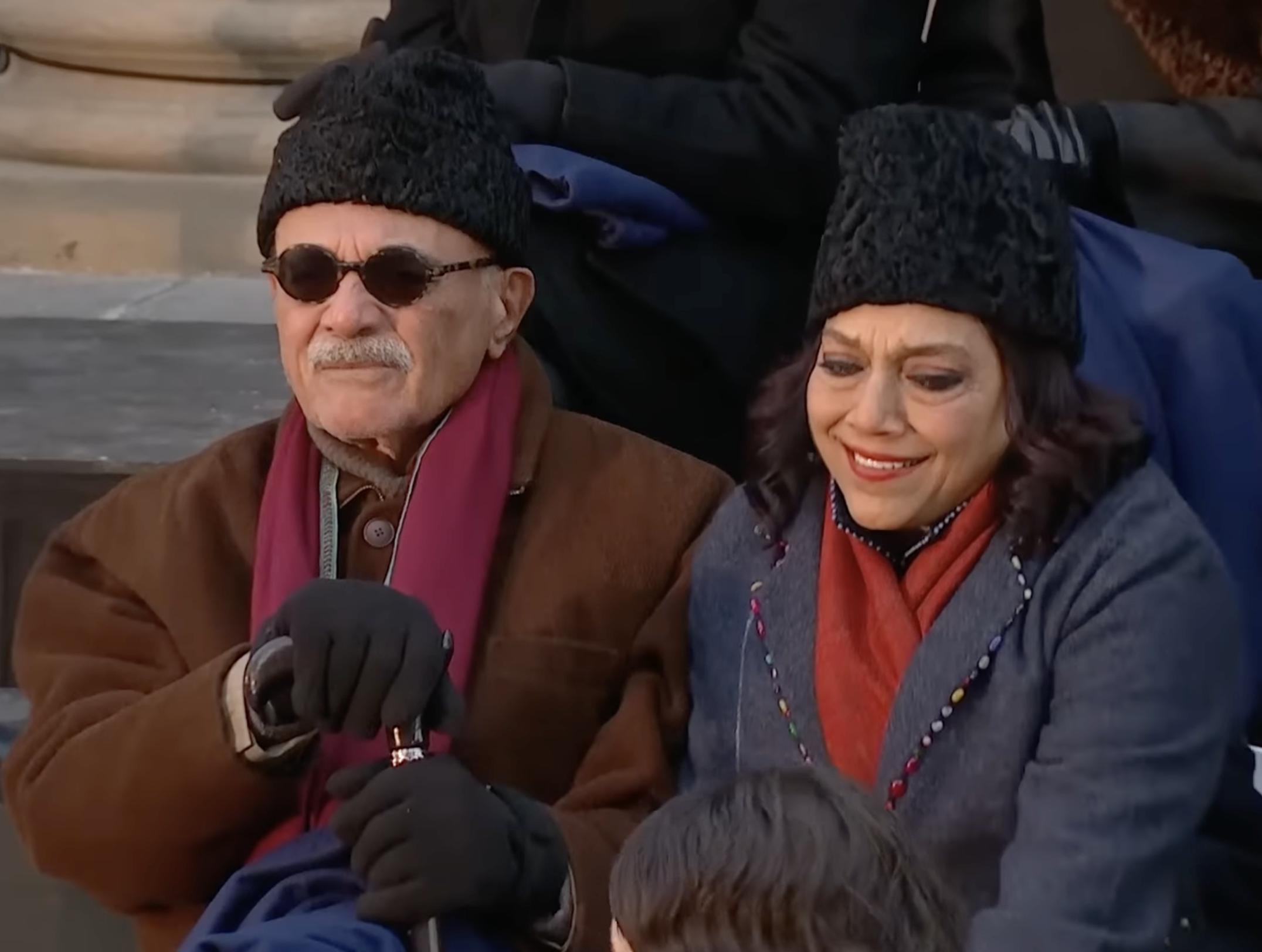
The erasure, for South Asians, was not forced on us from outside. We accepted it, consciously, as the price of a particular kind of visibility. Indians in America lead technology companies, we excel as doctors, and we have founded numerous successful startups. In doing so, we have come to embody the model-minority narrative: the vindication of legal immigration as a story of meritocratic success. Of the 39 Asian Americans who have led Fortune 500 companies, more than half are of South Asian descent. We are permitted, even encouraged, to be visible where our achievements can be categorized as both individual and private.
Politics, however, has remained a more difficult terrain for us. Asian Americans of every origin constitute only a small fraction of Congress, and apart from Hawaii, form a majority in only a handful of legislative districts nationwide. South Asians are a fraction of that fraction. We have participated, albeit marginally, in American political life, but we have rarely become its face.
The political exclusion, moreover, is only part of what the success story conceals. And the numbers are hard to ignore. By New York City’s own measure, more than one in five Asian New Yorkers live in poverty. Asians also registered the highest rate of poverty in the city. Asian New Yorkers are also more than twice as likely to live in poverty as white New Yorkers, a gap that widened rather than narrowed in the most recent data.
The model-minority label, popularized in the 1960s, suggested that certain immigrants (Asians) prospered through entering the country legally and demonstrating discipline and gratitude. Their success testified to the fairness of the social order itself. That narrative eventually morphed into conventional wisdom. It rewarded a form of visibility that demanded little of public life beyond individual achievement. And we did exceptionally well at that. But what remained harder to accommodate was a kind of visibility that entered politics not merely to succeed within the existing order but to interrogate its assumptions about belonging. Those were the terms of admission. Most of us accepted them or learned to live within them. Until now.
People with vastly different pasts can indeed choose to build their lives within the same political community, within the same borders. The question is not how many generations one can trace back, but about one’s commitment to sharing a future with others.
Watching Zohran’s inauguration, I realized how much I had internalized the idea that succeeding in America entailed becoming someone else. It was what I had done in that room in Kabul and called it professionalism: a punishing curation of the parts of myself that did not fit. Zohran refused that bargain, and in doing so, he created space for the rest of us.
He spoke eloquently about his father’s expulsion from Uganda, about being born in Kampala, and about growing up between two places that could not be farther apart. He invoked Nehru, Bollywood, and how each informed his perspective. And he did not apologize for any of it.
Zohran won by naming contradictions that others refused to acknowledge about the city – that New York had ceased to work for most of its residents, and that housing had become painfully unaffordable even for some who worked two jobs. He prevailed because he articulated what others chose to ignore or worse, evade. But his victory also rested on his refusal to accept the conventional bargain of political assimilation in America that would have demanded that he set aside himself.
During his campaign, questions arose about Zohran’s identification as African on a college application. Reporters contacted his father, Mahmood Mamdani, to ask about his ancestry. The inquiry was born of a familiar logic – that belonging was rooted in the past rather than in the future, and that it was shaped by lineage rather than commitment. Mahmood was shocked. “I didn’t have to have any African ancestry,” he said. “I thought of myself as a man from Africa. I was an African.” I understood his shock. Those were the same lines that had expelled him from Uganda.
I do not want to mistake an exceptional story from New York for a law of politics, nor do I assume Zohran’s first months in office reflect the future of politics in America. The way he spoke about what America means on its 250th Independence Day was unusually refreshing amid mostly one-directional, self-congratulatory celebrations of America’s journey. His speech offered something beyond the inaugural symbolism of the other speeches. He described America as a political community held together by shared commitment rather than by blood or ancestry. He said, America does not belong only to “those with the right accent or the right shade of skin”, but to every person who chooses to reach toward this country’s ideals and help shape what it becomes. In other words, America is what you make of it, and you are American if you commit to its ideals. It was his father’s answer to the question his father has spent a lifetime asking: who belongs?
None of this dismisses the role of structural conditions that made Zohran’s success inevitable. He won a Democratic primary in a democratic city where a redistributive message had an unusually strong audience. The middle class was politically dismayed and unattended. It felt abandoned by the progressive elite that seemed removed from everyday concerns of ordinary new yorkers. The electorate was disposed to believe that the system offered incentives that were stacked against them. Rents had become unaffordable. Those conditions mattered because in a wealthy city, inequality is not merely an abstract concept. You experience it in its dailyness.
It meant something I had not realized I was waiting for: recognition. Not only of my capacity to succeed as an immigrant, but of my right to belong in my country of choice.
Does Zohran’s refusal survive other contexts? Perhaps it is only a convergence of city, candidate, and moment that fuelled his success. I am not certain it generalizes. But there is a different claim that probably does not hinge on that uncertainty: the intentional refusal to treat one’s own history as a liability to be curated until it aligns. Such a refusal does not require a particular context. Rather, it requires only that one does not erase oneself.
This is what his victory means to me. Not that someone who looks like me won, but that he won by claiming all of himself, by saying: my past is complex, my identity is layered, and yet, I do not need to choose between being wholly myself and fighting for universal justice. I do not know if he will continue to succeed. Nor do I know if he can reform the structures that make housing unaffordable, and that quietly but firmly protect the position of those of us who already have ours. But I know what it meant to watch him win.
It meant something I had not realized I was waiting for: recognition. Not only of my capacity to succeed as an immigrant, but of my right to belong in my country of choice. For most of my life I have been used to a kind of invisibility, a pen rather than a face, someone whose contribution is valued, even acknowledged, and yet whose presence goes unregistered. I have felt it in Jaipur, in Manila, in Singapore, in Kabul, and here, where the seat beside me on the subway is almost always the last to fill. To watch Zohran claim a city, without apology, was to see the opposite of that performed in public: someone whose future is here, whose commitment is here, and who gets to actually help shape what here becomes.
Ta-Nehisi Coates, writing in The Atlantic about the end of the Obama presidency, described a Black president whose extraordinary faith in America’s possibilities survived even as the country exposed the limits of that faith. Watching Zohran, I felt something entirely different: not faith that America would eventually recognize my belonging, but a realization that I did not need the permission to belong.


Seeing Myself in City Hall

Zohran Mamdani swearing in as Mayor of New York at the City Hall. Photo: Wikimedia Commons
I vividly remember being in that room in Kabul in June 2010. I was presenting the findings of a large survey on the reach and effectiveness of a media program in Afghanistan to an audience of American donors and project implementation teams. The media program was a television series funded by USAID in which a popular host went to a different province each episode and talked about its history and culture. The program’s purpose was to build a sense of national identity among Afghans. A second purpose was to make Afghans aware of the contributions of American taxpayers to their country’s reconstruction. My presentation was a synthesis of the findings from the survey that I designed and managed in nine provinces. For the study, I even travelled to provinces where few foreigners went.
I spoke about the findings: first the probabilities, the likelihood that people would act in a given way, then the rationality beneath the numbers, why the Afghans would answer to one approach and not another. I explained their reasoning with great confidence. But what I did not add was that I had sat across from the people who were in the dataset, in remote villages, over tea and bread, and watched the effects of the program on them.
The audience engaged with the findings. But no one asked whether I was Indian or Pakistani or South Asian. No one asked where I belonged. They probably assumed but did not interrogate. I had buried that answer to avoid complicating the findings or introducing an unnecessary distraction. I perhaps thought that was the professional thing to do, to not bring myself into the conversation, to keep myself in the background, or to even fit in where I felt the need to belong.
The most puzzling aspect of the study was not that people could get together under a tree and watch TV. It was the presumption of being able to build a cohesive identity with a TV program. The ambition of fostering belonging was noble, but also outsized and misplaced, even in somewhere easier than Afghanistan. The audience was interested more in whether Afghans supported their government, than in whether the edifice of the state we created reflected the underlying power structures that they identified with.
Sixteen years later, on January 1, 2026, I watched Zohran Mamdani take the oath of office on a Quran to become the mayor of arguably the most consequential city in the world. I had followed his campaign with enthusiasm. I believed what he said about affordability, that the city had stopped delivering for most people; the rhetoric was highly relatable. But I had not expected the surge of recognition when he stood before the cameras and spoke not just as a democratic socialist or a progressive, but as the son of intellectuals expelled from Uganda, as someone whose mother directs Bollywood films and whose father is an eminent scholar of nationalism and identity. Zohran was brown, and he claimed his identity, brown, Muslim, South Asian, immigrant, without apology, as if it did not require one.
It was hard to name it that night, but it felt like the breaking of a bargain for South Asians in American politics. For almost two generations, South Asians who reached the national stage seemed to arrive with an implicit agreement: they would trade self-erasure for visibility. I had signed that agreement myself, in that room in Kabul, without reading the terms. But, evidently, Zohran had not. He stood there as the son of non-white immigrants and asked the city to recognize him precisely as that person.
This essay is about that older bargain, why it broke here, and what its breaking means for who actually gets to claim political belonging in America. Beneath the bargain lies a deeper question: what makes someone belong to a political community in the first place? Political theorist Mahmood Mamdani has spent much of his career arguing that belonging rests less on ancestry than on a shared commitment to a common future, and that it is not inherited but chosen.
For most of my adult life, I assumed the bargain was simply the price of entry because the South Asians who had reached political prominence before Zohran seemed to have paid it. Two figures, in particular, defined what political success was supposed to look like, and what it appeared to require.
Bobby Jindal and Nikki Haley were visibly present in American public life. They were popular and successful, and yet I could not recognize myself in them not only because of their brand of politics but also because of how they deployed their identity to serve their politics. Jindal, who was born as Piyush to Hindu immigrants, renamed himself Bobby as a teenager, before converting from Hinduism to Catholicism – a highly unusual choreography of one’s identity. When the Republican Party chose him to deliver its 2009 response to President Obama’s address to Congress, the moment meant to launch him, he described his own birth, bizarrely, as a “pre-existing condition”.
Nikki Haley’s identity politics rhymes with Jindal’s story. Born Nimrata Randhawa to Punjabi Sikh parents in South Carolina, she went by Nikki and took her husband’s surname after marriage. She converted to Methodism well before her foray into politics. On a 2001 voter registration card she curiously marked her race as ‘white’. When she launched her presidential campaign in 2024, she invoked her immigrant parents in one breath: “not Black, not white, I was different”.
In both their cases, they referred to their family history as evidence that the American promise remained open to newcomers, even to those who would typically be seen as outsiders. And yet, they summoned their South Asian identity when it aligned with the narrative of openness of American society and masked it when it threatened to complicate it – Piyush into Bobby, Hinduism into Methodism, identifying simultaneously as white and different, and naming their past a “pre-existing condition”. It was a compelling bargain, perhaps even effective and resurrecting, but I found myself resistant to its terms. In their stories, the past appeared less as a resource to be cherished than as an impediment to be overcome or washed away. Their narratives felt disingenuous to their roots, but they also felt like a quiet concession that America would accept less of them, and so they would give less of themselves to it.
One could label this as a Republican pathology: a party whose voters require reassurance, and whose candidates learn to constantly supply it. Such reading would be attractive, but it would also be wrong, because the pathology is not confined to one ideological pole. When Biden chose Harris as his running mate in 2020, I thought she finally broke the glass ceiling. And she did. A Black and Indian American woman became the first female vice president of the United States. Unlike Haley and Jindal, she did not conceal her mother’s origin from Chennai and her father’s from Jamaica. She did not make any attempt to turn her ancestry into an argument. But a closer look at her record, impressive as it is, also points to an attempt to bargain to belong.
Jindal and Haley curated their ancestry by choreographing their pasts until they could pass as a story of American openness. Harris retained her ancestry but curated her record.
As district attorney of San Francisco and later attorney general of California, Harris built a reputation as a prosecutor who was unhesitant about employing the state’s coercive powers. For instance, her campaign against truancy brought charges against some parents. She went on to secure a statewide law that made a child’s chronic absence a criminal matter for the parent, punishable by fines and possible jail time. Some parents were arrested. The policy drew the criticism of criminal-justice advocates for its disproportionate effects on poorer communities. As attorney general, Harris also declined to support a bill that would have made her office responsible for independently investigating fatal police shootings. She has since expressed regrets about how some of those cases were handled.
While her politics were noticeably different from Jindal and Haley’s, she also projected an image that would defy the stereotype voters would associate with her, that a Black and Indian American woman would be soft on crime. Jindal and Haley curated their ancestry by choreographing their pasts until they could pass as a story of American openness. In other words, the need to be seen as American in the old way prevailed. Harris retained her ancestry but curated her record.
I think about Mahmood Mamdani’s work, and the questions his writing has inspired about belonging and the boundaries of it. Who is considered Indigenous, and thus entitled to rights, and who will always be a stranger, no matter how long they have lived within the same borders?
In 2013, Mahmood helped form the Asian African Association in Kampala. Their declaration was simple and radical: “Asian Africans are people whose past is Asian, but whose future is African.” They were Africans of Asian descent. They were not visitors, or refugees, or perpetual outsiders. They were Africans. For me, that sentence gathered up an entire history of people around the world whose lives have strayed, who missed the boat that never sailed, or who took the boat that sailed elsewhere, a long way away, though never quite sure from where. It suggested that displacement could be something other than a life sentence of unbelonging; and that a future, willfully chosen and shared, might matter more than an endlessly audited past.
In Slow Poison, Mahmood argues that belonging is determined not by ancestry but by shared commitment to a common future. People with vastly different pasts can indeed choose to build their lives within the same political community, within the same borders. The question is not how many generations one can trace back, but about one’s commitment to sharing a future with others. That commitment, he argues, is what creates genuine political community and entitles people to equal rights within it.
Seen through this lens, the bargain is not merely a perennial quirk of American political campaigns. Rather, that bargain, as it appears to this immigrant, is an ancestry test at its core. You belong only if your ancestors belonged. If you don’t, you are not offered belonging, but only granted admission that is constrained by terms. It is the same binary logic of putting people in opposite camps – indigenous and non-Indigenous, insider and outsider – that allow no crossing except through blood. It is this logic that led to Mahmood’s own expulsion from Uganda in 1972, when Idi Amin decided that Asians, no matter how many generations they had lived there, did not belong. This is what makes American politics so inhospitable to people who do not fit neatly into its categories. You can be a success story, a CEO, an entrepreneur, an architect, or a doctor. But you will need to perform a form of self erasure to claim belonging in the arena of power.
The erasure, for South Asians, was not forced on us from outside. We accepted it, consciously, as the price of a particular kind of visibility. Indians in America lead technology companies, we excel as doctors, and we have founded numerous successful startups. In doing so, we have come to embody the model-minority narrative: the vindication of legal immigration as a story of meritocratic success. Of the 39 Asian Americans who have led Fortune 500 companies, more than half are of South Asian descent. We are permitted, even encouraged, to be visible where our achievements can be categorized as both individual and private.
Politics, however, has remained a more difficult terrain for us. Asian Americans of every origin constitute only a small fraction of Congress, and apart from Hawaii, form a majority in only a handful of legislative districts nationwide. South Asians are a fraction of that fraction. We have participated, albeit marginally, in American political life, but we have rarely become its face.
The political exclusion, moreover, is only part of what the success story conceals. And the numbers are hard to ignore. By New York City’s own measure, more than one in five Asian New Yorkers live in poverty. Asians also registered the highest rate of poverty in the city. Asian New Yorkers are also more than twice as likely to live in poverty as white New Yorkers, a gap that widened rather than narrowed in the most recent data.
The model-minority label, popularized in the 1960s, suggested that certain immigrants (Asians) prospered through entering the country legally and demonstrating discipline and gratitude. Their success testified to the fairness of the social order itself. That narrative eventually morphed into conventional wisdom. It rewarded a form of visibility that demanded little of public life beyond individual achievement. And we did exceptionally well at that. But what remained harder to accommodate was a kind of visibility that entered politics not merely to succeed within the existing order but to interrogate its assumptions about belonging. Those were the terms of admission. Most of us accepted them or learned to live within them. Until now.
People with vastly different pasts can indeed choose to build their lives within the same political community, within the same borders. The question is not how many generations one can trace back, but about one’s commitment to sharing a future with others.
Watching Zohran’s inauguration, I realized how much I had internalized the idea that succeeding in America entailed becoming someone else. It was what I had done in that room in Kabul and called it professionalism: a punishing curation of the parts of myself that did not fit. Zohran refused that bargain, and in doing so, he created space for the rest of us.
He spoke eloquently about his father’s expulsion from Uganda, about being born in Kampala, and about growing up between two places that could not be farther apart. He invoked Nehru, Bollywood, and how each informed his perspective. And he did not apologize for any of it.
Zohran won by naming contradictions that others refused to acknowledge about the city – that New York had ceased to work for most of its residents, and that housing had become painfully unaffordable even for some who worked two jobs. He prevailed because he articulated what others chose to ignore or worse, evade. But his victory also rested on his refusal to accept the conventional bargain of political assimilation in America that would have demanded that he set aside himself.
During his campaign, questions arose about Zohran’s identification as African on a college application. Reporters contacted his father, Mahmood Mamdani, to ask about his ancestry. The inquiry was born of a familiar logic – that belonging was rooted in the past rather than in the future, and that it was shaped by lineage rather than commitment. Mahmood was shocked. “I didn’t have to have any African ancestry,” he said. “I thought of myself as a man from Africa. I was an African.” I understood his shock. Those were the same lines that had expelled him from Uganda.
I do not want to mistake an exceptional story from New York for a law of politics, nor do I assume Zohran’s first months in office reflect the future of politics in America. The way he spoke about what America means on its 250th Independence Day was unusually refreshing amid mostly one-directional, self-congratulatory celebrations of America’s journey. His speech offered something beyond the inaugural symbolism of the other speeches. He described America as a political community held together by shared commitment rather than by blood or ancestry. He said, America does not belong only to “those with the right accent or the right shade of skin”, but to every person who chooses to reach toward this country’s ideals and help shape what it becomes. In other words, America is what you make of it, and you are American if you commit to its ideals. It was his father’s answer to the question his father has spent a lifetime asking: who belongs?
None of this dismisses the role of structural conditions that made Zohran’s success inevitable. He won a Democratic primary in a democratic city where a redistributive message had an unusually strong audience. The middle class was politically dismayed and unattended. It felt abandoned by the progressive elite that seemed removed from everyday concerns of ordinary new yorkers. The electorate was disposed to believe that the system offered incentives that were stacked against them. Rents had become unaffordable. Those conditions mattered because in a wealthy city, inequality is not merely an abstract concept. You experience it in its dailyness.
It meant something I had not realized I was waiting for: recognition. Not only of my capacity to succeed as an immigrant, but of my right to belong in my country of choice.
Does Zohran’s refusal survive other contexts? Perhaps it is only a convergence of city, candidate, and moment that fuelled his success. I am not certain it generalizes. But there is a different claim that probably does not hinge on that uncertainty: the intentional refusal to treat one’s own history as a liability to be curated until it aligns. Such a refusal does not require a particular context. Rather, it requires only that one does not erase oneself.
This is what his victory means to me. Not that someone who looks like me won, but that he won by claiming all of himself, by saying: my past is complex, my identity is layered, and yet, I do not need to choose between being wholly myself and fighting for universal justice. I do not know if he will continue to succeed. Nor do I know if he can reform the structures that make housing unaffordable, and that quietly but firmly protect the position of those of us who already have ours. But I know what it meant to watch him win.
It meant something I had not realized I was waiting for: recognition. Not only of my capacity to succeed as an immigrant, but of my right to belong in my country of choice. For most of my life I have been used to a kind of invisibility, a pen rather than a face, someone whose contribution is valued, even acknowledged, and yet whose presence goes unregistered. I have felt it in Jaipur, in Manila, in Singapore, in Kabul, and here, where the seat beside me on the subway is almost always the last to fill. To watch Zohran claim a city, without apology, was to see the opposite of that performed in public: someone whose future is here, whose commitment is here, and who gets to actually help shape what here becomes.
Ta-Nehisi Coates, writing in The Atlantic about the end of the Obama presidency, described a Black president whose extraordinary faith in America’s possibilities survived even as the country exposed the limits of that faith. Watching Zohran, I felt something entirely different: not faith that America would eventually recognize my belonging, but a realization that I did not need the permission to belong.