


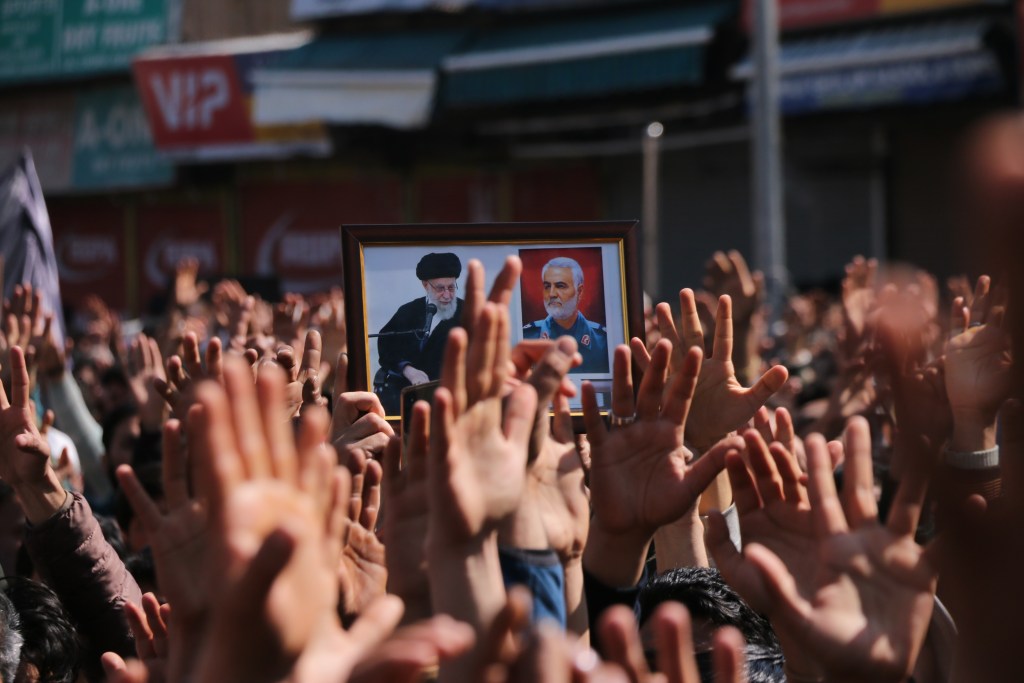
Since early March, visible expressions of solidarity with Iran across parts of Indian-administered Kashmir, from mass protests to donation drives, have drawn attention to a layered political and cultural relationship between the two sides.
Kashmir’s show of transnational solidarity with Iran is distinct from the current Indian government’s official position on the conflict, including the killing of Iran’s Supreme Leader Ayatollah Ali Khamenei. New Delhi’s response has been deliberately calibrated, largely avoiding outright condemnation and instead calling for restraint, de-escalation, and dialogue while balancing its ties across the region.
This photo essay documents the unfolding developments in Srinagar, from early demonstrations and women-led processions to heightened security restrictions that followed. Once again, the Valley saw barricaded streets, curtailed internet speed, closed schools and colleges, and shuttered markets.

Protests erupted after the assassination of Iran’s Supreme Leader Ali Khamenei, a key figure in Shia Islam. For many Kashmiris, especially within the region’s Shia communities, Iran holds deep religious, cultural, and symbolic importance. The Kashmir Valley has a significant Shia population, concentrated in Budgam district and parts of Srinagar, where religious traditions and institutions have historically maintained connections with Shia centers of learning in Iran and Iraq.

For decades, Kashmiri clerics and students have traveled to Iranian seminaries in cities such as Qom to pursue religious education, which strengthened intellectual and theological ties between the two regions. Further back in history, Persian was the official language of Jammu and Kashmir for about five centuries, until it was replaced by Urdu in 1889 under the Dogra monarchy. Kashmir’s exchanges with Iran also had a deep impact on its art and culture. The famed Kashmiri carpets and papier-mâché crafts bear testament to this connection.
After the 1979 Iranian Revolution, which toppled the Pahlavi monarchy and established the Islamic Republic’s rule, Ali Khamenei, then a cleric, visited Kashmir, among other places in India. He reportedly addressed a gathering in Srinagar with Mir Vaez Maulawi Farouq, the then Mirwaiz of Kashmir.

Over the years, events in the Middle East, including developments in Iran and the Palestinian territories, have periodically sparked demonstrations and expressions of solidarity in the Kashmir Valley.
Ayatollah Ali Khamenei, who became Iran’s Supreme Leader in 1989 after the death of Ruhollah Khomeini, also referred to the Kashmir conflict in public statements, urging the attention of the international community to the situation of Muslims and calling for their rights and concerns to be addressed.
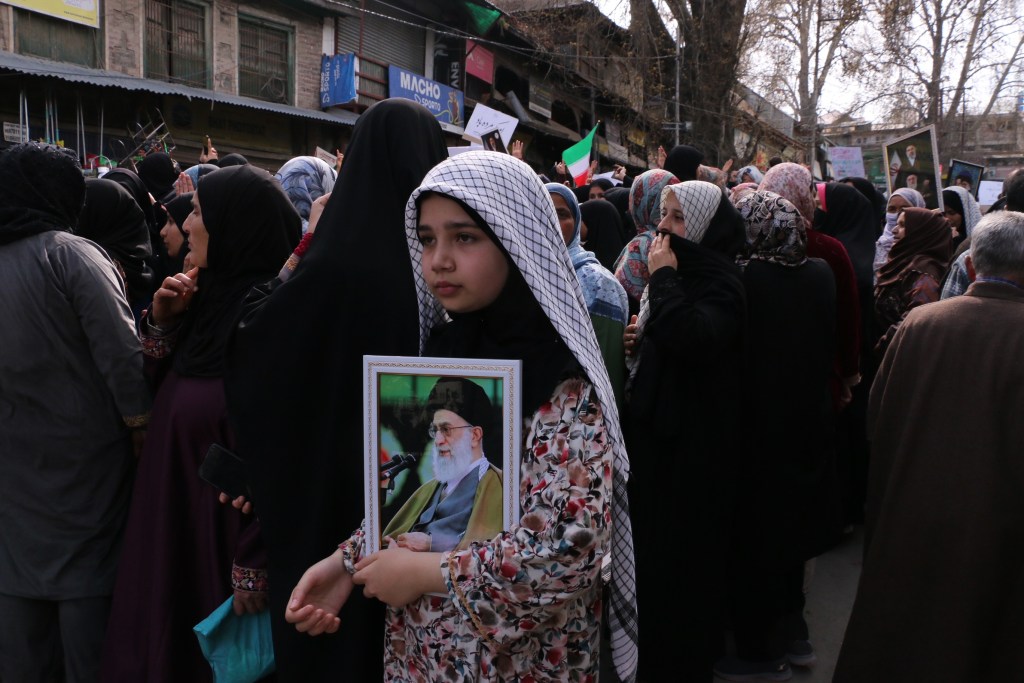
Because of these historical religious links and political statements, developments involving Iran’s leadership carry emotional and symbolic significance in parts of the Kashmir Valley.
As the gatherings grew in support of Iran, authorities increased security measures across Srinagar and other parts of the Kashmir Valley. Police and paramilitary forces were deployed at key locations, including major intersections, bridges, and public squares. Concertina wire barricades were placed along several roads to restrict movement and prevent large gatherings.
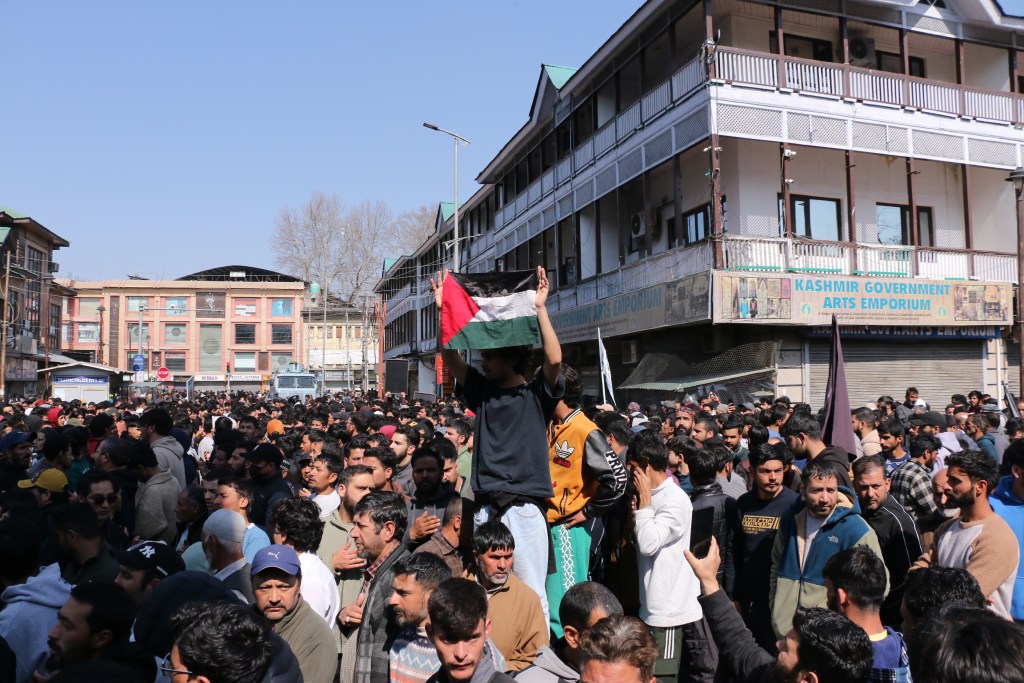
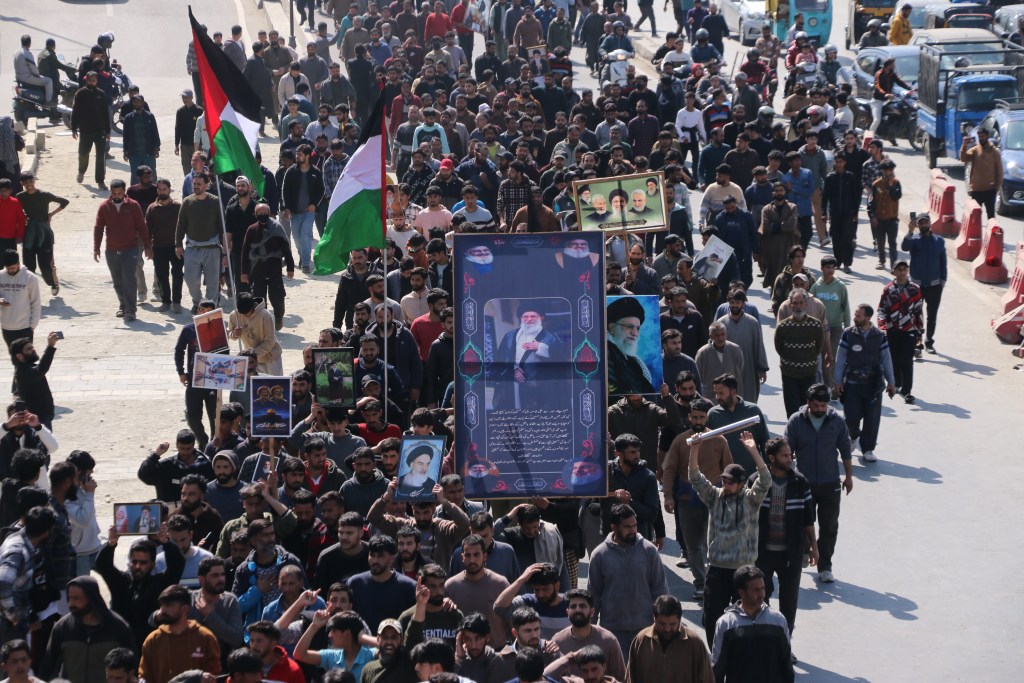
Security checkpoints appeared across different parts of Srinagar as officials attempted to monitor gatherings and maintain order. Patrols were increased in neighborhoods where protests had taken place, and access to certain areas was restricted.
In several parts of Srinagar, shops and businesses remained shuttered while educational institutions were closed as a precautionary measure. Public transport and movement were limited in some locations, leaving streets that are typically crowded with commuters, vendors, and shoppers unusually quiet. Markets around central areas such as Lal Chowk appeared largely deserted, with only a few pedestrians passing through heavily monitored streets.
The restrictions highlighted the tense atmosphere that often accompanies politically sensitive events in Kashmir, where public demonstrations and official security measures frequently unfold side by side.
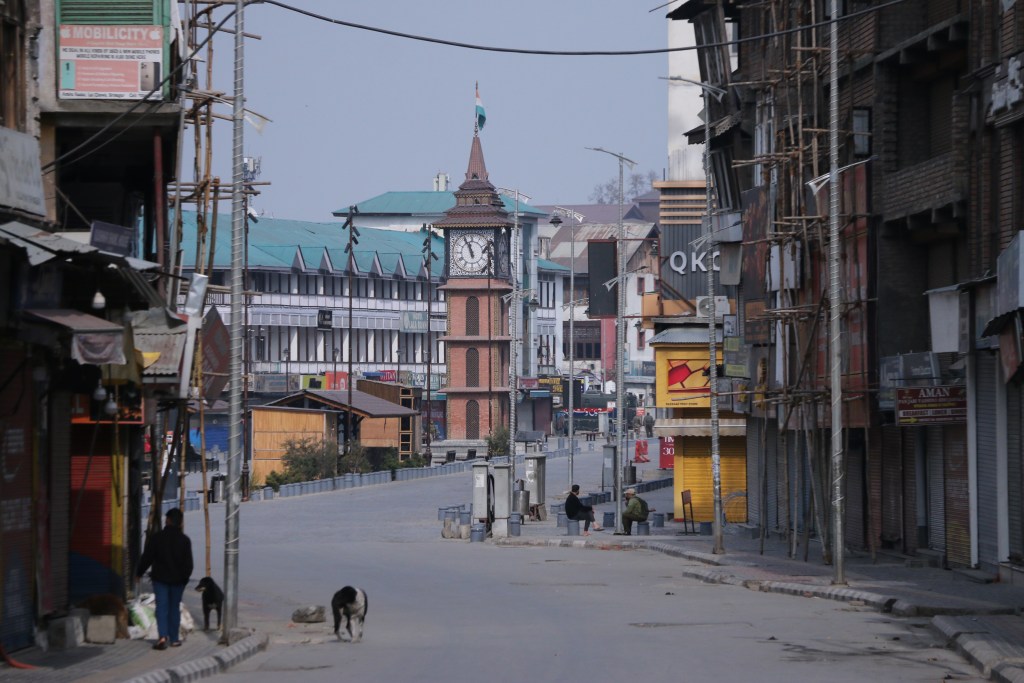

Photo Essay: Scenes of Solidarity, from Kashmir to Iran amid War

Demonstration in Srinagar, Kashmir, in solidarity with Iran amid US-Israel war on the country. All photos by Ahsaan Ali for The Polis Project.
Since early March, visible expressions of solidarity with Iran across parts of Indian-administered Kashmir, from mass protests to donation drives, have drawn attention to a layered political and cultural relationship between the two sides.
Kashmir’s show of transnational solidarity with Iran is distinct from the current Indian government’s official position on the conflict, including the killing of Iran’s Supreme Leader Ayatollah Ali Khamenei. New Delhi’s response has been deliberately calibrated, largely avoiding outright condemnation and instead calling for restraint, de-escalation, and dialogue while balancing its ties across the region.
This photo essay documents the unfolding developments in Srinagar, from early demonstrations and women-led processions to heightened security restrictions that followed. Once again, the Valley saw barricaded streets, curtailed internet speed, closed schools and colleges, and shuttered markets.
Protests erupted after the assassination of Iran’s Supreme Leader Ali Khamenei, a key figure in Shia Islam. For many Kashmiris, especially within the region’s Shia communities, Iran holds deep religious, cultural, and symbolic importance. The Kashmir Valley has a significant Shia population, concentrated in Budgam district and parts of Srinagar, where religious traditions and institutions have historically maintained connections with Shia centers of learning in Iran and Iraq.
For decades, Kashmiri clerics and students have traveled to Iranian seminaries in cities such as Qom to pursue religious education, which strengthened intellectual and theological ties between the two regions. Further back in history, Persian was the official language of Jammu and Kashmir for about five centuries, until it was replaced by Urdu in 1889 under the Dogra monarchy. Kashmir’s exchanges with Iran also had a deep impact on its art and culture. The famed Kashmiri carpets and papier-mâché crafts bear testament to this connection.
After the 1979 Iranian Revolution, which toppled the Pahlavi monarchy and established the Islamic Republic’s rule, Ali Khamenei, then a cleric, visited Kashmir, among other places in India. He reportedly addressed a gathering in Srinagar with Mir Vaez Maulawi Farouq, the then Mirwaiz of Kashmir.
Over the years, events in the Middle East, including developments in Iran and the Palestinian territories, have periodically sparked demonstrations and expressions of solidarity in the Kashmir Valley.
Ayatollah Ali Khamenei, who became Iran’s Supreme Leader in 1989 after the death of Ruhollah Khomeini, also referred to the Kashmir conflict in public statements, urging the attention of the international community to the situation of Muslims and calling for their rights and concerns to be addressed.
Because of these historical religious links and political statements, developments involving Iran’s leadership carry emotional and symbolic significance in parts of the Kashmir Valley.
As the gatherings grew in support of Iran, authorities increased security measures across Srinagar and other parts of the Kashmir Valley. Police and paramilitary forces were deployed at key locations, including major intersections, bridges, and public squares. Concertina wire barricades were placed along several roads to restrict movement and prevent large gatherings.
Security checkpoints appeared across different parts of Srinagar as officials attempted to monitor gatherings and maintain order. Patrols were increased in neighborhoods where protests had taken place, and access to certain areas was restricted.
In several parts of Srinagar, shops and businesses remained shuttered while educational institutions were closed as a precautionary measure. Public transport and movement were limited in some locations, leaving streets that are typically crowded with commuters, vendors, and shoppers unusually quiet. Markets around central areas such as Lal Chowk appeared largely deserted, with only a few pedestrians passing through heavily monitored streets.
The restrictions highlighted the tense atmosphere that often accompanies politically sensitive events in Kashmir, where public demonstrations and official security measures frequently unfold side by side.