




Agness Mkandawire grew up in a traditional family at Tukombo village, in a lakeshore district of Nkhata Bay in northern Malawi. While growing up, she had one thing on her mind: to join the fishing business.
Culturally, it is taboo for women to go out to catch fish. Hence, Mkandawire initially worked in fish processing and trading for three years before she bought a boat and two fishing nets to venture into the deep waters of Lake Malawi.
Mkandawire, a mother of three children, said that fish processing was not the kind of business she was hoping for when she started it in 2012.
“The fish processing and trading business was so challenging,” she said, “I was worried about the rising costs of firewood for drying fish. At the same time, buying fish from fishermen was a hustle. You need to know the fisherman or you have to be in a sexual relationship with one of them or many.”
“I needed to go fishing myself. Even though I had dreams of owning a boat, I didn’t know who would be helping me fish with it. Culturally, women aren’t allowed to go into the waters and fish,” she said. “In the first few months, I was going out with men in my boat, and they were teaching me how to do it and how to navigate the waves when the Lake [Malawi] got rough,” she added.
The first time she went into the waters, she was scorned and belittled by both men and women alike, and even the elders. She was forbidden to pursue her dream because fishing was only meant for men.
In northern Malawi, where patriarchy runs deep and women are relegated to domestic chores, Mkandawire was determined to break the yoke.
“I refused to accept what all people were saying that I should not do,” she said.
Her determination inspired several other women in her village. At present, more than 12 women own fishing gear in Tukombo.
Several of them are also part of the Beach Village Committees (BVCs), organizations committed to protecting the environment and women from exploitation. In Tukombo, six of the 11 executive committee members are women, said Mkandawire.
These government-regulated committees protect fisheries and promote sustainable fishing practices, such as banning the use of small-mesh fish nets, enforcing the closed fishing season, and ensuring fair auctions for fish sales to end the fish-for-sex trade.
Fish-for-Sex
The BVCs were set up in 2020 to end the widespread practice of fish-for-sex, which had become the norm in fishing communities across Malawi. Fishing has long been dominated by men, while women have worked mainly in processing and trading. As local demand for fish grew and competition tightened, many fishermen began using their control over the catch to exploit women.
Since women were often shut out of catching fish, men were able to set the unconscionable terms, demanding sexual favors in exchange for access to stock. Over time, this coercion became the norm and sex (a form of) currency.
“Fish-for-sex is not only a fisheries issue but also a public health and social justice issue. Eliminating it completely will require sustained investment in women’s economic empowerment, HIV prevention, community accountability, and protection of human rights,” said George Jobe, Executive Director of Malawi Health Equity Network (MHEN), a local health NGO.
Health experts have expressed concern over this practice, which remains a serious public health risk in a country heavily impacted by HIV/AIDS, where more than a million people still live with HIV, according to data from the National Aids Commission.
“Therefore, interventions should go beyond awareness campaigns and focus on sustainable economic empowerment of women and girls,” Jobe said. He traces the practice to poverty and unequal access to fishing resources, and argues that awareness campaigns alone won’t end it.
Selling fish by public auction, a key standard measure implemented by all BVCs, has significantly curbed the practice of fish-for-sex.
“We have introduced a system where no fisherman will be selling his fish through an agreement made between a man and a woman in secret. The owners of the boats and fisheries will have to sell fish by auction, where the highest bidder buys,” said Maggie Chiumia, a fisherwoman who also owns a boat and a net.
“Women have been victims for a long time. Selling fish through auction protects not only them but men too, especially their husbands, from HIV and other sexually transmitted diseases,” said Bilali Jambo, a boat builder and a fisherman.
Owning Fishing Gear Empowers Women
Although women comprise 47% of the fisheries workforce in the Global South, men go out to fish, while women engage in post-harvest activities. In sub-Saharan Africa, more than 80% of fish processors and traders are women, but men dominate the industry as they own fishing equipment such as nets, canoes, and boats.
In Malawi, the fishing sector employs about 60,000 fishers, gear owners, and crew, of whom only 5% are women. Yet, more than 70% of the fish traders who process, transport, and sell fish are women.
Apart from the fishing sector, inequality is also pronounced in agriculture, since landholding and ownership favor men. Men are considered heads of households, and they make decisions relating to land. Women are not entitled to land ownership. Since women hold no position of influence, they are often subjected to gender-based violence.
When fish catches decline, men migrate to other areas, leaving the women and children behind and often entering into relationships with other women there. About 32% of women aged 15–49 have experienced physical violence and 17% have experienced sexual violence, with 38% reporting either form of violence in their lifetime, according to a report by The Nation, a local newspaper.
These women believe that only through economic empowerment can such abuses end.
“Women are not empowered economically,” said Leah Munthali, a fish trader and chair of Luwalazi BVC, “Because of this lack of financial support, they fall in the hands of other men who promise to support them in the absence of their husbands.”
“Men also end up marrying where they have gone, and because culturally polygamy is accepted, women cannot do anything, let alone go into the actual fishing business,” Munthali added.
Statistics show that 11% of married women aged between 15 and 49 years old are living in polygamous marriage, with 15% in the northern region of the country. Polygamy in Malawi is both traditional and customary, but a dual legal framework is maintained. Civil and statutory marriage prohibits polygamy but customary and religious laws allow it. Under the Marriage, Divorce and Family Relations Act anyone entering the marriage through civil or statutory law must prove that he or she is single. The Act also recognizes customary marriages in which polygamy is permitted.
Although gender-based violence has been illegal in Malawi since 2014, awareness about the same is rising only recently, and women are reporting more abusive men to the police, and the GBV cases are on the decline. UN Women estimates that nearly 46% of women in Malawi have experienced physical or sexual violence, while 38% of girls are married before the age of 18. Women’s participation in fisheries projects has empowered them from being small-scale traders to owning assets through local financial groups such as cooperatives and village banks. A study published in 2021 observes that women “who earn an income from the fisheries value chain have more access to savings and credit and have more equal household bargaining power”.
Owning fishing gear has thus marked a turning point in the lives of these women. Mkandawire said that she is currently employing men for fishing, “while I also go into the waters.”
“Just imagine in a day if the weather is good and the lake is calm, I am making close to MK2million (USD 1,200). This is the money that I never used to make before owning a boat. If I were to think about our culture that limits us from going into the waters, what would have happened?” said Mkandawire.
Gender-Based Violence Still Prevalent
Gender-based violence, though on the decline, is still happening. Many women choose to suffer in silence as they are afraid of reporting an abusive husband to the police or authorities for fear that if the man, who is a breadwinner, gets jailed, there will be no one to look after the children.
In some cases, women have even gone to the courts or police to plead for the release of their husbands, even though the man is abusive.
“If a woman is economically empowered, no husband will abuse the wife. We are not only respected by our men, but we are also being supported by them because we have the means to survive economically,” said Tamala Mwenda, a fish trader at Tukombo fish landing site in Nkhata Bay.
Mwenda owns a boat and a fish net. When she first started going in deep waters to fish, accompanied by crewmen, she was scared.
“I was scared because men said I would not come alive, especially when the waters get rough. Now, I am no longer scared, and I do my job like any other fisherman,” she said.
While more and more women are determined to embrace gender equality across all economic spheres, some people remain cautious about it. Some are of the view that culture still needs to be respected.
“While in some landing sites women join the men as members of the crew in the waters, here [in Nkhota Kota] we do not allow women to go with men in the waters. Even though I have a boat and nets, I employ men to do the job for me. Women are by nature supposed to hide their bodies and cannot be half-dressed and be part of the crew,” said Andrew Munthali, Chairperson of Chia Cooperative.
“The main reason why women are not allowed to go into deep waters is that women cannot swim if Lake Malawi gets rough,” said James Nyirenda, a fish trader and member of Chia BVC in Nkhota Kota district in central Malawi.
He also explained that the other reason is that men put on very tight short trousers, and in some cases, they are almost naked. He says women cannot put on such attire, which is totally unacceptable and taboo, especially when women show their breasts.
Brown Chunda, a boat builder, said while women have the right to participate in any economic activity, “there are certain activities, such as fishing in deep waters, women must leave it to men.”
He said in the event that the boat capsizes due to bad weather, women, he said cannot swim.
But the women who go into deep waters and fish are of a different opinion and they still believe that it is wrong for men to think that women cannot make it to the deep waters.
“I have been fishing using my boat and a net for the past three years now. Most of the time I go with men in the same boat and nothing strange happens. We are all there for business,” said Chiumia, adding, “I know at first I was afraid because it was something new but with time I have got used to it. We are now at par with men and even our husbands encourage us to go fishing because they know the importance of a woman doing business.”
Jobe agrees with Chiumia that empowering is the only way of breaking the generational cultural taboo.
“We recommend strengthening women’s access to finance, ownership of fishing equipment, participation in fisheries cooperatives, and alternative livelihood opportunities. Communities should also continue promoting gender-responsive leadership structures that protect women from exploitation and provide safe channels for reporting abuse,” he said
Whatever the case, women in Malawi have set the pace in breaking the social and cultural taboos and it remains to be seen if this will be sustained for years to come.
Closing the Gender Gap
Statistics published in November 2021 indicate that about 5% of women in the business now own fishing gear and the numbers steadily increasing, leading to positive impacts on income and food security at the household level, according to the Department of Fisheries. The sector contributes about 4% to Malawi’s Gross Domestic Product (GDP) and hence, women participation is crucial for sustained food security and household income.
Charles Mkoka, Executive Director of the nonprofit Coordination Union for the Rehabilitation of the Environment (CURE) said women participation in the sector is closing the gender gap and strengthening economic empowerment.
A five-year project funded by the African Development Bank (AfDB/ADB) which ended in December 2025, targeted close to 20,000 fishers and entrepreneurs, with 50% of the participants being female.
Activities within the project included business and entrepreneurial development, strengthening fish farmers’ cooperatives, production of young fish and fish feeds, building capacity of value chain actors, and rehabilitating fish landing sites, fish processing zones and feeder roads.The project also constructed modern WASH facilities such as the one at Makawa-Kela fish landing site in Mangochi district in the southern region of Malawi, construction of cold rooms and donation of refrigerated trucks.
To break the gender barrier, the project involved local chiefs. Since the chiefs are respected within the communities, their involvement is critical in breaking the gender divide, as it enables women to participate in the project activities.
“It means people have realized that some cultural beliefs were bad for development,” said Patrick Zakeyo, Fisheries Officer at the Department of Fisheries in Salima district in central Malawi.
“It is true that currently many women are investing in businesses such as fishing, fish processing and even trading and this means that the ground is becoming conducive for gender diversity for all to enjoy equal rights, responsibilities and opportunities. This tells us that gender is becoming irrelevant in determining participation in fishing and other associated activities,” said Zakeyo.
Even though more and more women are now participating in the fishing business, many have little capital to grow their businesses.
Executive Director of Center for Policy and Advocacy (CEPA), Herbert Mwalukomo, said women have low capital investment, which makes it even more difficult to participate fully in the sector. He said women needed more financial support for their businesses to thrive.
Women at the Forefront Protecting Environment
Besides social and economic empowerment, women in fisheries also drive ecological sustainability through BVC regulations, often implemented by women-led committees.
Environmental degradation is a big threat to the sustainability of fisheries. It is a global problem especially within communities whose lives depend on marine resources.
Malawi, an agricultural country, has most of the rivers draining into Lake Malawi. Farmers have cleared forests along the riverbanks leading to increased soil erosion. Eroded soils wash into the rivers making them shallow. When the annual rains recede, they dry up faster than usual, impacting fish survival, and thus, fish stocks have significantly reduced. Depletion of stocks threatens the economic survival of the communities and affects food security.
Moreover, the demand for firewood to process fish also triggers deforestation. While some fishers sun-dry their catch, many use firewood, especially during the rainy season.
The BVCs are working on implementing regulations that strive to conserve natural resources. Besides auctioning fish, Luwalazi BVC has ruled that anyone fishing during closed season will be fined or have his or her net confiscated.
“We are doing this to bring sanity to the fishing sector. We want to protect our resources,” said Leah Munthali, who chairs the BVC committee. She said that the use of firewood for fish processing endangers “our environment and that is why women fish processors now use the eco-friendly kilns.”
Community-led projects such as the one funded by AfDB funded or Restoring Fisheries for Sustainable Livelihoods in Lake Malawi (REFRESH) introduced eco-friendly smoking kilns using biomass briquettes, solar tent dryers for fish processing and using organic waste fuels to protect the environment.
REFRESH was a five-year USAID-funded project whose main objectives include fisheries resources conservation in Lake Malawi and combating illegal fishing.
Overfishing and Resource Exploitation
The dismantling of USAID in 2025 has raised concerns among both fisheries’ experts and the fishing communities. In a telephone interview with the Polis Project, Mwenda said she wished that the USAID-funded project continued because many women like her had benefited from it and it had helped protect the environment.
Mwenda was concerned that the lack of funding would increase illegal fishing as there would be no funds for sensitization and enforcement of the by-laws. “The benefit is not only that we are owning fishing gear but fisheries resources are being protected from exploitation,” she said.
It is because women are responsible for these committees, they are in the forefront of publicizing the awareness programs especially among fellow women because environmental problems like climate change impact them a lot.
“Greater inclusion of women in resource management also strengthens sustainability and governance. When women participate in community committees, cooperatives, or conservation programs, they bring different perspectives on resource use and community needs. This can lead to more balanced decision-making and improved stewardship of natural resources,” said Mkoka.
Overfishing is yet another problem. When stocks get depleted due to illegal fishing, fishermen migrate to other areas in search of larger catches.
About 90% of all nets used in Lake Malawi waters are illegal, with small mesh sizes that capture younger fish species. Struggling and poor fishermen, often led by cultural beliefs of masculine strength, resort to illegal fishing using mosquito nets and monofilament nets. Widespread corruption and lack of enforcement by the Fisheries Department further worsens this crisis.
“During closed seasons [November 1-February], many men still fish illegally and their nets are confiscated by authorities. None of those nets confiscated belong to a woman, which means women are able to better protect the resources than men,” said Chiumia.
Closed seasons protect fish populations by allowing the fish to spawn and grow.
Mkoka said cultural norms have limited women’s involvement in activities traditionally dominated by men, particularly in natural resource sectors such as fisheries, forest management, and wildlife conservation.
“When women are given opportunities to participate in these fields—through training, leadership roles, and access to resources—it helps challenge long-standing barriers and promotes greater gender equality. This shift allows women to contribute their knowledge and skills to areas that were previously inaccessible to them,” he said.


Out in the Deep: Malawi’s Women Fishers Cast Their Nets Beyond Tradition Toward Sustainability and Empowerment
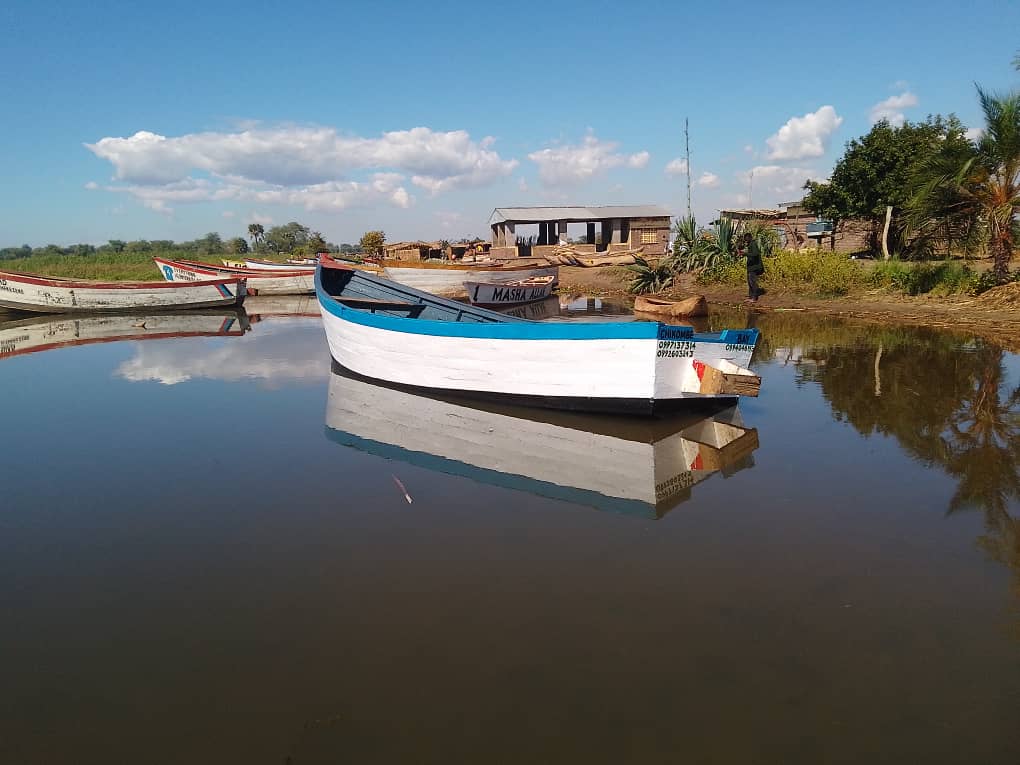
Boats on a fish landing site in Malawi. Owning boats and fishing gear has proved to be a game-changer for women fishers. Photo: Patrick Zakeyo
Agness Mkandawire grew up in a traditional family at Tukombo village, in a lakeshore district of Nkhata Bay in northern Malawi. While growing up, she had one thing on her mind: to join the fishing business.
Culturally, it is taboo for women to go out to catch fish. Hence, Mkandawire initially worked in fish processing and trading for three years before she bought a boat and two fishing nets to venture into the deep waters of Lake Malawi.
Mkandawire, a mother of three children, said that fish processing was not the kind of business she was hoping for when she started it in 2012.
“The fish processing and trading business was so challenging,” she said, “I was worried about the rising costs of firewood for drying fish. At the same time, buying fish from fishermen was a hustle. You need to know the fisherman or you have to be in a sexual relationship with one of them or many.”
“I needed to go fishing myself. Even though I had dreams of owning a boat, I didn’t know who would be helping me fish with it. Culturally, women aren’t allowed to go into the waters and fish,” she said. “In the first few months, I was going out with men in my boat, and they were teaching me how to do it and how to navigate the waves when the Lake [Malawi] got rough,” she added.
The first time she went into the waters, she was scorned and belittled by both men and women alike, and even the elders. She was forbidden to pursue her dream because fishing was only meant for men.
In northern Malawi, where patriarchy runs deep and women are relegated to domestic chores, Mkandawire was determined to break the yoke.
“I refused to accept what all people were saying that I should not do,” she said.
Her determination inspired several other women in her village. At present, more than 12 women own fishing gear in Tukombo.
Several of them are also part of the Beach Village Committees (BVCs), organizations committed to protecting the environment and women from exploitation. In Tukombo, six of the 11 executive committee members are women, said Mkandawire.
These government-regulated committees protect fisheries and promote sustainable fishing practices, such as banning the use of small-mesh fish nets, enforcing the closed fishing season, and ensuring fair auctions for fish sales to end the fish-for-sex trade.
Fish-for-Sex
The BVCs were set up in 2020 to end the widespread practice of fish-for-sex, which had become the norm in fishing communities across Malawi. Fishing has long been dominated by men, while women have worked mainly in processing and trading. As local demand for fish grew and competition tightened, many fishermen began using their control over the catch to exploit women.
Since women were often shut out of catching fish, men were able to set the unconscionable terms, demanding sexual favors in exchange for access to stock. Over time, this coercion became the norm and sex (a form of) currency.
“Fish-for-sex is not only a fisheries issue but also a public health and social justice issue. Eliminating it completely will require sustained investment in women’s economic empowerment, HIV prevention, community accountability, and protection of human rights,” said George Jobe, Executive Director of Malawi Health Equity Network (MHEN), a local health NGO.
Health experts have expressed concern over this practice, which remains a serious public health risk in a country heavily impacted by HIV/AIDS, where more than a million people still live with HIV, according to data from the National Aids Commission.
“Therefore, interventions should go beyond awareness campaigns and focus on sustainable economic empowerment of women and girls,” Jobe said. He traces the practice to poverty and unequal access to fishing resources, and argues that awareness campaigns alone won’t end it.
Selling fish by public auction, a key standard measure implemented by all BVCs, has significantly curbed the practice of fish-for-sex.
“We have introduced a system where no fisherman will be selling his fish through an agreement made between a man and a woman in secret. The owners of the boats and fisheries will have to sell fish by auction, where the highest bidder buys,” said Maggie Chiumia, a fisherwoman who also owns a boat and a net.
“Women have been victims for a long time. Selling fish through auction protects not only them but men too, especially their husbands, from HIV and other sexually transmitted diseases,” said Bilali Jambo, a boat builder and a fisherman.
Owning Fishing Gear Empowers Women
Although women comprise 47% of the fisheries workforce in the Global South, men go out to fish, while women engage in post-harvest activities. In sub-Saharan Africa, more than 80% of fish processors and traders are women, but men dominate the industry as they own fishing equipment such as nets, canoes, and boats.
In Malawi, the fishing sector employs about 60,000 fishers, gear owners, and crew, of whom only 5% are women. Yet, more than 70% of the fish traders who process, transport, and sell fish are women.
Apart from the fishing sector, inequality is also pronounced in agriculture, since landholding and ownership favor men. Men are considered heads of households, and they make decisions relating to land. Women are not entitled to land ownership. Since women hold no position of influence, they are often subjected to gender-based violence.
When fish catches decline, men migrate to other areas, leaving the women and children behind and often entering into relationships with other women there. About 32% of women aged 15–49 have experienced physical violence and 17% have experienced sexual violence, with 38% reporting either form of violence in their lifetime, according to a report by The Nation, a local newspaper.
These women believe that only through economic empowerment can such abuses end.
“Women are not empowered economically,” said Leah Munthali, a fish trader and chair of Luwalazi BVC, “Because of this lack of financial support, they fall in the hands of other men who promise to support them in the absence of their husbands.”
“Men also end up marrying where they have gone, and because culturally polygamy is accepted, women cannot do anything, let alone go into the actual fishing business,” Munthali added.
Statistics show that 11% of married women aged between 15 and 49 years old are living in polygamous marriage, with 15% in the northern region of the country. Polygamy in Malawi is both traditional and customary, but a dual legal framework is maintained. Civil and statutory marriage prohibits polygamy but customary and religious laws allow it. Under the Marriage, Divorce and Family Relations Act anyone entering the marriage through civil or statutory law must prove that he or she is single. The Act also recognizes customary marriages in which polygamy is permitted.
Although gender-based violence has been illegal in Malawi since 2014, awareness about the same is rising only recently, and women are reporting more abusive men to the police, and the GBV cases are on the decline. UN Women estimates that nearly 46% of women in Malawi have experienced physical or sexual violence, while 38% of girls are married before the age of 18. Women’s participation in fisheries projects has empowered them from being small-scale traders to owning assets through local financial groups such as cooperatives and village banks. A study published in 2021 observes that women “who earn an income from the fisheries value chain have more access to savings and credit and have more equal household bargaining power”.
Owning fishing gear has thus marked a turning point in the lives of these women. Mkandawire said that she is currently employing men for fishing, “while I also go into the waters.”
“Just imagine in a day if the weather is good and the lake is calm, I am making close to MK2million (USD 1,200). This is the money that I never used to make before owning a boat. If I were to think about our culture that limits us from going into the waters, what would have happened?” said Mkandawire.
Gender-Based Violence Still Prevalent
Gender-based violence, though on the decline, is still happening. Many women choose to suffer in silence as they are afraid of reporting an abusive husband to the police or authorities for fear that if the man, who is a breadwinner, gets jailed, there will be no one to look after the children.
In some cases, women have even gone to the courts or police to plead for the release of their husbands, even though the man is abusive.
“If a woman is economically empowered, no husband will abuse the wife. We are not only respected by our men, but we are also being supported by them because we have the means to survive economically,” said Tamala Mwenda, a fish trader at Tukombo fish landing site in Nkhata Bay.
Mwenda owns a boat and a fish net. When she first started going in deep waters to fish, accompanied by crewmen, she was scared.
“I was scared because men said I would not come alive, especially when the waters get rough. Now, I am no longer scared, and I do my job like any other fisherman,” she said.
While more and more women are determined to embrace gender equality across all economic spheres, some people remain cautious about it. Some are of the view that culture still needs to be respected.
“While in some landing sites women join the men as members of the crew in the waters, here [in Nkhota Kota] we do not allow women to go with men in the waters. Even though I have a boat and nets, I employ men to do the job for me. Women are by nature supposed to hide their bodies and cannot be half-dressed and be part of the crew,” said Andrew Munthali, Chairperson of Chia Cooperative.
“The main reason why women are not allowed to go into deep waters is that women cannot swim if Lake Malawi gets rough,” said James Nyirenda, a fish trader and member of Chia BVC in Nkhota Kota district in central Malawi.
He also explained that the other reason is that men put on very tight short trousers, and in some cases, they are almost naked. He says women cannot put on such attire, which is totally unacceptable and taboo, especially when women show their breasts.
Brown Chunda, a boat builder, said while women have the right to participate in any economic activity, “there are certain activities, such as fishing in deep waters, women must leave it to men.”
He said in the event that the boat capsizes due to bad weather, women, he said cannot swim.
But the women who go into deep waters and fish are of a different opinion and they still believe that it is wrong for men to think that women cannot make it to the deep waters.
“I have been fishing using my boat and a net for the past three years now. Most of the time I go with men in the same boat and nothing strange happens. We are all there for business,” said Chiumia, adding, “I know at first I was afraid because it was something new but with time I have got used to it. We are now at par with men and even our husbands encourage us to go fishing because they know the importance of a woman doing business.”
Jobe agrees with Chiumia that empowering is the only way of breaking the generational cultural taboo.
“We recommend strengthening women’s access to finance, ownership of fishing equipment, participation in fisheries cooperatives, and alternative livelihood opportunities. Communities should also continue promoting gender-responsive leadership structures that protect women from exploitation and provide safe channels for reporting abuse,” he said
Whatever the case, women in Malawi have set the pace in breaking the social and cultural taboos and it remains to be seen if this will be sustained for years to come.
Closing the Gender Gap
Statistics published in November 2021 indicate that about 5% of women in the business now own fishing gear and the numbers steadily increasing, leading to positive impacts on income and food security at the household level, according to the Department of Fisheries. The sector contributes about 4% to Malawi’s Gross Domestic Product (GDP) and hence, women participation is crucial for sustained food security and household income.
Charles Mkoka, Executive Director of the nonprofit Coordination Union for the Rehabilitation of the Environment (CURE) said women participation in the sector is closing the gender gap and strengthening economic empowerment.
A five-year project funded by the African Development Bank (AfDB/ADB) which ended in December 2025, targeted close to 20,000 fishers and entrepreneurs, with 50% of the participants being female.
Activities within the project included business and entrepreneurial development, strengthening fish farmers’ cooperatives, production of young fish and fish feeds, building capacity of value chain actors, and rehabilitating fish landing sites, fish processing zones and feeder roads.The project also constructed modern WASH facilities such as the one at Makawa-Kela fish landing site in Mangochi district in the southern region of Malawi, construction of cold rooms and donation of refrigerated trucks.
To break the gender barrier, the project involved local chiefs. Since the chiefs are respected within the communities, their involvement is critical in breaking the gender divide, as it enables women to participate in the project activities.
“It means people have realized that some cultural beliefs were bad for development,” said Patrick Zakeyo, Fisheries Officer at the Department of Fisheries in Salima district in central Malawi.
“It is true that currently many women are investing in businesses such as fishing, fish processing and even trading and this means that the ground is becoming conducive for gender diversity for all to enjoy equal rights, responsibilities and opportunities. This tells us that gender is becoming irrelevant in determining participation in fishing and other associated activities,” said Zakeyo.
Even though more and more women are now participating in the fishing business, many have little capital to grow their businesses.
Executive Director of Center for Policy and Advocacy (CEPA), Herbert Mwalukomo, said women have low capital investment, which makes it even more difficult to participate fully in the sector. He said women needed more financial support for their businesses to thrive.
Women at the Forefront Protecting Environment
Besides social and economic empowerment, women in fisheries also drive ecological sustainability through BVC regulations, often implemented by women-led committees.
Environmental degradation is a big threat to the sustainability of fisheries. It is a global problem especially within communities whose lives depend on marine resources.
Malawi, an agricultural country, has most of the rivers draining into Lake Malawi. Farmers have cleared forests along the riverbanks leading to increased soil erosion. Eroded soils wash into the rivers making them shallow. When the annual rains recede, they dry up faster than usual, impacting fish survival, and thus, fish stocks have significantly reduced. Depletion of stocks threatens the economic survival of the communities and affects food security.
Moreover, the demand for firewood to process fish also triggers deforestation. While some fishers sun-dry their catch, many use firewood, especially during the rainy season.
The BVCs are working on implementing regulations that strive to conserve natural resources. Besides auctioning fish, Luwalazi BVC has ruled that anyone fishing during closed season will be fined or have his or her net confiscated.
“We are doing this to bring sanity to the fishing sector. We want to protect our resources,” said Leah Munthali, who chairs the BVC committee. She said that the use of firewood for fish processing endangers “our environment and that is why women fish processors now use the eco-friendly kilns.”
Community-led projects such as the one funded by AfDB funded or Restoring Fisheries for Sustainable Livelihoods in Lake Malawi (REFRESH) introduced eco-friendly smoking kilns using biomass briquettes, solar tent dryers for fish processing and using organic waste fuels to protect the environment.
REFRESH was a five-year USAID-funded project whose main objectives include fisheries resources conservation in Lake Malawi and combating illegal fishing.
Overfishing and Resource Exploitation
The dismantling of USAID in 2025 has raised concerns among both fisheries’ experts and the fishing communities. In a telephone interview with the Polis Project, Mwenda said she wished that the USAID-funded project continued because many women like her had benefited from it and it had helped protect the environment.
Mwenda was concerned that the lack of funding would increase illegal fishing as there would be no funds for sensitization and enforcement of the by-laws. “The benefit is not only that we are owning fishing gear but fisheries resources are being protected from exploitation,” she said.
It is because women are responsible for these committees, they are in the forefront of publicizing the awareness programs especially among fellow women because environmental problems like climate change impact them a lot.
“Greater inclusion of women in resource management also strengthens sustainability and governance. When women participate in community committees, cooperatives, or conservation programs, they bring different perspectives on resource use and community needs. This can lead to more balanced decision-making and improved stewardship of natural resources,” said Mkoka.
Overfishing is yet another problem. When stocks get depleted due to illegal fishing, fishermen migrate to other areas in search of larger catches.
About 90% of all nets used in Lake Malawi waters are illegal, with small mesh sizes that capture younger fish species. Struggling and poor fishermen, often led by cultural beliefs of masculine strength, resort to illegal fishing using mosquito nets and monofilament nets. Widespread corruption and lack of enforcement by the Fisheries Department further worsens this crisis.
“During closed seasons [November 1-February], many men still fish illegally and their nets are confiscated by authorities. None of those nets confiscated belong to a woman, which means women are able to better protect the resources than men,” said Chiumia.
Closed seasons protect fish populations by allowing the fish to spawn and grow.
Mkoka said cultural norms have limited women’s involvement in activities traditionally dominated by men, particularly in natural resource sectors such as fisheries, forest management, and wildlife conservation.
“When women are given opportunities to participate in these fields—through training, leadership roles, and access to resources—it helps challenge long-standing barriers and promotes greater gender equality. This shift allows women to contribute their knowledge and skills to areas that were previously inaccessible to them,” he said.