





When Nadhirou Tambadou was notified by the United States government of his imminent deportation, his world was shaken once again. The 43-year-old asylum seeker has been living in Cincinnati, Ohio, for the past three years after leaving Mauritania. The West African nation has been rife with political and ethnic tensions for decades.
“It feels like discrimination and hardship keep following me,” Tambadou said. “I thought coming to the US would make things better. But when my lawyer told me I was going to be deported to Uganda, my heart sank.”
The deportation order Tambadou received is based on the July 2025 Asylum Cooperative Agreement (ACA) between the US and Uganda. The agreement allows the deportation of foreign individuals, who are seeking protection within the US, to the East African country. After several appeals and a federal judge’s ruling in Boston declaring the transfer of migrants to third countries illegal, Tambadou breathed a sigh of relief. But he knows this is temporary, since the decision could be challenged in the Court of Appeals and the Supreme Court.
After leaving Mauritania on May 7, 2023, and arriving in the US via the land border in Arizona six days later, Tambadou submitted his asylum application. His uncle, Oumar Ball, welcomed him in Ohio. Ball had come to the US as a political refugee in 1996, following what the Mauritanian authorities called “Passif humanitaire” (literally, human liability), but Afro-Mauritanians refer to as “state genocide”. This period, 1986 to 1992, under President Maaouya Ould Sid’Ahmed Taya’s regime, saw massive human rights violations against the Afro-Mauritanian population.
With the support of the Mauritanian Network for Human Rights in the US, which helped him navigate the lengthy legal process, Tambadou was gradually rebuilding his life in Ohio. He was working at Koch Foods’ poultry-processing facility in Fairfield while hoping to reunite with his wife, children, and mother who are still in Mauritania. He said he complied with all the Immigration and Customs Enforcement (ICE) check-in requirements during this period. However, events soon took a different turn. In early February this year, he received a deportation order to Uganda. Then, just four days before his asylum hearing, scheduled for March 2, he was informed that it had been canceled without explanation.
“The US government intends, through a hearing lasting only a few minutes, to summarily reject asylum claims and deport African asylum seekers to Uganda,” said Charleston Wang, Tambadou’s lawyer, who is providing legal aid to several asylum seekers from the Afro-Mauritanian community in Ohio. According to data from the Transactional Records Access Clearinghouse (TRAC), 18,071 immigration cases involving Mauritanian nationals are currently pending across the US since 1998, the second-highest among Africans, after Senegalese nationals. In Ohio, Mauritanians account for the largest number of pending cases among African nationalities, with 2,977 people waiting.
Long History of State Violence
Tambadou said that since his father’s death, his life has been “turbulent”. His father, Abdoulaye Tambadou, was an Afro-Mauritanian soldier executed during the repressive period of the “Passif humanitaire”.
Afterwards, he faced one obstacle after another. “I did not go to school: our education was effectively sabotaged by the government,” Tambadou said. Raised by his mother and grandfather and with his three sisters, he was “expected to take on the role of the male figure in the family. It was hard.”
When his father died, Tambadou was only seven. He waited every day for his father to return home. In the meantime, his mother began mobilizing alongside other women in the search for truth and justice for their disappeared husbands, fathers, and sons. It’s a struggle she has carried on for more than 30 years with the Collective of Widows.
As he grew older, Tambadou became involved in his mother’s quest for justice. He reconstructed the circumstances of his father’s death by reading L’Enfer d’Inal (“The Hell of Inal”, 2000), the survivor Mahamadou Sy’s testimony. Abdoulaye Tambadou’s military service number was 70023, a detail his son is careful to emphasize as both a reminder that his father was proudly serving his country at the time of his disappearance and an unmistakable form of identification. According to Sy’s writing, it was Mohamed Ould Bamba Ould Meguett, then serving as head of communication services in the National Army, who killed Abdoulaye Tambadou on December 6, 1990.

Abdoulaye is among over 500 Afro-Mauritanian soldiers who were victims of summary executions and torture during the “Passif humanitaire” period. Additionally, around 3,000 people were subjected to arbitrary arrests in this period.
Several years of mounting tensions reached a turning point when Afro-Mauritanian intellectuals gathered in the Forces de Libération Africaines de Mauritanie (African Liberation Forces of Mauritania, FLAM) in 1986 to publish the Manifeste du Négro mauritanien opprimé (“the Manifesto of the Oppressed Black Mauritanian”). The manifesto denounced “state apartheid” while calling for “a genuine national dialogue.” The Mauritanian government responded by accusing Afro-Mauritanians of having orchestrated an alleged coup in 1987, which became the pretext for a broader crackdown on Afro-Mauritanian soldiers.
Violence escalated in 1989, when a border dispute between Senegal and Mauritania led to the expulsion of more than 60,000 Afro-Mauritanians to Senegal and Mali. Their birth certificates, property titles, and identity papers were confiscated and never returned. Human Rights Watch reported that documents were also destroyed in villages predominantly inhabited by Afro-Mauritanians in southern Mauritania. Since that time, many of those who were expelled never returned to their homeland.
Protest Crackdown
The legacy of that period still shapes many Afro-Mauritanians’ lives. Every November 28, victims’ families take to the streets of the capital Nouakchott to commemorate the “Inal massacre,” during which 28 Afro-Mauritanian soldiers were hanged at the Inal military camp, about 60 kilometers from Western Sahara, in 1990. It is the same day when Mauritanians celebrate the country’s independence from French colonial rule (1960), whereas many Afro-Mauritanians mark the occasion with demonstrations demanding justice. During these demonstrations, authorities reportedly threaten or harass the families of Afro-Mauritanian soldiers and even subject them to arbitrary arrests. The continued repression lead many to leave the country or contemplate leaving.
Just as happened to Beidy Ly and Ibrahima Guisset, both asylum seekers and sons of Afro-Mauritanian soldiers who were killed in 1990.
Beidy Ly, son of Mamadou Ousmane Ly (military number 78089), said that he was arrested on November 28, 2020 – Day of Remembrance for the Inal massacre – and detained in a police station in Nouakchott for a week for taking part in peaceful protests. There, he said he was subjected to torture and discrimination.
“Before releasing us from prison, they told us that if we did not stop protesting, they would kill us, just as they had killed our father,” Ly said.
Hence, in 2023, he decided to join the Afro-Mauritanian community in Ohio, where he works for a manufacturing company called Picanova. “Now I am here, but my mind is not at ease because I think about my mother and what might happen to her. Every morning, I call her to make sure she is safe,” Ly added.
Ibrahima Guisset met with a car accident after learning that his mother had been arrested during a protest. It was his mother who convinced him to leave Mauritania: “She told us: ‘I have already lost your father. I raised you on my own, without anyone’s help. If you want to kill me, [then] stay here.’” Ibrahima and Fatimata Guisset, his younger sister, arrived in the US in May 2023.
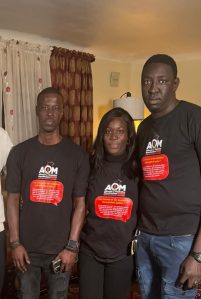
Clashes with the police in Nouakchott on April 27 of that year had alarmed them. They had protested against the possible appointment of Mohamed Ould Bamba Ould Meguett as president of the National Assembly, which took place on June 19, 2023. Ibrahima Guisset also identified Meguett as responsible for the death of his father, Mamadou Guisset, a senior army officer. His military registration/ID number was 76922.
“My father returned home on December 5, 1990, urgently summoned by Meguett and Ely Ould Dah. A week later, on December 13, 1990, he was executed at the Jreïda military barracks, about 30 kilometers north of Nouakchott,” Guisset said.
Mauritanian Orphans and a Transcontinental Struggle
Guisset, Ly, and Tambadou are “the Mauritanian orphans” – children of fathers who were disappeared by the state. Once, this was a stigmatizing label attached to the children of Afro-Mauritanian soldiers targeted during the repression, but now the term has been reclaimed by some of them and imbued with political meaning as they seek to uncover what happened to their fathers and where they are buried. All three of them are members of the Alliance des Orphelins Mauritaniens (“Alliance of Mauritanian Orphans”, AOM), a Cincinnati-based NGO founded in 2024 by brothers Mohamed Cirré Wele and Saliou Ousmane Wele–both “Mauritanian orphans”.
November 27, 1990, was the last time Mohamed and Saliou saw their father, Ousmane Abdallah Wele (military number 78080), a warrant officer in the Mauritanian Navy.
Mohamed was about eight years old at the time. The two brothers grew up with their uncle in Chad, the Central African Republic, and Burkina Faso. They were reunited with their mother and sisters only in 2005, in the US.
“At first it was difficult, because after being separated at such a young age, we had to recognize our mother again,” said Saliou.
The AOM calls for the repeal of Law 93-23, which granted amnesty to members of the armed forces and security services during the ’90s. Article 2 of the law further stipulates that “Any complaint, report, or investigative document relating to that period and concerning a person who has benefited from this amnesty shall be dismissed without further action.” The law has prevented any investigation into those events, creating a climate of impunity and injustice among the victims of the so-called “Passif humanitaire” and their families.
Amnesty Law and Its Weaponization
Under President Maaouya Ould Taya, Mauritania adopted a new constitution in 1991, formally transitioning from military rule to a multiparty political system. Meanwhile, growing international pressure mounted on the government to release Afro-Mauritanians who had been arbitrarily detained in prison and torture camps.
In April 1991, the surviving detainees were freed. Many fled to France and sought political asylum there. Several victims’ organizations emerged, such as the Collective of Widows, which mobilized to seek accountability. According to the International Federation for Human Rights (FIDH), these organizations urged the president of the Military Committee for National Salvation, the supreme institution of the Mauritanian state from 1979 to 1992, to establish an independent commission to inquire about the atrocities committed during “Passif humanitaire,” but it never saw the light of day.
Further, in July 1991, the Supreme Court issued an advisory opinion stating that military commanders lacked the authority to prosecute military personnel accused of crimes committed during the so-called “Passif humanitaire”. Nevertheless, the Special Court of Justice refrained from proceeding without authorization from the very military commanders it was supposed to prosecute. In fact, the Special Court of Justice itself had jurisdiction over crimes committed by military personnel.
Meanwhile, an internal army commission conducted its own investigation, collecting testimony from victims and visiting sites where torture had allegedly taken place. Its findings were never made public.
In January 1993, Parliament dissolved the Special Court of Justice and transferred the authority to initiate proceedings against military personnel to the chiefs of staff themselves. The final blow came in May 1993, when Parliament adopted the Amnesty Law.
“I remember clearly when it was passed. My mother and the other widows went to the National Assembly to protest and ask why the lawmakers were voting for such a law,” Ibrahima Guisset said. The police attacked and beat the protesters, he said, adding, “Struck by a baton, my mother lost consciousness and had to be taken to the hospital. She still bears the emotional and physical consequences of that assault today.”
Legislation like the Amnesty Law has a far-reaching impact on a divided society by restricting access to public goods, services, and citizenship. Africa Moreno, an expert on amnesty and transitional justice, and the founder and president of Labo des Mémoires (Memory Lab), said: “When an amnesty law is introduced, it implicitly determines who has ‘obeyed’ and conformed, and therefore has access to the rights, protections, and benefits guaranteed by the state, and who is excluded from them. In this way, society is divided into two.”
In Mauritania, those divisions are reflected in access to education, healthcare, and even basic civil documentation. What should have been fundamental rights of citizens have become privileges granted to chosen groups. “In this sense, the amnesty law does not function to calm a conflict at all. On the contrary, it inaugurates a phase in which violence is pacified, but also transformed: violence, in a more symbolic form, continues to persist over time,” Moreno added.
That violence endures in at least two ways. First, through the denial of a truth acknowledged by survivors, their families, human rights organizations, and the United Nations, yet unrecognized by the Mauritanian legal system. Second, through the intergenerational trauma carried by families whose suffering has never been adequately addressed.
“Time is used as a weapon by the Mauritanian government: our mothers are aging, and the authorities delay the case because they want to bury the truth,” said Mohamed Cirré Wele. His NGO does not want the work the widows have carried out so far to fall into oblivion.
“The Right to Memory”: Divisions over Compensation
According to news circulated last October, the Mauritanian government would be willing to compensate victims of the violence with 27 billion old ouguiyas (around USD 60 million). Reactions have been mixed.
“What I want is the right to memory, that the facts be acknowledged. Reparation comes afterward,” said Mamadou Wele, 71, a survivor of the Inal camp and former deputy head of the Navy. He recounted the torture he endured and having witnessed the hanging of 28 soldiers in the military camp. After his release, he lost his job. He first compiled a list of those who had died in the detention camps. He later added the names of the alleged perpetrators.
Despite his experience, Wele has never considered leaving Mauritania. “When you leave and go to another country, you become a foreigner,” he said.

Unlike Wele, other soldiers sought refuge in Europe or the US. From abroad, they continue to campaign with the Cadre de Concertation des Réscapés Mauritaniens (“Coordination Committee of Mauritanian Survivors”, CCRM) — an umbrella organization that brings together several associations in Mauritania as well as in Europe and the US that seek recognition and accountability for the atrocities committed during the early 1990s.
Since 2022, the CCRM has been engaging with the government of Mohamed Ould Cheikh Ghazouani in an effort to find common ground. However, most of its demands have been rejected, including the establishment of an independent commission of inquiry, the implementation of transitional justice measures, the identification of mass graves, and the repeal of the amnesty law. As a result, discussions have gradually shifted toward compensation.
Ndjim Boubou, the former president of the Europe–United States branch of the CCRM, however, believes that compensation is essential in order for victims’ families and survivors to obtain some form of redressal. A survivor of the Jreïda and Nbeika camps, Boubou has been living in France since 1997, where he was granted asylum within a few months after his arrival. “Those who want to accept financial compensation should not be condemned by others with the idea that everyone must remain in the same boat. If you want justice, continue to demand it; if someone else prefers to seek a sustainable solution, let them do so. That is why we went to discuss with the Mauritanian state,” says Boubou, who confirms that, so far, no official agreement has been signed between the CCRM and Nouakchott regarding compensation.
Not all organizations within the CCRM support the compensation compromise, including the US-based association Mauritanie Min Njejitta (MMN), led by Aissata Niang, mother of the Wele brothers.
“The truth must be known by all Mauritanian citizens. This is a dark and painful chapter in the history of our nation,” said Khally Mamadou Diallo, a member of the National Assembly on the list of the Coalition Espoir Mauritanie (“Coalition Hope Mauritania”). Diallo acts as a spokesperson for the Afro-Mauritanian cause, denouncing the discrimination and repression they face on a daily basis.
“The Mauritanian government’s method, which consists of offering money, is a method aimed at silencing the truth,” he added.
Deep-Rooted Fractures in Mauritanian Society
Tambadou, Ly, and Guisset have fought against the suppression of history, which ultimately compelled them to leave Mauritania and rebuild their lives in the US. But the system they challenge has deep historical roots dating back more than a century.
From the French indirect colonial rule which began in 1902 to Mauritania’s independence in 1960, the state inherited a dual configuration: the Moorish political elite, known as the Bidān, and the Afro-Mauritanian administrative elite. In between stood the Haratines: Arabic-speaking people commonly known as “Black Moors,” the descendants of the enslaved, who continue to face discrimination and fight against the legacy of slavery, including forms of hereditary servitude that still persist in some rural areas of the country.

“It is often said that the state preceded the nation. Struggles between communities focused on control of the state apparatus, since it is through it that resources are distributed, jobs are assigned, power is exercised—and sometimes forms of appropriation and corruption take place,” said anthropologist Abdel Wedoud Ould Cheikh, emeritus professor at the University of Lorraine.
In 1965, with the introduction of mandatory Arabic in secondary schools and the intensification of Arabization policies in the subsequent years, identity tensions deepened in the country. These policies, according to Ould Cheikh, constituted “one of the triggering factors of discrimination”.
According to Baba Adou in Racializing Arabic: Colonial Education Policies and the Linguistic Issue in Contemporary Mauritania, French colonial education policies contributed to structuring Mauritanian racial categorization around a homogeneous white Arab group, a process made possible by the colonial conception of Arabic as a marker of identity and later reinforced by the Bidān’s appropriation of this colonial construct. Afro-Mauritanians, on the other hand, were increasingly identified with the French language, reinforcing their portrayal as bearers of a colonial legacy in contrast to the Arab identity. Arabization, thus, came to be understood as part of a broader project of decolonization by the dominant Arab-Berber group.
While language continues to shape the Mauritanian state’s vision of national unity, the country’s political system has, in turn, hindered any meaningful reckoning with the legacy of the “Passif humanitaire”. “I believe that the despotic and vertical nature of the political system is what has prevented a real solution to the so-called “Passif humanitaire”, because it is a military system with an electoral veneer,” says Professor Ould Cheikh.
However, Ould Cheikh said that it is important not to reduce everything to ethnic categorizations. “They are more marketable than a nuanced discourse, but their use and the way they are foregrounded can also serve purposes that are sometimes close to demagoguery. Political leaders of all kinds, of every camp, tend to use this shortcut. In Mauritania, if you want to achieve something, you have to sell a tribe or an ethnicity; otherwise you will not gain attention or traction.”
Focusing exclusively on ethnic divisions fails to capture the complex interplay between ethnic affiliation, social status derived from membership in a particular tribe—given that communal groups are themselves divided into multiple tribes—and the enduring legacies of slavery. Taken together, these dynamics persistently shape access to political power, land, and economic opportunities.
Paulina Jagoda Warsza, a doctoral researcher at the University of Warsaw, observes, “…feudal structures have remained a dominant form of socio-economic organization and have helped secure Mauritania’s position within the family of Arab nations.”
The real challenge lies in achieving national reconciliation, where citizenship matters more than ethnic belonging. Transitional justice – a set of measures to address past abuses through truth, justice, reparations and guarantees of non-repetition – could be one way of creating the conditions needed to acknowledge, address, and overcome the fractures because a significant part of Mauritania’s population still feels as though it is treated as foreign in its own country.
“I tell myself that these are the people who prevented me from being happy, from living the life I should have lived, and from remaining in my own country. It is because of them that my mother suffered so deeply, enduring years of anguish and trauma. And this trauma has marked us as well,” said Guisset.
From Mauritania to the US, uncertainty remains part of their daily life. Waiting for his next check-in with ICE, Tambadou says he is “just hoping for the best.”

Orphans of an Unburied Past: Afro-Mauritanians Walk the Long Road to Truth and Justice

The Widows’ Collective and the Alliance of Mauritanian Orphans (AOM) in Geneva. Photo: Courtesy of AOM
When Nadhirou Tambadou was notified by the United States government of his imminent deportation, his world was shaken once again. The 43-year-old asylum seeker has been living in Cincinnati, Ohio, for the past three years after leaving Mauritania. The West African nation has been rife with political and ethnic tensions for decades.
“It feels like discrimination and hardship keep following me,” Tambadou said. “I thought coming to the US would make things better. But when my lawyer told me I was going to be deported to Uganda, my heart sank.”
The deportation order Tambadou received is based on the July 2025 Asylum Cooperative Agreement (ACA) between the US and Uganda. The agreement allows the deportation of foreign individuals, who are seeking protection within the US, to the East African country. After several appeals and a federal judge’s ruling in Boston declaring the transfer of migrants to third countries illegal, Tambadou breathed a sigh of relief. But he knows this is temporary, since the decision could be challenged in the Court of Appeals and the Supreme Court.
After leaving Mauritania on May 7, 2023, and arriving in the US via the land border in Arizona six days later, Tambadou submitted his asylum application. His uncle, Oumar Ball, welcomed him in Ohio. Ball had come to the US as a political refugee in 1996, following what the Mauritanian authorities called “Passif humanitaire” (literally, human liability), but Afro-Mauritanians refer to as “state genocide”. This period, 1986 to 1992, under President Maaouya Ould Sid’Ahmed Taya’s regime, saw massive human rights violations against the Afro-Mauritanian population.
With the support of the Mauritanian Network for Human Rights in the US, which helped him navigate the lengthy legal process, Tambadou was gradually rebuilding his life in Ohio. He was working at Koch Foods’ poultry-processing facility in Fairfield while hoping to reunite with his wife, children, and mother who are still in Mauritania. He said he complied with all the Immigration and Customs Enforcement (ICE) check-in requirements during this period. However, events soon took a different turn. In early February this year, he received a deportation order to Uganda. Then, just four days before his asylum hearing, scheduled for March 2, he was informed that it had been canceled without explanation.
“The US government intends, through a hearing lasting only a few minutes, to summarily reject asylum claims and deport African asylum seekers to Uganda,” said Charleston Wang, Tambadou’s lawyer, who is providing legal aid to several asylum seekers from the Afro-Mauritanian community in Ohio. According to data from the Transactional Records Access Clearinghouse (TRAC), 18,071 immigration cases involving Mauritanian nationals are currently pending across the US since 1998, the second-highest among Africans, after Senegalese nationals. In Ohio, Mauritanians account for the largest number of pending cases among African nationalities, with 2,977 people waiting.
Long History of State Violence
Tambadou said that since his father’s death, his life has been “turbulent”. His father, Abdoulaye Tambadou, was an Afro-Mauritanian soldier executed during the repressive period of the “Passif humanitaire”.
Afterwards, he faced one obstacle after another. “I did not go to school: our education was effectively sabotaged by the government,” Tambadou said. Raised by his mother and grandfather and with his three sisters, he was “expected to take on the role of the male figure in the family. It was hard.”
When his father died, Tambadou was only seven. He waited every day for his father to return home. In the meantime, his mother began mobilizing alongside other women in the search for truth and justice for their disappeared husbands, fathers, and sons. It’s a struggle she has carried on for more than 30 years with the Collective of Widows.
As he grew older, Tambadou became involved in his mother’s quest for justice. He reconstructed the circumstances of his father’s death by reading L’Enfer d’Inal (“The Hell of Inal”, 2000), the survivor Mahamadou Sy’s testimony. Abdoulaye Tambadou’s military service number was 70023, a detail his son is careful to emphasize as both a reminder that his father was proudly serving his country at the time of his disappearance and an unmistakable form of identification. According to Sy’s writing, it was Mohamed Ould Bamba Ould Meguett, then serving as head of communication services in the National Army, who killed Abdoulaye Tambadou on December 6, 1990.
Abdoulaye is among over 500 Afro-Mauritanian soldiers who were victims of summary executions and torture during the “Passif humanitaire” period. Additionally, around 3,000 people were subjected to arbitrary arrests in this period.
Several years of mounting tensions reached a turning point when Afro-Mauritanian intellectuals gathered in the Forces de Libération Africaines de Mauritanie (African Liberation Forces of Mauritania, FLAM) in 1986 to publish the Manifeste du Négro mauritanien opprimé (“the Manifesto of the Oppressed Black Mauritanian”). The manifesto denounced “state apartheid” while calling for “a genuine national dialogue.” The Mauritanian government responded by accusing Afro-Mauritanians of having orchestrated an alleged coup in 1987, which became the pretext for a broader crackdown on Afro-Mauritanian soldiers.
Violence escalated in 1989, when a border dispute between Senegal and Mauritania led to the expulsion of more than 60,000 Afro-Mauritanians to Senegal and Mali. Their birth certificates, property titles, and identity papers were confiscated and never returned. Human Rights Watch reported that documents were also destroyed in villages predominantly inhabited by Afro-Mauritanians in southern Mauritania. Since that time, many of those who were expelled never returned to their homeland.
Protest Crackdown
The legacy of that period still shapes many Afro-Mauritanians’ lives. Every November 28, victims’ families take to the streets of the capital Nouakchott to commemorate the “Inal massacre,” during which 28 Afro-Mauritanian soldiers were hanged at the Inal military camp, about 60 kilometers from Western Sahara, in 1990. It is the same day when Mauritanians celebrate the country’s independence from French colonial rule (1960), whereas many Afro-Mauritanians mark the occasion with demonstrations demanding justice. During these demonstrations, authorities reportedly threaten or harass the families of Afro-Mauritanian soldiers and even subject them to arbitrary arrests. The continued repression lead many to leave the country or contemplate leaving.
Just as happened to Beidy Ly and Ibrahima Guisset, both asylum seekers and sons of Afro-Mauritanian soldiers who were killed in 1990.
Beidy Ly, son of Mamadou Ousmane Ly (military number 78089), said that he was arrested on November 28, 2020 – Day of Remembrance for the Inal massacre – and detained in a police station in Nouakchott for a week for taking part in peaceful protests. There, he said he was subjected to torture and discrimination.
“Before releasing us from prison, they told us that if we did not stop protesting, they would kill us, just as they had killed our father,” Ly said.
Hence, in 2023, he decided to join the Afro-Mauritanian community in Ohio, where he works for a manufacturing company called Picanova. “Now I am here, but my mind is not at ease because I think about my mother and what might happen to her. Every morning, I call her to make sure she is safe,” Ly added.
Ibrahima Guisset met with a car accident after learning that his mother had been arrested during a protest. It was his mother who convinced him to leave Mauritania: “She told us: ‘I have already lost your father. I raised you on my own, without anyone’s help. If you want to kill me, [then] stay here.’” Ibrahima and Fatimata Guisset, his younger sister, arrived in the US in May 2023.
Clashes with the police in Nouakchott on April 27 of that year had alarmed them. They had protested against the possible appointment of Mohamed Ould Bamba Ould Meguett as president of the National Assembly, which took place on June 19, 2023. Ibrahima Guisset also identified Meguett as responsible for the death of his father, Mamadou Guisset, a senior army officer. His military registration/ID number was 76922.
“My father returned home on December 5, 1990, urgently summoned by Meguett and Ely Ould Dah. A week later, on December 13, 1990, he was executed at the Jreïda military barracks, about 30 kilometers north of Nouakchott,” Guisset said.
Mauritanian Orphans and a Transcontinental Struggle
Guisset, Ly, and Tambadou are “the Mauritanian orphans” – children of fathers who were disappeared by the state. Once, this was a stigmatizing label attached to the children of Afro-Mauritanian soldiers targeted during the repression, but now the term has been reclaimed by some of them and imbued with political meaning as they seek to uncover what happened to their fathers and where they are buried. All three of them are members of the Alliance des Orphelins Mauritaniens (“Alliance of Mauritanian Orphans”, AOM), a Cincinnati-based NGO founded in 2024 by brothers Mohamed Cirré Wele and Saliou Ousmane Wele–both “Mauritanian orphans”.
November 27, 1990, was the last time Mohamed and Saliou saw their father, Ousmane Abdallah Wele (military number 78080), a warrant officer in the Mauritanian Navy.
Mohamed was about eight years old at the time. The two brothers grew up with their uncle in Chad, the Central African Republic, and Burkina Faso. They were reunited with their mother and sisters only in 2005, in the US.
“At first it was difficult, because after being separated at such a young age, we had to recognize our mother again,” said Saliou.
The AOM calls for the repeal of Law 93-23, which granted amnesty to members of the armed forces and security services during the ’90s. Article 2 of the law further stipulates that “Any complaint, report, or investigative document relating to that period and concerning a person who has benefited from this amnesty shall be dismissed without further action.” The law has prevented any investigation into those events, creating a climate of impunity and injustice among the victims of the so-called “Passif humanitaire” and their families.
Amnesty Law and Its Weaponization
Under President Maaouya Ould Taya, Mauritania adopted a new constitution in 1991, formally transitioning from military rule to a multiparty political system. Meanwhile, growing international pressure mounted on the government to release Afro-Mauritanians who had been arbitrarily detained in prison and torture camps.
In April 1991, the surviving detainees were freed. Many fled to France and sought political asylum there. Several victims’ organizations emerged, such as the Collective of Widows, which mobilized to seek accountability. According to the International Federation for Human Rights (FIDH), these organizations urged the president of the Military Committee for National Salvation, the supreme institution of the Mauritanian state from 1979 to 1992, to establish an independent commission to inquire about the atrocities committed during “Passif humanitaire,” but it never saw the light of day.
Further, in July 1991, the Supreme Court issued an advisory opinion stating that military commanders lacked the authority to prosecute military personnel accused of crimes committed during the so-called “Passif humanitaire”. Nevertheless, the Special Court of Justice refrained from proceeding without authorization from the very military commanders it was supposed to prosecute. In fact, the Special Court of Justice itself had jurisdiction over crimes committed by military personnel.
Meanwhile, an internal army commission conducted its own investigation, collecting testimony from victims and visiting sites where torture had allegedly taken place. Its findings were never made public.
In January 1993, Parliament dissolved the Special Court of Justice and transferred the authority to initiate proceedings against military personnel to the chiefs of staff themselves. The final blow came in May 1993, when Parliament adopted the Amnesty Law.
“I remember clearly when it was passed. My mother and the other widows went to the National Assembly to protest and ask why the lawmakers were voting for such a law,” Ibrahima Guisset said. The police attacked and beat the protesters, he said, adding, “Struck by a baton, my mother lost consciousness and had to be taken to the hospital. She still bears the emotional and physical consequences of that assault today.”
Legislation like the Amnesty Law has a far-reaching impact on a divided society by restricting access to public goods, services, and citizenship. Africa Moreno, an expert on amnesty and transitional justice, and the founder and president of Labo des Mémoires (Memory Lab), said: “When an amnesty law is introduced, it implicitly determines who has ‘obeyed’ and conformed, and therefore has access to the rights, protections, and benefits guaranteed by the state, and who is excluded from them. In this way, society is divided into two.”
In Mauritania, those divisions are reflected in access to education, healthcare, and even basic civil documentation. What should have been fundamental rights of citizens have become privileges granted to chosen groups. “In this sense, the amnesty law does not function to calm a conflict at all. On the contrary, it inaugurates a phase in which violence is pacified, but also transformed: violence, in a more symbolic form, continues to persist over time,” Moreno added.
That violence endures in at least two ways. First, through the denial of a truth acknowledged by survivors, their families, human rights organizations, and the United Nations, yet unrecognized by the Mauritanian legal system. Second, through the intergenerational trauma carried by families whose suffering has never been adequately addressed.
“Time is used as a weapon by the Mauritanian government: our mothers are aging, and the authorities delay the case because they want to bury the truth,” said Mohamed Cirré Wele. His NGO does not want the work the widows have carried out so far to fall into oblivion.
“The Right to Memory”: Divisions over Compensation
According to news circulated last October, the Mauritanian government would be willing to compensate victims of the violence with 27 billion old ouguiyas (around USD 60 million). Reactions have been mixed.
“What I want is the right to memory, that the facts be acknowledged. Reparation comes afterward,” said Mamadou Wele, 71, a survivor of the Inal camp and former deputy head of the Navy. He recounted the torture he endured and having witnessed the hanging of 28 soldiers in the military camp. After his release, he lost his job. He first compiled a list of those who had died in the detention camps. He later added the names of the alleged perpetrators.
Despite his experience, Wele has never considered leaving Mauritania. “When you leave and go to another country, you become a foreigner,” he said.
Unlike Wele, other soldiers sought refuge in Europe or the US. From abroad, they continue to campaign with the Cadre de Concertation des Réscapés Mauritaniens (“Coordination Committee of Mauritanian Survivors”, CCRM) — an umbrella organization that brings together several associations in Mauritania as well as in Europe and the US that seek recognition and accountability for the atrocities committed during the early 1990s.
Since 2022, the CCRM has been engaging with the government of Mohamed Ould Cheikh Ghazouani in an effort to find common ground. However, most of its demands have been rejected, including the establishment of an independent commission of inquiry, the implementation of transitional justice measures, the identification of mass graves, and the repeal of the amnesty law. As a result, discussions have gradually shifted toward compensation.
Ndjim Boubou, the former president of the Europe–United States branch of the CCRM, however, believes that compensation is essential in order for victims’ families and survivors to obtain some form of redressal. A survivor of the Jreïda and Nbeika camps, Boubou has been living in France since 1997, where he was granted asylum within a few months after his arrival. “Those who want to accept financial compensation should not be condemned by others with the idea that everyone must remain in the same boat. If you want justice, continue to demand it; if someone else prefers to seek a sustainable solution, let them do so. That is why we went to discuss with the Mauritanian state,” says Boubou, who confirms that, so far, no official agreement has been signed between the CCRM and Nouakchott regarding compensation.
Not all organizations within the CCRM support the compensation compromise, including the US-based association Mauritanie Min Njejitta (MMN), led by Aissata Niang, mother of the Wele brothers.
“The truth must be known by all Mauritanian citizens. This is a dark and painful chapter in the history of our nation,” said Khally Mamadou Diallo, a member of the National Assembly on the list of the Coalition Espoir Mauritanie (“Coalition Hope Mauritania”). Diallo acts as a spokesperson for the Afro-Mauritanian cause, denouncing the discrimination and repression they face on a daily basis.
“The Mauritanian government’s method, which consists of offering money, is a method aimed at silencing the truth,” he added.
Deep-Rooted Fractures in Mauritanian Society
Tambadou, Ly, and Guisset have fought against the suppression of history, which ultimately compelled them to leave Mauritania and rebuild their lives in the US. But the system they challenge has deep historical roots dating back more than a century.
From the French indirect colonial rule which began in 1902 to Mauritania’s independence in 1960, the state inherited a dual configuration: the Moorish political elite, known as the Bidān, and the Afro-Mauritanian administrative elite. In between stood the Haratines: Arabic-speaking people commonly known as “Black Moors,” the descendants of the enslaved, who continue to face discrimination and fight against the legacy of slavery, including forms of hereditary servitude that still persist in some rural areas of the country.
“It is often said that the state preceded the nation. Struggles between communities focused on control of the state apparatus, since it is through it that resources are distributed, jobs are assigned, power is exercised—and sometimes forms of appropriation and corruption take place,” said anthropologist Abdel Wedoud Ould Cheikh, emeritus professor at the University of Lorraine.
In 1965, with the introduction of mandatory Arabic in secondary schools and the intensification of Arabization policies in the subsequent years, identity tensions deepened in the country. These policies, according to Ould Cheikh, constituted “one of the triggering factors of discrimination”.
According to Baba Adou in Racializing Arabic: Colonial Education Policies and the Linguistic Issue in Contemporary Mauritania, French colonial education policies contributed to structuring Mauritanian racial categorization around a homogeneous white Arab group, a process made possible by the colonial conception of Arabic as a marker of identity and later reinforced by the Bidān’s appropriation of this colonial construct. Afro-Mauritanians, on the other hand, were increasingly identified with the French language, reinforcing their portrayal as bearers of a colonial legacy in contrast to the Arab identity. Arabization, thus, came to be understood as part of a broader project of decolonization by the dominant Arab-Berber group.
While language continues to shape the Mauritanian state’s vision of national unity, the country’s political system has, in turn, hindered any meaningful reckoning with the legacy of the “Passif humanitaire”. “I believe that the despotic and vertical nature of the political system is what has prevented a real solution to the so-called “Passif humanitaire”, because it is a military system with an electoral veneer,” says Professor Ould Cheikh.
However, Ould Cheikh said that it is important not to reduce everything to ethnic categorizations. “They are more marketable than a nuanced discourse, but their use and the way they are foregrounded can also serve purposes that are sometimes close to demagoguery. Political leaders of all kinds, of every camp, tend to use this shortcut. In Mauritania, if you want to achieve something, you have to sell a tribe or an ethnicity; otherwise you will not gain attention or traction.”
Focusing exclusively on ethnic divisions fails to capture the complex interplay between ethnic affiliation, social status derived from membership in a particular tribe—given that communal groups are themselves divided into multiple tribes—and the enduring legacies of slavery. Taken together, these dynamics persistently shape access to political power, land, and economic opportunities.
Paulina Jagoda Warsza, a doctoral researcher at the University of Warsaw, observes, “…feudal structures have remained a dominant form of socio-economic organization and have helped secure Mauritania’s position within the family of Arab nations.”
The real challenge lies in achieving national reconciliation, where citizenship matters more than ethnic belonging. Transitional justice – a set of measures to address past abuses through truth, justice, reparations and guarantees of non-repetition – could be one way of creating the conditions needed to acknowledge, address, and overcome the fractures because a significant part of Mauritania’s population still feels as though it is treated as foreign in its own country.
“I tell myself that these are the people who prevented me from being happy, from living the life I should have lived, and from remaining in my own country. It is because of them that my mother suffered so deeply, enduring years of anguish and trauma. And this trauma has marked us as well,” said Guisset.
From Mauritania to the US, uncertainty remains part of their daily life. Waiting for his next check-in with ICE, Tambadou says he is “just hoping for the best.”