



“When a jungle got consumed by a fire and all its animals started running away, there was a small bird which filled its beak with water and took rounds, dropping it on the jungle. All the animals said, ‘You are being absurd. You will achieve nothing by doing this.’ But the bird said, ‘One day, people will tell the story of this jungle or write its history. There, it will be written that I was not on the side of those who set fire to the jungle, but rather with those who tried to extinguish the fire.’” These were the concluding remarks of Jacinta Kerketta—a poet, activist, journalist, documentary filmmaker, and educator—during a speech at a TEDx event in 2023.
Many believe that our planet is on the brink of crisis, much like the fire in this jungle. Some can smell the smoke or already feel the blaze, while others rest by the hearths of ignorance or privilege. In this inferno, Kerketta’s spirit flutters just like this small bird. Kerketta was born in 1983 in Khudposh, a village on the banks of the Koel River in West Singhbhum district, then part of Bihar and, after 2000, of Jharkhand. It sits on the Chota Nagpur plateau, close to the Saranda forest, the largest Sal forest in Asia, peppered with iron, bauxite, and coal mining towns.
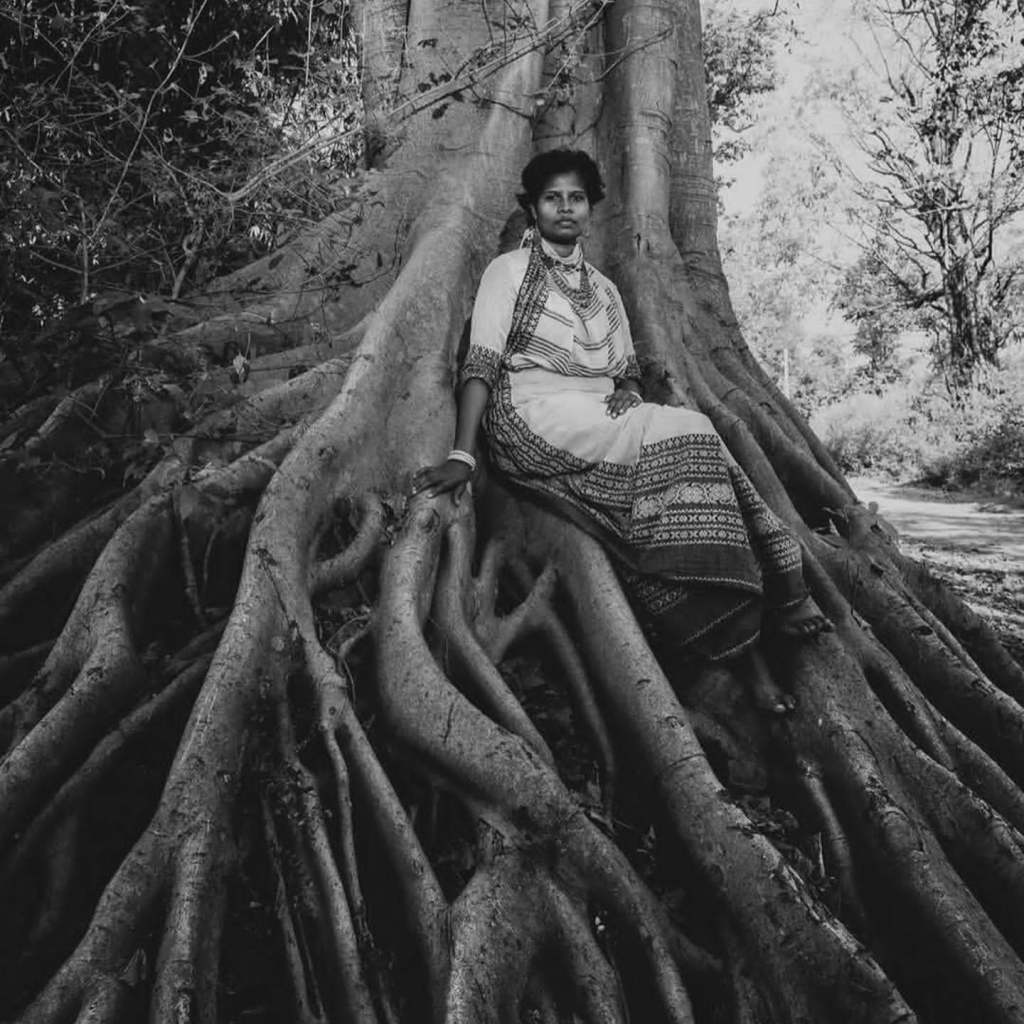
She comes from the Oraon Adivasi community. Unlike the caste identifiers Brahmanical communities in India use as surnames, the Oraon use clan names derived from their environment. In the Kurukh language of the Oraon people, ‘Kerketta’ means ‘sparrow’. Her mother, Pushpa Anima Kerketta, was affectionately called ‘Champa’ in their village. Today, one often sees Kerketta wearing a Champa flower in her hair. “Wearing the Champa flower brings me a profound sense of peace. It connects me directly to my mother, who is now merged with nature.”
Childhood on the Chota Nagpur Plateau
Kerketta’s childhood exposed her to an array of cultures and experiences, to confrontations with adversity, and to struggles afflicting her family and those around her.
When Kerketta was a child, Jharkhand was still part of Bihar. Her father was a marathon runner and joined the Bihar Police. As a result, her family was constantly on the move: within the Santhal Pargana area near West Bengal in (present-day) North-East Jharkhand, the city of Betiya near the Nepalese border in Bihar, and then Chakradharpur, a town in the West Singhbhum district. As a result, she grew up not only around her community of Kurukh speakers but also around other Adivasi communities such as Santhal, Munda, Khond, and Ho, as well as the non-Adivasi spectrum of Bihar’s urban society.
Growing up, Kerketta socialized among non-Adivasi students and teachers in a Christian mission school, and regularly experienced colorism, cultural assimilation, and racial profiling. When her academic performance exceeded the racialized expectations of her teachers, she was met with further disdain for having “the audacity to outperform her non-Adivasi peers”.
“I used to note down all these details. I was observing the inside and outside conditions of both the Adivasi and the non-Adivasi society.”
She witnessed her parents’ constant struggle through discrimination, and the impact of the norms of non-Adivasi society on her community. Ideas of black magic were weaponized against women, with her mother being accused of witchcraft by Adivasi Oraon neighbors in their urban apartment housing, as recounted by her in an article for Outlook in 2023.
“The distortions of mainstream society are penetrating deep into Adivasi communities through mobile phones, television, and modern media, reaching even remote villages. Because many Adivasis do not fully grasp the underlying mechanics of mainstream systems, they tend to adopt its flaws in an attempt to assimilate.
Consequently, instances of gang rape, gender-based violence, and religious extremism, which were historically absent in traditional Adivasi society, have risen sharply. Today, Adivasi communities are being fractured along religious lines, and control over women is tightening. While the status of Adivasi women remains distinct from that of mainstream women, Adivasi men are becoming heavily influenced by patriarchal mindsets, weakening the community from within.”
Kerketta began writing stories and poems in school. She started with a poem called “Bachpan” (Childhood), which focused on her family and mother—how her father adopted an oppressive mindset towards her mother, despite suffering and resisting discrimination within his workplace, and how patriarchy affected her brother and manifested as violence. Her writings were published extensively in Rahi (Wanderer), a children’s magazine then published in Ranchi.
As a teenager at Carmel High School in Chakradharpur, her primary source of information about her community was mainstream newspapers. The stark contrast between its distorted lens and their ground realities was tragically highlighted by the mob lynching of her uncle and grandmother. In 1999, as she entered the eighth grade, they were framed for the rape and murder of a girl child near their fields under the pretense of tribal ritual sacrifice. The media echoed and mainstreamed this fabrication. Her uncle was dragged to a street and murdered. Her grandmother was thrown into police custody and died soon thereafter. The shock of this incident significantly fueled her decision to become a journalist and writer.
“When I got to hear about the news that has been circulated in the newspapers, I began to think, who will write such stories from our perspective? The newspaper is theirs. The power, too, belongs to them,” she said in an interview for GroundXero in 2018.
Adivasiyat: The Adivasi Way of Life
Kerketta’s work spans journalism, activism, and poetry. She began reporting on tribal and Adivasi issues in Hindi for Dainik Jagran in Ranchi, then for Prabhat Khabar, The Wire, Outlook India, People’s Archive of Rural India, and more. She then released a poetry collection, Angor [“Ember”] (2016). This was followed by Jadon ki Zameen [“Land of the Roots”] (2018), Ishwar aur Bazaar [“God and the Market”] (2022), Jacinta ki Diary [“Jacinta’s Diary”] (2023), Jirhul (2024), Prem mein Ped Hona [“To Be a Tree in Love”] (2024), and Aurat ka Ghar [“The Home of a Woman”] (2026).
“There are only two ways or philosophies of life in the world today that are at war with each other in the true sense—the indigenous/tribal way and the capitalist way.” – Excerpt from The Adivasi Way of Life at Stake, published by Outlook India.
Kerketta presents Adivasiyat—the Adivasi way of life—as India’s heritage, central to her history, and pivotal to humanity’s survival. Her art mixes rage, sorrow, and love in a form both gentle in its emotion yet firm in its conviction. Political and ethno-nationalist agendas in India have always sought to uproot the identity of the ‘Adivasi’ by rejecting the very concept of ‘original inhabitants’ in favor of the term ‘van-vasi’ (forest dwellers), in favor of centering ‘Out-of-India indigenous Aryan’ existential mythology. Mahesh Kale, representing the RSS-affiliated ‘Vanvasi Kalyan Ashram’ (VKA), called the term ‘adivasi’ divisive and contrary to India’s unity in 2023. The ostensibly liberal Arya Samaj has long invested heavily in ‘purifying’ and ‘Sanskritizing’ Adivasis—from the Chota Nagpur Plateau to the Bhils and Meenas in West India—readily shifting from Vedic ritual culture to classic Brahmanical syncretism and bestowing savarna status. This ideological consensus across the spectrum of savarna power structures fueled the obfuscation of tribal religions under the category of ‘Hinduism’ as early as the 1951 Census. It continues to anchor their modern-day, grassroots ‘social welfare initiatives’ aimed at assimilating Adivasi youth.

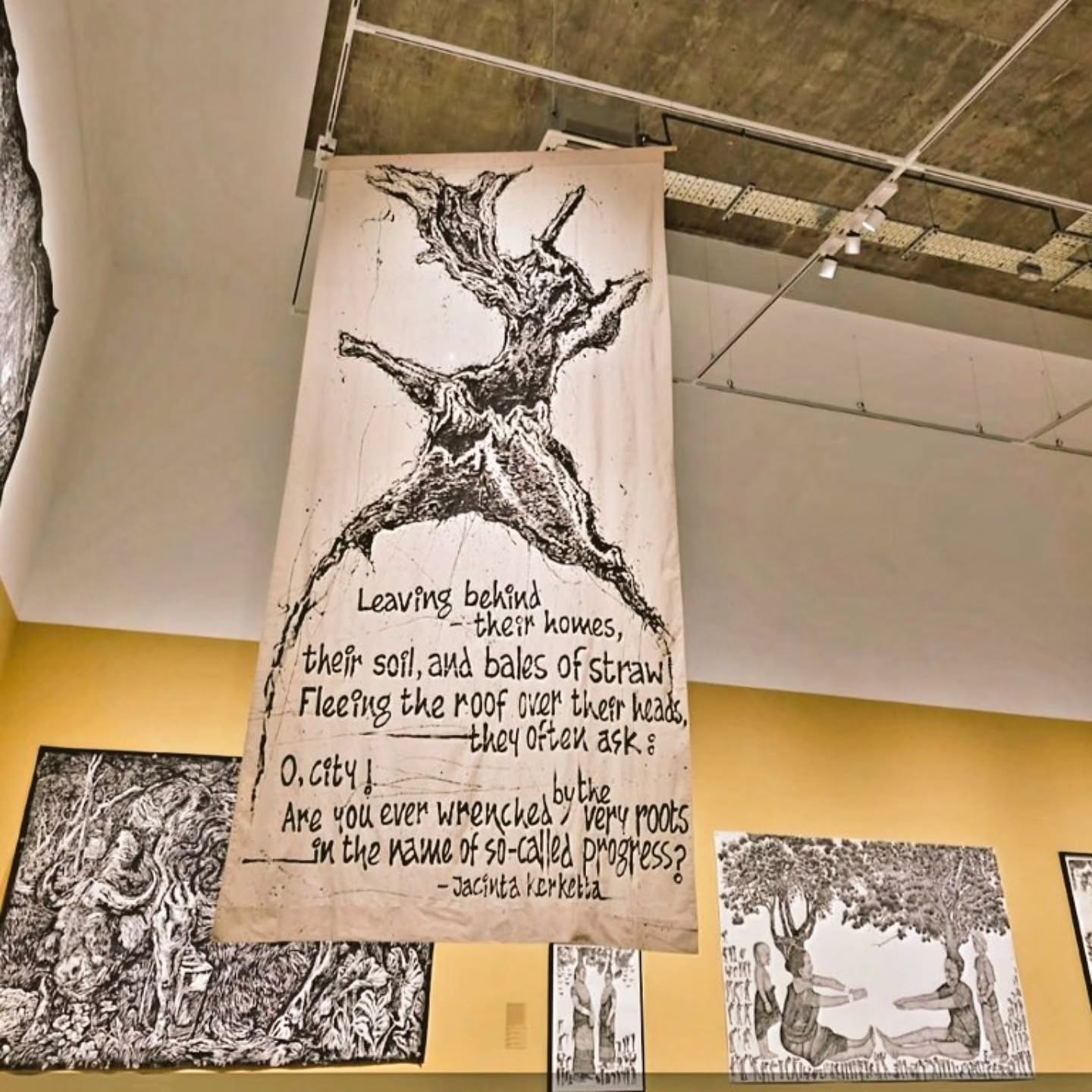
Kerketta’s work serves as a vital counter-force of epistemic resistance. Beyond merely documenting a society under pressure, her art actively deepens the roots of Adivasiyat. Intense, enveloping love for nature and the collective regenerative use of the commons are at the core of Adivasiyat.
“Adivasiyat is fundamentally different from traditional humanism, which places humans at the center of the universe. Adivasiyat means recognizing human beings alongside every other element of nature and all living beings—knowing one’s limits, caring for others, living, and letting live. At its core, it is a way of life anchored in mutual cooperation, respect, privacy, and freedom.”
Kerketta’s commitment to collective liberation and refusal to compromise in the face of hypocrisy and complicity embody rare, unwavering courage. In 2023, amid the state violence in Manipur, she rejected the India Today Group’s literary award for Ishwar aur Bazaar. In 2024, in solidarity with the children, women, and victims of Palestine, she refused an award for Jirhul by Room to Read India Trust due to its collaboration with the United States Agency for International Development (USAID) and close association with Boeing.
“What kind of religion is yours? / At each other’s throats you are forever. / And Nature, who feeds and nurtures you, / Even her you would not spare? / We will fight to the end of days against this very culture of yours. / But just let us know, / This earth that has been destroyed, / Who will answer for that, Sir?” – an excerpt from the poem Who will answer to us, sir? (2022), dedicated by Kerketta to “the indigenous peoples of India, the Amazon and around the world, fighting to save their jungles.”
She constantly looks far beyond her personal frame of reference, recognizing Adivasiyat in communities across the world and as a trait inherent to humanity—its generational loss in anthropocentric ‘mainstream societies’ a lament.
“Consistently engaging urban populations in conversations about Adivasi life philosophy helps break down their deep-seated prejudices toward tribal communities. At the same time, when Adivasis maintain unshakeable faith in Adivasiyat and practice it in their daily lives, it reassures urban society that an alternative, harmonious way of living truly exists. This mutual exchange inspires courage in both communities to live with greater empathy and connection to Adivasiyat.” … “Ultimately, Adivasiyat can only survive if it is actively lived—it cannot be saved through rhetoric alone, but through practice.”
In ‘Mera Adivasi Hona’ from Ishwar aur Bazaar (2022), she states that outer appearance does not reflect Adivasiyat. It is to be close to the Earth, to walk with Nature, flow like a river with grace, to struggle against every shackle, both imposed and internal, and to center beauty and humanity within oneself. Only Adivasiyat can protect the ability to be an Adivasi on this Earth.
“[Adivasis have] always fought against tendencies and forces that have wanted to enslave other human beings, including in the name of development and industrialization. Many great thinkers have, and are [still] talking about human freedom, socialism, etc., but the Adivasis have actually practiced these ideas in their everyday lives. In their struggle, they have sacrificed a lot, but they never compromised. Adivasis believe that humans are just one part of nature, and they should take only that amount of natural wealth that they need to live their lives.” – Jadon ki Zameen (Land of the Roots)
While discussing Dalit-Adivasi solidarity, Kerketta exclaimed, “Dalit society is actually a part of Adivasi society.” She highlights how Dalit society is rooted in indigenous communities that have lived within Brahmanical society for generations. Adivasis historically maintained distance from Brahmanical settlements, inheriting commons and systems of self-governance from their ancestors. “The struggles and historical lifestyles of Adivasis and Dalits are distinct. Yet, because both are targets of the same mainstream Brahmanical system, their struggle converges.” She celebrates instances of Dalit-Adivasi camaraderie, such as the Niyamgiri movement in Odisha, while critiquing the internalization of caste prejudice among some urban Dalits who align with corporate interests, support extraction, and view Adivasis as ‘backward’. “While opposing the Brahmanical system, urban Dalit politics often lacks an alternative societal model to replace it, sometimes maintaining existing hierarchies or rituals. Adivasis, however, have preserved an alternative, non-hierarchical way of life across generations. If Dalits fully embrace this perspective, a deeper, unified resistance can take root.”
Kerketta describes the Buddha’s attraction to the Adivasi value systems and highlights their inherent presence in the ways of life espoused by the Buddha, as discussed on a recent podcast with Kunal Kamra. While Dr. Ambedkar presented Buddhism as a route towards liberation from the spiritual internalization of caste inherent in Hindu identity, Kerketta presents adivasiyat as swirling at the core of the Buddha’s philosophies. “Only the adivasi world and life philosophy truly prevail against caste, the caste system, and Brahminism.”
Writing Against Erasure

Kerketta deeply explores the use of institutionalized religion to mentally enslave adivasi populations, especially in her book Ishwar aur Bazaar [“God and the Market”] (2022). Local communities historically worshipped hills, jungles, and springs, but their destruction also drove defeated residents towards institutional religions and Indo-Aryan deities, believing them to be stronger. In other cases, they were forced to do so to access resources, such as Birsa Munda taking the surname ‘David’ to gain access to a German mission school, or Droupadi Murmu being arbitrarily renamed by her school teacher.
“One day, they had the moneylender / Return to us our mortgaged land, / And said, ‘This is the power of our God!’ / We bowed down before that Almighty / And remained bowed for heaven knows how long. / With us bowed our future generations, / And then, many a century. / Blissfully unaware were we / That with God they also brought weapons unseen, / Which they used to wage wars around the world, / In places rich in land, forests and oil. / But how do we fight against these odds? / We seem to have given all responsibility / for our self-preservation to their God.” – an excerpt from her 2022 poem “The Adivasi Writes Back”
The drive of the missionaries to ceremonially save the marginalized from their allies’ oppression can be clearly identified as a white savior complex, which provided a strategic template for the savarna savior complex. Noting adivasiyat as the greatest threat to Hindutva, Kerketta highlights how the shifting design of the Census of India systematically erased acknowledgment of the very existence of adivasi religions, traditions, and cultural identities from 1951 onwards.
She critically examines the encroachment of Brahmanism, including the appropriation and occupation of an ancient adivasi hilltop place of worship as a contemporary Hanuman temple. Here, access to spirituality is gated by Brahmin pandits, with Hanuman – an Indo-Aryan mythical character derived from a ‘race of forest-dwelling people’, being relegated in modern iterations to a sub-human figure known for his servitude.
“Now I am either Ramesh, Naresh, or Mahesh / or Albert, Gilbert, Alfred. / I have names from every one of those lands / whose soil hasn’t made me, / whose history is not my history. / I keep searching for my history / inside theirs, and I realize / that in each corner of this world, / in each place, I am the one being slaughtered / and each killing has a beautiful name.”
She does not neglect the intersection of gender, revealing how the generational conditioning of women intensifies the role of religion in their lives and makes them particularly vulnerable. She also notes Adivasi languages as key carriers of their cultures, showing the Kurukh language’s uniquely fluid framework for the gender binary as well as respectful acknowledgment of people and identities outside male and female, contrasting heavily with the patriarchy inherent in Brahmanism and Abrahamic religions. “Patriarchy strips men of their femininity, making them “strong,” unfeeling, and violent, and destroying their innate tenderness. In response, women often feel compelled to adopt masculine aggression to survive within male-dominated systems, casting aside their own femininity. I hope for femininity to survive within both men and women. Only through this shared softness and sensitivity can we collectively work to protect the Earth.”
While writing about industrialization and resource extraction for development in the mineral-dense lands under the forests of the Chota Nagpur Plateau, Kerketta weaves a web between contemporary struggles and the increasingly relevant historical context of adivasis’ resistance. For The Wire, she elaborated on public-private partnerships pitted against local communities, using Utkal Alumina’s 2006 ‘operationalization’ in Odisha as an example. She described the nexus of politicians, corporates, and police forces, and how they engineered conflict, greed, and crime to cripple people’s resistance. Meanwhile, the multinational assault upon the landscape is greenwashed in hindsight with claims of ‘multi-stakeholder’ sustainable development in the tribal ‘hinterlands’.
“The Adivasi community is constantly forced to pay the price for the nation’s “development.” Whenever mainstream progress is pursued, the cost is extracted from Adivasis—just as someone somewhere always bears the burden of global expansion.
By law, mining cannot occur on Adivasi land without community consent, nor can the land be easily transferred. To bypass this and facilitate bauxite mining, Munda Adivasis are being reclassified under the OBC (Other Backward Classes) category in five districts of Jharkhand.”
“…Adivasi areas resemble internal colonies in their own country. Millions of acres of land have been acquired for big companies and dams,” she reported for The Outlook India while talking about ‘The Colonialism Within’, revealing how land rights, laws, economics, government jobs and financial services are weaponized using age-old colonial playbooks. Poverty is systematically maintained to cripple resistance and ensure cheap local labor. She highlighted the persistence and endurance of Adivasi struggle against land seizure, from pre-Independence resistance to the 30-year-old protest pilgrimage against an army firing range in the hills of Netarhat, with the reported devaluation of local consent through Gram Sabhas in ‘matters of national interest’ eerily foreshadowing the planned destruction of the Great Nicobar Island Project.
The traditional practices of collective land-ownership and regenerative nomadic agriculture – jhum kheti – have been threatened since the British Raj, with the zamindari system moving Adivasis from self-governance into serfdom. As communities fought to regain their common lands and transition into the modern legal framework of land ownership, Kerketta’s reporting for People’s Archive of Rural India highlighted new strategies to seize back Adivasi lands. There, she revealed how the Digital India Land Records Modernization Program (DILRMP) is used to exploit the digital divide and fabricate ownership of Adivasi plots by zamindar descendants.
Kerketta’s short documentary Astitva ka Uthkanan (Excavation of Existence) dove deeper – the lush green hills of the Saranda forest being stripped down for ore and blanketed with dust. The documentary shows how Adivasi communities continue to bear the brunt of extraction and deteriorating living conditions in their ancestral territories, receding deeper into the forests, or migrating to the urban ‘centers of civilization’ in order to earn a living to replace the lives they lost. “I ask the child the way to his village / He moves his head and points to a truck / ‘Ask any truck driver, dai,’ he says / ‘Loaded with coal, iron, bauxite / And many villages dumped on it, / The truck that goes towards the city every day, / Only it knows the real way to my village.”
In March 2026, Kerketta was asked about the recurring motif of ‘streams of bloody tears’, running out of a thousand eyes or down the cheeks of rivers. Her response was more literal than metaphorical, highlighting the visceral sorrow Adivasi communities felt and expressed when witnessing the brute demolition of their forests and landscapes, and the generational experience of seeing rivers run blood-red with acid mine drainage from iron mining.
Poetry, Prose, Children
Throughout her travels among Adivasi communities, Kerketta has always prioritized dialogue with children, especially young Adivasi girls. Recognizing the need to counter assimilation from within through critical pedagogy, she delved deeper into children’s literature with books such as Jirhul and Jacinta ki Diary.
In Jirhul, Kerketta transforms the landscape from a passive “resource” into a political protagonist. While mainstream education often prioritizes Western botanical symbols—the rose, the lotus, or the marigold—Kerketta centers the “wild” flora of the Chota Nagpur plateau.
“There is diversity in nature. That is what makes it beautiful. This very diversity is what sustains it. Our own survival also depends on this diversity. The forest is another name for diversity.
In the forest, wise people never call any flower “wild.” It is the city that often does so. In truth, it knows nothing about them. What it does not know the name of, what is unfamiliar, it calls wild. This is exactly what many people say about communities as well.”
Kerketta’s poetry in Jirhul provides a remarkably delicate and accessible pedagogical tool for evoking socio-political consciousness, layering deep historical meaning, endearment for nature, melancholic loss, fundamental ecological principles, local context, and languages. Centering a different plant in each poem, she draws heavily on Adivasi ecopoetic traditions through personification, romanticism, animism, and relational ontologies, channeling emotional and empathetic attention to patterns of harm and danger and their effects on ecosystems and communities. The light, playful animation of the behavior of Semal, Jatangi, and Palash flowers evokes wonder and endearment, while the poem about the Mahua introduces tragedy—its edible flowers saving locals from famines, only for the trees to be cut down.
Her poem about Sonrakha trees and the Koel river beautifully weaves together folk memory and natural beauty with the history of environmental encroachment and its effect on traditional livelihoods and ancient landscapes. She touches on the destruction of traditional gold-panning on the shores of the Koel river—from the Chota Nagpur plateau to the Damodar-Koel valley—by disruptions to the river’s flow. “The Koel river gave its gold to the Sonrakha trees when it got dug up and, when the groves of Sonrakha trees got cut, they hid the gold behind the laughter of the hills’ people. Now, when someone comes to the hills seeking gold, its people just laugh.” The red leaves of Kusum trees subtly introduce biodiversity and phenological staggering; Koinaar adds a feminist dimension through the economic injustices faced by Adivasi women, and the titular Jirhul flower cries “Hool, Hool” (Revolution in the Santhali language) upon sensing danger.

With Jacinta ki Diary, Kerketta offers a collection of short stories, poems, and childhood recollections in the form of journal entries, offering a window into her travels, the cultures she encounters, and her reflections.
In Baha Ghar, Kerketta writes about her time in Niyamgiri, Odisha, with the Khond community, which sustained rebellion through guerrilla warfare from 1753 until 1866 in the Ghumsar Zamindari of Odisha. She talks about their connection to their ancestors through nature, wedding practices that have the local river or a mango tree as witnesses, and their tradition of dormitory residence (Dhongdi Basa) for young boys and girls. With Chand par yakeen karte log, Kerketta introduces a short poem about how people around the world collectively believe in the moon, but continue to distrust their neighbors across generations. Gilehri ki bhasha takes us then to a small village near Neustadt, Germany, where Kerketta attempts to befriend a local squirrel and notes the adivasiyat of her hosts.
Then, with Asur Katha, Kerketta stays in a village in Jharkhand with the Asur community. She introduces the Asur culture, their multilingual coexistence with neighboring Adivasi communities, traditional livelihoods, and history. The ancient heritage of ironworking among the tribes, detailing the traditional use of charcoal from Sakhua trees, and the suppression of traditional Asura ironmaking during the British Raj, which forced the communities to move towards indentured labor on plantations and in mines.
“This is a small attempt to give children, youth, and adults with a child alive within them – via writing and books – a diary rooted in such societies, jungles, hills and village-homes which can help instill some love, trust and sense of belonging within them. So that it can keep that alive. So that it can help them feel and connect, little by little, with the nature that resides within pictures, words, and colors. So that in their dreams and thoughts, they can have a connection with that world, with nature, which will not let the natural life-values within them die.”
Building the Future
Kerketta’s latest book Aurat ka Ghar [‘The Home of a Woman’] (2026) hones in on the dispossession of women through the erosion of Adivasi land commons in exchange for private property and patrilineal inheritance. When asked what ‘home’ means for an Adivasi woman, she said, “The structure of society is designed to keep women divided. They are isolated from one another so that they are forced to choose a man—either out of fear of being alone or to secure basic social protection. However, I believe women can live together in different ways. For Adivasi women, home is inseparable from community. ‘Home’ signifies a safe personal sanctuary as well as a space for collective living: a place where no one is isolated, yet where privacy, individual freedom, and mutual growth coexist harmoniously.
She is determined to establish a feminist housing collective called ‘Jirhul’—a place where women can collectively manage a household, support each other, engage in creative work for youth, and organize workshops and intellectual dialogue alongside feminist men and experienced social workers. “The flower Jirhul never blooms alone—two, four, or more flowers are always connected to it. It is the dream of a home where women and youth can bloom together.”
Kerketta presents adivasiyat as a blueprint for the future—for survival and regeneration. She is under no illusion that her beakful of water will quench the inferno, but she refuses to stage a strategic retreat, remaining uncompromising in her praxis of international solidarity, gentle empathy, and persistent revolutionary action.

To Bloom Like Jirhul and Cry “Hool!”: A Profile of Poet Jacinta Kerketta
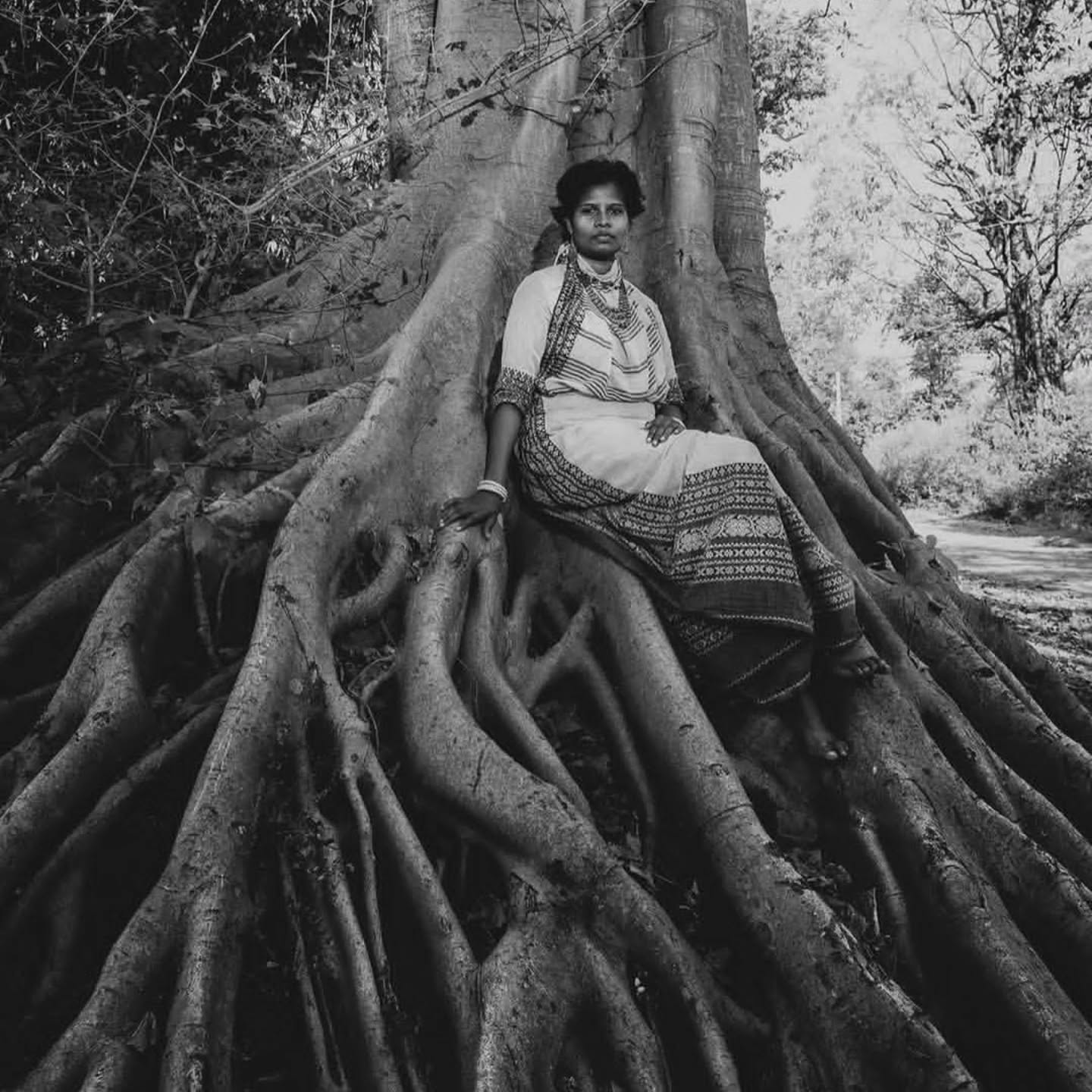
Photo Credit: Amit Verma
“When a jungle got consumed by a fire and all its animals started running away, there was a small bird which filled its beak with water and took rounds, dropping it on the jungle. All the animals said, ‘You are being absurd. You will achieve nothing by doing this.’ But the bird said, ‘One day, people will tell the story of this jungle or write its history. There, it will be written that I was not on the side of those who set fire to the jungle, but rather with those who tried to extinguish the fire.’” These were the concluding remarks of Jacinta Kerketta—a poet, activist, journalist, documentary filmmaker, and educator—during a speech at a TEDx event in 2023.
Many believe that our planet is on the brink of crisis, much like the fire in this jungle. Some can smell the smoke or already feel the blaze, while others rest by the hearths of ignorance or privilege. In this inferno, Kerketta’s spirit flutters just like this small bird. Kerketta was born in 1983 in Khudposh, a village on the banks of the Koel River in West Singhbhum district, then part of Bihar and, after 2000, of Jharkhand. It sits on the Chota Nagpur plateau, close to the Saranda forest, the largest Sal forest in Asia, peppered with iron, bauxite, and coal mining towns.
She comes from the Oraon Adivasi community. Unlike the caste identifiers Brahmanical communities in India use as surnames, the Oraon use clan names derived from their environment. In the Kurukh language of the Oraon people, ‘Kerketta’ means ‘sparrow’. Her mother, Pushpa Anima Kerketta, was affectionately called ‘Champa’ in their village. Today, one often sees Kerketta wearing a Champa flower in her hair. “Wearing the Champa flower brings me a profound sense of peace. It connects me directly to my mother, who is now merged with nature.”
Childhood on the Chota Nagpur Plateau
Kerketta’s childhood exposed her to an array of cultures and experiences, to confrontations with adversity, and to struggles afflicting her family and those around her.
When Kerketta was a child, Jharkhand was still part of Bihar. Her father was a marathon runner and joined the Bihar Police. As a result, her family was constantly on the move: within the Santhal Pargana area near West Bengal in (present-day) North-East Jharkhand, the city of Betiya near the Nepalese border in Bihar, and then Chakradharpur, a town in the West Singhbhum district. As a result, she grew up not only around her community of Kurukh speakers but also around other Adivasi communities such as Santhal, Munda, Khond, and Ho, as well as the non-Adivasi spectrum of Bihar’s urban society.
Growing up, Kerketta socialized among non-Adivasi students and teachers in a Christian mission school, and regularly experienced colorism, cultural assimilation, and racial profiling. When her academic performance exceeded the racialized expectations of her teachers, she was met with further disdain for having “the audacity to outperform her non-Adivasi peers”.
“I used to note down all these details. I was observing the inside and outside conditions of both the Adivasi and the non-Adivasi society.”
She witnessed her parents’ constant struggle through discrimination, and the impact of the norms of non-Adivasi society on her community. Ideas of black magic were weaponized against women, with her mother being accused of witchcraft by Adivasi Oraon neighbors in their urban apartment housing, as recounted by her in an article for Outlook in 2023.
“The distortions of mainstream society are penetrating deep into Adivasi communities through mobile phones, television, and modern media, reaching even remote villages. Because many Adivasis do not fully grasp the underlying mechanics of mainstream systems, they tend to adopt its flaws in an attempt to assimilate.
Consequently, instances of gang rape, gender-based violence, and religious extremism, which were historically absent in traditional Adivasi society, have risen sharply. Today, Adivasi communities are being fractured along religious lines, and control over women is tightening. While the status of Adivasi women remains distinct from that of mainstream women, Adivasi men are becoming heavily influenced by patriarchal mindsets, weakening the community from within.”
Kerketta began writing stories and poems in school. She started with a poem called “Bachpan” (Childhood), which focused on her family and mother—how her father adopted an oppressive mindset towards her mother, despite suffering and resisting discrimination within his workplace, and how patriarchy affected her brother and manifested as violence. Her writings were published extensively in Rahi (Wanderer), a children’s magazine then published in Ranchi.
As a teenager at Carmel High School in Chakradharpur, her primary source of information about her community was mainstream newspapers. The stark contrast between its distorted lens and their ground realities was tragically highlighted by the mob lynching of her uncle and grandmother. In 1999, as she entered the eighth grade, they were framed for the rape and murder of a girl child near their fields under the pretense of tribal ritual sacrifice. The media echoed and mainstreamed this fabrication. Her uncle was dragged to a street and murdered. Her grandmother was thrown into police custody and died soon thereafter. The shock of this incident significantly fueled her decision to become a journalist and writer.
“When I got to hear about the news that has been circulated in the newspapers, I began to think, who will write such stories from our perspective? The newspaper is theirs. The power, too, belongs to them,” she said in an interview for GroundXero in 2018.
Adivasiyat: The Adivasi Way of Life
Kerketta’s work spans journalism, activism, and poetry. She began reporting on tribal and Adivasi issues in Hindi for Dainik Jagran in Ranchi, then for Prabhat Khabar, The Wire, Outlook India, People’s Archive of Rural India, and more. She then released a poetry collection, Angor [“Ember”] (2016). This was followed by Jadon ki Zameen [“Land of the Roots”] (2018), Ishwar aur Bazaar [“God and the Market”] (2022), Jacinta ki Diary [“Jacinta’s Diary”] (2023), Jirhul (2024), Prem mein Ped Hona [“To Be a Tree in Love”] (2024), and Aurat ka Ghar [“The Home of a Woman”] (2026).
“There are only two ways or philosophies of life in the world today that are at war with each other in the true sense—the indigenous/tribal way and the capitalist way.” – Excerpt from The Adivasi Way of Life at Stake, published by Outlook India.
Kerketta presents Adivasiyat—the Adivasi way of life—as India’s heritage, central to her history, and pivotal to humanity’s survival. Her art mixes rage, sorrow, and love in a form both gentle in its emotion yet firm in its conviction. Political and ethno-nationalist agendas in India have always sought to uproot the identity of the ‘Adivasi’ by rejecting the very concept of ‘original inhabitants’ in favor of the term ‘van-vasi’ (forest dwellers), in favor of centering ‘Out-of-India indigenous Aryan’ existential mythology. Mahesh Kale, representing the RSS-affiliated ‘Vanvasi Kalyan Ashram’ (VKA), called the term ‘adivasi’ divisive and contrary to India’s unity in 2023. The ostensibly liberal Arya Samaj has long invested heavily in ‘purifying’ and ‘Sanskritizing’ Adivasis—from the Chota Nagpur Plateau to the Bhils and Meenas in West India—readily shifting from Vedic ritual culture to classic Brahmanical syncretism and bestowing savarna status. This ideological consensus across the spectrum of savarna power structures fueled the obfuscation of tribal religions under the category of ‘Hinduism’ as early as the 1951 Census. It continues to anchor their modern-day, grassroots ‘social welfare initiatives’ aimed at assimilating Adivasi youth.
Kerketta’s work serves as a vital counter-force of epistemic resistance. Beyond merely documenting a society under pressure, her art actively deepens the roots of Adivasiyat. Intense, enveloping love for nature and the collective regenerative use of the commons are at the core of Adivasiyat.
“Adivasiyat is fundamentally different from traditional humanism, which places humans at the center of the universe. Adivasiyat means recognizing human beings alongside every other element of nature and all living beings—knowing one’s limits, caring for others, living, and letting live. At its core, it is a way of life anchored in mutual cooperation, respect, privacy, and freedom.”
Kerketta’s commitment to collective liberation and refusal to compromise in the face of hypocrisy and complicity embody rare, unwavering courage. In 2023, amid the state violence in Manipur, she rejected the India Today Group’s literary award for Ishwar aur Bazaar. In 2024, in solidarity with the children, women, and victims of Palestine, she refused an award for Jirhul by Room to Read India Trust due to its collaboration with the United States Agency for International Development (USAID) and close association with Boeing.
“What kind of religion is yours? / At each other’s throats you are forever. / And Nature, who feeds and nurtures you, / Even her you would not spare? / We will fight to the end of days against this very culture of yours. / But just let us know, / This earth that has been destroyed, / Who will answer for that, Sir?” – an excerpt from the poem Who will answer to us, sir? (2022), dedicated by Kerketta to “the indigenous peoples of India, the Amazon and around the world, fighting to save their jungles.”
She constantly looks far beyond her personal frame of reference, recognizing Adivasiyat in communities across the world and as a trait inherent to humanity—its generational loss in anthropocentric ‘mainstream societies’ a lament.
“Consistently engaging urban populations in conversations about Adivasi life philosophy helps break down their deep-seated prejudices toward tribal communities. At the same time, when Adivasis maintain unshakeable faith in Adivasiyat and practice it in their daily lives, it reassures urban society that an alternative, harmonious way of living truly exists. This mutual exchange inspires courage in both communities to live with greater empathy and connection to Adivasiyat.” … “Ultimately, Adivasiyat can only survive if it is actively lived—it cannot be saved through rhetoric alone, but through practice.”
In ‘Mera Adivasi Hona’ from Ishwar aur Bazaar (2022), she states that outer appearance does not reflect Adivasiyat. It is to be close to the Earth, to walk with Nature, flow like a river with grace, to struggle against every shackle, both imposed and internal, and to center beauty and humanity within oneself. Only Adivasiyat can protect the ability to be an Adivasi on this Earth.
“[Adivasis have] always fought against tendencies and forces that have wanted to enslave other human beings, including in the name of development and industrialization. Many great thinkers have, and are [still] talking about human freedom, socialism, etc., but the Adivasis have actually practiced these ideas in their everyday lives. In their struggle, they have sacrificed a lot, but they never compromised. Adivasis believe that humans are just one part of nature, and they should take only that amount of natural wealth that they need to live their lives.” – Jadon ki Zameen (Land of the Roots)
While discussing Dalit-Adivasi solidarity, Kerketta exclaimed, “Dalit society is actually a part of Adivasi society.” She highlights how Dalit society is rooted in indigenous communities that have lived within Brahmanical society for generations. Adivasis historically maintained distance from Brahmanical settlements, inheriting commons and systems of self-governance from their ancestors. “The struggles and historical lifestyles of Adivasis and Dalits are distinct. Yet, because both are targets of the same mainstream Brahmanical system, their struggle converges.” She celebrates instances of Dalit-Adivasi camaraderie, such as the Niyamgiri movement in Odisha, while critiquing the internalization of caste prejudice among some urban Dalits who align with corporate interests, support extraction, and view Adivasis as ‘backward’. “While opposing the Brahmanical system, urban Dalit politics often lacks an alternative societal model to replace it, sometimes maintaining existing hierarchies or rituals. Adivasis, however, have preserved an alternative, non-hierarchical way of life across generations. If Dalits fully embrace this perspective, a deeper, unified resistance can take root.”
Kerketta describes the Buddha’s attraction to the Adivasi value systems and highlights their inherent presence in the ways of life espoused by the Buddha, as discussed on a recent podcast with Kunal Kamra. While Dr. Ambedkar presented Buddhism as a route towards liberation from the spiritual internalization of caste inherent in Hindu identity, Kerketta presents adivasiyat as swirling at the core of the Buddha’s philosophies. “Only the adivasi world and life philosophy truly prevail against caste, the caste system, and Brahminism.”
Writing Against Erasure
Kerketta deeply explores the use of institutionalized religion to mentally enslave adivasi populations, especially in her book Ishwar aur Bazaar [“God and the Market”] (2022). Local communities historically worshipped hills, jungles, and springs, but their destruction also drove defeated residents towards institutional religions and Indo-Aryan deities, believing them to be stronger. In other cases, they were forced to do so to access resources, such as Birsa Munda taking the surname ‘David’ to gain access to a German mission school, or Droupadi Murmu being arbitrarily renamed by her school teacher.
“One day, they had the moneylender / Return to us our mortgaged land, / And said, ‘This is the power of our God!’ / We bowed down before that Almighty / And remained bowed for heaven knows how long. / With us bowed our future generations, / And then, many a century. / Blissfully unaware were we / That with God they also brought weapons unseen, / Which they used to wage wars around the world, / In places rich in land, forests and oil. / But how do we fight against these odds? / We seem to have given all responsibility / for our self-preservation to their God.” – an excerpt from her 2022 poem “The Adivasi Writes Back”
The drive of the missionaries to ceremonially save the marginalized from their allies’ oppression can be clearly identified as a white savior complex, which provided a strategic template for the savarna savior complex. Noting adivasiyat as the greatest threat to Hindutva, Kerketta highlights how the shifting design of the Census of India systematically erased acknowledgment of the very existence of adivasi religions, traditions, and cultural identities from 1951 onwards.
She critically examines the encroachment of Brahmanism, including the appropriation and occupation of an ancient adivasi hilltop place of worship as a contemporary Hanuman temple. Here, access to spirituality is gated by Brahmin pandits, with Hanuman – an Indo-Aryan mythical character derived from a ‘race of forest-dwelling people’, being relegated in modern iterations to a sub-human figure known for his servitude.
“Now I am either Ramesh, Naresh, or Mahesh / or Albert, Gilbert, Alfred. / I have names from every one of those lands / whose soil hasn’t made me, / whose history is not my history. / I keep searching for my history / inside theirs, and I realize / that in each corner of this world, / in each place, I am the one being slaughtered / and each killing has a beautiful name.”
She does not neglect the intersection of gender, revealing how the generational conditioning of women intensifies the role of religion in their lives and makes them particularly vulnerable. She also notes Adivasi languages as key carriers of their cultures, showing the Kurukh language’s uniquely fluid framework for the gender binary as well as respectful acknowledgment of people and identities outside male and female, contrasting heavily with the patriarchy inherent in Brahmanism and Abrahamic religions. “Patriarchy strips men of their femininity, making them “strong,” unfeeling, and violent, and destroying their innate tenderness. In response, women often feel compelled to adopt masculine aggression to survive within male-dominated systems, casting aside their own femininity. I hope for femininity to survive within both men and women. Only through this shared softness and sensitivity can we collectively work to protect the Earth.”
While writing about industrialization and resource extraction for development in the mineral-dense lands under the forests of the Chota Nagpur Plateau, Kerketta weaves a web between contemporary struggles and the increasingly relevant historical context of adivasis’ resistance. For The Wire, she elaborated on public-private partnerships pitted against local communities, using Utkal Alumina’s 2006 ‘operationalization’ in Odisha as an example. She described the nexus of politicians, corporates, and police forces, and how they engineered conflict, greed, and crime to cripple people’s resistance. Meanwhile, the multinational assault upon the landscape is greenwashed in hindsight with claims of ‘multi-stakeholder’ sustainable development in the tribal ‘hinterlands’.
“The Adivasi community is constantly forced to pay the price for the nation’s “development.” Whenever mainstream progress is pursued, the cost is extracted from Adivasis—just as someone somewhere always bears the burden of global expansion.
By law, mining cannot occur on Adivasi land without community consent, nor can the land be easily transferred. To bypass this and facilitate bauxite mining, Munda Adivasis are being reclassified under the OBC (Other Backward Classes) category in five districts of Jharkhand.”
“…Adivasi areas resemble internal colonies in their own country. Millions of acres of land have been acquired for big companies and dams,” she reported for The Outlook India while talking about ‘The Colonialism Within’, revealing how land rights, laws, economics, government jobs and financial services are weaponized using age-old colonial playbooks. Poverty is systematically maintained to cripple resistance and ensure cheap local labor. She highlighted the persistence and endurance of Adivasi struggle against land seizure, from pre-Independence resistance to the 30-year-old protest pilgrimage against an army firing range in the hills of Netarhat, with the reported devaluation of local consent through Gram Sabhas in ‘matters of national interest’ eerily foreshadowing the planned destruction of the Great Nicobar Island Project.
The traditional practices of collective land-ownership and regenerative nomadic agriculture – jhum kheti – have been threatened since the British Raj, with the zamindari system moving Adivasis from self-governance into serfdom. As communities fought to regain their common lands and transition into the modern legal framework of land ownership, Kerketta’s reporting for People’s Archive of Rural India highlighted new strategies to seize back Adivasi lands. There, she revealed how the Digital India Land Records Modernization Program (DILRMP) is used to exploit the digital divide and fabricate ownership of Adivasi plots by zamindar descendants.
Kerketta’s short documentary Astitva ka Uthkanan (Excavation of Existence) dove deeper – the lush green hills of the Saranda forest being stripped down for ore and blanketed with dust. The documentary shows how Adivasi communities continue to bear the brunt of extraction and deteriorating living conditions in their ancestral territories, receding deeper into the forests, or migrating to the urban ‘centers of civilization’ in order to earn a living to replace the lives they lost. “I ask the child the way to his village / He moves his head and points to a truck / ‘Ask any truck driver, dai,’ he says / ‘Loaded with coal, iron, bauxite / And many villages dumped on it, / The truck that goes towards the city every day, / Only it knows the real way to my village.”
In March 2026, Kerketta was asked about the recurring motif of ‘streams of bloody tears’, running out of a thousand eyes or down the cheeks of rivers. Her response was more literal than metaphorical, highlighting the visceral sorrow Adivasi communities felt and expressed when witnessing the brute demolition of their forests and landscapes, and the generational experience of seeing rivers run blood-red with acid mine drainage from iron mining.
Poetry, Prose, Children
Throughout her travels among Adivasi communities, Kerketta has always prioritized dialogue with children, especially young Adivasi girls. Recognizing the need to counter assimilation from within through critical pedagogy, she delved deeper into children’s literature with books such as Jirhul and Jacinta ki Diary.
In Jirhul, Kerketta transforms the landscape from a passive “resource” into a political protagonist. While mainstream education often prioritizes Western botanical symbols—the rose, the lotus, or the marigold—Kerketta centers the “wild” flora of the Chota Nagpur plateau.
“There is diversity in nature. That is what makes it beautiful. This very diversity is what sustains it. Our own survival also depends on this diversity. The forest is another name for diversity.
In the forest, wise people never call any flower “wild.” It is the city that often does so. In truth, it knows nothing about them. What it does not know the name of, what is unfamiliar, it calls wild. This is exactly what many people say about communities as well.”
Kerketta’s poetry in Jirhul provides a remarkably delicate and accessible pedagogical tool for evoking socio-political consciousness, layering deep historical meaning, endearment for nature, melancholic loss, fundamental ecological principles, local context, and languages. Centering a different plant in each poem, she draws heavily on Adivasi ecopoetic traditions through personification, romanticism, animism, and relational ontologies, channeling emotional and empathetic attention to patterns of harm and danger and their effects on ecosystems and communities. The light, playful animation of the behavior of Semal, Jatangi, and Palash flowers evokes wonder and endearment, while the poem about the Mahua introduces tragedy—its edible flowers saving locals from famines, only for the trees to be cut down.
Her poem about Sonrakha trees and the Koel river beautifully weaves together folk memory and natural beauty with the history of environmental encroachment and its effect on traditional livelihoods and ancient landscapes. She touches on the destruction of traditional gold-panning on the shores of the Koel river—from the Chota Nagpur plateau to the Damodar-Koel valley—by disruptions to the river’s flow. “The Koel river gave its gold to the Sonrakha trees when it got dug up and, when the groves of Sonrakha trees got cut, they hid the gold behind the laughter of the hills’ people. Now, when someone comes to the hills seeking gold, its people just laugh.” The red leaves of Kusum trees subtly introduce biodiversity and phenological staggering; Koinaar adds a feminist dimension through the economic injustices faced by Adivasi women, and the titular Jirhul flower cries “Hool, Hool” (Revolution in the Santhali language) upon sensing danger.
With Jacinta ki Diary, Kerketta offers a collection of short stories, poems, and childhood recollections in the form of journal entries, offering a window into her travels, the cultures she encounters, and her reflections.
In Baha Ghar, Kerketta writes about her time in Niyamgiri, Odisha, with the Khond community, which sustained rebellion through guerrilla warfare from 1753 until 1866 in the Ghumsar Zamindari of Odisha. She talks about their connection to their ancestors through nature, wedding practices that have the local river or a mango tree as witnesses, and their tradition of dormitory residence (Dhongdi Basa) for young boys and girls. With Chand par yakeen karte log, Kerketta introduces a short poem about how people around the world collectively believe in the moon, but continue to distrust their neighbors across generations. Gilehri ki bhasha takes us then to a small village near Neustadt, Germany, where Kerketta attempts to befriend a local squirrel and notes the adivasiyat of her hosts.
Then, with Asur Katha, Kerketta stays in a village in Jharkhand with the Asur community. She introduces the Asur culture, their multilingual coexistence with neighboring Adivasi communities, traditional livelihoods, and history. The ancient heritage of ironworking among the tribes, detailing the traditional use of charcoal from Sakhua trees, and the suppression of traditional Asura ironmaking during the British Raj, which forced the communities to move towards indentured labor on plantations and in mines.
“This is a small attempt to give children, youth, and adults with a child alive within them – via writing and books – a diary rooted in such societies, jungles, hills and village-homes which can help instill some love, trust and sense of belonging within them. So that it can keep that alive. So that it can help them feel and connect, little by little, with the nature that resides within pictures, words, and colors. So that in their dreams and thoughts, they can have a connection with that world, with nature, which will not let the natural life-values within them die.”
Building the Future
Kerketta’s latest book Aurat ka Ghar [‘The Home of a Woman’] (2026) hones in on the dispossession of women through the erosion of Adivasi land commons in exchange for private property and patrilineal inheritance. When asked what ‘home’ means for an Adivasi woman, she said, “The structure of society is designed to keep women divided. They are isolated from one another so that they are forced to choose a man—either out of fear of being alone or to secure basic social protection. However, I believe women can live together in different ways. For Adivasi women, home is inseparable from community. ‘Home’ signifies a safe personal sanctuary as well as a space for collective living: a place where no one is isolated, yet where privacy, individual freedom, and mutual growth coexist harmoniously.
She is determined to establish a feminist housing collective called ‘Jirhul’—a place where women can collectively manage a household, support each other, engage in creative work for youth, and organize workshops and intellectual dialogue alongside feminist men and experienced social workers. “The flower Jirhul never blooms alone—two, four, or more flowers are always connected to it. It is the dream of a home where women and youth can bloom together.”
Kerketta presents adivasiyat as a blueprint for the future—for survival and regeneration. She is under no illusion that her beakful of water will quench the inferno, but she refuses to stage a strategic retreat, remaining uncompromising in her praxis of international solidarity, gentle empathy, and persistent revolutionary action.