



“Nothing will happen to me. I’ll return early,” 19-year-old Sahil Lohchab had said before leaving home to join a student protest, his maternal uncle Ajay recalled. Instead, Sahil ended up with pellet wounds on his right eye, face, and body near the protest site in Delhi. He now faces the bleak possibility of losing vision in the affected eye.
Sahil had gone to join a youth-led protest for educational reforms in Delhi. Tens of thousands of protesters swept central Delhi on the morning of July 20 to join a march to Parliament for educational reforms. The Home Ministry deployed a large number of police and paramilitary forces to tackle the massive crowd gathering in and around the Jantar Mantar protest site and stop them from marching to Parliament. While the forces stopped the march, they also cracked down on a largely peaceful protest with batons and tear gas, and fired pellet shotguns in one place. More than 100 protesters were injured and were rushed to Ram Manohar Lohia (RML) hospital, Safdarjung hospital, and Lady Hardinge Medical College (LHMC).
At around 7 PM on July 20, the police and paramilitary also dismantled the protest site where people had been peacefully gathering, and some of them held a hunger strike for 23 days. The brutality of the crackdown on youth protesters, many of them students, raised concerns nationally and internationally, with the Human Rights Watch asking the Indian government to investigate “unnecessary and excessive use of force”.
Pellet guns had never been fired at a protest in Delhi before. But it happened on July 20, near Jantar Mantar and Palika Bazar, a market close to the protest site.
As videos of pellet gun injuries emerged after the crackdown, Delhi Police went on to immediately deny the use of pellet guns and called it misinformation.
However, pellet guns are not used by the Delhi Police. These are used by the Rapid Action Force (RAF), which is part of the Central Reserve Police Force. On July 20, the RAF, in its distinct blue camouflage uniform, many of them without a nametag, was deployed alongside the Delhi Police. Both of them operate under the central Ministry of Home Affairs. There were also riot control vehicles (VAJRA) and water cannons present around the protest site.

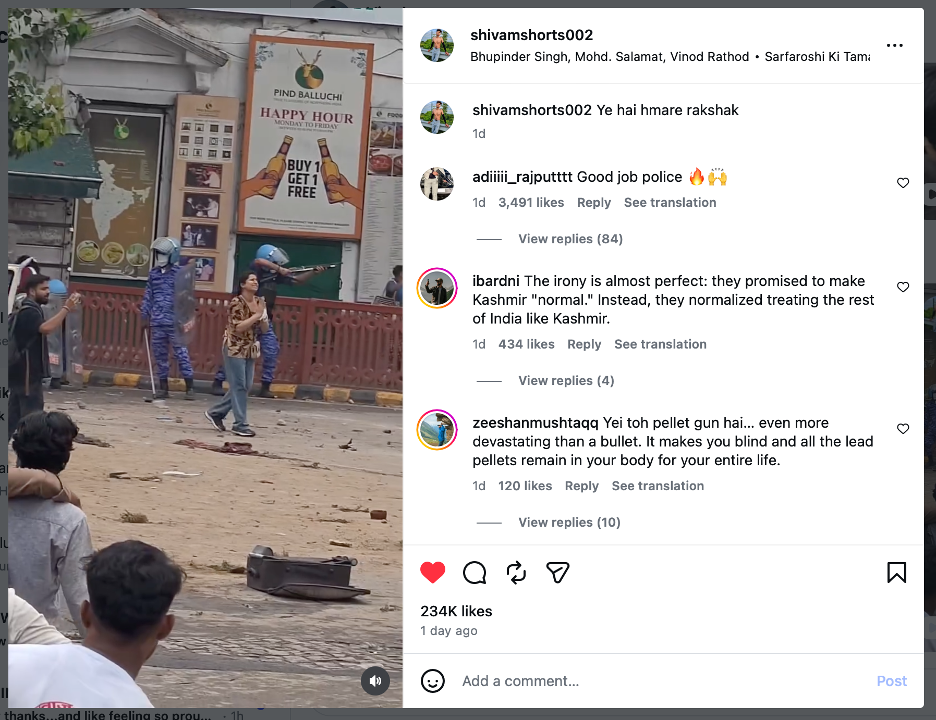
The RAF or the CRPF has not confirmed the use of pellet guns or rubber bullets on July 20. However, five cases of pellet gun injury have been found so far. The victims’ testimonies place them at a particular area, Palika Bazar, at around 4-5 pm. This area is close to the Jantar Mantar protest site, and the crowd of protesters had spilled over there. The Wire has also investigated social media videos to confirm a similar time and place of the suspected pellet gun use. On the day of the Parliament march by 6 PM, the air around Palika Bazar was already thick with tear gas. Twice, police and RAF personnel had charged the crowd with lathis. Protesters answered with stones and slippers.
Woman Hit by “Rubber Bullet”
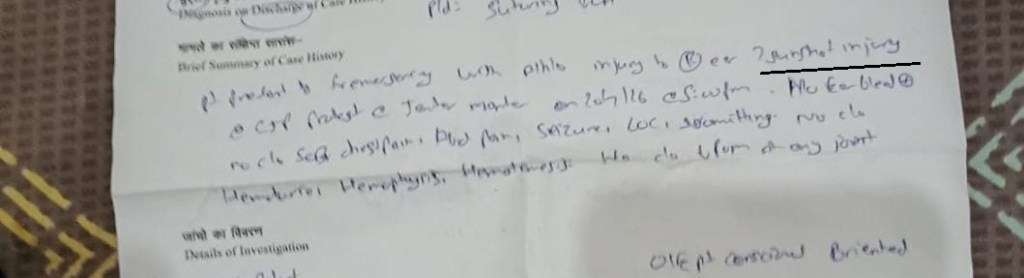
The Polis Project accessed the medico-legal certificate (MLC) of a 32-year-old woman, Nootan Toppo, who was admitted to the Ram Manohar Lohia (RML) hospital after a serious injury at Jantar Mantar; it mentioned “suspected gunshot injury”. A medico-legal certificate is an official medical document that records findings related to an injury or illness and is required in cases of road accidents, physical assaults, and trauma. The MLC report noted trauma to her right ear and mentioned surgery by a “plastic surgeon team”. It further added that she was suffering from chest pain, seizure, loss of consciousness, bleeding, vomiting, among other things.
“On that day, I was at the protest from 10 am in the morning and the protest was continuing peacefully. At around 5 PM, the police started to thrash protestors to make them leave the area. At this point, the police were firing tear gas shells, they were also firing from some kind of gun at us,” said Nooton.
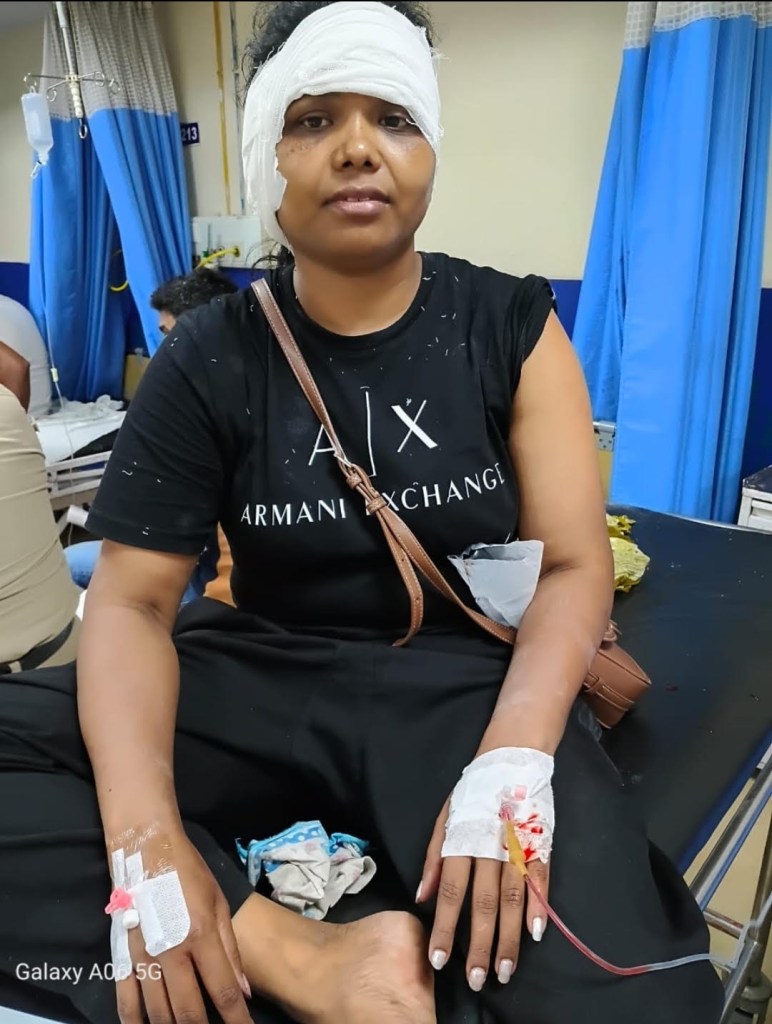
She added, “It was when I was running to look for a safe place to hide that I was hit by something like a rubber-gun shot in my right ear.” Following this, she was rushed to the RML hospital and underwent ear surgery. She is now waiting for her MRI report and worrying about her hearing.
“I can’t hear in my right ear now. I don’t know if it will recover,” she said.
The Polis Project reached out to the RML hospital authorities for a response on the gunshot injury mentioned in the MLC. However, they only confirmed ear laceration, and not its cause: “An MLC was made for ear lobe laceration; no other injury was present according to the records available.”
While Delhi Police has said to the media it did not fire rubber bullets, the central paramilitary forces are yet to confirm or deny whether this too came from them.
Journalist, 19-year-old Student Suffer Pellet Injuries
Like many youngsters in the current protest, 19-year-old Sahil convinced his family he was going to exercise his democratic right to protest as a student, and for students.
Sahil came to Jantar Mantar from Najafgarh, located near the Delhi-Haryana border. He is the eldest among three brothers. His father drives a taxi, and his mother does whatever work she can get to make ends meet. Coming from modest means, education is important to him. When he came to the protest site, he wanted to be heard, like the thousands of students who continue to demonstrate there. Now, the 19-year-old is admitted to AIIMS Delhi, where he is awaiting a second surgery as doctors continue efforts to save the vision in his right eye.
On the afternoon of July 20, the family received a call asking them to reach Lady Hardinge Medical College (at Connaught Place, near the protest area), saying Sahil had fallen ill. Initially, they assumed he had been affected by the heat and did not rush to the hospital. But when they arrived and saw his condition, they were shocked. As Lady Hardinge did not have an eye surgeon available, Sahil was referred to AIIMS Delhi for specialized treatment.
According to his uncle Ajay, doctors told the family that a pellet had pierced Sahil’s right eye and it was removed during the first surgery. However, the injury caused damage to the eye, requiring a second surgery to repair the sclera. “We don’t properly understand medical terms, which is why we are telling you what the doctors have told us. They said Sahil has a pellet injury on his right eye and right side of the face,” he said. When the Polis Project visited Sahil, his right eye was bandaged; he was lying on the hospital bed, surrounded by his family. His face and neck had multiple small pellet-like puncture wounds. “What was his fault?” a family member asked, leaving a suffocating silence hanging in the hospital air.
Opposition leader from the Indian National Congress, Rahul Gandhi, met Sahil on July 24 and held a press meeting with him. On video, Gandhi showed Sahil’s pellet wounds in front of the media. Sahil was discharged from AIIMS on Friday, and he is going to be treated at a different hospital.
Vikas Patwal, a journalist with Indian magazine Outlook, was on the road adjacent to the Stateman building in Connaught Place when tear gas shells were being fired. He had already inhaled the smoke when he saw a gun pointed at him, an Outlook report mentioned. He said he instinctively turned back and felt projectiles hit his backpack and arm.
“I saw a security personnel aiming a gun in my direction, after which I started running in the opposite direction, and when I got hit, there was a burning sensation for a bit in the areas where I got hit, and I instantly washed the area that was hit,” Vikas told The Polis Project.
According to his medico-legal certificate (MLC), he was “assaulted” by a pellet gun at 4 pm on July 20. It mentions him experiencing pain on injury sites, abdominal pain, vomiting, and seizures, among other things. His medical record also shows small puncture holes on his arm, which are typical of pellet gun wounds.
“It looked like metal pellets to me, which were further confirmed by medical reports from Safdurjung Hospital,” Vikas said.
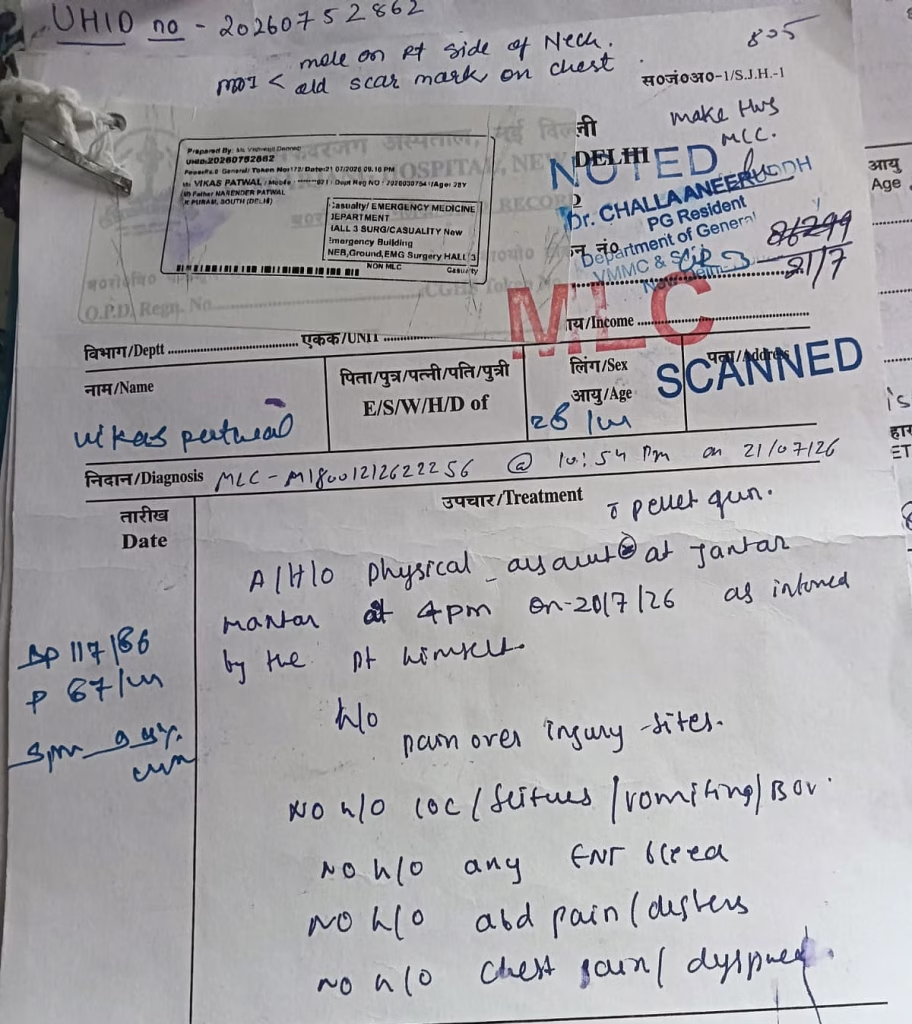
Tired and exhausted, Vikas went home. He visited a private hospital a day after the assault, where he was advised to go to a government one due to the nature of the injury. After initial treatment, Safdarjung Hospital told him that they would not do surgery to remove the pellets from his arm since those would not cause harm, only pain, the journalist said. He was told the same at Lady Hardinge.
Another protester who suffered pellet-like injuries is 25-year-old Irshad Shaikh, an MBA graduate who works in Gurugram, in the National Capital Region of Delhi.
Irshad sustained multiple pellet-like injuries. He underwent surgery at Lady Hardinge Hospital. According to the Indian Express, several pellets hit his face and upper body. The pellets were all surgically removed. Irshad’s friend told the Polis Project that he was hit by an RAF personnel near Palika Bazar around 4.30-5 pm. We were not able to verify the medical records.
On July 22, journalist and fact-checker Mohammed Zubair shared a video of a protester with pellet-like injuries on the side of his torso. This was the fourth case of such injury that emerged after police excesses on July 20. Later, Maktoob Media reported a fifth case after interviewing the victim and checking his MLC. “As I was trying to save myself [from baton charge], suddenly multiple arrow-like bullets were shot at me. I froze and sat down on the ground, and for a few minutes, everything blacked out. They hit the right side of my arm, neck and chest,” the victim, 25-year-old Prashant Kumar Singh, told the publication. He also reported being hit around 4.30 pm, within the time frame when pellet gun firing purportedly took place. The MLC recorded “pellet injury to his right upper limb, chest and adjoining area,” along with scalp and wrist injuries.
Questions have been raised by protesters on why physical force like baton charging, shock batons, and pellet guns were used on them while the primary method of crowd-control, water canon, was skipped despite being deployed at the site. According to the Home Ministry’s own report from 2017, water cannons are “most effective” for crowd control. “Water cannons developed by the DRDO are commonly used in crowd and riot control for dispersal or to prevent movement on particular position and are considered most effective methods to disperse mobs,” according to the report.
Amid mounting pressure from the public and media reports on the pellet gun use, the Rapid Action Force on July 24 initiated a verification exercise into accusations of using disproportionate force, including firing pellet guns, news agency PTI reported, quoting officials.
From Kashmir to Delhi
Shotgun pellets have been most notably used on protesters in Jammu and Kashmir, an erstwhile state comprising Indian-administered Kashmir. Pellet gun wounds have caused partial or complete blindness as well as deaths, even though the Home Ministry categorizes these weapons as “non-lethal” for crowd control, in place of using live ammunition. After being fired, pellets quickly disperse to a wide radius and hit people indiscriminately, including bystanders.
Pellet guns were first used for crowd control after over 100 people were killed in Kashmir during weeks of violent protests in 2010. In 2017, while presenting 88 cases of vision impairment caused by pellet injuries in Kashmir, Amnesty International had said that “Pellet shotguns and the manner in which they have been used in Kashmir violate international standards on the use of force, which state that law enforcement officials may use force “only when strictly necessary and to the extent required for the performance of their duty”.”
According to the United Nations’ ‘Human Rights Guidance on Less-Lethal Weapons in Law Enforcement’, “Multiple projectiles fired at the same time are inaccurate and, in general, their use cannot comply with the principles of necessity and proportionality. Metal pellets, such as those fired from shotguns, should never be used.” It further says, “Kinetic impact projectiles should not be targeted at the head, face or neck. Rubber-coated metal bullets are particularly dangerous and should not be used.” Notably, in the four cases mentioned in this story, the pellet firing hit the face and upper body of protesters. Additionally, the UN classifies these as “less lethal” weapons, as opposed to the Indian state’s “non lethal” categorization.
Pellet guns were more recently used in Manipur, where protesting students were severely injured. The state has been facing civil unrest and ethnic clashes since 2023. Haryana police also fired rubber bullets on the 2024 farmers’ protest near the Punjab-Haryana border.
Court’s Role So Far
After the crackdown on the student protest on July 20, the Supreme Court of India has declined a request for an urgent hearing of a petition on police violence against students, with the Chief Justice remarking: “We are not interested in videos; we don’t have time to watch.” However, the Delhi High Court is hearing the matter of police excesses. It has asked the Delhi Police to submit video evidence of action taken on July 20.
The Supreme Court’s present approach stands in contrast to 2012, when the apex court played a pivotal role in examining the legality of the police action on protesters at Delhi’s Ramlila Maidan. Taking suo motu cognizance of the incident, the Court questioned the use of force against sleeping protesters and underscored that the right to peaceful assembly is a fundamental constitutional guarantee. In its judgment, the Court held that the midnight eviction and excessive use of force were unjustified and disproportionate, observing that the State must balance the maintenance of public order with the protection of citizens’ fundamental rights. The Court ordered compensation for those injured during the operation and reaffirmed that executive authorities are accountable for actions that violate constitutional freedoms. The ruling has since been regarded as a significant precedent on the limits of police power and the protection of democratic dissent.
The current youth protest in Delhi, led by the Cockroach Janata Party, began at Jantar Mantar in June to demand accountability for mismanagement of medical entrance examinations (NEET) and corruption, and grew to include grievances against unemployment and resignation of Education Minister Dharmendra Pradhan. Left student organizations like All India Students Association (AISA) and Students Federation of India (SFI) also joined the protest. It is being seen as a Gen Z-led movement that was sparked after the Supreme Court chief justice compared unemployed youth of India to cockroaches.


Delhi Student Protest: At Least Five Pellet Injuries, Two Forces, One Ministry, and No Answers
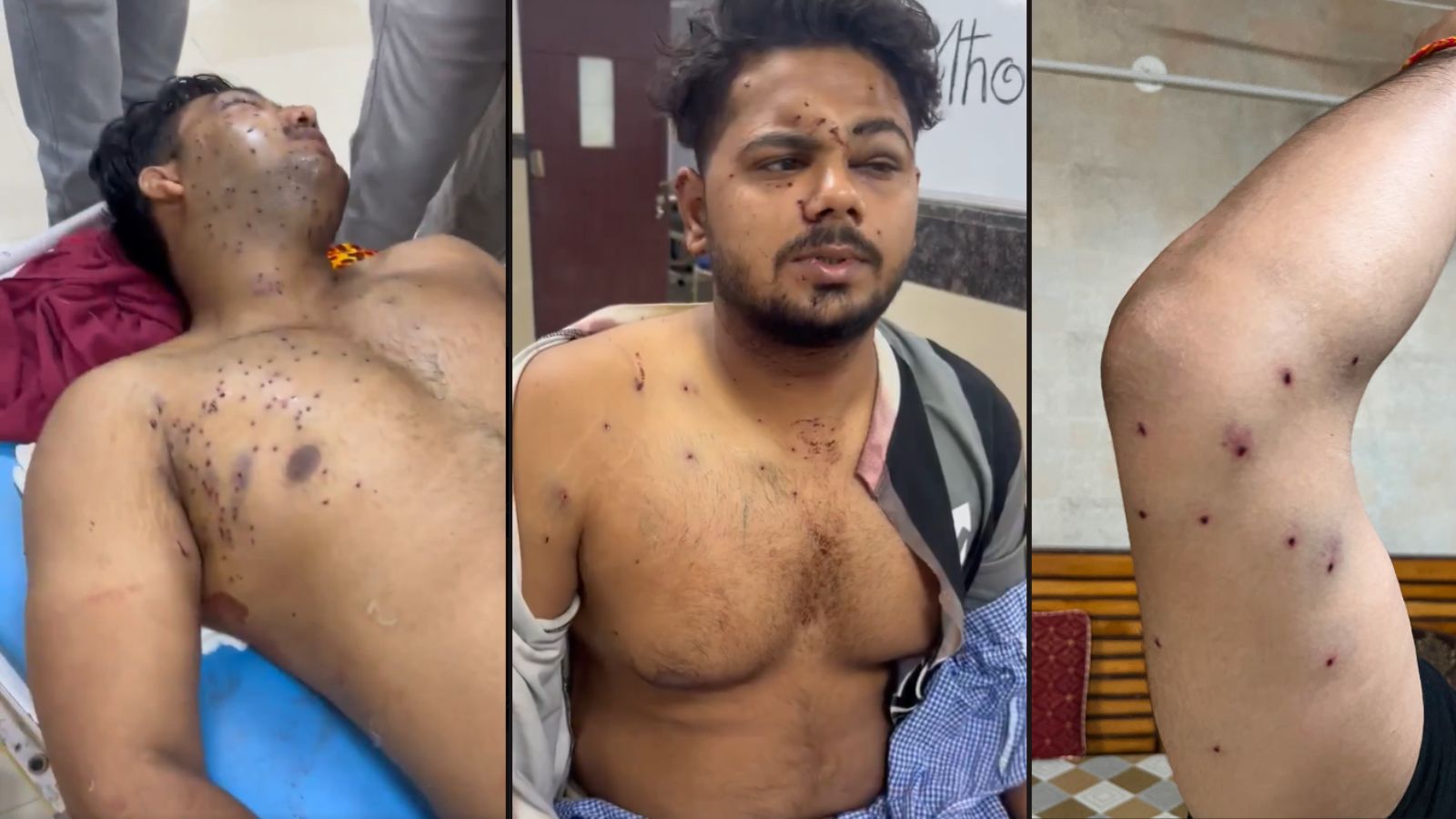
(Left to right) Pellet injuries on Sahil, Irshad, and Vikas. Source: Social Media / Outlook India
“Nothing will happen to me. I’ll return early,” 19-year-old Sahil Lohchab had said before leaving home to join a student protest, his maternal uncle Ajay recalled. Instead, Sahil ended up with pellet wounds on his right eye, face, and body near the protest site in Delhi. He now faces the bleak possibility of losing vision in the affected eye.
Sahil had gone to join a youth-led protest for educational reforms in Delhi. Tens of thousands of protesters swept central Delhi on the morning of July 20 to join a march to Parliament for educational reforms. The Home Ministry deployed a large number of police and paramilitary forces to tackle the massive crowd gathering in and around the Jantar Mantar protest site and stop them from marching to Parliament. While the forces stopped the march, they also cracked down on a largely peaceful protest with batons and tear gas, and fired pellet shotguns in one place. More than 100 protesters were injured and were rushed to Ram Manohar Lohia (RML) hospital, Safdarjung hospital, and Lady Hardinge Medical College (LHMC).
At around 7 PM on July 20, the police and paramilitary also dismantled the protest site where people had been peacefully gathering, and some of them held a hunger strike for 23 days. The brutality of the crackdown on youth protesters, many of them students, raised concerns nationally and internationally, with the Human Rights Watch asking the Indian government to investigate “unnecessary and excessive use of force”.
Pellet guns had never been fired at a protest in Delhi before. But it happened on July 20, near Jantar Mantar and Palika Bazar, a market close to the protest site.
As videos of pellet gun injuries emerged after the crackdown, Delhi Police went on to immediately deny the use of pellet guns and called it misinformation.
However, pellet guns are not used by the Delhi Police. These are used by the Rapid Action Force (RAF), which is part of the Central Reserve Police Force. On July 20, the RAF, in its distinct blue camouflage uniform, many of them without a nametag, was deployed alongside the Delhi Police. Both of them operate under the central Ministry of Home Affairs. There were also riot control vehicles (VAJRA) and water cannons present around the protest site.
The RAF or the CRPF has not confirmed the use of pellet guns or rubber bullets on July 20. However, five cases of pellet gun injury have been found so far. The victims’ testimonies place them at a particular area, Palika Bazar, at around 4-5 pm. This area is close to the Jantar Mantar protest site, and the crowd of protesters had spilled over there. The Wire has also investigated social media videos to confirm a similar time and place of the suspected pellet gun use. On the day of the Parliament march by 6 PM, the air around Palika Bazar was already thick with tear gas. Twice, police and RAF personnel had charged the crowd with lathis. Protesters answered with stones and slippers.
Woman Hit by “Rubber Bullet”
The Polis Project accessed the medico-legal certificate (MLC) of a 32-year-old woman, Nootan Toppo, who was admitted to the Ram Manohar Lohia (RML) hospital after a serious injury at Jantar Mantar; it mentioned “suspected gunshot injury”. A medico-legal certificate is an official medical document that records findings related to an injury or illness and is required in cases of road accidents, physical assaults, and trauma. The MLC report noted trauma to her right ear and mentioned surgery by a “plastic surgeon team”. It further added that she was suffering from chest pain, seizure, loss of consciousness, bleeding, vomiting, among other things.
“On that day, I was at the protest from 10 am in the morning and the protest was continuing peacefully. At around 5 PM, the police started to thrash protestors to make them leave the area. At this point, the police were firing tear gas shells, they were also firing from some kind of gun at us,” said Nooton.
She added, “It was when I was running to look for a safe place to hide that I was hit by something like a rubber-gun shot in my right ear.” Following this, she was rushed to the RML hospital and underwent ear surgery. She is now waiting for her MRI report and worrying about her hearing.
“I can’t hear in my right ear now. I don’t know if it will recover,” she said.
The Polis Project reached out to the RML hospital authorities for a response on the gunshot injury mentioned in the MLC. However, they only confirmed ear laceration, and not its cause: “An MLC was made for ear lobe laceration; no other injury was present according to the records available.”
While Delhi Police has said to the media it did not fire rubber bullets, the central paramilitary forces are yet to confirm or deny whether this too came from them.
Journalist, 19-year-old Student Suffer Pellet Injuries
Like many youngsters in the current protest, 19-year-old Sahil convinced his family he was going to exercise his democratic right to protest as a student, and for students.
Sahil came to Jantar Mantar from Najafgarh, located near the Delhi-Haryana border. He is the eldest among three brothers. His father drives a taxi, and his mother does whatever work she can get to make ends meet. Coming from modest means, education is important to him. When he came to the protest site, he wanted to be heard, like the thousands of students who continue to demonstrate there. Now, the 19-year-old is admitted to AIIMS Delhi, where he is awaiting a second surgery as doctors continue efforts to save the vision in his right eye.
On the afternoon of July 20, the family received a call asking them to reach Lady Hardinge Medical College (at Connaught Place, near the protest area), saying Sahil had fallen ill. Initially, they assumed he had been affected by the heat and did not rush to the hospital. But when they arrived and saw his condition, they were shocked. As Lady Hardinge did not have an eye surgeon available, Sahil was referred to AIIMS Delhi for specialized treatment.
According to his uncle Ajay, doctors told the family that a pellet had pierced Sahil’s right eye and it was removed during the first surgery. However, the injury caused damage to the eye, requiring a second surgery to repair the sclera. “We don’t properly understand medical terms, which is why we are telling you what the doctors have told us. They said Sahil has a pellet injury on his right eye and right side of the face,” he said. When the Polis Project visited Sahil, his right eye was bandaged; he was lying on the hospital bed, surrounded by his family. His face and neck had multiple small pellet-like puncture wounds. “What was his fault?” a family member asked, leaving a suffocating silence hanging in the hospital air.
Opposition leader from the Indian National Congress, Rahul Gandhi, met Sahil on July 24 and held a press meeting with him. On video, Gandhi showed Sahil’s pellet wounds in front of the media. Sahil was discharged from AIIMS on Friday, and he is going to be treated at a different hospital.
Vikas Patwal, a journalist with Indian magazine Outlook, was on the road adjacent to the Stateman building in Connaught Place when tear gas shells were being fired. He had already inhaled the smoke when he saw a gun pointed at him, an Outlook report mentioned. He said he instinctively turned back and felt projectiles hit his backpack and arm.
“I saw a security personnel aiming a gun in my direction, after which I started running in the opposite direction, and when I got hit, there was a burning sensation for a bit in the areas where I got hit, and I instantly washed the area that was hit,” Vikas told The Polis Project.
According to his medico-legal certificate (MLC), he was “assaulted” by a pellet gun at 4 pm on July 20. It mentions him experiencing pain on injury sites, abdominal pain, vomiting, and seizures, among other things. His medical record also shows small puncture holes on his arm, which are typical of pellet gun wounds.
“It looked like metal pellets to me, which were further confirmed by medical reports from Safdurjung Hospital,” Vikas said.
Tired and exhausted, Vikas went home. He visited a private hospital a day after the assault, where he was advised to go to a government one due to the nature of the injury. After initial treatment, Safdarjung Hospital told him that they would not do surgery to remove the pellets from his arm since those would not cause harm, only pain, the journalist said. He was told the same at Lady Hardinge.
Another protester who suffered pellet-like injuries is 25-year-old Irshad Shaikh, an MBA graduate who works in Gurugram, in the National Capital Region of Delhi.
Irshad sustained multiple pellet-like injuries. He underwent surgery at Lady Hardinge Hospital. According to the Indian Express, several pellets hit his face and upper body. The pellets were all surgically removed. Irshad’s friend told the Polis Project that he was hit by an RAF personnel near Palika Bazar around 4.30-5 pm. We were not able to verify the medical records.
On July 22, journalist and fact-checker Mohammed Zubair shared a video of a protester with pellet-like injuries on the side of his torso. This was the fourth case of such injury that emerged after police excesses on July 20. Later, Maktoob Media reported a fifth case after interviewing the victim and checking his MLC. “As I was trying to save myself [from baton charge], suddenly multiple arrow-like bullets were shot at me. I froze and sat down on the ground, and for a few minutes, everything blacked out. They hit the right side of my arm, neck and chest,” the victim, 25-year-old Prashant Kumar Singh, told the publication. He also reported being hit around 4.30 pm, within the time frame when pellet gun firing purportedly took place. The MLC recorded “pellet injury to his right upper limb, chest and adjoining area,” along with scalp and wrist injuries.
Questions have been raised by protesters on why physical force like baton charging, shock batons, and pellet guns were used on them while the primary method of crowd-control, water canon, was skipped despite being deployed at the site. According to the Home Ministry’s own report from 2017, water cannons are “most effective” for crowd control. “Water cannons developed by the DRDO are commonly used in crowd and riot control for dispersal or to prevent movement on particular position and are considered most effective methods to disperse mobs,” according to the report.
Amid mounting pressure from the public and media reports on the pellet gun use, the Rapid Action Force on July 24 initiated a verification exercise into accusations of using disproportionate force, including firing pellet guns, news agency PTI reported, quoting officials.
From Kashmir to Delhi
Shotgun pellets have been most notably used on protesters in Jammu and Kashmir, an erstwhile state comprising Indian-administered Kashmir. Pellet gun wounds have caused partial or complete blindness as well as deaths, even though the Home Ministry categorizes these weapons as “non-lethal” for crowd control, in place of using live ammunition. After being fired, pellets quickly disperse to a wide radius and hit people indiscriminately, including bystanders.
Pellet guns were first used for crowd control after over 100 people were killed in Kashmir during weeks of violent protests in 2010. In 2017, while presenting 88 cases of vision impairment caused by pellet injuries in Kashmir, Amnesty International had said that “Pellet shotguns and the manner in which they have been used in Kashmir violate international standards on the use of force, which state that law enforcement officials may use force “only when strictly necessary and to the extent required for the performance of their duty”.”
According to the United Nations’ ‘Human Rights Guidance on Less-Lethal Weapons in Law Enforcement’, “Multiple projectiles fired at the same time are inaccurate and, in general, their use cannot comply with the principles of necessity and proportionality. Metal pellets, such as those fired from shotguns, should never be used.” It further says, “Kinetic impact projectiles should not be targeted at the head, face or neck. Rubber-coated metal bullets are particularly dangerous and should not be used.” Notably, in the four cases mentioned in this story, the pellet firing hit the face and upper body of protesters. Additionally, the UN classifies these as “less lethal” weapons, as opposed to the Indian state’s “non lethal” categorization.
Pellet guns were more recently used in Manipur, where protesting students were severely injured. The state has been facing civil unrest and ethnic clashes since 2023. Haryana police also fired rubber bullets on the 2024 farmers’ protest near the Punjab-Haryana border.
Court’s Role So Far
After the crackdown on the student protest on July 20, the Supreme Court of India has declined a request for an urgent hearing of a petition on police violence against students, with the Chief Justice remarking: “We are not interested in videos; we don’t have time to watch.” However, the Delhi High Court is hearing the matter of police excesses. It has asked the Delhi Police to submit video evidence of action taken on July 20.
The Supreme Court’s present approach stands in contrast to 2012, when the apex court played a pivotal role in examining the legality of the police action on protesters at Delhi’s Ramlila Maidan. Taking suo motu cognizance of the incident, the Court questioned the use of force against sleeping protesters and underscored that the right to peaceful assembly is a fundamental constitutional guarantee. In its judgment, the Court held that the midnight eviction and excessive use of force were unjustified and disproportionate, observing that the State must balance the maintenance of public order with the protection of citizens’ fundamental rights. The Court ordered compensation for those injured during the operation and reaffirmed that executive authorities are accountable for actions that violate constitutional freedoms. The ruling has since been regarded as a significant precedent on the limits of police power and the protection of democratic dissent.
The current youth protest in Delhi, led by the Cockroach Janata Party, began at Jantar Mantar in June to demand accountability for mismanagement of medical entrance examinations (NEET) and corruption, and grew to include grievances against unemployment and resignation of Education Minister Dharmendra Pradhan. Left student organizations like All India Students Association (AISA) and Students Federation of India (SFI) also joined the protest. It is being seen as a Gen Z-led movement that was sparked after the Supreme Court chief justice compared unemployed youth of India to cockroaches.