





Naseem Bano had just finished sweeping our room when I asked her to tell me the story she had told earlier, so I could record it this time.
“Oh, you want to interview me?” she asked, a smile breaking across her face. Bano is a cheerful woman in her late 50s, a domestic worker who has supported herself in Karachi for over 25 years and has worked in our house for as long as I can remember. We have talked for years at the dining table, over parathas and Pepsi, about religion, marriage, parenting, and whatever else came up. This story had surfaced in one of those conversations. The only new thing that day was the recorder.
She told me things she has never told her own mother. It took decades of trust for any of this to be said out loud, which is why so little of what happens to women like her ever makes it into a record.
Sitting on the edge of the bed, one hand braced against the mattress and the other pressed to her bosom, she reminisced about her early marital memories. “For the first two months of my marriage, everything seemed fine,” she said. “However, things changed when I became pregnant.”
It was October 6, 1995, her nephew’s birthday. Bano was lying down with severe pain below her belly, feeling as if it was the “last day of her life”. Her husband was at work, whereas her two sisters-in-law, two brothers-in-law, and her father-in-law were at home.
When her husband’s aunt, a regular visitor to the house, raised the issue with the father-in-law that Bano needed to be taken to the hospital, he reportedly snapped at her. “Don’t talk to me about this,” he told her. “Talk to my daughters.” But the daughters did not bother much about it.
Bano’s younger sister-in-law told her that the matter had already been settled, and that they would take her to the doctor in the evening. In the evening, they said they would not take her where she wanted to go. She refused to go with them and started crying, calling for her mother. Coincidentally, her mother arrived that afternoon to invite the family to an event and said she would take her along. Her father-in-law would not allow it. “Wait until her husband comes.”
When her husband came home, he put it off. “Not today. Go tomorrow. It’s late; something might happen [to the baby].” That night they argued. He told her she would not be going the next day either, and threatened to call her family and tell them she had died. “If my family has no right to take me,” she said, “then I might as well be dead to them.”
The next day her mother came on her own, and in front of her, he behaved as though nothing was wrong. When he tried to stop Bano again, she told him nobody could stop her now, and left.
By the time she reached her mother’s home, her condition had worsened so much that her mother took her to the hospital. “If you had come earlier, we would have been able to save your child,” the doctor told her. By three in the morning, she had lost the baby.
She fell silent. Her face changed as she spoke of the loss of her first child. When her husband finished work, he came to her mother’s place and found out about the miscarriage. He didn’t speak a word. “I wanted him to confront his family, but he didn’t,” Bano said. They never spoke about it again.
Bano also narrated her daughter Maria Tabassum’s story. “Everything was fine the first month,” she said. Tabassum’s husband had been working alongside his father until then. After that, he stopped, and Tabassum took on domestic work to cover household expenses. She said nothing to her mother at first. “She never told me, just like I never told my mother,” Bano said. “She tolerated everything patiently.” But after a few visits, Bano worked it out. She watched her daughter’s sisters-in-law goad their brother into fighting with his wife.
The neighbors would fill in for her. Her girl earned, they reportedly told Bano, she did the housework too, and she still got talked down to. Later Tabassum set up her own household and kitchen, separate from that of her in-laws. Then one day Tabassum’s sister-in-law accused Bano of getting her brother addicted to maawa (a preparation of tobacco and areca). Tabassum said he had been using it before the wedding, which led to an argument. None of this was violence yet.
According to Bano, Tabassum’s husband, who had been sleeping through all of it, got up and, without trying to know the details of the argument, started hitting his wife. When Bano confronted her son-in-law, he blamed it on his sisters and asked who else he was supposed to take his anger out on if not his wife.
Later, upon Bano’s insistence, the couple moved out, but that changed little. His family kept telling him to leave her, and he kept coming home and taking it out on his wife. He hit her again. All hell broke loose when Bano, on her next visit, found Tabassum unable to walk properly.
“I was alarmed,” she said. “As a mother, it broke me.” A few weeks later Tabassum opted for a khula. Neither her husband nor anyone from his family came to talk to Bano afterward.
Neither woman was hit first. Bano lost a pregnancy to a household that would not move, and a husband who said nothing about it for 30 years. Tabassum was earning, running the house, and being talked down to by people who told her mother about it before she did. The hitting came later, out of an argument he had slept through. By the time there was anything a court would recognize as evidence, both marriages had already been years in the making. This is the usual order. As women’s rights advocate Sana Raza explains, “psychological abuse and physical violence are frequently interconnected… in many cases, psychological abuse precedes the onset of physical violence.”
In other marriages it never reaches that point, and never has to. Seven years into the marriage, on the first day of Eid at her in-laws’ home in Pakistan, Aamna Siddiqui* asked for a pizza. Her husband snapped. “I was humiliated and insulted for my existence and how trash my family is,” she said. His family sided with him. Siddiqui survived a 14-year marriage and had moved to Dubai after her nikah.
In the early months, control appeared as care. Her husband monitored her movements, her conversations, her expenses. “I just thought it was very normal… that’s what a husband is supposed to do… maybe he is just possessive,” she said. Permission existed on paper but not in practice. “I would always have to seek his permission and approval; hence I wasn’t ever able to meet anyone nor attend any events.”
Over time, he began twisting things she had said in arguments until she stopped trusting herself. “I would always be called a liar, a drama queen, and a mentally sick woman,” Siddiqui said. She had young children and no income of her own, so leaving him wasn’t an option, and that dependence was not accidental. When she tried to ask for help, she ran into people who believed her husband instead, because of how he behaved in front of outsiders. “He would be the nicest, kindest, most generous and supportive husband ever,” she said. “No one could suspect a thing.”
Saira Amjad*, also settled in Dubai, recounted similar patterns. Her husband convinced her that her family was using her, that they loved her for her money, and that he was the only one who cared.
“After we got married, he said he would manage my money and savings, and all expenses too,” she said. He put it as one of the conditions she had to meet to avoid divorce. He complained that her parents had not given his parents good enough gifts at the wedding, and demanded an account of what she had spent, including whether she had paid to send her brother to Canada. When she refused, he said he would divorce her unless her parents went and sought forgiveness from him for the wedding gifts. “My mother had a stroke after hearing all this,” Amjad said.
A meeting was arranged in Pakistan with her father, a relative acting as a neutral party, and his parents. It settled nothing. Amjad said her father advised her not to worry about her parents and to save her married life.
Amjad earned more than her husband. Siddiqui had no income of her own. The control was the same. “He said I was awful with money. If there wasn’t a receipt for even a bottle of water, he would accuse me of overspending,” said Siddiqui.
These are four women in four marriages, but the archetype of a husband is more or less the same: a spouse who monitors, who twists, and in some cases manipulates his wife against her family. He is also, in both accounts, a man people like. Amjad says hers was “the most lovable and charming person in the room.”
Survivors internalize it. Siddiqui stopped recognizing herself and concluded she was at fault. And when a woman can’t trust her own memory, how is she to prove anything in court? “Psychological damage is invisible,” says clinical psychologist Absar Fatima. “So its severity is often underestimated.”
“Cruelty” in a Patriarchal Courtroom
None of what Bano and her daughter lived through would have counted as evidence of anything. Family courts have largely depended on visible indicators of harm. “Within the traditional framework, courts mainly relied on physical domestic violence as a ground for dissolution of marriage under the head of cruelty,” explains Mahbano Kazmi, a Lahore-based barrister and lecturer at Pakistan College of Law. Emotional degradation, humiliation and controlling behavior were dismissed as “bedroom crimes” rather than abuse.
This extended into courtroom practice. Assistant Attorney General of Pakistan Zahrah Vayani notes that judges frequently asked a single question that shaped the direction of a case: “Have you filed a complaint with the police station?” Without an FIR or medical certificate, cases would collapse into what she describes as a “he says, she says situation,” where psychological abuse carried little evidentiary weight.
Why Now? The Moment Behind the Judgment
In recent years, public outrage over cases such as Qandeel Baloch, Noor Mukadam, and 17-year-old TikToker Sana Yousaf has forced people to confront how normalized violence is inside homes.
Tehrik-e-Niswan Cultural Action Group has been staging women’s stories in Karachi since 1979 on domestic abuse, forced marriage, and silence inside homes. “Almost all women face psychological abuse in their lives… from a young age… all of this is psychological abuse, and this is rampant,” said Sheema Kermani, a women’s-rights activist and the group’s founder.
The Aurat March, which began in 2018, took those same conversations into the streets. Marchers were mocked, attacked, and taken to court over their slogans, but they kept marching. This ruling did not come from a vacuum. It is a result of 40 years of women refusing to let these conversations die.
The ruling carries added weight because it comes from Justice Ayesha Malik, the first woman to sit on Pakistan’s Supreme Court. On the Lahore High Court, she declared the two-finger test in rape cases illegal and degrading, and fought against the idea that a rape victim has to physically resist for it to count as rape.
As Kermani puts it, “all these efforts… have certainly created an environment whereby this particular judgment was made possible.”
The Ruling: What the Supreme Court Actually Said
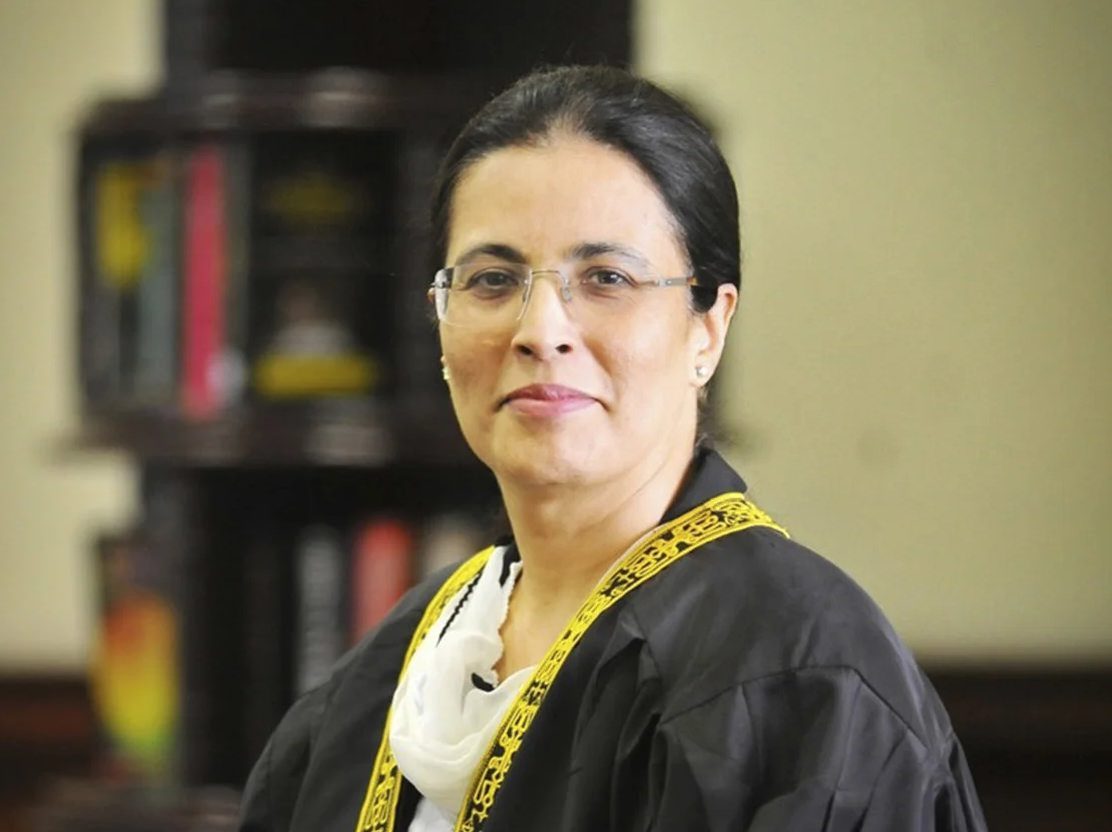
On October 25, 2025, Justice Ayesha Malik of the Supreme Court of Pakistan issued a 17-page ruling that expanded the legal definition of cruelty within marriage. It came out of one woman’s eight-year case.
Khula and dissolution both end a marriage through a family court, but they cost a woman differently. Khula is for a woman who wants out without alleging fault, and she pays for it by surrendering her dower; dissolution is for when the fault is his, and she keeps what she is owed.
Seema Hanif Khan asked a family court in 2017 to dissolve her marriage on the basis of cruelty, her husband’s failure to maintain her, and his second marriage. The court ruled on none of the three and, in July 2019, gave her khula instead, which she had not asked for, and directed her to return the gold and the plot she was owed as dower. Her appeal was dismissed in October 2020. In 2024, when she went to the Peshawar High Court with her petition, they dismissed it too, holding that her husband’s consent was needed. The Supreme Court set that order aside in October 2025, eight years after she first walked into a family court. Justice Ayesha A. Malik wrote the judgment and held that she had proved all three grounds and was therefore entitled to dissolution, with her dower intact.
As per the court ruling, cruelty under the Dissolution of Muslim Marriages Act (DMMA), 1939, is not limited to physical beatings. It now includes psychological, verbal, and emotional abuse, including behaviors such as intimidation, neglect, coercion, humiliation, belittlement, and false accusations of infidelity.
The Court did not remove the need to prove cruelty. What it said is that family courts had been asking for the wrong kind of proof. A family case is a civil case, so a woman only has to show that her account is more likely true than not. She does not have to produce injuries, an FIR, or a medical report for every incident. Abuse inside a home, the Court noted, usually happens in private, where there are no witnesses.
The Court also said that khula cannot be given to a woman who has not asked for it. Khula depends on the wife’s consent. A family court cannot hand it to her instead of ruling on the grounds she actually brought. Before she gives up her dower, the court must record her consent and ensure she understands what she is losing.
Judges are also told to apply a gender lens to understand the social realities women live in, and the different ways they experience harm, instead of treating it as ordinary marital conflict. The judgment is unusually direct about language. The family court had called Khan a “disobedient” and a “self-deserting wife”, and said she had brought the second marriage on herself. The Supreme Court said words like these judge women by how well they obey, and that courts have to stop using them.
What may change and what may not
At its strongest, the judgment may make it easier for women to seek divorce on grounds of psychological and verbal abuse, claims previously dismissed at the threshold.
“Many suits for dissolution of marriage based on cruelty were routinely converted into khula, particularly where judges considered the evidence ‘insufficient.’ This conversion had serious consequences because khula traditionally requires waiver of dower,” said Waiza Rafique, an advocate of Higher Courts and UN Global Peace Laureate. The Supreme Court has now called that practice unlawful. Tabassum took khula and gave up her dower. Amjad’s khula took four years. Neither woman got a cruelty finding.
Vayani is measured about what actually changes for men. “They are held a bit more accountable,” she said, “but only a tiny bit more. I don’t think the whole system has changed drastically at all. Even after this judgment, it is what it is.” Where psychological cruelty is proven, it travels: “That judgment can be used in any court of law in any proceedings afterward,” including to win custody away from him.
Otherwise, the ruling mostly gives his wife a faster, cheaper exit. It isn’t filing that stops anyone: a standard case requires a judicial ticket of Rs 15. What costs is time.
“The National Judicial Policy says family cases should ideally wrap up in six months, or 11 months at most,” says a serving civil judge in Karachi, who requested not to be named. “In reality, contested cruelty cases run much longer. Just sending official notices through the five required modes takes three to four months.” Reconciliation before trial often runs another six or seven months, mostly because the other side delays or does not turn up. Most of the first year is gone before a cruelty claim is heard, and none of that changes because the Supreme Court has redefined cruelty.
While a woman doesn’t have to attend every hearing, only to file, give evidence and be cross-examined, those days still cost a daily-wage worker her pay. In court practice, the judge said, dissolution suits on the ground of cruelty come mostly from women in the upper-middle and upper classes. Vayani puts the rest bluntly: the judgment talks about a gender lens, but many judges do not apply it.
The challenge is not the law but how it is applied. Rafique points to “deeply entrenched patriarchy” and a disconnect between legal principles and courtroom realities. Vayani puts it more bluntly: the judgment talks about a gender lens, but many judges do not apply it. The ruling binds every family court in the country whether a woman gets the benefit of it still depends on which district she files in and which judge she draws.
There are signs this may be changing. “After the Supreme Court judgment, I received a case order where damages of about 1,500,000 PKR (about $5,415) were awarded to a survivor of psychological abuse by her husband under the Protection of Women against Violence Act,” Kazmi said. “Clearly, the courts realize that most of the scars left by an abusive marriage cannot be seen.” Vayani calls it an outlier, and says whether it becomes a route survivors can rely on depends on how individual judges apply it.
This ruling won’t make courts fairer overnight, nor homes safer. It tells a woman that what she is living through has a name and it counts, for now, mostly if she can afford to say so in a courtroom.
Names have been changed at the request of the women, who asked not to be identified.


Pakistan’s Supreme Court Rules Psychological Abuse Is Cruelty in Marriage
Pakistan’s Supreme Court says cruelty in marriage includes psychological and verbal abuse. Four women’s stories show what the ruling changes, and for whom.
Naseem Bano had just finished sweeping our room when I asked her to tell me the story she had told earlier, so I could record it this time.
“Oh, you want to interview me?” she asked, a smile breaking across her face. Bano is a cheerful woman in her late 50s, a domestic worker who has supported herself in Karachi for over 25 years and has worked in our house for as long as I can remember. We have talked for years at the dining table, over parathas and Pepsi, about religion, marriage, parenting, and whatever else came up. This story had surfaced in one of those conversations. The only new thing that day was the recorder.
She told me things she has never told her own mother. It took decades of trust for any of this to be said out loud, which is why so little of what happens to women like her ever makes it into a record.
Sitting on the edge of the bed, one hand braced against the mattress and the other pressed to her bosom, she reminisced about her early marital memories. “For the first two months of my marriage, everything seemed fine,” she said. “However, things changed when I became pregnant.”
It was October 6, 1995, her nephew’s birthday. Bano was lying down with severe pain below her belly, feeling as if it was the “last day of her life”. Her husband was at work, whereas her two sisters-in-law, two brothers-in-law, and her father-in-law were at home.
When her husband’s aunt, a regular visitor to the house, raised the issue with the father-in-law that Bano needed to be taken to the hospital, he reportedly snapped at her. “Don’t talk to me about this,” he told her. “Talk to my daughters.” But the daughters did not bother much about it.
Bano’s younger sister-in-law told her that the matter had already been settled, and that they would take her to the doctor in the evening. In the evening, they said they would not take her where she wanted to go. She refused to go with them and started crying, calling for her mother. Coincidentally, her mother arrived that afternoon to invite the family to an event and said she would take her along. Her father-in-law would not allow it. “Wait until her husband comes.”
When her husband came home, he put it off. “Not today. Go tomorrow. It’s late; something might happen [to the baby].” That night they argued. He told her she would not be going the next day either, and threatened to call her family and tell them she had died. “If my family has no right to take me,” she said, “then I might as well be dead to them.”
The next day her mother came on her own, and in front of her, he behaved as though nothing was wrong. When he tried to stop Bano again, she told him nobody could stop her now, and left.
By the time she reached her mother’s home, her condition had worsened so much that her mother took her to the hospital. “If you had come earlier, we would have been able to save your child,” the doctor told her. By three in the morning, she had lost the baby.
She fell silent. Her face changed as she spoke of the loss of her first child. When her husband finished work, he came to her mother’s place and found out about the miscarriage. He didn’t speak a word. “I wanted him to confront his family, but he didn’t,” Bano said. They never spoke about it again.
Bano also narrated her daughter Maria Tabassum’s story. “Everything was fine the first month,” she said. Tabassum’s husband had been working alongside his father until then. After that, he stopped, and Tabassum took on domestic work to cover household expenses. She said nothing to her mother at first. “She never told me, just like I never told my mother,” Bano said. “She tolerated everything patiently.” But after a few visits, Bano worked it out. She watched her daughter’s sisters-in-law goad their brother into fighting with his wife.
The neighbors would fill in for her. Her girl earned, they reportedly told Bano, she did the housework too, and she still got talked down to. Later Tabassum set up her own household and kitchen, separate from that of her in-laws. Then one day Tabassum’s sister-in-law accused Bano of getting her brother addicted to maawa (a preparation of tobacco and areca). Tabassum said he had been using it before the wedding, which led to an argument. None of this was violence yet.
According to Bano, Tabassum’s husband, who had been sleeping through all of it, got up and, without trying to know the details of the argument, started hitting his wife. When Bano confronted her son-in-law, he blamed it on his sisters and asked who else he was supposed to take his anger out on if not his wife.
Later, upon Bano’s insistence, the couple moved out, but that changed little. His family kept telling him to leave her, and he kept coming home and taking it out on his wife. He hit her again. All hell broke loose when Bano, on her next visit, found Tabassum unable to walk properly.
“I was alarmed,” she said. “As a mother, it broke me.” A few weeks later Tabassum opted for a khula. Neither her husband nor anyone from his family came to talk to Bano afterward.
Neither woman was hit first. Bano lost a pregnancy to a household that would not move, and a husband who said nothing about it for 30 years. Tabassum was earning, running the house, and being talked down to by people who told her mother about it before she did. The hitting came later, out of an argument he had slept through. By the time there was anything a court would recognize as evidence, both marriages had already been years in the making. This is the usual order. As women’s rights advocate Sana Raza explains, “psychological abuse and physical violence are frequently interconnected… in many cases, psychological abuse precedes the onset of physical violence.”
In other marriages it never reaches that point, and never has to. Seven years into the marriage, on the first day of Eid at her in-laws’ home in Pakistan, Aamna Siddiqui* asked for a pizza. Her husband snapped. “I was humiliated and insulted for my existence and how trash my family is,” she said. His family sided with him. Siddiqui survived a 14-year marriage and had moved to Dubai after her nikah.
In the early months, control appeared as care. Her husband monitored her movements, her conversations, her expenses. “I just thought it was very normal… that’s what a husband is supposed to do… maybe he is just possessive,” she said. Permission existed on paper but not in practice. “I would always have to seek his permission and approval; hence I wasn’t ever able to meet anyone nor attend any events.”
Over time, he began twisting things she had said in arguments until she stopped trusting herself. “I would always be called a liar, a drama queen, and a mentally sick woman,” Siddiqui said. She had young children and no income of her own, so leaving him wasn’t an option, and that dependence was not accidental. When she tried to ask for help, she ran into people who believed her husband instead, because of how he behaved in front of outsiders. “He would be the nicest, kindest, most generous and supportive husband ever,” she said. “No one could suspect a thing.”
Saira Amjad*, also settled in Dubai, recounted similar patterns. Her husband convinced her that her family was using her, that they loved her for her money, and that he was the only one who cared.
“After we got married, he said he would manage my money and savings, and all expenses too,” she said. He put it as one of the conditions she had to meet to avoid divorce. He complained that her parents had not given his parents good enough gifts at the wedding, and demanded an account of what she had spent, including whether she had paid to send her brother to Canada. When she refused, he said he would divorce her unless her parents went and sought forgiveness from him for the wedding gifts. “My mother had a stroke after hearing all this,” Amjad said.
A meeting was arranged in Pakistan with her father, a relative acting as a neutral party, and his parents. It settled nothing. Amjad said her father advised her not to worry about her parents and to save her married life.
Amjad earned more than her husband. Siddiqui had no income of her own. The control was the same. “He said I was awful with money. If there wasn’t a receipt for even a bottle of water, he would accuse me of overspending,” said Siddiqui.
These are four women in four marriages, but the archetype of a husband is more or less the same: a spouse who monitors, who twists, and in some cases manipulates his wife against her family. He is also, in both accounts, a man people like. Amjad says hers was “the most lovable and charming person in the room.”
Survivors internalize it. Siddiqui stopped recognizing herself and concluded she was at fault. And when a woman can’t trust her own memory, how is she to prove anything in court? “Psychological damage is invisible,” says clinical psychologist Absar Fatima. “So its severity is often underestimated.”
“Cruelty” in a Patriarchal Courtroom
None of what Bano and her daughter lived through would have counted as evidence of anything. Family courts have largely depended on visible indicators of harm. “Within the traditional framework, courts mainly relied on physical domestic violence as a ground for dissolution of marriage under the head of cruelty,” explains Mahbano Kazmi, a Lahore-based barrister and lecturer at Pakistan College of Law. Emotional degradation, humiliation and controlling behavior were dismissed as “bedroom crimes” rather than abuse.
This extended into courtroom practice. Assistant Attorney General of Pakistan Zahrah Vayani notes that judges frequently asked a single question that shaped the direction of a case: “Have you filed a complaint with the police station?” Without an FIR or medical certificate, cases would collapse into what she describes as a “he says, she says situation,” where psychological abuse carried little evidentiary weight.
Why Now? The Moment Behind the Judgment
In recent years, public outrage over cases such as Qandeel Baloch, Noor Mukadam, and 17-year-old TikToker Sana Yousaf has forced people to confront how normalized violence is inside homes.
Tehrik-e-Niswan Cultural Action Group has been staging women’s stories in Karachi since 1979 on domestic abuse, forced marriage, and silence inside homes. “Almost all women face psychological abuse in their lives… from a young age… all of this is psychological abuse, and this is rampant,” said Sheema Kermani, a women’s-rights activist and the group’s founder.
The Aurat March, which began in 2018, took those same conversations into the streets. Marchers were mocked, attacked, and taken to court over their slogans, but they kept marching. This ruling did not come from a vacuum. It is a result of 40 years of women refusing to let these conversations die.
The ruling carries added weight because it comes from Justice Ayesha Malik, the first woman to sit on Pakistan’s Supreme Court. On the Lahore High Court, she declared the two-finger test in rape cases illegal and degrading, and fought against the idea that a rape victim has to physically resist for it to count as rape.
As Kermani puts it, “all these efforts… have certainly created an environment whereby this particular judgment was made possible.”
The Ruling: What the Supreme Court Actually Said
On October 25, 2025, Justice Ayesha Malik of the Supreme Court of Pakistan issued a 17-page ruling that expanded the legal definition of cruelty within marriage. It came out of one woman’s eight-year case.
Khula and dissolution both end a marriage through a family court, but they cost a woman differently. Khula is for a woman who wants out without alleging fault, and she pays for it by surrendering her dower; dissolution is for when the fault is his, and she keeps what she is owed.
Seema Hanif Khan asked a family court in 2017 to dissolve her marriage on the basis of cruelty, her husband’s failure to maintain her, and his second marriage. The court ruled on none of the three and, in July 2019, gave her khula instead, which she had not asked for, and directed her to return the gold and the plot she was owed as dower. Her appeal was dismissed in October 2020. In 2024, when she went to the Peshawar High Court with her petition, they dismissed it too, holding that her husband’s consent was needed. The Supreme Court set that order aside in October 2025, eight years after she first walked into a family court. Justice Ayesha A. Malik wrote the judgment and held that she had proved all three grounds and was therefore entitled to dissolution, with her dower intact.
As per the court ruling, cruelty under the Dissolution of Muslim Marriages Act (DMMA), 1939, is not limited to physical beatings. It now includes psychological, verbal, and emotional abuse, including behaviors such as intimidation, neglect, coercion, humiliation, belittlement, and false accusations of infidelity.
The Court did not remove the need to prove cruelty. What it said is that family courts had been asking for the wrong kind of proof. A family case is a civil case, so a woman only has to show that her account is more likely true than not. She does not have to produce injuries, an FIR, or a medical report for every incident. Abuse inside a home, the Court noted, usually happens in private, where there are no witnesses.
The Court also said that khula cannot be given to a woman who has not asked for it. Khula depends on the wife’s consent. A family court cannot hand it to her instead of ruling on the grounds she actually brought. Before she gives up her dower, the court must record her consent and ensure she understands what she is losing.
Judges are also told to apply a gender lens to understand the social realities women live in, and the different ways they experience harm, instead of treating it as ordinary marital conflict. The judgment is unusually direct about language. The family court had called Khan a “disobedient” and a “self-deserting wife”, and said she had brought the second marriage on herself. The Supreme Court said words like these judge women by how well they obey, and that courts have to stop using them.
What may change and what may not
At its strongest, the judgment may make it easier for women to seek divorce on grounds of psychological and verbal abuse, claims previously dismissed at the threshold.
“Many suits for dissolution of marriage based on cruelty were routinely converted into khula, particularly where judges considered the evidence ‘insufficient.’ This conversion had serious consequences because khula traditionally requires waiver of dower,” said Waiza Rafique, an advocate of Higher Courts and UN Global Peace Laureate. The Supreme Court has now called that practice unlawful. Tabassum took khula and gave up her dower. Amjad’s khula took four years. Neither woman got a cruelty finding.
Vayani is measured about what actually changes for men. “They are held a bit more accountable,” she said, “but only a tiny bit more. I don’t think the whole system has changed drastically at all. Even after this judgment, it is what it is.” Where psychological cruelty is proven, it travels: “That judgment can be used in any court of law in any proceedings afterward,” including to win custody away from him.
Otherwise, the ruling mostly gives his wife a faster, cheaper exit. It isn’t filing that stops anyone: a standard case requires a judicial ticket of Rs 15. What costs is time.
“The National Judicial Policy says family cases should ideally wrap up in six months, or 11 months at most,” says a serving civil judge in Karachi, who requested not to be named. “In reality, contested cruelty cases run much longer. Just sending official notices through the five required modes takes three to four months.” Reconciliation before trial often runs another six or seven months, mostly because the other side delays or does not turn up. Most of the first year is gone before a cruelty claim is heard, and none of that changes because the Supreme Court has redefined cruelty.
While a woman doesn’t have to attend every hearing, only to file, give evidence and be cross-examined, those days still cost a daily-wage worker her pay. In court practice, the judge said, dissolution suits on the ground of cruelty come mostly from women in the upper-middle and upper classes. Vayani puts the rest bluntly: the judgment talks about a gender lens, but many judges do not apply it.
The challenge is not the law but how it is applied. Rafique points to “deeply entrenched patriarchy” and a disconnect between legal principles and courtroom realities. Vayani puts it more bluntly: the judgment talks about a gender lens, but many judges do not apply it. The ruling binds every family court in the country whether a woman gets the benefit of it still depends on which district she files in and which judge she draws.
There are signs this may be changing. “After the Supreme Court judgment, I received a case order where damages of about 1,500,000 PKR (about $5,415) were awarded to a survivor of psychological abuse by her husband under the Protection of Women against Violence Act,” Kazmi said. “Clearly, the courts realize that most of the scars left by an abusive marriage cannot be seen.” Vayani calls it an outlier, and says whether it becomes a route survivors can rely on depends on how individual judges apply it.
This ruling won’t make courts fairer overnight, nor homes safer. It tells a woman that what she is living through has a name and it counts, for now, mostly if she can afford to say so in a courtroom.
Names have been changed at the request of the women, who asked not to be identified.