




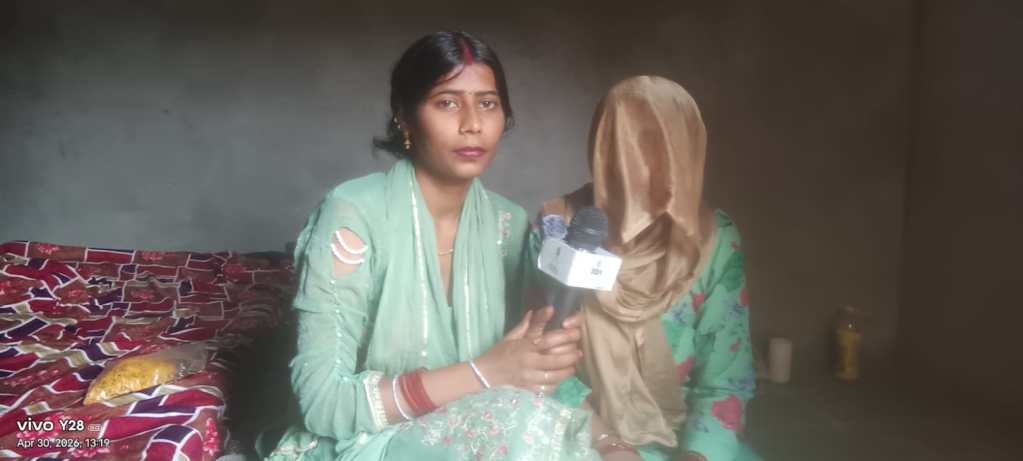
“There is no one to listen to me. What can I do? Now that I have come here, I have to live my life somehow. I have to endure it. This is my compulsion. What else can I say?”
Pushpa* sits beside Shilpa, a reporter with Paro Voice, on a bed in a sparsely furnished room. She pulls her ghoonghat low over her face, concealing her identity as she speaks about the 16 or 17 years she has spent in Haryana, after being brought by the groom’s family from Chhattisgarh, a state about a thousand kilometers away, to marry. She has four children – three daughters and a son.
In the beginning, she said, things were relatively fine. But soon her in-laws began troubling her, asking her to earn and pay for her own expenses alongside the household work she was expected to do. Her husband, who worked in agriculture, sometimes defended her, “We brought her from so far away. Why are you troubling her?” But this did little to change the everyday indignities she faced. When she needed clothes, her sister-in-law would give her clothes that had already been worn. “Who am I supposed to ask? I need clothes to cover my body. My parents are not going to bring them for me.”
The situation worsened when her husband died five years ago. She lost the only person who had sometimes intervened on her behalf. Now, she was alone, bearing the responsibilities of raising four children and supporting herself.
Across Haryana, thousands of women and girls from states such as Bihar, Jharkhand, West Bengal, Assam, and Odisha are brought through cross-regional marriages, facilitated by matchmaking agents and networks spanning across Haryana and these states. Sociologist Reena Kukreja’s research shows that these agents, as well as women’s own kinship and social networks, mediate these marriages. In many cases, prospective grooms paid the agents to arrange for their brides from other states in the country. These women are known locally as Paro or Molki—terms used for women who are bought from elsewhere to Haryana for marriage. But for these women, a marriage was a marriage; they have husbands, they raise children, and build families, even when their husbands’ families paid for them. The circumstances in which they entered these marriages do not erase the relationships and lives they have since built.
A 2019 survey conducted by the Jind-based Selfie-With-Daughter Foundation estimated that nearly 130,000 women had been brought into Haryana as brides from other states. However, the numbers have increased further since then.
Across Regions, Caste Persists
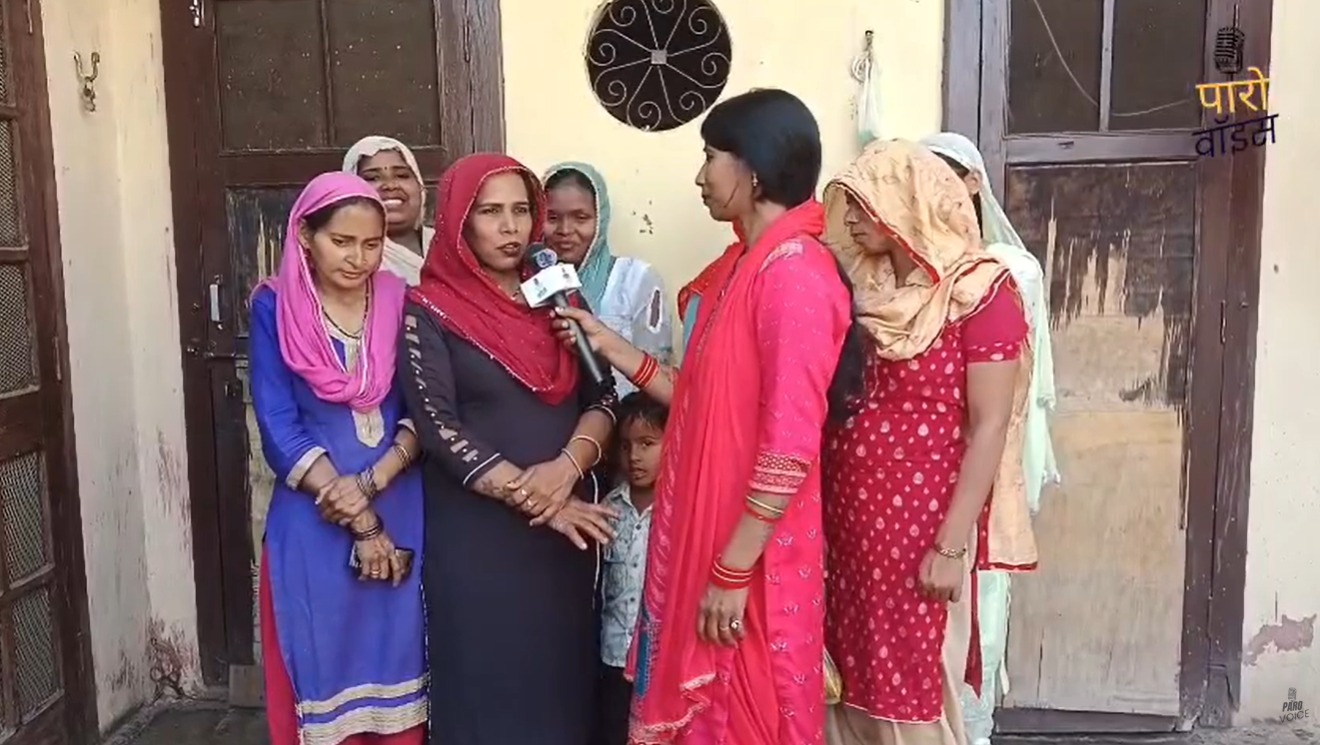
Drawing on his research across 52 villages in Mahendergarh district, sociologist Ankit, an Assistant Professor at SR University, estimates that nearly 200,000 cross-regional brides may now be living in Haryana. Based on a survey of nearly 500 families and extensive field interviews, he argues that these marriages are sustained not only by Haryana’s long history of adverse sex ratios but also by rigid caste endogamy, village exogamy, persistent son preference, and the gendered labor expected of wives. The 2011 Census recorded 879 females per 1,000 males in Haryana, compared with the national average of 943. Among children below six years of age, the gap was wider: 834 girls per 1,000 boys in Haryana, against 919 nationally.
“Marriage is socially indispensable,” Ankit said. “When local marriages become difficult, families look elsewhere.” In the families he studied, marriage served both practical and social functions; it brought a wife who could bear children, manage household work, care for aging parents and tend to livestock, while allowing men to fulfil the social expectations attached to married couples, including performing religious rituals and fulfilling familial and social obligations.
However, crossing regional boundaries does not make caste irrelevant. Ankit found that unfamiliar surnames and caste identities from states such as Odisha and West Bengal were often difficult for local communities to place, leaving these women to be perceived as belonging to “lower castes.” In her study of Dalit cross-regional brides in Jat households, Kukreja argues that the sheer distance often makes the brides’ caste credentials difficult to verify, allowing families to circumvent societal restrictions on inter-caste marriages, while leaving caste hierarchies intact.
For many of these women, distance becomes more than geography. Separated from their natal families and often excluded from local communities, they are spoken about far more often than they are listened to. Paro Voice sought to disrupt this silence by creating a platform where women can tell their own stories.
Now in her early 30s, Shilpa works as a reporter with Paro Voice, a media initiative of the Haryana-based nonprofit organization Empower People. The YouTube channel is run by the cross-regional women themselves, who interview other women who have also come to Haryana through cross-regional marriages. The project emerged from the recognition that behind the label “Paro” were thousands of women carrying stories that rarely entered public conversation except as statistics, rumors, or stigma.
From Paro to Paro Voice
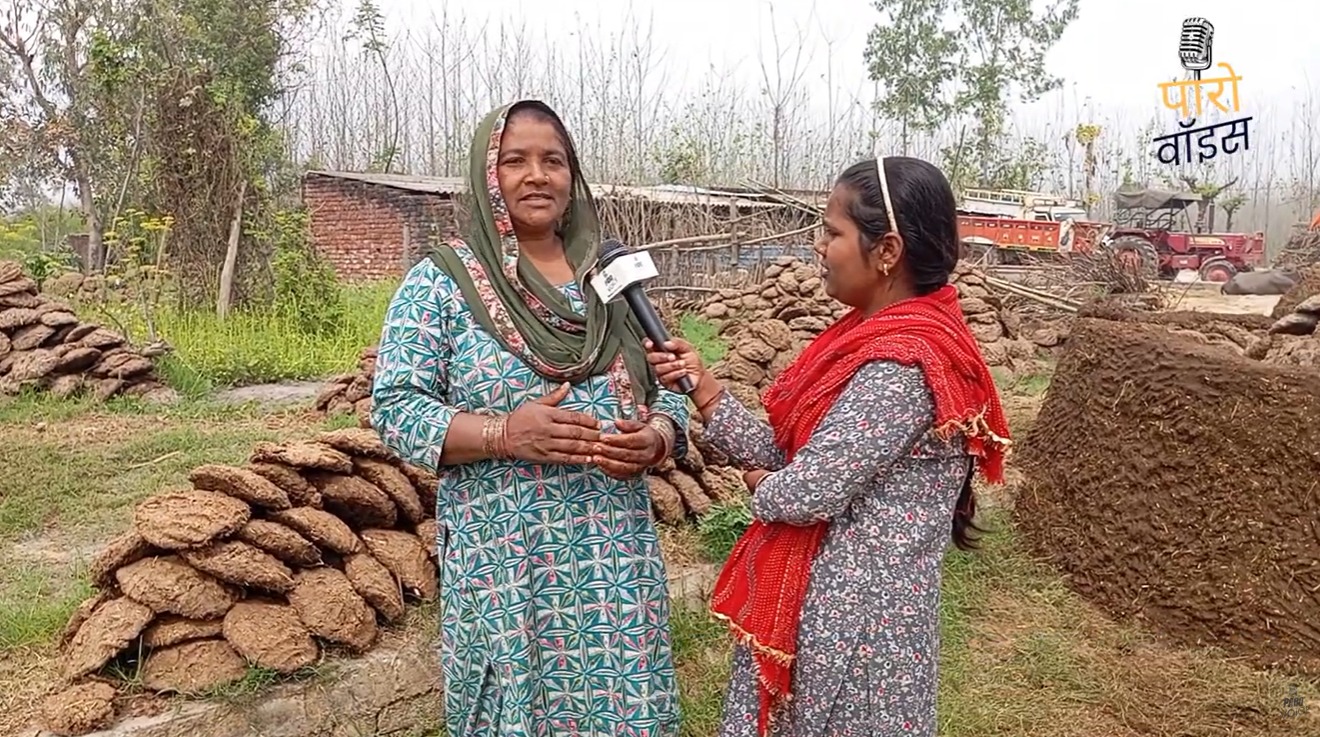
Shilpa herself arrived in Haryana through a cross-regional marriage. Today, alongside Anjum, another cross-regional bride, she documents the lives of women who have traveled similar journeys. Much of her reporting takes place in homes like this one, where women are willing to speak, but not always willing or able to be seen.
“It was a love marriage,” Shilpa said. More than a decade after leaving Ranchi, Jharkhand, for Haryana, a distance of more than a thousand kilometers, she still describes it that way. Her husband had seen her photograph and insisted he would marry only her. He traveled to Jharkhand to meet her family and, despite resistance from relatives, eventually persuaded them to agree to the match.
Yet parts of the story sit uneasily alongside that description. A broker facilitated the marriage. Shilpa was about 16 or 17 when she arrived in Haryana. At the time, neither she nor her family fully understood many conversations because of the language barrier. Years later, she learned that her husband had paid around ₹80,000 (USD 830) to the broker for arranging the match.
In Jharkhand, economic hardship continues to shape the choices available to many young women. Shilpa’s father struggled with alcoholism, she said, and her family could not afford the dowry demands often associated with marriages in their region. Cross-regional marriages, thus, offered a different possibility: that daughters could be married without the financial burden many families feared.
Shilpa’s story is not unusual. It is, however, unusual in one respect. Today, she is among a small group of women documenting the lives of others who underwent similar marriages.
Specter of Child Marriage
Jyoti Goyal, a lawyer, women’s rights activist, and Joint Secretary of Empower People’s Board, explained that many of the women brought into such marriages were children, and that some cases amount to trafficking. Under the Prohibition of Child Marriage Act, 2006, a marriage involving a girl under 18 is is child marriage. In cases where girls are brought across state borders through deception, or where money is paid to arrange their transfer and they are subsequently exploited, those circumstances fall within the aegis of trafficking under Section 143 of the Bharatiya Nyaya Sanhita.
“Marry me to anyone. Even a drunk. Even a disabled man. Just get me married.”
Anjum Bano was only 15 when she said those words.
Her board examinations were underway. Years earlier, her mother had died, leaving behind four children. Anjum and her siblings moved between relatives’ homes, never staying anywhere for long. Sometimes they lived with their grandmother, sometimes with other family members, and sometimes on their own. She remembers adults arguing over who would take responsibility for the children and who would eventually pay for their marriages.
“I was tired,” she said. “We were suffering. Sometimes no one wanted to keep us. We had to manage our own expenses. I thought at least if I got married, I would have a family.”
Within a week, she was married. She was told the prospective groom lived in Haryana, that his parents were dead, and that he lived with his siblings. A few days later, she arrived in Haryana. But much of what she had been told proved to be false.
Her husband’s father was alive. The household was larger than what she had been led to believe. Soon after arriving, she learned that money had been paid to negotiate the marriage. She did not know who had asked for the money or who had received it.
Goyal explained that in such cases, the groom’s family usually pays a middleman, and brides are deliberately kept out of the transaction. This came up during an argument, when a relative reminded her that she had not been brought into the family “for free.”
“If people know money was exchanged, they call her a Paro,” Anjum said. The label does more than describe where a woman comes from; they mark her as an outsider long after marriage.
For years, Anjum believed her experience was hers alone. It was only after meeting other women who had arrived in Haryana through similar marriages that she began to recognize a pattern. The stories differed in details but often converged around isolation, stigma, abandonment, violence, property disputes, and struggles over children. What struck her the most was the loneliness.
“Many of these women have no one,” she said. “No mother, no father, no brother, no sister. They keep everything within themselves.”
Today, she travels across villages with a smartphone and a microphone, documenting the lives of women like herself for Paro Voice.
“As we spent time with women, we realized they were carrying stories that remained confined to private conversations,” said Goyal. “There was a need for an alternative platform where those experiences could be documented by the women themselves. That’s how Paro Voice began. Anjum was the first to be trained in reporting, filming, editing, and running the YouTube channel, and later Shilpa joined. Today, the platform is shaped by the women who report from their own communities.”
Reporting from the Margins

When Shilpa was first asked to become a reporter, she refused.
Members of Empower People repeatedly encouraged her to learn how to record and edit videos, but she ignored them. “Leave it,” she recalled telling them. “Why should I do it?” Only after she was invited to a training program in Delhi did she reluctantly agree to try. Even then, she was terrified. Surrounded by unfamiliar people, she struggled to speak during practice interviews. “When the trainer looked at me, I forgot everything I wanted to say,” she said.
Her learning did not end with the training. One night, after returning home, she was instructed to edit and submit a video before the next morning. Unable to sleep, she asked a relative to help her record a practice clip. Between household chores and caring responsibilities, she spent hours learning the software. “I just edited it however I could,” she said. “Then I sent it.”
Today, Shilpa and Anjum are the two reporters behind Paro Voice.
Many of the women they meet want to speak, but convincing them that it is safe to do so is often the harder task. “Women are scared,” Anjum said. “They worry that if their in-laws find out, they will be thrown out of the house. Some fear their children will be taken away.”
To protect them, Paro Voice has developed its own reporting methods. Faces are hidden behind ghoonghats. Cameras are positioned from behind. Names are withheld. Interviews are often conducted only when husbands, in-laws, or neighbors are away. Sometimes women are taken to another house to talk. The goal, Anjum said, is not simply to record a story but to ensure that telling it does not place a woman in greater danger.
“Our video is not more important than her safety,” she said.
The trust comes partly from the shared experience of the reporters and the interviewees. Being paro women themselves, Shilpa and Anjum know what it means to have lived through the same kind of marriage, displacement and stigma. “When you are ready to listen, the other person becomes ready to speak,” Anjum said.
Over time, women began telling them things they had never spoken about publicly. They spoke about husbands who used drugs, pregnancies endured without medical care, children mocked for being “Bihari” or “Bangali,” and years spent without visiting their natal homes. One woman told Anjum how she had been brought to Haryana as a child and could no longer remember how to find her family. Another described carrying a basket of cow dung on her head while eating rotis on the roadside because she was never given time to rest. In her own account of life in Haryana, Shilpa recalled a summer evening when her young son was restless and crying as night approached. There were dishes still to wash, but no one to hold him while she worked.
Paro Voice’s work has often not been welcomed. Shilpa recalled being accused by a woman’s mother-in-law of earning secret commissions. Another family refused to let her enter their home. Anjum also described an interview abruptly ending when a husband arrived and seized the phone being used for recording. “You are provoking my wife,” he reportedly said and warned Shilpa not to come again.
This was not an isolated incident; Shilpa too faced similar harassment at the hands of family members of women during field interviews. Even in her own home, Shilpa had to fight her husband’s objections when she began reporting. For weeks, arguments followed every training session and field visit. “For a month, I cried when I slept and cried when I woke up,” she said.
Years later, reporting still needs to fit around the demands of the household. After returning home from an interview in Delhi at around 7 p.m., her husband reportedly scolded her for being late. After making dinner, she worked until 4 o’clock in the morning, editing the video she had shot that day.
Anjum also said that her own family still questioned what she gained from spending the day making videos, while people in the village badmouthed her for being seen in other villages. She said the work had damaged her reputation among many people.
Making Space for Possibilities
Yet the work has altered how both women see themselves and how others see them. Anjum recalled meeting women who later sought jobs, started small businesses, or simply began stepping outside their homes after seeing her travel from village to village with a microphone. “You went out and did it,” one woman reportedly told her. “So I thought maybe I could too.”
For the reporters of Paro Voice, the transformation extends beyond the stories they document to the relationships they have built with other women through their reporting. Women who once believed they were alone now find themselves part of a larger conversation, built by other women who know what it means to be called Paro.
For years, the Paro women appeared in public conversations largely as objects of concern, as evidence of Haryana’s skewed sex ratio, victims of trafficking, or statistics in reports about cross-regional marriages. Paro Voice has made these women recognize possibilities beyond their own homes.
Anjum described how she began showing one woman’s interview to others, telling them that the woman’s face was hidden but her voice was still there.
“Slowly, the women began to open up,” Anjum said.
Anjum spoke of a woman who had wanted to become a teacher, but her husband refused to let her work. After meeting Anjum and seeing her channel and interviews, he eventually changed his mind. The woman later reportedly told Anjum, “Because of you, I got a job at the school too.”
Other changes have been less visible but concrete. Another woman who wanted to earn but couldn’t leave home, asked her husband to buy two buffaloes so that she could sell their milk from home. Her husband agreed, and she began earning.
For Anjum, what began as a platform for women to tell stories they had nowhere else to place had grown into something they could claim collectively. “It does not belong to any one woman. It belongs to all the women who have come from outside,” she said.
At the end of my interview with Shilpa, she laughed and asked whether she was going to “go viral” now. She wanted everyone to hear her.
“I just want to get ahead of everyone. I want to make a name for myself,” Shilpa said.
*Name changed on request

They Called Them Paro: How Cross-Regional Brides Built Their Own Newsroom

Brought to Haryana as “Paro” brides, women like Anjum and Shilpa now run Paro Voice, a newsroom documenting the lives of cross-regional brides in their own words.
“There is no one to listen to me. What can I do? Now that I have come here, I have to live my life somehow. I have to endure it. This is my compulsion. What else can I say?”
Pushpa* sits beside Shilpa, a reporter with Paro Voice, on a bed in a sparsely furnished room. She pulls her ghoonghat low over her face, concealing her identity as she speaks about the 16 or 17 years she has spent in Haryana, after being brought by the groom’s family from Chhattisgarh, a state about a thousand kilometers away, to marry. She has four children – three daughters and a son.
In the beginning, she said, things were relatively fine. But soon her in-laws began troubling her, asking her to earn and pay for her own expenses alongside the household work she was expected to do. Her husband, who worked in agriculture, sometimes defended her, “We brought her from so far away. Why are you troubling her?” But this did little to change the everyday indignities she faced. When she needed clothes, her sister-in-law would give her clothes that had already been worn. “Who am I supposed to ask? I need clothes to cover my body. My parents are not going to bring them for me.”
The situation worsened when her husband died five years ago. She lost the only person who had sometimes intervened on her behalf. Now, she was alone, bearing the responsibilities of raising four children and supporting herself.
Across Haryana, thousands of women and girls from states such as Bihar, Jharkhand, West Bengal, Assam, and Odisha are brought through cross-regional marriages, facilitated by matchmaking agents and networks spanning across Haryana and these states. Sociologist Reena Kukreja’s research shows that these agents, as well as women’s own kinship and social networks, mediate these marriages. In many cases, prospective grooms paid the agents to arrange for their brides from other states in the country. These women are known locally as Paro or Molki—terms used for women who are bought from elsewhere to Haryana for marriage. But for these women, a marriage was a marriage; they have husbands, they raise children, and build families, even when their husbands’ families paid for them. The circumstances in which they entered these marriages do not erase the relationships and lives they have since built.
A 2019 survey conducted by the Jind-based Selfie-With-Daughter Foundation estimated that nearly 130,000 women had been brought into Haryana as brides from other states. However, the numbers have increased further since then.
Across Regions, Caste Persists
Drawing on his research across 52 villages in Mahendergarh district, sociologist Ankit, an Assistant Professor at SR University, estimates that nearly 200,000 cross-regional brides may now be living in Haryana. Based on a survey of nearly 500 families and extensive field interviews, he argues that these marriages are sustained not only by Haryana’s long history of adverse sex ratios but also by rigid caste endogamy, village exogamy, persistent son preference, and the gendered labor expected of wives. The 2011 Census recorded 879 females per 1,000 males in Haryana, compared with the national average of 943. Among children below six years of age, the gap was wider: 834 girls per 1,000 boys in Haryana, against 919 nationally.
“Marriage is socially indispensable,” Ankit said. “When local marriages become difficult, families look elsewhere.” In the families he studied, marriage served both practical and social functions; it brought a wife who could bear children, manage household work, care for aging parents and tend to livestock, while allowing men to fulfil the social expectations attached to married couples, including performing religious rituals and fulfilling familial and social obligations.
However, crossing regional boundaries does not make caste irrelevant. Ankit found that unfamiliar surnames and caste identities from states such as Odisha and West Bengal were often difficult for local communities to place, leaving these women to be perceived as belonging to “lower castes.” In her study of Dalit cross-regional brides in Jat households, Kukreja argues that the sheer distance often makes the brides’ caste credentials difficult to verify, allowing families to circumvent societal restrictions on inter-caste marriages, while leaving caste hierarchies intact.
For many of these women, distance becomes more than geography. Separated from their natal families and often excluded from local communities, they are spoken about far more often than they are listened to. Paro Voice sought to disrupt this silence by creating a platform where women can tell their own stories.
Now in her early 30s, Shilpa works as a reporter with Paro Voice, a media initiative of the Haryana-based nonprofit organization Empower People. The YouTube channel is run by the cross-regional women themselves, who interview other women who have also come to Haryana through cross-regional marriages. The project emerged from the recognition that behind the label “Paro” were thousands of women carrying stories that rarely entered public conversation except as statistics, rumors, or stigma.
From Paro to Paro Voice
Shilpa herself arrived in Haryana through a cross-regional marriage. Today, alongside Anjum, another cross-regional bride, she documents the lives of women who have traveled similar journeys. Much of her reporting takes place in homes like this one, where women are willing to speak, but not always willing or able to be seen.
“It was a love marriage,” Shilpa said. More than a decade after leaving Ranchi, Jharkhand, for Haryana, a distance of more than a thousand kilometers, she still describes it that way. Her husband had seen her photograph and insisted he would marry only her. He traveled to Jharkhand to meet her family and, despite resistance from relatives, eventually persuaded them to agree to the match.
Yet parts of the story sit uneasily alongside that description. A broker facilitated the marriage. Shilpa was about 16 or 17 when she arrived in Haryana. At the time, neither she nor her family fully understood many conversations because of the language barrier. Years later, she learned that her husband had paid around ₹80,000 (USD 830) to the broker for arranging the match.
In Jharkhand, economic hardship continues to shape the choices available to many young women. Shilpa’s father struggled with alcoholism, she said, and her family could not afford the dowry demands often associated with marriages in their region. Cross-regional marriages, thus, offered a different possibility: that daughters could be married without the financial burden many families feared.
Shilpa’s story is not unusual. It is, however, unusual in one respect. Today, she is among a small group of women documenting the lives of others who underwent similar marriages.
Specter of Child Marriage
Jyoti Goyal, a lawyer, women’s rights activist, and Joint Secretary of Empower People’s Board, explained that many of the women brought into such marriages were children, and that some cases amount to trafficking. Under the Prohibition of Child Marriage Act, 2006, a marriage involving a girl under 18 is is child marriage. In cases where girls are brought across state borders through deception, or where money is paid to arrange their transfer and they are subsequently exploited, those circumstances fall within the aegis of trafficking under Section 143 of the Bharatiya Nyaya Sanhita.
“Marry me to anyone. Even a drunk. Even a disabled man. Just get me married.”
Anjum Bano was only 15 when she said those words.
Her board examinations were underway. Years earlier, her mother had died, leaving behind four children. Anjum and her siblings moved between relatives’ homes, never staying anywhere for long. Sometimes they lived with their grandmother, sometimes with other family members, and sometimes on their own. She remembers adults arguing over who would take responsibility for the children and who would eventually pay for their marriages.
“I was tired,” she said. “We were suffering. Sometimes no one wanted to keep us. We had to manage our own expenses. I thought at least if I got married, I would have a family.”
Within a week, she was married. She was told the prospective groom lived in Haryana, that his parents were dead, and that he lived with his siblings. A few days later, she arrived in Haryana. But much of what she had been told proved to be false.
Her husband’s father was alive. The household was larger than what she had been led to believe. Soon after arriving, she learned that money had been paid to negotiate the marriage. She did not know who had asked for the money or who had received it.
Goyal explained that in such cases, the groom’s family usually pays a middleman, and brides are deliberately kept out of the transaction. This came up during an argument, when a relative reminded her that she had not been brought into the family “for free.”
“If people know money was exchanged, they call her a Paro,” Anjum said. The label does more than describe where a woman comes from; they mark her as an outsider long after marriage.
For years, Anjum believed her experience was hers alone. It was only after meeting other women who had arrived in Haryana through similar marriages that she began to recognize a pattern. The stories differed in details but often converged around isolation, stigma, abandonment, violence, property disputes, and struggles over children. What struck her the most was the loneliness.
“Many of these women have no one,” she said. “No mother, no father, no brother, no sister. They keep everything within themselves.”
Today, she travels across villages with a smartphone and a microphone, documenting the lives of women like herself for Paro Voice.
“As we spent time with women, we realized they were carrying stories that remained confined to private conversations,” said Goyal. “There was a need for an alternative platform where those experiences could be documented by the women themselves. That’s how Paro Voice began. Anjum was the first to be trained in reporting, filming, editing, and running the YouTube channel, and later Shilpa joined. Today, the platform is shaped by the women who report from their own communities.”
Reporting from the Margins
When Shilpa was first asked to become a reporter, she refused.
Members of Empower People repeatedly encouraged her to learn how to record and edit videos, but she ignored them. “Leave it,” she recalled telling them. “Why should I do it?” Only after she was invited to a training program in Delhi did she reluctantly agree to try. Even then, she was terrified. Surrounded by unfamiliar people, she struggled to speak during practice interviews. “When the trainer looked at me, I forgot everything I wanted to say,” she said.
Her learning did not end with the training. One night, after returning home, she was instructed to edit and submit a video before the next morning. Unable to sleep, she asked a relative to help her record a practice clip. Between household chores and caring responsibilities, she spent hours learning the software. “I just edited it however I could,” she said. “Then I sent it.”
Today, Shilpa and Anjum are the two reporters behind Paro Voice.
Many of the women they meet want to speak, but convincing them that it is safe to do so is often the harder task. “Women are scared,” Anjum said. “They worry that if their in-laws find out, they will be thrown out of the house. Some fear their children will be taken away.”
To protect them, Paro Voice has developed its own reporting methods. Faces are hidden behind ghoonghats. Cameras are positioned from behind. Names are withheld. Interviews are often conducted only when husbands, in-laws, or neighbors are away. Sometimes women are taken to another house to talk. The goal, Anjum said, is not simply to record a story but to ensure that telling it does not place a woman in greater danger.
“Our video is not more important than her safety,” she said.
The trust comes partly from the shared experience of the reporters and the interviewees. Being paro women themselves, Shilpa and Anjum know what it means to have lived through the same kind of marriage, displacement and stigma. “When you are ready to listen, the other person becomes ready to speak,” Anjum said.
Over time, women began telling them things they had never spoken about publicly. They spoke about husbands who used drugs, pregnancies endured without medical care, children mocked for being “Bihari” or “Bangali,” and years spent without visiting their natal homes. One woman told Anjum how she had been brought to Haryana as a child and could no longer remember how to find her family. Another described carrying a basket of cow dung on her head while eating rotis on the roadside because she was never given time to rest. In her own account of life in Haryana, Shilpa recalled a summer evening when her young son was restless and crying as night approached. There were dishes still to wash, but no one to hold him while she worked.
Paro Voice’s work has often not been welcomed. Shilpa recalled being accused by a woman’s mother-in-law of earning secret commissions. Another family refused to let her enter their home. Anjum also described an interview abruptly ending when a husband arrived and seized the phone being used for recording. “You are provoking my wife,” he reportedly said and warned Shilpa not to come again.
This was not an isolated incident; Shilpa too faced similar harassment at the hands of family members of women during field interviews. Even in her own home, Shilpa had to fight her husband’s objections when she began reporting. For weeks, arguments followed every training session and field visit. “For a month, I cried when I slept and cried when I woke up,” she said.
Years later, reporting still needs to fit around the demands of the household. After returning home from an interview in Delhi at around 7 p.m., her husband reportedly scolded her for being late. After making dinner, she worked until 4 o’clock in the morning, editing the video she had shot that day.
Anjum also said that her own family still questioned what she gained from spending the day making videos, while people in the village badmouthed her for being seen in other villages. She said the work had damaged her reputation among many people.
Making Space for Possibilities
Yet the work has altered how both women see themselves and how others see them. Anjum recalled meeting women who later sought jobs, started small businesses, or simply began stepping outside their homes after seeing her travel from village to village with a microphone. “You went out and did it,” one woman reportedly told her. “So I thought maybe I could too.”
For the reporters of Paro Voice, the transformation extends beyond the stories they document to the relationships they have built with other women through their reporting. Women who once believed they were alone now find themselves part of a larger conversation, built by other women who know what it means to be called Paro.
For years, the Paro women appeared in public conversations largely as objects of concern, as evidence of Haryana’s skewed sex ratio, victims of trafficking, or statistics in reports about cross-regional marriages. Paro Voice has made these women recognize possibilities beyond their own homes.
Anjum described how she began showing one woman’s interview to others, telling them that the woman’s face was hidden but her voice was still there.
“Slowly, the women began to open up,” Anjum said.
Anjum spoke of a woman who had wanted to become a teacher, but her husband refused to let her work. After meeting Anjum and seeing her channel and interviews, he eventually changed his mind. The woman later reportedly told Anjum, “Because of you, I got a job at the school too.”
Other changes have been less visible but concrete. Another woman who wanted to earn but couldn’t leave home, asked her husband to buy two buffaloes so that she could sell their milk from home. Her husband agreed, and she began earning.
For Anjum, what began as a platform for women to tell stories they had nowhere else to place had grown into something they could claim collectively. “It does not belong to any one woman. It belongs to all the women who have come from outside,” she said.
At the end of my interview with Shilpa, she laughed and asked whether she was going to “go viral” now. She wanted everyone to hear her.
“I just want to get ahead of everyone. I want to make a name for myself,” Shilpa said.
*Name changed on request