




The humdrum workday of journalist G.V.K. Prasad was interrupted by the chime of a WhatsApp notification. His eyes froze at the first sentence. The name “Renuka” stared back at him. He could no longer read the rest of the message.
It was only two days earlier, March 29, 2025, that 17 Maoist cadres were killed in an encounter in Sukma, a town in Chhattisgarh. But Prasad was sure that Renuka had been staying in the northern part of the Indravati River. It must be a mistake. He immediately dialed a journalist friend. She said she would check the news with comrades in Dantewada.
When she called back, it was to confirm that a woman had died in Belnar village at Bijapur: “They are saying it’s Renu.”
Prasad’s next call came from an unknown number. The Superintendent from the Telangana Police Department informed him that his sister had died in an encounter. The officer said that it was confirmed; he had spoken with Dantewada Superintendent Gaurav Rai, who said that gunfire broke out at 9 am in a forest along the Dantewada-Bijapur district border. The two teams of security cadres ran away. When the encounter ended, the body of a female revolutionary was recovered.
Prasad went home to break the news to his wife, Santoshi. They took the next flight to Raipur from Delhi, stopping at Santoshi’s village in Bastar first. The next morning, they hired a vehicle to Dantewada. Prasad knew these forests well; they had been home for years before he surrendered in 2014. The paths they drove through were familiar; the pattern of staged encounters, even more so.
Prasad pondered over the unsettling speed of the report. The days of bureaucratic delay that usually followed such encounters had vanished, replaced by an immediate identification. The police-recovered items—a handful of clothes, some medicine, one pair of chappals—were barely sufficient for one person. If multiple armed cadres had indeed fled the scene, Prasad wondered, where were their discarded supplies: slippers, water bottles, ammunition? The evidence held only a small, neatly arranged collection.
Prasad knew the clothes were Renuka’s. Even twelve years ago, she had carried the same lungis in her kitbag. But he knew the gun was not hers. She was a spondylitis patient, and her chronic backache meant she rarely carried a weapon. Beside the weapon lay her body, wrapped in a plastic bag and kept for display. Her face was adorned with earrings and a bindi. But Renuka never wore accessories in the field.
Prasad’s ponderings all converged at the same conclusion: Renuka had been living an ordinary life among the villagers, and her encounter was faked.
“Comrade Renuka (alias Chaite) was staying alone in a house in Belnar village, Bhairamgarh block of Bijapur district due to ill health,” the Press Release from the banned Communist Party of India (Maoist) notes. “On receiving this information, the police surrounded the house at 4 am on March 31 and arrested Comrade Chaite. Chhattisgarh and Telangana intelligence department officials interrogated her for 2-3 hours. Between 9 and 10 in the morning, she was taken to the banks of [the] Indravati River and brutally murdered.”
Seven hours later, Prasad and Santoshi reached Dantewada. The postmortem and panchnama took another day and a half. Prasad was finally taken to the mortuary, a small tin shed surrounded by armed policemen. The cold storage unit was not plugged in. He opened the freezer door and was instantly overwhelmed with the foul stench of a corpse left to the mercy of the hot Chattisgarh summer.
Her mouth was foaming with bubbles. Her hands were mutilated, hanging as if they could fall at any moment. The body was already decomposing; it was impossible to identify which scars were from bullets, which from torture, and which from careless handling of her body. Looking at her face, he could not recognize his sister.
He looked down at her feet. Each toe was achingly familiar. He knew then. This was Renuka.
Gummadivelli Renuka: The Fighter and the Firefly
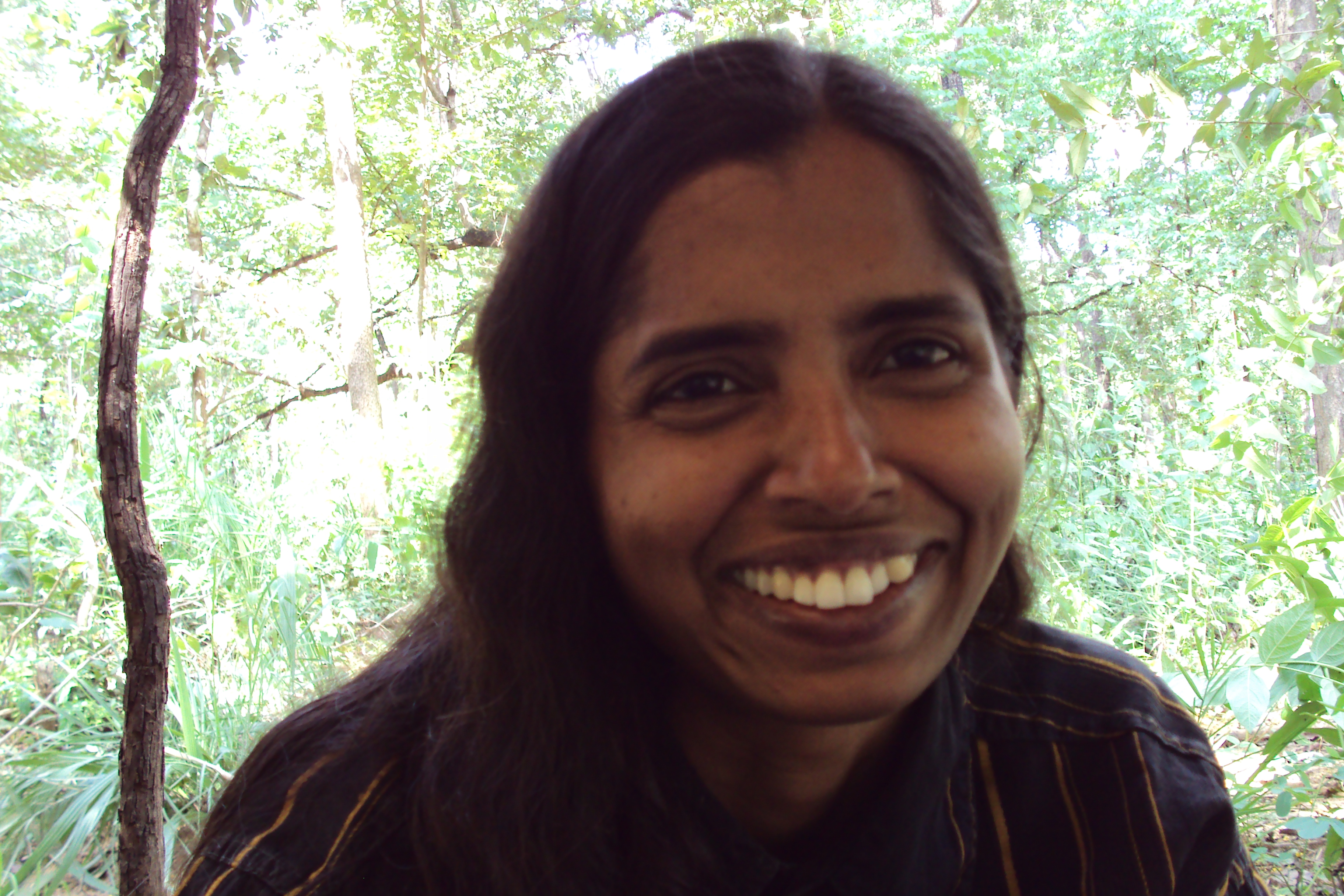
Renuka was a quiet, reserved presence. She was tall and slender. She spoke slowly, softly, and only what was necessary. But in times when silence was not an option, her voice carried no hesitation. Her words were chosen with care and purpose. The measured strength of her voice is preserved in her writings.
Renuka was born in Kadavendi, in the Warangal district of Telangana. In 1984, while she was still in school, her elder brother G.V.K. Prasad left their home to join the revolutionary movement. Renuka completed her 8th and 9th classes in her grandmother’s village, Motkur, and her 10th in Devaruppala.
After completing her intermediate studies, she traveled to Tirupathi to study law. It was at this time that she began actively participating in the women’s movement as a member of the Mahila Shakti (later, Chaitanya Mahila Sangham). Her writings led to her appointment to the editorial board of the Mahila Margam magazine.
By 1995, she became a full-time overground activist (in the party’s terminology, a “Professional Revolutionary”), organizing meetings, providing legal support, and writing stories under the names Nirmala and Zameen. She fell in love with Santosh Reddy, a member of the People’s War Central Committee, and they secretly married within the Party.
On December 2, 1999, Reddy was killed in a police firing within a year and a half of their marriage. Renuka’s tears remained silent. She couldn’t even openly claim their marriage. In the same year, Prasad’s spouse, Sabita, was killed in an encounter. Sabita was an Adivasi woman whose birth name was “Midko,” a Gondi word meaning fireflies.
Renuka inherited her name. Midko, a name unfamiliar to Telugu readers, soon became widely known within Telugu literary circles through stories such as “Metlameeda,” “Pravaham,” and “Iddaru Thallulu.” Her other stories, “Bhauvukatha,” “Marpu Evarilo,” and “Amma Kosam,” resonated deeply with readers, sparking discussions about her deeply humane characters navigating violent State repression in Dandakaranya.
In 2004, Renuka went underground in the forests of Basandara, Odisha. She was designated a Divisional Committee member of the Party. Within two years, she moved to Bastar and became the editor-in-charge of the Party’s magazine, Kranti. By the time of her martyrdom, she was the press in-charge of Dandakaranya Special Zonal Committee with a collective bounty of INR 45 lakh (around 47,000 USD) on her head.
Renuka was an incisive writer. She contributed extensively to Party literature, newsletters, and magazines. Revolutionary literature has a poor reputation for being obscure, lifeless, overemphasizing political jargon, and parroting Party stereotypes. Renuka’s language is a sharp departure from this tradition. Her style is simple, specific, and authentic. Her composition weaves together the rhythms of Adivasi life, the forest’s vivid backdrop, and the looming presence of state violence.
In the shadow cast by military violence, Midko’s stories offer us a glimpse of life in Liberated Zones, the struggle for Jal-Jangal-Zameen, and the flickering flames of an alternative future.
A Mother’s Love Under Counter-Insurgency

Midko’s story “Mother’s Love” opens with Mangli’s routine life in the Bijapur forest. Her family collects mahua, tendu leaves, gum, resin, honey, and other forest produce to sell at the market. Mangli plucks mahua flowers, sweeps up her two-room mud house, washes utensils, takes a bath, and then cooks Sukku’s favorite dish: fermented porridge with roasted ant eggs over rice.
Sukku is her only surviving son and her entire world. He was interested in joining the PrajaSena (People’s Army). But though Mangli understood the importance of the Party’s work, she could not bear to let him go.
Soon, the simple peace of their village is burnt to the ground. Only bare walls remain for the forty houses turned to ash. Charred remains of utensils, clothes, grain, and livestock lie in the debris. The villagers can’t cry too loudly. The Salwa Judum may still be around.
Salwa Judum is a Gondi term meaning “peace march.” Among the villages of South Chattisgarh, its meaning changed to “Sarva Vinash” (“Destroyer of All”). The Judum was a state-sponsored vigilante group to counter Naxal violence.
Formed in 2005, around the time the new state government entered into mining agreements with Tata and Essar industrial houses, it was led by local elites, contractors, and traders, and received unprecedented police and military support until 2011, when it was banned by the Supreme Court.
When their village was attacked, Sukku had been captured and taken to the Bijapur relief camp. Ignoring the warnings and protests of the villagers, a desperate Mangli heads to the Judum camp, prepared to beg at their feet for his release. The Special Police Officers (SPOs) mock at her pleas, drag her to look upon her son’s brutalized face, before raping her in front of Sukku’s eyes.
It would not be fair to call “Mother’s Love” a work of fiction. It is, rather, a composite chronicle of the experiences of many women in Bastar who tried to protect their husbands and children from the atrocities of Salwa Judum.
It is the story of Bhime, whose son Deval (30) was killed by the police in front of her in Chintaguppa village; of 60-year-old Bheeme, who was beaten with guns and sticks for trying to save her grandson Paddam Deval (25) in Gattapadu village; of Andamal (45), who was shot and castrated in front of his wife in Gatchampally village.
These names and accounts come to us from a fact-finding report on the Singanamadugu Incident of 2009, written by B.D. Damayanti, Renuka’s alias for her journalistic work. Damayanti’s pieces, published in the Party mouthpiece, include “Haree Bharee Zindagi” (Green Life), “Mandutunna Ghaayaalu” (Burning Wounds), and the Naraayanpatna report.
“She had a brilliant journalist’s mind,” noted Prasad. “When she wrote Haree Bharee Zindagi (A look at the methods of Salwa Judum), she only had a small tape recorder and three cassettes. She would record everything, and in the night, she would take down meticulous notes. She would wipe the tapes and use them again for recording the next day. This is how she did the fact-finding for 10 days.”
The relentless violence of the State’s counter-insurgency, chronicled by Midko and documented by Damayanti, has metastasized from the Salwa Judum to Operation GreenHunt, Operation Saranda, and Operation Anaconda. The current phase, Operation Kagar (‘The Final Operation’), inaugurated on January 1, 2024, with the killing of a 6-month-old infant in Bijapur’s Mudvendi village, has led to a fivefold increase in the number of killings, arrests, and surrenders of Naxalites.
CRPF, CoBRA, and DRG forces, armed with state-of-the-art weaponry including Netra 3 and Bharat drones and Israel-manufactured Heron unmanned aerial vehicles, have killed 375 adivasis and alleged Maoists as of March, 2025.
The four-pronged strategy involves establishing forward operating bases (FOBs), deploying satellite imaging for intelligence-gathering, setting up Fortified Police Stations and Integrated Development Centers (IDCs) on reclaimed territory, and implementing a surrender policy. The Frontline reports that Operation Kagar’s intensity maps perfectly onto geological surveys marking resource deposits.
Gift of Knowledge or Cage of Control? What Education Means for the Children of Bastar
“Kanuka” (Gift) is a story about the lessons taught to Adivasi children by their communities. In Bastar, alternative schools like Krantikari Janatana Sarkar Schools and Mobile Academic Schools for primary education are run by the local communities in the Koya language. The educational qualifications from these schools are not recognized by the government.
These alternative schools teach children about many things that are not taught in any formal institution. Their studies are intimately tied to their lives. They learn why their conditions remain unchanged even after so many generations. They learn who fixes the market rate for the fish they labor so hard to catch. They learn about the police, the government, and the state apparatus.
They learn to recognize and oppose untouchability, discrimination against castes and tribes, and violence against women. They learn how to practice community vigilance—how to act as sentries, defend themselves against goons, and alert the guerrillas if the police approach their village. The waves of the Krishna river set the rhythm for their songs and dances, as the annas teach them how to clench their fists, raise them, and cry out slogans.
During the Salwa Judum’s reign, schools became a battleground. Judum forces occupied schools to conduct their meetings and set up camps, and the Maoists destroyed them to prevent them from establishing a foothold in the villages. In the decade after, the generation of students whose education was stolen from them mobilized and began to demand their rights.
One such organization formed in South Bastar is the Moolvasi Bachao Manch (MBM), a peaceful, youth-led group protesting illegal appropriation of land, establishment of police camps in the Fifth Scheduled areas without local consent, and demanding the implementation of the PESA Act. In October 2024, MBM was banned, and in February 2025, its president, 23-year-old Raghu Midiyami, was arrested.
Since 2019, the Bastar police have been following a three-pronged strategy called Vishwas-Vikas-Suraksha (Trust-Development-Security) to win over “the hearts and minds” of the adivasis. This action plan is part of the Home Minister’s Operation Samadhan Prahar, which promises development-oriented steps for tribals to create “Manva Nawa Naar” (Our New Village).
The State is pushing to convert temporary security camps into permanent Integrated Development Centres (IDCs), consolidating schools, hospitals, banks, and public distribution systems within fortified military compounds. Since 2019, 250 security camps have been established in Bastar, spaced every 2-5 km, with one security personnel for every nine civilians.
Effectively, IDCs legitimize permanent military occupation, turn civilian services into tools of military control, and hold basic rights hostage to paramilitary authority.
Crime and Punishment: Alternatives to Justice, State, and Society
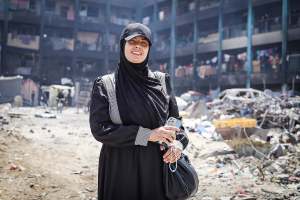
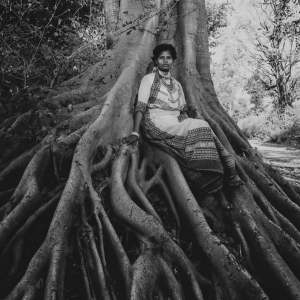
The uniform of the policemen raiding tribal villages conceals a shared past. The men carrying the guns once called these very villages home.
“We have a lot of local recruits in the name of DRG (District Reserve Guard) and CRPF’s Bastariya Battalion,” said Sundarraj P., Inspector General of Bastar Range. “Right now, almost two-thirds of the cadets are tribal boys and girls, who have been recruited to safeguard their own community.”
The practice of pitting tribals against tribals was popular during the Salwa Judum era, when “missing” villagers would often reappear as SPOs. The employment of tribal youth into a civilian militia was outlawed by the Supreme Court in 2011, and the state was ordered to cease and desist from using SPOs in any form or manner in counter-insurgency activities. The Chhattisgarh government responded by merely renaming SPOs to DRGs.
The Lone Varattu campaign, intended to “rehabilitate misguided youth,” is accompanied by a “zero-tolerance policy” towards those who refuse to surrender. This call of “surrender or be killed” has swelled the ranks of local recruits, which comprise former Judum members, captured or surrendered Naxal cadres, and displaced villagers who have lost their homes, lands, and livelihoods.
During the Judum years, Midko writes, the Naxalites too gave a call urging the SPOs to abandon the camps and return to their villages. Their official position was to assassinate the Judum leaders, but to forgive and reintegrate the SPOs who surrendered voluntarily and had not committed cruel atrocities. However, for the boys who enforced the tyranny of landlords and the girls who “willingly” maintained sexual relations with policemen, is a return possible?
This is the unsettling question that haunts Boklu and Mangal in Midko’s story Siksha (“Punishment”). In the Pottem village of Bhairamgarh, Dandakaranya, 500 villagers gather below mango trees to discuss what was to be done with the two defected SPOs. This is the Jan Adalat (People’s Court), being conducted by the judicial electives of the Janatana Sarkar, the People’s Government.
Janatana Sarkars are formed in areas with populations of 500 to 3,000 and are elected on the basis of general adult vote every three years. They operate on the principles of “land to the tiller” and “power to the people.” These “Revolutionary People’s Committees” (RPCs), which serve as an alternative form of government, are the reason for the historically low voter turnout in mainstream elections in Naxalite areas.
In Haree Bharee Zindagi, Damayanti documents a meeting of the Area Janatana Sarkar, where the Jan Sabha (voters and government committee) discusses issues such as sentry duty in the rainy season, the shortage of school teachers, and reports on forest protection.
“I got to see firsthand how smoothly the government can run if there is public participation in governance,” she writes. “One of the decisions taken in this Sabha was implemented immediately. The very next morning, everyone got busy with building a hut for the sentry. These governments formed by the people may be in their embryonic stage today, but their sole objective is public welfare.”
The Jan Adalat trial is open, and the people can voice their opinions freely. Many of the villagers of Pottem, especially the victims of the recent Judum attacks, were opposed to the idea of letting Boklu and Mangal return to their village. The commander of the squad, Mangtu, asks them to consider the fear and anxiety caused by the Judum propaganda, the escapees’ disgust with the atrocities in the camp, and their decision to return willingly.
However, the ultimate decision is of the people’s court and the vote of the majority. Evolving alternate social and judicial systems that genuinely represent the people’s interests is a complicated and chaotic process.
A collective of angry people is a mob, and the Jan Adalat is not above giving the death penalty for “counter-revolutionary crimes.” What differentiates corrective discipline from senseless brutality? Is punishment for deterrence, retribution, prevention, reformation, or restoration? How might a court navigate the tension between collective decisions and individual impulses?
The story grapples with ostracism, repentance, and rectification, but Midko does not give a final judgment. The readers, like the characters, are left with a thoughtful dissatisfaction and more questions.
“We don’t act out of anger or rage,” Midso writes in “Punishment.” “We act to stop the violence inflicted on us, and that too, only when necessary and with minimal risk. Violence is not our nature. We are as pure as the forest. We are building a new world with Janatana Sarkar.”
Funeral
In Telangana, Kadavendi carries historical weight as the village of the first martyr of the Telangana armed struggle, Doddi Komarayya. Opposite Renuka’s childhood home is his statue, inscribed with the words: “At this spot on July 4th, 1946, the goons of Visnoor Deshmukh Ramachandra Reddy fired and killed Doddi Komarayya.” This was the place where Renuka’s body was laid for public viewing on April 3, 2025.
“We entered the village at 12:40 at night,” Prasad recalled. “The whole village was awake. Nearly 2,000 people had gathered at the entrance. When our vehicles entered, they started showering flowers on the ambulance and raising slogans.”
Villagers from across the state turned out in large numbers for the funeral procession, along with civil rights leaders, poets, artists, student leaders, former Maoists, and even mainstream politicians. The panorama of red flags, the resonance of revolutionary songs and tributary dances, and the echoing resolve to continue her fight challenge Home Minister Amit Shah’s assertion that Naxalism will be eradicated from Bharat by March 31, 2026.
The government’s deadline-driven approach under Operation Kagar has created unsustainable pressure on security forces, incentivizing them to maximize kill counts. At the time of writing, about 7,000 personnel from CoBRA, DRG, and Telangana Police forces are closing in on Karreguttah hills at the Bijapur-Telangana border in the largest operation of the year. Preliminary reports indicate that 28 Maoists of the People’s Liberation Guerrilla Army (PLGA) have been killed.
This situation unfolds despite three public statements from Maoist party leaders calling for a halt to military operations and expressing readiness for peace talks. On 3 April 2025, over 50 civil society groups have appealed to the Union Government for an immediate ceasefire. Their appeal echoes the 2011 verdict of the Supreme Court, which mandates that state power against the Maoists must be within constitutional bounds and uphold the human rights of every Indian.
“The fight against Maoist/Naxalite violence cannot be conducted purely as a mere law and order problem to be confronted by whatever means the State can muster,” the Supreme Court verdict stated. “The primordial problem lies deep within the socio-economic policies pursued by the State on a society that was already endemically, and horrifically, suffering from gross inequalities.”
Maoist-occupied territories are called “Liberated Zones,” because the communities within strive for control over their social and political destinies. Renuka’s voice, with the journalistic clarity of Damayanti and the empathetic insight of Midko, unveils not only the systemic violence endured by the people but also the political experiments in pursuit of their liberation.
Her words reveal the embryonic but tangible alternatives taking shape through community control over local resources and new ways of organizing education, justice, and society. In one of the most militarized warzones in the country, Midko’s stories are small, luminous specks of resilience, resistance, camaraderie, and love—like fireflies lighting up the nighttime forest.


Fireflies in the Warzone: The Life and Death of Gummadivelli Renuka
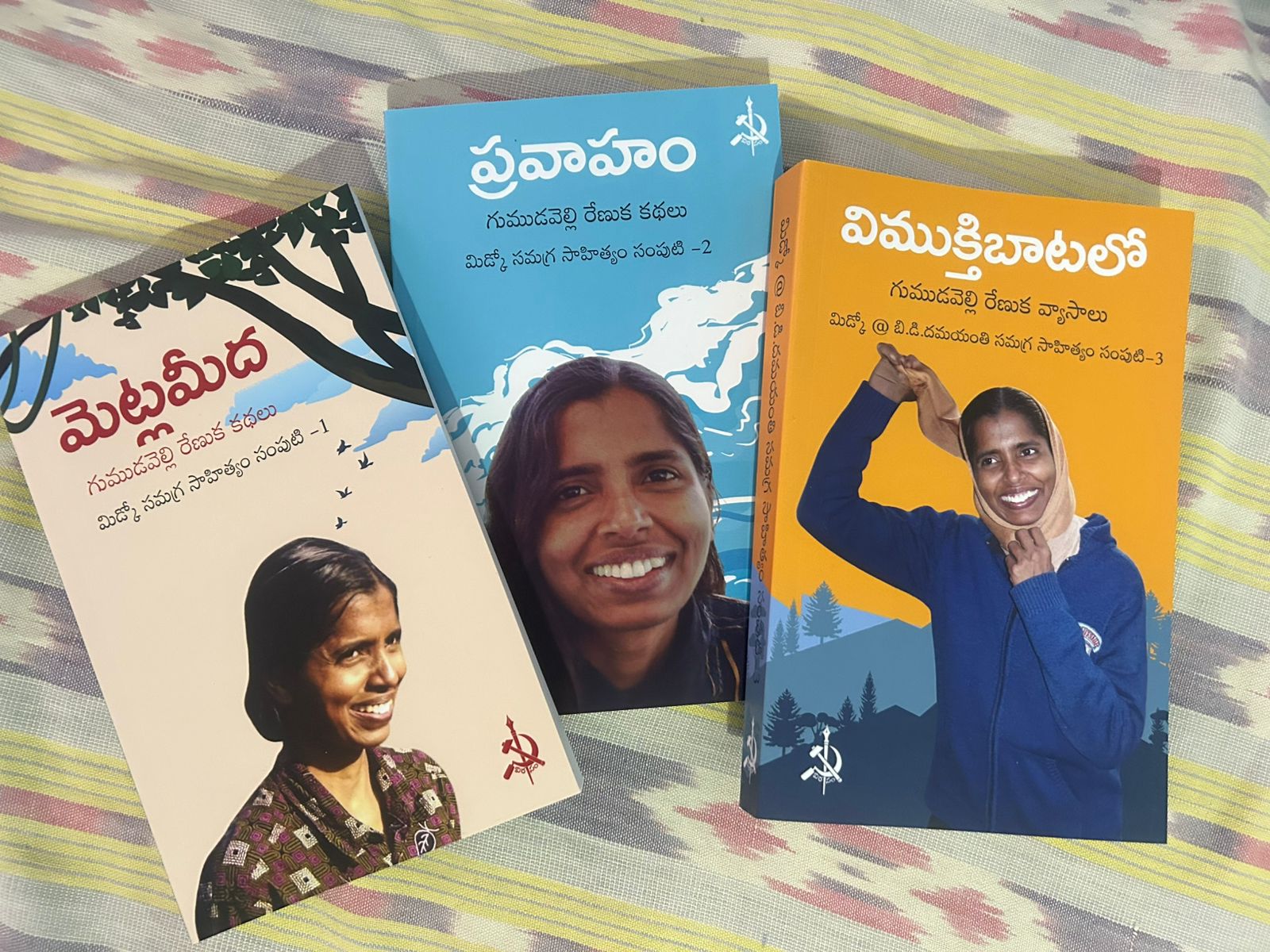
In the shadow cast by military violence, Renuka's stories offer us a glimpse of life in Liberated Zones, the struggle for Jal-Jangal-Zameen, and the flickering flames of an alternative future.
The humdrum workday of journalist G.V.K. Prasad was interrupted by the chime of a WhatsApp notification. His eyes froze at the first sentence. The name “Renuka” stared back at him. He could no longer read the rest of the message.
It was only two days earlier, March 29, 2025, that 17 Maoist cadres were killed in an encounter in Sukma, a town in Chhattisgarh. But Prasad was sure that Renuka had been staying in the northern part of the Indravati River. It must be a mistake. He immediately dialed a journalist friend. She said she would check the news with comrades in Dantewada.
When she called back, it was to confirm that a woman had died in Belnar village at Bijapur: “They are saying it’s Renu.”
Prasad’s next call came from an unknown number. The Superintendent from the Telangana Police Department informed him that his sister had died in an encounter. The officer said that it was confirmed; he had spoken with Dantewada Superintendent Gaurav Rai, who said that gunfire broke out at 9 am in a forest along the Dantewada-Bijapur district border. The two teams of security cadres ran away. When the encounter ended, the body of a female revolutionary was recovered.
Prasad went home to break the news to his wife, Santoshi. They took the next flight to Raipur from Delhi, stopping at Santoshi’s village in Bastar first. The next morning, they hired a vehicle to Dantewada. Prasad knew these forests well; they had been home for years before he surrendered in 2014. The paths they drove through were familiar; the pattern of staged encounters, even more so.
Prasad pondered over the unsettling speed of the report. The days of bureaucratic delay that usually followed such encounters had vanished, replaced by an immediate identification. The police-recovered items—a handful of clothes, some medicine, one pair of chappals—were barely sufficient for one person. If multiple armed cadres had indeed fled the scene, Prasad wondered, where were their discarded supplies: slippers, water bottles, ammunition? The evidence held only a small, neatly arranged collection.
Prasad knew the clothes were Renuka’s. Even twelve years ago, she had carried the same lungis in her kitbag. But he knew the gun was not hers. She was a spondylitis patient, and her chronic backache meant she rarely carried a weapon. Beside the weapon lay her body, wrapped in a plastic bag and kept for display. Her face was adorned with earrings and a bindi. But Renuka never wore accessories in the field.
Prasad’s ponderings all converged at the same conclusion: Renuka had been living an ordinary life among the villagers, and her encounter was faked.
“Comrade Renuka (alias Chaite) was staying alone in a house in Belnar village, Bhairamgarh block of Bijapur district due to ill health,” the Press Release from the banned Communist Party of India (Maoist) notes. “On receiving this information, the police surrounded the house at 4 am on March 31 and arrested Comrade Chaite. Chhattisgarh and Telangana intelligence department officials interrogated her for 2-3 hours. Between 9 and 10 in the morning, she was taken to the banks of [the] Indravati River and brutally murdered.”
Seven hours later, Prasad and Santoshi reached Dantewada. The postmortem and panchnama took another day and a half. Prasad was finally taken to the mortuary, a small tin shed surrounded by armed policemen. The cold storage unit was not plugged in. He opened the freezer door and was instantly overwhelmed with the foul stench of a corpse left to the mercy of the hot Chattisgarh summer.
Her mouth was foaming with bubbles. Her hands were mutilated, hanging as if they could fall at any moment. The body was already decomposing; it was impossible to identify which scars were from bullets, which from torture, and which from careless handling of her body. Looking at her face, he could not recognize his sister.
He looked down at her feet. Each toe was achingly familiar. He knew then. This was Renuka.
Gummadivelli Renuka: The Fighter and the Firefly
Renuka was a quiet, reserved presence. She was tall and slender. She spoke slowly, softly, and only what was necessary. But in times when silence was not an option, her voice carried no hesitation. Her words were chosen with care and purpose. The measured strength of her voice is preserved in her writings.
Renuka was born in Kadavendi, in the Warangal district of Telangana. In 1984, while she was still in school, her elder brother G.V.K. Prasad left their home to join the revolutionary movement. Renuka completed her 8th and 9th classes in her grandmother’s village, Motkur, and her 10th in Devaruppala.
After completing her intermediate studies, she traveled to Tirupathi to study law. It was at this time that she began actively participating in the women’s movement as a member of the Mahila Shakti (later, Chaitanya Mahila Sangham). Her writings led to her appointment to the editorial board of the Mahila Margam magazine.
By 1995, she became a full-time overground activist (in the party’s terminology, a “Professional Revolutionary”), organizing meetings, providing legal support, and writing stories under the names Nirmala and Zameen. She fell in love with Santosh Reddy, a member of the People’s War Central Committee, and they secretly married within the Party.
On December 2, 1999, Reddy was killed in a police firing within a year and a half of their marriage. Renuka’s tears remained silent. She couldn’t even openly claim their marriage. In the same year, Prasad’s spouse, Sabita, was killed in an encounter. Sabita was an Adivasi woman whose birth name was “Midko,” a Gondi word meaning fireflies.
Renuka inherited her name. Midko, a name unfamiliar to Telugu readers, soon became widely known within Telugu literary circles through stories such as “Metlameeda,” “Pravaham,” and “Iddaru Thallulu.” Her other stories, “Bhauvukatha,” “Marpu Evarilo,” and “Amma Kosam,” resonated deeply with readers, sparking discussions about her deeply humane characters navigating violent State repression in Dandakaranya.
In 2004, Renuka went underground in the forests of Basandara, Odisha. She was designated a Divisional Committee member of the Party. Within two years, she moved to Bastar and became the editor-in-charge of the Party’s magazine, Kranti. By the time of her martyrdom, she was the press in-charge of Dandakaranya Special Zonal Committee with a collective bounty of INR 45 lakh (around 47,000 USD) on her head.
Renuka was an incisive writer. She contributed extensively to Party literature, newsletters, and magazines. Revolutionary literature has a poor reputation for being obscure, lifeless, overemphasizing political jargon, and parroting Party stereotypes. Renuka’s language is a sharp departure from this tradition. Her style is simple, specific, and authentic. Her composition weaves together the rhythms of Adivasi life, the forest’s vivid backdrop, and the looming presence of state violence.
In the shadow cast by military violence, Midko’s stories offer us a glimpse of life in Liberated Zones, the struggle for Jal-Jangal-Zameen, and the flickering flames of an alternative future.
A Mother’s Love Under Counter-Insurgency
Midko’s story “Mother’s Love” opens with Mangli’s routine life in the Bijapur forest. Her family collects mahua, tendu leaves, gum, resin, honey, and other forest produce to sell at the market. Mangli plucks mahua flowers, sweeps up her two-room mud house, washes utensils, takes a bath, and then cooks Sukku’s favorite dish: fermented porridge with roasted ant eggs over rice.
Sukku is her only surviving son and her entire world. He was interested in joining the PrajaSena (People’s Army). But though Mangli understood the importance of the Party’s work, she could not bear to let him go.
Soon, the simple peace of their village is burnt to the ground. Only bare walls remain for the forty houses turned to ash. Charred remains of utensils, clothes, grain, and livestock lie in the debris. The villagers can’t cry too loudly. The Salwa Judum may still be around.
Salwa Judum is a Gondi term meaning “peace march.” Among the villages of South Chattisgarh, its meaning changed to “Sarva Vinash” (“Destroyer of All”). The Judum was a state-sponsored vigilante group to counter Naxal violence.
Formed in 2005, around the time the new state government entered into mining agreements with Tata and Essar industrial houses, it was led by local elites, contractors, and traders, and received unprecedented police and military support until 2011, when it was banned by the Supreme Court.
When their village was attacked, Sukku had been captured and taken to the Bijapur relief camp. Ignoring the warnings and protests of the villagers, a desperate Mangli heads to the Judum camp, prepared to beg at their feet for his release. The Special Police Officers (SPOs) mock at her pleas, drag her to look upon her son’s brutalized face, before raping her in front of Sukku’s eyes.
It would not be fair to call “Mother’s Love” a work of fiction. It is, rather, a composite chronicle of the experiences of many women in Bastar who tried to protect their husbands and children from the atrocities of Salwa Judum.
It is the story of Bhime, whose son Deval (30) was killed by the police in front of her in Chintaguppa village; of 60-year-old Bheeme, who was beaten with guns and sticks for trying to save her grandson Paddam Deval (25) in Gattapadu village; of Andamal (45), who was shot and castrated in front of his wife in Gatchampally village.
These names and accounts come to us from a fact-finding report on the Singanamadugu Incident of 2009, written by B.D. Damayanti, Renuka’s alias for her journalistic work. Damayanti’s pieces, published in the Party mouthpiece, include “Haree Bharee Zindagi” (Green Life), “Mandutunna Ghaayaalu” (Burning Wounds), and the Naraayanpatna report.
“She had a brilliant journalist’s mind,” noted Prasad. “When she wrote Haree Bharee Zindagi (A look at the methods of Salwa Judum), she only had a small tape recorder and three cassettes. She would record everything, and in the night, she would take down meticulous notes. She would wipe the tapes and use them again for recording the next day. This is how she did the fact-finding for 10 days.”
The relentless violence of the State’s counter-insurgency, chronicled by Midko and documented by Damayanti, has metastasized from the Salwa Judum to Operation GreenHunt, Operation Saranda, and Operation Anaconda. The current phase, Operation Kagar (‘The Final Operation’), inaugurated on January 1, 2024, with the killing of a 6-month-old infant in Bijapur’s Mudvendi village, has led to a fivefold increase in the number of killings, arrests, and surrenders of Naxalites.
CRPF, CoBRA, and DRG forces, armed with state-of-the-art weaponry including Netra 3 and Bharat drones and Israel-manufactured Heron unmanned aerial vehicles, have killed 375 adivasis and alleged Maoists as of March, 2025.
The four-pronged strategy involves establishing forward operating bases (FOBs), deploying satellite imaging for intelligence-gathering, setting up Fortified Police Stations and Integrated Development Centers (IDCs) on reclaimed territory, and implementing a surrender policy. The Frontline reports that Operation Kagar’s intensity maps perfectly onto geological surveys marking resource deposits.
Gift of Knowledge or Cage of Control? What Education Means for the Children of Bastar
“Kanuka” (Gift) is a story about the lessons taught to Adivasi children by their communities. In Bastar, alternative schools like Krantikari Janatana Sarkar Schools and Mobile Academic Schools for primary education are run by the local communities in the Koya language. The educational qualifications from these schools are not recognized by the government.
These alternative schools teach children about many things that are not taught in any formal institution. Their studies are intimately tied to their lives. They learn why their conditions remain unchanged even after so many generations. They learn who fixes the market rate for the fish they labor so hard to catch. They learn about the police, the government, and the state apparatus.
They learn to recognize and oppose untouchability, discrimination against castes and tribes, and violence against women. They learn how to practice community vigilance—how to act as sentries, defend themselves against goons, and alert the guerrillas if the police approach their village. The waves of the Krishna river set the rhythm for their songs and dances, as the annas teach them how to clench their fists, raise them, and cry out slogans.
During the Salwa Judum’s reign, schools became a battleground. Judum forces occupied schools to conduct their meetings and set up camps, and the Maoists destroyed them to prevent them from establishing a foothold in the villages. In the decade after, the generation of students whose education was stolen from them mobilized and began to demand their rights.
One such organization formed in South Bastar is the Moolvasi Bachao Manch (MBM), a peaceful, youth-led group protesting illegal appropriation of land, establishment of police camps in the Fifth Scheduled areas without local consent, and demanding the implementation of the PESA Act. In October 2024, MBM was banned, and in February 2025, its president, 23-year-old Raghu Midiyami, was arrested.
Since 2019, the Bastar police have been following a three-pronged strategy called Vishwas-Vikas-Suraksha (Trust-Development-Security) to win over “the hearts and minds” of the adivasis. This action plan is part of the Home Minister’s Operation Samadhan Prahar, which promises development-oriented steps for tribals to create “Manva Nawa Naar” (Our New Village).
The State is pushing to convert temporary security camps into permanent Integrated Development Centres (IDCs), consolidating schools, hospitals, banks, and public distribution systems within fortified military compounds. Since 2019, 250 security camps have been established in Bastar, spaced every 2-5 km, with one security personnel for every nine civilians.
Effectively, IDCs legitimize permanent military occupation, turn civilian services into tools of military control, and hold basic rights hostage to paramilitary authority.
Crime and Punishment: Alternatives to Justice, State, and Society
The uniform of the policemen raiding tribal villages conceals a shared past. The men carrying the guns once called these very villages home.
“We have a lot of local recruits in the name of DRG (District Reserve Guard) and CRPF’s Bastariya Battalion,” said Sundarraj P., Inspector General of Bastar Range. “Right now, almost two-thirds of the cadets are tribal boys and girls, who have been recruited to safeguard their own community.”
The practice of pitting tribals against tribals was popular during the Salwa Judum era, when “missing” villagers would often reappear as SPOs. The employment of tribal youth into a civilian militia was outlawed by the Supreme Court in 2011, and the state was ordered to cease and desist from using SPOs in any form or manner in counter-insurgency activities. The Chhattisgarh government responded by merely renaming SPOs to DRGs.
The Lone Varattu campaign, intended to “rehabilitate misguided youth,” is accompanied by a “zero-tolerance policy” towards those who refuse to surrender. This call of “surrender or be killed” has swelled the ranks of local recruits, which comprise former Judum members, captured or surrendered Naxal cadres, and displaced villagers who have lost their homes, lands, and livelihoods.
During the Judum years, Midko writes, the Naxalites too gave a call urging the SPOs to abandon the camps and return to their villages. Their official position was to assassinate the Judum leaders, but to forgive and reintegrate the SPOs who surrendered voluntarily and had not committed cruel atrocities. However, for the boys who enforced the tyranny of landlords and the girls who “willingly” maintained sexual relations with policemen, is a return possible?
This is the unsettling question that haunts Boklu and Mangal in Midko’s story Siksha (“Punishment”). In the Pottem village of Bhairamgarh, Dandakaranya, 500 villagers gather below mango trees to discuss what was to be done with the two defected SPOs. This is the Jan Adalat (People’s Court), being conducted by the judicial electives of the Janatana Sarkar, the People’s Government.
Janatana Sarkars are formed in areas with populations of 500 to 3,000 and are elected on the basis of general adult vote every three years. They operate on the principles of “land to the tiller” and “power to the people.” These “Revolutionary People’s Committees” (RPCs), which serve as an alternative form of government, are the reason for the historically low voter turnout in mainstream elections in Naxalite areas.
In Haree Bharee Zindagi, Damayanti documents a meeting of the Area Janatana Sarkar, where the Jan Sabha (voters and government committee) discusses issues such as sentry duty in the rainy season, the shortage of school teachers, and reports on forest protection.
“I got to see firsthand how smoothly the government can run if there is public participation in governance,” she writes. “One of the decisions taken in this Sabha was implemented immediately. The very next morning, everyone got busy with building a hut for the sentry. These governments formed by the people may be in their embryonic stage today, but their sole objective is public welfare.”
The Jan Adalat trial is open, and the people can voice their opinions freely. Many of the villagers of Pottem, especially the victims of the recent Judum attacks, were opposed to the idea of letting Boklu and Mangal return to their village. The commander of the squad, Mangtu, asks them to consider the fear and anxiety caused by the Judum propaganda, the escapees’ disgust with the atrocities in the camp, and their decision to return willingly.
However, the ultimate decision is of the people’s court and the vote of the majority. Evolving alternate social and judicial systems that genuinely represent the people’s interests is a complicated and chaotic process.
A collective of angry people is a mob, and the Jan Adalat is not above giving the death penalty for “counter-revolutionary crimes.” What differentiates corrective discipline from senseless brutality? Is punishment for deterrence, retribution, prevention, reformation, or restoration? How might a court navigate the tension between collective decisions and individual impulses?
The story grapples with ostracism, repentance, and rectification, but Midko does not give a final judgment. The readers, like the characters, are left with a thoughtful dissatisfaction and more questions.
“We don’t act out of anger or rage,” Midso writes in “Punishment.” “We act to stop the violence inflicted on us, and that too, only when necessary and with minimal risk. Violence is not our nature. We are as pure as the forest. We are building a new world with Janatana Sarkar.”
Funeral
In Telangana, Kadavendi carries historical weight as the village of the first martyr of the Telangana armed struggle, Doddi Komarayya. Opposite Renuka’s childhood home is his statue, inscribed with the words: “At this spot on July 4th, 1946, the goons of Visnoor Deshmukh Ramachandra Reddy fired and killed Doddi Komarayya.” This was the place where Renuka’s body was laid for public viewing on April 3, 2025.
“We entered the village at 12:40 at night,” Prasad recalled. “The whole village was awake. Nearly 2,000 people had gathered at the entrance. When our vehicles entered, they started showering flowers on the ambulance and raising slogans.”
Villagers from across the state turned out in large numbers for the funeral procession, along with civil rights leaders, poets, artists, student leaders, former Maoists, and even mainstream politicians. The panorama of red flags, the resonance of revolutionary songs and tributary dances, and the echoing resolve to continue her fight challenge Home Minister Amit Shah’s assertion that Naxalism will be eradicated from Bharat by March 31, 2026.
The government’s deadline-driven approach under Operation Kagar has created unsustainable pressure on security forces, incentivizing them to maximize kill counts. At the time of writing, about 7,000 personnel from CoBRA, DRG, and Telangana Police forces are closing in on Karreguttah hills at the Bijapur-Telangana border in the largest operation of the year. Preliminary reports indicate that 28 Maoists of the People’s Liberation Guerrilla Army (PLGA) have been killed.
This situation unfolds despite three public statements from Maoist party leaders calling for a halt to military operations and expressing readiness for peace talks. On 3 April 2025, over 50 civil society groups have appealed to the Union Government for an immediate ceasefire. Their appeal echoes the 2011 verdict of the Supreme Court, which mandates that state power against the Maoists must be within constitutional bounds and uphold the human rights of every Indian.
“The fight against Maoist/Naxalite violence cannot be conducted purely as a mere law and order problem to be confronted by whatever means the State can muster,” the Supreme Court verdict stated. “The primordial problem lies deep within the socio-economic policies pursued by the State on a society that was already endemically, and horrifically, suffering from gross inequalities.”
Maoist-occupied territories are called “Liberated Zones,” because the communities within strive for control over their social and political destinies. Renuka’s voice, with the journalistic clarity of Damayanti and the empathetic insight of Midko, unveils not only the systemic violence endured by the people but also the political experiments in pursuit of their liberation.
Her words reveal the embryonic but tangible alternatives taking shape through community control over local resources and new ways of organizing education, justice, and society. In one of the most militarized warzones in the country, Midko’s stories are small, luminous specks of resilience, resistance, camaraderie, and love—like fireflies lighting up the nighttime forest.