




On a crisp autumn morning, sunlight timidly broke through the gray clouds as Alaa Al-Saraj, a recently freed Palestinian journalist, stepped out of an Israeli prison after two years.
The warmth of the sun touched his face, a simple feeling that seemed to mark a rebirth after months of darkness. He lifted his head to the dust-laden sky and said, his voice trembling, “It feels like I am seeing light for the first time… I have returned from hell.”
Alaa, in his 30s, was released by Israel on October 9, 2025, along with 1,950 Palestinian prisoners, including journalists and doctors, as part of a ceasefire agreement. After a long detention without charges and living under harsh conditions, his release was celebrated by his community as he walked out on October 13, 2025. But thousands still remain in Israeli detention, according to human rights organizations, who note that Palestinians are held without independent oversight, without compliance with international humanitarian law.
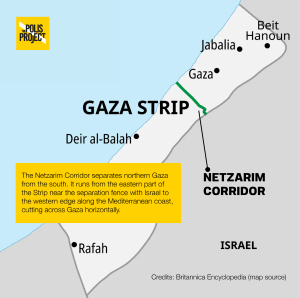
The memories of his detention have haunted him since his return. His mind drifted back to November 16, 2023, when he, his wife, and their five children were fleeing from the Sabra neighborhood in northern Gaza to the south. At that time, the Israeli occupation forces had stormed Sabra and ordered residents to evacuate and head to southern Gaza. Alaa’s family left via what was called the “safe corridor”. This corridor was in Netzarim, which was under Israeli control at the time.
A military corridor established by the Israeli occupation army in the wake of the events of October 7, 2023, stretching from the southeastern entrance of Gaza City, along Salah al-Din Street, to the southwestern entrance on al-Rashid Street, which runs parallel to Gaza’s coastline. The corridor was created to sever northern Gaza from the south, with Israeli authorities allowing displaced civilians fleeing bombardment in the north to pass through it toward southern Gaza. It was presented as the only available route after evacuation orders were issued.

However, testimonies from Gaza residents indicate that this so-called “safe corridor” turned into a deadly trap during their displacement. The corridor witnessed a partial withdrawal of Israeli forces in February 2025, for the first time since the outbreak of the war, following a ceasefire at the time. When the war in Gaza resumed on March 18, 2025, Israeli forces reinforced their presence. They withdrew for a second time during the second week of the most recent ceasefire on October 13, 2025.
Journalists Abused in Israeli Prisons
The “safe corridor” proved unsafe for Alaa and his family when they reached the military checkpoint in Netzarim, in central Gaza.
The checkpoint is part of the Netzarim Corridor, which separates northern Gaza from the south. It runs from the eastern part of the Strip near the separation fence with Israel to the western edge along the Mediterranean coast, cutting across Gaza horizontally.
At the checkpoint, an IDF soldier called out Alaa’s name and forced him to wait for hours under the sun, while his family watched from a distance, consumed by anxiety.
Alaa recounted what happened then:
“They took me to a field interrogation room, forced me to strip completely, and a soldier fired shots nearby to intimidate my family. They tied my hands, blindfolded me, and began questioning, beating, and humiliating me. I was kicked, slapped, and insulted until my feet bled. They laughed every time I fell in pain. After hours of torture, they transferred me to the ‘Sde Teyman’ prison, where a part of my life began that I will never forget.”
“It was not a place for humans, more like a farm for animals,” he noted, describing the prison conditions. “People were humiliated, dignity crushed. We slept on bare dirt with no bedding, and the cold penetrated our bones. We woke to the soldiers’ screams and kicks, and huge police dogs, muzzled, attacked us in sensitive areas while the soldiers laughed.” After harrowing days, the nights did not bring any relief to the detainees either. “At night, they woke us up with cold water and beatings just to prevent us from sleeping. Their goal was not investigation. It was humiliation,” Alaa said.
The displaced journalist was transferred between multiple prisons after Sde Teyman, including Negev and Nafha, but the hardest was a coffin-like cell in Ofer Prison in occupied West Bank, he recalled.
“My cell was a narrow grave. But in the darkness, I was overjoyed to see an ant nearby. I clung to it as proof that life had not been defeated,” Alaa recalled.
While in Ofer, He said he was subjected to beatings, batons, and cold water around four times a day. Alaa added that he was targeted for having been a journalist. He faced no formal charges, was never presented before a court, and met a lawyer only once in confinement, from behind a glass partition, in the presence of prison guards. Appointing a lawyer is usually not afforded to Palestinian prisoners.
As per several reports by rights groups and international media, Palestinians routinely face torture in Israeli prisons and are often held without charge. In an August 2024 report, mainly based on testimonies of Palestinian detainees, Jerusalem-based non-profit B’Tselem noted that the testimonies clearly indicate a systemic institutional policy focused on the continual abuse and torture of Palestinian prisoners.
“Frequent acts of severe, arbitrary violence; sexual assault; humiliation and degradation, deliberate starvation; forced unhygienic conditions; sleep deprivation, prohibition on, and punitive measures for, religious worship; confiscation of all communal and personal belongings; and denial of adequate medical treatment — these descriptions appear time and again in the testimonies, in horrifying detail and with chilling similarities,” the report said.
“The Israeli Guantanamo”
Serious concerns have been raised over the condition of those who were not fortunate enough to be freed during the ceasefire deal months back. Alaa Skafi, director of the Al-Damir Human Rights Organization in Gaza, explained that since October 7, the situation of Palestinian prisoners—especially from Gaza—has deteriorated to unprecedented levels in Israeli prisons. Skafi said this period was a turning point in the Israeli occupation’s policies toward Palestinian detainees, marked by systematic brutality and revenge.
He said that according to his and his organization’s estimates, the number of current prisoners exceeds 11,000, including 3,100 from Gaza, among whom 400 are children, and 53 women. As many as 78 detainees, including 46 from Gaza, died due to torture and medical neglect since October 2023, Skafi added.
Skafi characterized these violations as “war crimes”, calling on the international community to act immediately to hold Israel accountable and withdraw policies that “violate human dignity inside Israeli prisons.”
Among the released was journalist Imad Al-Furnaji (58). He was arrested on March 18, 2024, while covering events at Al-Shifa Medical Complex, when Israeli forces stormed the building, detaining everyone indiscriminately—civilians, patients, doctors, and journalists alike. Imad was bound, humiliated, and stripped. Speaking to The Polis Project, he described his arrest as “the beginning of a journey of psychological and physical torment.”
Imad recounted his prison days. “One soldier smiled at me and said: ‘You are that old journalist, aren’t you?’ This was the start of repeated abuses.”

He describes Israeli prisons as “the Israeli Guantanamo.” The journalist reported having endured three interrogation sessions, including frequent beatings until he lost consciousness at the notorious Sde Teiman prison. According to him, inmates lost limbs due to medical neglect and torture. He heard their screams and inferred that some were also sexually assaulted.
Beating routines included inserting sticks in the detainees’ bodies as a form of humiliation. Imad himself was left with an untreated head wound, and told by interrogators that getting pain medication was “a miracle.”
Imad later learned that 36 soldiers had raided his home, stolen around 30,000 shekels, and used his wife and six children as human shields while troops withdrew, and burnt whatever remained.
Despite these experiences of pain and loss, he insists on continuing his journalistic work: “The occupation does not want words and images that expose its narrative. They threatened me till the very moment of my release that if I returned to my work, I would be killed. But I will return, stronger and more determined.”
Detained Doctor Tends to Inmates
In Gaza, humanitarian workers, medics, doctors, and journalists are targeted alike. Hospitals and media offices have become scenes of detention and harassment, reflecting a systematic targeting of those documenting events or providing medical care under occupation.
On November 15, 2024, Israeli soldiers raided Nasser Medical Hospital in Khan Younis, ordering doctors, civilians, and patients to leave immediately. During the raid, Doctor Mohammed Salem (45) and his family of three were detained. His wife and two children were subsequently released, but he was held for a year in Israeli prisons.
Dr Salem said his work made him a target during the raid. “The (IDF) officer called me by name, knowing I am a doctor. My detention was because of my humanitarian work.” He vividly remembers his ordeal. Inside the interrogation room, he was subjected to a full strip search in front of his wife and children, beaten and humiliated repeatedly, and accused of working with Hamas. Witnessing their father being subjected to abuse left his 13-year-old daughter and 10-year-old son in profound trauma.
After one night of field interrogation, Dr Salem was transferred to Sde Teyman Prison, facing physical and psychological torture: repeated beatings, broken ribs, deprivation of sleep and water, and restricted bathroom access. Despite this, he continued tending to his fellow prisoners’ wounds with scarce resources. The torture in prison and lack of any medical attention have reportedly led to deaths of detainees, making Dr Salem’s work while in prison all the more necessary.
Even after their release, Mohammed and dozens of other detainees faced threats of death to themselves and their families should they return to their medical work.
Systematic Violations in Absence of Accountability
Alongside the release of living prisoners, Israel handed over 195 Palestinian bodies by October 27, 2025, delivered to Gaza’s Ministry of Health through the International Committee of the Red Cross. Among them, 41 bodies of unknown identity were buried in a mass grave in Deir Al-Balah, after identification proved impossible due to mutilation and torture.
At Nasser Hospital, the family of Mohammed Mahmoud, a man in his fifties, was found by his neighbor and friend, bound and dismembered after months of enforced disappearance.
Salma Al-Qudumi, 35, a neighbor, said: “We had no news of him. What arrived was more painful–a bound and tied body, as if the chains remained on his soul even after death.” She added, “His last appearance was in a video after his house was bombed. He was alone among the rubble, saying, ‘I’m not leaving here, and I have cats and chickens-who will feed them?’ That moment captures his humanity and love for animals even after death.”
Skafi, from the point of view of a human rights lawyer, stressed that these violations against both living prisoners and the deceased constitute fully-fledged war crimes. “International law obliges parties to conflict to respect the dignity of the dead, document their identities, preserve their bodies, and return them to their families. What happened reflects a systematic policy of humiliation and abuse, requiring urgent international action for accountability.”

In a November 2025 report, the NGO Physicians for Human Rights-Israel (PHRI) published details of at least 94 Palestinian prisoners being killed in Israel’s military detention facilities and IPS prisons. The report conceded that their deaths were due to either torture, medical neglect, or malnutrition.
In an earlier report on detention and torture of medical workers, PHRI noted that at least half of them were detained while on duty, in violation of International Humanitarian Laws. Among them was 50-year-old Dr. Adnan Al Bursh, the head of the orthopedic department at Al-Shifa Hospital, the largest medical facility in the Gaza Strip. As per various reports, he died on April 19, 2024, in Ofer prison, an Israeli detention facility. The Palestinian Prisoners’ Society and UN sources cited torture as the cause of death. He was detained while temporarily treating patients at the al-Awda Hospital and subsequently held in detention for around four months till his death.
The prisoners’ group said the doctor’s death was “part of a systematic targeting of doctors and the health system in Gaza.” The incident raised an alarm globally on torture in Israeli prisons.
“Dr. Adnan’s case raises serious concerns that he died following torture at the hands of Israeli authorities. His death demands an independent international investigation,” Tlaleng Mofokeng, UN Special Rapporteur on the right to health, said. Before his death, he had reportedly been beaten in prison, with his body showing signs of torture.
While attacks on medical facilities and health workers are banned under international humanitarian law, according to the Geneva Conventions, the Israeli military has repeatedly targeted them. According to the Palestinian Ministry of Health, at least 1,722 healthcare workers have been killed in Israeli strikes in the past two years.
Israel routinely accuses Hamas of using hospitals for military purposes and says the presence of fighters justifies its operations, but it has not provided any evidence to back its claims.
Last March, another horrific incident emerged. The Israeli forces reportedly killed 15 Palestinian paramedics and rescue workers, including at least one UN employee, during a rescue mission in southern Gaza on 23 March. Their bodies were buried in a mass grave. According to the UN Office for the Coordination of Humanitarian Affairs (OCHA) and the Palestinian Red Crescent, clearly marked ambulances carrying the health and rescue workers, to respond to earlier shootings, came under heavy fire in Rafah.
The head of OCHA in Palestine, Jonathan Whittall, said, “We’re digging them out in their uniforms, with their gloves on. They were here to save lives. Instead, they ended up in a mass grave.”
Recently, Médecins Sans Frontières (Doctors Without Borders), while remembering 15 colleagues killed in Gaza, said, “We are outraged that many of these people were killed while providing care for patients or sheltering with their families.”
In July 2025, the UN OHCHR condemned the killing of medical professionals in Gaza by Israeli forces. It said that medical professionals in Gaza and their families must be presumed civilians, with no evidence they were directly participating in hostilities, raising serious concerns of possible war crimes. It also cited that the Palestinian health ministry’s figures of at least 1,581 health workers being killed since October 7, 2023. Those still working face constant threats to their lives, widespread destruction of hospitals, and severe shortages of medicine and equipment, further undermining access to life-saving care for Palestinians, it said.


‘I’ve Returned from Hell’: Arrested Without Charge, Palestinian Journalists, Doctor Detail Torture in Israeli Prisons
Palestinian journalist Alaa al-Saraj was released by Israel on October 9, 2025, along with 1,950 Palestinian prisoners, including journalists and doctors, as part of a ceasefire agreement. Image Source: Facebook
On a crisp autumn morning, sunlight timidly broke through the gray clouds as Alaa Al-Saraj, a recently freed Palestinian journalist, stepped out of an Israeli prison after two years.
The warmth of the sun touched his face, a simple feeling that seemed to mark a rebirth after months of darkness. He lifted his head to the dust-laden sky and said, his voice trembling, “It feels like I am seeing light for the first time… I have returned from hell.”
Alaa, in his 30s, was released by Israel on October 9, 2025, along with 1,950 Palestinian prisoners, including journalists and doctors, as part of a ceasefire agreement. After a long detention without charges and living under harsh conditions, his release was celebrated by his community as he walked out on October 13, 2025. But thousands still remain in Israeli detention, according to human rights organizations, who note that Palestinians are held without independent oversight, without compliance with international humanitarian law.
The memories of his detention have haunted him since his return. His mind drifted back to November 16, 2023, when he, his wife, and their five children were fleeing from the Sabra neighborhood in northern Gaza to the south. At that time, the Israeli occupation forces had stormed Sabra and ordered residents to evacuate and head to southern Gaza. Alaa’s family left via what was called the “safe corridor”. This corridor was in Netzarim, which was under Israeli control at the time.
A military corridor established by the Israeli occupation army in the wake of the events of October 7, 2023, stretching from the southeastern entrance of Gaza City, along Salah al-Din Street, to the southwestern entrance on al-Rashid Street, which runs parallel to Gaza’s coastline. The corridor was created to sever northern Gaza from the south, with Israeli authorities allowing displaced civilians fleeing bombardment in the north to pass through it toward southern Gaza. It was presented as the only available route after evacuation orders were issued.
However, testimonies from Gaza residents indicate that this so-called “safe corridor” turned into a deadly trap during their displacement. The corridor witnessed a partial withdrawal of Israeli forces in February 2025, for the first time since the outbreak of the war, following a ceasefire at the time. When the war in Gaza resumed on March 18, 2025, Israeli forces reinforced their presence. They withdrew for a second time during the second week of the most recent ceasefire on October 13, 2025.
Journalists Abused in Israeli Prisons
The “safe corridor” proved unsafe for Alaa and his family when they reached the military checkpoint in Netzarim, in central Gaza.
The checkpoint is part of the Netzarim Corridor, which separates northern Gaza from the south. It runs from the eastern part of the Strip near the separation fence with Israel to the western edge along the Mediterranean coast, cutting across Gaza horizontally.
At the checkpoint, an IDF soldier called out Alaa’s name and forced him to wait for hours under the sun, while his family watched from a distance, consumed by anxiety.
Alaa recounted what happened then:
“They took me to a field interrogation room, forced me to strip completely, and a soldier fired shots nearby to intimidate my family. They tied my hands, blindfolded me, and began questioning, beating, and humiliating me. I was kicked, slapped, and insulted until my feet bled. They laughed every time I fell in pain. After hours of torture, they transferred me to the ‘Sde Teyman’ prison, where a part of my life began that I will never forget.”
“It was not a place for humans, more like a farm for animals,” he noted, describing the prison conditions. “People were humiliated, dignity crushed. We slept on bare dirt with no bedding, and the cold penetrated our bones. We woke to the soldiers’ screams and kicks, and huge police dogs, muzzled, attacked us in sensitive areas while the soldiers laughed.” After harrowing days, the nights did not bring any relief to the detainees either. “At night, they woke us up with cold water and beatings just to prevent us from sleeping. Their goal was not investigation. It was humiliation,” Alaa said.
The displaced journalist was transferred between multiple prisons after Sde Teyman, including Negev and Nafha, but the hardest was a coffin-like cell in Ofer Prison in occupied West Bank, he recalled.
“My cell was a narrow grave. But in the darkness, I was overjoyed to see an ant nearby. I clung to it as proof that life had not been defeated,” Alaa recalled.
While in Ofer, He said he was subjected to beatings, batons, and cold water around four times a day. Alaa added that he was targeted for having been a journalist. He faced no formal charges, was never presented before a court, and met a lawyer only once in confinement, from behind a glass partition, in the presence of prison guards. Appointing a lawyer is usually not afforded to Palestinian prisoners.
As per several reports by rights groups and international media, Palestinians routinely face torture in Israeli prisons and are often held without charge. In an August 2024 report, mainly based on testimonies of Palestinian detainees, Jerusalem-based non-profit B’Tselem noted that the testimonies clearly indicate a systemic institutional policy focused on the continual abuse and torture of Palestinian prisoners.
“Frequent acts of severe, arbitrary violence; sexual assault; humiliation and degradation, deliberate starvation; forced unhygienic conditions; sleep deprivation, prohibition on, and punitive measures for, religious worship; confiscation of all communal and personal belongings; and denial of adequate medical treatment — these descriptions appear time and again in the testimonies, in horrifying detail and with chilling similarities,” the report said.
“The Israeli Guantanamo”
Serious concerns have been raised over the condition of those who were not fortunate enough to be freed during the ceasefire deal months back. Alaa Skafi, director of the Al-Damir Human Rights Organization in Gaza, explained that since October 7, the situation of Palestinian prisoners—especially from Gaza—has deteriorated to unprecedented levels in Israeli prisons. Skafi said this period was a turning point in the Israeli occupation’s policies toward Palestinian detainees, marked by systematic brutality and revenge.
He said that according to his and his organization’s estimates, the number of current prisoners exceeds 11,000, including 3,100 from Gaza, among whom 400 are children, and 53 women. As many as 78 detainees, including 46 from Gaza, died due to torture and medical neglect since October 2023, Skafi added.
Skafi characterized these violations as “war crimes”, calling on the international community to act immediately to hold Israel accountable and withdraw policies that “violate human dignity inside Israeli prisons.”
Among the released was journalist Imad Al-Furnaji (58). He was arrested on March 18, 2024, while covering events at Al-Shifa Medical Complex, when Israeli forces stormed the building, detaining everyone indiscriminately—civilians, patients, doctors, and journalists alike. Imad was bound, humiliated, and stripped. Speaking to The Polis Project, he described his arrest as “the beginning of a journey of psychological and physical torment.”
Imad recounted his prison days. “One soldier smiled at me and said: ‘You are that old journalist, aren’t you?’ This was the start of repeated abuses.”
He describes Israeli prisons as “the Israeli Guantanamo.” The journalist reported having endured three interrogation sessions, including frequent beatings until he lost consciousness at the notorious Sde Teiman prison. According to him, inmates lost limbs due to medical neglect and torture. He heard their screams and inferred that some were also sexually assaulted.
Beating routines included inserting sticks in the detainees’ bodies as a form of humiliation. Imad himself was left with an untreated head wound, and told by interrogators that getting pain medication was “a miracle.”
Imad later learned that 36 soldiers had raided his home, stolen around 30,000 shekels, and used his wife and six children as human shields while troops withdrew, and burnt whatever remained.
Despite these experiences of pain and loss, he insists on continuing his journalistic work: “The occupation does not want words and images that expose its narrative. They threatened me till the very moment of my release that if I returned to my work, I would be killed. But I will return, stronger and more determined.”
Detained Doctor Tends to Inmates
In Gaza, humanitarian workers, medics, doctors, and journalists are targeted alike. Hospitals and media offices have become scenes of detention and harassment, reflecting a systematic targeting of those documenting events or providing medical care under occupation.
On November 15, 2024, Israeli soldiers raided Nasser Medical Hospital in Khan Younis, ordering doctors, civilians, and patients to leave immediately. During the raid, Doctor Mohammed Salem (45) and his family of three were detained. His wife and two children were subsequently released, but he was held for a year in Israeli prisons.
Dr Salem said his work made him a target during the raid. “The (IDF) officer called me by name, knowing I am a doctor. My detention was because of my humanitarian work.” He vividly remembers his ordeal. Inside the interrogation room, he was subjected to a full strip search in front of his wife and children, beaten and humiliated repeatedly, and accused of working with Hamas. Witnessing their father being subjected to abuse left his 13-year-old daughter and 10-year-old son in profound trauma.
After one night of field interrogation, Dr Salem was transferred to Sde Teyman Prison, facing physical and psychological torture: repeated beatings, broken ribs, deprivation of sleep and water, and restricted bathroom access. Despite this, he continued tending to his fellow prisoners’ wounds with scarce resources. The torture in prison and lack of any medical attention have reportedly led to deaths of detainees, making Dr Salem’s work while in prison all the more necessary.
Even after their release, Mohammed and dozens of other detainees faced threats of death to themselves and their families should they return to their medical work.
Systematic Violations in Absence of Accountability
Alongside the release of living prisoners, Israel handed over 195 Palestinian bodies by October 27, 2025, delivered to Gaza’s Ministry of Health through the International Committee of the Red Cross. Among them, 41 bodies of unknown identity were buried in a mass grave in Deir Al-Balah, after identification proved impossible due to mutilation and torture.
At Nasser Hospital, the family of Mohammed Mahmoud, a man in his fifties, was found by his neighbor and friend, bound and dismembered after months of enforced disappearance.
Salma Al-Qudumi, 35, a neighbor, said: “We had no news of him. What arrived was more painful–a bound and tied body, as if the chains remained on his soul even after death.” She added, “His last appearance was in a video after his house was bombed. He was alone among the rubble, saying, ‘I’m not leaving here, and I have cats and chickens-who will feed them?’ That moment captures his humanity and love for animals even after death.”
Skafi, from the point of view of a human rights lawyer, stressed that these violations against both living prisoners and the deceased constitute fully-fledged war crimes. “International law obliges parties to conflict to respect the dignity of the dead, document their identities, preserve their bodies, and return them to their families. What happened reflects a systematic policy of humiliation and abuse, requiring urgent international action for accountability.”
In a November 2025 report, the NGO Physicians for Human Rights-Israel (PHRI) published details of at least 94 Palestinian prisoners being killed in Israel’s military detention facilities and IPS prisons. The report conceded that their deaths were due to either torture, medical neglect, or malnutrition.
In an earlier report on detention and torture of medical workers, PHRI noted that at least half of them were detained while on duty, in violation of International Humanitarian Laws. Among them was 50-year-old Dr. Adnan Al Bursh, the head of the orthopedic department at Al-Shifa Hospital, the largest medical facility in the Gaza Strip. As per various reports, he died on April 19, 2024, in Ofer prison, an Israeli detention facility. The Palestinian Prisoners’ Society and UN sources cited torture as the cause of death. He was detained while temporarily treating patients at the al-Awda Hospital and subsequently held in detention for around four months till his death.
The prisoners’ group said the doctor’s death was “part of a systematic targeting of doctors and the health system in Gaza.” The incident raised an alarm globally on torture in Israeli prisons.
“Dr. Adnan’s case raises serious concerns that he died following torture at the hands of Israeli authorities. His death demands an independent international investigation,” Tlaleng Mofokeng, UN Special Rapporteur on the right to health, said. Before his death, he had reportedly been beaten in prison, with his body showing signs of torture.
While attacks on medical facilities and health workers are banned under international humanitarian law, according to the Geneva Conventions, the Israeli military has repeatedly targeted them. According to the Palestinian Ministry of Health, at least 1,722 healthcare workers have been killed in Israeli strikes in the past two years.
Israel routinely accuses Hamas of using hospitals for military purposes and says the presence of fighters justifies its operations, but it has not provided any evidence to back its claims.
Last March, another horrific incident emerged. The Israeli forces reportedly killed 15 Palestinian paramedics and rescue workers, including at least one UN employee, during a rescue mission in southern Gaza on 23 March. Their bodies were buried in a mass grave. According to the UN Office for the Coordination of Humanitarian Affairs (OCHA) and the Palestinian Red Crescent, clearly marked ambulances carrying the health and rescue workers, to respond to earlier shootings, came under heavy fire in Rafah.
The head of OCHA in Palestine, Jonathan Whittall, said, “We’re digging them out in their uniforms, with their gloves on. They were here to save lives. Instead, they ended up in a mass grave.”
Recently, Médecins Sans Frontières (Doctors Without Borders), while remembering 15 colleagues killed in Gaza, said, “We are outraged that many of these people were killed while providing care for patients or sheltering with their families.”
In July 2025, the UN OHCHR condemned the killing of medical professionals in Gaza by Israeli forces. It said that medical professionals in Gaza and their families must be presumed civilians, with no evidence they were directly participating in hostilities, raising serious concerns of possible war crimes. It also cited that the Palestinian health ministry’s figures of at least 1,581 health workers being killed since October 7, 2023. Those still working face constant threats to their lives, widespread destruction of hospitals, and severe shortages of medicine and equipment, further undermining access to life-saving care for Palestinians, it said.