




“We are not the first
Who, with best meaning, have incurr’d the worst.”
— Cordelia to Lear, King Lear (William Shakespeare, 1606)
In a world governed by instability, hope is rarely free of dread. To hope (and love) is to risk exposure to collapse. The promise of warmth arrives with the wisdom that it will go away. For all of us, this openness slowly becomes crowded out by caution, like a limited resource we need to ration carefully rather than believing in its expansion.
In Delhi, spring arrives unevenly. One day, the weather is pleasant enough to interrupt the harsh, dry winters. The ground feels just soft enough, the air smells sweet enough, to remind us of blooming semal flowers (Red Silk Cotton Tree), the thaw has begun! We plan to pack away our thick winter shawls and blankets, spring is almost here.
But the frosty air returns soon. Gardeners have a term for this: false spring. A brief rise in temperature can prompt some plants to bloom prematurely, exposing them to the freeze. The blossoms open because conditions are fairly favorable, but the season’s structural cold has not yet fully passed. When the cold air returns, some of these early blooms don’t survive—but a few endure it, altered by the cold.
Maybe something similar organizes our emotional and political life.
In therapy rooms and public spheres—social movements, everyday conversations about politics, our media, and social media—brief intervals of warmth are often followed by retreat. By warmth, I mean openness in intimate relationships, the willingness to risk vulnerability, the sudden solidarity that brings us together on the streets: moments that make us feel like change is possible.
These cycles of opening and withdrawal leave us all unsure: are we witnessing reliable change/movement or just a brief fluctuation in climate?
When Hope Feels Like a Slow Poison
As a therapist, I have recently been working with a couple whose relationship is unfolding across borders. Each of us appears in three small rectangles on a screen from three separate geographies—an arrangement that reminds us that intimacy today stretches across distances that love alone cannot bridge.
Their relationship is not in a dramatic crisis. Their struggle is difficult to name: the ground we stand on is perpetually unstable.
What do we do with this love and care when we are unsure about what happens next? Every fight in this situation feels magnified. The lines between personal, bureaucratic, and geographic instabilities blur to make a pile that can only be labelled “OH GOD WHAT IS GOING ON!” All plans are provisional, and the future is hypothetical.
Over time, these conditions reorganize the relationship itself. The border is the fourth presence in the room. One considers relocating but worries about finding a job, the other wonders whether they should alter their vision of the future—whether that means loosening attachments to language, work, and familiarity, or leaving behind their family—to make migration easier. There are conversations about whether marriage might help, even though they don’t feel ready, questions about language, culture, family obligations, who bears the cost of adaptation, and so on.
These negotiations seem practical, but they slowly acquire emotional weight. Each compromise raises a new question: how much of oneself can one change to sustain love?
While this dilemma seems logistical because we are speaking in terms of a couple, it is actually existential: What do we sacrifice, and how much, to avoid building up resentment? If decisions feel indefinitely delayed, will we lose the warmth that we try so hard to preserve?
In this sense, the global “tension” doesn’t just create geographical or economic instability; it reorganizes time, identities, and expectations. The relationships we share—with ourselves and the people around us—start to revolve around managing uncertainty. Plans are drafted cautiously, and excitement is tempered with a dose of realism. We measure hope carefully so disappointment does not feel catastrophic.
Watching this couple, I often feel we are stuck in a very particular emotional climate: warmth of love surrounded by the season of cold. They find moments of expansion: a good interview, a scheduled visit in advance, a beautiful apartment, and for a moment, it all feels possible. They allow themselves to imagine living in the same house, sharing ordinary routines, building a life that no longer requires relying on the whims and fancies of a “President.”
But then again, another delay arrives.
The warmth has receded.
Hope feels like a slow poison.
A Metaphor for the Political Moment
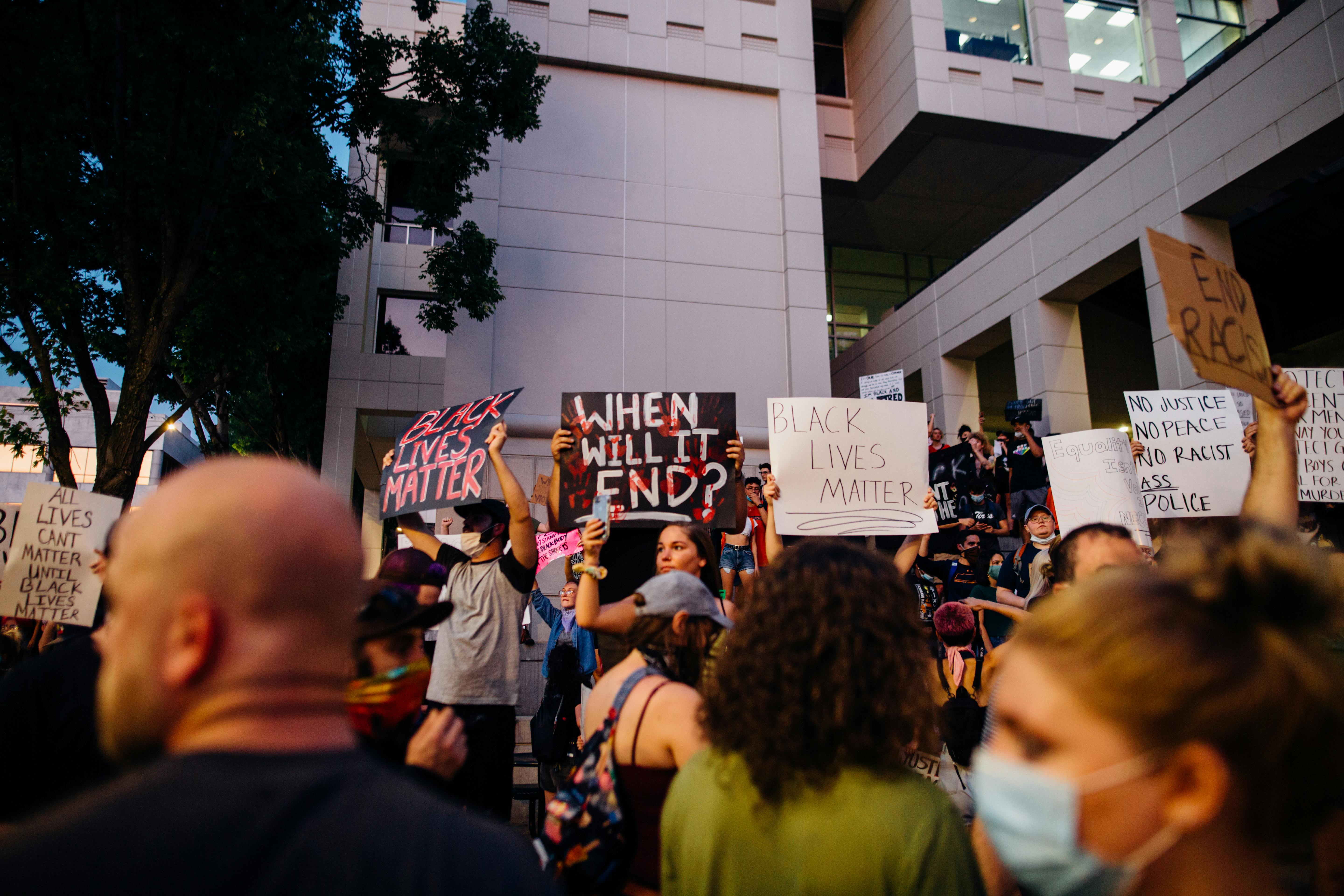
This pattern is so familiar that it has begun to feel like a metaphor for the political moment we inhabit. Public life seems to be organized around these short-lived thaws. A shocking event captures our attention, and outrage crystallizes, gathering people on the streets or filling our social media feeds with declarations and demands.
For a brief period, the emotional temperature rises, and it becomes possible to believe that enough is enough and that something decisive has shifted. We start believing that collective recognition will finally produce the structural change we have been begging for.
In the last couple of years, we have seen this repeatedly. Movements and protests that surge in response to immigration raids and racialized police brutality (#BLM), to the exposure of predators among elites (Epstein files, #MeToo movement), to wars that reveal the moral contradictions of global politics, and genocides. The revelations are often horrifying enough to cut through the numbness that otherwise governs public attention. Anger and solidarity become visible, and the air feels different.
But as weeks pass, institutions absorb the shock, and news cycles move forward. What felt like a decisive turning point begins to resemble another brief disturbance.
It is the political equivalent of false spring: a climate that repeatedly mobilizes feeling but struggles to sustain transformations. The difficulty lies partly in the nature of shock itself. Catastrophic events demand attention; they break our defensive routines, but shock is exhausting. But to remain permanently attuned to catastrophe(s) is psychologically intolerable. The psyche then oscillates between the exciting cycle of activation and withdrawal.
So, while our capacity to react remains intact, our ability to stay activated is increasingly fragile. We mobilize, protest, write, organize—and then get too tired to sustain the practice because it goes unheard, or because we experience temporary relief. A powerful figure is held responsible, and somewhat accountable (Trump gets impeached, Weinstein is imprisoned), or legal battles are won (Indian Youth Congress’s President and protestors are granted bail), or an institution acknowledges its failures
From “we need to change this,” we shift to “maybe change is not coming, we need to survive this.”
Hope and Dread are Intertwined
Hope doesn’t arrive without the shadow of dread because imagining a different future involves exposing oneself to the possibility that it may never arrive. Dread is not an obstacle to hope, but in fact part of the same psychic movement: what we want/long for is fragile. Hope stretches us towards a future, and dread reminds us that it is collapsible.
So, we wait for clearer signals before we fully commit. We create an emotional landscape which is marked by ambivalence: secretly hoping for transformation but never trusting the warmth.
But when the world around us is unstable—politically, economically, relationally—we must work towards holding an uneasy position: one where we continue to desire change, while knowing that disappointment is still possible.
In the therapy room, the couple recognizes how easily their plans can be dissolved. They oscillate between optimism and guardedness. The challenge is not just to endure this uncertainty, but to find ways to remain emotionally open without hardening into cynicism.
Our political lives present a similar challenge. If we wait for spectacular moments of violence and cruelty to provoke action, our collective responses will always remain reactive. We will move when the temperature spikes, and retreat when it drops. The deeper question is whether hope—and in essence, our humanness—can survive outside these dramatic fluctuations, as durable practices.
Spring does not arrive as a single event. It is an accumulation of small and gradual changes. The days grow longer, the flowers start blooming, the birds and the bugs return; we might notice the shift drastically, but the arrival is cyclical, smaller, less noticeable. None of these transformations is spectacular in isolation, but together, they alter the landscape.
Hope operates similarly.
Marches, protests, and public declarations in response to crises matter because they create moments of genuine solidarity. But these moments cannot remain disconnected from everyday practices of care and cooperation. Real spring requires patient effort and conditions that allow life to persist.
I think about this when I listen to this couple speak. Despite these uncertainties that surround them, they continue to show up for each other: in therapy and in their lives. They text each other, have date nights, and learn details about each other’s routines so that the distance feels less abstract. None of these gestures resolves their issues—both personal and political—but they create a fragile shared ground on which the relationship continues to stand.
Political hope requires something similar.
To have the capacity to react to cruelty, but also the willingness to cultivate forms of solidarity that do not depend on crisis to justify themselves. To enjoy the warmth of collective outrage, but to have the strength of doing the quiet, everyday labor of sustaining relationships, democratic institutions, and communities that make collective life possible.
The Ordinariness of Endurance
Week after week, as I watch this couple, I am struck by how ordinary endurance is. Their relationship is less about certainty and more about practice now, the repeated decision to stay and speak honestly about both the possibilities: of being together or breaking up.
But what can these markers look like in private and public life? What does it mean to build something that sustains hope and dread together?
Here’s my naive and definitely incomplete list:
1. Warmth without catastrophe: The world is unfair by design. We need outrage; we also need people gathering, organizing, and caring before a crisis demands it.
2. Sharing time without urgency: Conversations, meals, collaborations that are not structured entirely by emergency.
3. Attention that lingers: Remain present to an injustice even after the headlines move on. Overwhelm is not awareness/presence. Dissociation is not the answer.
4. Naming sacrifices honestly: Building a shared future often requires unequal burdens; we need the willingness to speak openly about those burdens.
5. Making solidarity ordinary: Mutual aid, neighborhood care, and collective study are forms of cooperation that need to become routine rather than exceptional.
6. Returning to imagination: Picture a future beyond survival, not to “manifest” it but to remind the self what it is that we work towards.
7. Flowers blooming without spectacle: Small acts of kindness, risk, and commitment that do not wait for cruelty to justify themselves.
Hope is not the certainty that the season has changed, but the decision to keep prepping the soil anyway, tending to each other and to fragile solidarities, all through the winter. Whether the spring is real or false, both will pass, and the work remains the same: to care for what might still bloom.
After all, spring is not a promise; it is a practice.

Psychic Weather: On (False) Spring

Psychic Weather is a new column at The Polis Project.
“We are not the first
Who, with best meaning, have incurr’d the worst.”
— Cordelia to Lear, King Lear (William Shakespeare, 1606)
In a world governed by instability, hope is rarely free of dread. To hope (and love) is to risk exposure to collapse. The promise of warmth arrives with the wisdom that it will go away. For all of us, this openness slowly becomes crowded out by caution, like a limited resource we need to ration carefully rather than believing in its expansion.
In Delhi, spring arrives unevenly. One day, the weather is pleasant enough to interrupt the harsh, dry winters. The ground feels just soft enough, the air smells sweet enough, to remind us of blooming semal flowers (Red Silk Cotton Tree), the thaw has begun! We plan to pack away our thick winter shawls and blankets, spring is almost here.
But the frosty air returns soon. Gardeners have a term for this: false spring. A brief rise in temperature can prompt some plants to bloom prematurely, exposing them to the freeze. The blossoms open because conditions are fairly favorable, but the season’s structural cold has not yet fully passed. When the cold air returns, some of these early blooms don’t survive—but a few endure it, altered by the cold.
Maybe something similar organizes our emotional and political life.
In therapy rooms and public spheres—social movements, everyday conversations about politics, our media, and social media—brief intervals of warmth are often followed by retreat. By warmth, I mean openness in intimate relationships, the willingness to risk vulnerability, the sudden solidarity that brings us together on the streets: moments that make us feel like change is possible.
These cycles of opening and withdrawal leave us all unsure: are we witnessing reliable change/movement or just a brief fluctuation in climate?
When Hope Feels Like a Slow Poison
As a therapist, I have recently been working with a couple whose relationship is unfolding across borders. Each of us appears in three small rectangles on a screen from three separate geographies—an arrangement that reminds us that intimacy today stretches across distances that love alone cannot bridge.
Their relationship is not in a dramatic crisis. Their struggle is difficult to name: the ground we stand on is perpetually unstable.
What do we do with this love and care when we are unsure about what happens next? Every fight in this situation feels magnified. The lines between personal, bureaucratic, and geographic instabilities blur to make a pile that can only be labelled “OH GOD WHAT IS GOING ON!” All plans are provisional, and the future is hypothetical.
Over time, these conditions reorganize the relationship itself. The border is the fourth presence in the room. One considers relocating but worries about finding a job, the other wonders whether they should alter their vision of the future—whether that means loosening attachments to language, work, and familiarity, or leaving behind their family—to make migration easier. There are conversations about whether marriage might help, even though they don’t feel ready, questions about language, culture, family obligations, who bears the cost of adaptation, and so on.
These negotiations seem practical, but they slowly acquire emotional weight. Each compromise raises a new question: how much of oneself can one change to sustain love?
While this dilemma seems logistical because we are speaking in terms of a couple, it is actually existential: What do we sacrifice, and how much, to avoid building up resentment? If decisions feel indefinitely delayed, will we lose the warmth that we try so hard to preserve?
In this sense, the global “tension” doesn’t just create geographical or economic instability; it reorganizes time, identities, and expectations. The relationships we share—with ourselves and the people around us—start to revolve around managing uncertainty. Plans are drafted cautiously, and excitement is tempered with a dose of realism. We measure hope carefully so disappointment does not feel catastrophic.
Watching this couple, I often feel we are stuck in a very particular emotional climate: warmth of love surrounded by the season of cold. They find moments of expansion: a good interview, a scheduled visit in advance, a beautiful apartment, and for a moment, it all feels possible. They allow themselves to imagine living in the same house, sharing ordinary routines, building a life that no longer requires relying on the whims and fancies of a “President.”
But then again, another delay arrives.
The warmth has receded.
Hope feels like a slow poison.
A Metaphor for the Political Moment
This pattern is so familiar that it has begun to feel like a metaphor for the political moment we inhabit. Public life seems to be organized around these short-lived thaws. A shocking event captures our attention, and outrage crystallizes, gathering people on the streets or filling our social media feeds with declarations and demands.
For a brief period, the emotional temperature rises, and it becomes possible to believe that enough is enough and that something decisive has shifted. We start believing that collective recognition will finally produce the structural change we have been begging for.
In the last couple of years, we have seen this repeatedly. Movements and protests that surge in response to immigration raids and racialized police brutality (#BLM), to the exposure of predators among elites (Epstein files, #MeToo movement), to wars that reveal the moral contradictions of global politics, and genocides. The revelations are often horrifying enough to cut through the numbness that otherwise governs public attention. Anger and solidarity become visible, and the air feels different.
But as weeks pass, institutions absorb the shock, and news cycles move forward. What felt like a decisive turning point begins to resemble another brief disturbance.
It is the political equivalent of false spring: a climate that repeatedly mobilizes feeling but struggles to sustain transformations. The difficulty lies partly in the nature of shock itself. Catastrophic events demand attention; they break our defensive routines, but shock is exhausting. But to remain permanently attuned to catastrophe(s) is psychologically intolerable. The psyche then oscillates between the exciting cycle of activation and withdrawal.
So, while our capacity to react remains intact, our ability to stay activated is increasingly fragile. We mobilize, protest, write, organize—and then get too tired to sustain the practice because it goes unheard, or because we experience temporary relief. A powerful figure is held responsible, and somewhat accountable (Trump gets impeached, Weinstein is imprisoned), or legal battles are won (Indian Youth Congress’s President and protestors are granted bail), or an institution acknowledges its failures
From “we need to change this,” we shift to “maybe change is not coming, we need to survive this.”
Hope and Dread are Intertwined
Hope doesn’t arrive without the shadow of dread because imagining a different future involves exposing oneself to the possibility that it may never arrive. Dread is not an obstacle to hope, but in fact part of the same psychic movement: what we want/long for is fragile. Hope stretches us towards a future, and dread reminds us that it is collapsible.
So, we wait for clearer signals before we fully commit. We create an emotional landscape which is marked by ambivalence: secretly hoping for transformation but never trusting the warmth.
But when the world around us is unstable—politically, economically, relationally—we must work towards holding an uneasy position: one where we continue to desire change, while knowing that disappointment is still possible.
In the therapy room, the couple recognizes how easily their plans can be dissolved. They oscillate between optimism and guardedness. The challenge is not just to endure this uncertainty, but to find ways to remain emotionally open without hardening into cynicism.
Our political lives present a similar challenge. If we wait for spectacular moments of violence and cruelty to provoke action, our collective responses will always remain reactive. We will move when the temperature spikes, and retreat when it drops. The deeper question is whether hope—and in essence, our humanness—can survive outside these dramatic fluctuations, as durable practices.
Spring does not arrive as a single event. It is an accumulation of small and gradual changes. The days grow longer, the flowers start blooming, the birds and the bugs return; we might notice the shift drastically, but the arrival is cyclical, smaller, less noticeable. None of these transformations is spectacular in isolation, but together, they alter the landscape.
Hope operates similarly.
Marches, protests, and public declarations in response to crises matter because they create moments of genuine solidarity. But these moments cannot remain disconnected from everyday practices of care and cooperation. Real spring requires patient effort and conditions that allow life to persist.
I think about this when I listen to this couple speak. Despite these uncertainties that surround them, they continue to show up for each other: in therapy and in their lives. They text each other, have date nights, and learn details about each other’s routines so that the distance feels less abstract. None of these gestures resolves their issues—both personal and political—but they create a fragile shared ground on which the relationship continues to stand.
Political hope requires something similar.
To have the capacity to react to cruelty, but also the willingness to cultivate forms of solidarity that do not depend on crisis to justify themselves. To enjoy the warmth of collective outrage, but to have the strength of doing the quiet, everyday labor of sustaining relationships, democratic institutions, and communities that make collective life possible.
The Ordinariness of Endurance
Week after week, as I watch this couple, I am struck by how ordinary endurance is. Their relationship is less about certainty and more about practice now, the repeated decision to stay and speak honestly about both the possibilities: of being together or breaking up.
But what can these markers look like in private and public life? What does it mean to build something that sustains hope and dread together?
Here’s my naive and definitely incomplete list:
1. Warmth without catastrophe: The world is unfair by design. We need outrage; we also need people gathering, organizing, and caring before a crisis demands it.
2. Sharing time without urgency: Conversations, meals, collaborations that are not structured entirely by emergency.
3. Attention that lingers: Remain present to an injustice even after the headlines move on. Overwhelm is not awareness/presence. Dissociation is not the answer.
4. Naming sacrifices honestly: Building a shared future often requires unequal burdens; we need the willingness to speak openly about those burdens.
5. Making solidarity ordinary: Mutual aid, neighborhood care, and collective study are forms of cooperation that need to become routine rather than exceptional.
6. Returning to imagination: Picture a future beyond survival, not to “manifest” it but to remind the self what it is that we work towards.
7. Flowers blooming without spectacle: Small acts of kindness, risk, and commitment that do not wait for cruelty to justify themselves.
Hope is not the certainty that the season has changed, but the decision to keep prepping the soil anyway, tending to each other and to fragile solidarities, all through the winter. Whether the spring is real or false, both will pass, and the work remains the same: to care for what might still bloom.
After all, spring is not a promise; it is a practice.