


Oppression and Dehumanization: Reading ‘Pedagogy of the Oppressed’ Amid Israel’s Genocide in Gaza
Note: The US attacked Iran on 28 February, 2026, at Israel’s behest, murdering the country’s Supreme Leader, Ayatollah Khameini. In the weeks that have ensued, the US and Israel have engaged in indiscriminate bombing and war crimes. However, this time, we find ourselves shrouded by a thick haze of censorship perpetrated by the genocidal media in the US and Israel. While the moment might feel terrifying and unprecedented, it is anything but. Each week, our editorial team will unpack and analyze seminal texts that help us make sense of this moment.
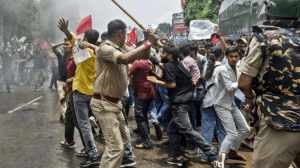
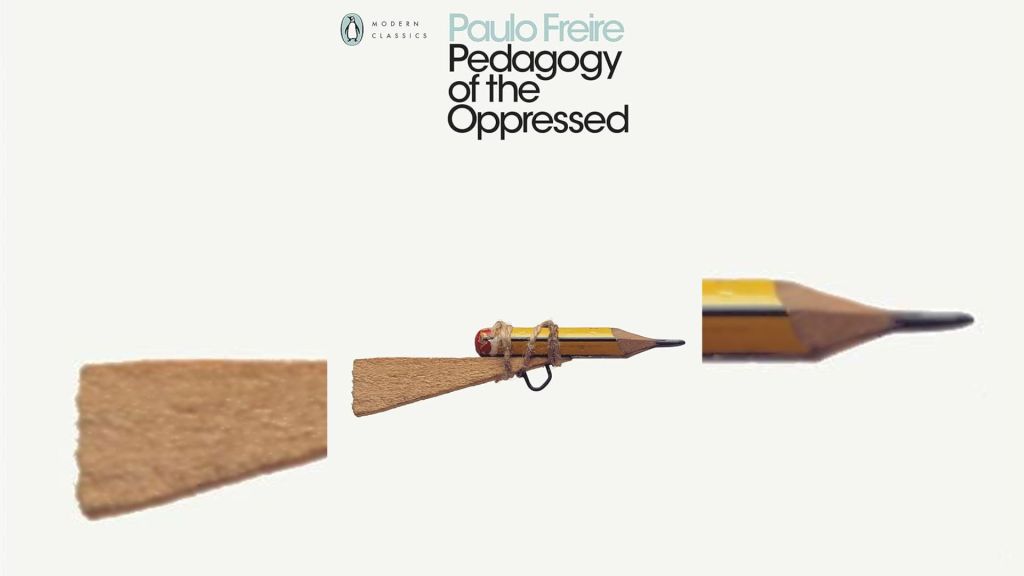
In 1968, a Brazilian educator wrote a book on the political nature of education and how to use emancipatory pedagogy against oppression while in exile due to the 1964 Brazilian coup d’état, in which the US helped install a military dictatorship. The book was eventually banned in apartheid South Africa and several Latin American countries.
But it found its way to its intended readers through underground networks, photocopies, and unofficial translations as a radical guidebook for liberation. Those who banned it knew the radical potential of the book, titled Pedagogy of the Oppressed.
There’s a line in Paulo Freire’s seminal book that stops you in your tracks: “To exist humanly is to name the world, to change it.” This forms the core of his philosophy: “humanization” is the true vocation of people; oppression leads to dehumanization of both the oppressed and the oppressor, albeit differently; being human is not possible through passive existence, but active participation in shaping reality.
Breaking Down Freire’s Ideas
For Freire, “naming the world” is not empty “verbalism”. When people name their world, they move from being objects—acted upon by forces they don’t control—to subjects who can think critically about those forces and recognize injustice, inequality, and power.
Freire argues that this naming is incomplete without transformation. This is where the Marxist writer’s idea of praxis comes in: reflection combined with action.
He draws a boundary between humanization and dehumanization. When people are denied the ability to name their world—through censorship, oppression, or systems like the “banking” model of education—they are pushed into silence. They are reduced to objects, unable to define their own reality and exist as human beings.
Pedagogy of the Oppressed opens with the question of what it means to be completely human when it is violently interrupted by systems of oppression. If “humanization” or becoming more completely human is the fundamental vocation of every person, then “dehumanization” is not just injustice. It is a violation of something ontological, something written into existence itself.
Dehumanization is Not a One-Way Street
Dehumanization is also the key tool of the oppressor. Over time, the oppressed begin to internalize the oppressor’s image of them — lazy, ignorant, incapable, less than human. The model of “what it means to be a man (human)” is then so thoroughly colonized by that image that liberation looks like becoming the oppressor rather than dismantling oppression itself. Freire would thus urge the oppressed to take on the task of structural, revolutionary transformation to break this cycle.
One of the most interesting things Freire shines light on is that the process of dehumanization is not a one-way street. Dehumanization, he writes, is “the result of an unjust order that engenders violence in the oppressors, which in turn dehumanizes the oppressed.”
This is Freire’s central provocation: oppression produces a damaged world in which both the oppressed and the oppressor are affected, although never equally or similarly. The oppressed are denied their humanity outright, while the oppressor, in the very act of domination, distorts his own humanity.
How does this distortion manifest? He writes: “Apart from direct, concrete, material possession of the world and of people, the oppressor consciousness could not understand itself — could not even exist.”
Applying Freire to Israel’s Genocide in Palestine
In the context of Israel’s colonization of Palestine, Palestinians have been rendered as abstract categories—security threats, demographic problems, collateral damage. This is precisely the kind of objectification Freire describes, that which enables violence by first stripping away personhood.
Say, for example, when Palestinians are called “vermins” with genocidal intent by Zionists, or when a six-year-old Palestinian girl is killed along with her family, and paramedics who came to help, by the Israel Defense Forces, do the actors not lose their humanity in dehumanizing those acted upon? [Worth noting that “dehumanization” also constitutes the fourth of the ten stages of genocide.]
Dehumanization accompanies the denial of the power to name one’s world, one’s reality, and thus the power to change the said reality. Naming is political because it is contested. Freire writes: “Dialogue cannot occur between those who want to name the world and those who do not wish this naming … Those who have been denied their primordial right to speak their word must first reclaim this right and prevent the continuation of this dehumanizing aggression.”
Connections with Edward Said
To read Edward Said alongside Freire is to see naming/narrating as a battleground. Said argues that Palestinians have not only been dispossessed materially but narratively, with their reality overwritten. They are denied the permission to narrate, and to their own narrative. When a people cannot narrate their own condition, they are erased.
“Facts do not at all speak for themselves, but require a socially acceptable narrative to absorb, sustain and circulate them,” writes Said in his 1984 essay “Permission to Narrate.”
The systemic policing and erasure of Palestinian voices is much more widely documented today than when Said wrote his essay. But it remains relevant as the core issues of occupation and violence have only grown.
When Palestinians are killed in Gaza, major media publications rooted in Western liberal sensibilities refuse to name the killer—Israel. A “progressive” politician like Zohran Mamdani calls Palestinian-American author Susan Abulhawa “reprehensible”. Despite ample historical records, Palestinian resistance against occupation, whether through narration, political organization, or arms, is easily vilified. At the same time, there remains a moral isolation around Israel’s actions and the genocidal aims of Zionism.
Mohammad El-Kurd and “Perfect Victims”
Today, as the digital world has opened up the scope for more Palestinians to speak to the world and livestream their own genocide, it is no longer permission that they need, but performance. Mohammad El-Kurd argues in his book Perfect Victims: And the Politics of Appeal (2025) that when Palestinians narrate, they are forced to do so under conditions set by power.
They are compelled to produce a non-threatening victimhood to earn empathy, narrative credibility, and be worthy of justice. This demand itself is a mechanism of control. In the 21st century, the world of power has moved on from outright silencing to conditional listening.
Bringing in Said and El-Kurd here is not a digression but a testament to how Freire’s work, like Frantz Fanon’s, continues to resonate with those who want to transform the world. It stays relevant because situations of oppression continue to innovate, worsen, and expand. It also proposed new frameworks of education, with students and teachers as collaborative re-creators of knowledge and, by extension, the world.
Freire’s work survived suppression and moved across borders, languages, and eras because it addressed something fundamental: who gets to think, speak, and shape reality.
Join us


Oppression and Dehumanization: Reading ‘Pedagogy of the Oppressed’ Amid Israel’s Genocide in Gaza
By The Polis Project
April 1, 2026
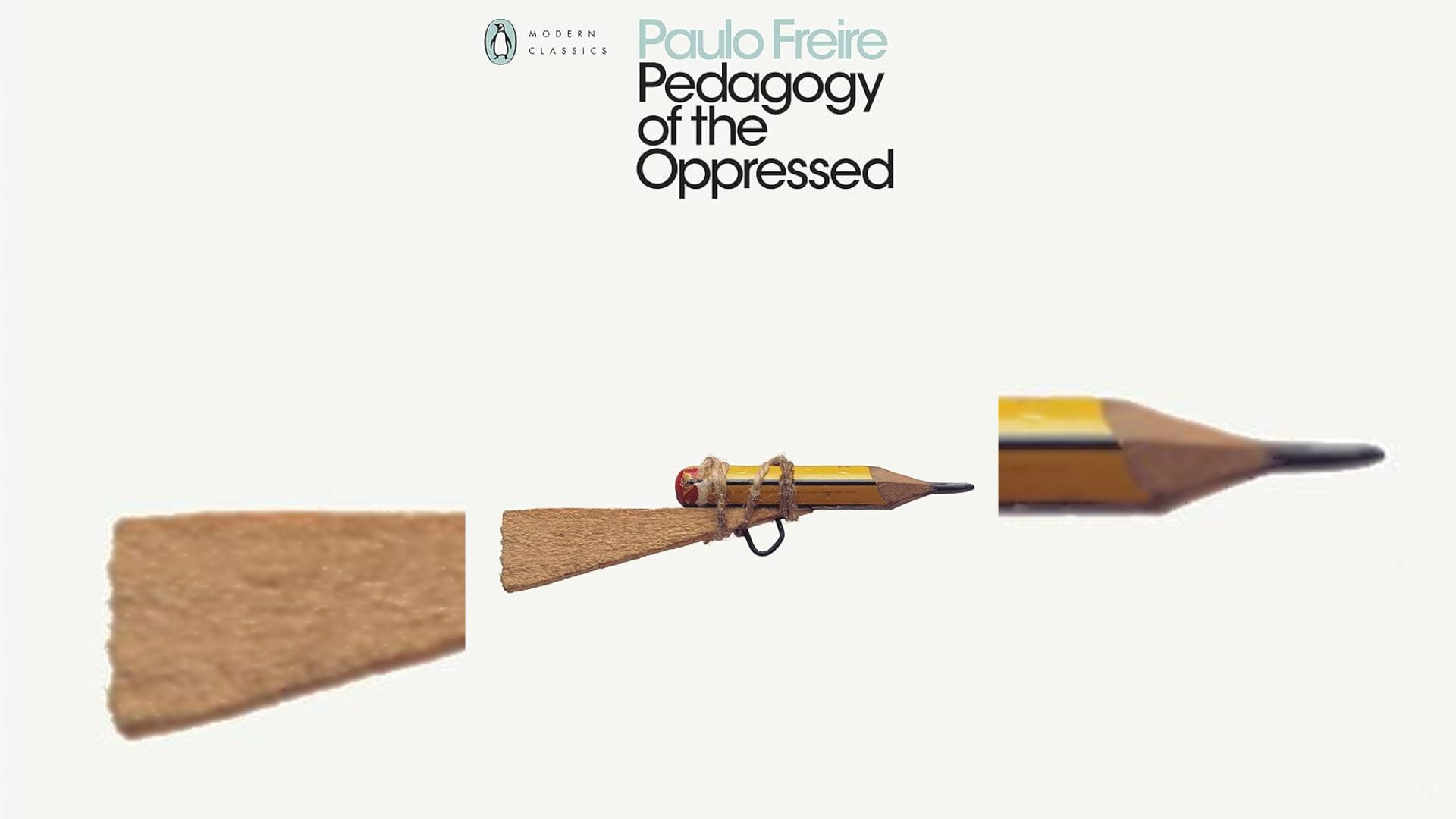
Paulo Freire’s work survived suppression and moved across borders, languages, and eras because it addressed something fundamental: who gets to think, speak, and shape reality.
Note: The US attacked Iran on 28 February, 2026, at Israel’s behest, murdering the country’s Supreme Leader, Ayatollah Khameini. In the weeks that have ensued, the US and Israel have engaged in indiscriminate bombing and war crimes. However, this time, we find ourselves shrouded by a thick haze of censorship perpetrated by the genocidal media in the US and Israel. While the moment might feel terrifying and unprecedented, it is anything but. Each week, our editorial team will unpack and analyze seminal texts that help us make sense of this moment.
In 1968, a Brazilian educator wrote a book on the political nature of education and how to use emancipatory pedagogy against oppression while in exile due to the 1964 Brazilian coup d’état, in which the US helped install a military dictatorship. The book was eventually banned in apartheid South Africa and several Latin American countries.
But it found its way to its intended readers through underground networks, photocopies, and unofficial translations as a radical guidebook for liberation. Those who banned it knew the radical potential of the book, titled Pedagogy of the Oppressed.
There’s a line in Paulo Freire’s seminal book that stops you in your tracks: “To exist humanly is to name the world, to change it.” This forms the core of his philosophy: “humanization” is the true vocation of people; oppression leads to dehumanization of both the oppressed and the oppressor, albeit differently; being human is not possible through passive existence, but active participation in shaping reality.
Breaking Down Freire’s Ideas
For Freire, “naming the world” is not empty “verbalism”. When people name their world, they move from being objects—acted upon by forces they don’t control—to subjects who can think critically about those forces and recognize injustice, inequality, and power.
Freire argues that this naming is incomplete without transformation. This is where the Marxist writer’s idea of praxis comes in: reflection combined with action.
He draws a boundary between humanization and dehumanization. When people are denied the ability to name their world—through censorship, oppression, or systems like the “banking” model of education—they are pushed into silence. They are reduced to objects, unable to define their own reality and exist as human beings.
Pedagogy of the Oppressed opens with the question of what it means to be completely human when it is violently interrupted by systems of oppression. If “humanization” or becoming more completely human is the fundamental vocation of every person, then “dehumanization” is not just injustice. It is a violation of something ontological, something written into existence itself.
Dehumanization is Not a One-Way Street
Dehumanization is also the key tool of the oppressor. Over time, the oppressed begin to internalize the oppressor’s image of them — lazy, ignorant, incapable, less than human. The model of “what it means to be a man (human)” is then so thoroughly colonized by that image that liberation looks like becoming the oppressor rather than dismantling oppression itself. Freire would thus urge the oppressed to take on the task of structural, revolutionary transformation to break this cycle.
One of the most interesting things Freire shines light on is that the process of dehumanization is not a one-way street. Dehumanization, he writes, is “the result of an unjust order that engenders violence in the oppressors, which in turn dehumanizes the oppressed.”
This is Freire’s central provocation: oppression produces a damaged world in which both the oppressed and the oppressor are affected, although never equally or similarly. The oppressed are denied their humanity outright, while the oppressor, in the very act of domination, distorts his own humanity.
How does this distortion manifest? He writes: “Apart from direct, concrete, material possession of the world and of people, the oppressor consciousness could not understand itself — could not even exist.”
Applying Freire to Israel’s Genocide in Palestine
In the context of Israel’s colonization of Palestine, Palestinians have been rendered as abstract categories—security threats, demographic problems, collateral damage. This is precisely the kind of objectification Freire describes, that which enables violence by first stripping away personhood.
Say, for example, when Palestinians are called “vermins” with genocidal intent by Zionists, or when a six-year-old Palestinian girl is killed along with her family, and paramedics who came to help, by the Israel Defense Forces, do the actors not lose their humanity in dehumanizing those acted upon? [Worth noting that “dehumanization” also constitutes the fourth of the ten stages of genocide.]
Dehumanization accompanies the denial of the power to name one’s world, one’s reality, and thus the power to change the said reality. Naming is political because it is contested. Freire writes: “Dialogue cannot occur between those who want to name the world and those who do not wish this naming … Those who have been denied their primordial right to speak their word must first reclaim this right and prevent the continuation of this dehumanizing aggression.”
Connections with Edward Said
To read Edward Said alongside Freire is to see naming/narrating as a battleground. Said argues that Palestinians have not only been dispossessed materially but narratively, with their reality overwritten. They are denied the permission to narrate, and to their own narrative. When a people cannot narrate their own condition, they are erased.
“Facts do not at all speak for themselves, but require a socially acceptable narrative to absorb, sustain and circulate them,” writes Said in his 1984 essay “Permission to Narrate.”
The systemic policing and erasure of Palestinian voices is much more widely documented today than when Said wrote his essay. But it remains relevant as the core issues of occupation and violence have only grown.
When Palestinians are killed in Gaza, major media publications rooted in Western liberal sensibilities refuse to name the killer—Israel. A “progressive” politician like Zohran Mamdani calls Palestinian-American author Susan Abulhawa “reprehensible”. Despite ample historical records, Palestinian resistance against occupation, whether through narration, political organization, or arms, is easily vilified. At the same time, there remains a moral isolation around Israel’s actions and the genocidal aims of Zionism.
Mohammad El-Kurd and “Perfect Victims”
Today, as the digital world has opened up the scope for more Palestinians to speak to the world and livestream their own genocide, it is no longer permission that they need, but performance. Mohammad El-Kurd argues in his book Perfect Victims: And the Politics of Appeal (2025) that when Palestinians narrate, they are forced to do so under conditions set by power.
They are compelled to produce a non-threatening victimhood to earn empathy, narrative credibility, and be worthy of justice. This demand itself is a mechanism of control. In the 21st century, the world of power has moved on from outright silencing to conditional listening.
Bringing in Said and El-Kurd here is not a digression but a testament to how Freire’s work, like Frantz Fanon’s, continues to resonate with those who want to transform the world. It stays relevant because situations of oppression continue to innovate, worsen, and expand. It also proposed new frameworks of education, with students and teachers as collaborative re-creators of knowledge and, by extension, the world.
Freire’s work survived suppression and moved across borders, languages, and eras because it addressed something fundamental: who gets to think, speak, and shape reality.
SUPPORT US
We like bringing the stories that don’t get told to you. For that, we need your support. However small, we would appreciate it.
Related Posts