




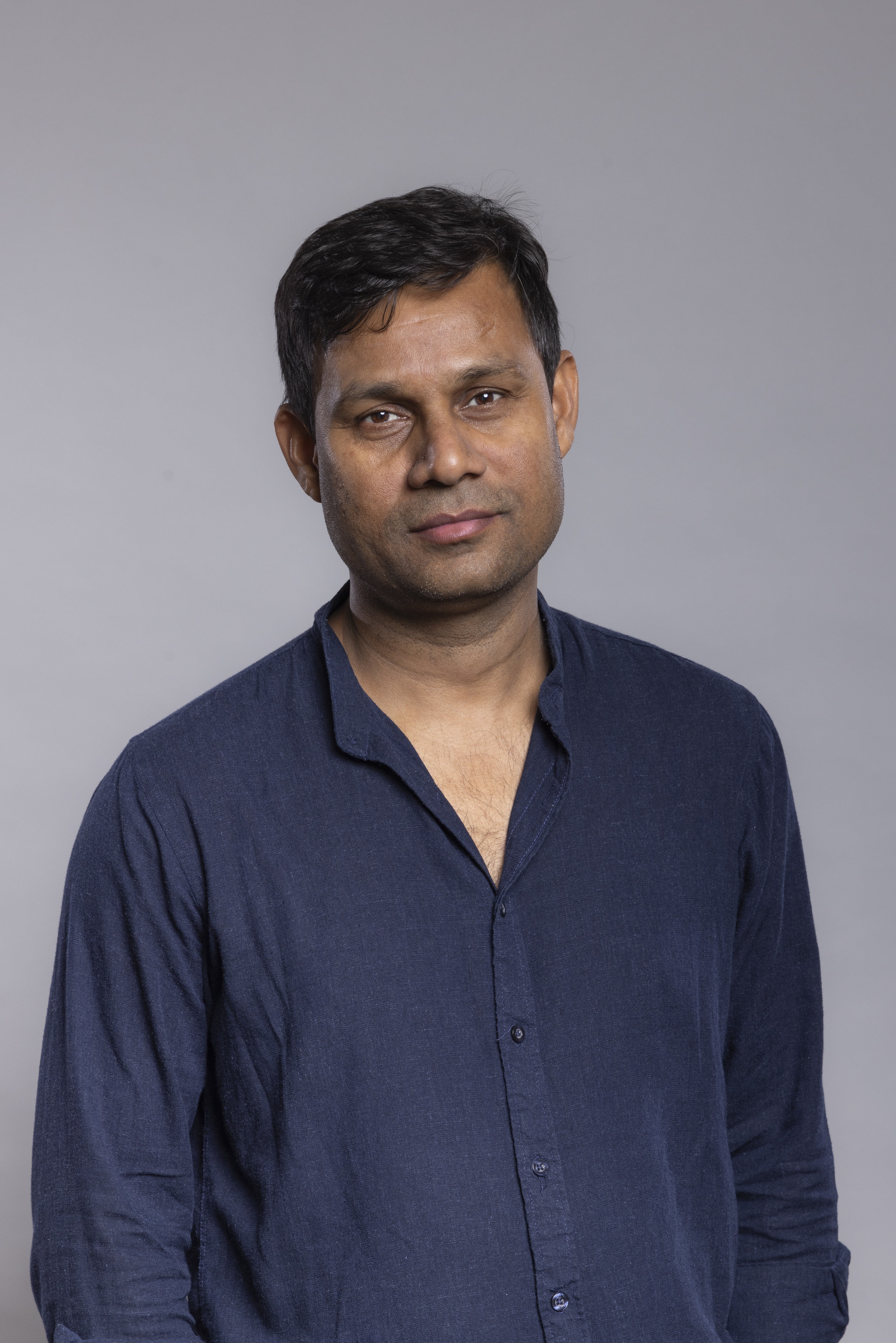
In Nepalese filmmaker Deepak Rauniyar’s 2024 political drama, the first thing that unsettles you is the title: Pooja, Sir: Rajagunj. “Pooja,” a name synonymous with Hindu worship, is commonly given to daughters in Indian and Nepali Hindu cultures. But here, it is jarringly paired with “Sir,” a word deeply rooted in masculine, institutional authority.
“We revere our daughters as goddesses,” Rauniyar explained. “However, we revere them as long as they do not challenge authority or the ideologies of the people who worship them. I wanted the title to reflect that hypocrisy.”
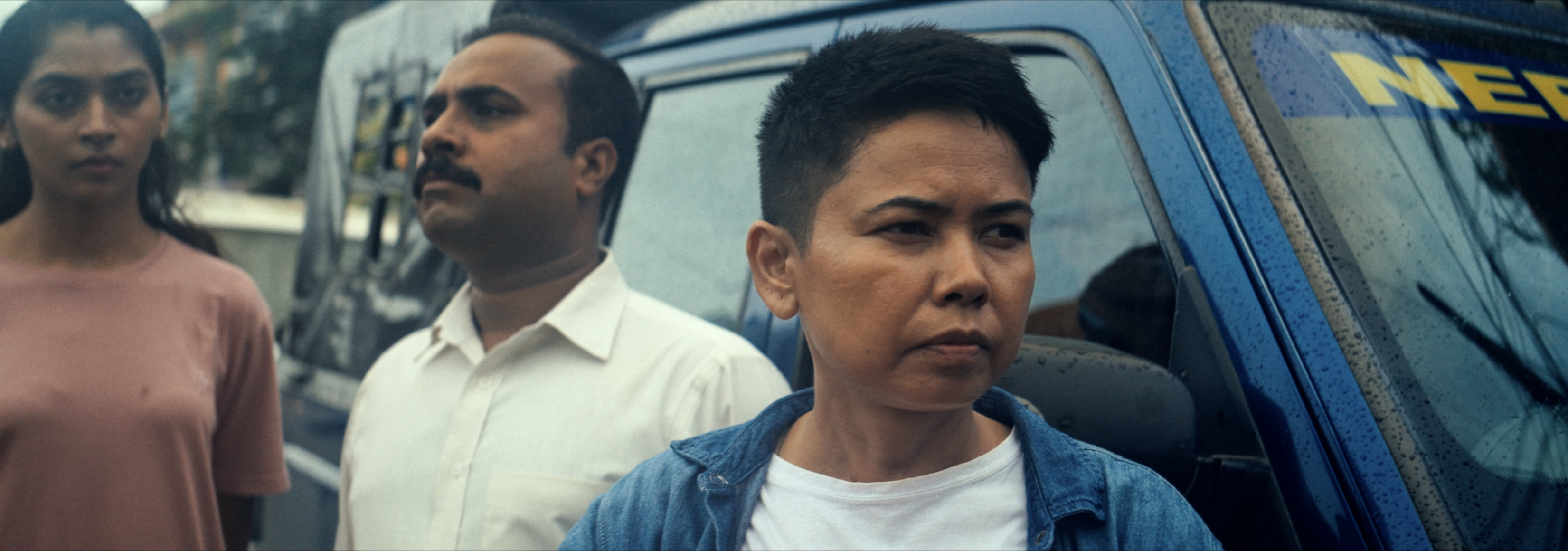
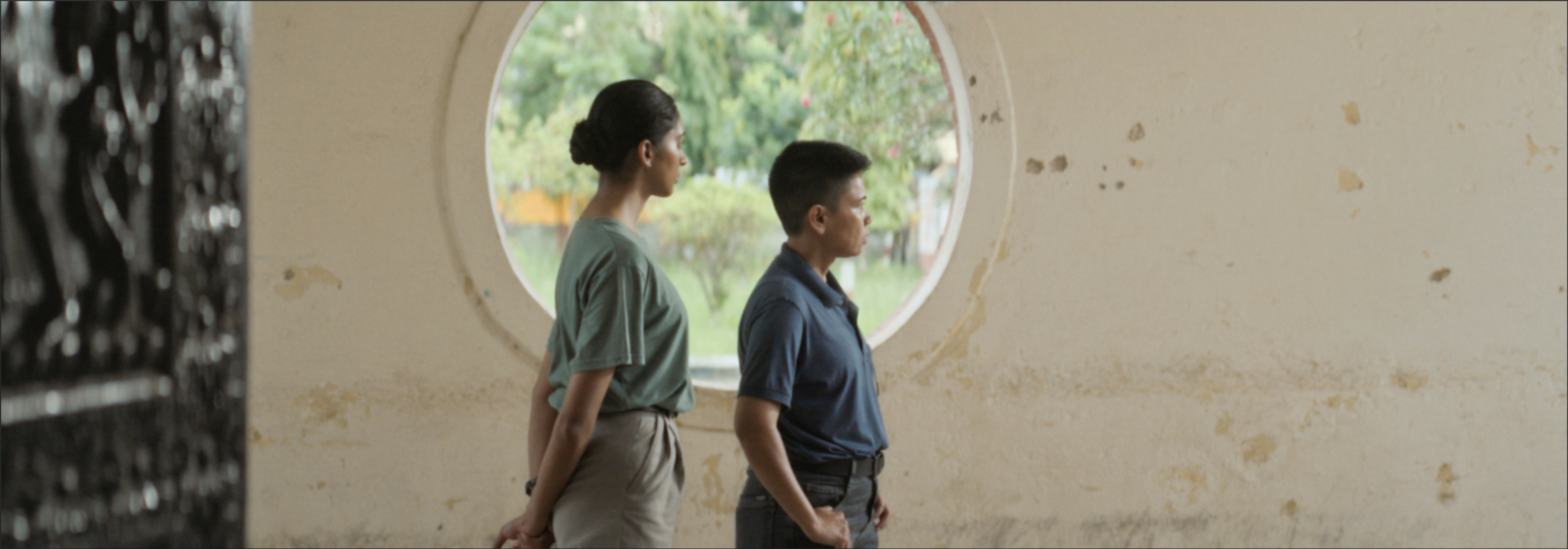
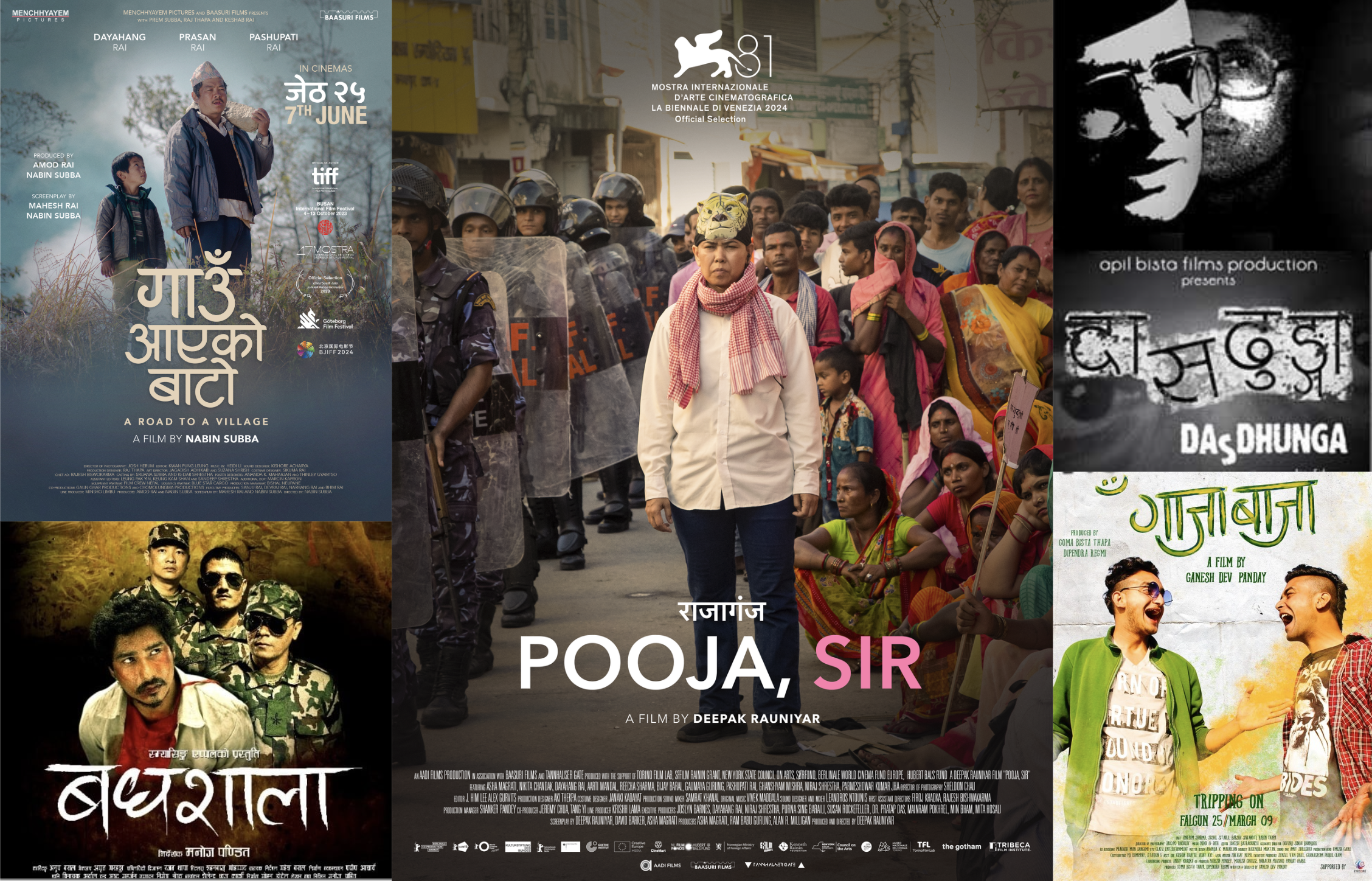
Pooja, Sir: Rajagunj narrates the story of a queer female police officer, Pooja (Asha Magrati), in the fictional town of Rajagunj, investigating the disappearance of two boys amidst rampant political unrest and misogyny. Magrati said that during their research, many female police officers preferred being addressed as ‘sir’ rather than ‘ma’am’ to be taken seriously in a heavily dominated male police workforce.
This linguistic inclusion reflects the country’s dynamics: to be heard or seen, it is crucial to command more power. It also ties gendered vocabulary, state suppression, and injustice towards marginalized communities into a subversive, uncompromising narrative.
Pooja, Sir also centers on the 2015 Madhesi protests, sparked by pervasive, historic racial discrimination against the Madhesi community. Over 50 people were killed opposing the government’s new constitution that failed to address Madhesis’ requests for greater political representation and social equality. The protests triggered a blockade at key border points and restricted medical supplies, food, and fuel from the country until early 2016.
The film’s underlying subtext—about who gets to be seen and who stays invisible—spilled behind the scenes, too. When Rauniyar submitted Pooja, Sir for certification, the censor board members demanded the script and suggested “corrections” before even watching the film.
Premiering at the Venice Film Festival in October 2024, the film’s teaser release and international coverage clearly foregrounded the Madhesi protests. It was not only the film’s content that unnerved the censor board, but also Rauniyar’s identity as a Madhesi. “I’ve had my Madhesi identity questioned at restaurants and police stations,” he shared, “and I did not want it to be a hindrance here as well.”
“I was pleading with them to expedite the certification process, but all I got was hostility,” Rauniyar added. Then came a plot twist: Rauniyar found out that Gajendra Kumar Thakur—the Censor Board Chair and Assistant Secretary of Nepal’s Ministry of Communication and Information Technology, who was attempting to block the film—was a Madhesi himself.
The irony of a film about violence against Madhesis being obstructed by someone from the very community he belongs to was not lost on Rauniyar. “Without having watched a single scene, he accused me of inciting racial conflict,” he said. “They had already made up their minds to block the film’s release, and the best way to do that was by simply delaying it with unnecessary roadblocks.” Only after repeated requests did the members watch Pooja, Sir for the first time, just two weeks before its release in March 2025.
“Since the protests were not widely reported, we have no iconic, defining image of the Madhesi movement,” Rauniyar noted. “This film was supposed to be our visible record.”
How Film Censorship Works in Nepal
Nepal has two institutions for film regulation: the Film Development Board, a government body responsible for the development and promotion of movies, and the Film Censor Board, an administrative unit under the Ministry of Information and Communication.
The Censor Board lacks both a clear legal mandate and expertise, in the form of senior artists from the film industry. “It is staffed mostly by political appointees and bureaucrats who favor the ruling government’s narratives while penalizing those who indulge in political dialogue,” explained Tara Nath Dahal, founder and CEO of Freedom Forum, a non-governmental organization working for the institutionalization of democracy, protection, and promotion of human rights.
Dahal is concerned that this top-down interference sets a worrying precedent for filmmakers who make politically driven movies. “Censors routinely justify cuts and edits on the pretext to safeguard ‘national interest’—a framing that is used as a weapon to censor political movies,” she said.
Filmmaker Nabin Subba, widely regarded as the pioneer of Nepal’s independent film movement and a vocal opponent of the censorship of Pooja, Sir: Rajagunj, argued that the erasure is not restricted just to one politically motivated film. Censorship, he explained, is deeply structural, beginning well before a film reaches the editor’s table.
In Nepal, the script must first be registered with the Film Development Board. If the film contains references to security agencies such as the police or the army, prior approval from those institutions or a ‘no objection’ letter must be sought. “These decisions are made by political figures and not independent experts equipped with knowledge of cinema or filmmaking, thus causing our films to suffer,” Subba said.
The Censor Board sits inside Singha Durbar, a palace in Kathmandu that houses the government’s administrative offices. Rauniyar described the certification process as tedious and almost intimidating. Filmmakers need permission to simply enter the government premises. “When you do receive the approval, ‘soldiers’ escort you in,” Rauniyar recalled.
Then, the filmmakers wait for a screening date, where Board members—usually party cadres from various ministries—view and certify the film. Here, the filmmakers are expected to cover their miscellaneous expenses. “You pay for lunch, drinks, and even taxi fare. Then, you hope your movies get certified. And if it doesn’t, you don’t know when they’ll watch it again,” he added.

The Scene the State Didn’t Want Audiences to Watch
In Rauniyar’s case, the Censor Board expanded the panel and brought in more “senior officials” to watch Pooja, Sir, whereupon they demanded 17 cuts. The additional scrutiny stemmed from the film’s inclusion of archival footage featuring the sitting prime minister, K.P. Sharma Oli, using abusive language to describe Madhesis during the protests.
Though the footage was legally sourced from an independent news portal, the board insisted on getting additional clearance from the Prime Minister’s office. Although Oli was not the prime minister during filming, his fourth stint began on July 14th, 2024, meaning Pooja, Sir would reach local audiences while he was still in office; this made the board members nervous.
The laundry list of cuts did not end there. “The board demanded all Hindi dialogues be subtitled, claiming them to be ‘foreign’,” shared Rauniyar. The demand, he argued, read as selective nationalism, as they also forced him to delete “Bharat” from the movie. It also seemed striking because Bollywood movies are screened without any English subtitles in Nepal; after all, Hindi is widely spoken in the country. It is worth noting that the Board did not demand insertion of any subtitles during the scenes featuring Maithili dialogues, a language spoken less than Hindi.
“While we were still requesting them to watch the film, a member of the board went to the media, blaming me for making a controversial movie—even before seeing it,” Rauniyar said. “This isn’t the kind of publicity I was hoping for. I did not want my battle with the Censor Board to precede the moviegoer’s perception.”
Rauniyar chose to take the legal route. However, his lawyers warned him that the court would never go against the Prime Minister’s office, and even if it did, it could take anywhere from six months to six years to receive a potentially unfavorable judgment. Moreover, the film would get completely lost in the process.
Giving in seemed like the only choice. After all, the film had endured eight years of production, and its financing had collapsed twice: once in 2020 due to Covid-19 and then in 2022 due to Magrati’s cancer diagnosis, during which filming stopped, and grants were withdrawn. Friends and locals, including Madhesis, volunteered to help. Hundreds of people—hotel owners, shopkeepers, and community members—supported him financially. Rauniyar shared, “Some even filled in as extras.”
The thought of the movie not being screened in theatres was devastating. “How can the people who made the movie possible be deprived of their right to watch it?” Rauniyar asked.
For Rauniyar, the personal stakes were also high. Both his wife and he come from different worlds. While he is Madhesi, Magrati is Pahadi–a light-skinned ethnic group that historically holds a higher status than the dark-skinned Madhesis. “Our union is a bridge between two distinct communities,” the filmmaker shared.
Before marrying Rauniyar, Magrati admitted that she was oblivious to the discrimination faced by Madhesis. “But later,” she said, “I witnessed the systemic exclusion of my husband by the government first-hand.” That awareness made the movie even more urgent.
The film was finally approved on the fourth viewing, after two weeks of intense back and forth, and the certificate was handed over only after the board had received the final copy of the altered film with all its suggested edits in place. Rauniyar thus accepted the cuts reluctantly—but not without an act of resistance.
Making the Censorship Visible
Midway through Pooja, Sir, the camera pans to a TV screen playing a news broadcast of Prime Minister Oli, but then abruptly, the screen cuts to black. The black frame silently lingers for a few seconds, long enough for viewers to understand that it was not a technical glitch but an intentional narrative device. The missing scene included the archival footage of Oli reacting to the police killing of Madhesi protesters during the 2015 unrest as “a few falling mangoes don’t make a difference.”
To Rauniyar, it was not just a scene, but a rare visual memory of state violence towards his people. “The erasure of the pivotal scene by the board meant erasing history,” he said. But as viewers, the very scene the censor board tried to suppress drew attention to it–black frames indicating that even if the images were removed, the act itself of removal could still have a lasting impact.
It happens again—across nearly ten scenes—where dialogues cut out mid-conversation. In a routine police procedural scene where cops are discussing the chain of command, the utterance of a certain word drops out completely. Rauniyar said the board’s instruction was specific: any mention of the word “Prime” in reference to the Prime Minister must be edited out. However, instead of removing the dialogues entirely, he chose to simply mute “Prime.” Through repeated muting of a single word, he transformed what would have been a routine exchange into a visible representation of political control—not through sound, but silence.
“I wanted my audience to witness the silence that was forced upon me and ensure they knew exactly what was censored,” said Rauniyar.
When Pooja, Sir finally hit Nepal’s theatres, it ran only for two weeks. “Why should we watch a badly censored movie?” Rauniyar said, citing public sentiment that caused this short run at the box office. Yet, he did not anticipate the political resonance the film would have within Nepal, as opposition leaders attended screenings and endorsed its message.
Solidarity and Global Reception
While Former Prime Minister Baburam Bhattarai spoke out against the censorship, the National Independent Party (Rastriya Swatantra Party) MP Asim Shah was most vocal in his support of the film. During the House of Representatives meeting held last March, Shah criticized the film’s censorship, arguing that the government was curbing artistic expression, and challenged the presence of political appointees on the censor board.
Subsequently, in a rare display of solidarity, 15 filmmakers joined Rauniyar at a press conference at Mandala theatre in Kathmandu to condemn the Board’s handling of Pooja, Sir. The collective outcry moved beyond one film and shifted to address a recurring pattern of censorship. Attendees shared their personal run-ins with the censor board, reiterating how its interventions deprive films of cultural nuance and authentic storytelling.
For instance, filmmaker Deepak Raj Giri recalled having to seek permission simply to dress an actor in a police uniform amid concerns that depicting the police force as corrupt could evoke outrage, while actor Dayahang Rai questioned the absurdity of objections over dialogues mentioning names of foreign countries.
Pooja, Sir extended beyond Nepal’s borders, releasing in its uncensored form in the U.S., U.K., Switzerland, France, and Canada. During international screenings at Harvard and Boston University, discussions centred more on the history it documented than the controversy surrounding its censorship. “To me, it was a document of suppressed history—a glimpse into how democracies stifle dissent in plain sight,” said Dhruv Saxena, a journalist and Boston University student who attended the screening.
International reviews followed suit. Cineuropa praised “the film’s complex series of interlocking relations and tensions between ethnicity, class, caste and gender,” and Film Fest Report called it “a cinematic voice that transcends years of agony among the nation and stings with clarity and absolute honesty.”
A Censorship Behemoth and Self-Censorship
Filmmaker Nabin Subba, who attended the Mandala theatre press conference, said his own experience with the Censor Board shaped his solidarity towards Rauniyar. His 2023 film, Gaun Aayeko Bato (The Road to the Village), centered on a father and son from the indigenous Rai community whose lives are irrevocably transformed by the arrival of a newly constructed road—a metaphor for the clash between deeply-embedded customs and pressures of rapid development.
References to the police triggered the need for prior approval from the police department. “But when [the board] attempted to alter the script itself, we decided to proceed without the approval,” Subba said. When the film reached the Censor Board’s office, a traditional set of instructions followed: display health warnings about alcohol and smoking, and also blur on-screen displays of products endorsing drinking or smoking.
However, this directive clashed with the film’s theme of the displacement of local products by market forces. “If we had followed their directive fully, the movie’s message would have been diluted,” Subba said. So, while they included the health warning, they disobeyed the order to blur those references.
Subba views his ability to push back as a privilege stemming from years of industry experience. “My standing in the industry gives me courage,” he noted. “But lesser-known creators remain silent. To them, resistance comes with irreversible risks.”
Filmmaker Ganesh Dev Panday understands this form of state resistance all too well. In 2016, the Film Development Board refused to even register the title of his film Gaja Baja (Gaja Means Marijuana), a stoner comedy about the misadventures of two buddies drifting aimlessly through Kathmandu. In the film, marijuana serves as a symbol for a generation lost, seeking escape in contemporary Nepali society.
Panday filed a writ petition in Nepal’s Supreme Court, arguing the ban violated his freedom of expression. “They said the title could promote drug use,” he noted, adding that marijuana appears only metaphorically. “What I was showing was political satire on youth and drug culture.” Panday’s refusal to moralize unsettled the regulatory system that is prone to endorsing social order. The film remained stuck for almost two years.
He eventually won his case, but the two-year battle caused him severe financial and mental distress. “Blur these scenes, mute these dialogues,” Panday recalled the instructions. “You know the board is resistant to reality when it asks you to blur a scene featuring a wall with political graffiti that stands tall in the city—and isn’t a part of a movie set.”

Panday is particularly frustrated with the double standard, where foreign movies such as Animal (2023) or One Battle After Another (2025) released freely in Nepal despite graphic violence, drug use, and explicit language.
“Our battle is not restricted to one film,” said filmmaker Manoj Pandit, whose career has been characterized by several contentious run-ins with the censor board. “It is about fighting a system that constantly silences truth.” Pandit’s 2010 film Dasdhunga—based on the mysterious death of CPN-UML leader Madan Bhandari, linked directly to powerful political figures—was the subject of much scrutiny. “The board watched the film several times,” he recalled. “Every time, I was made to submit documentation and evidence to substantiate the events taking place in the film.”
Ultimately, Pandit noted that the political pushback against the questions the film posed—namely, why did the government never pursue the culprits—was immensely revealing.
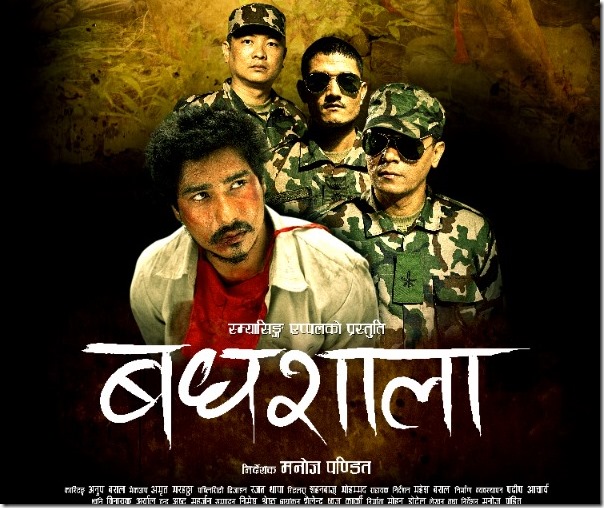
However, his 2013 film, Badhshala (Slaughterhouse)—on the army’s torture of Maoist detainees during the 1996-2006 civil war—was banned outright. First, the army argued that the actors were wearing military uniforms without their permission. But as pressure grew, they rephrased their position to adopt a more political tone, claiming the film could “derail the peace process” by bringing unresolved trauma surrounding the war to the surface.
It wasn’t just the depiction of the torture scenes that perturbed the Censor Board, but fear over national conversations around judicial accountability (or lack thereof). The Nepal Army even wrote an official letter to the state authority barring the film from certification altogether.
“It was clear that the government did not want the movie to hit theatres,” Pandit reflected. But protests by filmmakers, media professionals, and activists framed the ban as a creative violation. Pandit even went as far as presenting a DVD of the film to the then-Prime Minister as a last resort. “Only after sustained outrage did the state cave in,” Pandit shared, although the film was only cleared for screening after he deleted the “problematic torture scenes.”
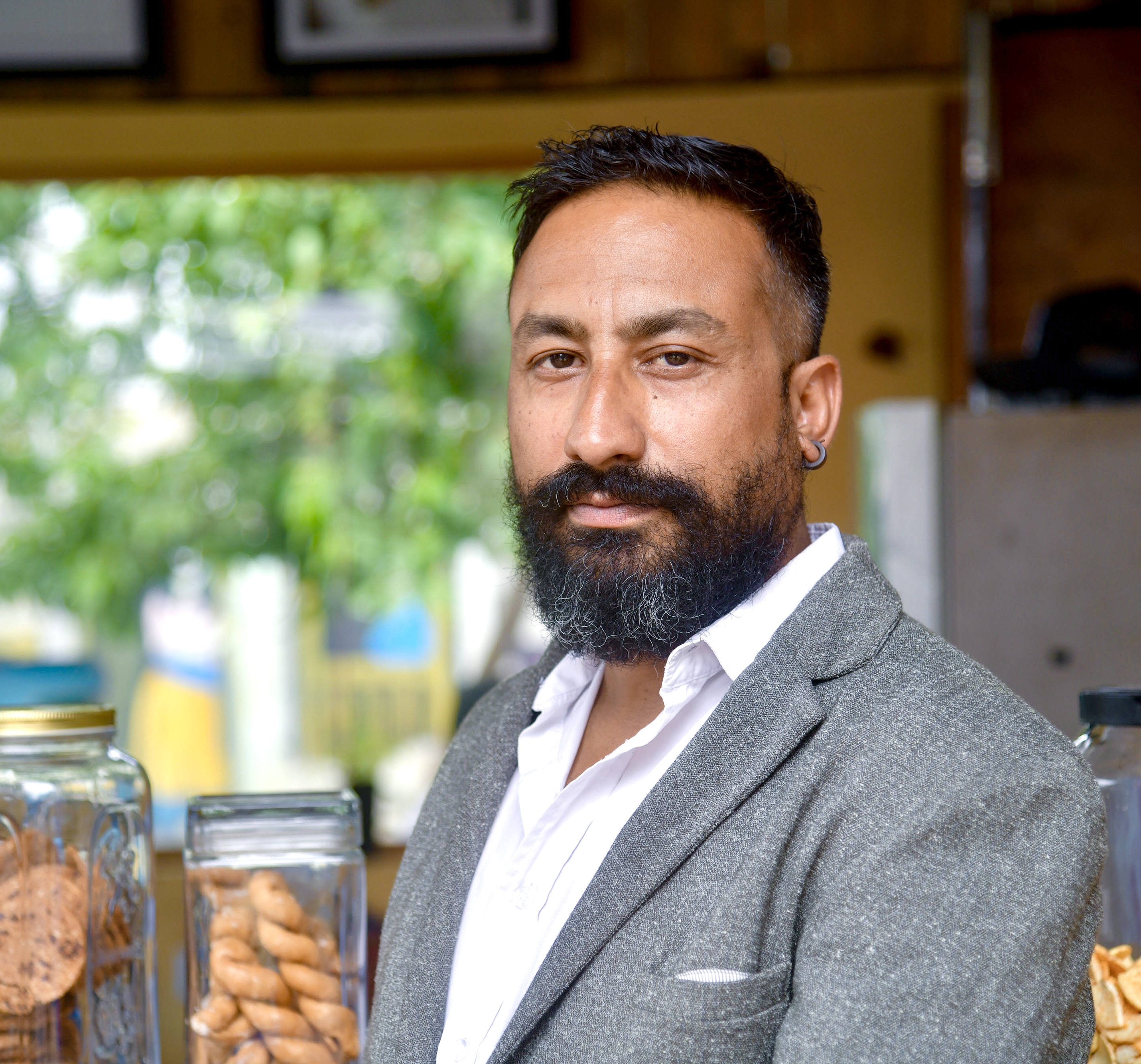
Pandit is concerned that filmmakers’ courage to tell urgent, political stories has been compromised. “They feel it’s not worth the fight,” he said, noting that self-censorship has seeped into the creative process, where filmmakers censor a scene even before writing it, if they deem it too controversial for the board. Subba also feels he himself has become mindful of themes critical of ethnicity, religion, political parties, the police, the army, or bureaucracy at the scripting stage itself.
Yet, Kuber Giri, a journalist who was appointed to Nepal’s Censor Board in June 2025, argues that the state’s role in film production is not necessarily punitive.
“It is understandable that filmmakers would not want a single scene or dialogue to be cut. But harbouring such expectations may be futile,” explained Giri, who has a checklist he follows during evaluation: Does the movie corrupt society? Will this scene lead to social unrest? Is the tonality of the movie damaging to international relations? Is the dialogue condescending to the state’s narratives?
In a tacit endorsement of self-censorship, he encourages filmmakers to be “conscious” of the elements that might trigger censorship during the writing, scripting, and shooting stages. “Ask yourself: could this scene or dialogue be perceived as problematic by the board?” Giri advised, adding that he is even happy to engage with filmmakers about parts of their film that may need censorship. “There have been instances when I was able to convince the filmmakers about the need to censor certain aspects of the movie, citing their potential impact on the state.”
It may not be an elaborate list, but the ramifications certainly are dire. “If a film appears to incite conflict or harm a certain community or religious group, the Board will interpret it as undermining the state,” Giri explained nonchalantly. “Any negative portrayal of the state itself could lead to a ban.”
The Draft Film Bill and Organized Resistance
Pandit and many of his peers are currently the voice of organized resistance, after they joined forces to fight the government’s proposed Draft Film Bill 2024, a long-awaited attempt to replace Nepal’s Film Act, first enacted in the early 1970s. While the Draft Film Bill was framed as being relevant to the current times, filmmakers argued that it was riddled with ambiguous clauses that gave the Censor Board the authority to stage a forced intervention.
“If a scene offends a Board member, he would have the power to suggest a cut—simply driven by personal sensibilities,” Pandit said. The most controversial clause would allow the board to withdraw any film from the cinemas, even after it received certification, if it received a complaint. In response, key stakeholders from the Nepali film industry, including Subba and Pandit, met with the Minister for Communication and Information Technology and formally submitted objections and possible amendments.
In January 2026, the discussion took a significant turn when the Parliamentary Legislative Management Committee approved the Draft Film Bill, 2024, with certain amendments. For example, while there are provisions to replace the censor board model with a certification model and appoint experts on the board, filmmakers are still concerned whether these reforms curb state control or simply repackage it. The bill is awaiting passage at the House of Representatives.
Pandit had declared 2025 to be “the year of resistance,” not as a punchline but a shift in Nepal’s mood, framing it as part of the broader cultural renaissance in the wake of the Gen Z protests, which unsettled the residents of Singha Durbar. Subba also feels that the Gen Z uprising made 2025 a landmark year for artistic expression. “The parallels are too obvious to ignore. Both movements—against film censorship and digital ban—are deeply rooted in our people’s refusal to be controlled.”
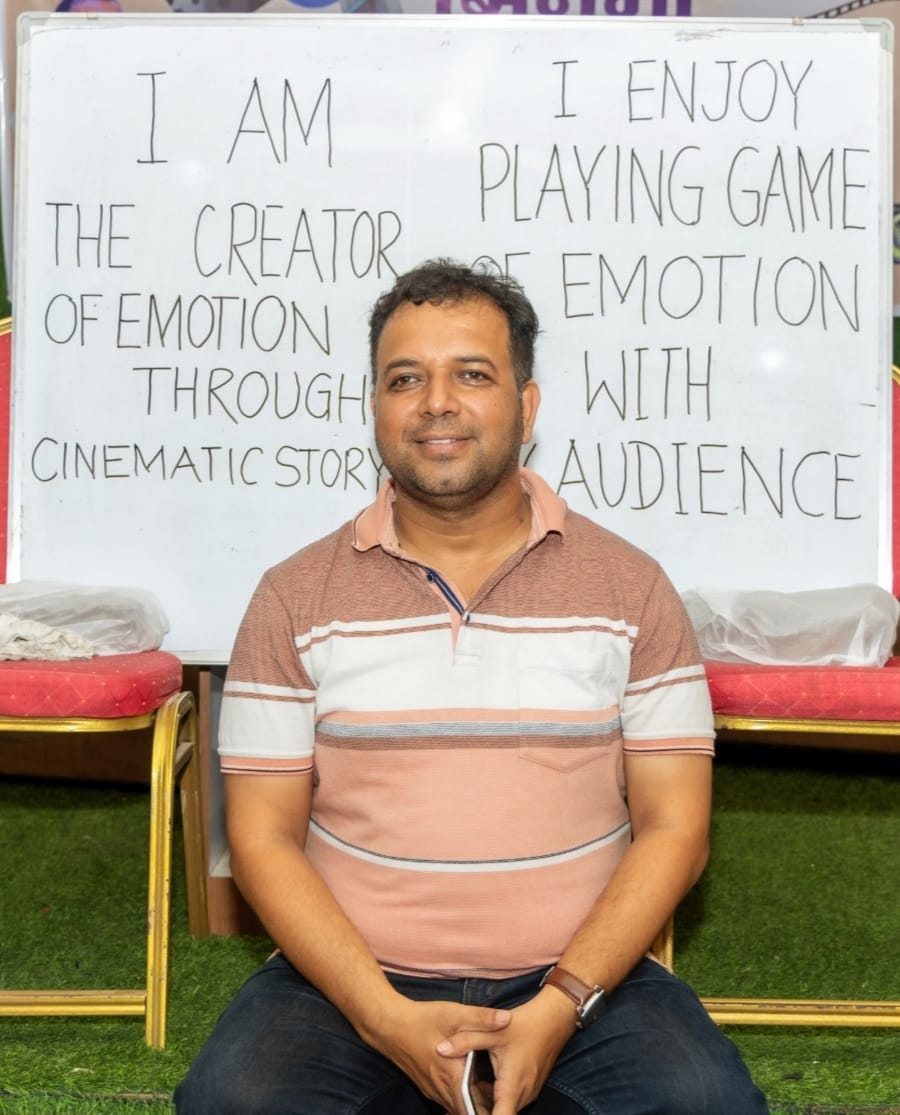
Such a public uprising in Nepal is poignant. “Nepal is unaccustomed to any form of public resistance,” said Ganesh Dev Panday, citing the country’s history of authoritarian rule, from the Rana dynasty to the Shah monarchy and the constitutional monarchy. “Even when democracy was bestowed, corruption and political instability prevailed, driving the youth to the streets in hordes. The censorship and social media battles are a part of the wider pattern of state control and are interconnected.”
While a major turning point in cinematic freedom seems unlikely in the current political climate, Panday feels that acts of artistic resistance can nudge the country towards change. Pandit, too, is cautiously optimistic. “The Gen Z movement has changed the narrative,” he said. “The new bill, when it becomes an act, needs to reflect the pressure from the streets. And we, the filmmakers, will stand to gain.”
For Rauniyar, the struggle doesn’t end with Pooja, Sir: Rajagunj. It is about never letting the movement of resistance lose steam and never letting fear silence the art or the artist.


From Badhshala to Pooja, Sir: Inside the Battle Over Film Censorship in Nepal
In Nepal, the bureaucratic machinery of film censorship continues to scrutinize, sanitize, and silence politically driven movies that challenge majoritarian narratives. Even as censorship looms large over the country’s young democracy, a resistance movement has taken shape, led by filmmakers challenging political comfort, one movie at a time.
In Nepalese filmmaker Deepak Rauniyar’s 2024 political drama, the first thing that unsettles you is the title: Pooja, Sir: Rajagunj. “Pooja,” a name synonymous with Hindu worship, is commonly given to daughters in Indian and Nepali Hindu cultures. But here, it is jarringly paired with “Sir,” a word deeply rooted in masculine, institutional authority.
“We revere our daughters as goddesses,” Rauniyar explained. “However, we revere them as long as they do not challenge authority or the ideologies of the people who worship them. I wanted the title to reflect that hypocrisy.”
Pooja, Sir: Rajagunj narrates the story of a queer female police officer, Pooja (Asha Magrati), in the fictional town of Rajagunj, investigating the disappearance of two boys amidst rampant political unrest and misogyny. Magrati said that during their research, many female police officers preferred being addressed as ‘sir’ rather than ‘ma’am’ to be taken seriously in a heavily dominated male police workforce.
This linguistic inclusion reflects the country’s dynamics: to be heard or seen, it is crucial to command more power. It also ties gendered vocabulary, state suppression, and injustice towards marginalized communities into a subversive, uncompromising narrative.
Pooja, Sir also centers on the 2015 Madhesi protests, sparked by pervasive, historic racial discrimination against the Madhesi community. Over 50 people were killed opposing the government’s new constitution that failed to address Madhesis’ requests for greater political representation and social equality. The protests triggered a blockade at key border points and restricted medical supplies, food, and fuel from the country until early 2016.
The film’s underlying subtext—about who gets to be seen and who stays invisible—spilled behind the scenes, too. When Rauniyar submitted Pooja, Sir for certification, the censor board members demanded the script and suggested “corrections” before even watching the film.
Premiering at the Venice Film Festival in October 2024, the film’s teaser release and international coverage clearly foregrounded the Madhesi protests. It was not only the film’s content that unnerved the censor board, but also Rauniyar’s identity as a Madhesi. “I’ve had my Madhesi identity questioned at restaurants and police stations,” he shared, “and I did not want it to be a hindrance here as well.”
“I was pleading with them to expedite the certification process, but all I got was hostility,” Rauniyar added. Then came a plot twist: Rauniyar found out that Gajendra Kumar Thakur—the Censor Board Chair and Assistant Secretary of Nepal’s Ministry of Communication and Information Technology, who was attempting to block the film—was a Madhesi himself.
The irony of a film about violence against Madhesis being obstructed by someone from the very community he belongs to was not lost on Rauniyar. “Without having watched a single scene, he accused me of inciting racial conflict,” he said. “They had already made up their minds to block the film’s release, and the best way to do that was by simply delaying it with unnecessary roadblocks.” Only after repeated requests did the members watch Pooja, Sir for the first time, just two weeks before its release in March 2025.
“Since the protests were not widely reported, we have no iconic, defining image of the Madhesi movement,” Rauniyar noted. “This film was supposed to be our visible record.”
How Film Censorship Works in Nepal
Nepal has two institutions for film regulation: the Film Development Board, a government body responsible for the development and promotion of movies, and the Film Censor Board, an administrative unit under the Ministry of Information and Communication.
The Censor Board lacks both a clear legal mandate and expertise, in the form of senior artists from the film industry. “It is staffed mostly by political appointees and bureaucrats who favor the ruling government’s narratives while penalizing those who indulge in political dialogue,” explained Tara Nath Dahal, founder and CEO of Freedom Forum, a non-governmental organization working for the institutionalization of democracy, protection, and promotion of human rights.
Dahal is concerned that this top-down interference sets a worrying precedent for filmmakers who make politically driven movies. “Censors routinely justify cuts and edits on the pretext to safeguard ‘national interest’—a framing that is used as a weapon to censor political movies,” she said.
Filmmaker Nabin Subba, widely regarded as the pioneer of Nepal’s independent film movement and a vocal opponent of the censorship of Pooja, Sir: Rajagunj, argued that the erasure is not restricted just to one politically motivated film. Censorship, he explained, is deeply structural, beginning well before a film reaches the editor’s table.
In Nepal, the script must first be registered with the Film Development Board. If the film contains references to security agencies such as the police or the army, prior approval from those institutions or a ‘no objection’ letter must be sought. “These decisions are made by political figures and not independent experts equipped with knowledge of cinema or filmmaking, thus causing our films to suffer,” Subba said.
The Censor Board sits inside Singha Durbar, a palace in Kathmandu that houses the government’s administrative offices. Rauniyar described the certification process as tedious and almost intimidating. Filmmakers need permission to simply enter the government premises. “When you do receive the approval, ‘soldiers’ escort you in,” Rauniyar recalled.
Then, the filmmakers wait for a screening date, where Board members—usually party cadres from various ministries—view and certify the film. Here, the filmmakers are expected to cover their miscellaneous expenses. “You pay for lunch, drinks, and even taxi fare. Then, you hope your movies get certified. And if it doesn’t, you don’t know when they’ll watch it again,” he added.
The Scene the State Didn’t Want Audiences to Watch
In Rauniyar’s case, the Censor Board expanded the panel and brought in more “senior officials” to watch Pooja, Sir, whereupon they demanded 17 cuts. The additional scrutiny stemmed from the film’s inclusion of archival footage featuring the sitting prime minister, K.P. Sharma Oli, using abusive language to describe Madhesis during the protests.
Though the footage was legally sourced from an independent news portal, the board insisted on getting additional clearance from the Prime Minister’s office. Although Oli was not the prime minister during filming, his fourth stint began on July 14th, 2024, meaning Pooja, Sir would reach local audiences while he was still in office; this made the board members nervous.
The laundry list of cuts did not end there. “The board demanded all Hindi dialogues be subtitled, claiming them to be ‘foreign’,” shared Rauniyar. The demand, he argued, read as selective nationalism, as they also forced him to delete “Bharat” from the movie. It also seemed striking because Bollywood movies are screened without any English subtitles in Nepal; after all, Hindi is widely spoken in the country. It is worth noting that the Board did not demand insertion of any subtitles during the scenes featuring Maithili dialogues, a language spoken less than Hindi.
“While we were still requesting them to watch the film, a member of the board went to the media, blaming me for making a controversial movie—even before seeing it,” Rauniyar said. “This isn’t the kind of publicity I was hoping for. I did not want my battle with the Censor Board to precede the moviegoer’s perception.”
Rauniyar chose to take the legal route. However, his lawyers warned him that the court would never go against the Prime Minister’s office, and even if it did, it could take anywhere from six months to six years to receive a potentially unfavorable judgment. Moreover, the film would get completely lost in the process.
Giving in seemed like the only choice. After all, the film had endured eight years of production, and its financing had collapsed twice: once in 2020 due to Covid-19 and then in 2022 due to Magrati’s cancer diagnosis, during which filming stopped, and grants were withdrawn. Friends and locals, including Madhesis, volunteered to help. Hundreds of people—hotel owners, shopkeepers, and community members—supported him financially. Rauniyar shared, “Some even filled in as extras.”
The thought of the movie not being screened in theatres was devastating. “How can the people who made the movie possible be deprived of their right to watch it?” Rauniyar asked.
For Rauniyar, the personal stakes were also high. Both his wife and he come from different worlds. While he is Madhesi, Magrati is Pahadi–a light-skinned ethnic group that historically holds a higher status than the dark-skinned Madhesis. “Our union is a bridge between two distinct communities,” the filmmaker shared.
Before marrying Rauniyar, Magrati admitted that she was oblivious to the discrimination faced by Madhesis. “But later,” she said, “I witnessed the systemic exclusion of my husband by the government first-hand.” That awareness made the movie even more urgent.
The film was finally approved on the fourth viewing, after two weeks of intense back and forth, and the certificate was handed over only after the board had received the final copy of the altered film with all its suggested edits in place. Rauniyar thus accepted the cuts reluctantly—but not without an act of resistance.
Making the Censorship Visible
Midway through Pooja, Sir, the camera pans to a TV screen playing a news broadcast of Prime Minister Oli, but then abruptly, the screen cuts to black. The black frame silently lingers for a few seconds, long enough for viewers to understand that it was not a technical glitch but an intentional narrative device. The missing scene included the archival footage of Oli reacting to the police killing of Madhesi protesters during the 2015 unrest as “a few falling mangoes don’t make a difference.”
To Rauniyar, it was not just a scene, but a rare visual memory of state violence towards his people. “The erasure of the pivotal scene by the board meant erasing history,” he said. But as viewers, the very scene the censor board tried to suppress drew attention to it–black frames indicating that even if the images were removed, the act itself of removal could still have a lasting impact.
It happens again—across nearly ten scenes—where dialogues cut out mid-conversation. In a routine police procedural scene where cops are discussing the chain of command, the utterance of a certain word drops out completely. Rauniyar said the board’s instruction was specific: any mention of the word “Prime” in reference to the Prime Minister must be edited out. However, instead of removing the dialogues entirely, he chose to simply mute “Prime.” Through repeated muting of a single word, he transformed what would have been a routine exchange into a visible representation of political control—not through sound, but silence.
“I wanted my audience to witness the silence that was forced upon me and ensure they knew exactly what was censored,” said Rauniyar.
When Pooja, Sir finally hit Nepal’s theatres, it ran only for two weeks. “Why should we watch a badly censored movie?” Rauniyar said, citing public sentiment that caused this short run at the box office. Yet, he did not anticipate the political resonance the film would have within Nepal, as opposition leaders attended screenings and endorsed its message.
Solidarity and Global Reception
While Former Prime Minister Baburam Bhattarai spoke out against the censorship, the National Independent Party (Rastriya Swatantra Party) MP Asim Shah was most vocal in his support of the film. During the House of Representatives meeting held last March, Shah criticized the film’s censorship, arguing that the government was curbing artistic expression, and challenged the presence of political appointees on the censor board.
Subsequently, in a rare display of solidarity, 15 filmmakers joined Rauniyar at a press conference at Mandala theatre in Kathmandu to condemn the Board’s handling of Pooja, Sir. The collective outcry moved beyond one film and shifted to address a recurring pattern of censorship. Attendees shared their personal run-ins with the censor board, reiterating how its interventions deprive films of cultural nuance and authentic storytelling.
For instance, filmmaker Deepak Raj Giri recalled having to seek permission simply to dress an actor in a police uniform amid concerns that depicting the police force as corrupt could evoke outrage, while actor Dayahang Rai questioned the absurdity of objections over dialogues mentioning names of foreign countries.
Pooja, Sir extended beyond Nepal’s borders, releasing in its uncensored form in the U.S., U.K., Switzerland, France, and Canada. During international screenings at Harvard and Boston University, discussions centred more on the history it documented than the controversy surrounding its censorship. “To me, it was a document of suppressed history—a glimpse into how democracies stifle dissent in plain sight,” said Dhruv Saxena, a journalist and Boston University student who attended the screening.
International reviews followed suit. Cineuropa praised “the film’s complex series of interlocking relations and tensions between ethnicity, class, caste and gender,” and Film Fest Report called it “a cinematic voice that transcends years of agony among the nation and stings with clarity and absolute honesty.”
A Censorship Behemoth and Self-Censorship
Filmmaker Nabin Subba, who attended the Mandala theatre press conference, said his own experience with the Censor Board shaped his solidarity towards Rauniyar. His 2023 film, Gaun Aayeko Bato (The Road to the Village), centered on a father and son from the indigenous Rai community whose lives are irrevocably transformed by the arrival of a newly constructed road—a metaphor for the clash between deeply-embedded customs and pressures of rapid development.
References to the police triggered the need for prior approval from the police department. “But when [the board] attempted to alter the script itself, we decided to proceed without the approval,” Subba said. When the film reached the Censor Board’s office, a traditional set of instructions followed: display health warnings about alcohol and smoking, and also blur on-screen displays of products endorsing drinking or smoking.
However, this directive clashed with the film’s theme of the displacement of local products by market forces. “If we had followed their directive fully, the movie’s message would have been diluted,” Subba said. So, while they included the health warning, they disobeyed the order to blur those references.
Subba views his ability to push back as a privilege stemming from years of industry experience. “My standing in the industry gives me courage,” he noted. “But lesser-known creators remain silent. To them, resistance comes with irreversible risks.”
Filmmaker Ganesh Dev Panday understands this form of state resistance all too well. In 2016, the Film Development Board refused to even register the title of his film Gaja Baja (Gaja Means Marijuana), a stoner comedy about the misadventures of two buddies drifting aimlessly through Kathmandu. In the film, marijuana serves as a symbol for a generation lost, seeking escape in contemporary Nepali society.
Panday filed a writ petition in Nepal’s Supreme Court, arguing the ban violated his freedom of expression. “They said the title could promote drug use,” he noted, adding that marijuana appears only metaphorically. “What I was showing was political satire on youth and drug culture.” Panday’s refusal to moralize unsettled the regulatory system that is prone to endorsing social order. The film remained stuck for almost two years.
He eventually won his case, but the two-year battle caused him severe financial and mental distress. “Blur these scenes, mute these dialogues,” Panday recalled the instructions. “You know the board is resistant to reality when it asks you to blur a scene featuring a wall with political graffiti that stands tall in the city—and isn’t a part of a movie set.”
Panday is particularly frustrated with the double standard, where foreign movies such as Animal (2023) or One Battle After Another (2025) released freely in Nepal despite graphic violence, drug use, and explicit language.
“Our battle is not restricted to one film,” said filmmaker Manoj Pandit, whose career has been characterized by several contentious run-ins with the censor board. “It is about fighting a system that constantly silences truth.” Pandit’s 2010 film Dasdhunga—based on the mysterious death of CPN-UML leader Madan Bhandari, linked directly to powerful political figures—was the subject of much scrutiny. “The board watched the film several times,” he recalled. “Every time, I was made to submit documentation and evidence to substantiate the events taking place in the film.”
Ultimately, Pandit noted that the political pushback against the questions the film posed—namely, why did the government never pursue the culprits—was immensely revealing.
However, his 2013 film, Badhshala (Slaughterhouse)—on the army’s torture of Maoist detainees during the 1996-2006 civil war—was banned outright. First, the army argued that the actors were wearing military uniforms without their permission. But as pressure grew, they rephrased their position to adopt a more political tone, claiming the film could “derail the peace process” by bringing unresolved trauma surrounding the war to the surface.
It wasn’t just the depiction of the torture scenes that perturbed the Censor Board, but fear over national conversations around judicial accountability (or lack thereof). The Nepal Army even wrote an official letter to the state authority barring the film from certification altogether.
“It was clear that the government did not want the movie to hit theatres,” Pandit reflected. But protests by filmmakers, media professionals, and activists framed the ban as a creative violation. Pandit even went as far as presenting a DVD of the film to the then-Prime Minister as a last resort. “Only after sustained outrage did the state cave in,” Pandit shared, although the film was only cleared for screening after he deleted the “problematic torture scenes.”
Pandit is concerned that filmmakers’ courage to tell urgent, political stories has been compromised. “They feel it’s not worth the fight,” he said, noting that self-censorship has seeped into the creative process, where filmmakers censor a scene even before writing it, if they deem it too controversial for the board. Subba also feels he himself has become mindful of themes critical of ethnicity, religion, political parties, the police, the army, or bureaucracy at the scripting stage itself.
Yet, Kuber Giri, a journalist who was appointed to Nepal’s Censor Board in June 2025, argues that the state’s role in film production is not necessarily punitive.
“It is understandable that filmmakers would not want a single scene or dialogue to be cut. But harbouring such expectations may be futile,” explained Giri, who has a checklist he follows during evaluation: Does the movie corrupt society? Will this scene lead to social unrest? Is the tonality of the movie damaging to international relations? Is the dialogue condescending to the state’s narratives?
In a tacit endorsement of self-censorship, he encourages filmmakers to be “conscious” of the elements that might trigger censorship during the writing, scripting, and shooting stages. “Ask yourself: could this scene or dialogue be perceived as problematic by the board?” Giri advised, adding that he is even happy to engage with filmmakers about parts of their film that may need censorship. “There have been instances when I was able to convince the filmmakers about the need to censor certain aspects of the movie, citing their potential impact on the state.”
It may not be an elaborate list, but the ramifications certainly are dire. “If a film appears to incite conflict or harm a certain community or religious group, the Board will interpret it as undermining the state,” Giri explained nonchalantly. “Any negative portrayal of the state itself could lead to a ban.”
The Draft Film Bill and Organized Resistance
Pandit and many of his peers are currently the voice of organized resistance, after they joined forces to fight the government’s proposed Draft Film Bill 2024, a long-awaited attempt to replace Nepal’s Film Act, first enacted in the early 1970s. While the Draft Film Bill was framed as being relevant to the current times, filmmakers argued that it was riddled with ambiguous clauses that gave the Censor Board the authority to stage a forced intervention.
“If a scene offends a Board member, he would have the power to suggest a cut—simply driven by personal sensibilities,” Pandit said. The most controversial clause would allow the board to withdraw any film from the cinemas, even after it received certification, if it received a complaint. In response, key stakeholders from the Nepali film industry, including Subba and Pandit, met with the Minister for Communication and Information Technology and formally submitted objections and possible amendments.
In January 2026, the discussion took a significant turn when the Parliamentary Legislative Management Committee approved the Draft Film Bill, 2024, with certain amendments. For example, while there are provisions to replace the censor board model with a certification model and appoint experts on the board, filmmakers are still concerned whether these reforms curb state control or simply repackage it. The bill is awaiting passage at the House of Representatives.
Pandit had declared 2025 to be “the year of resistance,” not as a punchline but a shift in Nepal’s mood, framing it as part of the broader cultural renaissance in the wake of the Gen Z protests, which unsettled the residents of Singha Durbar. Subba also feels that the Gen Z uprising made 2025 a landmark year for artistic expression. “The parallels are too obvious to ignore. Both movements—against film censorship and digital ban—are deeply rooted in our people’s refusal to be controlled.”
Such a public uprising in Nepal is poignant. “Nepal is unaccustomed to any form of public resistance,” said Ganesh Dev Panday, citing the country’s history of authoritarian rule, from the Rana dynasty to the Shah monarchy and the constitutional monarchy. “Even when democracy was bestowed, corruption and political instability prevailed, driving the youth to the streets in hordes. The censorship and social media battles are a part of the wider pattern of state control and are interconnected.”
While a major turning point in cinematic freedom seems unlikely in the current political climate, Panday feels that acts of artistic resistance can nudge the country towards change. Pandit, too, is cautiously optimistic. “The Gen Z movement has changed the narrative,” he said. “The new bill, when it becomes an act, needs to reflect the pressure from the streets. And we, the filmmakers, will stand to gain.”
For Rauniyar, the struggle doesn’t end with Pooja, Sir: Rajagunj. It is about never letting the movement of resistance lose steam and never letting fear silence the art or the artist.