

“The Rohingya Are Not Statistics”: Poet Mayyu Ali’s Resolve to Preserve His Culture

Mayyu (Rahmat) Ali is a Rohingya poet, author, educator, and human-rights activist whose work sits at the crossroads of art and advocacy. His memoir, L’effacement: Un poète au coeur du génocide des Rohingyas (Erasure: A Poet at the Heart of the Rohingya Genocide), has recently been translated by Siba Barkataki as Eradication (Pan MacMillan, 2025).
Ali’s testimony comes against a backdrop of continuing international reckoning. In 2019, The Gambia initiated proceedings against Myanmar at the International Court of Justice, accusing the state of violating the Genocide Convention, for which public hearings opened this January, after years of preliminary legal arguments.
Interspersed with poetry and musings, the memoir is Ali’s moral indictment against his homeland, whether the army, the government, the perpetrators, or the bystanders. It narrates the story of a changing Myanmar, as the Buddhist majority of the country grew increasingly hostile to the Rohingyas, the native Muslim population. As he writes, “(…) doing nothing means letting things happen. To say nothing, to not oppose something, to stay neutral is to become an accomplice to the worst horrors; to passively collaborate in crimes.”
Carrying much despair and pain, the book is also filled with hope and longing. It forces the reader to sit with the painful contradiction of mass suffering coexisting with global declarations of human advancement, and that for some, history is not moving forward at all.
Ali has lived through the gradual tightening of a state project of eradication in Myanmar: restrictions on movement, marriage, and education; the banning of Rohingya-language radio broadcasts as early as the 1960s; and waves of military violence culminating in the 2016-17 attacks that forced more than 700,000 Rohingyas into exile. Much of what he witnessed—the burning of villages, the disappearance of neighbors—also entailed much personal loss: home, homeland, and the basic continuity of life.
After fleeing Myanmar’s Rakhine state in 2017 and living in the refugee camps of Cox’s Bazar, Bangladesh, Ali helped build community-led education and youth programs, including founding the Community Rebuilding Centre. He also co-founded Art Garden Rohingya, a community-based collective to amplify Rohingya culture, literature, and emerging artists.
He has published poetry collections titled Exodus: Between Genocide and Me and The White Elephant, and his essays and op-eds have appeared in major international outlets. Now based in Canada and a graduate of the University of Waterloo’s Global Governance program, he is working on efforts to preserve the Rohingya language and cultural identity.
Through a string of emails, this conversation came to have much heart, much hope, and much optimism, despite the shaky grounds on which it stands.
What follows is an edited excerpt.
Amritesh Mukherjee: In Eradication, you intertwine poetry with memoir. How did you envision this structure? Or did it evolve as you wrote?
Mayyu Ali: As a Rohingya writer, I feel responsible for telling our stories, preserving history, and amplifying our voices, celebrating resilience, traditions, and humanity. Poetry is my weapon against oblivion, declaring our existence.
Belonging, a concept paramount to the indigenous Rohingya people, has been eloquently captured in the works of Abdul Karim Khondkar, a distinguished Rohingya poet from the Mrauk-U dynasty in Arakan. In his 1784 poetry book, Dulla Majlis, Khondkar asserts his lineage and connection to the land:
“The name of my great grandfather was Rasul Mia, the king was kind to bestow his wealth and title. His duty was to collect dues from boats or ships and to send state dues to the king. His son was Machan Ali, he was interpreter of ships. If he came across a good thing, he used to present it to the king. His duty was to present before the king all traders who came to Roshang. His son was good souled and good charactered Ali Akbar. I am Abdul Karim Khondkar, his son.”
Earlier, I had organized several poetry events in Yangon with my fellow Burmese poets Maung Saungkha and Won Roe. Following the 2021 military coup, poets and writers have been targeted, and some of my colleagues were murdered. I have lost contact with the Rakhine poet, Won Roe, since internet access has been cut off in Rakhine state. Through poetry, I fight against cultural and physical annihilation. Each line is a declaration: “We exist. We resist. We endure.”
AM: You co-authored the book with journalist Emilie Lopes, and Siba Barkataki has translated it. Could you walk me through the journey and process of this book?
MA: In March 2018, I met Emilie for the first time in the Cox’s Bazar refugee camp, where I was a refugee. We were working on interviewing Rohingya women who became pregnant after being raped by the military forces in Myanmar, for which I served as interpreter. This marked the beginning of our friendship, which led to Emilie’s publication of an article about my poetry titled “A Poet at the Heart of the Genocide” in Le Figaro. Subsequently, she proposed a memoir in French, to which I readily agreed.
The writing process involved my drafting chapters in English, which Emilie translated into French, and collaborative editing. Before this memoir, I had published my debut poetry book, Exodus. Crafting a book in prose required extensive learning, reading, and practice. Emilie’s familiarity with French readers and my own experiences as a survivor of genocide informed the narrative.
Documenting the atrocities committed against my community and processing my own trauma and losses proved emotionally challenging. At the same time, I faced death threats from a local gang in the refugee camp, which compelled me to relocate to a nearby area and conceal my identity. This period was marked by intense emotional distress, headaches, and intermittent gaps in my writing.
Emilie’s unwavering support and generosity played a pivotal role in the completion of the book in 2020. However, we were forced to suspend publication to prevent jeopardizing my exit permit process in Bangladesh to Canada. Following my resettlement there in 2021, the book was finally published by Grasset in 2022.
After three years of collaboration and dedication with Pan Macmillan India, the English version is finally out, translated from French by Siba Barkataki. I am thrilled that this edition came out at a time when the world has almost forgotten about the Rohingya crisis. I am grateful for this privilege.
AM: The original French edition was titled L’effacement (“Erasure”), and now the English edition is Eradication. Can you talk about those specific word choices?
MA: The word “Eradication” reflects the prolonged and systematic repressive policy aimed at eroding the Rohingya’s history, identity, and existence. It encompasses the extensive process of cultural genocide carried out by successive governments and military regimes of Myanmar against the Rohingya, including the suppression of language, citizenship stripping, renaming of landmarks, restriction of cultural practices, and destruction of cultural heritage.
While “Erasure” might imply a singular event or action, “Eradication” conveys the deliberate and multifaceted efforts to annihilate the Rohingya people, aligning with the Genocide Convention’s definition. Hence, the former accurately captures the essence of the Rohingya experience in conveying the gravity of the genocide.
AM: Several chapters detail the betrayal by “The Lady.” Do you think Aung San Suu Kyi’s silence and later denial of the genocide were driven more by personal prejudice or political calculations? Or was it the very architecture of Myanmar’s Bamar-Buddhist nationalism?
MA: For generations, the Rohingya supported Aung San Suu Kyi and her democracy movement. However, she turned her back on my people when we were slaughtered and expelled from Myanmar. She even refused to refer to us as “Rohingya,” an accurate term that represents the ethnicity of my people, the indigenous people of Arakan, now Rakhine State.
In December 2019, Aung San Suu Kyi led the defense of Myanmar at the International Court of Justice (ICJ) in The Hague, where Myanmar stood accused by The Gambia of violating the Genocide Convention. The Lady, who has never spoken out about the atrocities against the Rohingya, defended the Myanmar military, the perpetrator of the genocide.
She lied to the world, saying all newborns in Rakhine state received birth certificates. The Rohingya still do not always receive birth certificates; my own was confiscated in 1992 by the NaSaKa, a border security force linked to the Tatmadaw (Myanmar’s military).
This is an act of her political cowardice. Now, for the millions of Rohingyas displaced around the world, her name is synonymous with those of the tyrants and dictators who came before her in Myanmar. This is the other side of Aung San Suu Kyi, who was once considered the Nelson Mandela of Asia.
AM: You emphasize how genocide is not only about killing but about destroying culture and language, starting with bans on Rohingya radio broadcasts as early as the 1960s. Could you talk about Rohingya culture and art?
MA: Arakan, now known as Rakhine State, has been the ancestral homeland of the Rohingya people since the 7th century. The Rohingya language, an eastern Indo-Aryan language related to Bengali and Assamese, is spoken by Rohingya Muslims, Hindus, and Buddhist ethnic minorities such as the Daingnet and Mayamagyi in our area.
Music is deeply ingrained in Rohingya culture. Traditional instruments such as the dab, dhol, and bela are popular. Various genres of songs, including Oli, Boil, Ailla Shari, and Qawali, continue to be cherished by the Rohingya community. Qawali has been particularly influential, with masters like Qawal Jafar Ahmed leaving a lasting impact on Rohingya music.
Passed down orally, our folk songs and poetry are rich in rhythmic verse and aesthetic values rooted in the community’s history and geography. These collective narratives form a saga that connects the Rohingya language to our ancestral land, preserving the wisdom and values of our forebears.
Poetry remains a cherished form of expression among the Rohingya. In recent years, initiatives like Art Garden Rohingya, which my friends and I have established, showcase the artistic and poetic talents of Rohingya youth in the refugee camps. Our story is one of resilience, strength, and dignity, encompassing more than just our suffering at the hands of the Myanmar military. It is a testament to our agency, resourcefulness, and quest for meaning and dignity.
AM: You’ve described the Rohingya as “the forgotten of the forgotten.”Media coverage follows global trends, somewhat reticently covering the genocide in Gaza. Meanwhile, the Rohingya remain in a permanent waiting room, and we hear reports—for instance, around 40 Rohingya refugees were recently forced into the sea by Indian forces. What do you make of the media and international community’s practice of tokenizing oppressed groups? Do you fear being tokenized?
MA: I see tokenization as a dangerous game. It’s when the international community acknowledges our suffering, but only superficially, without truly committing to action. We’re often reduced to statistics or soundbites, our stories simplified to fit a narrative that doesn’t threaten the status quo. This tokenization is a form of negligence, silencing our voices and suppressing our agency.
It’s as if some lives are more worthy of attention than others. The recent incident in India, where Rohingya refugees were allegedly forced into the sea, barely made headlines. This lack of coverage emboldens perpetrators and leaves us vulnerable.
I’m wary of being tokenized because it distracts from the systemic change we need, and is a way to appear supportive without actually supporting us. True solidarity means listening to our voices, amplifying our stories, and pushing for policy changes that address our crisis. Anything less is just a hollow gesture.
AM: In India, defenders of the Citizenship Amendment Act (CAA) claim that Muslims have “many other countries” they can go to. How do you respond to that narrative, especially given the reality of Rohingya refugees confined to what you and others have called open-air prisons in Bangladesh?
MA: That narrative is not only misinformed but also cruel and dismissive of the Rohingya reality. I’ve seen firsthand the desperation and hopelessness in the camps. The idea that Muslims have “many other countries” to go to is a gross oversimplification of the complexities of refugee crises and international law.
The CAA is a stark example of exclusionary politics, singling out Muslims and undermining the principles of equality and non-discrimination. The policy affects not only India’s own Muslim population but also sends a chilling message to the world about India’s stance on diversity and human rights.
The Rohingya are not statistics; they’re seeking safety, dignity, and a chance to rebuild their lives. The international community, including India, has a responsibility to protect them, not abandon them.
The CAA narrative ignores the fact that the Rohingya are stateless, facing existential threats, and are in dire need of protection. It’s not about choosing a country; it’s about being forced to flee persecution due to brutal violence. Mistreatment of Rohingya refugees is a widespread issue, also evident in Malaysia and Indonesia. Host countries must refrain from treating the Rohingya genocide survivors with the same hatred that drove them from their homeland. I urge India and other Asian countries to recognize the Rohingya’s right to seek safety and citizenship in Myanmar, and to work towards a more inclusive and compassionate approach to refugee protection in the region.
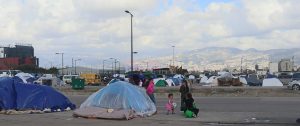
AM: Western media often depicted the Rohingya crisis using images of boats, camps, and queues for rations. What did you feel about being represented that way?
MA: I felt deeply troubled by those images. They reduced my people to mere victims, perpetuating a narrative of helplessness, reinforcing stereotypes, and justifying the world’s indifference. The complexity of our history, culture, and resilience was lost in those snapshots. They ignored the brutality of the Myanmar military, the systemic oppression, and our ongoing fight for justice. I felt like I was being erased, my identity flattened into a simplistic, dehumanizing trope.
We aren’t just refugees in camps or on boats; we’re poets, artists, farmers, teachers, aid workers, and parents. I want the world to see us in all our complexity, not just as symbols of suffering, but as human beings deserving of dignity and respect.
AM: I loved your last chapter dedicated to Inayah, your daughter, who’s grown up with this history behind her and an uncertain political future ahead. What are your hopes and dreams for her?
MA: I’ve witnessed my grandfather and father worry about their daughters being raped by the Myanmar military regime. Seeing my daughter Inayah today, I feel safe for her and her future in Canada. This September, she started junior kindergarten, and she loves it, just like I did in my village in Myanmar. My wife and I have also welcomed our second daughter, Ayesha.
However, my heart aches to see girls as young as mine being killed by the Myanmar military and the Arakan Army, kidnapped and trafficked in Cox’s Bazar refugee camps, or drowned with their parents in the Andaman Sea while seeking safety in Southeast Asia.
Sometimes, my children ask me about our homeland, Arakan, and I struggle to explain the brutality they never seen. I teach them our stories, our songs, and our history, hoping they’ll carry our legacy forward. But I also want to shield them from the pain, the fear, and the loss.
As a father, I want to give them a future, not just a past. I want them to thrive, to be proud Rohingyas, and to know they’re part of a resilient community. But the scars of genocide don’t fade easily. I hope they grow up knowing our story, tell it with pride, and keep fighting for justice, even when the world forgets.
AM: After everything you’ve witnessed and lost, what gives you hope?
MA: Writing gives me hope. When my existence is denied by my government, writing becomes an act of revolution. In my writing, I am free. Writing is how I process trauma, loss, and displacement, and it also allows me to reclaim my identity, culture, and voice. It gives me hope even on the edge of a sword.
What also gives me hope is the resilience of my people. Despite the brutality we’ve faced, we are rebuilding our lives, preserving our culture, and fighting for our rights. Our stories, traditions, and language thrive in exile.
I find hope in our younger generation who are learning about our history, heritage, and culture, and growing up with pride. They are the ones on whom we entrust our future and our legacy.
I find hope in our emerging poets, writers, musicians, and artists who convey our stories through creative expression.
I find hope in our women and young girls who take part in activism, leadership, and community dynamics, breaking the circle of deep-rooted cultural norms within the community.
I find hope in community advocacy and global solidarity for our justice. In February 2025, an Argentine court ordered arrest warrants against 25 Myanmar military leaders and officials, including Aung San Suu Kyi, for their involvement in genocide committed against the Rohingya. There is an ongoing trial at the International Court of Justice (ICJ). As a survivor, I expect arrest warrants for perpetrators who enjoy their impunity in Myanmar. Only holding them accountable can stop them from continuing crimes against the Rohingya and other groups in Myanmar.
Our stories, our culture, our language, and our survival—they’re all acts of resistance. And as long as we hold onto that, I believe there’s a future where we can be seen and heard, where we can thrive.
AM: Anything you’re working on?
MA: I am currently working on a cultural preservation project, documenting Rohingya oral traditions such as proverbs, riddles, folksongs, and folktales through audio and video recordings. These traditions have been transcribed into the Rohingya script with Burmese and English translations. We have completed four collections. The goal is to print these cultural education books and teach them to Rohingya children in our homeland, refugee camps, and diaspora.
Due to the ongoing genocide, these oral traditions are disappearing as elderly community members, who hold ancestral knowledge, pass away. This project aims to revitalize Rohingya culture, preserving the legacy of our ancestors for future generations. I am grateful to be part of this noble legacy.
Join us
Amritesh Mukherjee is a reader, writer, and journalist—mostly in that order. Covering literature, cinema, and art through his writings, he's fascinated by the stories that shape our world.

“The Rohingya Are Not Statistics”: Poet Mayyu Ali’s Resolve to Preserve His Culture
By Amritesh Mukherjee
January 30, 2026
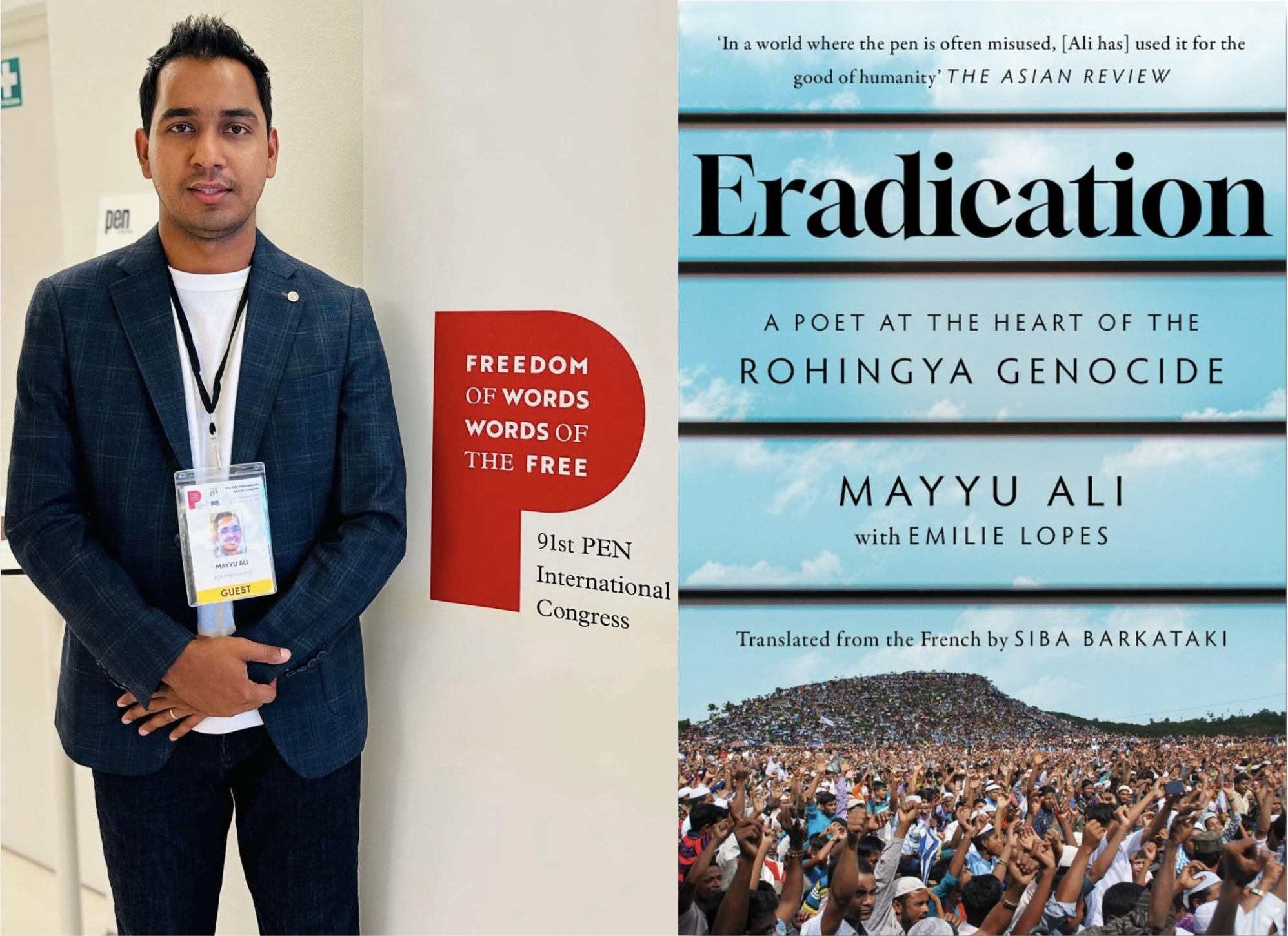
Poet Mayyu Ali has lived through the gradual tightening of a state project of eradication in Myanmar.
Mayyu (Rahmat) Ali is a Rohingya poet, author, educator, and human-rights activist whose work sits at the crossroads of art and advocacy. His memoir, L’effacement: Un poète au coeur du génocide des Rohingyas (Erasure: A Poet at the Heart of the Rohingya Genocide), has recently been translated by Siba Barkataki as Eradication (Pan MacMillan, 2025).
Ali’s testimony comes against a backdrop of continuing international reckoning. In 2019, The Gambia initiated proceedings against Myanmar at the International Court of Justice, accusing the state of violating the Genocide Convention, for which public hearings opened this January, after years of preliminary legal arguments.
Interspersed with poetry and musings, the memoir is Ali’s moral indictment against his homeland, whether the army, the government, the perpetrators, or the bystanders. It narrates the story of a changing Myanmar, as the Buddhist majority of the country grew increasingly hostile to the Rohingyas, the native Muslim population. As he writes, “(…) doing nothing means letting things happen. To say nothing, to not oppose something, to stay neutral is to become an accomplice to the worst horrors; to passively collaborate in crimes.”
Carrying much despair and pain, the book is also filled with hope and longing. It forces the reader to sit with the painful contradiction of mass suffering coexisting with global declarations of human advancement, and that for some, history is not moving forward at all.
Ali has lived through the gradual tightening of a state project of eradication in Myanmar: restrictions on movement, marriage, and education; the banning of Rohingya-language radio broadcasts as early as the 1960s; and waves of military violence culminating in the 2016-17 attacks that forced more than 700,000 Rohingyas into exile. Much of what he witnessed—the burning of villages, the disappearance of neighbors—also entailed much personal loss: home, homeland, and the basic continuity of life.
After fleeing Myanmar’s Rakhine state in 2017 and living in the refugee camps of Cox’s Bazar, Bangladesh, Ali helped build community-led education and youth programs, including founding the Community Rebuilding Centre. He also co-founded Art Garden Rohingya, a community-based collective to amplify Rohingya culture, literature, and emerging artists.
He has published poetry collections titled Exodus: Between Genocide and Me and The White Elephant, and his essays and op-eds have appeared in major international outlets. Now based in Canada and a graduate of the University of Waterloo’s Global Governance program, he is working on efforts to preserve the Rohingya language and cultural identity.
Through a string of emails, this conversation came to have much heart, much hope, and much optimism, despite the shaky grounds on which it stands.
What follows is an edited excerpt.
Amritesh Mukherjee: In Eradication, you intertwine poetry with memoir. How did you envision this structure? Or did it evolve as you wrote?
Mayyu Ali: As a Rohingya writer, I feel responsible for telling our stories, preserving history, and amplifying our voices, celebrating resilience, traditions, and humanity. Poetry is my weapon against oblivion, declaring our existence.
Belonging, a concept paramount to the indigenous Rohingya people, has been eloquently captured in the works of Abdul Karim Khondkar, a distinguished Rohingya poet from the Mrauk-U dynasty in Arakan. In his 1784 poetry book, Dulla Majlis, Khondkar asserts his lineage and connection to the land:
“The name of my great grandfather was Rasul Mia, the king was kind to bestow his wealth and title. His duty was to collect dues from boats or ships and to send state dues to the king. His son was Machan Ali, he was interpreter of ships. If he came across a good thing, he used to present it to the king. His duty was to present before the king all traders who came to Roshang. His son was good souled and good charactered Ali Akbar. I am Abdul Karim Khondkar, his son.”
Earlier, I had organized several poetry events in Yangon with my fellow Burmese poets Maung Saungkha and Won Roe. Following the 2021 military coup, poets and writers have been targeted, and some of my colleagues were murdered. I have lost contact with the Rakhine poet, Won Roe, since internet access has been cut off in Rakhine state. Through poetry, I fight against cultural and physical annihilation. Each line is a declaration: “We exist. We resist. We endure.”
AM: You co-authored the book with journalist Emilie Lopes, and Siba Barkataki has translated it. Could you walk me through the journey and process of this book?
MA: In March 2018, I met Emilie for the first time in the Cox’s Bazar refugee camp, where I was a refugee. We were working on interviewing Rohingya women who became pregnant after being raped by the military forces in Myanmar, for which I served as interpreter. This marked the beginning of our friendship, which led to Emilie’s publication of an article about my poetry titled “A Poet at the Heart of the Genocide” in Le Figaro. Subsequently, she proposed a memoir in French, to which I readily agreed.
The writing process involved my drafting chapters in English, which Emilie translated into French, and collaborative editing. Before this memoir, I had published my debut poetry book, Exodus. Crafting a book in prose required extensive learning, reading, and practice. Emilie’s familiarity with French readers and my own experiences as a survivor of genocide informed the narrative.
Documenting the atrocities committed against my community and processing my own trauma and losses proved emotionally challenging. At the same time, I faced death threats from a local gang in the refugee camp, which compelled me to relocate to a nearby area and conceal my identity. This period was marked by intense emotional distress, headaches, and intermittent gaps in my writing.
Emilie’s unwavering support and generosity played a pivotal role in the completion of the book in 2020. However, we were forced to suspend publication to prevent jeopardizing my exit permit process in Bangladesh to Canada. Following my resettlement there in 2021, the book was finally published by Grasset in 2022.
After three years of collaboration and dedication with Pan Macmillan India, the English version is finally out, translated from French by Siba Barkataki. I am thrilled that this edition came out at a time when the world has almost forgotten about the Rohingya crisis. I am grateful for this privilege.
AM: The original French edition was titled L’effacement (“Erasure”), and now the English edition is Eradication. Can you talk about those specific word choices?
MA: The word “Eradication” reflects the prolonged and systematic repressive policy aimed at eroding the Rohingya’s history, identity, and existence. It encompasses the extensive process of cultural genocide carried out by successive governments and military regimes of Myanmar against the Rohingya, including the suppression of language, citizenship stripping, renaming of landmarks, restriction of cultural practices, and destruction of cultural heritage.
While “Erasure” might imply a singular event or action, “Eradication” conveys the deliberate and multifaceted efforts to annihilate the Rohingya people, aligning with the Genocide Convention’s definition. Hence, the former accurately captures the essence of the Rohingya experience in conveying the gravity of the genocide.
AM: Several chapters detail the betrayal by “The Lady.” Do you think Aung San Suu Kyi’s silence and later denial of the genocide were driven more by personal prejudice or political calculations? Or was it the very architecture of Myanmar’s Bamar-Buddhist nationalism?
MA: For generations, the Rohingya supported Aung San Suu Kyi and her democracy movement. However, she turned her back on my people when we were slaughtered and expelled from Myanmar. She even refused to refer to us as “Rohingya,” an accurate term that represents the ethnicity of my people, the indigenous people of Arakan, now Rakhine State.
In December 2019, Aung San Suu Kyi led the defense of Myanmar at the International Court of Justice (ICJ) in The Hague, where Myanmar stood accused by The Gambia of violating the Genocide Convention. The Lady, who has never spoken out about the atrocities against the Rohingya, defended the Myanmar military, the perpetrator of the genocide.
She lied to the world, saying all newborns in Rakhine state received birth certificates. The Rohingya still do not always receive birth certificates; my own was confiscated in 1992 by the NaSaKa, a border security force linked to the Tatmadaw (Myanmar’s military).
This is an act of her political cowardice. Now, for the millions of Rohingyas displaced around the world, her name is synonymous with those of the tyrants and dictators who came before her in Myanmar. This is the other side of Aung San Suu Kyi, who was once considered the Nelson Mandela of Asia.
AM: You emphasize how genocide is not only about killing but about destroying culture and language, starting with bans on Rohingya radio broadcasts as early as the 1960s. Could you talk about Rohingya culture and art?
MA: Arakan, now known as Rakhine State, has been the ancestral homeland of the Rohingya people since the 7th century. The Rohingya language, an eastern Indo-Aryan language related to Bengali and Assamese, is spoken by Rohingya Muslims, Hindus, and Buddhist ethnic minorities such as the Daingnet and Mayamagyi in our area.
Music is deeply ingrained in Rohingya culture. Traditional instruments such as the dab, dhol, and bela are popular. Various genres of songs, including Oli, Boil, Ailla Shari, and Qawali, continue to be cherished by the Rohingya community. Qawali has been particularly influential, with masters like Qawal Jafar Ahmed leaving a lasting impact on Rohingya music.
Passed down orally, our folk songs and poetry are rich in rhythmic verse and aesthetic values rooted in the community’s history and geography. These collective narratives form a saga that connects the Rohingya language to our ancestral land, preserving the wisdom and values of our forebears.
Poetry remains a cherished form of expression among the Rohingya. In recent years, initiatives like Art Garden Rohingya, which my friends and I have established, showcase the artistic and poetic talents of Rohingya youth in the refugee camps. Our story is one of resilience, strength, and dignity, encompassing more than just our suffering at the hands of the Myanmar military. It is a testament to our agency, resourcefulness, and quest for meaning and dignity.
AM: You’ve described the Rohingya as “the forgotten of the forgotten.”Media coverage follows global trends, somewhat reticently covering the genocide in Gaza. Meanwhile, the Rohingya remain in a permanent waiting room, and we hear reports—for instance, around 40 Rohingya refugees were recently forced into the sea by Indian forces. What do you make of the media and international community’s practice of tokenizing oppressed groups? Do you fear being tokenized?
MA: I see tokenization as a dangerous game. It’s when the international community acknowledges our suffering, but only superficially, without truly committing to action. We’re often reduced to statistics or soundbites, our stories simplified to fit a narrative that doesn’t threaten the status quo. This tokenization is a form of negligence, silencing our voices and suppressing our agency.
It’s as if some lives are more worthy of attention than others. The recent incident in India, where Rohingya refugees were allegedly forced into the sea, barely made headlines. This lack of coverage emboldens perpetrators and leaves us vulnerable.
I’m wary of being tokenized because it distracts from the systemic change we need, and is a way to appear supportive without actually supporting us. True solidarity means listening to our voices, amplifying our stories, and pushing for policy changes that address our crisis. Anything less is just a hollow gesture.
AM: In India, defenders of the Citizenship Amendment Act (CAA) claim that Muslims have “many other countries” they can go to. How do you respond to that narrative, especially given the reality of Rohingya refugees confined to what you and others have called open-air prisons in Bangladesh?
MA: That narrative is not only misinformed but also cruel and dismissive of the Rohingya reality. I’ve seen firsthand the desperation and hopelessness in the camps. The idea that Muslims have “many other countries” to go to is a gross oversimplification of the complexities of refugee crises and international law.
The CAA is a stark example of exclusionary politics, singling out Muslims and undermining the principles of equality and non-discrimination. The policy affects not only India’s own Muslim population but also sends a chilling message to the world about India’s stance on diversity and human rights.
The Rohingya are not statistics; they’re seeking safety, dignity, and a chance to rebuild their lives. The international community, including India, has a responsibility to protect them, not abandon them.
The CAA narrative ignores the fact that the Rohingya are stateless, facing existential threats, and are in dire need of protection. It’s not about choosing a country; it’s about being forced to flee persecution due to brutal violence. Mistreatment of Rohingya refugees is a widespread issue, also evident in Malaysia and Indonesia. Host countries must refrain from treating the Rohingya genocide survivors with the same hatred that drove them from their homeland. I urge India and other Asian countries to recognize the Rohingya’s right to seek safety and citizenship in Myanmar, and to work towards a more inclusive and compassionate approach to refugee protection in the region.
AM: Western media often depicted the Rohingya crisis using images of boats, camps, and queues for rations. What did you feel about being represented that way?
MA: I felt deeply troubled by those images. They reduced my people to mere victims, perpetuating a narrative of helplessness, reinforcing stereotypes, and justifying the world’s indifference. The complexity of our history, culture, and resilience was lost in those snapshots. They ignored the brutality of the Myanmar military, the systemic oppression, and our ongoing fight for justice. I felt like I was being erased, my identity flattened into a simplistic, dehumanizing trope.
We aren’t just refugees in camps or on boats; we’re poets, artists, farmers, teachers, aid workers, and parents. I want the world to see us in all our complexity, not just as symbols of suffering, but as human beings deserving of dignity and respect.
AM: I loved your last chapter dedicated to Inayah, your daughter, who’s grown up with this history behind her and an uncertain political future ahead. What are your hopes and dreams for her?
MA: I’ve witnessed my grandfather and father worry about their daughters being raped by the Myanmar military regime. Seeing my daughter Inayah today, I feel safe for her and her future in Canada. This September, she started junior kindergarten, and she loves it, just like I did in my village in Myanmar. My wife and I have also welcomed our second daughter, Ayesha.
However, my heart aches to see girls as young as mine being killed by the Myanmar military and the Arakan Army, kidnapped and trafficked in Cox’s Bazar refugee camps, or drowned with their parents in the Andaman Sea while seeking safety in Southeast Asia.
Sometimes, my children ask me about our homeland, Arakan, and I struggle to explain the brutality they never seen. I teach them our stories, our songs, and our history, hoping they’ll carry our legacy forward. But I also want to shield them from the pain, the fear, and the loss.
As a father, I want to give them a future, not just a past. I want them to thrive, to be proud Rohingyas, and to know they’re part of a resilient community. But the scars of genocide don’t fade easily. I hope they grow up knowing our story, tell it with pride, and keep fighting for justice, even when the world forgets.
AM: After everything you’ve witnessed and lost, what gives you hope?
MA: Writing gives me hope. When my existence is denied by my government, writing becomes an act of revolution. In my writing, I am free. Writing is how I process trauma, loss, and displacement, and it also allows me to reclaim my identity, culture, and voice. It gives me hope even on the edge of a sword.
What also gives me hope is the resilience of my people. Despite the brutality we’ve faced, we are rebuilding our lives, preserving our culture, and fighting for our rights. Our stories, traditions, and language thrive in exile.
I find hope in our younger generation who are learning about our history, heritage, and culture, and growing up with pride. They are the ones on whom we entrust our future and our legacy.
I find hope in our emerging poets, writers, musicians, and artists who convey our stories through creative expression.
I find hope in our women and young girls who take part in activism, leadership, and community dynamics, breaking the circle of deep-rooted cultural norms within the community.
I find hope in community advocacy and global solidarity for our justice. In February 2025, an Argentine court ordered arrest warrants against 25 Myanmar military leaders and officials, including Aung San Suu Kyi, for their involvement in genocide committed against the Rohingya. There is an ongoing trial at the International Court of Justice (ICJ). As a survivor, I expect arrest warrants for perpetrators who enjoy their impunity in Myanmar. Only holding them accountable can stop them from continuing crimes against the Rohingya and other groups in Myanmar.
Our stories, our culture, our language, and our survival—they’re all acts of resistance. And as long as we hold onto that, I believe there’s a future where we can be seen and heard, where we can thrive.
AM: Anything you’re working on?
MA: I am currently working on a cultural preservation project, documenting Rohingya oral traditions such as proverbs, riddles, folksongs, and folktales through audio and video recordings. These traditions have been transcribed into the Rohingya script with Burmese and English translations. We have completed four collections. The goal is to print these cultural education books and teach them to Rohingya children in our homeland, refugee camps, and diaspora.
Due to the ongoing genocide, these oral traditions are disappearing as elderly community members, who hold ancestral knowledge, pass away. This project aims to revitalize Rohingya culture, preserving the legacy of our ancestors for future generations. I am grateful to be part of this noble legacy.
SUPPORT US
We like bringing the stories that don’t get told to you. For that, we need your support. However small, we would appreciate it.
Amritesh Mukherjee is a reader, writer, and journalist—mostly in that order. Covering literature, cinema, and art through his writings, he's fascinated by the stories that shape our world.
Related Posts

Don’t Say Palestine: Politics of Western Media Style Guides and Entrenched Bias
Claudia Gohn, Shubhanjana Das