


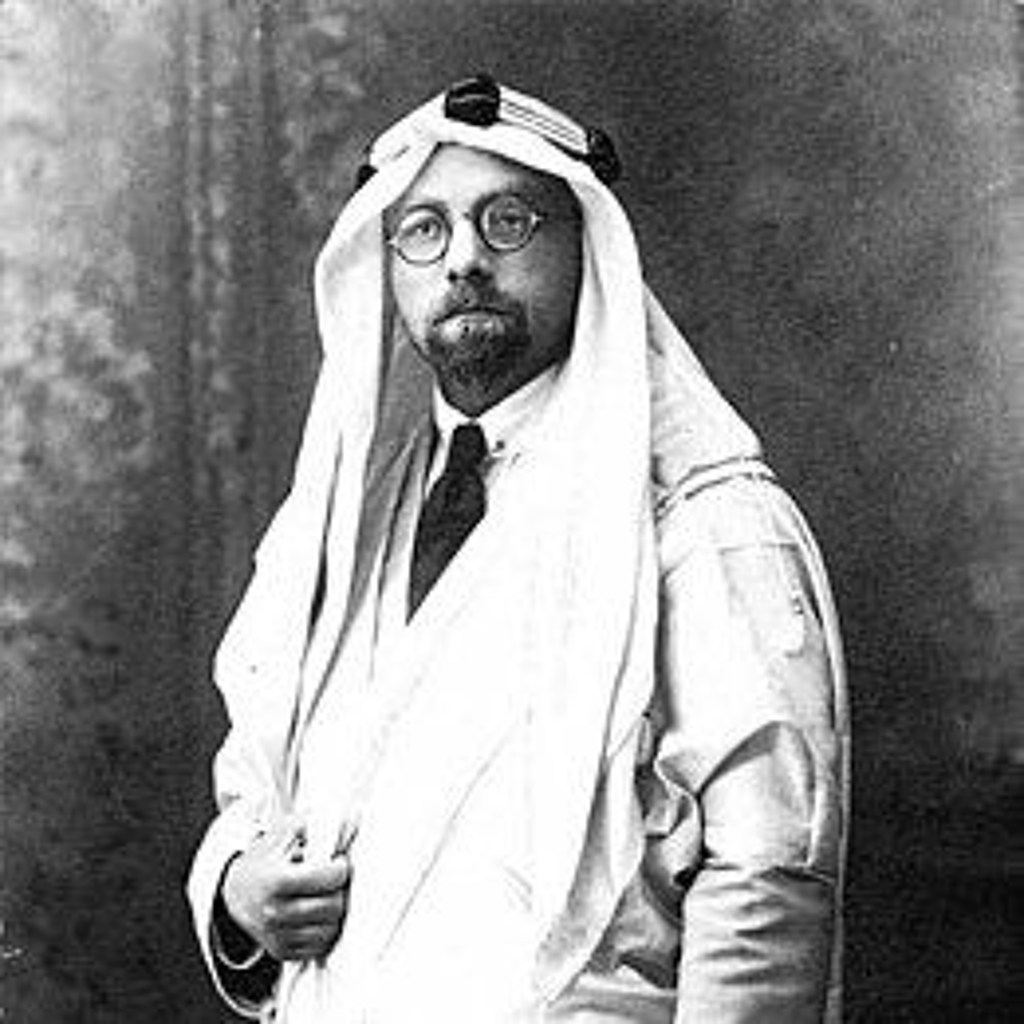
In Amsterdam’s Westermarkt square, near the house where Anne Frank once lived, are three large equilateral triangles made of pink granite. Together they form the Homomonument—a memorial to the queer victims of the Nazi regime. On the third triangle is engraved a line from Dutch-Jewish literary pioneer Jacob Israël de Haan’s poem, ‘To a Young Fisherman’: “Naar vriendschap zulk een mateloos verlangen,” Dutch for “such an endless desire for friendship.”
Sadly, little of De Haan’s work has been translated into other languages, and he remains obscure outside the domains of Dutch literature and early-20th-century Palestinian history.
His journey—from an Orthodox Jew to an unlikely queer icon, from a human rights activist to a Zionist settler; and eventually, an anti-Zionist dissident who became one of the first Jewish victims of Zionist political violence—offers a unique perspective on sexuality, resistance, and the fraught politics of identity and belonging that once drew him to the Zionist movement but also led him to oppose its hegemony over Jewish and Arab life in Palestine.
As a quixotic crusader who spoke for the rejects, the misfits, and the dispossessed, De Haan’s work encompasses gay men in early 20th-century Europe, Jewish prisoners in Tsarist Russia, and Arabs and anti-Zionist Orthodox Jewish communities in British Mandate Palestine. Over a century after his assassination, he remains too complicated a character to be categorized as a hero, a victim, or a villain.
On one hand, he was a provocateur who challenged Christian moral panic over queerness; on the other, he was a besotted pederast—a boy lover—someone we would consider a pedophile by modern standards.
As the Zionist project continues its genocide in Palestine and wages war on Iran and Lebanon, Jacob Israël de Haan is a vital and provocative figure to revisit today—not only because of the anti-Zionist activism in the final years of his life, but because of his divergent stances throughout his life that reveal the limitations of contemporary identity categories.
As a Queer Socialist Writer
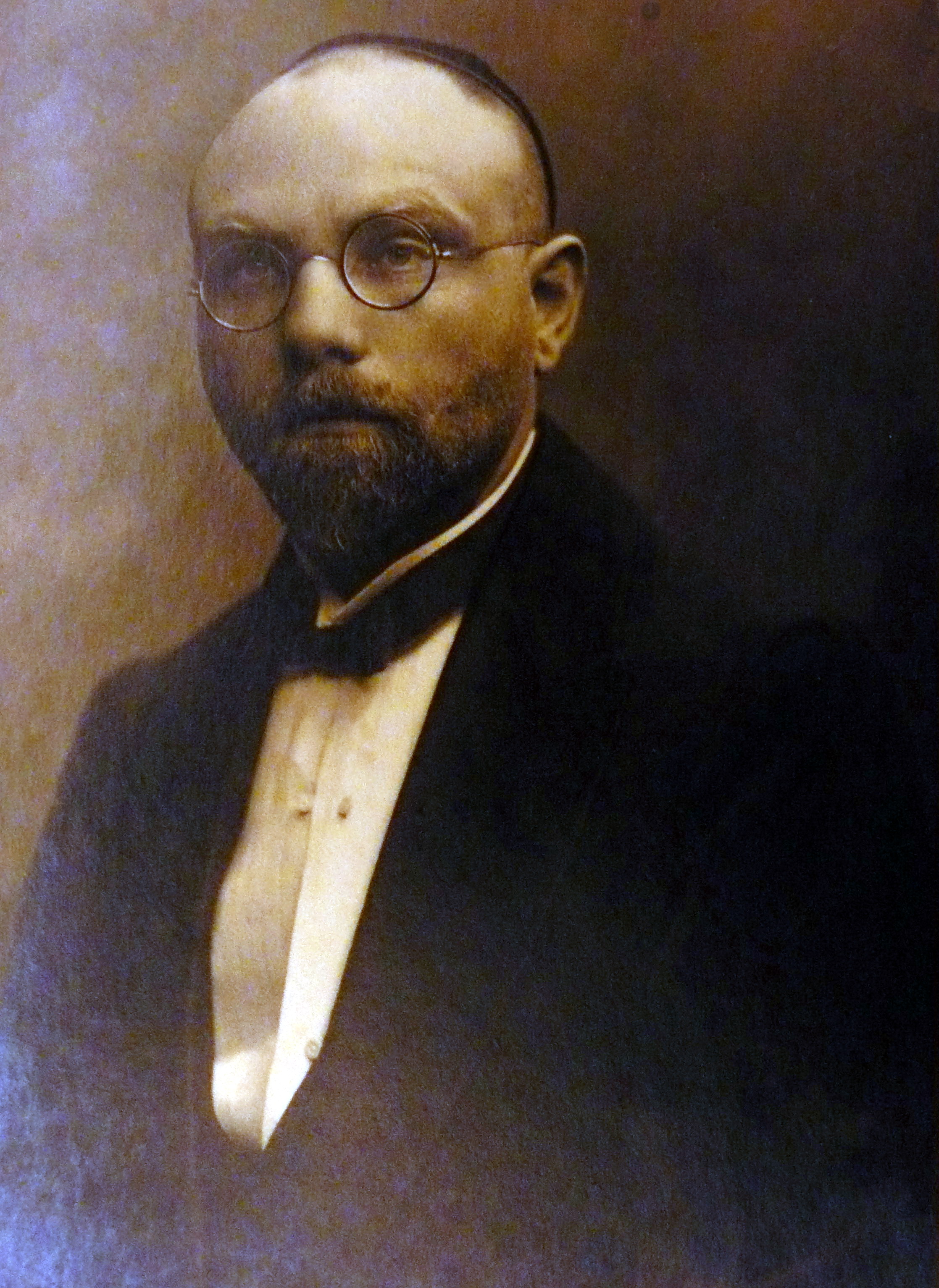
De Haan lived a life as radical as his writing. He was born in 1881 into an Orthodox Jewish family in Smilde, a village in the northern Netherlands, and grew up in the industrial town of Zaandam. His father, Izak de Haan, was a chazzan (an ordained cleric) who led the prayers at a local synagogue. Despite—or perhaps because of—his Orthodox Jewish upbringing, De Haan was drawn to left-wing ideas and renounced religion while studying at the National School for Teachers in Haarlem in the 1890s.
He began writing poetry after coming in contact with the ‘Tachtigers’ (‘Eightiers’), a radical group of Dutch writers, such as Willem Kloos and Frederik van Eeden, who rejected the didactic and formalistic literature that dominated mid-19th-century Dutch letters. Inspired by the Eightiers’ rejection of bourgeois piety and hypocritical morality, he joined the Social Democratic Workers’ Party (SDAP) and began working for the party newspaper, Het Volk (The People), in his early twenties.
Soon, he met Arnold Aletrino, one of the earliest proponents of academic literature on homosexuality and an advocate for homosexual rights, marking a pivotal moment in his life as the two allegedly became lovers.
De Haan’s first novel, Pijplijntjes (Pipelines, 1904), is an autofictional account of his relationship with Aletrino, and was initially dedicated to him. Set in De Pijp, the working-class quarter of old Amsterdam where De Haan lived, Pipelines revolves around the relationship between roommates Sam and Joop, besides exposing the stark class differences between the locals and the bourgeois youth.
Pipelines shocked the Dutch literary world for its candid portrayal of homosexuality, and Aletrino, who identified as heterosexual all his life, was outraged. Together with Johanna van Maarsseveen, whom De Haan would marry in 1907, Aletrino bought all the available copies of the first edition of Pipelines and destroyed them. Undeterred by this setback, De Haan published a significantly altered second edition the same year, changing the names and traits of the protagonists, and removing the dedication to Aletrino. But the damage was done.
Although his literary peers would never approve of his openly homosexual themes, they were more tolerant of his lifestyle than their political counterparts. The socialist movement, at this time, believed that homosexuality was a ‘bourgeois degeneracy’ detrimental to the working-class struggle. De Haan lost his job at Het Volk and was forced to resign from the SDAP under threats of expulsion.
His personal correspondence from this time reveals an increasingly isolated and melancholic man who felt misunderstood and betrayed by his literary and political peers. In a letter to Frederik van Eeden—his closest friend and mentor—De Haan wrote that he was considering leaving the Netherlands. In another letter to writer Herman Robbers in 1907, he wrote: “I promised my wife-to-be, who is a doctor, not to write any more Pipelines-like literature.”
De Haan would not keep this promise. According to filmmaker Zvi Landsman, director of the 2024 documentary ‘Jacob de Haan: A Voice Out of Time’, the persecution De Haan faced after Pipelines “instilled in him a willingness to pay any price for his truth. Instead of backing down, as one might expect, he went on to write an even more provocative homosexual novel.”
Between 1904 and 1908, De Haan produced two more works that engaged with homosexuality, transsexuality, and queer eroticism: a series of short fiction posthumously published in the collection Nerveuze Vertellingen (Nervous Stories, 1983), and his second and final novel, Pathologieën (Pathologies, 1908).
Rejecting Christian Notions of Sin and Redemption
Like Pipelines, Pathologies explores a relationship between a young boy and an older man. It follows the life of Johan van Vere de With, a troubled aristocratic teen who lives a secluded life with his father and their elderly housekeeper, Sien, in a beautiful house in Culemborg. When he finds himself feeling sexually attracted to his father, he grows desperate to move out. He finds lodging in Haarlem, where he begins a sadomasochistic relationship with an older artist named René Richell, which soon spirals into psychological and physical abuse.
Akin to Goethe’s Werther (The Sorrows of Young Werther, 1774) in his existential longing for companionship, and Dostoevsky’s Raskolnikov (Crime and Punishment, 1866) in his self-inflicted moral-philosophical torment—Johan’s turbulent inner life, his struggle to come to terms with his queer desires, and his desperate search for belonging make him one of world literature’s most tragic and complex protagonists.
Pathologies can be read both as a psychological novel exploring sexual nonconformities which lead to ‘degeneration’ and ‘perversion’—a trend in European fin-de-siècle literature—and as a precursor to the queer coming-of-age novels of today. The novel remains avant-garde, both in the unconventional realism with which De Haan treats this subject and the novel’s themes of sadomasochism and incest, which are still considered controversial.
A deeper, more allegorical interpretation of the novel mirrors De Haan’s struggle with religion. Johan, signifying the Man, loves and longs for his father, who represents God. He is guided by Sien, symbolizing Religion. For Johan’s sin of being homosexual and incestuous, however, he is rejected by God, and rejects Religion in turn. In his desperate search for belonging, he turns to René, the Devil, and suffers for it.
The dominant sexological theory in the early 20th century proposed a redemptive narrative for the homosexual: he does not choose his condition, he is born with it, and therefore deserves tolerance and pity. The underlying logic was the same as in Christian morality: the subject must be innocent to be worthy of compassion.
De Haan refuses this precondition in his work, ultimately seeming to identify more with the evil and decadent characters: Joop in Pipelines and René in Pathologies. He rejects the idea of sin and redemption in favor of pleasure and autonomy that the Christian moral order denies. De Haan’s fiction offers a counter-theological framework instead: he finds in the Devil not the absence of God but a more honest god, an alternative covenant that does not require the annihilation of desire as the price of belonging.
While Pathologies did not stir as much controversy as Pipelines—and some critics even praised De Haan’s literary merit despite their aversion to the novel’s themes—it cemented his reputation as a “boy lover.”
One major fallout was the City of Amsterdam removing him from the list of potential primary school teachers. De Haan’s inclination for masochism and pederasty—or sexual relations between a man and a boy—made him an outcast within socialist and modernist circles, which were then beginning to consider these relationships in terms of power dynamics and the age of consent. For De Haan, pederasty was not morally exceptional, but a fact, in both his literature and his life.
In Pipelines, Joop has implied sexual encounters with working-class boys as young as thirteen, and De Haan writes these scenes without sensationalism or condemnation. But his rejection of sexological modernity meant that he also rejected the solidarity of the emerging homosexual rights movement in Europe. He had no interest in being respectable, and this made him useless—even dangerous—to the modernist project.
Rejecting Essentialism and Modernist Pathology
The ostracization De Haan faced from the modernist literary and political movements led him to premodern beliefs. In Pipelines and Pathologies, De Haan refuses the emerging tenets of sexology and dismisses the ideas of born uranians or innate homosexuals, fixed identities, or a homosexual who would renounce boys, homosexuality, anal sex, and sadism, unlike his contemporaries such as Marc-André Raffalovich, Lucien von Römer, or Aletrino.
This framework required the homosexual to explain himself and produce an account of his queer desires that makes them legible and involuntary enough to deserve compassion. But De Haan refuses to appear before a tribunal of modern reason at all. He places the burden of interpretation—and therefore of judgement—onto the reader instead.
In The Queer Art of Failure (2011), Jack Halberstam describes this as ‘escape from identity’—a refusal to be fixed within the normative identity categories of a contemporary society. Halberstam argues that categories such as homosexual, heterosexual, man, woman, and citizen are not neutral descriptors but function to stabilize populations and produce “good subjects” for capitalism, nationalism, and heteropatriarchy. Halberstam frames queerness as a set of tactics for slipping away from these fixed, state-sanctioned definitions.
De Haan, too, defies a single, legible political identity and refrains from using terms like ‘homosexuality’ in his texts, despite being familiar with them. Instead, in Pipelines, De Haan keeps his alter ego Joop, who is clearly homosexual and effeminate, ambiguous. Joop is referred to as “being different from others,” and his sexuality as “strange boy’s feelings,” while the opposite is described as “happiness with girls.”
In his refusal to use fixed terminology for himself and his protagonists, he dares the reader to pity the kind of queerness that does not see itself as pitiable, and to cure the kind of desire that refuses to see itself as a disease.
De Haan refuses the entire epistemological project of late 19th- and early 20th-century sexology that desire could be known, classified, and managed. He refuses essentialism because his desires exceed its precondition of respectability; rejects moral reform because it demands that he renounce his queer and pederastic desires; refuses normalization because it required a legible, law-abiding citizen-subject he had no interest in becoming; and he rejects pathology because it offered pity where he wanted none.
A Spiritual Awakening
The backlash against Pipelines made De Haan turn back to Judaism at a time when Europe was riddled with sociopolitical tensions: between Christians and Jews, conservatives and modernists, and socialists and trade unionists and capitalists and liberals. From 1905 onwards, he began referring to himself as Jacob ‘Israël’ de Haan—the Hebrew name given at his circumcision in 1882.
After losing his job at Het Volk, De Haan worked as a lawyer and journalist, and travelled across Europe. Between 1912 and 1913, he travelled to Russia three times to investigate the alleged mistreatment of Jewish inmates in Tsarist prisons. His socialist inclinations, suppressed since he left the SDAP, found an outlet in his campaign against the Tsarist prison system.
Shocked by the abysmal conditions of Jewish political prisoners in Moscow, St. Petersburg, and Riga, or exiled to the penal colonies in Siberia and the Russian Far East, he wrote In Russische Gevangenissen (In Russian Prisons) in 1913: “I dare to declare and swear that the political prisoners are being taunted, provoked, tormented, mistreated, wounded in their sense of being human, and beaten to death.”
De Haan’s return to religiosity culminated in 1913, around the same time Zionism was rising in Europe, when he experienced what he described as a profound spiritual awakening. While walking in an Amsterdam park, he heard an inner voice that led him back to Orthodox Judaism. De Haan became aware of the growing antisemitism in Europe at the onset of World War I in 1914, and supported the Zionist view that only a nation-state for the Jewish people would put an end to their persecution.
His writings on Jewish identity and struggle, and a collection of spiritual poems titled Het Joodsche Lied (The Jewish Song, 1914), brought him into the orbit of early Zionist leaders, such as the future first president of Israel, Chaim Weizmann, who was instrumental in securing the Balfour Declaration in 1917. De Haan became a member of the Nederlandsche Zionistenbond (the Dutch Zionist Union) during this time and applied to join the Zionist Organization in 1918, but his application was never accepted.
After the war, De Haan cut ties with his Christian wife and set sail for Palestine. In his first dispatch for the Dutch newspaper Algemeen Handelsblad before he departed for Palestine, he wrote: “There is one country that draws them (the Jewish people) with almighty desire. A country where they can find a very balanced life, and where they can work on the reconstruction of the Jewish people: Palestine.”
The Jerusalem Years (1919-1924)
Palestine was a melting pot of many cultures, religions, ethnicities, and political ideas at this time. When De Haan arrived in Jerusalem in 1919, Palestine was grappling with its liminality—suspended between its multi-ethnic, multi-cultural past and its hegemonic present.
In Jerusalem, De Haan found the acceptance he had searched for all his life in Europe, since queerness was not forbidden in the Ottoman Empire. Relationships between older men and young boys—known as ‘amrad’—were common, especially in urban and intellectual circles. He lived in the garden shed of the Aweidah family, had many affairs with Arab men, and wrote erotic quatrains about Arab boys.
De Haan participated in an Orientalist, more intimate form of dispossession that extracted erotic value from the same colonial conditions of dispossession he eventually came to criticize. The Arab boy became the object of De Haan’s desire precisely because colonial logic made him so: in De Haan’s eyes, the Arab boy was naturally sensual, available, and outside the repressive sexual morality of Europe.
De Haan practiced and taught law, besides writing legal theses, reportage, and poetry in these years. His poems dealt with diverse themes, such as God, his desire for Arab boys, his search for belonging, and his being torn between Amsterdam and Jerusalem. His erotic feelings transcended bodily lust and explored the intersection of spirituality and desire.
In one of his poems—translated by Jake Goldwasser as ‘For God or the Moroccan Boy?’—written during his years in Jerusalem, he wonders: “I wait for what, this evening hour— / The City stalked by sleep, / Seated by the Temple Wall: / For God or the Moroccan boy?”
For De Haan—like Oscar Wilde, whom he greatly admired and wrote several poems about—the mystic traditions of Orthodox Judaism offered a richness, sensuality, and depth which he also found in queerness. The Orthodox Jewish tradition that De Haan returned to did not operate on a logic of essentialist identity, but on one of action and reaction, of conduct and covenant.
A man is not homosexual by nature; he performs homosexual acts. The soul is not defined by its inclinations but by its relationship to morality, and crucially by its relationship to repentance, which is always available, but never quite achievable. There is sin, there is pleasure, there is the certainty of forgiveness, and then sin again—an endless negotiation between desire and the divine.
It is this ambivalence between pleasure and sin, hedonism and religiosity, divine love and queer desire that informs his later works. In one of his quatrains (307, ‘Despair’), he says that he hates God; in another (306, ‘Good and Evil’), he says he serves both God and Satan: “with one lust and one pleasure”; in yet another (364, ‘All in God’), he writes: “there is no love outside God / And outside God there is no guilt.”
Both thematically and formally, his quatrains share similarities with the rubaiyat of Persian poet and polymath Omar Khayyam in their preoccupation with divine contemplation, earthly pleasure, and intoxication as mysticism that positions his queer-spiritual vocabulary at the periphery of the European tradition and more in line with a pre-modern Islamic poetic culture.
The literary tradition De Haan drew on—from the Greek lyric poets through the Persian rubaiyat to the queer poets of Victorian England—had long romanticised homoerotic relations between men and boys as a privileged site of pedagogy, spiritual exploration, and erotic refinement.
De Haan inherited this tradition uncritically. Pederasty and homosexuality appear in his poems as matters of fact, as does his lack of remorse or guilt after sinning and enjoying pleasure. In De Haan’s poetry, lust and pain parallel pleasure and sin—God and Devil. In quatrain no. 339, ‘God’s gifts’, he writes: “My most pious songs I wrote, / When I got up from my sinful bed. / God has given me a treasure of sins— / And only God has saved me from my sins!”
His admiration for the Palestinian Arab culture and his friendship with members of the Arab nationalist movement, Abdul and Adil Aweidah, put him at odds with political Zionists. Between 1919 and 1921, De Haan travelled across Palestine—from Jaffa to Gaza and Jerusalem to Beersheba—with Adil, a member of the Arab nationalist organization Al-Muntada. Adil became an inspiration for many of De Haan’s poems, and it was rumored that they were lovers.
In the quatrain ‘R. Chaim Sonnenfeld’, De Haan writes: “Soon I will wander again with Adil through the country / Of light and shadow in the full moon.”
For De Haan, the personal was never far from the political. In Russia, his advocacy for Jewish prisoners was shaped by his infatuation with a young inmate who became the subject of a series of poems. In Palestine, his disillusionment with political Zionism followed his long trips across the country with Adil, who taught him Arabic, a language he called “soft, and wide ranging,” his affairs with Arab boys and men, and his growing attachment to anti-Zionist Arabs and Orthodox Jews.
Palestine: The Country of Light and Shadow
De Haan came to see the Zionist movement as a threat to Orthodox Judaism and the peaceful coexistence of Arabs and Jews in Palestine. His reports on the political zeitgeist in early 1920s Palestine reveal a society in flux as the Zionist project begins to build a Jewish ethnostate in Palestine, increasing oppression and persecution of Palestinian Arabs, and the rise of hypermasculine and heteropatriarchal nationalism.
Within two years in Jerusalem, De Haan befriended Palestinian Arabs, as well as Ashkenazi and Haredi Jewish communities, and became disillusioned with the political Zionist attitude towards Orthodox Jews and Palestinian Arabs.
Besides the political Zionists, he connected with two different Jewish groups: the Mizrachi, a religious Zionist organization founded in Vilnius in 1902; and the Agudath Israel, the representative body of the anti-Zionist Orthodox Jewish Haredi community led by Rabbi Yosef Chaim Sonnenfeld. Through his close associations with the Agudath as well as the Palestinian Arab community, he rightly feared that political Zionists would suppress all dissenting voices for the ‘greater good’ of the Jewish nation-state.
In 1920, he wrote: “Every nationalism, including Zionism, is after all only a necessary one-sidedness.”
In the following years, De Haan worked towards raising awareness about the hegemonic nature of political Zionism in Europe. In 1920, he interviewed Arif al-Arif, a Palestinian journalist, politician, and editor of the Arab nationalist newspaper Al-Suriya Al-Janubiya. This interview, circulated in European newspapers, introduced De Haan’s European readers to Palestinian Arab intellectualism and the Arab nationalist perspective on Zionism and Jewish immigration—a rarity in European newspapers at the time.
The idea of ‘Avoda Ivrit’, or the boycott of Arabs from working on Jewish lands in 1920, further soured his relationship with the political Zionists. According to British artist and writer Nathan Witt, the first explicit turning point appears in ‘The City in Uprising’, De Haan’s eyewitness account of the Nabi Musa riots, which broke out in April 1920 when Arab nationalists, on a pilgrimage to the shrine of Moses, clashed with Zionist settlers.
In his survey of De Haan’s life in Palestine, Witt writes: “This moment seemed to crystallize just how politically naïve he was when he first arrived, both about Zionism and the British Mandate, and the local Orthodox and Arab sentiments against both.”
When Alfred Harmsworth, the owner of several British newspapers, including The Daily Express, visited Palestine in 1922 to meet with Palestinian Arab and Orthodox Jewish communities, De Haan met him as a spokesperson for the Agudath and strongly criticized political Zionists. The following year, De Haan visited Amman to seek support for the Old Yishuv communities, who favored communal autonomy for the Palestinian Jewish population but opposed the Zionist project because they believed that only the arrival of the promised Messiah could legitimately establish a Jewish state in Palestine and saw the largely secular European Zionists as antithetical to their deeply religious way of life.
De Haan’s advocacy led Hussein bin Ali al-Hashimi—the Sharif and Emir of Mecca and the King of Hejaz from 1916 to 1924—to condemn political Zionism. The Sharif’s statement and De Haan’s critical articles in The Daily Express angered political Zionists as they challenged the image of a unified Jewish Palestine.
Assassination and Afterlife
By early 1924, De Haan’s opposition to political Zionism had grown so intense that students at the Law School in Jerusalem, where he taught Ottoman Law, refused to attend his classes. In April 1924, he wrote: “I regard the present, political, unreligious, Zionist movement as an injustice towards the Mohammedans, the Christians and the Orthodox Jews in Palestine, I, as Servant of Justice, am obliged to organize and mobilize the entire Mohammedan world against the present Zionist Organization.”
Once again, he found himself on the receiving end of ridicule, mockery, and death threats. His father’s death the following month affected him deeply. Both mentally and socially unmoored, he no longer felt safe and rarely allowed anyone into his garden shed.
On June 30, 1924, while walking home after his second prayer of the day in a makeshift synagogue in the backyard of the Shaare Zedek Hospital in Jerusalem, De Haan was shot dead by Avraham Tehomi, a member of the Zionist paramilitary organization Haganah, a precursor to the IDF. He was only 42.
In his last dispatch, published the next morning in the Amsterdam-based Algemeen Handelsblad, he described the dangers of a turbulent Palestine, hauntingly relevant today: “Everyone knows that these are all symptoms. Only eternity knows of what. When the time comes, it will tell.”
To read and engage with his life and works today is to reckon with how, almost a century later, journalists, writers, and artists in conflict zones around the world—and especially in Palestine—face intimidation, violence, and assassination for bearing witness against injustice and speaking truth to power.
At the same time, his contradictory political and erotic attachments represent modes of queer worldmaking that gesture toward forms of relation neither early-20th-century modernism nor Zionism could accommodate. De Haan operated within what Eve Sedgwick called the ‘lateral space’ in her Epistemology of the Closet (1990): he refused the rigid binary oppositions of modern Western culture, between ‘secular’ and ‘Orthodox’, ‘homosexual’ and ‘heterosexual’, and ‘Zionist’ and ‘anti-Zionist’.
As people of color and sexual minorities negotiate identity and a sense of belonging in a world that is not made for them, instead of identifying with or completely against dominant cultures, De Haan shows us how to be both and neither—and, at once, many.
Note: A comprehensive collection of Jacob Israël de Haan’s writings is available at the Digital Library for Dutch Literature (DBNL). The first English translation of Pathologies: The Downfall of Johan van Vere de With by Brian Doyle–Du Breuil was published by Seagull Books in 2024, the centenary of Jacob Israël de Haan’s assassination.
The Queer Dissident Zionism Could Not Contain: Jacob Israël de Haan
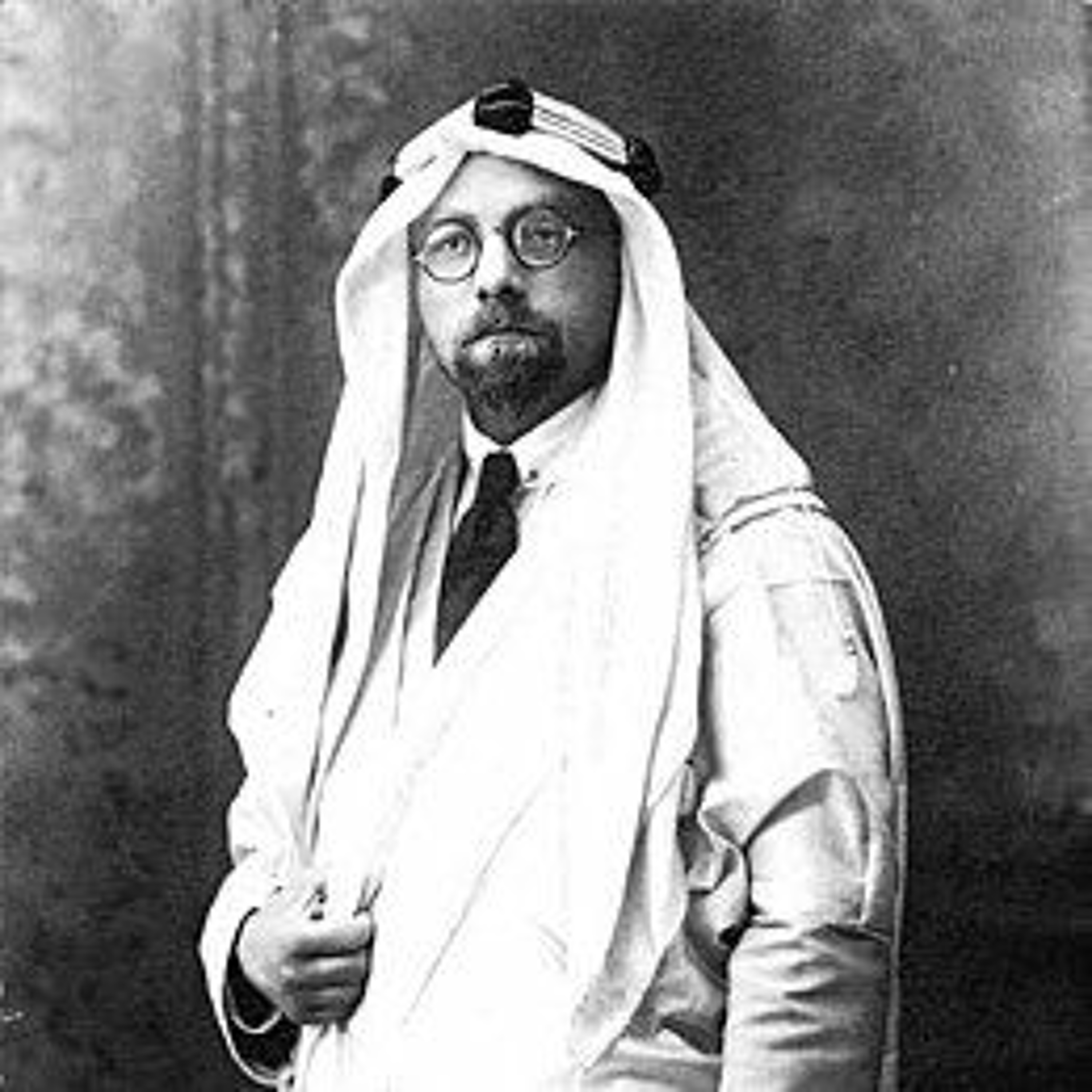
As a quixotic crusader who spoke for the rejects, the misfits, and the dispossessed, Jacob Israël De Haan’s work encompasses gay men in early 20th-century Europe, Jewish prisoners in Tsarist Russia, and Arabs and anti-Zionist Orthodox Jewish communities in British Mandate Palestine.
In Amsterdam’s Westermarkt square, near the house where Anne Frank once lived, are three large equilateral triangles made of pink granite. Together they form the Homomonument—a memorial to the queer victims of the Nazi regime. On the third triangle is engraved a line from Dutch-Jewish literary pioneer Jacob Israël de Haan’s poem, ‘To a Young Fisherman’: “Naar vriendschap zulk een mateloos verlangen,” Dutch for “such an endless desire for friendship.”
Sadly, little of De Haan’s work has been translated into other languages, and he remains obscure outside the domains of Dutch literature and early-20th-century Palestinian history.
His journey—from an Orthodox Jew to an unlikely queer icon, from a human rights activist to a Zionist settler; and eventually, an anti-Zionist dissident who became one of the first Jewish victims of Zionist political violence—offers a unique perspective on sexuality, resistance, and the fraught politics of identity and belonging that once drew him to the Zionist movement but also led him to oppose its hegemony over Jewish and Arab life in Palestine.
As a quixotic crusader who spoke for the rejects, the misfits, and the dispossessed, De Haan’s work encompasses gay men in early 20th-century Europe, Jewish prisoners in Tsarist Russia, and Arabs and anti-Zionist Orthodox Jewish communities in British Mandate Palestine. Over a century after his assassination, he remains too complicated a character to be categorized as a hero, a victim, or a villain.
On one hand, he was a provocateur who challenged Christian moral panic over queerness; on the other, he was a besotted pederast—a boy lover—someone we would consider a pedophile by modern standards.
As the Zionist project continues its genocide in Palestine and wages war on Iran and Lebanon, Jacob Israël de Haan is a vital and provocative figure to revisit today—not only because of the anti-Zionist activism in the final years of his life, but because of his divergent stances throughout his life that reveal the limitations of contemporary identity categories.
As a Queer Socialist Writer
De Haan lived a life as radical as his writing. He was born in 1881 into an Orthodox Jewish family in Smilde, a village in the northern Netherlands, and grew up in the industrial town of Zaandam. His father, Izak de Haan, was a chazzan (an ordained cleric) who led the prayers at a local synagogue. Despite—or perhaps because of—his Orthodox Jewish upbringing, De Haan was drawn to left-wing ideas and renounced religion while studying at the National School for Teachers in Haarlem in the 1890s.
He began writing poetry after coming in contact with the ‘Tachtigers’ (‘Eightiers’), a radical group of Dutch writers, such as Willem Kloos and Frederik van Eeden, who rejected the didactic and formalistic literature that dominated mid-19th-century Dutch letters. Inspired by the Eightiers’ rejection of bourgeois piety and hypocritical morality, he joined the Social Democratic Workers’ Party (SDAP) and began working for the party newspaper, Het Volk (The People), in his early twenties.
Soon, he met Arnold Aletrino, one of the earliest proponents of academic literature on homosexuality and an advocate for homosexual rights, marking a pivotal moment in his life as the two allegedly became lovers.
De Haan’s first novel, Pijplijntjes (Pipelines, 1904), is an autofictional account of his relationship with Aletrino, and was initially dedicated to him. Set in De Pijp, the working-class quarter of old Amsterdam where De Haan lived, Pipelines revolves around the relationship between roommates Sam and Joop, besides exposing the stark class differences between the locals and the bourgeois youth.
Pipelines shocked the Dutch literary world for its candid portrayal of homosexuality, and Aletrino, who identified as heterosexual all his life, was outraged. Together with Johanna van Maarsseveen, whom De Haan would marry in 1907, Aletrino bought all the available copies of the first edition of Pipelines and destroyed them. Undeterred by this setback, De Haan published a significantly altered second edition the same year, changing the names and traits of the protagonists, and removing the dedication to Aletrino. But the damage was done.
Although his literary peers would never approve of his openly homosexual themes, they were more tolerant of his lifestyle than their political counterparts. The socialist movement, at this time, believed that homosexuality was a ‘bourgeois degeneracy’ detrimental to the working-class struggle. De Haan lost his job at Het Volk and was forced to resign from the SDAP under threats of expulsion.
His personal correspondence from this time reveals an increasingly isolated and melancholic man who felt misunderstood and betrayed by his literary and political peers. In a letter to Frederik van Eeden—his closest friend and mentor—De Haan wrote that he was considering leaving the Netherlands. In another letter to writer Herman Robbers in 1907, he wrote: “I promised my wife-to-be, who is a doctor, not to write any more Pipelines-like literature.”
De Haan would not keep this promise. According to filmmaker Zvi Landsman, director of the 2024 documentary ‘Jacob de Haan: A Voice Out of Time’, the persecution De Haan faced after Pipelines “instilled in him a willingness to pay any price for his truth. Instead of backing down, as one might expect, he went on to write an even more provocative homosexual novel.”
Between 1904 and 1908, De Haan produced two more works that engaged with homosexuality, transsexuality, and queer eroticism: a series of short fiction posthumously published in the collection Nerveuze Vertellingen (Nervous Stories, 1983), and his second and final novel, Pathologieën (Pathologies, 1908).
Rejecting Christian Notions of Sin and Redemption
Like Pipelines, Pathologies explores a relationship between a young boy and an older man. It follows the life of Johan van Vere de With, a troubled aristocratic teen who lives a secluded life with his father and their elderly housekeeper, Sien, in a beautiful house in Culemborg. When he finds himself feeling sexually attracted to his father, he grows desperate to move out. He finds lodging in Haarlem, where he begins a sadomasochistic relationship with an older artist named René Richell, which soon spirals into psychological and physical abuse.
Akin to Goethe’s Werther (The Sorrows of Young Werther, 1774) in his existential longing for companionship, and Dostoevsky’s Raskolnikov (Crime and Punishment, 1866) in his self-inflicted moral-philosophical torment—Johan’s turbulent inner life, his struggle to come to terms with his queer desires, and his desperate search for belonging make him one of world literature’s most tragic and complex protagonists.
Pathologies can be read both as a psychological novel exploring sexual nonconformities which lead to ‘degeneration’ and ‘perversion’—a trend in European fin-de-siècle literature—and as a precursor to the queer coming-of-age novels of today. The novel remains avant-garde, both in the unconventional realism with which De Haan treats this subject and the novel’s themes of sadomasochism and incest, which are still considered controversial.
A deeper, more allegorical interpretation of the novel mirrors De Haan’s struggle with religion. Johan, signifying the Man, loves and longs for his father, who represents God. He is guided by Sien, symbolizing Religion. For Johan’s sin of being homosexual and incestuous, however, he is rejected by God, and rejects Religion in turn. In his desperate search for belonging, he turns to René, the Devil, and suffers for it.
The dominant sexological theory in the early 20th century proposed a redemptive narrative for the homosexual: he does not choose his condition, he is born with it, and therefore deserves tolerance and pity. The underlying logic was the same as in Christian morality: the subject must be innocent to be worthy of compassion.
De Haan refuses this precondition in his work, ultimately seeming to identify more with the evil and decadent characters: Joop in Pipelines and René in Pathologies. He rejects the idea of sin and redemption in favor of pleasure and autonomy that the Christian moral order denies. De Haan’s fiction offers a counter-theological framework instead: he finds in the Devil not the absence of God but a more honest god, an alternative covenant that does not require the annihilation of desire as the price of belonging.
While Pathologies did not stir as much controversy as Pipelines—and some critics even praised De Haan’s literary merit despite their aversion to the novel’s themes—it cemented his reputation as a “boy lover.”
One major fallout was the City of Amsterdam removing him from the list of potential primary school teachers. De Haan’s inclination for masochism and pederasty—or sexual relations between a man and a boy—made him an outcast within socialist and modernist circles, which were then beginning to consider these relationships in terms of power dynamics and the age of consent. For De Haan, pederasty was not morally exceptional, but a fact, in both his literature and his life.
In Pipelines, Joop has implied sexual encounters with working-class boys as young as thirteen, and De Haan writes these scenes without sensationalism or condemnation. But his rejection of sexological modernity meant that he also rejected the solidarity of the emerging homosexual rights movement in Europe. He had no interest in being respectable, and this made him useless—even dangerous—to the modernist project.
Rejecting Essentialism and Modernist Pathology
The ostracization De Haan faced from the modernist literary and political movements led him to premodern beliefs. In Pipelines and Pathologies, De Haan refuses the emerging tenets of sexology and dismisses the ideas of born uranians or innate homosexuals, fixed identities, or a homosexual who would renounce boys, homosexuality, anal sex, and sadism, unlike his contemporaries such as Marc-André Raffalovich, Lucien von Römer, or Aletrino.
This framework required the homosexual to explain himself and produce an account of his queer desires that makes them legible and involuntary enough to deserve compassion. But De Haan refuses to appear before a tribunal of modern reason at all. He places the burden of interpretation—and therefore of judgement—onto the reader instead.
In The Queer Art of Failure (2011), Jack Halberstam describes this as ‘escape from identity’—a refusal to be fixed within the normative identity categories of a contemporary society. Halberstam argues that categories such as homosexual, heterosexual, man, woman, and citizen are not neutral descriptors but function to stabilize populations and produce “good subjects” for capitalism, nationalism, and heteropatriarchy. Halberstam frames queerness as a set of tactics for slipping away from these fixed, state-sanctioned definitions.
De Haan, too, defies a single, legible political identity and refrains from using terms like ‘homosexuality’ in his texts, despite being familiar with them. Instead, in Pipelines, De Haan keeps his alter ego Joop, who is clearly homosexual and effeminate, ambiguous. Joop is referred to as “being different from others,” and his sexuality as “strange boy’s feelings,” while the opposite is described as “happiness with girls.”
In his refusal to use fixed terminology for himself and his protagonists, he dares the reader to pity the kind of queerness that does not see itself as pitiable, and to cure the kind of desire that refuses to see itself as a disease.
De Haan refuses the entire epistemological project of late 19th- and early 20th-century sexology that desire could be known, classified, and managed. He refuses essentialism because his desires exceed its precondition of respectability; rejects moral reform because it demands that he renounce his queer and pederastic desires; refuses normalization because it required a legible, law-abiding citizen-subject he had no interest in becoming; and he rejects pathology because it offered pity where he wanted none.
A Spiritual Awakening
The backlash against Pipelines made De Haan turn back to Judaism at a time when Europe was riddled with sociopolitical tensions: between Christians and Jews, conservatives and modernists, and socialists and trade unionists and capitalists and liberals. From 1905 onwards, he began referring to himself as Jacob ‘Israël’ de Haan—the Hebrew name given at his circumcision in 1882.
After losing his job at Het Volk, De Haan worked as a lawyer and journalist, and travelled across Europe. Between 1912 and 1913, he travelled to Russia three times to investigate the alleged mistreatment of Jewish inmates in Tsarist prisons. His socialist inclinations, suppressed since he left the SDAP, found an outlet in his campaign against the Tsarist prison system.
Shocked by the abysmal conditions of Jewish political prisoners in Moscow, St. Petersburg, and Riga, or exiled to the penal colonies in Siberia and the Russian Far East, he wrote In Russische Gevangenissen (In Russian Prisons) in 1913: “I dare to declare and swear that the political prisoners are being taunted, provoked, tormented, mistreated, wounded in their sense of being human, and beaten to death.”
De Haan’s return to religiosity culminated in 1913, around the same time Zionism was rising in Europe, when he experienced what he described as a profound spiritual awakening. While walking in an Amsterdam park, he heard an inner voice that led him back to Orthodox Judaism. De Haan became aware of the growing antisemitism in Europe at the onset of World War I in 1914, and supported the Zionist view that only a nation-state for the Jewish people would put an end to their persecution.
His writings on Jewish identity and struggle, and a collection of spiritual poems titled Het Joodsche Lied (The Jewish Song, 1914), brought him into the orbit of early Zionist leaders, such as the future first president of Israel, Chaim Weizmann, who was instrumental in securing the Balfour Declaration in 1917. De Haan became a member of the Nederlandsche Zionistenbond (the Dutch Zionist Union) during this time and applied to join the Zionist Organization in 1918, but his application was never accepted.
After the war, De Haan cut ties with his Christian wife and set sail for Palestine. In his first dispatch for the Dutch newspaper Algemeen Handelsblad before he departed for Palestine, he wrote: “There is one country that draws them (the Jewish people) with almighty desire. A country where they can find a very balanced life, and where they can work on the reconstruction of the Jewish people: Palestine.”
The Jerusalem Years (1919-1924)
Palestine was a melting pot of many cultures, religions, ethnicities, and political ideas at this time. When De Haan arrived in Jerusalem in 1919, Palestine was grappling with its liminality—suspended between its multi-ethnic, multi-cultural past and its hegemonic present.
In Jerusalem, De Haan found the acceptance he had searched for all his life in Europe, since queerness was not forbidden in the Ottoman Empire. Relationships between older men and young boys—known as ‘amrad’—were common, especially in urban and intellectual circles. He lived in the garden shed of the Aweidah family, had many affairs with Arab men, and wrote erotic quatrains about Arab boys.
De Haan participated in an Orientalist, more intimate form of dispossession that extracted erotic value from the same colonial conditions of dispossession he eventually came to criticize. The Arab boy became the object of De Haan’s desire precisely because colonial logic made him so: in De Haan’s eyes, the Arab boy was naturally sensual, available, and outside the repressive sexual morality of Europe.
De Haan practiced and taught law, besides writing legal theses, reportage, and poetry in these years. His poems dealt with diverse themes, such as God, his desire for Arab boys, his search for belonging, and his being torn between Amsterdam and Jerusalem. His erotic feelings transcended bodily lust and explored the intersection of spirituality and desire.
In one of his poems—translated by Jake Goldwasser as ‘For God or the Moroccan Boy?’—written during his years in Jerusalem, he wonders: “I wait for what, this evening hour— / The City stalked by sleep, / Seated by the Temple Wall: / For God or the Moroccan boy?”
For De Haan—like Oscar Wilde, whom he greatly admired and wrote several poems about—the mystic traditions of Orthodox Judaism offered a richness, sensuality, and depth which he also found in queerness. The Orthodox Jewish tradition that De Haan returned to did not operate on a logic of essentialist identity, but on one of action and reaction, of conduct and covenant.
A man is not homosexual by nature; he performs homosexual acts. The soul is not defined by its inclinations but by its relationship to morality, and crucially by its relationship to repentance, which is always available, but never quite achievable. There is sin, there is pleasure, there is the certainty of forgiveness, and then sin again—an endless negotiation between desire and the divine.
It is this ambivalence between pleasure and sin, hedonism and religiosity, divine love and queer desire that informs his later works. In one of his quatrains (307, ‘Despair’), he says that he hates God; in another (306, ‘Good and Evil’), he says he serves both God and Satan: “with one lust and one pleasure”; in yet another (364, ‘All in God’), he writes: “there is no love outside God / And outside God there is no guilt.”
Both thematically and formally, his quatrains share similarities with the rubaiyat of Persian poet and polymath Omar Khayyam in their preoccupation with divine contemplation, earthly pleasure, and intoxication as mysticism that positions his queer-spiritual vocabulary at the periphery of the European tradition and more in line with a pre-modern Islamic poetic culture.
The literary tradition De Haan drew on—from the Greek lyric poets through the Persian rubaiyat to the queer poets of Victorian England—had long romanticised homoerotic relations between men and boys as a privileged site of pedagogy, spiritual exploration, and erotic refinement.
De Haan inherited this tradition uncritically. Pederasty and homosexuality appear in his poems as matters of fact, as does his lack of remorse or guilt after sinning and enjoying pleasure. In De Haan’s poetry, lust and pain parallel pleasure and sin—God and Devil. In quatrain no. 339, ‘God’s gifts’, he writes: “My most pious songs I wrote, / When I got up from my sinful bed. / God has given me a treasure of sins— / And only God has saved me from my sins!”
His admiration for the Palestinian Arab culture and his friendship with members of the Arab nationalist movement, Abdul and Adil Aweidah, put him at odds with political Zionists. Between 1919 and 1921, De Haan travelled across Palestine—from Jaffa to Gaza and Jerusalem to Beersheba—with Adil, a member of the Arab nationalist organization Al-Muntada. Adil became an inspiration for many of De Haan’s poems, and it was rumored that they were lovers.
In the quatrain ‘R. Chaim Sonnenfeld’, De Haan writes: “Soon I will wander again with Adil through the country / Of light and shadow in the full moon.”
For De Haan, the personal was never far from the political. In Russia, his advocacy for Jewish prisoners was shaped by his infatuation with a young inmate who became the subject of a series of poems. In Palestine, his disillusionment with political Zionism followed his long trips across the country with Adil, who taught him Arabic, a language he called “soft, and wide ranging,” his affairs with Arab boys and men, and his growing attachment to anti-Zionist Arabs and Orthodox Jews.
Palestine: The Country of Light and Shadow
De Haan came to see the Zionist movement as a threat to Orthodox Judaism and the peaceful coexistence of Arabs and Jews in Palestine. His reports on the political zeitgeist in early 1920s Palestine reveal a society in flux as the Zionist project begins to build a Jewish ethnostate in Palestine, increasing oppression and persecution of Palestinian Arabs, and the rise of hypermasculine and heteropatriarchal nationalism.
Within two years in Jerusalem, De Haan befriended Palestinian Arabs, as well as Ashkenazi and Haredi Jewish communities, and became disillusioned with the political Zionist attitude towards Orthodox Jews and Palestinian Arabs.
Besides the political Zionists, he connected with two different Jewish groups: the Mizrachi, a religious Zionist organization founded in Vilnius in 1902; and the Agudath Israel, the representative body of the anti-Zionist Orthodox Jewish Haredi community led by Rabbi Yosef Chaim Sonnenfeld. Through his close associations with the Agudath as well as the Palestinian Arab community, he rightly feared that political Zionists would suppress all dissenting voices for the ‘greater good’ of the Jewish nation-state.
In 1920, he wrote: “Every nationalism, including Zionism, is after all only a necessary one-sidedness.”
In the following years, De Haan worked towards raising awareness about the hegemonic nature of political Zionism in Europe. In 1920, he interviewed Arif al-Arif, a Palestinian journalist, politician, and editor of the Arab nationalist newspaper Al-Suriya Al-Janubiya. This interview, circulated in European newspapers, introduced De Haan’s European readers to Palestinian Arab intellectualism and the Arab nationalist perspective on Zionism and Jewish immigration—a rarity in European newspapers at the time.
The idea of ‘Avoda Ivrit’, or the boycott of Arabs from working on Jewish lands in 1920, further soured his relationship with the political Zionists. According to British artist and writer Nathan Witt, the first explicit turning point appears in ‘The City in Uprising’, De Haan’s eyewitness account of the Nabi Musa riots, which broke out in April 1920 when Arab nationalists, on a pilgrimage to the shrine of Moses, clashed with Zionist settlers.
In his survey of De Haan’s life in Palestine, Witt writes: “This moment seemed to crystallize just how politically naïve he was when he first arrived, both about Zionism and the British Mandate, and the local Orthodox and Arab sentiments against both.”
When Alfred Harmsworth, the owner of several British newspapers, including The Daily Express, visited Palestine in 1922 to meet with Palestinian Arab and Orthodox Jewish communities, De Haan met him as a spokesperson for the Agudath and strongly criticized political Zionists. The following year, De Haan visited Amman to seek support for the Old Yishuv communities, who favored communal autonomy for the Palestinian Jewish population but opposed the Zionist project because they believed that only the arrival of the promised Messiah could legitimately establish a Jewish state in Palestine and saw the largely secular European Zionists as antithetical to their deeply religious way of life.
De Haan’s advocacy led Hussein bin Ali al-Hashimi—the Sharif and Emir of Mecca and the King of Hejaz from 1916 to 1924—to condemn political Zionism. The Sharif’s statement and De Haan’s critical articles in The Daily Express angered political Zionists as they challenged the image of a unified Jewish Palestine.
Assassination and Afterlife
By early 1924, De Haan’s opposition to political Zionism had grown so intense that students at the Law School in Jerusalem, where he taught Ottoman Law, refused to attend his classes. In April 1924, he wrote: “I regard the present, political, unreligious, Zionist movement as an injustice towards the Mohammedans, the Christians and the Orthodox Jews in Palestine, I, as Servant of Justice, am obliged to organize and mobilize the entire Mohammedan world against the present Zionist Organization.”
Once again, he found himself on the receiving end of ridicule, mockery, and death threats. His father’s death the following month affected him deeply. Both mentally and socially unmoored, he no longer felt safe and rarely allowed anyone into his garden shed.
On June 30, 1924, while walking home after his second prayer of the day in a makeshift synagogue in the backyard of the Shaare Zedek Hospital in Jerusalem, De Haan was shot dead by Avraham Tehomi, a member of the Zionist paramilitary organization Haganah, a precursor to the IDF. He was only 42.
In his last dispatch, published the next morning in the Amsterdam-based Algemeen Handelsblad, he described the dangers of a turbulent Palestine, hauntingly relevant today: “Everyone knows that these are all symptoms. Only eternity knows of what. When the time comes, it will tell.”
To read and engage with his life and works today is to reckon with how, almost a century later, journalists, writers, and artists in conflict zones around the world—and especially in Palestine—face intimidation, violence, and assassination for bearing witness against injustice and speaking truth to power.
At the same time, his contradictory political and erotic attachments represent modes of queer worldmaking that gesture toward forms of relation neither early-20th-century modernism nor Zionism could accommodate. De Haan operated within what Eve Sedgwick called the ‘lateral space’ in her Epistemology of the Closet (1990): he refused the rigid binary oppositions of modern Western culture, between ‘secular’ and ‘Orthodox’, ‘homosexual’ and ‘heterosexual’, and ‘Zionist’ and ‘anti-Zionist’.
As people of color and sexual minorities negotiate identity and a sense of belonging in a world that is not made for them, instead of identifying with or completely against dominant cultures, De Haan shows us how to be both and neither—and, at once, many.
Note: A comprehensive collection of Jacob Israël de Haan’s writings is available at the Digital Library for Dutch Literature (DBNL). The first English translation of Pathologies: The Downfall of Johan van Vere de With by Brian Doyle–Du Breuil was published by Seagull Books in 2024, the centenary of Jacob Israël de Haan’s assassination.