




Gulf: A Dangerous, Orientalist Portrait of Monstrous Arabs and Oppressed Victims
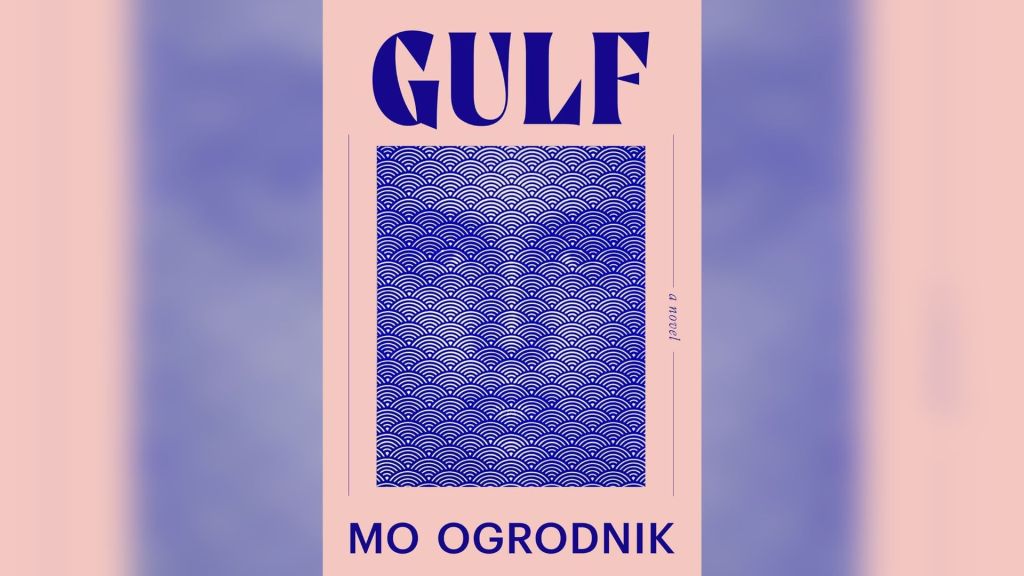
When I encountered the 2025 novel Gulf by Mo Ogrodnik, I hoped it would challenge existing stereotypes that persist in North American discourse and literature about the Arab world and the Gulf in particular. People tell me they would never visit the Arabian Gulf, even after I tell them that I lived in the United Arab Emirates (UAE) for 11 years. Proudly, they say they would never go to a place like that; they mention something vague about human rights, as though refusing to engage with a particular region is equivalent to taking action against global systems of subjugation.
Usually, even as they reject the Gulf for its censorship, patriarchy, and exploitation of migrant workers, they seem unconcerned about North American censorship, patriarchy, and exploitation of migrant workers. Since moving to New York, the most frequent question I’m asked about my time in the UAE is, what was that like?—as though it’s an ordeal I survived—and the second is, how was it to be there… as a woman? For some reason, North American men ask me the latter question most frequently. When I tell them I feel much less safe in North America, the conversation quickly slides into a new topic.
“With liberals,” journalist Janan Ganesh writes, “the conversation starts and ends with muttered distaste about human rights in the Gulf. Good. Nice to see a bit of western moral confidence in these self-doubting times. But applied consistently, this attitude can amount to scandalized recoil from much of the rest of the world.”
With Gulf, I wanted to read a text that interrogated its own positionality as a novel about the Arab world by an American author for an American publisher. Ogrodnik gains her authority through her associations with NYU Abu Dhabi, my alma mater, and FIND Creative Lab in the UAE. Unlike western journalists who fly into the region for a few weeks to write controversial think-pieces, Ogrodnik lived and taught in the Gulf, which should mean she has the experience necessary to write about the region in a thoughtful, nuanced way.
Instead, the novel evokes existing stereotypes, flattening the specificity of its characters’ experiences into simplistic portraits of power and powerlessness. By attempting to “educate”—and perhaps scandalize—an American audience using five representational stories about the region, this work paints a dangerous, orientalist portrait of a place full of monstrous Arabs and oppressed victims.
A Sweeping, Disjointed Narrative
Gulf moves at breakneck speed between Saudi Arabia, the United States, Syria, the Philippines, Ethiopia, and the United Arab Emirates. It braids five women’s stories into a sweeping, disjointed narrative that attempts to tackle questions of labor and power in the Gulf and beyond. Dounia, a young Saudi woman, is pregnant, isolated, and unhappy with her life as a housewife in Ras Al-Khair.
She hires Flora—a Filipina domestic worker who is suffering the loss of her own child—to take care of her newborn baby, and quickly begins abusing her. Justine, an American curator, attempts to rescue Eskedare, an Ethiopian teenager who is working illegally in Abu Dhabi, with terrible consequences. Finally, Zeinah, a Syrian woman, is forced to marry an ISIS terrorist and, at his urging, joins the morality police in Raqqa.
On its release, Gulf was reviewed by The New York Times, which criticized the novel for its tenuous premise and for being reductive and, “at times, even stereotypical.” The most damning criticism: “Zeinah is neither a migrant nor living in a Persian Gulf state, and her inclusion in the novel does little more than evoke the stereotype that a story about the Middle East must somehow include a terrorist.” While this criticism is timely and necessary, it doesn’t go far enough. Wasafiri and The Brooklyn Rail have published excerpts of the novel, supporting its premise, and readers on Goodreads have largely praised it for educating them about a place they knew little about.
I hoped Gulf would engage some of the most salient questions for people who live in the region. How do systems of subjugation in Gulf countries influence and infiltrate family dynamics there? What does resistance look like in a place with strict censorship and surveillance? What happens psychologically to the abuser and the abused? How does a particular strand of history shape a facet of contemporary Gulf culture? How do racial and class hierarchies in the region prevent people from connecting, building community, or loving each other?
In trying to represent so many identity groups and countries in splashy snippets, the novel fails to capture any one place or social dynamic. It forecloses its ability to raise important questions because of its preconceived and often simplistic conclusions about power.
In her seminal book Do Muslim Women Need Saving, anthropologist Lila Abu-Lughod argues that Western liberals often believe their culture is the universal amoral standard that all societies should be measured by. Any society that has different values—especially in the Muslim world, which is viewed as threatening, homogeneous, and backwards—should be condemned, and the people who live within those societies need to be rescued.
This attitude—best captured by Edward Said’s treatise Orientalism—has been rising in contemporary discourse about the Arabian Gulf in particular. For instance, in his 2025 song, “My 27th Birthday,” the rapper Dave writes, “I cried about slavery, then went to Dubai with my girl /Surely I ain’t part of the problem, I lied to myself.” Dave is not the first to draw parallels between the Atlantic slave trade and labor practices in the Arab world.
There is a long history of women’s rights activists using the specter of Atlantic slavery as an analogy for the treatment of Muslim women by Muslim men. But as Abu-Lughod explains, these analogies are then weaponized to justify Western interventions in Muslim-majority countries, and images of helpless Muslim women are instrumentalized to fuel the Western mission to rescue them from their cultures.
Abu-Lughod uses an example from a German human rights campaign with an image of a woman in a burka crouched among a pile of garbage bags. “Oppressed women are easily overlooked. Please support us in the fight for their rights.” Abu-Lughod asks why human rights campaigners presume that because Muslim women dress a certain way, they don’t have agency and can’t speak for themselves. “We ought to talk to them to find out what problems they face rather than treating them as mute garbage bags.”
These images and narratives do not invite viewers to consider the role westerners already play in perpetuating global inequality, nor do they reflect on the inequalities that take place within western societies; instead, they reinforce a sense of western superiority.
Dead-ends, Death and Emptiness in the Arab World
The novel opens with a description of a town in Saudi Arabia (KSA), where Dounia, a Saudi woman, is being forced to live with her mother-in-law, Basma. The town is described as bleak, desolate, crude, a “dumping ground.” There is no life, no beauty, and no hope beyond the “slick videos” promising a future of international tourism in the area.
In the family home, death lingers like a bad smell. “The ground floor enclosed a central courtyard and fountain with koi, seven already dead… the inside had the decadence of a coiffed casket.” The family’s patriarch has recently passed away, and Basma demands that Dounia join her in their family compound—the Dream Development—far from KSA’s bustling social spheres in Jeddah or Riyadh. Dounia’s husband, Hamed, agrees to this arrangement without consulting her.
Reading these opening pages, I wonder: where is the rest of Basma’s family, and why doesn’t she live with them? Why would she want to be separated from the rest of KSA society with just one daughter-in-law for company? Why not live with another one of her children, her siblings, cousins, or even Dounia’s family? Why would she and her late husband choose to live in a compound that’s still under construction? The novel maroons the two women in an unlikely setting, cutting off the potential for any deep exploration of Saudi culture, in which extended family plays a central role.
Without a family or friends surrounding her, Dounia’s life is stripped of cultural context. Isolating the two women accomplishes two narrative goals: to keep the story simple enough that it can share 422 pages with four other women’s stories, and to turn Dounia’s life into an allegory of Saudi womanhood. Later in the novel, when she behaves monstrously, we understand that her monstrosity is a condition of her Saudiness—not a result of her specific circumstances or character.
This conflation is made clear on the novel’s first page, when Dounia, who has lived in KSA her whole life, looks at “the green Saudi flag inscribed in white,” outside of her home, as though it would be noteworthy to her. From the first page, Dounia’s story is representative of the nation; alone on the page, she stands for all Saudi women.
In the 2020 ethnographic book, Beyond Exception: New Interpretations of the Arabian Peninsula, authors Le Renard, Vora, and Kanna demonstrate that depictions of the Gulf often reinforce an imagined divide between East and West, modern and traditional, liberal and illiberal, progressive and barbaric. Thus, while air conditioning, isolation, death, and depression loom over the novel’s opening descriptions of the Gulf, New York is bursting with life.
Justine, the American character, runs into the scene, winded with excitement because she’s just received a rave review from The New York Times for her curation of an exhibit on opossums. “Finally, an exhibition that brings the American Museum of Natural History into the current conversation, upending the racial hierarchy that’s been entombed with Roosevelt at the door.” Through this review, we understand that Justine is a good liberal woman; racially aware, anti-colonial, and independent.
Unlike Dounia, she has a thriving career, and her life is as vivid as her lipstick. We watch her putting on lingerie—making it clear that she’s sexually liberated. Her biggest problem is her husband’s depression, which she lingers on momentarily before going out to revel in her teenage daughter’s admiration of her career. Mother and daughter walk arm-in-arm through Central Park, which is blooming with hyacinth and forsythia, sharply contrasting the death that hangs over the opening description of Saudi.
New York is thus idealized and rendered unproblematic: a place where a white woman can singlehandedly undo the colonial history of a prominent American institution.
Beyond the idea that New York—and by extension, the United States—is more vibrant, progressive, alive, and liberated than Saudi Arabia, I am disturbed by how the novel evokes emptiness throughout its descriptions of the Gulf. When Justine arrives in Abu Dhabi, she is immediately isolated. Aside from one day spent learning about falconry, we see her working alone, despite the curatorial team she is supposed to join and the ubiquity of Abu Dhabi’s creative hubs, where people with her job description typically work.
Instead, she mostly stays in her air-conditioned apartment and fails to make any friends. Her experience mirrors the isolation and lack of community that Dounia experiences in her “coiffed casket” in KSA. The reader is left with a barren vision of the Gulf that is nothing like the multiplicity of worlds and communities that exist there.
Who does it serve to imagine a densely populated region as mostly empty, and to portray the women who live there as trapped and friendless? Gulf portrays the region as a terra nullius: a land that belongs to nobody—a bleak desert, a dumping ground. Throughout history, the terra nullius trope has been utilized as a justification for colonization. If a land is empty, and the few people who live there are backwards—miserable, in need of liberation—what is stopping colonizers from intervening? It does not seem violent to invade a place that was empty of life to begin with.
Beyond these orientalist tropes is what Le Renard, Vora, and Kanna term Gulf “exceptionalism”: depictions of the region as hypermodern, empty, and inauthentic, “avant-garde in terms of consumerism and slavery-like exploitation, a society without freedom and without middle classes, divided up into a rich leisure class and an army of quasi slaves.” Gulf exceptionalism erases the long histories of class, anti-colonial, and nationalist struggles in the region; it diminishes the agency of citizens and noncitizens who make up Gulf societies.
The Specter of Terrorism
Gulf takes this neocolonial imaginary a step further when it transforms the land from empty and avant-garde to threatening. As the novel progresses, the people in the Gulf are not simply isolated and miserable, but monstrous. In an early scene, Justine listens to her neighbor in Abu Dhabi practicing the clarinet, “invoking an atmosphere of lonesomeness and dread.”
For a woman who is living in a luxury apartment and has just received the career opportunity of a lifetime, it’s unclear where this nebulous fear comes from, unless it’s the implicit threat that the Gulf always represents: the specter of terrorism, which is made clear through the inexplicable inclusion of Zeinah’s story, set in Syria. Zeinah is being forced to marry Omar, “even though girls in Raqaa were drinking antifreeze and committing suicide to avoid marrying ISIS fighters.”
She and her new husband drive through Raqqa, where “death was in heat: groins sweating, beards growing, urine reeking… Zeinah saw puppies eating from the stomach of a rotting corpse.” What do these horrifying images—which reek of Islamophobia—have to do with the Gulf?
The novel insists on shoehorning this terrorism threat directly in Abu Dhabi, where Justine meets an Iraqi man and agrees to go with him to his hotel room. Before they can have sex, he starts ranting to her about the war in Iraq. He mentions a cousin who disappeared and “the reality of ISIS settled between them.” He becomes angry with Justine and starts yelling about American politics and tourists, frightening her: “Mockery had entered his voice, and she felt she should leave… She saw herself through his eyes, his disgust, but also felt the urgency in his grasp and felt afraid…”
Justine leaves unscathed, but the possibility of rape hangs over the scene in his grasp and his sudden passionate rambling—reminding the reader that it is never safe for a white woman to be alone with an Arab man.
In White Tears/Brown Scars: How White Feminism Betrays Women of Color (2019), Ruby Hamad writes about how white women’s accusations of rape are used to reinforce white supremacy and justify violence against men of color. One of her case studies is 1910s Southern Rhodesia, when white settler colonies became convinced that African men were driven mad with desire for white women, and were attempting to rape them en masse.
As a result of this hysteria, which they referred to as Black Peril, the white population executed at least 20 Black men and sentenced hundreds more to hard labor. A white woman could simply imagine that a Black man wanted to rape her, and he would be sentenced. This fear was so wildly disproportionate to the actual threat that historians now consider it “a kind of psychopathology.”
Despite this history of violence, which a character like Justine would ostensibly be aware of as an anti-racist liberal American, both she and Gulf can only imagine a sexual and threatening encounter between a white woman and an Iraqi man.
The Kafala System and Exploitation
Like many neocolonial texts, Gulf confidently depicts a place that it fails to understand and remains unaware of its own blindness. Throughout Justine’s sections, I stumbled upon factual inaccuracies or misconceptions about the UAE. The novel places Yas Waterworld, a prominent Abu Dhabi landmark, in Dubai. It uses the word “Sheik” instead of the widely-used UAE spelling, “Sheikh.” Justine is disturbed by the lack of graffiti in Abu Dhabi—a city with ample graffiti.
These mistakes betray a kind of authorial carelessness that becomes harmful when the novel makes its more political claims. Justine has a conversation with her daughter’s friend, Aleyna, who states that UAE hospitals are “filled with women workers trying to escape. Women with broken ankles who’ve jumped from high floors… Lots of them are trafficked.” Imagining that UAE hospitals are “filled” with trafficked, suicidal women is a gross exaggeration of a very real problem—one that deserves greater specificity and care, instead of being weaponized to cast a vague shadow of violence over the country.
Gulf is threaded with implausible dialogue, sacrificing realism for “educating” the non-Gulf reader about the region’s systems of power. As an example, when Dounia visits an agency that will help her hire Flora, the agency worker explains the kafala system to her. “Under the kafala system, employers have control over hours, days off, pay, and legal status.” Both Dounia and the agency worker would be intimately familiar with this system, which Dounia’s family would have used to hire their domestic workers throughout her life.
Dounia hires Flora and begins abusing her. In the midst of this abuse, she tells Flora about the similar violence that another domestic worker experienced during Dounia’s childhood. She shows no empathy for the young woman who raised her, and immediately afterwards, she brings up a news story about another woman who was abused in KSA. “It’s easier to take the maid’s side. Like that one who was tied to a tree in midday heat. That went viral. But no one asked, ‘What did the maid do?’”
It seems unlikely that Dounia would talk to Flora about the abuse that domestic workers face in KSA. By way of an explanation, the novel asserts that “cruelty compelled her,” but it doesn’t question how Dounia’s identity or sense of faith are impacted by her cruelty. She situates Flora’s experiences in a larger network of national and familial attitudes towards domestic workers, the way a villain in a cartoon might.
In this moment, the novel sacrifices realism for another goal: to make it clear that Dounia’s violence is commonplace, and that her monstrosity is rooted in her identity as a Saudi woman.
The Arabian Gulf is notorious for its kafala system of migrant sponsorship. Kafala is a temporary, non-immigrant, employer-based sponsorship system that does not offer pathways to citizenship or permanent residency. Most writing on the kafala system is done by US and European scholars and journalists, who portray it as distinct and non-modern.
Le Renard, Vora, and Kanna write that this writing “places migrants into categories of being where they exist solely as homo economicus and overly exploited, making it difficult to see the complexity of their daily lives in the Gulf, their affect and belonging, and their forms of pleasure and leisure.” Some Gulf residents experience a liminal existence, but this liminality is also not limited to the Gulf.
They go on to explain, “Gulf resident experiences may resonate with broader global shifts: growing urbanism in East and Central Asia; increased transnational migration of students, workers, and corporations between Africa and China; the rise of a postcolonial middle class while the rift between rich and poor also gets wider in South Asia and Latin America; the international division of care labor between the Philippines and Europe, and a move away from industrialism to knowledge economy development in the Middle East.”
In other words, labor migration in the Gulf is not as exceptional as it is made out to be; it can be compared to and is interwoven with what happens in global cities across the world.
In Gulf, Flora exists solely to experience Dounia’s abuse and does not have a moment of agency or resistance beyond stealing a few household items. She is the perfect victim: kind, noble, passive, vague. Even when Dounia attempts to murder her in a jealous rage, Flora accepts her slow death by starvation without protest. The kafala system is certainly exploitative and can enable terrible abuse, but sensationalizing it does nothing to humanize the Gulf migrant.
Ethnographers have shown that the kafala system is not very different qualitatively than other migration systems elsewhere in the world; for example, migration policies that deport new migrants before they seek asylum are common. New York, where Justine is from, is rendered unproblematic in the novel, despite the US having its own exploitative labor practices and migrant issues. Creating connections between these systems and those in the Gulf, rather than erasing some and sensationalizing others, might help us to reimagine these systems and begin to dismantle them.
Situating Gulf Within Gulf Literature
I hoped Ogrodnik’s Gulf would expand and complicate the work of artists and writers who have already begun to engage these ideas. Temporary People, a 2017 novel by Deepak Unnikrishnan, uses a range of narrative and poetic forms to depict the contingency, myths, joys, violence, absurdity, and turbulence in the lives of migrant workers in the UAE. Through its use of magical realism, the novel peels back assumptions about power in the UAE and reveals painful contradictions at the heart of its social life.
The Bamboo Stalk by Saud Alsanousi is a novel about a Filipino-Kuwaiti teenager who moves from the Philippines to Kuwait to become part of the family he has never known. Published in English in 2015, the novel examines how systems of subjugation infiltrate intimate relationships in Kuwait, and probes the unspoken limits and boundaries around who is considered family there.
Celestial Bodies is a 2010 novel by Jokha Alharthi and is the winner of the International Booker Prize. Set in Oman, the novel depicts the lives of three sisters navigating love and marriage to explore the changing social landscape of the country. These works demonstrate the potential for Gulf literature to ask its most urgent questions and to engage nuance and contradiction without sacrificing sharp social commentary.
In nonfiction, Gaar Adams’ 2025 book Guest Privileges: Queer Lives and Finding Home in the Middle East offers a model for how North American writers can grapple with systems of power in the Gulf without flattening or fearmongering. It offers a deep interrogation of the western gaze: “I slowly became aware that much of what I read about the Gulf was penned by ‘parachute journalists’—writers who flew into an unfamiliar place to cover the story du jour. Some clearly never stepped foot in the places they wrote about.”
As he writes about queer lives, love, and resistance in the Gulf, Adams unpacks what it means to be an “expat” and how writers of Gulf literature must grapple with orientalist and exceptionalist frameworks. Attiya Ahmad’s 2017 book, Everyday Conversations: Islam, Domestic Work, and South Asian Migrant Women in Kuwait, details the lives of domestic workers in the Gulf who convert to Islam, giving insights into the lives of migrant workers that go beyond the usual narratives of exploitation.
I wonder then about Ogrodnik’s Gulf as an attempt to represent a region as though it is not already representing itself. The novel critiques the region’s systems of power the way a parachute journalist might—shallowly, to put them on display for a Western audience, and to imagine the region as an empty, immoral, or backwards place.
Ogrodnik’s Gulf ends shortly after Justine is ousted from Abu Dhabi. She has some affection for the city, but her conscience—spurred by an encounter with Eskedare, an Ethiopian teenager living illegally in the UAE—will not allow her to stay in a place where people are exploited. Justine feels guilty over Eskedare’s suicide. The source of her guilt is unclear because she was just trying to help the teen during an unlikely encounter, but the guilt leads her to have a breakdown during a work presentation.
Afterwards, Khadijah, the Emirati woman who hired her, says, “You may not be aware, but there are organizations that help migrant women in the Emirates. I wish you’d called me… Callum will follow up regarding the details of your termination and return home.” It’s unclear whether Justine is being fired and deported because her presentation was bad, or because she accidentally showed the audience some of her research about the exploitation of migrant workers in the Gulf. Either way, she seems glad to go. “She committed the street names to memory, knowing she’d never return.”
Gulf is written for people like Justine: liberal North Americans who have made up their minds about the region and would rather disengage than examine the nuances of power and complicity there. The novel imagines the region as an empty place where women are oppressed or monstrous, residents forgo their morality for high salaries, and terrorism lurks.
The migrant workers whom Gulf tries to champion are not helpless victims, and their lives cannot be whittled down to the exploitation they face. Their struggle should not be separated from global working-class solidarity and resistance. And as a place often written as a monolith, the Arabian Gulf needs more writers who can climb outside of this tired discourse—those who push themselves to imagine beyond it.
Join us
Related Posts

Gulf: A Dangerous, Orientalist Portrait of Monstrous Arabs and Oppressed Victims
By Zoe Patterson
March 13, 2026

The novel evokes existing stereotypes, flattening the specificity of its characters’ experiences into simplistic portraits of power and powerlessness.
When I encountered the 2025 novel Gulf by Mo Ogrodnik, I hoped it would challenge existing stereotypes that persist in North American discourse and literature about the Arab world and the Gulf in particular. People tell me they would never visit the Arabian Gulf, even after I tell them that I lived in the United Arab Emirates (UAE) for 11 years. Proudly, they say they would never go to a place like that; they mention something vague about human rights, as though refusing to engage with a particular region is equivalent to taking action against global systems of subjugation.
Usually, even as they reject the Gulf for its censorship, patriarchy, and exploitation of migrant workers, they seem unconcerned about North American censorship, patriarchy, and exploitation of migrant workers. Since moving to New York, the most frequent question I’m asked about my time in the UAE is, what was that like?—as though it’s an ordeal I survived—and the second is, how was it to be there… as a woman? For some reason, North American men ask me the latter question most frequently. When I tell them I feel much less safe in North America, the conversation quickly slides into a new topic.
“With liberals,” journalist Janan Ganesh writes, “the conversation starts and ends with muttered distaste about human rights in the Gulf. Good. Nice to see a bit of western moral confidence in these self-doubting times. But applied consistently, this attitude can amount to scandalized recoil from much of the rest of the world.”
With Gulf, I wanted to read a text that interrogated its own positionality as a novel about the Arab world by an American author for an American publisher. Ogrodnik gains her authority through her associations with NYU Abu Dhabi, my alma mater, and FIND Creative Lab in the UAE. Unlike western journalists who fly into the region for a few weeks to write controversial think-pieces, Ogrodnik lived and taught in the Gulf, which should mean she has the experience necessary to write about the region in a thoughtful, nuanced way.
Instead, the novel evokes existing stereotypes, flattening the specificity of its characters’ experiences into simplistic portraits of power and powerlessness. By attempting to “educate”—and perhaps scandalize—an American audience using five representational stories about the region, this work paints a dangerous, orientalist portrait of a place full of monstrous Arabs and oppressed victims.
A Sweeping, Disjointed Narrative
Gulf moves at breakneck speed between Saudi Arabia, the United States, Syria, the Philippines, Ethiopia, and the United Arab Emirates. It braids five women’s stories into a sweeping, disjointed narrative that attempts to tackle questions of labor and power in the Gulf and beyond. Dounia, a young Saudi woman, is pregnant, isolated, and unhappy with her life as a housewife in Ras Al-Khair.
She hires Flora—a Filipina domestic worker who is suffering the loss of her own child—to take care of her newborn baby, and quickly begins abusing her. Justine, an American curator, attempts to rescue Eskedare, an Ethiopian teenager who is working illegally in Abu Dhabi, with terrible consequences. Finally, Zeinah, a Syrian woman, is forced to marry an ISIS terrorist and, at his urging, joins the morality police in Raqqa.
On its release, Gulf was reviewed by The New York Times, which criticized the novel for its tenuous premise and for being reductive and, “at times, even stereotypical.” The most damning criticism: “Zeinah is neither a migrant nor living in a Persian Gulf state, and her inclusion in the novel does little more than evoke the stereotype that a story about the Middle East must somehow include a terrorist.” While this criticism is timely and necessary, it doesn’t go far enough. Wasafiri and The Brooklyn Rail have published excerpts of the novel, supporting its premise, and readers on Goodreads have largely praised it for educating them about a place they knew little about.
I hoped Gulf would engage some of the most salient questions for people who live in the region. How do systems of subjugation in Gulf countries influence and infiltrate family dynamics there? What does resistance look like in a place with strict censorship and surveillance? What happens psychologically to the abuser and the abused? How does a particular strand of history shape a facet of contemporary Gulf culture? How do racial and class hierarchies in the region prevent people from connecting, building community, or loving each other?
In trying to represent so many identity groups and countries in splashy snippets, the novel fails to capture any one place or social dynamic. It forecloses its ability to raise important questions because of its preconceived and often simplistic conclusions about power.
In her seminal book Do Muslim Women Need Saving, anthropologist Lila Abu-Lughod argues that Western liberals often believe their culture is the universal amoral standard that all societies should be measured by. Any society that has different values—especially in the Muslim world, which is viewed as threatening, homogeneous, and backwards—should be condemned, and the people who live within those societies need to be rescued.
This attitude—best captured by Edward Said’s treatise Orientalism—has been rising in contemporary discourse about the Arabian Gulf in particular. For instance, in his 2025 song, “My 27th Birthday,” the rapper Dave writes, “I cried about slavery, then went to Dubai with my girl /Surely I ain’t part of the problem, I lied to myself.” Dave is not the first to draw parallels between the Atlantic slave trade and labor practices in the Arab world.
There is a long history of women’s rights activists using the specter of Atlantic slavery as an analogy for the treatment of Muslim women by Muslim men. But as Abu-Lughod explains, these analogies are then weaponized to justify Western interventions in Muslim-majority countries, and images of helpless Muslim women are instrumentalized to fuel the Western mission to rescue them from their cultures.
Abu-Lughod uses an example from a German human rights campaign with an image of a woman in a burka crouched among a pile of garbage bags. “Oppressed women are easily overlooked. Please support us in the fight for their rights.” Abu-Lughod asks why human rights campaigners presume that because Muslim women dress a certain way, they don’t have agency and can’t speak for themselves. “We ought to talk to them to find out what problems they face rather than treating them as mute garbage bags.”
These images and narratives do not invite viewers to consider the role westerners already play in perpetuating global inequality, nor do they reflect on the inequalities that take place within western societies; instead, they reinforce a sense of western superiority.
Dead-ends, Death and Emptiness in the Arab World
The novel opens with a description of a town in Saudi Arabia (KSA), where Dounia, a Saudi woman, is being forced to live with her mother-in-law, Basma. The town is described as bleak, desolate, crude, a “dumping ground.” There is no life, no beauty, and no hope beyond the “slick videos” promising a future of international tourism in the area.
In the family home, death lingers like a bad smell. “The ground floor enclosed a central courtyard and fountain with koi, seven already dead… the inside had the decadence of a coiffed casket.” The family’s patriarch has recently passed away, and Basma demands that Dounia join her in their family compound—the Dream Development—far from KSA’s bustling social spheres in Jeddah or Riyadh. Dounia’s husband, Hamed, agrees to this arrangement without consulting her.
Reading these opening pages, I wonder: where is the rest of Basma’s family, and why doesn’t she live with them? Why would she want to be separated from the rest of KSA society with just one daughter-in-law for company? Why not live with another one of her children, her siblings, cousins, or even Dounia’s family? Why would she and her late husband choose to live in a compound that’s still under construction? The novel maroons the two women in an unlikely setting, cutting off the potential for any deep exploration of Saudi culture, in which extended family plays a central role.
Without a family or friends surrounding her, Dounia’s life is stripped of cultural context. Isolating the two women accomplishes two narrative goals: to keep the story simple enough that it can share 422 pages with four other women’s stories, and to turn Dounia’s life into an allegory of Saudi womanhood. Later in the novel, when she behaves monstrously, we understand that her monstrosity is a condition of her Saudiness—not a result of her specific circumstances or character.
This conflation is made clear on the novel’s first page, when Dounia, who has lived in KSA her whole life, looks at “the green Saudi flag inscribed in white,” outside of her home, as though it would be noteworthy to her. From the first page, Dounia’s story is representative of the nation; alone on the page, she stands for all Saudi women.
In the 2020 ethnographic book, Beyond Exception: New Interpretations of the Arabian Peninsula, authors Le Renard, Vora, and Kanna demonstrate that depictions of the Gulf often reinforce an imagined divide between East and West, modern and traditional, liberal and illiberal, progressive and barbaric. Thus, while air conditioning, isolation, death, and depression loom over the novel’s opening descriptions of the Gulf, New York is bursting with life.
Justine, the American character, runs into the scene, winded with excitement because she’s just received a rave review from The New York Times for her curation of an exhibit on opossums. “Finally, an exhibition that brings the American Museum of Natural History into the current conversation, upending the racial hierarchy that’s been entombed with Roosevelt at the door.” Through this review, we understand that Justine is a good liberal woman; racially aware, anti-colonial, and independent.
Unlike Dounia, she has a thriving career, and her life is as vivid as her lipstick. We watch her putting on lingerie—making it clear that she’s sexually liberated. Her biggest problem is her husband’s depression, which she lingers on momentarily before going out to revel in her teenage daughter’s admiration of her career. Mother and daughter walk arm-in-arm through Central Park, which is blooming with hyacinth and forsythia, sharply contrasting the death that hangs over the opening description of Saudi.
New York is thus idealized and rendered unproblematic: a place where a white woman can singlehandedly undo the colonial history of a prominent American institution.
Beyond the idea that New York—and by extension, the United States—is more vibrant, progressive, alive, and liberated than Saudi Arabia, I am disturbed by how the novel evokes emptiness throughout its descriptions of the Gulf. When Justine arrives in Abu Dhabi, she is immediately isolated. Aside from one day spent learning about falconry, we see her working alone, despite the curatorial team she is supposed to join and the ubiquity of Abu Dhabi’s creative hubs, where people with her job description typically work.
Instead, she mostly stays in her air-conditioned apartment and fails to make any friends. Her experience mirrors the isolation and lack of community that Dounia experiences in her “coiffed casket” in KSA. The reader is left with a barren vision of the Gulf that is nothing like the multiplicity of worlds and communities that exist there.
Who does it serve to imagine a densely populated region as mostly empty, and to portray the women who live there as trapped and friendless? Gulf portrays the region as a terra nullius: a land that belongs to nobody—a bleak desert, a dumping ground. Throughout history, the terra nullius trope has been utilized as a justification for colonization. If a land is empty, and the few people who live there are backwards—miserable, in need of liberation—what is stopping colonizers from intervening? It does not seem violent to invade a place that was empty of life to begin with.
Beyond these orientalist tropes is what Le Renard, Vora, and Kanna term Gulf “exceptionalism”: depictions of the region as hypermodern, empty, and inauthentic, “avant-garde in terms of consumerism and slavery-like exploitation, a society without freedom and without middle classes, divided up into a rich leisure class and an army of quasi slaves.” Gulf exceptionalism erases the long histories of class, anti-colonial, and nationalist struggles in the region; it diminishes the agency of citizens and noncitizens who make up Gulf societies.
The Specter of Terrorism
Gulf takes this neocolonial imaginary a step further when it transforms the land from empty and avant-garde to threatening. As the novel progresses, the people in the Gulf are not simply isolated and miserable, but monstrous. In an early scene, Justine listens to her neighbor in Abu Dhabi practicing the clarinet, “invoking an atmosphere of lonesomeness and dread.”
For a woman who is living in a luxury apartment and has just received the career opportunity of a lifetime, it’s unclear where this nebulous fear comes from, unless it’s the implicit threat that the Gulf always represents: the specter of terrorism, which is made clear through the inexplicable inclusion of Zeinah’s story, set in Syria. Zeinah is being forced to marry Omar, “even though girls in Raqaa were drinking antifreeze and committing suicide to avoid marrying ISIS fighters.”
She and her new husband drive through Raqqa, where “death was in heat: groins sweating, beards growing, urine reeking… Zeinah saw puppies eating from the stomach of a rotting corpse.” What do these horrifying images—which reek of Islamophobia—have to do with the Gulf?
The novel insists on shoehorning this terrorism threat directly in Abu Dhabi, where Justine meets an Iraqi man and agrees to go with him to his hotel room. Before they can have sex, he starts ranting to her about the war in Iraq. He mentions a cousin who disappeared and “the reality of ISIS settled between them.” He becomes angry with Justine and starts yelling about American politics and tourists, frightening her: “Mockery had entered his voice, and she felt she should leave… She saw herself through his eyes, his disgust, but also felt the urgency in his grasp and felt afraid…”
Justine leaves unscathed, but the possibility of rape hangs over the scene in his grasp and his sudden passionate rambling—reminding the reader that it is never safe for a white woman to be alone with an Arab man.
In White Tears/Brown Scars: How White Feminism Betrays Women of Color (2019), Ruby Hamad writes about how white women’s accusations of rape are used to reinforce white supremacy and justify violence against men of color. One of her case studies is 1910s Southern Rhodesia, when white settler colonies became convinced that African men were driven mad with desire for white women, and were attempting to rape them en masse.
As a result of this hysteria, which they referred to as Black Peril, the white population executed at least 20 Black men and sentenced hundreds more to hard labor. A white woman could simply imagine that a Black man wanted to rape her, and he would be sentenced. This fear was so wildly disproportionate to the actual threat that historians now consider it “a kind of psychopathology.”
Despite this history of violence, which a character like Justine would ostensibly be aware of as an anti-racist liberal American, both she and Gulf can only imagine a sexual and threatening encounter between a white woman and an Iraqi man.
The Kafala System and Exploitation
Like many neocolonial texts, Gulf confidently depicts a place that it fails to understand and remains unaware of its own blindness. Throughout Justine’s sections, I stumbled upon factual inaccuracies or misconceptions about the UAE. The novel places Yas Waterworld, a prominent Abu Dhabi landmark, in Dubai. It uses the word “Sheik” instead of the widely-used UAE spelling, “Sheikh.” Justine is disturbed by the lack of graffiti in Abu Dhabi—a city with ample graffiti.
These mistakes betray a kind of authorial carelessness that becomes harmful when the novel makes its more political claims. Justine has a conversation with her daughter’s friend, Aleyna, who states that UAE hospitals are “filled with women workers trying to escape. Women with broken ankles who’ve jumped from high floors… Lots of them are trafficked.” Imagining that UAE hospitals are “filled” with trafficked, suicidal women is a gross exaggeration of a very real problem—one that deserves greater specificity and care, instead of being weaponized to cast a vague shadow of violence over the country.
Gulf is threaded with implausible dialogue, sacrificing realism for “educating” the non-Gulf reader about the region’s systems of power. As an example, when Dounia visits an agency that will help her hire Flora, the agency worker explains the kafala system to her. “Under the kafala system, employers have control over hours, days off, pay, and legal status.” Both Dounia and the agency worker would be intimately familiar with this system, which Dounia’s family would have used to hire their domestic workers throughout her life.
Dounia hires Flora and begins abusing her. In the midst of this abuse, she tells Flora about the similar violence that another domestic worker experienced during Dounia’s childhood. She shows no empathy for the young woman who raised her, and immediately afterwards, she brings up a news story about another woman who was abused in KSA. “It’s easier to take the maid’s side. Like that one who was tied to a tree in midday heat. That went viral. But no one asked, ‘What did the maid do?’”
It seems unlikely that Dounia would talk to Flora about the abuse that domestic workers face in KSA. By way of an explanation, the novel asserts that “cruelty compelled her,” but it doesn’t question how Dounia’s identity or sense of faith are impacted by her cruelty. She situates Flora’s experiences in a larger network of national and familial attitudes towards domestic workers, the way a villain in a cartoon might.
In this moment, the novel sacrifices realism for another goal: to make it clear that Dounia’s violence is commonplace, and that her monstrosity is rooted in her identity as a Saudi woman.
The Arabian Gulf is notorious for its kafala system of migrant sponsorship. Kafala is a temporary, non-immigrant, employer-based sponsorship system that does not offer pathways to citizenship or permanent residency. Most writing on the kafala system is done by US and European scholars and journalists, who portray it as distinct and non-modern.
Le Renard, Vora, and Kanna write that this writing “places migrants into categories of being where they exist solely as homo economicus and overly exploited, making it difficult to see the complexity of their daily lives in the Gulf, their affect and belonging, and their forms of pleasure and leisure.” Some Gulf residents experience a liminal existence, but this liminality is also not limited to the Gulf.
They go on to explain, “Gulf resident experiences may resonate with broader global shifts: growing urbanism in East and Central Asia; increased transnational migration of students, workers, and corporations between Africa and China; the rise of a postcolonial middle class while the rift between rich and poor also gets wider in South Asia and Latin America; the international division of care labor between the Philippines and Europe, and a move away from industrialism to knowledge economy development in the Middle East.”
In other words, labor migration in the Gulf is not as exceptional as it is made out to be; it can be compared to and is interwoven with what happens in global cities across the world.
In Gulf, Flora exists solely to experience Dounia’s abuse and does not have a moment of agency or resistance beyond stealing a few household items. She is the perfect victim: kind, noble, passive, vague. Even when Dounia attempts to murder her in a jealous rage, Flora accepts her slow death by starvation without protest. The kafala system is certainly exploitative and can enable terrible abuse, but sensationalizing it does nothing to humanize the Gulf migrant.
Ethnographers have shown that the kafala system is not very different qualitatively than other migration systems elsewhere in the world; for example, migration policies that deport new migrants before they seek asylum are common. New York, where Justine is from, is rendered unproblematic in the novel, despite the US having its own exploitative labor practices and migrant issues. Creating connections between these systems and those in the Gulf, rather than erasing some and sensationalizing others, might help us to reimagine these systems and begin to dismantle them.
Situating Gulf Within Gulf Literature
I hoped Ogrodnik’s Gulf would expand and complicate the work of artists and writers who have already begun to engage these ideas. Temporary People, a 2017 novel by Deepak Unnikrishnan, uses a range of narrative and poetic forms to depict the contingency, myths, joys, violence, absurdity, and turbulence in the lives of migrant workers in the UAE. Through its use of magical realism, the novel peels back assumptions about power in the UAE and reveals painful contradictions at the heart of its social life.
The Bamboo Stalk by Saud Alsanousi is a novel about a Filipino-Kuwaiti teenager who moves from the Philippines to Kuwait to become part of the family he has never known. Published in English in 2015, the novel examines how systems of subjugation infiltrate intimate relationships in Kuwait, and probes the unspoken limits and boundaries around who is considered family there.
Celestial Bodies is a 2010 novel by Jokha Alharthi and is the winner of the International Booker Prize. Set in Oman, the novel depicts the lives of three sisters navigating love and marriage to explore the changing social landscape of the country. These works demonstrate the potential for Gulf literature to ask its most urgent questions and to engage nuance and contradiction without sacrificing sharp social commentary.
In nonfiction, Gaar Adams’ 2025 book Guest Privileges: Queer Lives and Finding Home in the Middle East offers a model for how North American writers can grapple with systems of power in the Gulf without flattening or fearmongering. It offers a deep interrogation of the western gaze: “I slowly became aware that much of what I read about the Gulf was penned by ‘parachute journalists’—writers who flew into an unfamiliar place to cover the story du jour. Some clearly never stepped foot in the places they wrote about.”
As he writes about queer lives, love, and resistance in the Gulf, Adams unpacks what it means to be an “expat” and how writers of Gulf literature must grapple with orientalist and exceptionalist frameworks. Attiya Ahmad’s 2017 book, Everyday Conversations: Islam, Domestic Work, and South Asian Migrant Women in Kuwait, details the lives of domestic workers in the Gulf who convert to Islam, giving insights into the lives of migrant workers that go beyond the usual narratives of exploitation.
I wonder then about Ogrodnik’s Gulf as an attempt to represent a region as though it is not already representing itself. The novel critiques the region’s systems of power the way a parachute journalist might—shallowly, to put them on display for a Western audience, and to imagine the region as an empty, immoral, or backwards place.
Ogrodnik’s Gulf ends shortly after Justine is ousted from Abu Dhabi. She has some affection for the city, but her conscience—spurred by an encounter with Eskedare, an Ethiopian teenager living illegally in the UAE—will not allow her to stay in a place where people are exploited. Justine feels guilty over Eskedare’s suicide. The source of her guilt is unclear because she was just trying to help the teen during an unlikely encounter, but the guilt leads her to have a breakdown during a work presentation.
Afterwards, Khadijah, the Emirati woman who hired her, says, “You may not be aware, but there are organizations that help migrant women in the Emirates. I wish you’d called me… Callum will follow up regarding the details of your termination and return home.” It’s unclear whether Justine is being fired and deported because her presentation was bad, or because she accidentally showed the audience some of her research about the exploitation of migrant workers in the Gulf. Either way, she seems glad to go. “She committed the street names to memory, knowing she’d never return.”
Gulf is written for people like Justine: liberal North Americans who have made up their minds about the region and would rather disengage than examine the nuances of power and complicity there. The novel imagines the region as an empty place where women are oppressed or monstrous, residents forgo their morality for high salaries, and terrorism lurks.
The migrant workers whom Gulf tries to champion are not helpless victims, and their lives cannot be whittled down to the exploitation they face. Their struggle should not be separated from global working-class solidarity and resistance. And as a place often written as a monolith, the Arabian Gulf needs more writers who can climb outside of this tired discourse—those who push themselves to imagine beyond it.
SUPPORT US
We like bringing the stories that don’t get told to you. For that, we need your support. However small, we would appreciate it.
Related Posts