



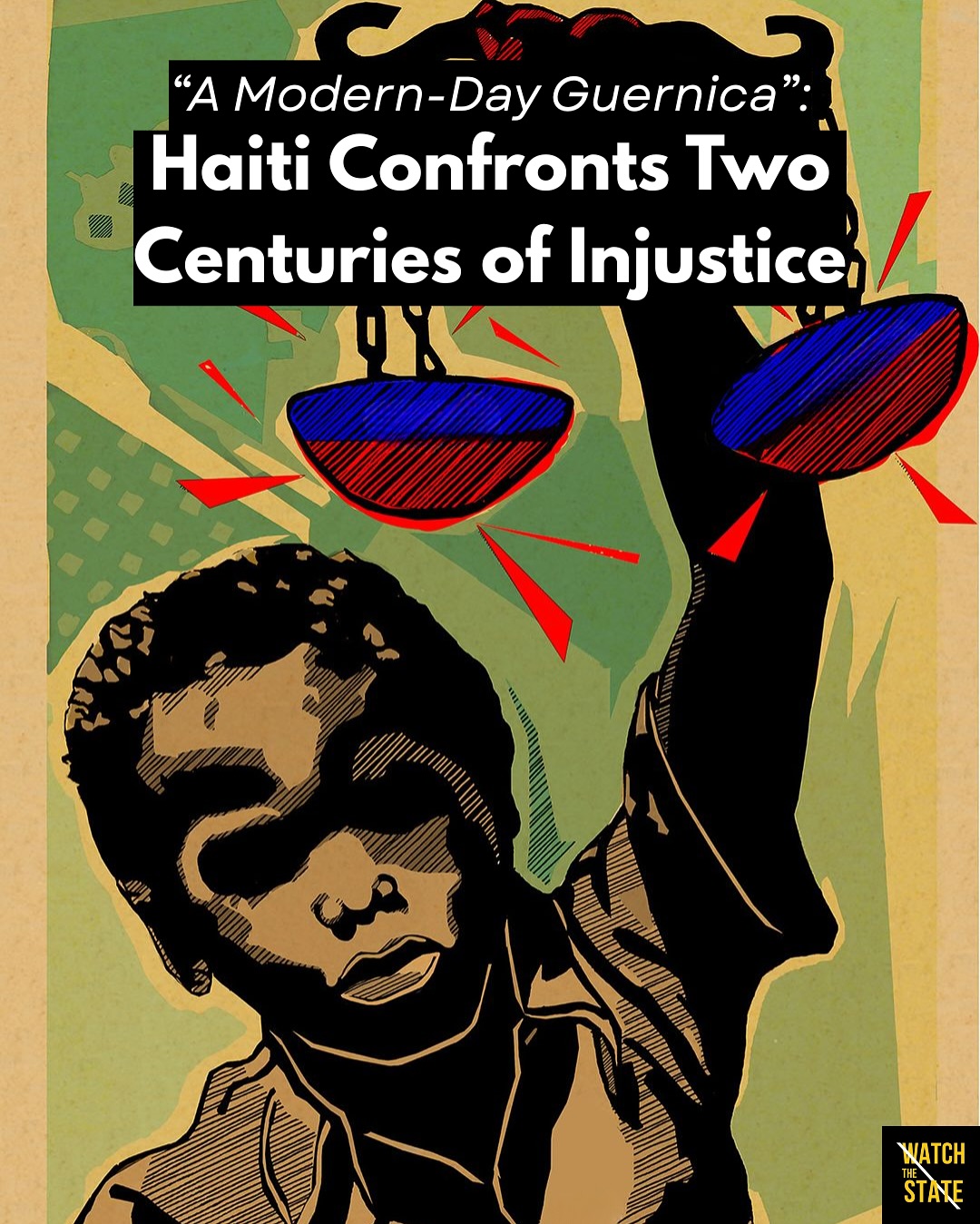
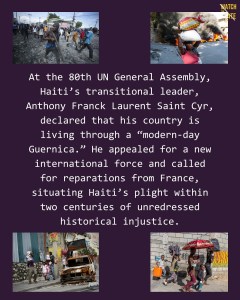
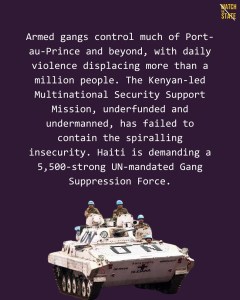


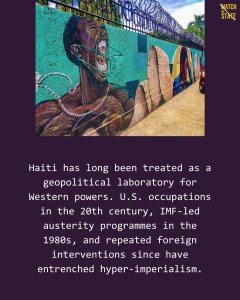

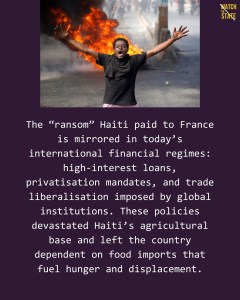
At the 80th session of the UN General Assembly, Haiti’s transitional leader Anthony Franck Laurent Saint-Cyr declared his country a “modern-day Guernica,” demanding both immediate international protection and long-overdue reparations from France. The present crisis, marked by mass displacement, escalating gang violence, and a collapsing state apparatus, is part of a longer history of enforced dependency and systemic expropriation. The 1825 “ransom” bled Haiti’s economy for over a century. Colonial plunder remains materially embedded in today’s insecurities.
But there are limits to crisis management in the absence of structural transformation. History shows that foreign interventions often reproduce dependency rather than restore sovereignty. From debt servitude to IMF conditionalities and UN peacekeeping failures, Haiti exemplifies the dynamics of hyperimperialism. The Haitian appeal is a demand to rethink global governance itself. Security and sovereignty cannot be divorced from reparative justice and the dismantling of colonial continuities.