



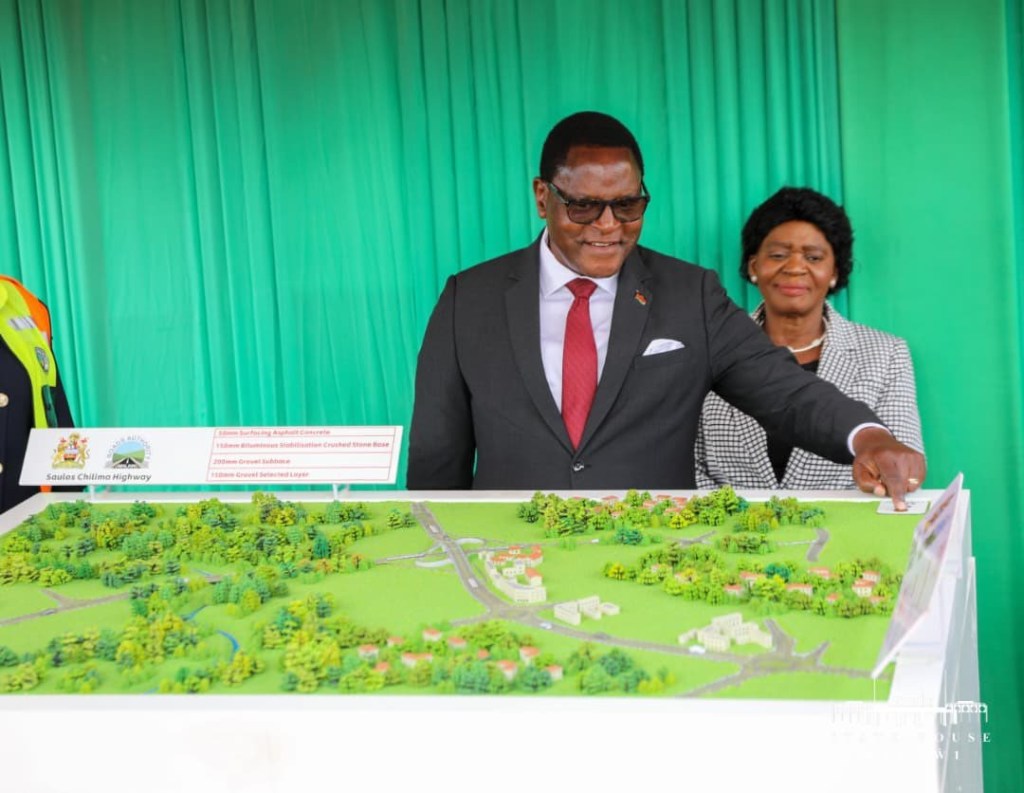
President Lazarus Chakwera took office in 2020 after a historic court‑ordered election rerun that rekindled hope for democratic renewal in Malawi. The southern African country was reeling from poverty, corruption, hunger, and soaring living costs. A former pastor, Chakwera likened Malawians’ economic suffering to the Israelites’ bondage under Pharaoh and promised to lead them to “Canaan,” a land of milk and honey that symbolized moral and material redemption.
Five years after promising to lead Malawians to a ‘Canaan’ of prosperity, President Chakwera was voted out of office, his vision buried under corruption scandals, economic collapse, and growing repression. The biblical metaphor that once lifted him to power had turned against him, as accusations of gagging dissent, weaponizing cyber laws, and unleashing party thugs erased any trace of the moral politics he preached. Disillusioned voters have now returned 85–year-old Arthur Peter Mutharika to power—signalling not only a rejection of Chakwera’s failed trip to “Canaan,” but a broader vote of no confidence in Malawi’s entire political establishment.
Broken Road to Canaan
In 2019, Peter Mutharika had won Malawi’s presidential election, but his victory was short-lived. Then opposition candidate Lazarus Chakwera, along with his running mate Saulos Chilima, challenged the results in court, alleging widespread irregularities, including the use of correction fluid on ballot papers. In a major ruling in February 2020, Malawi’s Constitutional Court annulled the election and ordered a rerun. The re-election took place in June 2020. Chakwera, running on a reform platform, defeated the incumbent Mutharika.
Chakwera, a former pastor and one-time president of the Assemblies of God church in Malawi, campaigned in 2020 as a moral reformer who would deliver Malawians from the “wilderness” of corruption and poverty to a promised land of accountability and growth. For many, “Canaan” has become a national metaphor for hope betrayed as his administration quickly came to resemble the very system it vowed to dismantle. Now 70, Chakwera has publicly conceded that the road to Canaan has been “long and weary” and apologized to Malawians for failing to deliver on his promises.
Amid rising inflation and cost of living, Chakwera’s presidency was marred by a series of high-profile corruption scandals involving senior government officials, including his vice president, Saulos Chilima. The vice president was accused of receiving US$280,000 in bribes from a British businessman, Zuneth Sattar.
His administration was also implicated in a fertilizer procurement scandal under the Affordable Input Program (AIP), in which the government paid about US$727,000 to the UK-based Barkaat Foods Limited for fertilizer that was never delivered. It was a State under the control of powerful elites, and corruption was the norm. Even institutions like the Anti-Corruption Bureau (ACB) and the police could not conduct any investigation, let alone arrest those involved in corruption.
On the political scene, the then-ruling Malawi Congress Party (MCP), of which Chakwera is the president, was accused by Malawians of sponsoring ‘terrorists’ who hacked innocent people with machetes for demonstrating in the streets against the government over rising costs of living.
Human rights activists condemned such violent acts. Many watched in dismay but promised to end such cruel acts on the election day, which they did.
According to the Malawi Electoral Commission, 7.2 million Malawians registered to vote out of a population of around 21 million, and 5.5 million cast ballots in the September 19, 2025, elections.
President Mutharika, 85, of the Democratic Progressive Party (DPP), received 3 million votes, representing 56.8 percent, while the man who removed him from office in 2020 received 1.7 million votes, representing 33 percent.
The coming in of Mutharika marked the end of a period of political terror perpetrated by the Chakwera regime. Malawians have warned the Mutharika administration that his second coming should not repeat what his first administration did: beating and jailing government critics.
Mutharika, for now, seems to be listening to the call to stop any political violence by warning anyone involved that they will face the long arm of the law. His administration has already warned people who grab land from innocent Malawians in the name of the ruling party. The Mutharika administration said the time for lawlessness is over.
Economic Collapse
These scandals unfolded against a backdrop of economic freefall. Prices of basic goods such as food, fertilizer, and household essentials soared, while fuel and foreign exchange frequently ran dry, and electricity blackouts intensified, grinding many businesses to a halt.
Shortage of foreign exchange reserves curbed the country’s ability to import fuel. Widespread fuel shortages were reported in 2024. Rising fuel prices drove up the cost of living.
Meanwhile, hospitals have struggled without essential drugs and functioning equipment, forcing patients to buy medicines from private pharmacies or go without, as Malawi slipped deeper into poverty and food insecurity.
Economist Alick Nyasulu links these woes to poor leadership and bad governance, saying corruption has been allowed to grow as “manifest in dubious procurement contracts aided by cronyism, ignoring meritocracy, indecisive leadership on key economic issues.” Corruption is endemic and impacts the economy. Cabinet ministers and other government officials are merely dismissed from their jobs, or they are arrested and later released on bail, but only to be reinstated later.
Under these conditions, the World Bank has highlighted how an overvalued official exchange rate, unsustainable borrowing, increasing trade restrictions, and price controls have combined with such misrule to plunge Malawi into crisis and devastate livelihoods.
Malawians voted with anger, and they had nothing to lose by voting Chakwera out of office because they had been struggling to make ends meet. Smallholder farmers who were promised subsidized farm inputs got frustrated. Members of the civil society organizations, who were beaten for demonstrating against the government, and political commentators were all relieved after noting the end of this era.
“Let Chakwera and his team go to Canaan. I can tell you there was no way I would have voted for him. He promised subsidized fertilizer, and we hardly saw the fertilizer,” said Doctor Mkochi, a lead farmer in Mzimba district in the northern region of the country.
A lead farmer is an innovative and successful farmer in the local community who is committed to training fellow farmers in agricultural methods and technologies.
“He is finished politically,” said Andrew Nkhata, 36, a businessman in Lilongwe, about Chakwera. He added, “Who the hell on earth can decide to vote for a president who is failing to provide you with basic needs such as medicines, fuel, electricity, water, and food?”
Civil society organizations (CSOs) had warned that President Chakwera and his team should listen to the voices of the people, but those speaking were labeled enemies of the State. The CSO members were targeted with arrests and beaten by thugs.
“The ruling party lost a plot a long time ago. They stopped listening to the cry of the people, and they thought they would go away with it on a ballot,” said Michael Kaiyatsa, Executive Director at the Center for Human Rights and Rehabilitation (CHRR).
“The voters have spoken. This time, they did not go for the candidate’s district or region of origin. Initially, I expected the two leading contenders to maintain support in their regional strongholds. It appears a significant number of potential voters from the central region did not show up to exercise their voting rights. This might be understood as a protest vote against the incumbent [Chakwera], who comes from the center,” said Gift Sambo, University of Malawi political science lecturer.
Repression and Media Freedom
Malawi’s political trajectory cannot be understood without the shadow of its one‑party past. Under the late Dr Hastings Kamuzu Banda, who ruled for nearly 32 years until 1994, many Malawians were detained without trial or died in prison for political reasons. Most were released under international pressure in 1991. Today, the country may no longer hold formal political prisoners, but Malawians still experience political repression and the gagging of media as tools to silence dissent.
In the run‑up to the disputed 2019 presidential elections, later annulled by the Constitutional Court, the Malawi Communications Regulatory Authority (MACRA) ordered an internet shutdown, a move that was condemned as an attempt to limit mobilization and scrutiny. Chakwera and Chilima, then in opposition, criticized the DPP government for weaponizing the 2016 Electronic Transactions and Cyber Security Act. However, the same law was used under their own administration against journalists, CSO members, opposition politicians, businesspeople, and social media influencers.
The State has in the past used this Act to suppress freedom of speech and critics of the government, such as journalists, CSOs members, and members of the opposition parties, have been put behind bars because of this law. They also include businessmen and human rights activists.
In June 2024, police arrested former lawmaker and activist Bon Kalindo for allegedly producing an offensive voice note on the death of Dr. Chilima and eight others.
Listing incidents of arrest and intimidation, the Media Institute of Southern Africa (MISA) Malawi said, “In 2024, Electronic Transaction and Cybersecurity Act of 2016 was actively used as a tool of silencing and intimidating critical voices. A number of Malawians including journalists were arrested and ill-treated for allegedly contravening the Electronic Transactions and Cybersecurity Act.”
Such incidents started becoming prominent in 2022. Among other incidents that year, police arrested 51-year-old Dauka Manondo over a WhatsApp post in which he allegedly insulted Malawi’s then Minister of Labour. Weeks later, Chidawawa Mainje, a 39-year-old nurse, was arrested for allegedly insulting President Chakwera and First Lady Monica in a WhatsApp group while debating governance in the nation.
Michael Kaiyatsa, Executive Director of the Centre for Human Rights and Rehabilitation, argues that the police are not applying the Act in good faith, saying a law ostensibly designed to protect citizens from cyber threats has become a convenient instrument for silencing critics and criminalising free expression. Lawyer Khwima Mchizi similarly warns that law enforcers are misusing the Act, underscoring how legal frameworks intended to secure digital spaces have instead been folded into a broader architecture of repression.
However, the then Police spokesperson Peter Kalaya said in an interview that police do not use the Act to impinge on people’s rights and freedoms.
Political Violence
Election campaigns in Malawi have long been marked by violence, and the last two cycles have followed that pattern. In 2019, a police officer was killed during clashes ahead of a Mutharika rally, and human rights activist Billy Mayaya of the Human Rights Defenders Coalition (HRDC) was hacked with machetes by DPP supporters.
This year, while still under the Malawi Congress Party (MCP) of Chakwera, demonstrators such as Sylvester Namiwa, Executive Director of the Centre for Democracy and Economic Development Initiatives, were attacked in full view of the police and the Malawi Defence Force, with no arrests made, fuelling public belief that the attackers acted with the blessing of the state.
Political parties in power have repeatedly used violent tactics to intimidate critics, a strategy that may deliver short‑term control, but it now appears to be contributing to their electoral defeat.
“The violence we are witnessing is deeply troubling and symptomatic of a broader breakdown in the rule of law and political tolerance,” said Kaiyatsa, noting that despite constitutional guarantees of peaceful assembly, incitement and impunity have created a climate where violence is seen as an acceptable response to protest. Kaiyatsa describes this erosion of democratic norms as a failure of leadership across party structures and state institutions, amplified by the lack of prosecutions even when perpetrators are known and security forces are present. When politically connected attackers face no consequences, he argues, it sends a clear message that the law is applied selectively and that proximity to power can shield individuals from justice.
What Next?
For many Malawians, the choice between Chakwera and Mutharika has felt less like an embrace of a saviour than a grim calculus about which leader harms them less. “Comparing Mutharika and Chakwera on ending corruption and political violence, both have failed Malawians,” said 56‑year‑old Ibrahim Yusuf, who voted for Chakwera in 2020 but switched to Mutharika five years later. “Economically, Mutharika was better off, and I want him to continue his policies,” he added, reflecting a widespread perception that, in relative terms, hardship had worsened under Chakwera.
Mutharika has sought to tap into that sentiment, telling Parliament he will tackle corruption, rebuild the ailing economy, and make the tough decisions needed to stabilize the country.
Economist Nyasulu cautions that any new regime must prioritize good governance over self‑enrichment, warning that Malawi remains deeply corrupt with few signs of meaningful change on the horizon.
On the other hand, political analyst Sambo says Mutharika’s new term has started with tough talk against corruption and violence, but stresses that Malawians will judge him by his actions in the coming months and years rather than speeches. Already, some experts have warned that by appointing individuals who are facing corruption charges to the cabinet, Mutharika risks quickly eroding public trust and signalling continuity with the failings of his first term.
But for a few months he has been in power since the September elections last year, Mutharika has matched his talks with actions: bought maize to feed the hungry, bought enough fuel for motorists, arrested corrupt government officials, and took steps to curb lawlessness. It remains unclear whether Mutharika will continue what he started, which will define both his previous presidency and Chakwera’s short‑lived “Canaan” project, or whether Malawi will witness yet another cycle of broken promises under a familiar face.
Join us
Raphael Mweninguwe is a freelance journalist based in Malawi with over a decade of work experience. He is a 2022 International Center for Journalists (ICFJ) Global Nutrition and Food Security Reporting Fellow and a 2023 Dart Center Ochberg Fellow at Columbia University’s Graduate School of Journalism. Raphael holds a postgraduate certificate in Media Studies from the University of Oslo, Norway, and a Master of Arts degree in Diplomacy and International Relations from the Africa University of Diplomacy, Counselling and International Relations in Lilongwe, Malawi.
Related Posts

Fall of Malawi’s Pastor-President: How Chakwera’s Five Years of Instability and Repression Ended in Defeat
By Raphael Mweninguwe
February 6, 2026

Lazarus Chakwera, former President of Malawi (Photo sourced from Facebook).
President Lazarus Chakwera took office in 2020 after a historic court‑ordered election rerun that rekindled hope for democratic renewal in Malawi. The southern African country was reeling from poverty, corruption, hunger, and soaring living costs. A former pastor, Chakwera likened Malawians’ economic suffering to the Israelites’ bondage under Pharaoh and promised to lead them to “Canaan,” a land of milk and honey that symbolized moral and material redemption.
Five years after promising to lead Malawians to a ‘Canaan’ of prosperity, President Chakwera was voted out of office, his vision buried under corruption scandals, economic collapse, and growing repression. The biblical metaphor that once lifted him to power had turned against him, as accusations of gagging dissent, weaponizing cyber laws, and unleashing party thugs erased any trace of the moral politics he preached. Disillusioned voters have now returned 85–year-old Arthur Peter Mutharika to power—signalling not only a rejection of Chakwera’s failed trip to “Canaan,” but a broader vote of no confidence in Malawi’s entire political establishment.
Broken Road to Canaan
In 2019, Peter Mutharika had won Malawi’s presidential election, but his victory was short-lived. Then opposition candidate Lazarus Chakwera, along with his running mate Saulos Chilima, challenged the results in court, alleging widespread irregularities, including the use of correction fluid on ballot papers. In a major ruling in February 2020, Malawi’s Constitutional Court annulled the election and ordered a rerun. The re-election took place in June 2020. Chakwera, running on a reform platform, defeated the incumbent Mutharika.
Chakwera, a former pastor and one-time president of the Assemblies of God church in Malawi, campaigned in 2020 as a moral reformer who would deliver Malawians from the “wilderness” of corruption and poverty to a promised land of accountability and growth. For many, “Canaan” has become a national metaphor for hope betrayed as his administration quickly came to resemble the very system it vowed to dismantle. Now 70, Chakwera has publicly conceded that the road to Canaan has been “long and weary” and apologized to Malawians for failing to deliver on his promises.
Amid rising inflation and cost of living, Chakwera’s presidency was marred by a series of high-profile corruption scandals involving senior government officials, including his vice president, Saulos Chilima. The vice president was accused of receiving US$280,000 in bribes from a British businessman, Zuneth Sattar.
His administration was also implicated in a fertilizer procurement scandal under the Affordable Input Program (AIP), in which the government paid about US$727,000 to the UK-based Barkaat Foods Limited for fertilizer that was never delivered. It was a State under the control of powerful elites, and corruption was the norm. Even institutions like the Anti-Corruption Bureau (ACB) and the police could not conduct any investigation, let alone arrest those involved in corruption.
On the political scene, the then-ruling Malawi Congress Party (MCP), of which Chakwera is the president, was accused by Malawians of sponsoring ‘terrorists’ who hacked innocent people with machetes for demonstrating in the streets against the government over rising costs of living.
Human rights activists condemned such violent acts. Many watched in dismay but promised to end such cruel acts on the election day, which they did.
According to the Malawi Electoral Commission, 7.2 million Malawians registered to vote out of a population of around 21 million, and 5.5 million cast ballots in the September 19, 2025, elections.
President Mutharika, 85, of the Democratic Progressive Party (DPP), received 3 million votes, representing 56.8 percent, while the man who removed him from office in 2020 received 1.7 million votes, representing 33 percent.
The coming in of Mutharika marked the end of a period of political terror perpetrated by the Chakwera regime. Malawians have warned the Mutharika administration that his second coming should not repeat what his first administration did: beating and jailing government critics.
Mutharika, for now, seems to be listening to the call to stop any political violence by warning anyone involved that they will face the long arm of the law. His administration has already warned people who grab land from innocent Malawians in the name of the ruling party. The Mutharika administration said the time for lawlessness is over.
Economic Collapse
These scandals unfolded against a backdrop of economic freefall. Prices of basic goods such as food, fertilizer, and household essentials soared, while fuel and foreign exchange frequently ran dry, and electricity blackouts intensified, grinding many businesses to a halt.
Shortage of foreign exchange reserves curbed the country’s ability to import fuel. Widespread fuel shortages were reported in 2024. Rising fuel prices drove up the cost of living.
Meanwhile, hospitals have struggled without essential drugs and functioning equipment, forcing patients to buy medicines from private pharmacies or go without, as Malawi slipped deeper into poverty and food insecurity.
Economist Alick Nyasulu links these woes to poor leadership and bad governance, saying corruption has been allowed to grow as “manifest in dubious procurement contracts aided by cronyism, ignoring meritocracy, indecisive leadership on key economic issues.” Corruption is endemic and impacts the economy. Cabinet ministers and other government officials are merely dismissed from their jobs, or they are arrested and later released on bail, but only to be reinstated later.
Under these conditions, the World Bank has highlighted how an overvalued official exchange rate, unsustainable borrowing, increasing trade restrictions, and price controls have combined with such misrule to plunge Malawi into crisis and devastate livelihoods.
Malawians voted with anger, and they had nothing to lose by voting Chakwera out of office because they had been struggling to make ends meet. Smallholder farmers who were promised subsidized farm inputs got frustrated. Members of the civil society organizations, who were beaten for demonstrating against the government, and political commentators were all relieved after noting the end of this era.
“Let Chakwera and his team go to Canaan. I can tell you there was no way I would have voted for him. He promised subsidized fertilizer, and we hardly saw the fertilizer,” said Doctor Mkochi, a lead farmer in Mzimba district in the northern region of the country.
A lead farmer is an innovative and successful farmer in the local community who is committed to training fellow farmers in agricultural methods and technologies.
“He is finished politically,” said Andrew Nkhata, 36, a businessman in Lilongwe, about Chakwera. He added, “Who the hell on earth can decide to vote for a president who is failing to provide you with basic needs such as medicines, fuel, electricity, water, and food?”
Civil society organizations (CSOs) had warned that President Chakwera and his team should listen to the voices of the people, but those speaking were labeled enemies of the State. The CSO members were targeted with arrests and beaten by thugs.
“The ruling party lost a plot a long time ago. They stopped listening to the cry of the people, and they thought they would go away with it on a ballot,” said Michael Kaiyatsa, Executive Director at the Center for Human Rights and Rehabilitation (CHRR).
“The voters have spoken. This time, they did not go for the candidate’s district or region of origin. Initially, I expected the two leading contenders to maintain support in their regional strongholds. It appears a significant number of potential voters from the central region did not show up to exercise their voting rights. This might be understood as a protest vote against the incumbent [Chakwera], who comes from the center,” said Gift Sambo, University of Malawi political science lecturer.
Repression and Media Freedom
Malawi’s political trajectory cannot be understood without the shadow of its one‑party past. Under the late Dr Hastings Kamuzu Banda, who ruled for nearly 32 years until 1994, many Malawians were detained without trial or died in prison for political reasons. Most were released under international pressure in 1991. Today, the country may no longer hold formal political prisoners, but Malawians still experience political repression and the gagging of media as tools to silence dissent.
In the run‑up to the disputed 2019 presidential elections, later annulled by the Constitutional Court, the Malawi Communications Regulatory Authority (MACRA) ordered an internet shutdown, a move that was condemned as an attempt to limit mobilization and scrutiny. Chakwera and Chilima, then in opposition, criticized the DPP government for weaponizing the 2016 Electronic Transactions and Cyber Security Act. However, the same law was used under their own administration against journalists, CSO members, opposition politicians, businesspeople, and social media influencers.
The State has in the past used this Act to suppress freedom of speech and critics of the government, such as journalists, CSOs members, and members of the opposition parties, have been put behind bars because of this law. They also include businessmen and human rights activists.
In June 2024, police arrested former lawmaker and activist Bon Kalindo for allegedly producing an offensive voice note on the death of Dr. Chilima and eight others.
Listing incidents of arrest and intimidation, the Media Institute of Southern Africa (MISA) Malawi said, “In 2024, Electronic Transaction and Cybersecurity Act of 2016 was actively used as a tool of silencing and intimidating critical voices. A number of Malawians including journalists were arrested and ill-treated for allegedly contravening the Electronic Transactions and Cybersecurity Act.”
Such incidents started becoming prominent in 2022. Among other incidents that year, police arrested 51-year-old Dauka Manondo over a WhatsApp post in which he allegedly insulted Malawi’s then Minister of Labour. Weeks later, Chidawawa Mainje, a 39-year-old nurse, was arrested for allegedly insulting President Chakwera and First Lady Monica in a WhatsApp group while debating governance in the nation.
Michael Kaiyatsa, Executive Director of the Centre for Human Rights and Rehabilitation, argues that the police are not applying the Act in good faith, saying a law ostensibly designed to protect citizens from cyber threats has become a convenient instrument for silencing critics and criminalising free expression. Lawyer Khwima Mchizi similarly warns that law enforcers are misusing the Act, underscoring how legal frameworks intended to secure digital spaces have instead been folded into a broader architecture of repression.
However, the then Police spokesperson Peter Kalaya said in an interview that police do not use the Act to impinge on people’s rights and freedoms.
Political Violence
Election campaigns in Malawi have long been marked by violence, and the last two cycles have followed that pattern. In 2019, a police officer was killed during clashes ahead of a Mutharika rally, and human rights activist Billy Mayaya of the Human Rights Defenders Coalition (HRDC) was hacked with machetes by DPP supporters.
This year, while still under the Malawi Congress Party (MCP) of Chakwera, demonstrators such as Sylvester Namiwa, Executive Director of the Centre for Democracy and Economic Development Initiatives, were attacked in full view of the police and the Malawi Defence Force, with no arrests made, fuelling public belief that the attackers acted with the blessing of the state.
Political parties in power have repeatedly used violent tactics to intimidate critics, a strategy that may deliver short‑term control, but it now appears to be contributing to their electoral defeat.
“The violence we are witnessing is deeply troubling and symptomatic of a broader breakdown in the rule of law and political tolerance,” said Kaiyatsa, noting that despite constitutional guarantees of peaceful assembly, incitement and impunity have created a climate where violence is seen as an acceptable response to protest. Kaiyatsa describes this erosion of democratic norms as a failure of leadership across party structures and state institutions, amplified by the lack of prosecutions even when perpetrators are known and security forces are present. When politically connected attackers face no consequences, he argues, it sends a clear message that the law is applied selectively and that proximity to power can shield individuals from justice.
What Next?
For many Malawians, the choice between Chakwera and Mutharika has felt less like an embrace of a saviour than a grim calculus about which leader harms them less. “Comparing Mutharika and Chakwera on ending corruption and political violence, both have failed Malawians,” said 56‑year‑old Ibrahim Yusuf, who voted for Chakwera in 2020 but switched to Mutharika five years later. “Economically, Mutharika was better off, and I want him to continue his policies,” he added, reflecting a widespread perception that, in relative terms, hardship had worsened under Chakwera.
Mutharika has sought to tap into that sentiment, telling Parliament he will tackle corruption, rebuild the ailing economy, and make the tough decisions needed to stabilize the country.
Economist Nyasulu cautions that any new regime must prioritize good governance over self‑enrichment, warning that Malawi remains deeply corrupt with few signs of meaningful change on the horizon.
On the other hand, political analyst Sambo says Mutharika’s new term has started with tough talk against corruption and violence, but stresses that Malawians will judge him by his actions in the coming months and years rather than speeches. Already, some experts have warned that by appointing individuals who are facing corruption charges to the cabinet, Mutharika risks quickly eroding public trust and signalling continuity with the failings of his first term.
But for a few months he has been in power since the September elections last year, Mutharika has matched his talks with actions: bought maize to feed the hungry, bought enough fuel for motorists, arrested corrupt government officials, and took steps to curb lawlessness. It remains unclear whether Mutharika will continue what he started, which will define both his previous presidency and Chakwera’s short‑lived “Canaan” project, or whether Malawi will witness yet another cycle of broken promises under a familiar face.
SUPPORT US
We like bringing the stories that don’t get told to you. For that, we need your support. However small, we would appreciate it.
Raphael Mweninguwe is a freelance journalist based in Malawi with over a decade of work experience. He is a 2022 International Center for Journalists (ICFJ) Global Nutrition and Food Security Reporting Fellow and a 2023 Dart Center Ochberg Fellow at Columbia University’s Graduate School of Journalism. Raphael holds a postgraduate certificate in Media Studies from the University of Oslo, Norway, and a Master of Arts degree in Diplomacy and International Relations from the Africa University of Diplomacy, Counselling and International Relations in Lilongwe, Malawi.
Related Posts