

Not only are Israel’s continued attacks killing people and enforcing mass displacement from southern Lebanon, but evidence also shows it is methodically destroying the land they could return to.
A month ago, amid rubble and vast stretches of evacuated land, there was a sense of hope in southern Lebanon. That hope has curdled into dread, as Israel resumed ground operations on March 2nd. Hundreds of thousands of people have begun moving north, fleeing Israeli bombardment and mass evacuation orders that are driving them from their homes and their land.
Since early March, over 1 million Lebanese have been displaced, as per Lebanon’s Ministry of Social Affairs and the United Nations. In the first of that month, many arrived at shelters after journeys that lasted hours, and sometimes an entire day. Some children were still in their pajamas, as evacuation orders came late in the night. When jets passed overhead, a shared silence fell in the apprehension that a strike might be moments away. People anxiously checked their phones, hoping the loved ones they left behind were alive.
Over 130,000 people are registered in shelters as of 29 March, with more displaced every day.
Meanwhile, Israel has continued to hit Beirut’s southern suburbs, with strikes around the city intensifying as southern Lebanon is being completely emptied. Israel has destroyed major bridges linking the southern part of the country to other parts, isolating several regions.
One in every four Lebanese is now displaced. This mass displacement is not only a humanitarian crisis, but also part of an accelerating environmental catastrophe. Fields have been burned, olive groves uprooted, and farmland contaminated with white phosphorus. Researchers, lawyers, and environmental organizations argue that what Israel is doing to the land of South Lebanon is “ecocide”–deliberate environmental harm.

Displacement and Environmental Destruction
“After receiving evacuation notices from the Israeli army, we decided to leave our village in fear of being struck,” said Karam, a farmer from Khiam, a town close to the Blue Line—which is the UN-drawn withdrawal line that serves as the de facto boundary between Lebanon and Israel.
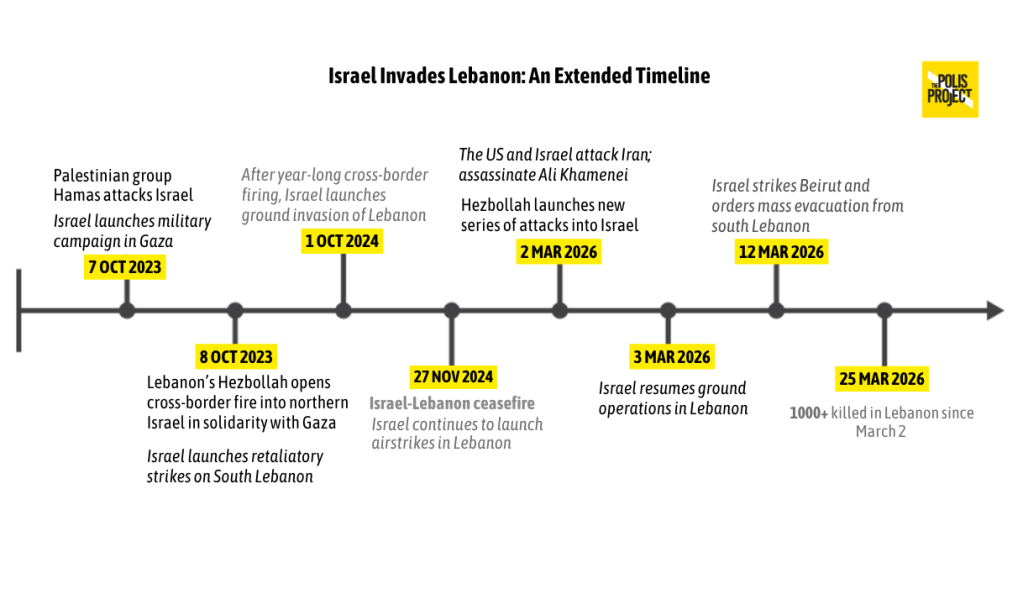
Karam was among the several displaced residents from his village after Israel launched a ground invasion of Lebanon in October 2024. This invasion came almost a year after Israel began attacks on Lebanon in October 2023, following cross-border firing by Hezbollah.
“We went and lived with family up in Sour [the Arabic name for Tyre]. Some neighbours warned us not to return even after the ceasefire in November 2024, because the strikes just didn’t stop,” Karam told The Polis Project.
Karam eventually returned home in January 2025, only to find that Israeli forces had bulldozed large parts of his agricultural land. “I farmed olive trees in a commercial capacity and also maintained a few citrus trees,” he said. “There was so much devastation around the village that only talking about my farm isn’t enough,” Karam added.
A report by Action Against Hunger, Insecurity Insight, and Oxfam estimates that around 90% of farmers interviewed had significantly reduced food production in the South, since Israel’s attacks in 2023. The situation worsened with the subsequent Israeli invasion of southern Lebanon a year later.
Israeli offensives have had a major environmental cost. Israel’s attacks on Lebanon amounted to approximately $500 million in damages to the country’s natural resources, according to a 2025 World Bank report. These natural resources included forests, shrublands, grasslands, riverine ecosystems, wetlands, and the coastline.
Lebanon’s National Council of Scientific Research estimated the destruction of at least 2,000 hectares of forests, olive groves, citrus orchards, and agricultural land during the war, including due to white phosphorus. Fires continued in the South even after a ceasefire was in place, with approximately 162 hectares burned because of Israeli attacks in just 2 months (August 18 – October 21) in 2025.
Lebanese farmers have faced economic devastation alongside the destruction of an entire way of life. Green Southerners, an association that aims to protect and preserve Lebanon’s natural and cultural heritage, particularly in the South, said, “Agriculture in southern Lebanon, the primary productive sector and the backbone of the rural economy in the South, is based on the continuous presence of local communities and their stewardship of the land. When farmers are forced to leave their villages, the entire human-environment relationship that sustains these agro-ecological systems is disrupted.”

Describing his return to farming under difficult conditions, Karam said, “Definitely there was a sense of fear to go back with a mindset that it will be business as usual, given the non-stop shelling by them [the Israeli military].”
The farmer has been displaced again, as Israel escalated its military actions in Lebanon last month.
For Karam, farming in his native town now seems like a distant dream.“After much deliberation and waiting for conditions to improve, we have had to flee again. The evacuation orders returned, so what else is there to say?” he asked, echoing a sentiment shared by many in Lebanon.
At the time of writing, there were reports of ground clashes between Hezbollah and the IDF in a village neighboring Karam’s.
Systematic Destruction of the Environment: A Case of Ecocide
Christina Abou Rouphaël from Public Works Studio (PWS), a Beirut-based research and design studio focused on urban and environmental issues in Lebanon, said the destruction of the environment in southern Lebanon occurred through three methods: the burning of fields, the uprooting of olive and other trees, and the use of chemicals, including white phosphorus. Along with the Arab Reform Initiative, PWS conducted research into the environmental destruction in South Lebanon that occurred specifically during wartime.
Given the systematic nature of the destruction, Abou Rouphaël said the evidence met the threshold of ecocide — defined as “unlawful or wanton acts” committed with knowledge of a substantial likelihood of severe, widespread, or long-term environmental damage. “There is no room for doubt that Israel is committing ecocide in southernLebanon,” she stated.
“We can make a distinction when the environment is occasionally attacked during a war, and when the environment is militarily weaponized,” said Ahmad Baydoun, a PhD Scholar at TU Delft, Netherlands, and a geospatial analyst who has been mapping Israel’s use of white phosphorus in the country “In the case of Lebanon, particularly in the South, the environment became a primary target,” he added, asserting that this warrants understanding Israel’s actions in the country within the framework of an ecocide..
White phosphorus— an incendiary weapon—is a significant tool in this environmental destruction. While its use is not prohibited under international law, the legality depends on how it is deployed. Baydoun said the pattern of Israeli use of the chemical went well beyond incidental attacks. “Particularly during the 2024 war in Lebanon, the use [of white phosphorus] by Israel wasn’t incidental; it was repetitive and closely tied to military practice that wants to make this stretch of land uninhabitable. The pattern, locations, and timing of use – all point towards a systematic use [of white phosphorus].”
Baydoun’s research, based on open-source intelligence and satellite imagery, identified white phosphorus attacks along the southern border of Lebanon from October 2023 to November 2025, when the ceasefire agreement was signed.

When Karam returned to Khiam in 2025, his farmland had been scorched—olive trees gone, equipment destroyed, the earth itself altered. He recalled, “I could see how artillery fire and other Israeli military attacks had burned land and damaged the equipment and warehouses of fellow farmers.”
White phosphorus is dispersed through artillery shells, bombs, and rockets that have devastating effects on both people and the land where the residue persists. Israel most recently used white phosphorus on March 3rd this year, in Yohmor, a town in southern Lebanon, according to the Human Rights Watch. “The Israeli military’s unlawful use of white phosphorus over residential areas is extremely alarming and will have dire consequences for civilians,” said Ramzi Kaiss, Lebanon researcher at Human Rights Watch.
In February, the Lebanese government said that Israel sprayed a herbicide on farmlands, threatening food security and farmers’ livelihoods. Lebanon’s president, Joseph Aoun, condemned this, saying it was “an environmental and health crime” and a “violation of Lebanon’s sovereignty” in a statement. He further stated, “These dangerous practices that target agricultural lands and the livelihoods of citizens and threaten their health and environment require the international community and relevant United Nations organizations to assume their responsibilities to stop these attacks.”
Unlike war crimes or crimes against humanity, ecocide is not yet codified as a crime under the Rome Statute, the treaty that governs the International Criminal Court, meaning there is currently no formal international mechanism to prosecute it.
Zeinab Farhat, Program Coordinator for Environmental Politics at the Arab Reform Initiative, spoke about the challenges of pursuing accountability. “It is challenging anyway to make a case of ecocide as there are many technicalities involved legally, and a lengthy procedure internationally to recognise and hold accountable the violators. Yet there was some sense of momentum going in the past few months, but with the ongoing war, it is tough to push forward,” she said.

Ecocide in Wider Practice
While the case for systematic destruction amounting to ecocide in the context of Lebanon remains under wider discussion, Israel’s use of environmental destruction as a military strategy has a precedent. It mirrors a pattern documented in Gaza, where during the genocide, 86.1% of all cropland was damaged.
An investigation by Forensic Architecture (a research agency at the University of London) revealed that Israeli forces routinely sprayed airborne herbicides, bulldozed land, and attacked Palestinian farmers in border and buffer zones as early as 2014.
Since Israel’s ground invasion of Gaza in October 2023, most orchards have been uprooted and agricultural land and infrastructure systematically targeted throughout the Strip, with a World Bank report estimating environmental sector damage in 2023-24 at around $92 million. The widespread and long-term environmental damage, resulting from what legal scholars describe as systematic Israeli policy, has also been framed as intentional ecocide.
Steve Cutts, CEO of Medical Aid for Palestinians, drew a direct line between the two. “What we are witnessing in Lebanon is the unmistakable extension of the Israeli military playbook used in Gaza — collective punishment, forced displacement, and the deliberate terrorizing of civilian populations, including already traumatized Palestinian communities,” he said.
In Lebanon, as in Palestine, one of the most targeted crops has been the olive tree. Beyond providing essential income for local communities, olive cultivation is bound up with cultural and social practices passed down over generations. Its targeting is widely understood as an attack not just on livelihoods, but also on communities’ connection to their land.
Baydoun noted that the environmental destruction formed just one layer of a broader strategy. “On the Gaza Strip, as initially on the land in the border zones, this was one layer among others, with villages completely razed to the ground. It happened in Gaza on a large scale, as it has happened and continues to happen in Lebanon on a smaller scale along the border. It’s the same playbook,” he said.
Belligerent states have employed Ecocide throughout history. The term ecocide was coined in the late 1960s to describe the US military’s use of Agent Orange and incendiary weapons like napalm in Vietnam, where jungle and marsh cover was being destroyed to expose guerrilla forces. More than 50 years on, Vietnam is still bearing the consequences.
Referring to Russia’s use of white phosphorus in Ukraine, Baydoun said that international condemnations followed in that case. “We are yet to see anything of the sort” in the case of Lebanon, despite rising evidence, he added.

Government Response and Future
Following the ceasefire in November 2024, the Ministry of Agriculture undertook field research to assess the damage. Additionally, at the national level, action includes producing rapid needs-assessment reports in collaboration with international organizations such as the World Bank and the FAO. Findings from other bodies include the National Human Rights Council in Lebanon and the National Council for Scientific Research.
“Despite the Israeli-inflicted disaster on southern villages, official Lebanese measures revealed an almost non-existent, fragmented environmental response that is disproportionate to the scale of the destruction,” said Abou Rouphaël.
As of late September 2025, Abou Rouphaël said recovery and reconstruction efforts had not begun in earnest, and many residents and farmers in southern Lebanon’s towns and villages remained unable to return home. “They continue to wait for justice and compensation,” she said.
Karam said he was unable to access any funds allocated to reconstruction or benefit from government-approved assistance plans, wondering whether they would ever materialize.
The Lebanese Ministry of Environment and the Lebanese Ministry of Agriculture did not respond to a request for comment.
Fear of Total Occupation
Across Lebanon, the intensification of attacks and mass displacement orders has created a pervasive sense of dread.
Green Southerners described the current phase of Israeli attacks as entering a wider, more brutal, and destructive stage. They argued that the mass forced displacement of civilians constitutes a war crime under international humanitarian law. “Beyond its immediate humanitarian consequences, and as an act of aggression against Lebanon and its territorial integrity, this situation raises serious concerns about the collapse of agro-ecological systems that sustain rural livelihoods in southern Lebanon, as well as about the long-term viability of agricultural production in the South,” the group said.
Zeinab Farhat was candid about the long-term intent she sees behind the destruction.“We know that [long-term environmental destruction] may be a useful policy for [Israel] to keep people out of the land, for the long term. Israeli threats have included land seizure and the creation of either a buffer zone or a dead zone in the South, a prospect that, combined with the displacement of people 1,049,328 registered [as per Lebanese Ministry of Social Affairs] as displaced across Lebanon as of 17 March, points toward a crisis that may outlast the current conflict by decades.”
Green Southerners warned that if the displacement persists, the consequences will extend far beyond the immediate humanitarian crisis. “Over time, this could lead to broader socio-ecological degradation, including soil deterioration, biodiversity loss, and a decline in local food production. Yet we cannot help but notice that all of this is unfolding amid what can only be described as a troubling silence from the international community,” they said.
Intensified attacks on the South include land incursions into border towns and strikes on healthcare facilities and first responders. Civilian infrastructure has been characterized as a legitimate military target by Israeli forces. These escalations come amid explicit statements by senior Israeli and US officials endorsing a vision of ‘Greater Israel’; Israeli PM Netanyahu told i24NEWS in August 2025 that he “very much” identified with the vision, while US Ambassador Mike Huckabee declined to disavow Israeli control over the broader region as recently as February 2026.
For Karam and for the million displaced alongside him, the question of return to their land grows more distant with each passing day. Abou Rouphaël said the fear now extends beyond environmental destruction. “Beyond the idea of ecocide, now, there is fear of total occupation, particularly in southern Lebanon.”

Israel’s ‘Ecocide’ in Lebanon as a Tool of War and Displacement
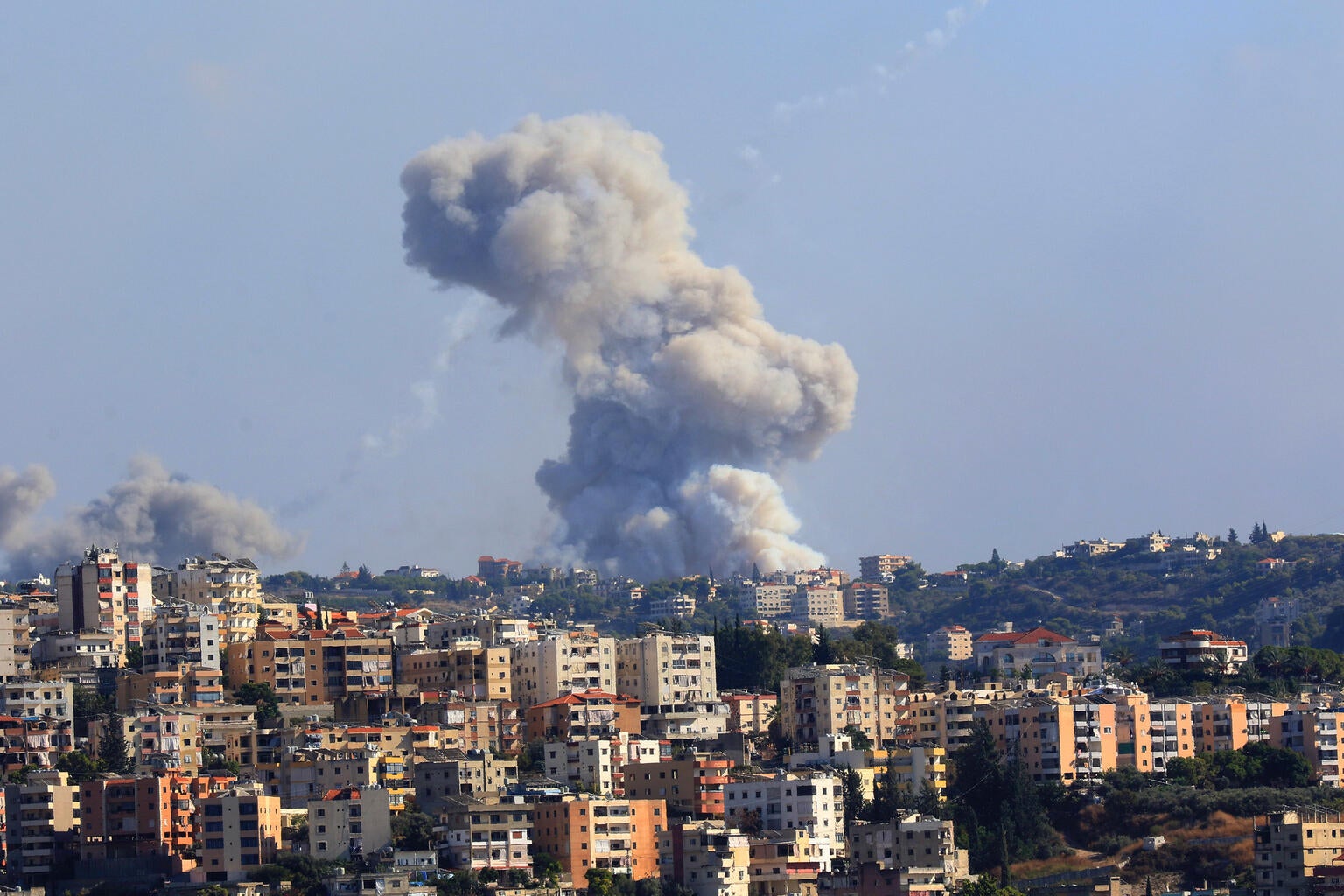
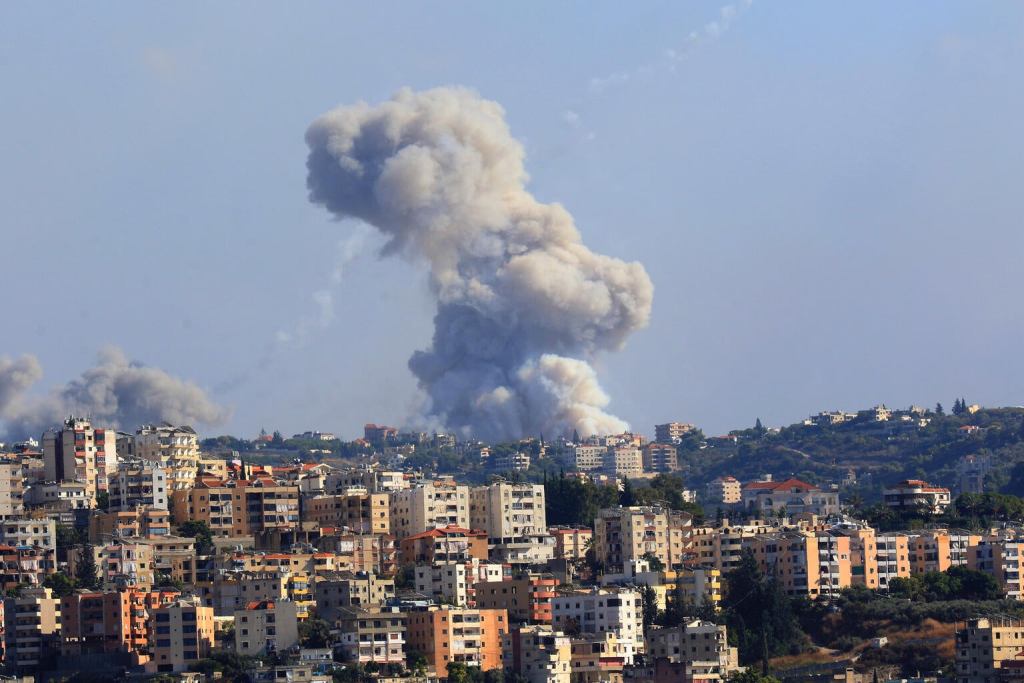
Smoke billows from a site targeted by shelling in the southern Lebanese village of Zaita. Image Credit: UNICEF/Dar Al Mussawir
Not only are Israel’s continued attacks killing people and enforcing mass displacement from southern Lebanon, but evidence also shows it is methodically destroying the land they could return to.
A month ago, amid rubble and vast stretches of evacuated land, there was a sense of hope in southern Lebanon. That hope has curdled into dread, as Israel resumed ground operations on March 2nd. Hundreds of thousands of people have begun moving north, fleeing Israeli bombardment and mass evacuation orders that are driving them from their homes and their land.
Since early March, over 1 million Lebanese have been displaced, as per Lebanon’s Ministry of Social Affairs and the United Nations. In the first of that month, many arrived at shelters after journeys that lasted hours, and sometimes an entire day. Some children were still in their pajamas, as evacuation orders came late in the night. When jets passed overhead, a shared silence fell in the apprehension that a strike might be moments away. People anxiously checked their phones, hoping the loved ones they left behind were alive.
Over 130,000 people are registered in shelters as of 29 March, with more displaced every day.
Meanwhile, Israel has continued to hit Beirut’s southern suburbs, with strikes around the city intensifying as southern Lebanon is being completely emptied. Israel has destroyed major bridges linking the southern part of the country to other parts, isolating several regions.
One in every four Lebanese is now displaced. This mass displacement is not only a humanitarian crisis, but also part of an accelerating environmental catastrophe. Fields have been burned, olive groves uprooted, and farmland contaminated with white phosphorus. Researchers, lawyers, and environmental organizations argue that what Israel is doing to the land of South Lebanon is “ecocide”–deliberate environmental harm.
Displacement and Environmental Destruction
“After receiving evacuation notices from the Israeli army, we decided to leave our village in fear of being struck,” said Karam, a farmer from Khiam, a town close to the Blue Line—which is the UN-drawn withdrawal line that serves as the de facto boundary between Lebanon and Israel.
Karam was among the several displaced residents from his village after Israel launched a ground invasion of Lebanon in October 2024. This invasion came almost a year after Israel began attacks on Lebanon in October 2023, following cross-border firing by Hezbollah.
“We went and lived with family up in Sour [the Arabic name for Tyre]. Some neighbours warned us not to return even after the ceasefire in November 2024, because the strikes just didn’t stop,” Karam told The Polis Project.
Karam eventually returned home in January 2025, only to find that Israeli forces had bulldozed large parts of his agricultural land. “I farmed olive trees in a commercial capacity and also maintained a few citrus trees,” he said. “There was so much devastation around the village that only talking about my farm isn’t enough,” Karam added.
A report by Action Against Hunger, Insecurity Insight, and Oxfam estimates that around 90% of farmers interviewed had significantly reduced food production in the South, since Israel’s attacks in 2023. The situation worsened with the subsequent Israeli invasion of southern Lebanon a year later.
Israeli offensives have had a major environmental cost. Israel’s attacks on Lebanon amounted to approximately $500 million in damages to the country’s natural resources, according to a 2025 World Bank report. These natural resources included forests, shrublands, grasslands, riverine ecosystems, wetlands, and the coastline.
Lebanon’s National Council of Scientific Research estimated the destruction of at least 2,000 hectares of forests, olive groves, citrus orchards, and agricultural land during the war, including due to white phosphorus. Fires continued in the South even after a ceasefire was in place, with approximately 162 hectares burned because of Israeli attacks in just 2 months (August 18 – October 21) in 2025.
Lebanese farmers have faced economic devastation alongside the destruction of an entire way of life. Green Southerners, an association that aims to protect and preserve Lebanon’s natural and cultural heritage, particularly in the South, said, “Agriculture in southern Lebanon, the primary productive sector and the backbone of the rural economy in the South, is based on the continuous presence of local communities and their stewardship of the land. When farmers are forced to leave their villages, the entire human-environment relationship that sustains these agro-ecological systems is disrupted.”
Describing his return to farming under difficult conditions, Karam said, “Definitely there was a sense of fear to go back with a mindset that it will be business as usual, given the non-stop shelling by them [the Israeli military].”
The farmer has been displaced again, as Israel escalated its military actions in Lebanon last month.
For Karam, farming in his native town now seems like a distant dream.“After much deliberation and waiting for conditions to improve, we have had to flee again. The evacuation orders returned, so what else is there to say?” he asked, echoing a sentiment shared by many in Lebanon.
At the time of writing, there were reports of ground clashes between Hezbollah and the IDF in a village neighboring Karam’s.
Systematic Destruction of the Environment: A Case of Ecocide
Christina Abou Rouphaël from Public Works Studio (PWS), a Beirut-based research and design studio focused on urban and environmental issues in Lebanon, said the destruction of the environment in southern Lebanon occurred through three methods: the burning of fields, the uprooting of olive and other trees, and the use of chemicals, including white phosphorus. Along with the Arab Reform Initiative, PWS conducted research into the environmental destruction in South Lebanon that occurred specifically during wartime.
Given the systematic nature of the destruction, Abou Rouphaël said the evidence met the threshold of ecocide — defined as “unlawful or wanton acts” committed with knowledge of a substantial likelihood of severe, widespread, or long-term environmental damage. “There is no room for doubt that Israel is committing ecocide in southernLebanon,” she stated.
“We can make a distinction when the environment is occasionally attacked during a war, and when the environment is militarily weaponized,” said Ahmad Baydoun, a PhD Scholar at TU Delft, Netherlands, and a geospatial analyst who has been mapping Israel’s use of white phosphorus in the country “In the case of Lebanon, particularly in the South, the environment became a primary target,” he added, asserting that this warrants understanding Israel’s actions in the country within the framework of an ecocide..
White phosphorus— an incendiary weapon—is a significant tool in this environmental destruction. While its use is not prohibited under international law, the legality depends on how it is deployed. Baydoun said the pattern of Israeli use of the chemical went well beyond incidental attacks. “Particularly during the 2024 war in Lebanon, the use [of white phosphorus] by Israel wasn’t incidental; it was repetitive and closely tied to military practice that wants to make this stretch of land uninhabitable. The pattern, locations, and timing of use – all point towards a systematic use [of white phosphorus].”
Baydoun’s research, based on open-source intelligence and satellite imagery, identified white phosphorus attacks along the southern border of Lebanon from October 2023 to November 2025, when the ceasefire agreement was signed.
When Karam returned to Khiam in 2025, his farmland had been scorched—olive trees gone, equipment destroyed, the earth itself altered. He recalled, “I could see how artillery fire and other Israeli military attacks had burned land and damaged the equipment and warehouses of fellow farmers.”
White phosphorus is dispersed through artillery shells, bombs, and rockets that have devastating effects on both people and the land where the residue persists. Israel most recently used white phosphorus on March 3rd this year, in Yohmor, a town in southern Lebanon, according to the Human Rights Watch. “The Israeli military’s unlawful use of white phosphorus over residential areas is extremely alarming and will have dire consequences for civilians,” said Ramzi Kaiss, Lebanon researcher at Human Rights Watch.
In February, the Lebanese government said that Israel sprayed a herbicide on farmlands, threatening food security and farmers’ livelihoods. Lebanon’s president, Joseph Aoun, condemned this, saying it was “an environmental and health crime” and a “violation of Lebanon’s sovereignty” in a statement. He further stated, “These dangerous practices that target agricultural lands and the livelihoods of citizens and threaten their health and environment require the international community and relevant United Nations organizations to assume their responsibilities to stop these attacks.”
Unlike war crimes or crimes against humanity, ecocide is not yet codified as a crime under the Rome Statute, the treaty that governs the International Criminal Court, meaning there is currently no formal international mechanism to prosecute it.
Zeinab Farhat, Program Coordinator for Environmental Politics at the Arab Reform Initiative, spoke about the challenges of pursuing accountability. “It is challenging anyway to make a case of ecocide as there are many technicalities involved legally, and a lengthy procedure internationally to recognise and hold accountable the violators. Yet there was some sense of momentum going in the past few months, but with the ongoing war, it is tough to push forward,” she said.
Ecocide in Wider Practice
While the case for systematic destruction amounting to ecocide in the context of Lebanon remains under wider discussion, Israel’s use of environmental destruction as a military strategy has a precedent. It mirrors a pattern documented in Gaza, where during the genocide, 86.1% of all cropland was damaged.
An investigation by Forensic Architecture (a research agency at the University of London) revealed that Israeli forces routinely sprayed airborne herbicides, bulldozed land, and attacked Palestinian farmers in border and buffer zones as early as 2014.
Since Israel’s ground invasion of Gaza in October 2023, most orchards have been uprooted and agricultural land and infrastructure systematically targeted throughout the Strip, with a World Bank report estimating environmental sector damage in 2023-24 at around $92 million. The widespread and long-term environmental damage, resulting from what legal scholars describe as systematic Israeli policy, has also been framed as intentional ecocide.
Steve Cutts, CEO of Medical Aid for Palestinians, drew a direct line between the two. “What we are witnessing in Lebanon is the unmistakable extension of the Israeli military playbook used in Gaza — collective punishment, forced displacement, and the deliberate terrorizing of civilian populations, including already traumatized Palestinian communities,” he said.
In Lebanon, as in Palestine, one of the most targeted crops has been the olive tree. Beyond providing essential income for local communities, olive cultivation is bound up with cultural and social practices passed down over generations. Its targeting is widely understood as an attack not just on livelihoods, but also on communities’ connection to their land.
Baydoun noted that the environmental destruction formed just one layer of a broader strategy. “On the Gaza Strip, as initially on the land in the border zones, this was one layer among others, with villages completely razed to the ground. It happened in Gaza on a large scale, as it has happened and continues to happen in Lebanon on a smaller scale along the border. It’s the same playbook,” he said.
Belligerent states have employed Ecocide throughout history. The term ecocide was coined in the late 1960s to describe the US military’s use of Agent Orange and incendiary weapons like napalm in Vietnam, where jungle and marsh cover was being destroyed to expose guerrilla forces. More than 50 years on, Vietnam is still bearing the consequences.
Referring to Russia’s use of white phosphorus in Ukraine, Baydoun said that international condemnations followed in that case. “We are yet to see anything of the sort” in the case of Lebanon, despite rising evidence, he added.
Government Response and Future
Following the ceasefire in November 2024, the Ministry of Agriculture undertook field research to assess the damage. Additionally, at the national level, action includes producing rapid needs-assessment reports in collaboration with international organizations such as the World Bank and the FAO. Findings from other bodies include the National Human Rights Council in Lebanon and the National Council for Scientific Research.
“Despite the Israeli-inflicted disaster on southern villages, official Lebanese measures revealed an almost non-existent, fragmented environmental response that is disproportionate to the scale of the destruction,” said Abou Rouphaël.
As of late September 2025, Abou Rouphaël said recovery and reconstruction efforts had not begun in earnest, and many residents and farmers in southern Lebanon’s towns and villages remained unable to return home. “They continue to wait for justice and compensation,” she said.
Karam said he was unable to access any funds allocated to reconstruction or benefit from government-approved assistance plans, wondering whether they would ever materialize.
The Lebanese Ministry of Environment and the Lebanese Ministry of Agriculture did not respond to a request for comment.
Fear of Total Occupation
Across Lebanon, the intensification of attacks and mass displacement orders has created a pervasive sense of dread.
Green Southerners described the current phase of Israeli attacks as entering a wider, more brutal, and destructive stage. They argued that the mass forced displacement of civilians constitutes a war crime under international humanitarian law. “Beyond its immediate humanitarian consequences, and as an act of aggression against Lebanon and its territorial integrity, this situation raises serious concerns about the collapse of agro-ecological systems that sustain rural livelihoods in southern Lebanon, as well as about the long-term viability of agricultural production in the South,” the group said.
Zeinab Farhat was candid about the long-term intent she sees behind the destruction.“We know that [long-term environmental destruction] may be a useful policy for [Israel] to keep people out of the land, for the long term. Israeli threats have included land seizure and the creation of either a buffer zone or a dead zone in the South, a prospect that, combined with the displacement of people 1,049,328 registered [as per Lebanese Ministry of Social Affairs] as displaced across Lebanon as of 17 March, points toward a crisis that may outlast the current conflict by decades.”
Green Southerners warned that if the displacement persists, the consequences will extend far beyond the immediate humanitarian crisis. “Over time, this could lead to broader socio-ecological degradation, including soil deterioration, biodiversity loss, and a decline in local food production. Yet we cannot help but notice that all of this is unfolding amid what can only be described as a troubling silence from the international community,” they said.
Intensified attacks on the South include land incursions into border towns and strikes on healthcare facilities and first responders. Civilian infrastructure has been characterized as a legitimate military target by Israeli forces. These escalations come amid explicit statements by senior Israeli and US officials endorsing a vision of ‘Greater Israel’; Israeli PM Netanyahu told i24NEWS in August 2025 that he “very much” identified with the vision, while US Ambassador Mike Huckabee declined to disavow Israeli control over the broader region as recently as February 2026.
For Karam and for the million displaced alongside him, the question of return to their land grows more distant with each passing day. Abou Rouphaël said the fear now extends beyond environmental destruction. “Beyond the idea of ecocide, now, there is fear of total occupation, particularly in southern Lebanon.”