



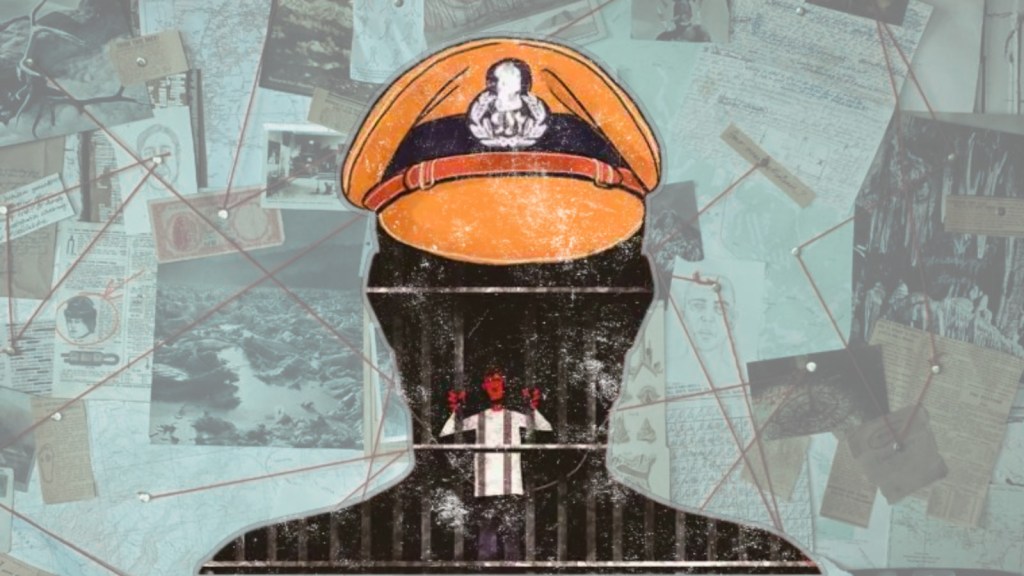
On July 21, 2025, the Bombay High Court delivered justice to a dead man. Kamaal Ahmed Ansari had already perished behind bars, his body broken by torture and neglect, his spirit crushed by nearly two decades of juridical indifference. The court quashed earlier convictions of all twelve accused in the 2006 Mumbai local train bombings. The acquittal that should have freed Kamaal while alive came four years too late.
Kamaal was the first to be arrested in the 7/11 train bombings in India’s financial capital, Mumbai, that killed 187 people. Mumbai’s Anti-Terror Squad (ATS) descended on his village in Bihar on July 20, 2006, to pick him up. What followed was 19 years of systematic brutality against an innocent man.
Dr Abdul Wahid Shaikh, author of Innocent Prisoners, was also behind bars in connection with the 7/11 Mumbai local train blast case for a period of nine years. He was acquitted in 2015. Speaking to us, Dr Shaikh recalled his acquaintance with Kamaal in prison:
“It feels as if he is standing in front of me right now. As if he, too, has heard the Bombay High Court’s judgment acquitting him. But the truth is, he is not with us anymore. He has gone to a place from where no one returns. He is not here today to witness this moment of justice.”
Investigations into Kamaal’s case revealed that a religious text message became proof of extremism for the state. But what began as an exchange of religious messages soon spiraled into a case built on suspicion, surveillance, and selective evidence. Torture-extracted confessions were used as evidence, and alibi documents disappeared from trial proceedings. In a democracy that prides itself on the tenet “innocent until proven guilty,” Kamaal’s fate reveals how easily that principle crumbles when faith intersects with fear under India’s anti-terror apparatus.
FROM RELIGIOUS MESSAGE TO TERROR CHARGES
On July 10, 2006, Kamaal sent a religious message to his brother-in-law, Mumtaz Ahmed Chaudhri, his friend Khaleed Azeez Shaikh, and his friend’s brother, Qamruzzaman, and a few other people. The message read:
May Allah grant you the patience of Prophet Ayyub (Job),
May Allah bless you with the beauty of Prophet Yusuf (Joseph),
May Allah bestow upon you the faith of Prophet Ibrahim (Abraham),
May Allah bless you with an obedient son like Prophet Ismail (Ishmael),
And may Allah grant you the noble character of Prophet Muhammad (peace be upon him).
Ameen.
This message was intercepted by the Mumbai ATS, which was scrutinizing all the messages back and forth from the city, trying to find clues about those responsible for the train bombings. Two recipients of Kamaal’s message, Chaudhri and Shaikh, were arrested, tortured, and compelled to share his contact. Then, about a dozen ATS and Intelligence Bureau personnel flew into Bihar via a RAW aircraft to apprehend Kamaal.
Chaudhri and Shaikh were released after a few days; only Kamaal remained in custody.
After his arrest, the Police examined his call records and found that a minor nephew in Malmal village had called Kamaal. That minor boy was also arrested and then released after a day, Kamaal’s mother said.
In court, the ATS cited this message as proof of Kamaal’s involvement in the 7/11 blasts, claiming that it reeked of religious extremism.
The ATS accused Kamaal of facilitating the entry of two Pakistanis, Aslam and Hafizullah, into India through the Nepal border, helping them in planting a bomb in one of the trains, and storing RDX at his house in Madhubani, Bihar. He was also accused of planting a bomb in the Virar fast local train in Mumbai by allegedly placing a large black rexine bag on the train’s luggage rack. According to the ATS Mumbai, when he was arrested at his home, about 500 grams of black powder was allegedly recovered, which the Forensic Science Laboratory later reported as comprising 85 percent RDX and 15 percent charcoal. Based on these allegations, they concluded that Kamaal had himself planted the bomb. Kamaal was convicted and sentenced to death by the special MCOCA (Maharashtra Control of Organised Crime Act) court.

HAUNTING PAST: LASHKAR CONNECTION AND INFORMER ROLE
Interestingly, media investigations revealed that Kamaal was also an informer for the Intelligence Bureau, which is why his phone was under ATS surveillance. A retired ATS officer, speaking on condition of anonymity, told us that in his opinion, Kamaal had been working as an informer for the Intelligence Bureau. He was purportedly sent to infiltrate the Lashkar-e-Taiba (LeT) and provide intelligence, but was later framed by the state.
Former Aaj Tak journalist Gunjan Kumar had investigated his background. We met Gunjan in Delhi in 2018. Gunjan’s findings, corroborated by Kamaal’s brother, Jamaal, revealed a complex history of a person’s life.
In 1999, Kamaal had gone to Pakistan to train with the militant Islamist organization Lashkar‑e‑Taiba (LeT), which was active along the Indo‑Nepal Terai belt and recruited vulnerable men. A local LeT operative from his village had arranged his Indian passport. He entered Pakistan via the Wagah border, met a Lashkar operative in Lahore, and underwent six months of training to become a sleeper agent under a handler named Azam Cheema. He was asked to recruit others, with promises of monetary reward per recruit.
Back in his village, Basopatti, Kamaal advised his brother-in-law, who was then seeking work in Saudi Arabia, to go to Pakistan ostensibly to learn Arabic. In reality, Kamaal intended to get him trained under the LeT. His brother-in-law agreed; he obtained his passport from the same recruiter, went to Pakistan, and was taken to the LeT training camp. Upon realizing the deception after six months, he returned home and informed Kamaal’s father, who became furious.
Kamaal’s father, an Indian Army tailor, beat his son and forced him to swear on the Quran never to involve himself with the proscribed outfit again. Kamaal vowed not to repeat his mistake.
THE DELHI YEARS AND CONTINUED PERSECUTION
Kamaal’s Muslim identity, combined with a single mistake of training under the LeT in his youth, made him a target for relentless state scrutiny. Kamaal faced systematic harassment across multiple cases from 2002-05, with the police manufacturing charges, demanding bribes, and using intimidation tactics that established him as a permanent target regardless of evidence.
After the Lashkar debacle, he and one of his relatives decided to go to Delhi and start a tailoring business, Gunjan said. However, his brother Jamaal said that Kamaal had gone to Delhi along with his wife’s sister’s husband, Anwar ul Haq, to get his tonsillitis treated at the Masjidia hospital.
In 2002, as soon as Kamaal and Anwar reached Delhi, they were picked up from outside Masjidiya Hospital by Delhi Police Special Cell officers led by ACP Raghuveer. The arrest was on charges of counterfeit currency trafficking from Nepal. When absolutely no evidence emerged, the charges were changed to an arms case. Jamaal arranged for bail via Supreme Court advocate Shakeel Ahmed.
Further, speaking to us in 2021, Jamaal said Delhi Inspector Mohan Chand Sharma had purportedly accused Kamaal of planning to assassinate then Deputy Prime Minister and Bharatiya Janata Party leader L.K. Advani in 2002. He said that the duo was detained for nearly three months at Tihar jail and tortured severely, to the point that the soles of his feet were injured from beating. Jamaal claimed they were released after allegedly paying a bribe to the police. A case under the Arms Act was registered against Kamaal, 12 months after his initial release.
In May 2005, he was again implicated in the Satyam Cinema blast case in Delhi, but it was eventually proven that Kamaal was attending a court hearing that day. His Supreme Court advocate informed the Special Cell that Kamaal had judicial proof of his presence in court the day of the Delhi blast.
On December 14, 2002, Delhi Police killed two alleged Pakistani militants at Tughlaqabad. Jamaal alleged that Kamaal was also brought there to be killed in an encounter, but since he was too injured to run, the plan was aborted. Jamaal further alleged that at the Lodhi Road Special Cell office, ACP Rajbir Singh demanded Rs 400,000 ransom for Kamaal’s release. When Jamaal protested, claiming his brother’s innocence, Singh purportedly threatened to arrest him. Jamaal was also spied on for two months, and Singh used his name to enforce Kamaal’s compliance. Besides, Kamaal’s elder brother Shakeel was harassed by the police later.
Anwar-ul-Haq, the co-accused in the counterfeit currency case, later turned into a government witness. Jamaal said he had been told by Haq that Kamaal’s death would benefit the latter. Jamaal stated that his brother occasionally exchanged currency for travelers in Nepal, but he was never involved in counterfeit operations, as had been alleged.
From repeated arrests to torture, the system treated Kamaal as guilty by association, ignoring the absence of any concrete evidence. Despite being cleared in multiple cases, he remained under constant surveillance and faced harassment. The police leveraged his religion and past to justify threats, extortion, and intimidation. This systemic bias ultimately shadowed his entire life. The police eventually framed him in one of the biggest terror attacks on indian soil.
CUSTODIAL TORTURE
“The first time I saw Kamaal was in the Anti-Terrorism Squad’s (ATS) torture room. The last time I saw him was in the Anda Cell of Arthur Road Jail in 2015, when I was released after my acquittal,” said Dr Shaikh while talking about his former inmate.
In that torture room, Kamaal was being subjected to inhuman brutality—the kind not even a bystander could bear to watch, let alone survive, he said.
He added that when the police officers asked him, “Do you know this man?” he replied, “No.” Then the officers purportedly coldly commented, “He’s [Kamaal] a top Lashkar‑e‑Taiba terrorist. A hardened criminal. We’re using third‑degree torture as he won’t confess easily.”
Kamaal would beg, plead, and weep. Over and over, he would repeat, “I am innocent.”But his pleading did not bring him any relief.
Shaikh further recounted: “I once saw Kamal tied to a door, arms stretched unnaturally, forced to stand upright like a crucified man. A constable came in, offering him iodex, an ointment for pain. Others gave him medicine, suggesting ways to reduce the swelling.” He had a question – “Why this sudden sympathy?” Then he finally understood: “Kamal had to be produced in court the next day. This wasn’t a display of actual concern. These were strategies to somewhat cover up this inhumane torture. They wanted to make him look ‘normal’ so that he couldn’t expose them in court. This was their performance of mercy after hours of savagery.”
Dr. Shaikh said, “When Kamaal appeared in the special MCOCA court, Mumbai, he tried to speak out. But the trial court had already decided whom to believe. The judges bent over backwards to validate the police’s ‘investigation’, while the voices of the defence, especially the accused, were muffled.” He pointed out that Kamal reported the torture at court, but “it fell on deaf ears.” “He reported it again. And again. Eventually, the complaint was formally recorded. But what did the court do? They sent him back to the same police custody. The same place. The same men. The same torture.”
EVIDENCE OF ALIBI: BORDER MOVEMENT AND CDRS
Even as the ATS built its case against Kamaal, documents and witnesses told another story, one that placed Kamaal far from Mumbai on the day of the blasts.
As narrated by Gunjan, Kamaal was in Nepal on July 11, 2006. On July 10, he had attended a marriage of his cousin in his village, and on July 11, he crossed the Indo‑Nepal border for a few hours for personal work. Nepal’s Bhansar register, maintained under the Bikram Sambat calendar, recorded his entry, which, when converted, matched July 11, 2006; this showed he was not in India during the blasts. Gunjan’s cameraman, Nadeem, filmed the process discreetly when the Nepali officials suspected them of being intelligence agents from India, but allowed access when informed they were journalists.
The ATS alleged that Kamaal had placed a bomb on a Matunga-bound train in Mumbai, but CDRs and Nepal border papers showed he was in Madhubani and Nepal on both July 10 and 11.
The ATS concealed his CDR and border documents in court. From jail, Kamaal filed an RTI and obtained his CDR records, showing his presence in the village and Nepal at those times. However, none of the documents were presented in court.
He was arrested at midnight on July 11, kept at a local police station, then transferred the next day to Patna, and from Patna flown to Mumbai on a special RAW aircraft.
When Kamaal was picked up by the ATS, a local Basopatti thaanedaar (police official) defended Kamaal, calling him a cricket enthusiast who organized a match in the village the day after the blasts. A photograph of him with his team was cited in support of his alibi.
In 2018, Gunjan interviewed Jamaal and traveled to Basopatti to investigate the case. His research convinced him of Kamaal’s innocence. Gunjan visited the village with Aaj Tak’s Patna bureau cameraman Nadeem and interviewed Kamaal’s neighbours, friends, relatives, and mother, who said Kamaal had traveled to Nepal on the morning of July 11, 2006.
Gunjan and his team then went to Basti village, where Kamaal’s sister lived. Mumtaz, Kamaal’s brother‑in‑law, had previously worked at a mosque in Mumbai. Experts later traced an outbound call from that mosque to Nepal after the blasts, likely a family communication. When Mumtaz was arrested, the family’s association with Kamaal was revealed. The ATS already had his name from past surveillance and the Delhi arrest history, which they used to build the case.
Despite CDRs, border records, and consistent witness testimony, the courts did not offer him justice. He remained in prison.
DEATH IN CUSTODY
On April 2, 2021, Kamaal’s mother spoke to him over the phone and said he seemed well. He later called his brother and complained of worsened tonsillitis after drinking cold water. Jail authorities insisted he had COVID and tried to hospitalize him. He rejected saline and injections, insisting he had only tonsillitis.
Around April 10 or 11, his mother learned Kamaal had been hospitalized in a serious condition. She travelled to Nagpur, where he was admitted to a COVID ward in a civil hospital, on a ventilator. On April 17, she was not permitted direct access and saw him from a distance.
On April 19, 2021, at around 1 am, Kamaal passed away. His mother, Saeed un Nisa Ansari, was notified only at 11 am that day. She and Jamaal traveled to Nagpur for his burial. Kamaal was then 50. His mother and brother allege gross negligence: delayed information, denied treatment, withheld medical status, mishandled hospital admission, and unjust delay in notifying them of his death. Jamaal suspects foul play, citing that Kamaal had refused to accept saline or COVID injections in prison and insisted that his tonsillitis be treated.
However, a jail staff member, speaking on condition of anonymity, stated that Kamaal was promptly sent to the hospital when he first reported his illness, and his treatment began without delay.
Kamaal was only 30 years old at the time of his arrest. He was living in Basopatti village with his mother, four brothers, wife, and a son.
His mother still remembers him fondly as a hard-working, generous, and caring person. According to her, shortly before his arrest, he gave Rs 300 of his own pocket money to a destitute woman with four children, telling her to return to him if she needed help again. Though Kamaal had very little, he was ready to help even less fortunate people, she added.
Wahid remembers Kamaal as a man who stood his ground even under torture. He was more than “accused number one”; he was a father, a husband, a son. Now, after his death, his family is left to pick up the fragments of a life shattered by persecution.
While speaking to us, Dr Shaikh painted a detailed picture of his late inmate: “Kamaal was tall, well‑built, wheatish, sharp‑featured. He had a straight nose, large eyes, and always carried himself with a certain urgency, a fast pace. He didn’t read much, but he had the gift of winning hearts.”
For 15 years, the state built its case on a religious text message while concealing evidence that proved Kamaal was in Nepal, not Mumbai, during the 7/11 train blasts. His acquittal came four years too late; he had already died in prison, another casualty of a system that treats Muslim identity as guilt by association.

Arrested, Tortured, Declared Innocent After Death: A Muslim Prisoner’s Two-Decade Struggle Exposes India’s Justice System

Image by the Polis Project
On July 21, 2025, the Bombay High Court delivered justice to a dead man. Kamaal Ahmed Ansari had already perished behind bars, his body broken by torture and neglect, his spirit crushed by nearly two decades of juridical indifference. The court quashed earlier convictions of all twelve accused in the 2006 Mumbai local train bombings. The acquittal that should have freed Kamaal while alive came four years too late.
Kamaal was the first to be arrested in the 7/11 train bombings in India’s financial capital, Mumbai, that killed 187 people. Mumbai’s Anti-Terror Squad (ATS) descended on his village in Bihar on July 20, 2006, to pick him up. What followed was 19 years of systematic brutality against an innocent man.
Dr Abdul Wahid Shaikh, author of Innocent Prisoners, was also behind bars in connection with the 7/11 Mumbai local train blast case for a period of nine years. He was acquitted in 2015. Speaking to us, Dr Shaikh recalled his acquaintance with Kamaal in prison:
“It feels as if he is standing in front of me right now. As if he, too, has heard the Bombay High Court’s judgment acquitting him. But the truth is, he is not with us anymore. He has gone to a place from where no one returns. He is not here today to witness this moment of justice.”
Investigations into Kamaal’s case revealed that a religious text message became proof of extremism for the state. But what began as an exchange of religious messages soon spiraled into a case built on suspicion, surveillance, and selective evidence. Torture-extracted confessions were used as evidence, and alibi documents disappeared from trial proceedings. In a democracy that prides itself on the tenet “innocent until proven guilty,” Kamaal’s fate reveals how easily that principle crumbles when faith intersects with fear under India’s anti-terror apparatus.
FROM RELIGIOUS MESSAGE TO TERROR CHARGES
On July 10, 2006, Kamaal sent a religious message to his brother-in-law, Mumtaz Ahmed Chaudhri, his friend Khaleed Azeez Shaikh, and his friend’s brother, Qamruzzaman, and a few other people. The message read:
May Allah grant you the patience of Prophet Ayyub (Job),
May Allah bless you with the beauty of Prophet Yusuf (Joseph),
May Allah bestow upon you the faith of Prophet Ibrahim (Abraham),
May Allah bless you with an obedient son like Prophet Ismail (Ishmael),
And may Allah grant you the noble character of Prophet Muhammad (peace be upon him).
Ameen.
This message was intercepted by the Mumbai ATS, which was scrutinizing all the messages back and forth from the city, trying to find clues about those responsible for the train bombings. Two recipients of Kamaal’s message, Chaudhri and Shaikh, were arrested, tortured, and compelled to share his contact. Then, about a dozen ATS and Intelligence Bureau personnel flew into Bihar via a RAW aircraft to apprehend Kamaal.
Chaudhri and Shaikh were released after a few days; only Kamaal remained in custody.
After his arrest, the Police examined his call records and found that a minor nephew in Malmal village had called Kamaal. That minor boy was also arrested and then released after a day, Kamaal’s mother said.
In court, the ATS cited this message as proof of Kamaal’s involvement in the 7/11 blasts, claiming that it reeked of religious extremism.
The ATS accused Kamaal of facilitating the entry of two Pakistanis, Aslam and Hafizullah, into India through the Nepal border, helping them in planting a bomb in one of the trains, and storing RDX at his house in Madhubani, Bihar. He was also accused of planting a bomb in the Virar fast local train in Mumbai by allegedly placing a large black rexine bag on the train’s luggage rack. According to the ATS Mumbai, when he was arrested at his home, about 500 grams of black powder was allegedly recovered, which the Forensic Science Laboratory later reported as comprising 85 percent RDX and 15 percent charcoal. Based on these allegations, they concluded that Kamaal had himself planted the bomb. Kamaal was convicted and sentenced to death by the special MCOCA (Maharashtra Control of Organised Crime Act) court.
HAUNTING PAST: LASHKAR CONNECTION AND INFORMER ROLE
Interestingly, media investigations revealed that Kamaal was also an informer for the Intelligence Bureau, which is why his phone was under ATS surveillance. A retired ATS officer, speaking on condition of anonymity, told us that in his opinion, Kamaal had been working as an informer for the Intelligence Bureau. He was purportedly sent to infiltrate the Lashkar-e-Taiba (LeT) and provide intelligence, but was later framed by the state.
Former Aaj Tak journalist Gunjan Kumar had investigated his background. We met Gunjan in Delhi in 2018. Gunjan’s findings, corroborated by Kamaal’s brother, Jamaal, revealed a complex history of a person’s life.
In 1999, Kamaal had gone to Pakistan to train with the militant Islamist organization Lashkar‑e‑Taiba (LeT), which was active along the Indo‑Nepal Terai belt and recruited vulnerable men. A local LeT operative from his village had arranged his Indian passport. He entered Pakistan via the Wagah border, met a Lashkar operative in Lahore, and underwent six months of training to become a sleeper agent under a handler named Azam Cheema. He was asked to recruit others, with promises of monetary reward per recruit.
Back in his village, Basopatti, Kamaal advised his brother-in-law, who was then seeking work in Saudi Arabia, to go to Pakistan ostensibly to learn Arabic. In reality, Kamaal intended to get him trained under the LeT. His brother-in-law agreed; he obtained his passport from the same recruiter, went to Pakistan, and was taken to the LeT training camp. Upon realizing the deception after six months, he returned home and informed Kamaal’s father, who became furious.
Kamaal’s father, an Indian Army tailor, beat his son and forced him to swear on the Quran never to involve himself with the proscribed outfit again. Kamaal vowed not to repeat his mistake.
THE DELHI YEARS AND CONTINUED PERSECUTION
Kamaal’s Muslim identity, combined with a single mistake of training under the LeT in his youth, made him a target for relentless state scrutiny. Kamaal faced systematic harassment across multiple cases from 2002-05, with the police manufacturing charges, demanding bribes, and using intimidation tactics that established him as a permanent target regardless of evidence.
After the Lashkar debacle, he and one of his relatives decided to go to Delhi and start a tailoring business, Gunjan said. However, his brother Jamaal said that Kamaal had gone to Delhi along with his wife’s sister’s husband, Anwar ul Haq, to get his tonsillitis treated at the Masjidia hospital.
In 2002, as soon as Kamaal and Anwar reached Delhi, they were picked up from outside Masjidiya Hospital by Delhi Police Special Cell officers led by ACP Raghuveer. The arrest was on charges of counterfeit currency trafficking from Nepal. When absolutely no evidence emerged, the charges were changed to an arms case. Jamaal arranged for bail via Supreme Court advocate Shakeel Ahmed.
Further, speaking to us in 2021, Jamaal said Delhi Inspector Mohan Chand Sharma had purportedly accused Kamaal of planning to assassinate then Deputy Prime Minister and Bharatiya Janata Party leader L.K. Advani in 2002. He said that the duo was detained for nearly three months at Tihar jail and tortured severely, to the point that the soles of his feet were injured from beating. Jamaal claimed they were released after allegedly paying a bribe to the police. A case under the Arms Act was registered against Kamaal, 12 months after his initial release.
In May 2005, he was again implicated in the Satyam Cinema blast case in Delhi, but it was eventually proven that Kamaal was attending a court hearing that day. His Supreme Court advocate informed the Special Cell that Kamaal had judicial proof of his presence in court the day of the Delhi blast.
On December 14, 2002, Delhi Police killed two alleged Pakistani militants at Tughlaqabad. Jamaal alleged that Kamaal was also brought there to be killed in an encounter, but since he was too injured to run, the plan was aborted. Jamaal further alleged that at the Lodhi Road Special Cell office, ACP Rajbir Singh demanded Rs 400,000 ransom for Kamaal’s release. When Jamaal protested, claiming his brother’s innocence, Singh purportedly threatened to arrest him. Jamaal was also spied on for two months, and Singh used his name to enforce Kamaal’s compliance. Besides, Kamaal’s elder brother Shakeel was harassed by the police later.
Anwar-ul-Haq, the co-accused in the counterfeit currency case, later turned into a government witness. Jamaal said he had been told by Haq that Kamaal’s death would benefit the latter. Jamaal stated that his brother occasionally exchanged currency for travelers in Nepal, but he was never involved in counterfeit operations, as had been alleged.
From repeated arrests to torture, the system treated Kamaal as guilty by association, ignoring the absence of any concrete evidence. Despite being cleared in multiple cases, he remained under constant surveillance and faced harassment. The police leveraged his religion and past to justify threats, extortion, and intimidation. This systemic bias ultimately shadowed his entire life. The police eventually framed him in one of the biggest terror attacks on indian soil.
CUSTODIAL TORTURE
“The first time I saw Kamaal was in the Anti-Terrorism Squad’s (ATS) torture room. The last time I saw him was in the Anda Cell of Arthur Road Jail in 2015, when I was released after my acquittal,” said Dr Shaikh while talking about his former inmate.
In that torture room, Kamaal was being subjected to inhuman brutality—the kind not even a bystander could bear to watch, let alone survive, he said.
He added that when the police officers asked him, “Do you know this man?” he replied, “No.” Then the officers purportedly coldly commented, “He’s [Kamaal] a top Lashkar‑e‑Taiba terrorist. A hardened criminal. We’re using third‑degree torture as he won’t confess easily.”
Kamaal would beg, plead, and weep. Over and over, he would repeat, “I am innocent.”But his pleading did not bring him any relief.
Shaikh further recounted: “I once saw Kamal tied to a door, arms stretched unnaturally, forced to stand upright like a crucified man. A constable came in, offering him iodex, an ointment for pain. Others gave him medicine, suggesting ways to reduce the swelling.” He had a question – “Why this sudden sympathy?” Then he finally understood: “Kamal had to be produced in court the next day. This wasn’t a display of actual concern. These were strategies to somewhat cover up this inhumane torture. They wanted to make him look ‘normal’ so that he couldn’t expose them in court. This was their performance of mercy after hours of savagery.”
Dr. Shaikh said, “When Kamaal appeared in the special MCOCA court, Mumbai, he tried to speak out. But the trial court had already decided whom to believe. The judges bent over backwards to validate the police’s ‘investigation’, while the voices of the defence, especially the accused, were muffled.” He pointed out that Kamal reported the torture at court, but “it fell on deaf ears.” “He reported it again. And again. Eventually, the complaint was formally recorded. But what did the court do? They sent him back to the same police custody. The same place. The same men. The same torture.”
EVIDENCE OF ALIBI: BORDER MOVEMENT AND CDRS
Even as the ATS built its case against Kamaal, documents and witnesses told another story, one that placed Kamaal far from Mumbai on the day of the blasts.
As narrated by Gunjan, Kamaal was in Nepal on July 11, 2006. On July 10, he had attended a marriage of his cousin in his village, and on July 11, he crossed the Indo‑Nepal border for a few hours for personal work. Nepal’s Bhansar register, maintained under the Bikram Sambat calendar, recorded his entry, which, when converted, matched July 11, 2006; this showed he was not in India during the blasts. Gunjan’s cameraman, Nadeem, filmed the process discreetly when the Nepali officials suspected them of being intelligence agents from India, but allowed access when informed they were journalists.
The ATS alleged that Kamaal had placed a bomb on a Matunga-bound train in Mumbai, but CDRs and Nepal border papers showed he was in Madhubani and Nepal on both July 10 and 11.
The ATS concealed his CDR and border documents in court. From jail, Kamaal filed an RTI and obtained his CDR records, showing his presence in the village and Nepal at those times. However, none of the documents were presented in court.
He was arrested at midnight on July 11, kept at a local police station, then transferred the next day to Patna, and from Patna flown to Mumbai on a special RAW aircraft.
When Kamaal was picked up by the ATS, a local Basopatti thaanedaar (police official) defended Kamaal, calling him a cricket enthusiast who organized a match in the village the day after the blasts. A photograph of him with his team was cited in support of his alibi.
In 2018, Gunjan interviewed Jamaal and traveled to Basopatti to investigate the case. His research convinced him of Kamaal’s innocence. Gunjan visited the village with Aaj Tak’s Patna bureau cameraman Nadeem and interviewed Kamaal’s neighbours, friends, relatives, and mother, who said Kamaal had traveled to Nepal on the morning of July 11, 2006.
Gunjan and his team then went to Basti village, where Kamaal’s sister lived. Mumtaz, Kamaal’s brother‑in‑law, had previously worked at a mosque in Mumbai. Experts later traced an outbound call from that mosque to Nepal after the blasts, likely a family communication. When Mumtaz was arrested, the family’s association with Kamaal was revealed. The ATS already had his name from past surveillance and the Delhi arrest history, which they used to build the case.
Despite CDRs, border records, and consistent witness testimony, the courts did not offer him justice. He remained in prison.
DEATH IN CUSTODY
On April 2, 2021, Kamaal’s mother spoke to him over the phone and said he seemed well. He later called his brother and complained of worsened tonsillitis after drinking cold water. Jail authorities insisted he had COVID and tried to hospitalize him. He rejected saline and injections, insisting he had only tonsillitis.
Around April 10 or 11, his mother learned Kamaal had been hospitalized in a serious condition. She travelled to Nagpur, where he was admitted to a COVID ward in a civil hospital, on a ventilator. On April 17, she was not permitted direct access and saw him from a distance.
On April 19, 2021, at around 1 am, Kamaal passed away. His mother, Saeed un Nisa Ansari, was notified only at 11 am that day. She and Jamaal traveled to Nagpur for his burial. Kamaal was then 50. His mother and brother allege gross negligence: delayed information, denied treatment, withheld medical status, mishandled hospital admission, and unjust delay in notifying them of his death. Jamaal suspects foul play, citing that Kamaal had refused to accept saline or COVID injections in prison and insisted that his tonsillitis be treated.
However, a jail staff member, speaking on condition of anonymity, stated that Kamaal was promptly sent to the hospital when he first reported his illness, and his treatment began without delay.
Kamaal was only 30 years old at the time of his arrest. He was living in Basopatti village with his mother, four brothers, wife, and a son.
His mother still remembers him fondly as a hard-working, generous, and caring person. According to her, shortly before his arrest, he gave Rs 300 of his own pocket money to a destitute woman with four children, telling her to return to him if she needed help again. Though Kamaal had very little, he was ready to help even less fortunate people, she added.
Wahid remembers Kamaal as a man who stood his ground even under torture. He was more than “accused number one”; he was a father, a husband, a son. Now, after his death, his family is left to pick up the fragments of a life shattered by persecution.
While speaking to us, Dr Shaikh painted a detailed picture of his late inmate: “Kamaal was tall, well‑built, wheatish, sharp‑featured. He had a straight nose, large eyes, and always carried himself with a certain urgency, a fast pace. He didn’t read much, but he had the gift of winning hearts.”
For 15 years, the state built its case on a religious text message while concealing evidence that proved Kamaal was in Nepal, not Mumbai, during the 7/11 train blasts. His acquittal came four years too late; he had already died in prison, another casualty of a system that treats Muslim identity as guilt by association.