


(This story contains references to sexual violence and police abuse.)
The room fell silent as Boniface Mwangi got ready to speak. Mwangi had just returned from Tanzania, where he’d been detained, alongside Ugandan activist Agather Atuhaire. They had visited Tanzania to observe the treason trial of opposition leader Tundu Lissu, and what should have been a routine act of solidarity turned into days in detention.
His voice, thunderous at protests, was now measured and deliberate. Usually loud and full of life, he seemed defeated, and broken. At a press conference in June 2025 in Nairobi, he recounted the physical assault, sexual violence, and threats he had endured between May 18 and 22. His voice broke and tears flowed as he narrated how inhumane the police can be when cracking down on citizens who fail to color inside the lines.
A Kenyan photojournalist-turned-activist, Mwangi’s work documenting the 2007-2008 post-election violence, which killed more than a thousand people, made him one of East Africa’s most prominent advocates for accountability and justice.
Mwangi gained public attention during the 2009 Madaraka Day celebrations, a national holiday commemorating Kenya’s transition to self-governance from British colonial rule. He interrupted President Mwai Kibaki’s speech with heckles, imploring him to remember the victims of the 2007-2008 post-election violence and flush out corrupt leaders. He was hauled away by plainclothes officers, physically assaulted, and thrown in a jail cell for the night. He would spend the next year embroiled in a court case that would accomplish nothing— except strengthening his resolve.
This incident marked the beginning of a long fight for justice. A year later, he founded Picha Mtaani, a travelling photography exhibition which showcased his images of the post-election violence— which not only killed more than a thousand people but also injured and maimed about 3,500 and displaced more than half a million— in every corner of Kenya.
“I have seen things that many people will never see, and I have a responsibility not to be silent about it,” he said in an interview for TED Blog.
In 2013, Mwangi, alongside other activists, organized the MPigs Protest, placing more than a dozen pigs and pouring pig blood right outside the Parliament. The protest, he said, was an apt response to greedy Parliamentarians, who were lobbying for yet another pay rise.
Mwangi has faced serious retaliation for his continued activism against corruption, political impunity, and social injustice. In October 2021, it was reported that unknown armed individuals had planted explosives in his family’s country home in Lukenya, Machakos County. Mwangi publicly accused the then Machakos Governor, Alfred Mutua, with whom he had a personal feud, of orchestrating the attack.
Fortunately, the house was still under construction, and no one was hurt. Between then and now, he has experienced several acts of intimidation, harassment, and assault.
Mwangi says that there’s no police precinct in Nairobi whose threshold he hasn’t crossed. Throughout the years, he has been arrested, shot at, and detained. He has received countless death threats and gotten tangled in court cases for simply standing up for what’s right.
He has also been vocal against police brutality. In the wake of a recent incident of police harassment of youth in Nandi Hills, Kenya, Mwangi proposed a complete overhaul of the policing system–changing outdated recruitment techniques, paying officers better, introducing body cameras, and tracking all arresting officers’ cases, including prosecution success rates. This, he said, would ensure the police stop using arrests as a form of extortion and intimidation.
For nearly two decades, Mwangi has used art, photography, and direct action to challenge state impunity, mobilize public resistance, and demand dignity for African lives on the global stage. This profile examines the personal costs of that commitment: how Mwangi reconciles his role as a father with the dangers of dissent, how he understands the intersection of activism and African identity, and what his persistence reveals about the possibilities—and limits—of citizen action in a region where speaking truth to power can be lethal.
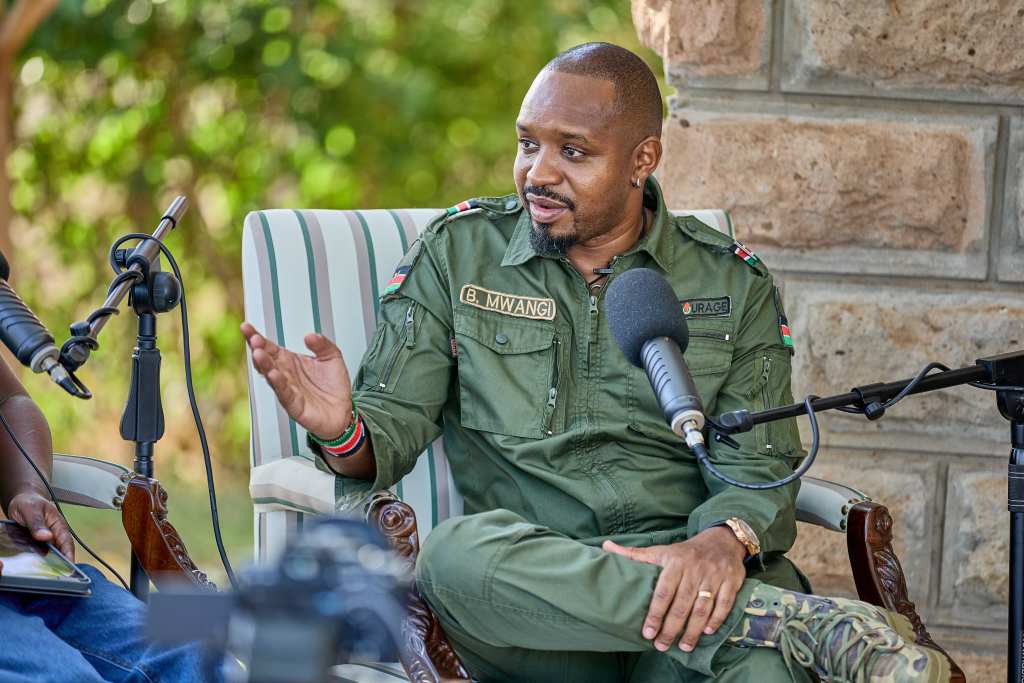
He spoke to Martin Mahanda at his office in Nairobi, giving a glimpse of the human behind the activist, his work, and its significance.
MM: I’m curious to know what kind of child you were and what your childhood was like.
BM: When I was young, I was very curious. I was inquisitive and adventurous. I was raised by a single mother. I would make friends easily, so I’d go loitering around. You could swim in the Nairobi River back then, so I’d go play with street kids, some of whom weren’t even my friends.
MM: You have three kids. Do you remember what you were like at their age?
BM: I do remember. My three kids are 18, 15, and 14; all teens. I tell my oldest son that when I was 14, I had started working. By 17, I was paying rent, and by 23, I was a father. By 26, I had three children. (Laughs.)
I was very focused in my teenage years. My mother died when I was 17, and I didn’t have any academic qualifications besides my Class 8 certificate. I had to work very hard to get where I am. When I was dating my wife, I told her about my upbringing and the poverty that surrounded my family, and she said that I’m one of the poorest people she’s ever met. (Laughs softly.)
MM: Fatherhood is very important to you. How do you reconcile with the inherent risks in the work you do? Does this make you anxious?
BM: I have zero anxiety, my brother. Do I have fears? Yes. I have fears of dying young and leaving my kids fatherless. But I think the cause is worth it, and my kids understand that. I don’t want to die, though— I shouldn’t have to die for doing the right thing. But yes, it is a concern for my family that I could die and leave them without a father.
MM: How do you process this fear? When you’re in the heat of the moment, out on the streets, or in a jail cell…
BM: First, I have too much self-belief to feel stranded. And then the thing is, I do it even when I’m afraid. I’d arrive at a protest with my legs shaking, but I’d still keep on marching. So, we don’t do it because we’re not afraid, we do it while we’re afraid. And then I also have a war chant: (Loudly) Heeeeeeh! That always helps.
MM: You have endured much trauma in this journey. What’s your take on therapy?
BM: Therapy saves lives, my brother! Go for therapy, don’t avoid it. It’s crucial. It keeps you from transferring trauma to other people. A lot has transpired. Tanzania happened. I’ve been shot. Someone tried to bomb my house… Therapy helps you process your feelings and emotions, so I’m a big supporter and believer in it.
MM: Let’s dwell on fatherhood for a bit. What’s one thing you lacked growing up that you’re proud to give your children?
BM: I think having a father (laughs) is the best gift I’ve given my kids, and making them curious about life. We’ve given them the freedom to do whatever they want to, within limits, of course. We also advocate for free speech in our house. We don’t censor ourselves; people speak their minds.
MM: A lot of young men harbor resentment towards women. Many consume content from influencers such as Andrew Tate. How are you protecting your kids from going in that direction?
BM: My kids live in a home where their mother is as equal a parent as I am. I don’t treat her any less. I believe insecurity causes a culture of hatred against women. So, the question I’d ask people who hate women is, “Who hurt you?” The world is a beautiful place because women exist. If there were more women leaders globally, I think the world would be a much safer place. Women don’t do nearly as much harm in the world as men do.
MM: That’s an interesting thought, especially considering that Martha Karua announced she’ll be running for President in 2027. How do you feel about that?
(Martha Karua is a veteran politician whose career in Kenyan politics spans more than three decades. She was first elected as Member of Parliament for Gichugu Constituency in 1992, a seat she held for 21 years, winning in four consecutive elections. She first ran for President in 2013, losing to Uhuru Kenyatta and William Ruto. In 2022, she supported the late Raila Odinga’s bid and was his running mate.)
BM: She has every right to run. She’s my mentor. She’s my mother. She’s a grandmother to my kids. I’m happy for her. I worked for her when she was vying for Deputy President with Raila Odinga as the presidential candidate. I have so much respect for her.
MM: Since you mentioned protesting earlier, what inspired you from the protests here in Kenya in the last two years? And what can we learn from their mistakes?
(From June to August 2024, Kenyans took to the streets to protest against the Proposed 2024 Finance Bill, which would raise existing taxes and introduce new ones. Young Kenyans organized a series of mass demonstrations during this period. In response, police fired teargas canisters, water cannons, and live rounds into the crowds. The protests, which started peacefully, claimed more than 50 lives. Soon after, similar demonstrations erupted in Uganda and Tanzania.)
BM: I was inspired by the number of young people in the streets. It was a movement, and there were more women than men. I loved that. There was a lot of originality and unity, and young people even forced their celebrities to go to the streets.
What we failed to do… is nothing! We did everything we could do. We went to the streets peacefully, we protested peacefully, and then we got murdered. So, the young protesters did nothing wrong. The problem was how the government responded to protestors.
MM: Following these protests, terrorism charges were levied against you. Have these charges been dropped? What’s your take on it?
BM: Yeah, they were dropped, and now I’m facing ammunition charges and other things. It’s just silliness. They’re politically motivated cases. Many young kids were arrested and charged with the same thing. And they settle on terrorism charges to scare young people. You see, you can’t scare me, regardless of what you say. But for young people, when you’re trying to get a certificate of good conduct, that shows up. When you’re applying for a visa, they ask you: Have you ever been charged with terrorism? You say yes, then you don’t get a visa. They’re destroying lives! That’s what they’re doing, man.

MM: How is propaganda affecting the organization, planning, and execution of protests?
(During the 2024 Anti-Finance Bill protests, many X accounts tweeted similar messages, urging people not to proceed with the planned march. Others would post false protest programs, creating chaos and confusion, which kept people from showing up.)
BM: It brings a lot of misinformation and confusion. People start questioning everything; they don’t know which protests are legitimate and who is getting paid to spew propaganda. This discourages people from participating in protests. It demobilizes them, so to speak.
MM: Netizens often criticize activists for accepting donor funding. Is this criticism unfounded? And is it wrong for activists to receive funding?
BM: I think that’s how people try to discredit us. They say that activists are funded as an excuse for not being active citizens themselves. What is the harm in someone being paid for the work they are doing?
But, for me, I work. I sell land. I help people claim their debts. I work here, in the office we are in. There’s no place where I collect checks called “activism.”
MM: You’ve worked both as an artist and a journalist. What is your take on the current state of journalism in Kenya, especially with the rise of digital media?
BM: I think journalism in this country is in the pits. People don’t read papers as much; they watch TV. And now, social media is competing with that. Hence, media houses don’t pay journalists well. They go months without pay, and they are paid very little. At 23, right after my first child was born, I earned Ksh 90,000 (about 700 USD) working as a photojournalist at The Standard. After taxes, take-home pay was more than Ksh 60,000. That’s how much I was earning in 2007. You can’t find that kind of job today.
Now journalists have been turned into beggars, and they get paid to write negative stories or to ghostwrite hit jobs.
There is no minimum wage for journalists here, so you can pay someone whatever you want. Also, they are not protected. The Kenya Union of Journalists is very weak. A lady was shot at the Anti-Finance Bill protests in Nakuru, and she still hasn’t gotten justice. Many journalists got hurt, and they haven’t gotten justice either.
(In July 2024, Catherine Wanjeri wa Kariuki, a Kenyan broadcast journalist, was shot thrice in the leg while covering the protests, despite wearing a clearly visible “Press” vest by the police with rubber bullets.)
Media houses rely on government advertising to fund their work and pay their staff. This is forcing them to tone down on criticisms, lest they lose advertising revenue, which would leave them unable to pay their staff and run their operations. So it’s a mess, but it’s not a Kenyan problem; it’s happening globally.
MM: How can we strengthen the creative economy to help it reach its full potential?
BM: We’re already struggling as a creative economy, and the government is still asking us for taxes. You’re taxing someone who has worked hard to buy their own camera and establish their own hustle. Someone wants to stage a play, but they must first rent rehearsal grounds.
Every ward, not constituency, should have a public hall where people can rehearse and practice their art. We should have theaters in every community. But unfortunately, the people in power hate art; they’ve never seen a music concert or a play.
Also, we need to demand that the people who run these social media platforms pay us as much money as they pay people in the West.
Twitch, for example, is not paying Kenyan creatives. Why? Facebook and X pay Kenyan creatives very little, while those in the West are paid significantly more. We are not getting what we’re worth.
But all in all, I think it should be illegal for a government to tax people in an industry they haven’t invested in. The Kenyan government hasn’t invested anything in the creative sector. Why are they taxing us?
(Twitch pulled monetization in Kenya due to the digital tax policies the 2025 Finance Bill imposed. These included a 16% VAT on digital services, withholding tax (5% for residents, 20% for non-residents), and a 3% Significant Economic Presence tax.
On the other hand, TikTok doesn’t offer Kenyan creators access to the Creator Fund or even direct payout programs. They, therefore, rely on gifts, brand deals, and influencer marketing, receiving no compensation for the traffic they generate.)
MM: What advice would you give young people going into 2027, other than getting their voter’s card?
BM: Be selfish. Vote for leaders who will provide solutions to your problems. Look at what you’re going through, the challenges you’re having in life, and identify leaders who will actually fix the problem. And look at people’s track record. Let us judge people by their fruits over the past several years.


Boniface Mwangi: An Indomitable Voice of Resistance in Kenya
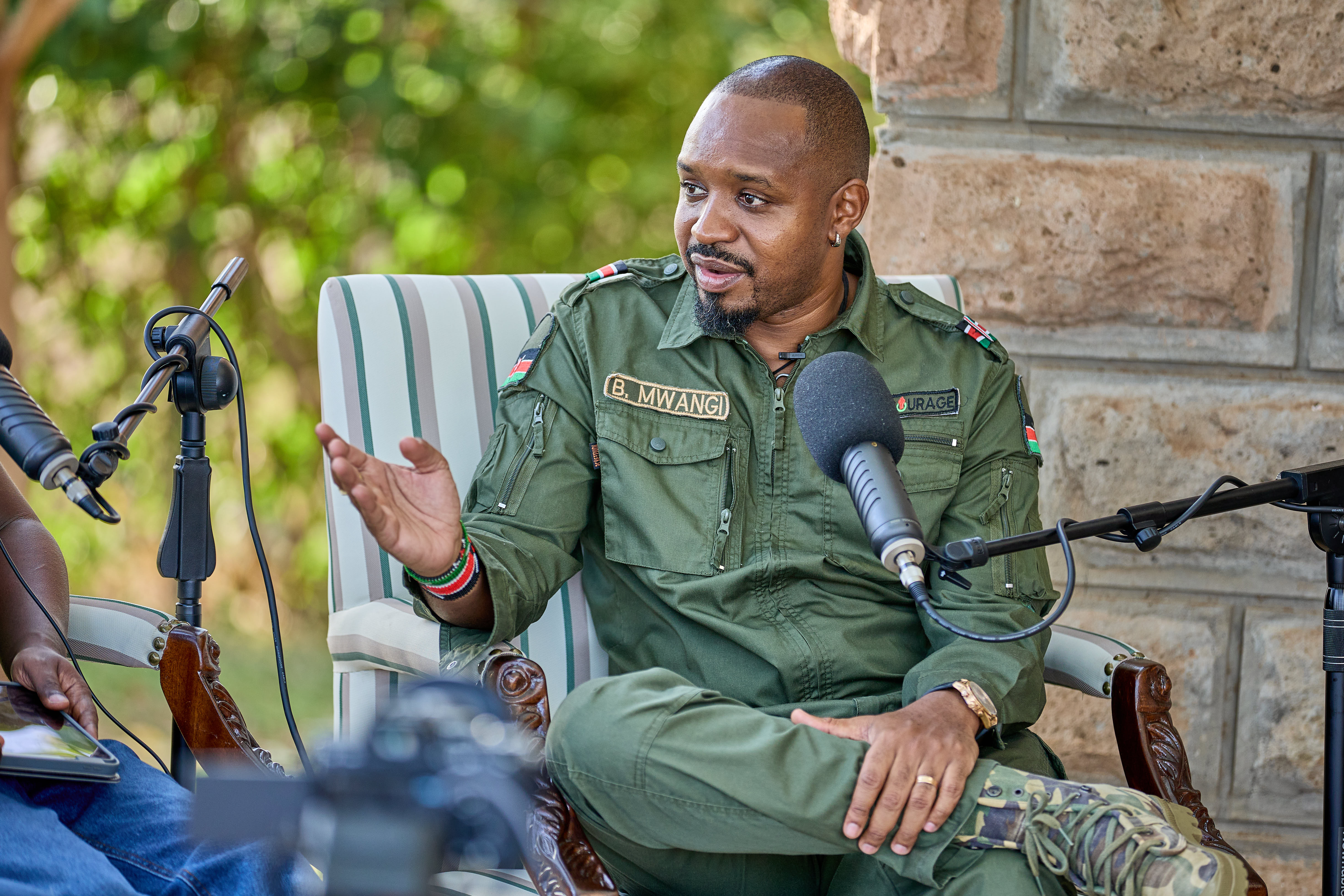
Boniface Mwangi at an interview.
(This story contains references to sexual violence and police abuse.)
The room fell silent as Boniface Mwangi got ready to speak. Mwangi had just returned from Tanzania, where he’d been detained, alongside Ugandan activist Agather Atuhaire. They had visited Tanzania to observe the treason trial of opposition leader Tundu Lissu, and what should have been a routine act of solidarity turned into days in detention.
His voice, thunderous at protests, was now measured and deliberate. Usually loud and full of life, he seemed defeated, and broken. At a press conference in June 2025 in Nairobi, he recounted the physical assault, sexual violence, and threats he had endured between May 18 and 22. His voice broke and tears flowed as he narrated how inhumane the police can be when cracking down on citizens who fail to color inside the lines.
A Kenyan photojournalist-turned-activist, Mwangi’s work documenting the 2007-2008 post-election violence, which killed more than a thousand people, made him one of East Africa’s most prominent advocates for accountability and justice.
Mwangi gained public attention during the 2009 Madaraka Day celebrations, a national holiday commemorating Kenya’s transition to self-governance from British colonial rule. He interrupted President Mwai Kibaki’s speech with heckles, imploring him to remember the victims of the 2007-2008 post-election violence and flush out corrupt leaders. He was hauled away by plainclothes officers, physically assaulted, and thrown in a jail cell for the night. He would spend the next year embroiled in a court case that would accomplish nothing— except strengthening his resolve.
This incident marked the beginning of a long fight for justice. A year later, he founded Picha Mtaani, a travelling photography exhibition which showcased his images of the post-election violence— which not only killed more than a thousand people but also injured and maimed about 3,500 and displaced more than half a million— in every corner of Kenya.
“I have seen things that many people will never see, and I have a responsibility not to be silent about it,” he said in an interview for TED Blog.
In 2013, Mwangi, alongside other activists, organized the MPigs Protest, placing more than a dozen pigs and pouring pig blood right outside the Parliament. The protest, he said, was an apt response to greedy Parliamentarians, who were lobbying for yet another pay rise.
Mwangi has faced serious retaliation for his continued activism against corruption, political impunity, and social injustice. In October 2021, it was reported that unknown armed individuals had planted explosives in his family’s country home in Lukenya, Machakos County. Mwangi publicly accused the then Machakos Governor, Alfred Mutua, with whom he had a personal feud, of orchestrating the attack.
Fortunately, the house was still under construction, and no one was hurt. Between then and now, he has experienced several acts of intimidation, harassment, and assault.
Mwangi says that there’s no police precinct in Nairobi whose threshold he hasn’t crossed. Throughout the years, he has been arrested, shot at, and detained. He has received countless death threats and gotten tangled in court cases for simply standing up for what’s right.
He has also been vocal against police brutality. In the wake of a recent incident of police harassment of youth in Nandi Hills, Kenya, Mwangi proposed a complete overhaul of the policing system–changing outdated recruitment techniques, paying officers better, introducing body cameras, and tracking all arresting officers’ cases, including prosecution success rates. This, he said, would ensure the police stop using arrests as a form of extortion and intimidation.
For nearly two decades, Mwangi has used art, photography, and direct action to challenge state impunity, mobilize public resistance, and demand dignity for African lives on the global stage. This profile examines the personal costs of that commitment: how Mwangi reconciles his role as a father with the dangers of dissent, how he understands the intersection of activism and African identity, and what his persistence reveals about the possibilities—and limits—of citizen action in a region where speaking truth to power can be lethal.
He spoke to Martin Mahanda at his office in Nairobi, giving a glimpse of the human behind the activist, his work, and its significance.
MM: I’m curious to know what kind of child you were and what your childhood was like.
BM: When I was young, I was very curious. I was inquisitive and adventurous. I was raised by a single mother. I would make friends easily, so I’d go loitering around. You could swim in the Nairobi River back then, so I’d go play with street kids, some of whom weren’t even my friends.
MM: You have three kids. Do you remember what you were like at their age?
BM: I do remember. My three kids are 18, 15, and 14; all teens. I tell my oldest son that when I was 14, I had started working. By 17, I was paying rent, and by 23, I was a father. By 26, I had three children. (Laughs.)
I was very focused in my teenage years. My mother died when I was 17, and I didn’t have any academic qualifications besides my Class 8 certificate. I had to work very hard to get where I am. When I was dating my wife, I told her about my upbringing and the poverty that surrounded my family, and she said that I’m one of the poorest people she’s ever met. (Laughs softly.)
MM: Fatherhood is very important to you. How do you reconcile with the inherent risks in the work you do? Does this make you anxious?
BM: I have zero anxiety, my brother. Do I have fears? Yes. I have fears of dying young and leaving my kids fatherless. But I think the cause is worth it, and my kids understand that. I don’t want to die, though— I shouldn’t have to die for doing the right thing. But yes, it is a concern for my family that I could die and leave them without a father.
MM: How do you process this fear? When you’re in the heat of the moment, out on the streets, or in a jail cell…
BM: First, I have too much self-belief to feel stranded. And then the thing is, I do it even when I’m afraid. I’d arrive at a protest with my legs shaking, but I’d still keep on marching. So, we don’t do it because we’re not afraid, we do it while we’re afraid. And then I also have a war chant: (Loudly) Heeeeeeh! That always helps.
MM: You have endured much trauma in this journey. What’s your take on therapy?
BM: Therapy saves lives, my brother! Go for therapy, don’t avoid it. It’s crucial. It keeps you from transferring trauma to other people. A lot has transpired. Tanzania happened. I’ve been shot. Someone tried to bomb my house… Therapy helps you process your feelings and emotions, so I’m a big supporter and believer in it.
MM: Let’s dwell on fatherhood for a bit. What’s one thing you lacked growing up that you’re proud to give your children?
BM: I think having a father (laughs) is the best gift I’ve given my kids, and making them curious about life. We’ve given them the freedom to do whatever they want to, within limits, of course. We also advocate for free speech in our house. We don’t censor ourselves; people speak their minds.
MM: A lot of young men harbor resentment towards women. Many consume content from influencers such as Andrew Tate. How are you protecting your kids from going in that direction?
BM: My kids live in a home where their mother is as equal a parent as I am. I don’t treat her any less. I believe insecurity causes a culture of hatred against women. So, the question I’d ask people who hate women is, “Who hurt you?” The world is a beautiful place because women exist. If there were more women leaders globally, I think the world would be a much safer place. Women don’t do nearly as much harm in the world as men do.
MM: That’s an interesting thought, especially considering that Martha Karua announced she’ll be running for President in 2027. How do you feel about that?
(Martha Karua is a veteran politician whose career in Kenyan politics spans more than three decades. She was first elected as Member of Parliament for Gichugu Constituency in 1992, a seat she held for 21 years, winning in four consecutive elections. She first ran for President in 2013, losing to Uhuru Kenyatta and William Ruto. In 2022, she supported the late Raila Odinga’s bid and was his running mate.)
BM: She has every right to run. She’s my mentor. She’s my mother. She’s a grandmother to my kids. I’m happy for her. I worked for her when she was vying for Deputy President with Raila Odinga as the presidential candidate. I have so much respect for her.
MM: Since you mentioned protesting earlier, what inspired you from the protests here in Kenya in the last two years? And what can we learn from their mistakes?
(From June to August 2024, Kenyans took to the streets to protest against the Proposed 2024 Finance Bill, which would raise existing taxes and introduce new ones. Young Kenyans organized a series of mass demonstrations during this period. In response, police fired teargas canisters, water cannons, and live rounds into the crowds. The protests, which started peacefully, claimed more than 50 lives. Soon after, similar demonstrations erupted in Uganda and Tanzania.)
BM: I was inspired by the number of young people in the streets. It was a movement, and there were more women than men. I loved that. There was a lot of originality and unity, and young people even forced their celebrities to go to the streets.
What we failed to do… is nothing! We did everything we could do. We went to the streets peacefully, we protested peacefully, and then we got murdered. So, the young protesters did nothing wrong. The problem was how the government responded to protestors.
MM: Following these protests, terrorism charges were levied against you. Have these charges been dropped? What’s your take on it?
BM: Yeah, they were dropped, and now I’m facing ammunition charges and other things. It’s just silliness. They’re politically motivated cases. Many young kids were arrested and charged with the same thing. And they settle on terrorism charges to scare young people. You see, you can’t scare me, regardless of what you say. But for young people, when you’re trying to get a certificate of good conduct, that shows up. When you’re applying for a visa, they ask you: Have you ever been charged with terrorism? You say yes, then you don’t get a visa. They’re destroying lives! That’s what they’re doing, man.
MM: How is propaganda affecting the organization, planning, and execution of protests?
(During the 2024 Anti-Finance Bill protests, many X accounts tweeted similar messages, urging people not to proceed with the planned march. Others would post false protest programs, creating chaos and confusion, which kept people from showing up.)
BM: It brings a lot of misinformation and confusion. People start questioning everything; they don’t know which protests are legitimate and who is getting paid to spew propaganda. This discourages people from participating in protests. It demobilizes them, so to speak.
MM: Netizens often criticize activists for accepting donor funding. Is this criticism unfounded? And is it wrong for activists to receive funding?
BM: I think that’s how people try to discredit us. They say that activists are funded as an excuse for not being active citizens themselves. What is the harm in someone being paid for the work they are doing?
But, for me, I work. I sell land. I help people claim their debts. I work here, in the office we are in. There’s no place where I collect checks called “activism.”
MM: You’ve worked both as an artist and a journalist. What is your take on the current state of journalism in Kenya, especially with the rise of digital media?
BM: I think journalism in this country is in the pits. People don’t read papers as much; they watch TV. And now, social media is competing with that. Hence, media houses don’t pay journalists well. They go months without pay, and they are paid very little. At 23, right after my first child was born, I earned Ksh 90,000 (about 700 USD) working as a photojournalist at The Standard. After taxes, take-home pay was more than Ksh 60,000. That’s how much I was earning in 2007. You can’t find that kind of job today.
Now journalists have been turned into beggars, and they get paid to write negative stories or to ghostwrite hit jobs.
There is no minimum wage for journalists here, so you can pay someone whatever you want. Also, they are not protected. The Kenya Union of Journalists is very weak. A lady was shot at the Anti-Finance Bill protests in Nakuru, and she still hasn’t gotten justice. Many journalists got hurt, and they haven’t gotten justice either.
(In July 2024, Catherine Wanjeri wa Kariuki, a Kenyan broadcast journalist, was shot thrice in the leg while covering the protests, despite wearing a clearly visible “Press” vest by the police with rubber bullets.)
Media houses rely on government advertising to fund their work and pay their staff. This is forcing them to tone down on criticisms, lest they lose advertising revenue, which would leave them unable to pay their staff and run their operations. So it’s a mess, but it’s not a Kenyan problem; it’s happening globally.
MM: How can we strengthen the creative economy to help it reach its full potential?
BM: We’re already struggling as a creative economy, and the government is still asking us for taxes. You’re taxing someone who has worked hard to buy their own camera and establish their own hustle. Someone wants to stage a play, but they must first rent rehearsal grounds.
Every ward, not constituency, should have a public hall where people can rehearse and practice their art. We should have theaters in every community. But unfortunately, the people in power hate art; they’ve never seen a music concert or a play.
Also, we need to demand that the people who run these social media platforms pay us as much money as they pay people in the West.
Twitch, for example, is not paying Kenyan creatives. Why? Facebook and X pay Kenyan creatives very little, while those in the West are paid significantly more. We are not getting what we’re worth.
But all in all, I think it should be illegal for a government to tax people in an industry they haven’t invested in. The Kenyan government hasn’t invested anything in the creative sector. Why are they taxing us?
(Twitch pulled monetization in Kenya due to the digital tax policies the 2025 Finance Bill imposed. These included a 16% VAT on digital services, withholding tax (5% for residents, 20% for non-residents), and a 3% Significant Economic Presence tax.
On the other hand, TikTok doesn’t offer Kenyan creators access to the Creator Fund or even direct payout programs. They, therefore, rely on gifts, brand deals, and influencer marketing, receiving no compensation for the traffic they generate.)
MM: What advice would you give young people going into 2027, other than getting their voter’s card?
BM: Be selfish. Vote for leaders who will provide solutions to your problems. Look at what you’re going through, the challenges you’re having in life, and identify leaders who will actually fix the problem. And look at people’s track record. Let us judge people by their fruits over the past several years.