Anuparna Roy on Love, Labor, and Resistance in ‘Songs of Forgotten Trees’
Anuparna Roy talks about adapting her personal experiences into the film, the significance of the title, and her refreshing representation of sex work.
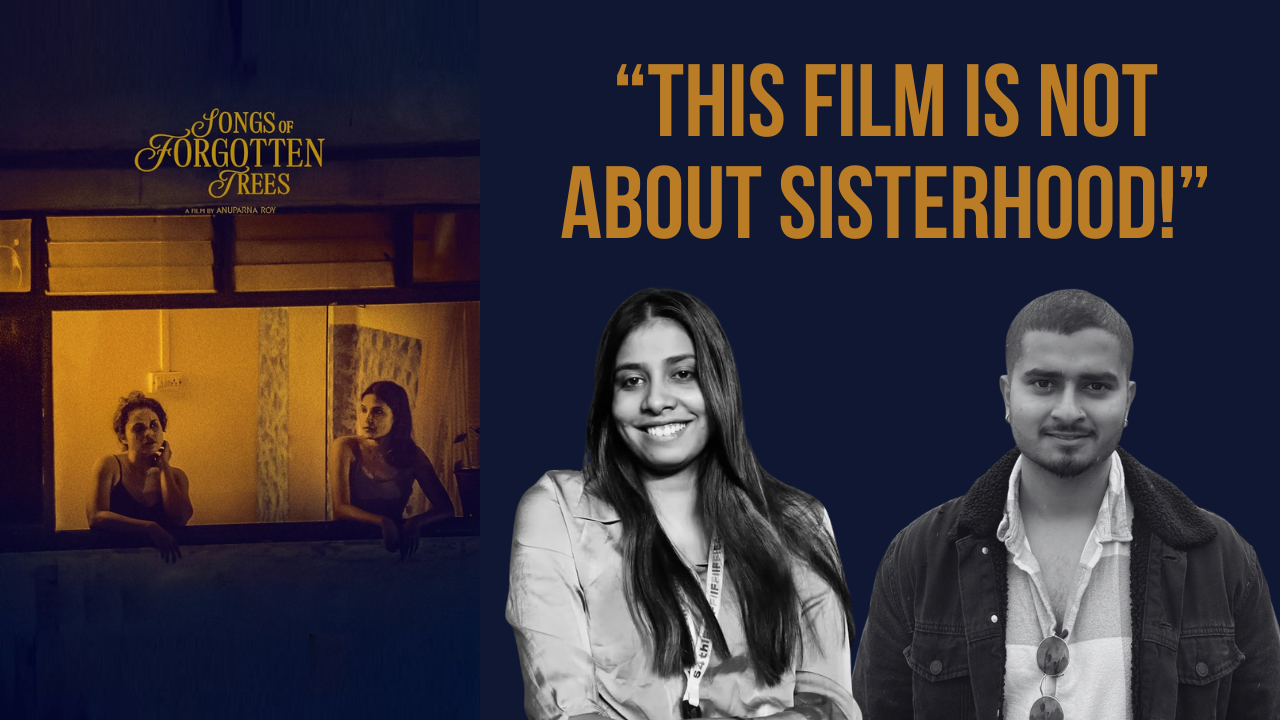
Anuparna Roy’s debut feature, Songs of Forgotten Trees, is a meditative exploration of intimacy and resilience in Mumbai. The filmfollows Thooya (Naaz Shaikh), who, in the wake of her father’s death, is processing the traumatic impact of his abusive relationship with her mother on her own life. She is also still grieving the loss of her childhood best friend, Jhuma, who was married off at a young age. Thooya is an aspiring actress and part-time sex worker from an unnamed state in Northeastern India; her main client is her landlord and sugar daddy (Bhushan Shimpi).
Songs of Forgotten Trees begins with Thooya subletting a bedroom in her apartment to Shwetha (Sumi Baghel), a migrant from Delhi. Shwetha has much more conventional goals: she works remotely at an IT call center and is seeking a husband via a matrimonial website. The film traces their relationship, which gradually unfolds amidst the mundanities of domestic life in their tiny apartment.
Despite their differences, both characters remain bound to serving men—a similarity Roy attributes to hetero-patriarchal marriage, sex work, and corporate labor under capitalism. The film then traces their journey, grappling with these structures and slowly finding forms of freedom. In Songs of Forgotten Trees, Roy channels her rage against the patriarchy in subtle ways. The film is never didactic or dramatic: Thooya and Shwetha’s friendship unfolds as much through silences as the small snippets of information they share.
The story and characters are deeply personal for Roy, who grew up in Narayanpur, a village in Purulia, West Bengal, and later moved to Mumbai to pursue a career as a filmmaker. She self-funded the film by juggling three corporate jobs—including one in IT sales. But most importantly, the film is rooted in Roy’s own memory of her friend, Jhuma Nath, who was also married off at the young age of 13.
Songs of Forgotten Trees premiered at the 82nd Venice Film Festival, where she made history as the first Indian to win the Best Director award in the Orizzonti (Horizons) section. During her speech, Roy used the platform to express her solidarity with Palestine. “I might upset my country, but it doesn’t matter to me anymore,” she said. “Every child deserves peace, freedom, liberation, and Palestinians are no exception. It’s a responsibility at the moment to stand by Palestine.”
The film played at the 69th BFI London Film Festival in October, where I caught it. It made its Indian premiere in November, as the closing film at the Dharamshala International Film Festival.
In this interview, I ask Roy about adapting her personal experiences into the film, the significance of the title, and her refreshing representation of sex work. She also breaks down some of the film’s key scenes, discusses her use of symbolism, and explains why she left the ending ambiguous.
Anuparna Roy talks about adapting her personal experiences into the film, the significance of the title, and her refreshing representation of sex work.
Anuparna Roy’s debut feature, Songs of Forgotten Trees, is a meditative exploration of intimacy and resilience in Mumbai. The filmfollows Thooya (Naaz Shaikh), who, in the wake of her father’s death, is processing the traumatic impact of his abusive relationship with her mother on her own life. She is also still grieving the loss of her childhood best friend, Jhuma, who was married off at a young age. Thooya is an aspiring actress and part-time sex worker from an unnamed state in Northeastern India; her main client is her landlord and sugar daddy (Bhushan Shimpi).
Songs of Forgotten Trees begins with Thooya subletting a bedroom in her apartment to Shwetha (Sumi Baghel), a migrant from Delhi. Shwetha has much more conventional goals: she works remotely at an IT call center and is seeking a husband via a matrimonial website. The film traces their relationship, which gradually unfolds amidst the mundanities of domestic life in their tiny apartment.
Despite their differences, both characters remain bound to serving men—a similarity Roy attributes to hetero-patriarchal marriage, sex work, and corporate labor under capitalism. The film then traces their journey, grappling with these structures and slowly finding forms of freedom. In Songs of Forgotten Trees, Roy channels her rage against the patriarchy in subtle ways. The film is never didactic or dramatic: Thooya and Shwetha’s friendship unfolds as much through silences as the small snippets of information they share.
The story and characters are deeply personal for Roy, who grew up in Narayanpur, a village in Purulia, West Bengal, and later moved to Mumbai to pursue a career as a filmmaker. She self-funded the film by juggling three corporate jobs—including one in IT sales. But most importantly, the film is rooted in Roy’s own memory of her friend, Jhuma Nath, who was also married off at the young age of 13.
Songs of Forgotten Trees premiered at the 82nd Venice Film Festival, where she made history as the first Indian to win the Best Director award in the Orizzonti (Horizons) section. During her speech, Roy used the platform to express her solidarity with Palestine. “I might upset my country, but it doesn’t matter to me anymore,” she said. “Every child deserves peace, freedom, liberation, and Palestinians are no exception. It’s a responsibility at the moment to stand by Palestine.”
The film played at the 69th BFI London Film Festival in October, where I caught it. It made its Indian premiere in November, as the closing film at the Dharamshala International Film Festival.
In this interview, I ask Roy about adapting her personal experiences into the film, the significance of the title, and her refreshing representation of sex work. She also breaks down some of the film’s key scenes, discusses her use of symbolism, and explains why she left the ending ambiguous.
SUPPORT US
We like bringing the stories that don’t get told to you. For that, we need your support. However small, we would appreciate it.