
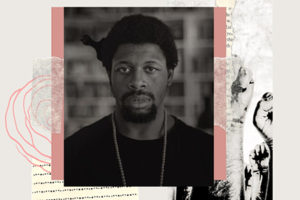
5 Objects Podcast| A conversation with Anna Feigenbaum

By July 9, 2018

For each episode of 5 Objects, we ask a guest to choose five pieces or items that have influenced their intellectual life and work. These can be books, art, music, poetry, photographs, performance, a person, an event, or an experience. The choices of objects have ranged from books by Edward Said, Steve Biko, and Assata Shakur, music from Notorious BIG, art by Ermias Ekube, the radio, and becoming a refugee after the Somali war. The choices then become the basis of a free-flowing conversation that discusses our guest’s life, their personal, political, and intellectual journeys and histories. For this episode, Suchitra Vijayan talks to Dr. Anand Pandian, a professor of anthropology at Johns Hopkins University. This week Suchitra Vijayan spoke to Dr. Anna Feigenbaum.

Anna Feigenbaum

Anna Feigenbaum, is a Senior Lecturer in Digital Storytelling at Bournemouth University. Her work focuses on communication and social justice. She is a co-author of Protest Camps with Fabian Frenzel and Patrick McCurdy (Zed 2013), author of Tear Gas (Verso 2017), and the forthcoming Data Storytelling Workbook (Routeldge 2020). Her research can be found in a variety of academic journals as well as in The Guardian, The Atlantic, Le Monde, The Financial Times, and Vice among other outlets

I recently read Anna’s, incredible book, “Tear Gas — From the Battlefields of WWI to the Streets of Today”, that tells the story of how a chemical weapon went from the battlefield to the streets. In this conversation, we speak about her work, how she came to write the history of tear gas, as both the history of state violence and resistance.

I asked Anna for five things that have influenced her intellectual and political journeys, and she picked

1. Donna Haraway – Cyborg Manifesto 

2. Adrienne Rich – Cartographies of Silence (poem)

3. Capitalism is the Crisis Banner 

4. Woomera Fence 

Protesters rip down the fence at the Woomera detention center, freeing many asylum seekers imprisoned under inhumane conditions. Australia, 2002.5. Photo – US Troops use Tear Gas on Bonus Army 

US troops use tear gas on Bonus Army

SUPPORT US

We like bringing the stories that don’t get told to you. For that, we need your support. However small, we would appreciate it.


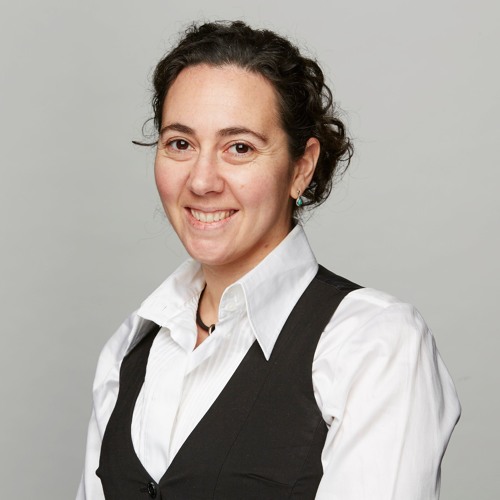
Suchitra Vijayan is the author of the critically acclaimed book Midnight's Borders: A People's History of Modern India (Melville House, New York) and How Long Can the Moon Be Caged? Voices of Indian Political Prisoners (Pluto Press). She is 2023 NYSCA/NYFA Artist Fellow in Nonfiction. She is an award-winning photographer and the founder and executive director of the Polis Project, a New York-based magazine of dissent. She teaches at NYU Gallatin and Columbia University, and is the Chairperson of the International Human Rights Committee. Her essays, photographs, and interviews have appeared in The Washington Post, GQ, The Nation, The Boston Review, Foreign Policy, Lit Hub, Rumpus, Electric Literature, NPR, NBC, Time, and BBC. As an attorney, she worked for the United Nations war crimes tribunals in Yugoslavia and Rwanda before co-founding the Resettlement Legal Aid Project in Cairo for Iraqi refugees.

5 Objects Podcast| A conversation with Anna Feigenbaum

Suchitra Vijayan is the author of the critically acclaimed book Midnight's Borders: A People's History of Modern India (Melville House, New York) and How Long Can the Moon Be Caged? Voices of Indian Political Prisoners (Pluto Press). She is 2023 NYSCA/NYFA Artist Fellow in Nonfiction. She is an award-winning photographer and the founder and executive director of the Polis Project, a New York-based magazine of dissent. She teaches at NYU Gallatin and Columbia University, and is the Chairperson of the International Human Rights Committee. Her essays, photographs, and interviews have appeared in The Washington Post, GQ, The Nation, The Boston Review, Foreign Policy, Lit Hub, Rumpus, Electric Literature, NPR, NBC, Time, and BBC. As an attorney, she worked for the United Nations war crimes tribunals in Yugoslavia and Rwanda before co-founding the Resettlement Legal Aid Project in Cairo for Iraqi refugees.